Let's be honest, every life-changing backpacking trip begins with the same four big questions. It really just boils down to where you want to go, how much you can spend, what you want to do, and what you need to bring.
Nail these, and that fuzzy dream of an adventure starts to look like a real, achievable plan.
Your Adventure Blueprint: Where to Begin Your Plan
Every great journey starts with a spark—maybe it was a jaw-dropping photo on Instagram, a friend's wild travel story, or just that deep-seated itch to see what's out there. The real trick is learning how to capture that excitement and channel it into a plan that's solid but still leaves room for magic.
This first stage isn’t about locking yourself into a minute-by-minute schedule. It’s about daydreaming with purpose. Ask yourself what kind of trip you’re really craving. Are you picturing the electric energy of street food markets in Southeast Asia, or is it the soul-stirring quiet of a mountain trail in Patagonia?
Getting clear on that feeling will be your compass for every decision that follows, from what you pack to how much you'll spend each day.
Defining Your Trip's Core Elements
The biggest question after "where" is usually "for how long?" A whirlwind two-week trip through Europe is a completely different beast than a slow, meandering six-month journey across South America. Your timeline sets the pace for everything.
To help bring your vision into focus, I find it helps to organize your thoughts around this quick-glance table. It’s a simple way to tackle the big questions head-on.
The Four Pillars of Backpacking Trip Planning
Once you’ve wrestled with these questions, you’ll have a much clearer picture of the adventure you're building.
By defining these four pillars upfront, you create a powerful filter for all future decisions. It stops you from getting overwhelmed by endless options and ensures every choice is intentional, bringing you closer to the adventure you truly crave.
Think of this initial blueprint as your North Star. It gives you direction without chaining you to a rigid plan, leaving plenty of space for those spontaneous detours and unexpected moments that make backpacking so incredible. With this foundation set, you're officially ready to move from dreaming to doing.
Crafting Your Perfect Itinerary and Route
You’ve picked your destination. Now for the fun part—turning that pin on a map into a real-life adventure. This is where you become the architect of your own journey. But don’t think of it as a rigid blueprint. Think of it more like a flexible game plan. The point isn’t to schedule every single minute, but to connect the dots in a way that feels exciting and logical, with plenty of room for those magical, unplanned moments.
The best backpacking trips I've ever taken all had a certain rhythm. They avoided those soul-crushing back-to-back travel days and instead created a path that just flowed, giving me time to really soak up one place before getting excited for the next.
Choosing Your Travel Style and Pace
Before you even look at a bus schedule, take a moment to think about the vibe of your trip. Are you on a mission to tick off as many countries as possible, or would you rather go deep and really get to know one specific region?
A classic approach is the Point A to B route. This is your quintessential cross-country trek. Picture this: flying into Bangkok, then weaving your way south through Thailand, Malaysia, and finally ending up in Singapore. It’s a straight shot, perfect if you love that feeling of constant forward motion and covering serious ground.
Then there’s the Hub and Spoke method. I love this one for saving my sanity. You set up a home base in a central city for a week or even longer, then take smaller trips out from there. For example, you could plant yourself in Cusco, Peru. From there, you can easily take day or multi-day trips to explore the Sacred Valley, hike Rainbow Mountain, and see Machu Picchu, all without having to lug your main backpack around every single time.
One of the biggest mistakes I see first-timers make is packing their schedule too tight. Travel fatigue is very, very real. A good rule of thumb is to stay at least three nights in most places. That gives you two full days to explore, chill out, and actually connect with your surroundings without that frantic, rushed feeling.
This strategy doesn't just save you from burnout; it often lets you snag better deals on accommodation and gives you the time to find the best local coffee spot or chat with shop owners.
Connecting the Dots with Smart Transportation
Getting from one place to the next isn’t just a logistical hurdle—it’s part of the adventure itself. Sure, an overnight bus in Southeast Asia can save you cash and a night's accommodation, but a scenic train ride through the tea plantations of Sri Lanka? That's an experience you'll be talking about for years.
Here’s a quick breakdown of your options:
- Overnight Buses & Trains: A backpacker’s best friend. That 12-hour bus from Ho Chi Minh City to Nha Trang in Vietnam? It whisks you to your next stop while you sleep. Pro tip: an eye mask and quality earplugs are non-negotiable.
- Budget Airlines: For longer hauls, low-cost carriers like AirAsia or Ryanair can be shockingly cheap. Just book well in advance and pack light. A quick flight can turn a grueling 24-hour bus ride into a simple two-hour hop.
- Local Transport: Don't sleep on the local options! Hopping on a ferry between Greek islands or squeezing into a shared colectivo van in Mexico is more than just transport—it’s a full-on cultural immersion. It's almost always the cheapest and most interesting way to cover shorter distances.
When you're sketching out your route, tools like Google Maps or Rome2rio are great for getting a first look at travel times. But always, always cross-reference with recent travel blogs or ask around when you arrive. Schedules in many parts of the world are, shall we say, more like suggestions.
Building Flexibility into Your Plan
Treat your itinerary like it’s written in pencil, not permanent ink. The real magic of backpacking happens in the spaces between your plans. It's the spontaneous invitation to dinner with a local family, the detour to a hidden waterfall you heard about from someone at your hostel, or simply deciding to stay another week in a place that has captured your heart.
When you’re mapping things out, leave some breathing room. Don’t book every bus ticket and hostel bed months ahead. My personal strategy is to have my first few nights in a new country locked in, just to ease the transition. After that? I leave it open to discovery.
This mix of planning and spontaneity is the secret sauce. It ensures you hit your must-sees while leaving the door wide open for the unexpected. And while you're daydreaming, why not look for some inspiration for those spontaneous side-quests by uncovering some hidden gems in Europe? You never know where the road might lead you.
Mastering Your Budget and Saving Money on the Road
Let’s talk about money. Knowing you have a handle on your finances is what gives you true freedom on the road. It transforms your journey from a source of low-key stress into a string of incredible, can’t-believe-this-is-my-life memories.
Budgeting isn't about being restrictive; it's about empowerment. It’s the confidence that comes from knowing you’ve got the essentials covered, so you can say a wholehearted "yes!" to the spontaneous adventures that make a trip unforgettable. The simplest way to start is by splitting your costs into two piles: Pre-Trip Expenses and Daily On-the-Road Costs.
The Foundation: Your Pre-Trip Expenses
These are the big-ticket items you’ll need to cover before your boots even touch the tarmac. Getting these locked in first gives you a clear savings target and prevents any last-minute surprises.
- Flights & Visas: This is often your single biggest purchase. I’ve found that using flight comparison tools and staying flexible with travel dates can save hundreds.
- Travel Insurance: Seriously, don't leave home without it. This is your safety net for everything from a lost backpack to an unexpected medical issue. It’s a non-negotiable.
- Essential Gear: Think of your backpack, hiking boots, and a quality rain jacket as investments. Good gear is an investment in your comfort, safety, and overall happiness on the trail.
- Vaccinations: Depending on where you’re headed, this is a necessary (and sometimes pricey) part of getting ready.
Once you’ve tallied these up, you’ve got your initial savings goal. Now for the fun part—making your money last once you’re out there.
The Day-to-Day: On-the-Road Costs
This is where your smart planning truly shines. Your daily budget is all about the "big three": where you sleep, what you eat, and how you get around. And the good news? The entire global backpacking community is built on making these things affordable.
Globally, travelers take about 45 million backpacking trips each year. A huge chunk of them—23% of all international arrivals—are adventurers under 30. On their last big trip, they spent an average of just under €3,000, with a massive 69% of that cash being spent in the destination on things like hostels, street food, and local buses. This huge community means there are tons of budget-friendly options out there if you know where to look. Get more insights from the latest trends shaping backpacker travel.
Your daily budget isn't a strict rule book; it's a guide. Think of it as a daily average. Some days you'll splurge on a scuba diving trip, and other days your biggest expense will be a few street tacos and a local bus ticket. It all evens out in the end.
The infographic below really nails how backpackers think about their routes, which is directly tied to how they spend their money.
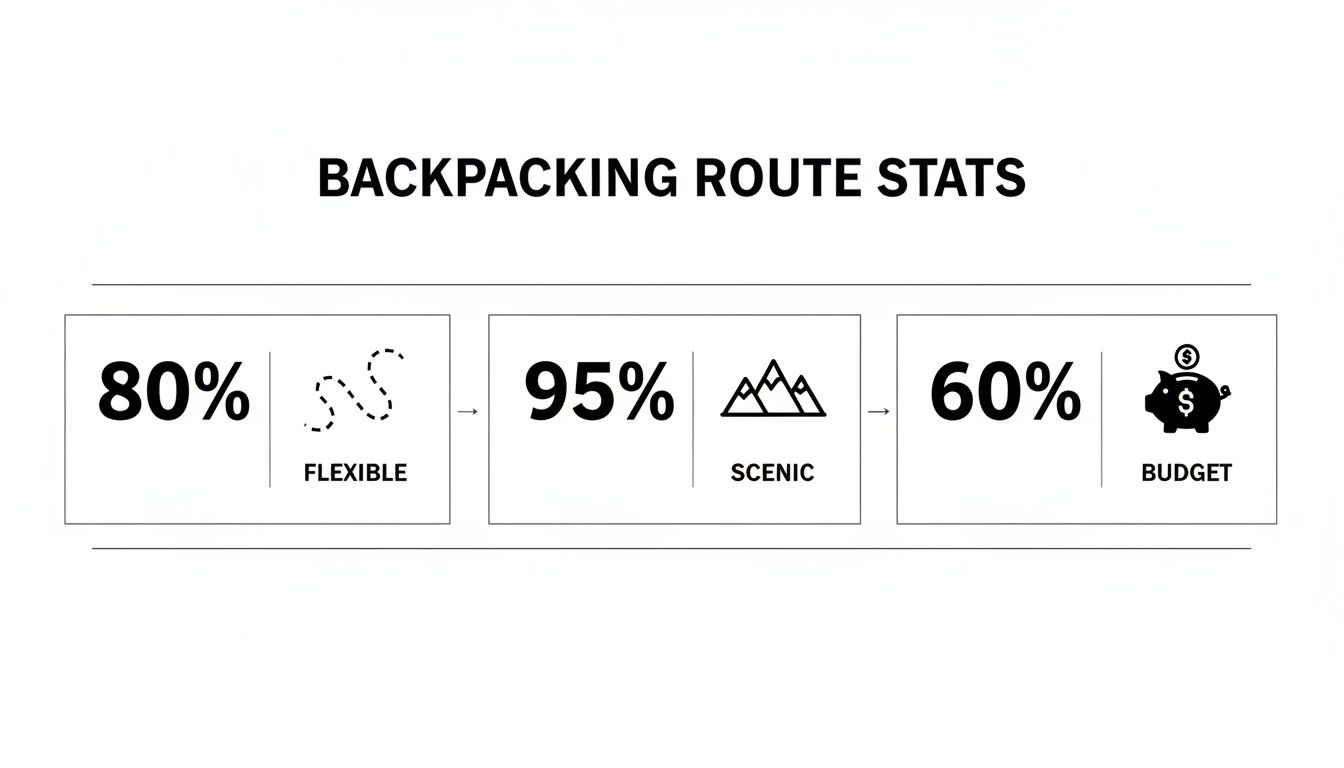
It’s clear that while we all crave flexibility and incredible scenery, keeping an eye on the budget is still a huge part of the plan.
Insider Strategies for Making Your Money Last
Stretching your funds doesn’t mean you have to miss out. It just means traveling smarter. From my own experience, a few strategic choices can dramatically extend your time on the road.
- Travel in the Shoulder Season: This is my favorite travel hack. Visiting just before or after peak season can slash accommodation costs by 30-50%. You get fantastic weather with a fraction of the crowds.
- Embrace Hostels: Forget any old-school notions you might have. Modern hostels are clean, safe, and unbelievably social. There’s a reason the hostel market hit USD 8.5 billion in 2023—it’s the backbone of budget travel and the best place to meet fellow travelers.
- Eat Like a Local: Please, skip the tourist-trap restaurants. The most authentic, delicious food is almost always found at street food stalls and in bustling local markets. You can often get an incredible meal for less than the price of a coffee back home.
- Master Public Transportation: Jump on the local bus, figure out the subway, or take the train. Not only is it way cheaper, but it’s better for the environment and an adventure in itself.
Budgeting is a skill that will serve you on every trip you ever take. If you want to dive deeper, you might find our guide on the 7 travel budget categories that save you money really helpful. With a solid plan in place, you can stop worrying about your bank account and start focusing on the incredible journey ahead.
Packing Smart: What to Bring and What to Leave Behind
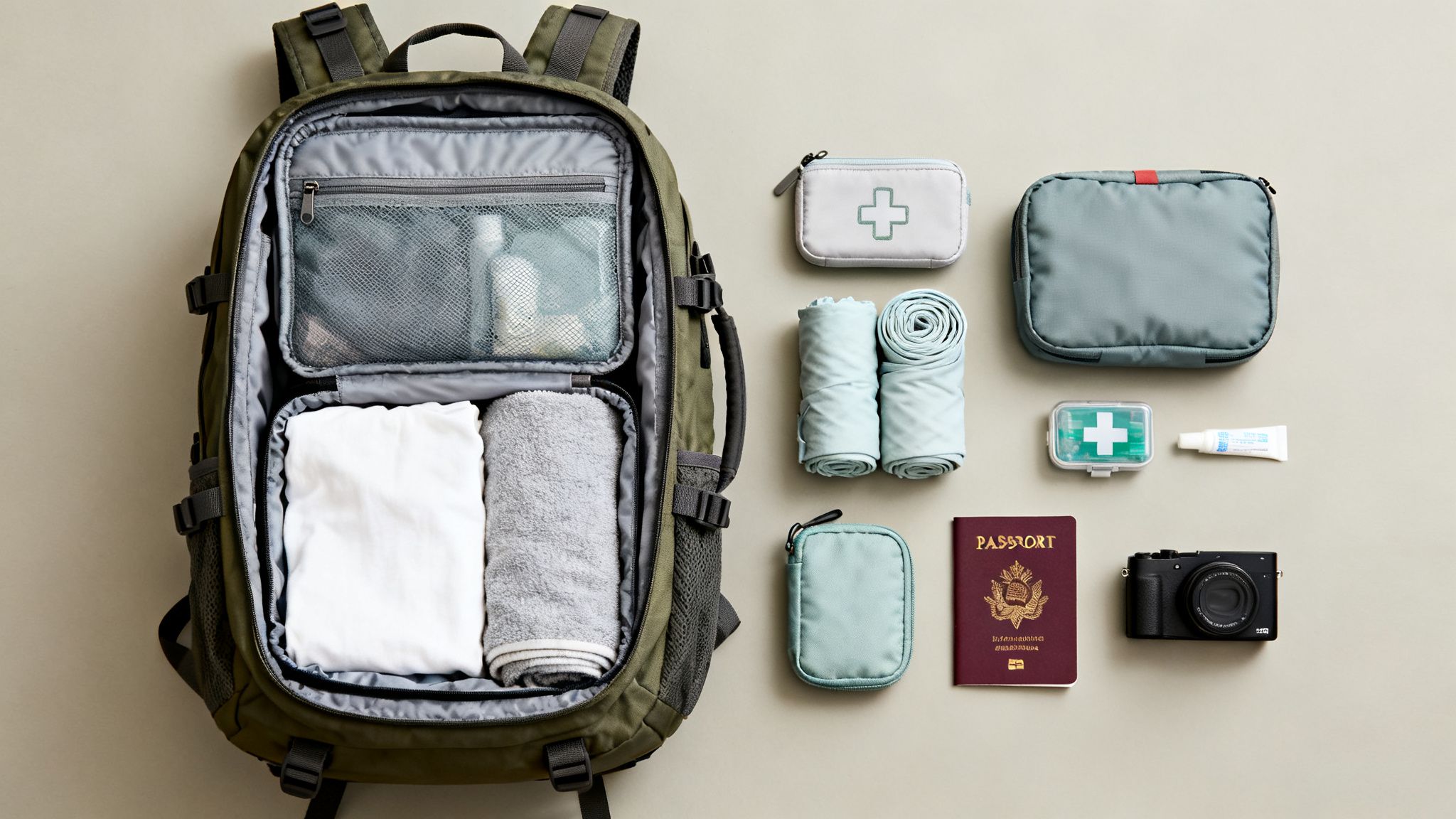
Think of your backpack as your entire world, distilled down to what you can carry on your shoulders. It’s your mobile home. Packing it isn’t just a task to check off; it’s an art form, a practice in living intentionally. The real goal isn't to be ready for every single possibility but to carefully choose a handful of versatile things that will see you through almost anything.
Ultimately, learning how to plan a backpacking trip is really about discovering what you can live without. A lighter bag means more freedom, more energy, and a whole lot more joy on the road. It's the difference between dragging yourself from the bus station and gliding through a new city, ready for whatever adventure finds you.
Your Backpack: The Most Important Choice You'll Make
Before you even start thinking about what goes inside, you’ve got to get the pack itself right. This is, without a doubt, the single most important piece of gear you will buy. A poorly fitting pack can turn a dream trip into a waking nightmare, while the right one feels like it’s a part of you.
Please don’t just order the one with the best reviews online. Do yourself a favor and go to an outdoor store to get properly fitted by someone who knows what they're doing. They’ll measure your torso length and help you find a pack that shifts the weight onto your hips, which is exactly where it should be (not your shoulders!).
Here’s what I always tell people to look for:
- Capacity: For most adventures, a 40-60 liter pack is the sweet spot. Anything bigger is just an invitation to overpack. A 40-liter pack can often pass as a carry-on, saving you a ton of time and money at the airport.
- Access: This is a big one. Front-loading packs that open like a suitcase are an absolute game-changer. Top-loading packs are great for serious trekking, but for most travel, they feel like a black hole when you’re desperately trying to find that one thing you know is at the bottom.
- Comfort: Look for easily adjustable straps, a cushioned hip belt, and decent ventilation to stop your back from becoming a swamp. Once you think you’ve found the one, ask the staff to put some weights in it so you can feel what it’s like with a real load.
Building Your Mobile Wardrobe
It's time to channel your inner minimalist. You're not packing "outfits"; you're building a tiny, versatile collection of layers that all work together. Merino wool is a backpacker's best friend for a reason—it’s light, it wicks away sweat, and it miraculously resists odor for days on end.
A great starting point is the 3-5 rule. Pack no more than five pairs of socks and underwear, three or four tops, and one or two pairs of pants or shorts. This little trick forces you to pick items that are genuinely functional. A pair of quick-dry hiking pants that also look sharp enough for dinner in the city is infinitely more valuable than separate jeans and trail pants.
The most freeing travel lesson you’ll ever learn is that no one you meet will notice or care if you wear the same shirt twice. Pack for your own comfort and function, not for an imaginary audience. The memories you’re making will always outshine your outfit.
The Magic of Organization and Essentials
Once your clothes are picked out, how you organize them is everything. I swear by packing cubes—they are absolutely non-negotiable. They compress your clothes to save space and create little compartments in your bag, so you always know exactly where to find a clean pair of socks.
Beyond the clothes, think compact and multi-purpose for all your other essentials.
- Toiletries: Solid shampoo bars, toothpaste tabs, and a multi-purpose soap (like Dr. Bronner's) save an incredible amount of space and eliminate the risk of leaks. This is also a fantastic way to incorporate more sustainable travel tips by cutting down on plastic.
- First-Aid Kit: Don’t waste money on a huge pre-made kit. Build a small one yourself with the things you'll actually use: blister plasters, your preferred pain reliever, antiseptic wipes, and any personal medications.
- Electronics: A universal travel adapter, a solid portable power bank, and your phone are usually all you truly need. Save battery and data by downloading offline maps and books before you go.
Okay, last step—and it’s a crucial one. Do a full trial run. Pack your bag completely, put it on, and walk around your house for at least 15 minutes. Does it feel balanced? Can you reach your water bottle without taking it off? This simple test will tell you exactly what needs tweaking before you’re out on the road.
Staying Safe and Confident on Your Journey
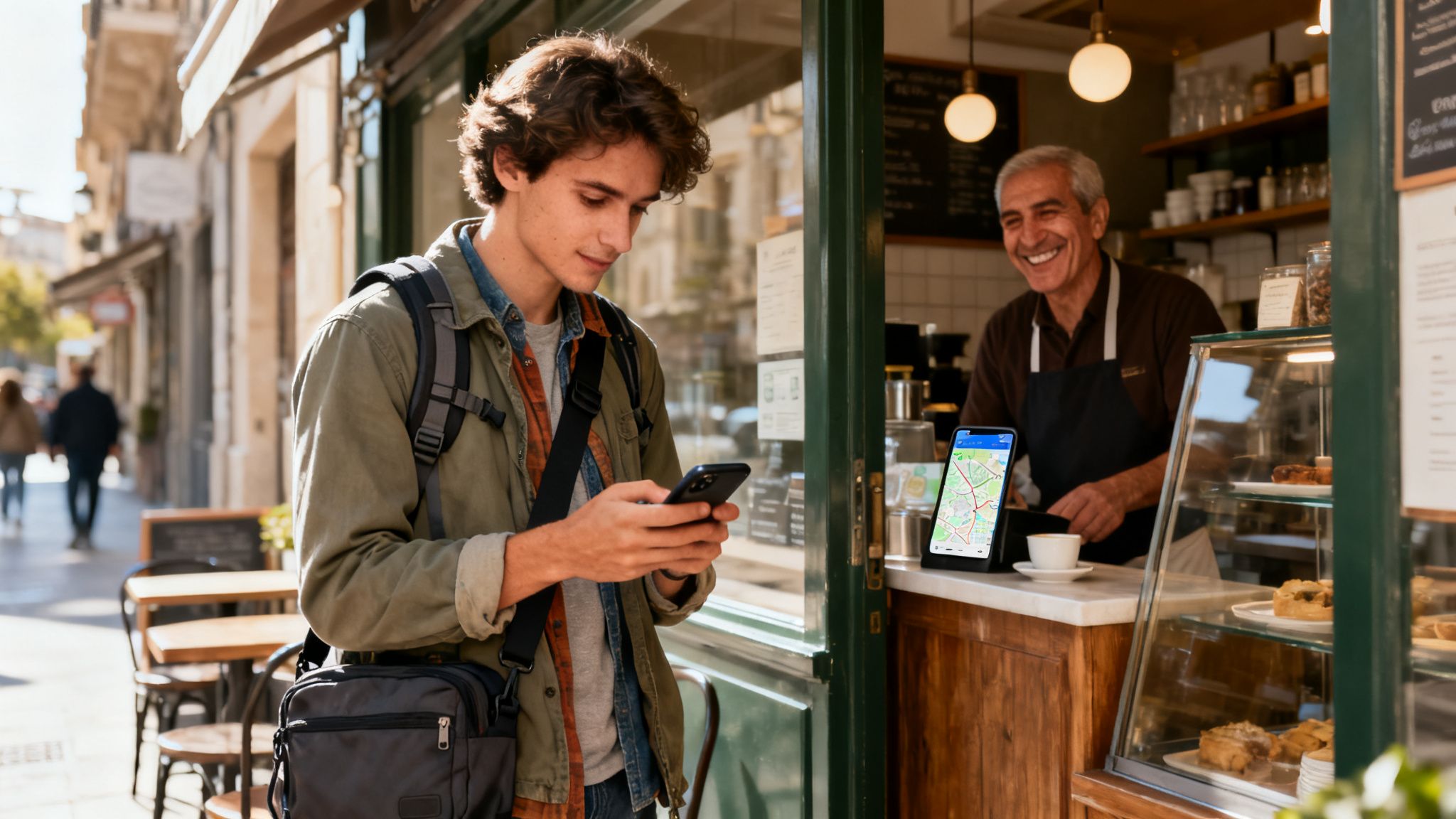
True freedom on the road isn't just about having an open itinerary; it’s about feeling confident enough to actually embrace it. This is especially true when you're exploring solo.
That confidence doesn't just appear out of nowhere—it’s built on smart preparation. This isn’t about being fearful, it's about being empowered. It’s about turning that little voice of anxiety into a quiet, calm awareness that lets you soak in every incredible moment of your trip. Forget generic advice. Let's get into the real-world strategies that seasoned travelers actually use to build a safety net, so they can focus on the adventure.
Building Your Pre-Trip Safety Net
The work of staying safe on the road begins long before you ever zip up your backpack. Taking care of a few crucial tasks at home creates a powerful foundation, ensuring that if something goes sideways, you have a solid support system ready to go.
Get Comprehensive Travel Insurance: Seriously, this is non-negotiable. Your policy needs to cover medical emergencies, trip cancellations, and theft. And please, read the fine print. You need to know if you're covered for that spontaneous scuba dive or mountain trek you might decide to do.
Register Your Itinerary: Let your government know where you’ll be. For U.S. citizens, that means enrolling in the free Smart Traveler Enrollment Program (STEP). It’s a simple step that allows the local embassy to find and contact you in an emergency, whether it’s a natural disaster or a crisis back home.
Create a Digital Fortress: This one has saved me before. Scan your passport, visa, driver's license, and credit cards. Save the copies to a secure cloud service like Google Drive or Dropbox, and for good measure, email a set to a trusted family member. It's a five-minute task that can save you a world of pain if your wallet or passport goes missing.
Think of these not as chores, but as acts of self-reliance. When you know you have these safeguards in place, you can be more present and open to whatever experiences come your way.
On-the-Ground Awareness and Strategies
Once you’re out there, your greatest safety tool is your own intuition, backed by smart habits. It's all about navigating new places with a quiet confidence that projects awareness, not fear.
And solo travel is booming for a reason—it’s an incredibly empowering way to see the world. A massive 69% of travelers are planning a solo trip in 2025, a trend driven largely by women, who make up over 80% of the solo travel market. For these adventurers, safety (76%) and price (77%) are the top concerns when picking a spot. This surge proves that with the right preparation, solo backpacking is more accessible than ever.
Here’s how to stay sharp on the ground:
Choose Accommodations Wisely: Don't just book the cheapest bed. Read recent reviews with a specific eye for safety, especially comments from other solo female travelers. Look for mentions of secure lockers, a 24-hour reception, and a good neighborhood vibe. I always book my first night in a new city in advance—it’s one less thing to worry about when I’m tired and navigating a new place.
Protect Your Valuables: Never carry all your cash and cards in one place. Keep a small amount for the day easily accessible, and stash the rest in a hidden money belt or a secure internal pocket. A cross-body bag worn in front of you is a much tougher target than a backpack on your back.
Blend In, Don't Stand Out: A little research on local customs goes a long way. This is particularly true for dress codes. In more conservative countries, dressing modestly isn't just a sign of respect; it helps you avoid unwanted attention. Just look at how local women are dressing and take your cues from them.
Your intuition is your most reliable guide. If a situation or a person feels off, it probably is. Trust that gut feeling and remove yourself from the situation without hesitation or apology. You don't owe anyone an explanation for prioritizing your safety.
Building Your Support System on the Go
Traveling solo doesn't mean you have to be alone. In fact, one of the best ways to enhance your safety is to build a temporary community wherever you land.
Stay in social hostels, join a free walking tour, or sign up for a local cooking class. These are fantastic, low-pressure ways to meet other travelers. Having a buddy to grab dinner with or explore a market, especially after dark, adds an extra layer of both security and fun. If you're looking for ideas on where to go, check out our guide to the best countries for solo female travelers.
Finally, stay connected with your people back home. Share your general itinerary with someone you trust and set up a loose schedule for check-ins. A quick text or email every few days lets them know you're okay and gives them a general idea of your whereabouts. This simple routine ensures that if you ever do fall off the grid unexpectedly, someone will notice—and notice quickly.
These small, consistent actions create a web of support that empowers you to explore boldly and with total confidence.
Your Final Pre-Departure Checklist
The countdown is on. Your bag is packed (or at least, mostly packed), your route is mapped out, and the excitement is so real you can feel it buzzing in your chest. This is it—the final stretch. It’s time to methodically tick off those last few boxes so you can walk out the door feeling calm, confident, and ready for anything.
Think of this as your pre-launch sequence. Taking care of these small but essential tasks now means you won’t be scrambling at the last minute. It's all about clearing your mind so you can be fully present for the adventure from the second it begins.
Administrative and Financial Sanity Checks
Let's get the boring-but-important stuff out of the way first. I'm a huge fan of spontaneity, but trust me on this: arriving in a new country after a 20-hour flight with nowhere to sleep is a terrible way to start a trip. Book your first night or two of accommodation. It gives you a guaranteed soft place to land and a base to regroup before you dive headfirst into exploring.
Next up, give your bank a quick call. A simple heads-up about your travel dates and destinations will keep them from freezing your cards for "suspicious activity" when you're trying to buy a train ticket in a foreign country. While you've got them on the line, double-check your daily withdrawal limits and ask about their international transaction fees so there are no nasty surprises.
This is also your final opportunity to glance over the absolute must-haves:
- Visas and Entry Requirements: Lay your eyes on every single document you need for every country on your list. Make sure they're all in order.
- Vaccinations and Health: Are you up to date on your shots? Do you have all your necessary medications, plus a doctor’s note if required? Now's the time to check.
- Travel Insurance Confirmation: Print out a physical copy of your policy and save a digital version to your phone and cloud storage. You'll thank yourself later.
Your Digital Pre-Flight Briefing
Your phone is your lifeline on the road, but it's only as smart as you prepare it to be. Before you leave the sweet embrace of reliable Wi-Fi, get your digital world sorted. The first, and maybe most important, thing to do is download offline maps for your arrival city on an app like Google Maps or Maps.me. This is an absolute game-changer for navigating from the airport to your hostel without chewing through expensive data.
Then, create a secure digital fortress for your most important documents.
Take clear photos of your passport, driver’s license, visa pages, and credit cards (both front and back). Save them in a password-protected folder on a cloud service like Google Drive or Dropbox. This is a five-minute job that can save you from a world of pain if your wallet ever goes missing.
Finally, download any apps you'll be relying on—airline apps for your boarding passes, hostel booking platforms, and a good currency converter.
Okay, deep breath. With your documents squared away and your digital toolkit prepped, you've officially aced your final checks. All that's left to do now is trust your planning and get ready for the adventure of a lifetime. You've got this.
Got Questions? Let's Get Them Answered
It's totally normal to have a million questions swirling around as you start piecing together your first big backpacking trip. In fact, that curiosity is what makes a great traveler! Let’s tackle some of the most common questions I hear from new adventurers to help you feel confident and ready to hit the road.
How Far Out Should I Start Planning?
This is a big one, and the answer really depends on the scale of your adventure.
For a massive, long-term journey—think a month or more—I always recommend giving yourself a solid 6-12 month planning window. This isn't about being rigid; it's about giving yourself breathing room. A longer timeline lets you save money without stress, hunt for those amazing flight deals, truly get to know your destinations, and sort out any visas without a last-minute panic.
If you're looking at a shorter trip, say two to four weeks, a 3-6 month runway is usually plenty of time to get all your ducks in a row.
What's the Biggest Rookie Mistake I Can Make?
Oh, I've seen this one a thousand times, and I've even made the mistake myself. It’s a two-part trap: overpacking and overplanning. First-time backpackers often try to schedule every single minute, stuffing their itinerary as full as their brand-new backpack.
This leaves zero room for the real magic of travel—the spontaneous detours, the unexpected friendships, or just a much-needed day to relax.
Trust me, travel burnout is a real thing. Pack half of what you think you need and build plenty of free time into your schedule. The best memories are almost always the ones you didn't plan for.
How Can I Keep in Touch With People Back Home?
Staying connected on the road is simpler and cheaper than you might think. Free Wi-Fi is everywhere in most hostels, cafes, and guesthouses, making video calls home a breeze. If you want a more consistent connection, grabbing a local SIM card right when you land is the way to go.
- Free & Easy Apps: Lean on apps like WhatsApp, FaceTime, or Skype to make calls and send messages for free whenever you're on Wi-Fi.
- Local SIMs for the Win: A local SIM card with a data plan is your best friend for maps, on-the-go research, and staying connected outside of Wi-Fi zones. It's usually incredibly affordable.
- The Casual Check-in: I always recommend setting up a loose "I'm okay!" check-in plan with a family member or friend. It’s not about tracking your every move, just a quick message every few days to let them know you're safe and having fun.
Should I Book All My Hostels Before I Go?
My go-to strategy is a hybrid approach—it gives you the perfect mix of security and freedom. I always book my first night or two in a new city. There's nothing worse than stumbling off a long bus ride, exhausted and overwhelmed, with nowhere to go. Having that first landing spot secured is a lifesaver.
After that? Play it by ear. Booking just a few days ahead gives you the ultimate flexibility. If you fall head-over-heels in love with a place, you can stay longer. If a group of new friends invites you on an unplanned adventure to a nearby island, you can say "yes!" without losing a non-refundable deposit.
At Travel Talk Today, we know the best adventures are a perfect blend of smart preparation and a willingness to embrace the unknown. We create guides to give you the tools and confidence to see the world your way. For more real-world advice and stories to get you inspired, check out our other expert backpacking guides.