The idea of volunteering abroad often feels like a distant, expensive dream. But what if I told you it’s more within reach than you’ve ever imagined? The biggest myth we need to bust is that making a difference overseas requires a massive savings account. It absolutely doesn't.
This guide is designed to pull back the curtain and show you how to find truly impactful, low-cost volunteer opportunities. It’s about empowering you to enrich your own life while genuinely serving the communities you visit.
Your Dream of Volunteering Abroad Is Closer Than You Think

Let's get real for a moment. The main thing stopping most people from packing their bags isn't a lack of passion—it's the sticker shock. We've all seen those glossy "voluntourism" packages that cost as much as a five-star resort vacation. But that’s just one slice of the pie, and frankly, it's not the most authentic one.
We’re here to talk about a different path. A way to travel with purpose, on a budget you actually control. We’ll walk through real, practical strategies for finding incredible programs that don't have a giant price tag attached. It’s time to forget the notion that you have to shell out thousands just to lend a hand.
From Tourist to Contributor: A Mindset Shift
The secret lies in changing how you see the journey. It's about shifting your mindset from that of a consumer buying a pre-packaged trip to that of a contributor offering your time and skills. Instead of paying a middleman for an "experience," you'll learn how to connect directly with grassroots organizations that genuinely need you.
Yes, this approach takes a bit more legwork and planning. But the payoff is huge. You’ll forge a much deeper connection with the local culture, build real relationships, and know with certainty that your work supports community-led goals. You become a partner, not just a visitor.
So, How Affordable Are We Talking?
To really see the difference, let’s talk numbers. A typical one-week international vacation can easily set you back thousands of dollars. By contrast, many low-cost volunteer programs, especially work-exchange gigs, can run as little as $20 to $50 a day. That often covers your room and board, leaving you with very few daily expenses.
A purpose-driven journey doesn't have to drain your bank account. By choosing the right program, you're not just saving money; you're investing in a more authentic and impactful way to see the world and create lasting change.
This simple comparison reveals an incredible truth: a week spent volunteering can be drastically cheaper than a week spent on a standard vacation. The table below breaks it down, showing just how different the spending can look.
Typical Vacation vs. Affordable Volunteering Cost Snapshot (Per Week)
Here’s a quick comparison showing where your money typically goes in each scenario. The savings with volunteering become crystal clear.
This fundamental shift in spending is how you can volunteer abroad for cheap without sacrificing the experience of a lifetime. If you're looking for a dose of inspiration, you can find it by reading the incredible travel stories from people who have already turned this dream into their reality.
Alright, you've decided that giving back doesn't have to break the bank. Fantastic. Now comes the fun part: finding the perfect opportunity that speaks to you. The secret isn't just about finding the cheapest option, but about discovering the best value—where your skills, your time, and your money make a real, tangible difference.
Let's move past the big, glossy agencies with their massive overheads. The goal here is to find something that feels less like a product you're buying and more like a genuine partnership.
Your First Stop: Work Exchange Platforms
One of the absolute game-changers for budget-conscious volunteering is the rise of work exchange platforms. Think of sites like Workaway, Worldpackers, or HelpX. The deal is simple and brilliant: you give a few hours of your day helping a host, and in return, you get a free place to stay and often meals, too. Just like that, you've eliminated your biggest travel expense.
This isn't just mindless labor. Imagine helping an Italian family with their olive harvest and then spending your afternoons exploring cobblestone villages. Or maybe you're a whiz at social media? A small eco-lodge in Peru might be looking for exactly your skills to help them reach a wider audience. It's a true exchange.
For a small annual membership, usually around $40-$50, you unlock a global database of hosts. The trick is to play to your strengths. Are you a budding photographer, a green-thumbed gardener, or amazing with animals? Search for hosts who need what you have to offer.
Go Straight to the Source: Connect with Local NGOs
Here’s a pro tip: bypass the international middlemen and go directly to local, grassroots NGOs. These are the small but mighty organizations doing incredible work on the ground. They often desperately need help but don't have the marketing budget to show up on the big volunteer websites.
This takes a little more detective work on your part, but it’s worth it. A few Google searches like "local NGO in Chiang Mai" or "community project Cusco" can unearth some hidden gems. Look for organizations with a clear mission, transparent finances, and—this is key—local people in charge.
When you connect directly, any fee you pay almost always goes straight into the community project, not into some far-off administrative black hole. For example, a sea turtle conservation project in Costa Rica might ask for a weekly contribution of $300-$500 to cover your food and lodging. That money directly fuels their conservation efforts, making your stay a win-win. This direct-support model is a huge reason why this Central American paradise is such a hub for meaningful travel.
Dive Deep with Grassroots and Community Projects
If you're truly passionate about a specific cause, whether it's reforestation or youth education, grassroots projects offer an unmatched level of immersion. These are often small, locally-run initiatives that are all-in on their mission.
Forget about rigid, tourist-focused itineraries. Here, you'll be integrated into the daily rhythm of the project. You might be planting native trees, monitoring wildlife with a local guide, or helping build a community center. Because these projects are smaller and less commercial, they typically charge minimal fees—often just enough to cover your costs.
I’ve learned over the years that the most rewarding opportunities are rarely the easiest to find. They’re off the beaten path and require a bit more effort to vet, but they offer an authenticity and direct impact that big-box volunteer programs just can’t replicate.
How to Know You've Found a Good One
With so many options out there, it’s crucial to do your homework. You want to support a program that truly empowers the local community, not one that creates dependency.
Here’s my personal checklist for spotting an ethical and impactful program:
- Financial Transparency: Where is your money really going? A good organization will be upfront about how fees are used. Ask for a breakdown if you don’t see one.
- Local Leadership: Are local people in decision-making roles? This is a huge green flag. It shows the project is community-driven and respects local wisdom and culture.
- A Sustainable Vision: Is the project built for the long haul? Look for programs that are working to create lasting solutions, not just short-term fixes that disappear when volunteers leave.
- Real Volunteer Feedback: Dig for honest reviews on independent blogs and forums. A great organization will be happy to connect you with a past volunteer. You might find more great ideas in our other travel tips articles.
By focusing on these authentic, direct-impact models, you’ll find an incredible experience that fits your budget, aligns with your values, and leaves a positive, lasting footprint.
Mastering Your Budget to Fund the Adventure
Let's talk about the money. For many would-be volunteers, this is the biggest hurdle—the one that makes the dream feel just out of reach. But I want you to reframe that thinking. Creating your financial roadmap isn't a barrier; it's the very first, tangible step you take on your adventure.
Getting a handle on your budget is what turns the vague idea to volunteer abroad for cheap into a concrete, achievable plan. It's about looking at the whole picture: flights, visas, insurance, and yes, even the cash you'll need for weekend explorations and sampling all that incredible street food. A realistic financial plan is your ticket to a stress-free and truly impactful journey.
Deconstructing the Real Costs
Before you can start saving, you need a crystal-clear picture of what you're saving for. The program fee you see listed online? That’s often just the starting line. Let's peel back the layers and look at all the costs—hidden and not-so-hidden—that you’ll need to anticipate.
I find it helps to bucket expenses into a few key areas:
- Pre-Departure Essentials: This is where you’ll find your big, one-time costs. Think flights, travel insurance, visa applications, and any required vaccinations.
- Program Contributions: This is the fee paid directly to the organization. A good one will give you a clear breakdown of what this covers, which should ideally include your accommodation, meals, and project-related expenses.
- In-Country Spending: This is your day-to-day cash. It covers things like local bus fare, grabbing a coffee, buying a local SIM card, laundry, and any personal items you need.
- Leisure and Exploration: You’re not going to travel halfway around the world to work 24/7! You absolutely need to set aside funds for weekend trips, museum tickets, souvenirs, and just soaking up the local culture.
Getting your head around these categories is the first win. For an even deeper dive, our guide on the top travel budget categories that will save you money provides an excellent framework to build from.
Actionable Travel Hacking for Volunteers
Shaving money off big-ticket items like flights can free up hundreds of dollars for your trip. Forget the generic advice you’ve heard a million times; these are the tactics that I and other budget travelers swear by.
First up, be a little flexible with your dates if you can. Flying on a Tuesday or Wednesday is almost always cheaper than a Friday. I always set up alerts using Google Flights' price tracker to get an email the second fares drop for my route. Don't be afraid to get creative, either—sometimes booking two one-way tickets on different airlines is cheaper, or you can fly into a major airport hub and take a local bus to your final destination.
When it comes to travel insurance, don’t just grab the cheapest plan. Look for policies from providers like SafetyWing or World Nomads that are actually designed for long-term travelers. They offer solid medical coverage without costing a fortune.
This visual shows some of the most common pathways to finding affordable volunteer work, from direct work exchanges to connecting with established NGOs and grassroots projects.
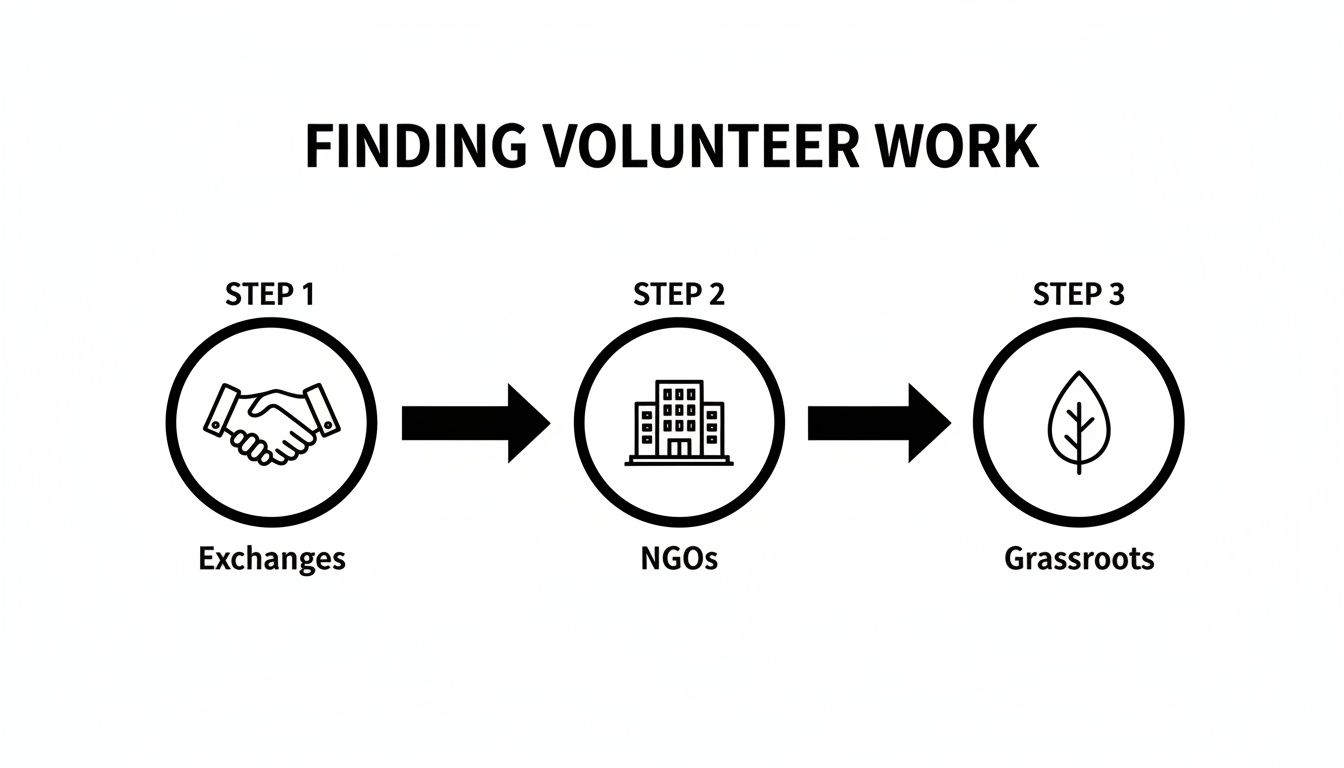
Each path offers a different balance of cost and immersion, so you can pick the one that really fits your budget and what you hope to get out of the experience.
Creative Funding Strategies That Work
Saving your own money is one side of the coin; raising funds is the other. Your volunteer journey is an inspiring story waiting to be told, and sharing it is a powerful way to gather the support you need.
Your passion is your greatest fundraising asset. People don't just contribute to a trip; they invest in your commitment to making a difference. Tell your story authentically, and you'll be amazed at the support you receive.
Think about launching a crowdfunding campaign on a platform like GoFundMe or FundMyTravel. The absolute key to a successful campaign is a compelling narrative. Don't just post, "Help me volunteer abroad." Instead, explain why this particular project in this particular place matters so deeply to you. What impact do you hope to have? Share updates along the way and make your supporters feel like they are part of your journey.
Beyond crowdfunding, start digging for travel grants and scholarships. You'd be surprised how many universities, foundations, and even government programs offer funding specifically for international volunteer work. A little bit of research can uncover opportunities you never knew existed. For instance, The Awesome Foundation gives out small grants for community projects—which could be a perfect match for your volunteer work.
This multi-pronged approach of saving smart, travel hacking, and fundraising is how you build a financial plan that doesn't just feel possible—it makes your dream an absolute reality.
Where to Actually Look: Using Vetted Platforms to Find Your Project
Knowing where to start your search is honestly half the battle. The internet is a huge, noisy place, and the right platform can be the difference between finding an incredible, life-changing opportunity and a frustrating, expensive dead end. Let's break down the best places to begin your hunt for a volunteer placement that feels right for you and your wallet.
Think of these platforms as your starting blocks. They are built to connect travelers directly with hosts and organizations, cutting out the costly middlemen that often inflate program fees.
Your Secret Weapon: Work Exchange Sites
If you want to slash your travel costs, work exchange platforms are an absolute game-changer. I’m talking about sites like Workaway, Worldpackers, and HelpX. The concept is beautifully simple: you trade a few hours of your time and skills each day for a place to sleep and, usually, food. Just like that, your biggest daily expenses are gone.
For a small annual membership—we're talking less than $50 in most cases—you unlock a world of possibilities. You could find yourself managing social media for an eco-lodge in Costa Rica, helping out at a yoga retreat in Portugal, or getting your hands dirty on a small farm in New Zealand.
The trick is to build a profile that showcases what you bring to the table. Are you great with kids? A whiz with web design? A passionate gardener? Highlighting your skills will make you stand out and help you land a spot that feels like a perfect fit, not just a random job.
Digging Through the Big Program Databases
Work exchanges are fantastic, but maybe you have something more specific in mind, like a structured conservation project or a community development initiative. This is where bigger databases like Go Overseas or Volunteer HQ come in handy. But you have to know how to navigate them.
Your best friend on these sites is the filter. Get comfortable with it. Sort every search by cost and actively look for "low-fee" or "no-fee" programs. These are often the hidden gems run by smaller, grassroots organizations that use these larger platforms just to get the word out.
Don't get distracted by the flashy, expensive programs that dominate the homepages. You have to dig a little deeper. The goal is to find projects where your fee goes directly into the local community and operations—not into a massive international marketing budget.
It takes a bit more effort, for sure. But the reward is finding an opportunity that’s not only affordable but also genuinely connected to the place and people you want to support.
Your Pre-Commitment Vetting Checklist
Okay, you’ve found a project that looks amazing. Don't click "apply" just yet. This next step is the most important one: vetting. This is how you protect yourself and ensure the experience will be safe, ethical, and everything you hope it will be.
Never, ever commit without doing your own homework. Here’s a checklist to guide you:
- Read Between the Lines: Don't just glance at star ratings. Dive deep into detailed reviews from past volunteers—and don't just stick to the program's website. Look for independent travel blogs. Pay attention to comments about communication, the reality of the day-to-day work, and the living situation.
- Ask Where the Money Goes: If there's a fee, ask for a breakdown. A transparent, ethical organization will have no problem telling you exactly how your money is used to support the project, pay local staff, and cover your own costs. If they're vague, that's a red flag.
- Talk to a Past Volunteer: This is a non-negotiable for me. Ask the organization if they can connect you with someone who has volunteered recently. Any legitimate program should be happy to do this. Prepare real questions: What was a typical day like? Did you feel supported? Did the experience match what was advertised?
For instance, Thailand is one of the most popular volunteer spots in the world for a reason. It's an incredible entry point for first-timers, with opportunities in elephant sanctuaries or teaching that can cost as little as $200-$400 a week, room and board included. Volunteers often get an insider’s look at the country, avoiding tourist traps for a truly authentic experience. You can find more great insights on how to volunteer on a budget from a seasoned traveler.
Taking the time to vet properly isn't just about avoiding scams; it's about finding a placement that truly aligns with your values and sets you up for an incredible adventure.
Getting Ready for an Adventure That Matters
The real journey begins long before you step on a plane. It starts with the prep work—the research, the planning, and the mindset shift that turns a simple trip into a life-changing experience. This is where you lay the groundwork to become a thoughtful, responsible global citizen, ready to step into a new world with confidence and respect.
From understanding local customs to looking after your own well-being, every bit of effort you put in now pays off in a huge way once you’re on the ground. Let's walk through the essentials that will not only keep you safe but also ensure your presence is a truly positive one.
First Things First: Your Health and Safety
Your well-being is everything. Without it, you can’t give your best to your project or fully enjoy the experience. A great first step is to book a visit with your doctor or a travel clinic at least two months before you fly. They’ll give you the rundown on any necessary vaccinations and can prescribe essentials like anti-malarials if you need them.
Beyond the clinic, safety is all about awareness. Do some digging into the local culture, especially around dress codes and social etiquette. Knowing what's expected goes a long way in showing respect and helps you navigate daily life smoothly. Many of the principles in our guide on staying safe as a solo female traveler are great advice for anyone traveling alone.
"True preparation for a journey is not packing your bags but opening your mind. It’s about learning to listen, observe, and adapt with grace and humility in a culture that is not your own."
A little bit of planning for the "what-ifs" brings incredible peace of mind. Make sure someone back home has your itinerary, keep both digital and paper copies of your important documents, and save local emergency numbers in your phone. Simple steps, but they make all the difference.
Making a Positive, Ethical Impact
This is the heart and soul of why you’re going. Being a responsible volunteer means your positive influence extends beyond your specific tasks. It’s about making conscious choices every day that support the local community and protect the environment you’re lucky enough to call home for a while.
You're not alone in this—you're part of a massive global movement. A staggering 860 million people volunteer their time each month, fueling a volunteer tourism market valued at €725 million in 2023. People are hungry for travel with purpose. If you want to dive deeper into the data, the UN's state of global volunteerism report is a fascinating read.
Here are a few simple ways to make sure you're a force for good:
- Shop and Eat Local: Skip the big chains and put your money directly into the hands of local families by supporting their businesses.
- Respect Cultural Norms: Learn a few basic phrases. "Hello," "please," and "thank you" in the local language work wonders. Dress appropriately for the culture, and always, always ask before taking someone's picture.
- Leave a Light Footprint: Be mindful of your water and electricity use. Pack a reusable water bottle and shopping bag to cut down on single-use plastics.
These might feel like small things, but they add up to show genuine respect for your host community and help preserve the beauty of the place you’ve come to serve.
Your Ultimate Pre-Departure Checklist
As your trip gets closer, it’s time to get organized. A good checklist will be your best friend, ensuring nothing important gets forgotten in the last-minute rush.
Documentation and Finances
- Passport & Visas: Check your passport. Is it valid for at least six months after you plan to return? Have you sorted out the correct visa for your destination?
- Flights & Insurance: Are your flight details confirmed? And have you bought a solid travel insurance policy that covers medical emergencies? Don't skip this one.
- Money Matters: Give your bank a heads-up about your travel dates to avoid any frozen cards. Plan on carrying a mix of local currency and a backup card, just in case.
Health and Packing
- Medical Kit: Put together a small first-aid kit with the basics: band-aids, pain relief, antiseptic wipes, and any personal medications you need.
- Smart Packing: Pack light, but pack smart. Versatile layers are key. Make sure you have clothes that are practical for your project and culturally appropriate.
- Digital Prep: Before you go, download offline maps (Google Maps and Maps.me are great), a translation app, and any helpful travel guides directly to your phone.
Checking these items off your list will calm any pre-travel jitters and let you board that plane feeling confident, excited, and ready for the adventure of a lifetime.
Got Questions About Affordable Volunteering? Let's Talk.
Stepping into the world of volunteering abroad is exciting, but let's be honest—it also brings up a ton of questions. That's completely normal. You're trying to figure out how to make a real difference without breaking the bank, and getting clear, straightforward answers is the best way to start.
Let’s dive into some of the questions I hear all the time. My goal is to give you the confidence to move forward and make this incredible dream a reality.
Are "Free" Volunteer Programs Actually Free?
This is probably the number one question I get, and it's a source of a lot of confusion. The short answer? Not really.
While there are some fantastic programs out there that don’t charge a fee to participate, "free" rarely means a zero-cost trip. Thinking otherwise is a common pitfall that can wreck your budget before you even leave.
A "free" program usually just means you aren't paying the organization for the placement itself. You're almost always on the hook for the big-ticket items.
- Flights: Your international airfare will likely be your single biggest expense.
- Visas: Depending on your destination, visa fees can run anywhere from $20 to over $200.
- Travel Insurance: This is absolutely non-negotiable. Don't even think about leaving home without it.
- Personal Spending: This is your budget for weekend side-trips, dinners out, souvenirs, and anything else not covered by the program.
The closest you'll get to an all-inclusive experience are work-exchange gigs, where you trade a few hours of work each day for a place to sleep and sometimes meals. Even then, you have to read the fine print and clarify exactly what's included to avoid any nasty surprises.
Do I Need to Be an Expert to Volunteer?
It really, truly depends on the project. So many opportunities are looking for your passion and a can-do attitude, not a fancy résumé. If you're looking at community development, helping out in a classroom, or general conservation work, they often value your enthusiasm, flexibility, and a solid work ethic more than anything else.
That said, some roles are highly specialized for a reason.
The most impactful volunteering happens when there's a perfect match between what a community truly needs and what a volunteer can authentically offer. Honesty about your skill set is the foundation of ethical service.
Think about it: medical clinics need licensed professionals, and engineering projects need qualified engineers. You wouldn't want someone without training building a bridge or giving medical advice in your hometown, and the same integrity applies when you're abroad. Be upfront about what you can and can't do, and you’ll find a project where you can make a genuine contribution.
How Do I Know if a Program Is Ethical?
This is the most critical question you can ask. Doing your homework to vet a program’s ethics is the most important part of this whole process. A good organization is transparent, sustainable, and deeply respectful of the community it serves.
Look for groups that are crystal clear about where your money goes. They should have deep roots and established partnerships with local leaders, not just fly in and out. They should be able to point to their long-term, sustainable impact. If you're ever unsure, our team is here to help; feel free to contact us for advice.
Here are a few massive red flags that should make you run the other way:
- Orphanage Volunteering: Just don't. Reputable international aid organizations strongly advise against it because it often fuels a harmful industry that can tear families apart for profit.
- Creating Dependency: Does the project empower locals to take over, or does it rely on a never-ending cycle of foreigners to stay afloat? The goal should always be to make the volunteer's role obsolete over time.
- Lack of Transparency: If an organization gets cagey when you ask about its finances or its impact metrics, that's a bad sign. Walk away.
Don't just rely on the testimonials they post on their own site. Dig deep for reviews from past volunteers on independent blogs and forums to get the real, unvarnished story.
At Travel Talk Today, we believe that travel should be both meaningful and accessible. We provide the tools and insights to help you plan an adventure that enriches your life and makes a positive impact on the world. Explore our resources and start designing a trip that truly matters. Find out more at https://www.packlight-journeys.com.