Nine of the world’s 10 most walkable cities are in Europe, and 45 of the top 50 are on the continent, according to Voronoi’s summary of research based on A universal framework for inclusive 15-minute cities. For travelers, that matters because a city that works on foot usually costs less, feels safer to explore alone, and reveals more of its real character between the headline sights.
Walking changes what you remember.
A cheap bakery on a side street in Krakow. A neighborhood market in Lisbon before the crowds build. A canal path in Amsterdam that never makes the standard itinerary. Those are the parts of a trip that stretch your budget and make solo travel feel less scripted.
This guide focuses on cities where walking is not just possible, but useful. Useful for keeping daily transport costs down. Useful for building a day around neighborhoods instead of ticket lines. Useful for travelers who want to spend the afternoon in a lived-in district, then keep going until sunset without needing three transit connections to get back.
There are trade-offs. Some cities are compact and flat. Some reward you with views, then charge for them in stair climbs and sore calves. Some historic centers are pleasant for an hour and crowded by noon. Others get better once you cross a bridge, leave the main square, or follow locals toward a market street.
These are the European cities I recommend for budget-conscious solo travelers who want more than landmark collecting. Each one supports the kind of trip that feels rich without requiring constant spending. Walk well, choose the right base neighborhood, and the city starts giving you free value all day long.
1. Copenhagen, Denmark
Copenhagen rewards walkers in a very practical way. The core neighborhoods sit close together, the terrain is flat, and a solo traveler can cover a full day’s route without burning money on short transit hops. That matters here, because accommodation and meals can get expensive fast.

Where walking pays off
For a budget-conscious stay, base yourself in Vesterbro or Nørrebro. Nyhavn is photogenic and worth an hour with your camera, but it is a poor place to build a low-cost trip around. Vesterbro gives you better-value cafés, bakeries, and grocery options. Nørrebro gives you long, interesting streets, secondhand shops, casual food, and a more local pace after dark.
The best first day on foot is neighborhood-based, not attraction-based. Start with coffee in Vesterbro, walk toward the lakes, continue into Nørrebro, then cut back toward the center by late afternoon. Finish on the waterfront or cross into Christianshavn if you want a quieter canal walk before dinner. It is an easy route to adjust if the weather turns or you stop often.
Copenhagen also works better if you borrow the city’s cycling logic, even when you stay on foot. Use the bridges, lake paths, and waterfront stretches. They are often more direct and much calmer than sticking to traffic-heavy streets.
Practical rule: Sleep one ring outside the postcard core. You will usually pay less, eat better, and see more of the city between major sights.
Best use of your budget
Copenhagen asks for discipline. It is one of the easiest cities in Europe to walk, but it is rarely one of the cheapest.
- Choose your base carefully: Vesterbro and Nørrebro usually make more sense than the central harbor area for solo travelers watching costs.
- Buy supermarket breakfasts: Coffee and pastry culture is excellent here, but doing that three times a day adds up quickly.
- Group paid sights by area: Central Copenhagen is compact enough that you can stack museums and historic stops into one walking loop.
- Save transit for specific moments: Arrival day, departure day, and one wet or windy stretch are usually enough.
The trade-off is clear. Copenhagen is gentle on your feet and hard on your wallet. Still, if you spend more time in neighborhood streets than in ticketed attractions, the city starts to feel surprisingly manageable for a solo trip.
2. Barcelona, Spain
Barcelona works differently. It isn’t gentle in the same way Copenhagen is. It’s bigger, louder, and more chaotic. But for solo travelers who like texture, few cities give you as much visual payoff per hour on foot.
The mistake is treating it as one compact historic center. Barcelona makes more sense as a series of linked walking districts. The Gothic Quarter gives you the medieval lanes. Eixample gives you order and breathing room. Gràcia feels residential and lived-in. Montjuïc changes the pace completely.
How to walk Barcelona without wasting energy
Base yourself in Eixample or Gràcia. That one choice fixes a lot. You’ll get better sleep, more local food options, and easier starts to each day. The Gothic Quarter is best visited, not necessarily lived in for a budget trip.
A practical route for a first full day looks like this:
- Morning start: Walk Eixample early while the streets still feel spacious and the façades are doing most of the work.
- Midday drift: Cut into the Gothic Quarter for narrow streets, smaller plazas, and a longer lunch than you planned.
- Late afternoon climb: Head toward Gràcia or save your uphill energy for Bunkers del Carmel on a clear evening.
- Night walk: Do an evening paseo when locals are out and the city feels less strained by daytime tourism.
Barcelona rewards people who understand when not to walk. Montjuïc, Park Güell, and higher viewpoints can turn a good strolling day into a punishing one if you stack too many climbs back to back. Use the metro when it protects your energy for the neighborhoods that matter.
Neighborhoods over landmarks
The city’s best walking moments often happen between the sights. A side street in Gràcia. A bakery line in the morning. The shift from grand Eixample blocks into the compressed medieval lanes. That contrast is the city.
Walk Barcelona early and late. Midday is for markets, long lunches, or one targeted sight. That rhythm makes the city feel better and costs less than powering through peak hours.
The trade-off is crowd pressure. Barcelona is one of the most rewarding cities on foot, but it’s also one of the easiest to misread. If you chase only major landmarks, you’ll spend the day weaving through other visitors. If you walk the neighborhoods instead, you’ll understand why it belongs on any serious list of the most walkable cities in europe.
3. Amsterdam, Netherlands
Amsterdam ranked 10th globally in a walkability ranking covered by Euronews. For a solo traveler on a budget, that tracks in practice. The historic center is compact, distances stay manageable, and a full day on foot can cover far more than the postcard canal views.
The mistake is staying too close to those postcard views.
Centrum is convenient, but it often costs more and gives less. Room rates rise, café menus get thinner on value, and the walking experience starts to feel crowded by midday. Jordaan, De Pijp, and Plantage usually work better for solo travelers who want local rhythm without giving up easy access. You still get a city made for walking, just with more breathing room and fewer tourist-priced stops.
Each area suits a different kind of day. Jordaan is best for slow canal-side wandering, small shops, and streets that still feel residential. De Pijp gives you better budget food options and more everyday energy, especially around Albert Cuypstraat. Plantage is the quiet pick, with broad streets, greenery, and a calmer pace if you want to reset after a busy day in the center.
A practical walking plan is simple. Start early in the canal belt, when the bridges are quiet and the streets feel almost local again. By late morning, shift outward instead of drilling deeper into the busiest core. Walk south into De Pijp for lunch, or east toward Plantage if you want a greener route. If the center starts to feel overworked, take the free ferry to Amsterdam Noord and keep walking there. It changes the mood of the day without adding transport costs.
Amsterdam rewards people who understand one trade-off clearly. A city that works beautifully for pedestrians also asks you to stay alert. Cyclists move fast, use dedicated lanes aggressively, and expect you not to drift into their path while checking maps or taking photos. For solo travelers, personal safety usually feels solid in busy areas. Street awareness matters more than street fear.
My rule here is straightforward. Spend money on the right neighborhood, not the most famous view.
- Best base for value: De Pijp, especially if you want cheaper meals and easy walks in multiple directions.
- Best early walk: The canal ring at the start of the day, before foot traffic builds.
- Best free detour: The ferry to Noord when you want a less polished, more everyday side of Amsterdam.
Amsterdam earns its place on this list because it is easy to use on foot and still rewarding once you leave the landmark loop. Walk a few streets beyond the souvenir zone and the city gets better, cheaper, and more memorable.
4. Lisbon, Portugal
Lisbon’s central neighborhoods look close together on a map. Your legs will disagree within the first hour. The city still works well on foot for budget solo travelers, but only if you plan around elevation instead of pretending the hills are a minor detail.
That is the trade-off. Lisbon gives you dense, atmospheric streets and neighborhood variety. It also makes you pay for every bad route choice in stairs, cobblestones, and slow climbs.
How to walk Lisbon without burning out
The most efficient approach is part walking, part restraint. Start high when you can. Let the city pull you downhill through the day. Save one uphill return for public transport, a tram, or a rideshare if your accommodation sits above the center. That single decision usually matters more than shaving a few euros off your room rate.
Alfama is where many travelers get Lisbon right or wrong. It is beautiful early, before tour groups and tuk-tuks thicken the lanes, and it rewards solo wandering because the details are small: laundry lines, tiled facades, sudden church squares, short viewpoints over the river. It also slows you down. The paving is uneven, the route logic is messy, and a short distance can take much longer than expected.
Chiado and Príncipe Real are easier to use as a daily base. You still get character, but the walking rhythm is calmer. Cafés, bookstores, miradouros, and side streets connect more naturally, which matters if you are traveling alone and want a neighborhood that feels active without being chaotic. Alcântara works better as a targeted detour, especially if you want a more local, creative stretch away from the postcard core.
A good Lisbon day starts with gravity on your side.
Best walking rhythm for a budget solo trip
Try Lisbon in layers, not as a checklist. Begin in Alfama or Graça early, while the streets still belong to residents and delivery vans. Walk downhill toward Baixa or Chiado for lunch, then spend the afternoon in one adjacent area instead of crossing the whole city. Finish at a miradouro near sunset, then return by tram or metro rather than forcing a final uphill march.
That pattern keeps transport costs low and energy high. It also gives you more time in the neighborhoods that make Lisbon memorable.
Safety is usually less about major risk than about timing and street choice. Busy restaurant streets and main pedestrian routes feel more comfortable at night than quiet stair corridors or poorly lit shortcuts. Solo travelers, especially women, often have a better experience here by choosing the lively route over the technically shorter one.
Lisbon earns its place on this list because walking here feels rewarding, not effortless. Travelers who respect the terrain get one of Europe’s richest street atmospheres for relatively modest daily costs. Travelers who treat it like a flat city usually end the day tired, off schedule, and wondering why the map lied.
5. Berlin, Germany
Berlin doesn’t feel walkable in the same way Prague or Venice does. It’s too spread out for that. But neighborhood by neighborhood, it’s one of the best cities in Europe to explore on foot, especially if your trip is built around culture, street life, history, and cheap food over classic monument-hopping.
The trick is not trying to “do Berlin” in one continuous march. Berlin works in chapters.
Walk Berlin district by district
Choose one area per half-day. Kreuzberg in the morning, Neukölln later. Friedrichshain one day, Charlottenburg another. That approach keeps the city human-sized.
Kreuzberg rewards wandering. You’ll get street art, Turkish food, canal edges, and the kind of side streets where Berlin still feels raw rather than staged. Friedrichshain is stronger for post-industrial atmosphere and long urban walks with visual grit. Neukölln is where budget travelers often find their rhythm, because it balances daily life, food value, and fewer polished tourism cues.
One of Berlin’s best walking experiences is the East Side Gallery. It gives you a long, linear route with clear historical weight. After that, the city makes more sense if you let neighborhood texture take over.
Budget reality and solo travel logic
Berlin usually works well for solo travelers because there’s little pressure to perform the city in a certain way. You can spend the day walking, eating cheaply, browsing bookstores, and sitting in public space without feeling like you’re missing the point.
- Best budget base: Neukölln if you want value and easy food options.
- Best first long walk: Kreuzberg into Friedrichshain with stops rather than a fixed checklist.
- Best energy-saving move: Use transit between districts, then walk throughout each one.
What doesn’t work is sleeping far out just to save a little money. Berlin is large enough that a bad base creates friction every day.
The trade-off here is scale. Berlin won’t give you the compact fairytale experience. It gives you freedom, layers, and neighborhoods that reward repeat visits. For many budget travelers, that’s the better deal.
6. Venice, Italy
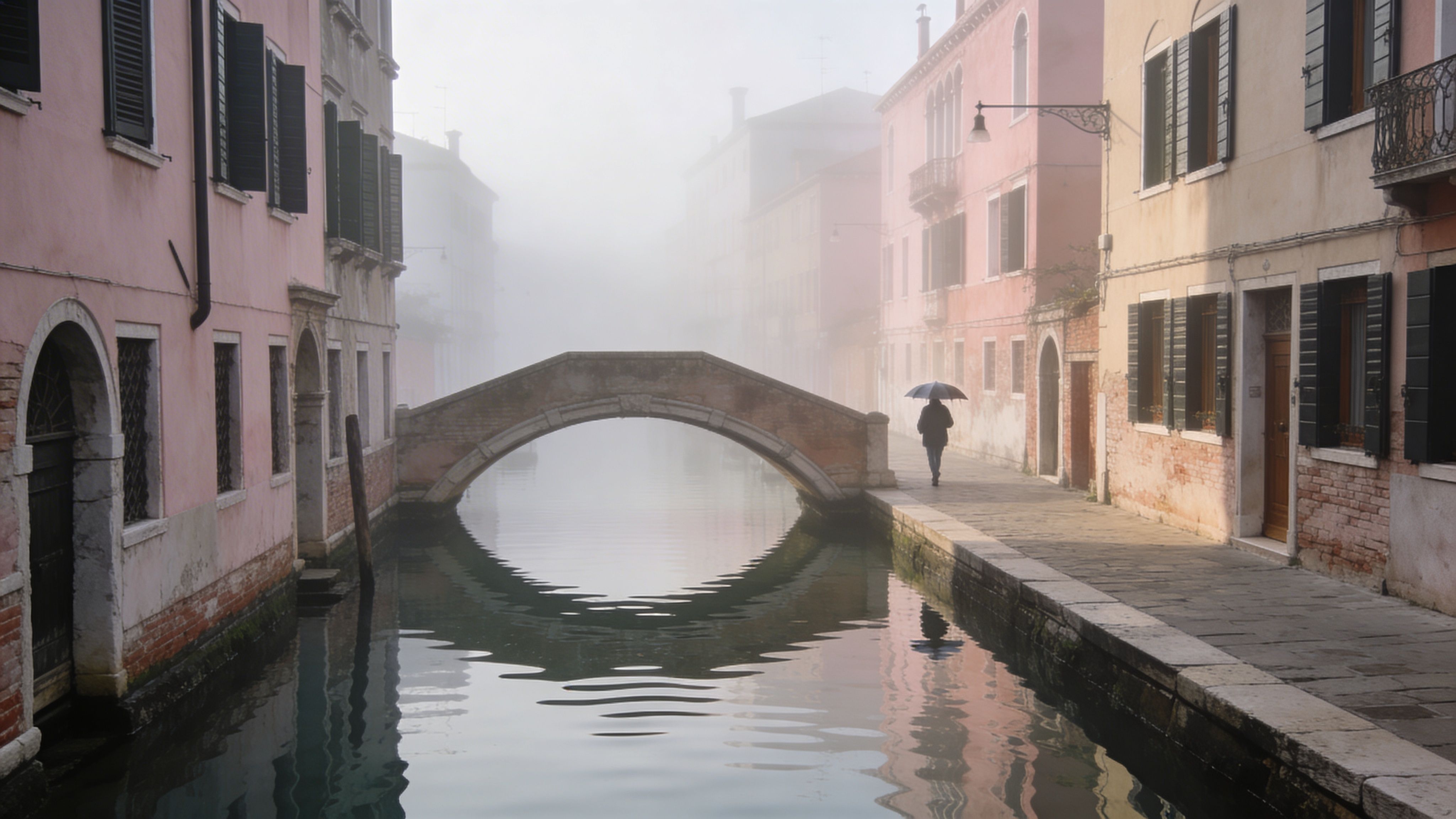
Venice is one of the few major European cities where walking is not a travel style choice. It is the default. Once you arrive, the day is shaped by footpaths, bridges, alleys, and how well you time the busiest corridors.
That makes Venice unforgettable for solo travelers, but it does not make it easy. A city built around pedestrians can still wear you out fast if you base yourself badly, hit St. Mark’s at peak hours, or assume every short-looking route is quick.
How to make Venice feel human again
The common mistake is spending the whole day on the San Marco to Rialto axis. That stretch is famous for a reason, but it also concentrates queues, tour groups, souvenir stalls, and bridge bottlenecks into a few exhausting hours.
Venice improves the moment you treat those landmarks as early anchors rather than all-day destinations. Start at dawn if you can. See St. Mark’s while the city is still quiet, cross toward Rialto, then move outward before mid-morning pressure builds.
Cannaregio is usually the smartest base for budget-conscious solo travelers. It has better odds of finding lower-cost stays than the prestige districts, calmer evening energy, and enough local life to make a simple walk for coffee or dinner feel like part of the trip instead of a transaction. Dorsoduro is stronger if you want longer, more open-feeling walks and a slightly less cramped rhythm.
Morning changes Venice.
I have found that the city feels almost twice as manageable before day-trippers fully flood the central lanes. The proportions make sense again. You notice laundry lines, delivery boats, tiny campi, and neighborhood bars opening up, not just the grand set pieces everyone photographs.
Budget and practical trade-offs
Venice can punish bad planning. Booking far from where you want to walk often saves less money than it seems once you factor in vaporetto costs, bag hauling over bridges, and the simple fatigue of repeated detours.
For solo travelers trying to keep costs under control, a good Venice day usually looks like this:
- Best neighborhood base: Cannaregio, for a better balance of price, food options, and lower evening pressure.
- Best first route: San Marco at dawn, then Rialto, then drift north or west into quieter residential streets.
- Best money-saving habit: Walk your main sestiere thoroughly and use the vaporetto selectively, not reflexively.
- Best reset point: A shaded campo or canal-side bench for 20 minutes. Venice rewards slower pacing more than checklist speed.
Accessibility is the hard reality here. Bridges, steps, and uneven surfaces can turn a short route into a frustrating one, especially with luggage or limited mobility. Even travelers who love the city on foot should be honest about that constraint before choosing it as a low-stress stop.
Venice works best when you narrow the frame. One well-walked sestiere, one unhurried meal, and one early start will usually give a better day than trying to cover the entire city.
7. Krakow, Poland
Krakow rewards budget-minded walkers in a way few European cities do. You can base yourself in a central neighborhood, cover a lot on foot, eat well without constant price checks, and still feel like you are in a city with real architectural weight.
For solo travelers, that matters. Krakow is easy to read, easy to break into manageable walking zones, and easier to afford for three or four days than many better-known city breaks in Western Europe. It also feels social without demanding that you spend heavily. A long coffee in Kazimierz, a riverside walk, and a simple lunch can fill half a day without draining your budget.
Why Krakow works so well on foot
The city center has clear anchors. Main Market Square gives you instant orientation, the Planty park ring helps you reset your bearings, and the streets connecting the Old Town to Kazimierz are straightforward enough that solo travelers rarely feel trapped in a maze.
The better Krakow day starts once you leave the postcard core.
Kazimierz is still the strongest district for independent travelers. It has enough activity to feel safe and lived-in, but it is less performative than the area around the main square. You get bakeries, late cafés, small bars, courtyards, and side streets that hold your attention between landmarks. Podgórze adds another layer. Crossing the river gives you a quieter, more residential rhythm, which is often exactly what long-term budget travelers want after an hour or two in the center.
Public transport helps without taking over the experience. Trams are cheap enough that you can save your energy for the best walking stretches, then ride back later instead of forcing a tired return on foot.
Best rhythm for solo travelers
The smartest base is usually Kazimierz. It gives you better value, better evening food options, and a smoother balance between sightseeing and actual neighborhood life.
A practical Krakow day looks like this:
- Morning: Start at Main Market Square early, then use the smaller surrounding streets before the center gets crowded.
- Midday: Walk south into Kazimierz for lunch and a slower loop through its back streets, churches, and squares.
- Late afternoon: Follow the Wisła river or cross into Podgórze if you want a calmer, less tourist-heavy stretch.
- Evening: Return through busy, well-lit routes and use the tram if the weather turns or your feet are done.
Krakow’s main trade-off is seasonality. Cold, damp days can shorten your walking window fast, and winter air quality can be a factor on some days. Still, outside peak summer, the city often feels better value, less crowded, and more local. For solo travelers watching costs, that is usually a fair exchange.
8. Porto, Portugal
Porto rewards walkers who can handle hills. Distances stay short, but the effort adds up fast because the city keeps pulling you from river level to ridge streets, then back again.
For a solo traveler on a budget, that matters more than a generic “walkable city” label. Porto can save you money because many of its best moments come between the headline sights. Miradouros, tiled side streets, church steps, local bakeries, and the quieter lanes west of the center cost little or nothing. The trade-off is physical. A route that looks simple on the map can feel much longer once cobbles, staircases, and steep grades start stacking up.
That is why Porto works best with a clear daily shape.
Where Porto feels best on foot
Ribeira gives you postcard views and easy river access, but prices around the waterfront usually run higher and the area stays busy deep into the evening. Cedofeita is often the smarter base for solo travelers who want better value, solid café options, and a neighborhood you can use between sightseeing blocks. Miragaia suits travelers who want a quieter stay and slower mornings, though the terrain still asks something from your legs.
The practical rule is simple. Start high, end low.
Begin around Cedofeita, Igreja do Carmo, or Clérigos while your energy is fresh. Drift downhill through Vitória toward Ribeira, then follow the Douro when you want a flatter stretch. If you keep zigzagging uphill and downhill all day, Porto stops feeling charming and starts feeling like leg day in wet stone streets.
Best rhythm for solo travelers
A strong Porto day looks like this:
- Morning: Start in Cedofeita or near Clérigos, before the steep streets feel like work.
- Midday: Walk downhill through smaller lanes in Vitória, stopping for a bakery or fixed-price lunch away from the riverfront.
- Late afternoon: Reach Ribeira, then continue along the Douro for your easiest walking stretch of the day.
- Evening: Stay low if your feet are done, or take transit back uphill instead of forcing one more climb.
Shoes with grip matter here more than in flatter cities on this list. So does pacing. Wet pavement changes the city immediately, especially on polished stone and older steps. Travelers who try to “see everything” in one loop usually end the day exhausted and spend more on taxis or rides they could have avoided with a better route.
Porto’s edge is atmosphere. You do not need a packed landmark checklist to get value here. Some of the best hours come from walking residential blocks, pausing at viewpoints, and letting the city unfold downhill toward the river. If you respect the terrain, Porto gives solo travelers a lot of beauty for relatively little money.
9. Prague, Czech Republic
Prague is one of the easiest cities to love quickly. That’s both its appeal and its trap.
The historic core is compact, beautiful, and highly legible. Charles Bridge, Old Town, the castle district, river walks, and hilltop viewpoints all pull you in. But the best version of Prague isn’t the one where you spend all day in the densest medieval lanes.
How to keep Prague from feeling overrun
Time your iconic walks aggressively. Charles Bridge at dawn feels like a privilege. Later, it can feel like a queue with scenery. Old Town Square is worth seeing, but not worth orbiting for hours.
The save is to widen your map. Vinohrady gives you a more local rhythm. Letná offers views without the same intensity of crowding. Smíchov and Žižkov can make the city feel livable rather than staged.
Prague also becomes a better budget trip. You stop paying premium prices around the most famous streets and start eating, drinking, and walking where the day feels less extracted.
Practical route for a strong first day
Try this order. Cross Charles Bridge early. Continue uphill while your energy is high. Wander near the castle but don’t stay pinned there. Then descend through quieter streets and finish with a long river walk or head toward Vinohrady for dinner.
What works in Prague is layering spectacle with relief. One grand view, one normal neighborhood, one beer, one river segment, one church tower, one side street. Repeat.
What doesn’t work is sleeping in Old Town if you’re on a budget and want actual rest.
Prague’s trade-off is popularity. It’s still one of the most walkable cities in europe for travelers who want beauty at almost every turn, but you have to keep escaping your own itinerary before the city starts performing only for visitors.
Top 9 Walkable European Cities Comparison
| City | 🔄 Implementation complexity | ⚡ Resource requirements | 📊 Expected outcomes | 💡 Ideal use cases | ⭐ Key advantages |
|---|---|---|---|---|---|
| Copenhagen, Denmark | High, coordinated policy, large-scale bike infrastructure | Moderate‑high, extensive bike lanes, transit integration, upkeep | Very high modal shift to cycling; lower car use; sustainable tourism | Bike-centric city trips, sustainable urban mobility, safe solo travel | World-class cycling network; compact neighborhoods; safe and sustainable |
| Barcelona, Spain | Medium, blend of historic fabric and modern grid planning | Medium, metro/bus support, pedestrian zones, crowd management | High cultural discovery; beach + city access; seasonal crowding | Architecture and neighborhood exploration, budget food tours, evening paseos | Gaudí landmarks, grid walkability, strong café/plaza culture |
| Amsterdam, Netherlands | Medium, preservation of canals + cycling-first policies | Moderate, canal maintenance, bridges, bike infrastructure | High walk & cycle usability; scenic routes; tourist peaks | Canal-side wandering, photography, budget solo travel | Iconic canals and bridges; safe cycling; compact center |
| Lisbon, Portugal | Medium‑high, hillside terrain with tram integration | Low‑medium, trams, stairways, viewpoint maintenance | Authentic, affordable exploration but physically demanding | Hillside discovery with tram-assisted returns, offbeat neighborhoods | Very affordable; rich local culture; memorable viewpoints |
| Berlin, Germany | High, large urban area requiring transit + district planning | High, extensive U-/S‑Bahn network, neighborhood services | Strong neighborhood-level exploration; diverse cultural finds | Urban exploration, street art, nightlife, long neighborhood hops | Affordable, vibrant creative scenes, distinct district personalities |
| Venice, Italy | Very high, unique pedestrian+water system and flood control | High, vaporetto network, flood defenses, heritage upkeep | Unique car-free experience; severe peak overcrowding and seasonal flooding | Off‑peak immersive walks, island day trips, architecture focus | Entirely pedestrian core; unparalleled historic ambiance |
| Krakow, Poland | Low, compact medieval core with simple pedestrian zones | Low, pedestrian maintenance, modest transit support | High authenticity and affordability; easy short walks | Budget cultural trips, Jewish heritage tours, compact sightseeing | Extremely affordable; compact Old Town; rich history |
| Porto, Portugal | Medium, steep topography with stair and route planning | Low‑medium, stair upkeep, signage, limited transit links | Scenic and authentic but physically taxing walks | Adventurous budget travelers, photographers, riverfront routes | Dramatic river views, UNESCO Ribeira, strong local food/wine scene |
| Prague, Czech Republic | Medium, multiple centers and historic preservation needs | Medium, preservation, tram support, crowd management | Very photogenic walking experience; heavy tourist congestion at peaks | Fairy‑tale sightseeing, early-morning photography, castle-to-river walks | Iconic medieval architecture, compact centers, enjoyable beer culture |
Your Next Step Choosing Your Walkable Adventure
True walkability isn’t just about how many landmarks fit into a short radius. It’s about whether a city keeps inviting you onward. One more bridge. One more square. One more bakery. One more neighborhood you hadn’t planned to see.
That’s why the best city for you depends less on rankings and more on the kind of walking day you enjoy.
Choose Copenhagen if you want ease. It’s the city for travelers who like clean design, clear routes, and days that unfold without friction. It suits first-time solo travelers well because the movement itself feels intuitive.
Choose Barcelona if you want energy and contrast. It’s best for travelers who don’t mind some noise and complexity in exchange for constant visual reward, neighborhood variety, and late-day street life.
Choose Amsterdam if you want beauty with very little effort. It gives you one of the simplest formulas for a satisfying day on foot. Canal, café, market, bridge, repeat. It’s especially strong for shorter trips where you want the city to reveal itself quickly.
Choose Lisbon if you enjoy cities that make you work a little. It rewards patience, route planning, and a willingness to build your day around terrain. If you like viewpoints, layered neighborhoods, and a little unpredictability, Lisbon sticks.
Choose Berlin if your ideal walking trip has less to do with monuments and more to do with atmosphere. Berlin is for people who want bookstores, street art, low-key food stops, and districts that feel like separate worlds.
Choose Venice if you care about mood above all else. Go if you’re willing to wake early, wander slowly, and let the side streets matter more than the bucket-list checklist. Don’t go expecting efficiency.
Choose Krakow if you want value without sacrificing beauty. It’s one of the easiest recommendations for budget-conscious solo travelers who want history, manageable scale, and a city that still feels comfortable to inhabit after the day-trippers thin out.
Choose Porto if you want a walking city with drama. It gives you steep streets, river views, tiled facades, and some of the best visual payoffs on this list. Just don’t confuse short distances with an easy day.
Choose Prague if you want classic European atmosphere and you’re prepared to dodge the obvious crowds. It still delivers. You just need to step beyond the most photographed lanes often enough to keep the experience fresh.
Across all nine, one pattern holds. The best walking cities aren’t just convenient. They help you travel better. You spend less on short rides. You notice more. You eat where you happened to be, not where an itinerary forced you. You become part of the city’s rhythm instead of just moving across its surface.
Use the rankings as a starting point. Then choose the place whose trade-offs you’re happy to accept. Flat and expensive. Hilly and atmospheric. Compact and crowded. Gritty and spread out. Every great walking city asks something of you and gives something back.
At Travel Talk Today, that exchange is the point. The best European trip often isn’t the one with the most tickets or the fastest route. It’s the one where your feet keep carrying you somewhere better than what you planned.
Travel Talk Today helps you turn that kind of trip into something practical. Visit Travel Talk Today for more budget-focused city guides, solo travel advice, neighborhood-based itineraries, and smarter ways to explore Europe slowly, safely, and affordably.