You've got two days in Washington, D.C. By the time you pin the White House, the Capitol, a few Smithsonian stops, Georgetown, and one “hidden gem” list from social media, the trip can start to look like a forced march.
A short D.C. visit works better when you stop treating it like a checklist. The city rewards travelers who build around a few strong anchors, then leave space for a neighborhood, a long walk, a market, or a café break that was not in the original plan.
That is the approach here. Use these stops as building blocks, not rules. Pair the landmarks with places where Washington feels lived-in. Spend one morning on the Mall, then trade an afternoon museum for Georgetown streets, Eastern Market, U Street, or a quiet stretch of Rock Creek Park depending on your pace and interests.
I like D.C. for short trips because it gives you real flexibility. You can do a lot without spending much, especially if you mix monuments, public spaces, and free museums with one or two neighborhoods that show the city beyond federal marble. If you build trips around culture without stacking up ticket costs, this guide to free things to do while traveling fits the same mindset.
The goal is simple. Leave with a version of Washington that fits you, whether that means first-time highlights, African American history, food and street life, or a slower weekend with room to wander.
1. The National Mall & Memorial Parks Free Walking Tour
Start here if this is your first trip and you want a strong read on Washington in a single sweep. The National Mall gives you the city's headline sights, but a key advantage is how efficiently you can connect them on foot. That matters on a two-day trip, because every unnecessary detour eats into museum time, rest time, or a neighborhood stop later.
The Mall works best as a flexible block, not an all-day attempt to conquer everything. Build it around two or three priorities, then let the rest of the route fill in naturally as you walk. Travelers who enjoy cities that reveal themselves best on foot usually do well here, for the same reason they look for walkable city breaks built around neighborhoods and landmarks.
How to make the Mall work in real life
Choose one direction and keep your day simple. I usually recommend starting near the Capitol if you want a cleaner morning rhythm, then moving west with one museum stop before the memorials. The reverse can work too, especially if sunset at the Lincoln Memorial matters more to you than an early museum entry.
Pacing is the trade-off.
If you stack too many Smithsonian stops, the monuments blur together and the day turns into security lines, map-checking, and tired feet. A better plan is one focused museum, maybe two if your interests are narrow and you move quickly, then a long outdoor stretch that leaves room to absorb the place.
Budget-wise, this is one of the best-value parts of the city. You can fill half a day, or more, with major memorials, public space, and free museum time. If you like trips that keep costs low without stripping out culture, this roundup of free things to do while traveling matches that approach.
Practical rule: One museum you actually remember is better than several rushed stops.
A good baseline route looks like this:
- Start early near the Capitol or Smithsonian side: Mornings are cooler, quieter, and easier on your feet.
- Pick one anchor museum: The National Museum of American History, Natural History, or Air and Space can each justify a focused visit on their own.
- Pause for a simple lunch: Museum cafés are convenient, but carrying a snack and water gives you more freedom.
- Save the memorial-heavy stretch for later light: The Lincoln Memorial, World War II Memorial, and surrounding paths feel better when the glare softens and the crowds spread out.
- Leave margin in the schedule: The best short D.C. itineraries have room for an unplanned bench stop, a longer look at a memorial wall, or a museum exhibit you did not expect to care about.
Solo travelers often find the Mall easy to handle because the route is intuitive and busy without feeling chaotic. Slow travelers can treat it differently. Sit on the grass for a while, step into one museum in a deliberate way, then continue only if the day still feels good. That approach usually leads to a better Washington memory than trying to cover every headline sight before dark.
2. Georgetown Walking Tour Historic Streets & Local Cafés
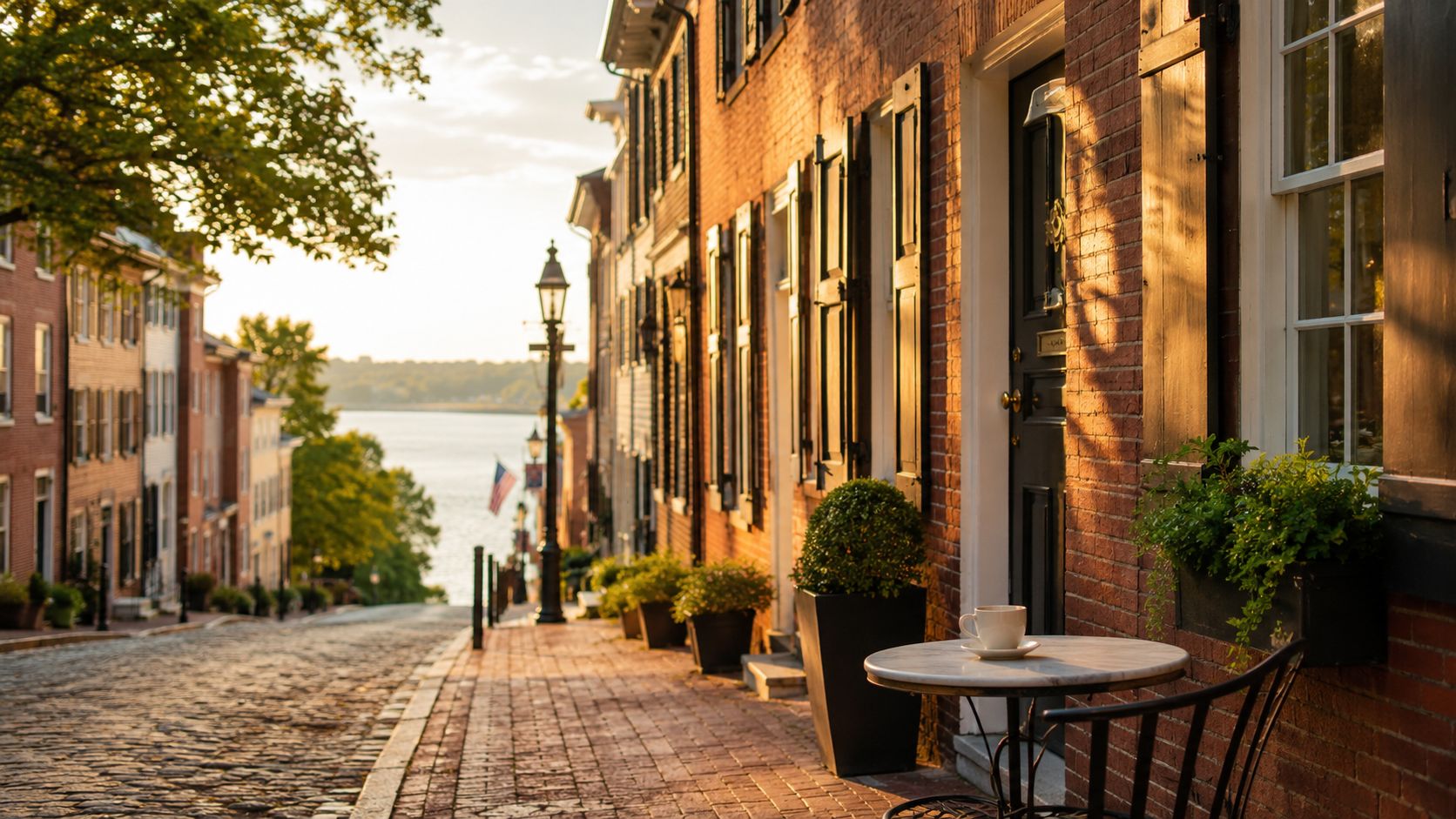
Georgetown is what I recommend when someone says, “I want D.C., but I don't want only government buildings.” It gives you texture. Brick row houses, side streets worth wandering, waterfront air, and cafés where you can sit long enough to stop feeling like you're on a checklist.
It also balances the emotional tone of the city. After a day of memorials and museums, Georgetown feels lived-in rather than ceremonial.
Best way to use Georgetown in a short trip
This neighborhood works best as a late afternoon and evening block. You don't need a rigid route. Walk M Street if you want energy, then step off it quickly if you want charm. The quieter streets are where Georgetown becomes memorable.
A budget traveler can treat it as a window-shopping and walking stop, then keep dinner casual. A solo traveler often does well here because there's plenty of foot traffic and enough activity to feel comfortable without having to plan every minute. If you enjoy cities where walking reveals the city's character more than the landmarks do, this piece on walkable urban travel taps into the same appeal.
Try this loose rhythm:
- Arrive before sunset: The neighborhood looks best when the light warms up the brick facades.
- Walk beyond the main drag: Streets like P, Q, and N feel calmer and more personal than the busiest commercial stretch.
- Use the waterfront as your pause button: If the day has been packed, the Potomac path gives you room to exhale.
Georgetown is where you remember Washington is a city people actually live in, not just a place people visit.
For slow travelers, this can be the anchor neighborhood of the whole trip. For faster-moving visitors, it's the ideal counterweight to the National Mall. Either way, it adds humanity to a capital-city weekend.
3. The Lincoln Memorial & Tidal Basin Cherry Blossoms Seasonal
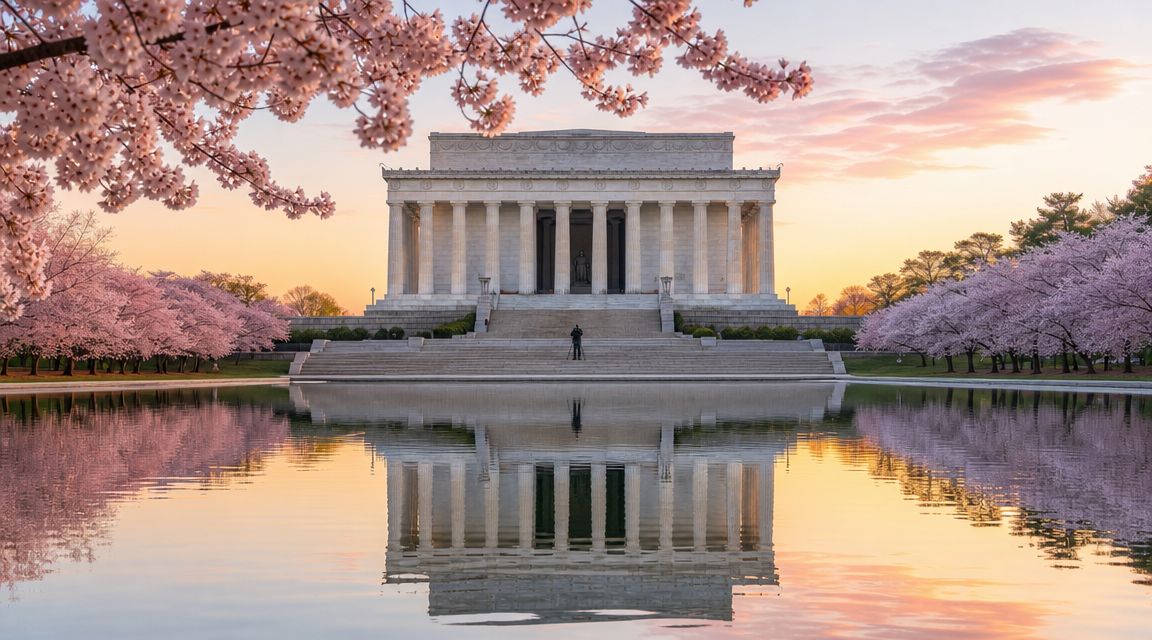
Some places deserve the hype. The Lincoln Memorial is one of them. It lands differently in person because the scale, the steps, and the long sightline over the Reflecting Pool all work together. Even travelers who swear they're “not into monuments” usually go quiet here.
Pair it with the Tidal Basin if you want your itinerary to feel less stone-heavy. In blossom season, this area turns cinematic. Outside that window, it's still one of the best walks in the city.
When this stop is worth your prime hours
If you're visiting in spring, make this a dawn or near-dusk play. Midday crowds flatten the mood. Early hours are better for photos, but also for space to experience the place.
The Tidal Basin also helps first-time visitors link several major memorials without overcomplicating the route. You can move through Lincoln, the nearby memorial zone, and then continue toward Jefferson, FDR, or MLK Jr. if your energy holds.
Travel styles matter here:
- Photographers: Go early and keep expectations realistic during blossom season. Patience matters more than perfect angles.
- Budget travelers: This is one of the easiest high-impact experiences in the city because the walk itself is the attraction.
- Slow travelers: Sit for a while. The views shift with light, weather, and crowd levels.
If your trip falls in spring, it's worth reading broader seasonal ideas for the best places to travel in spring, because timing changes the feel of a destination as much as the destination itself.
What doesn't work is forcing this into the hottest, busiest part of the day after you've already done miles on the Mall. Save it for when the light helps you and your feet don't hate you.
4. Library of Congress & U.S. Capitol Building Guided & Self-Guided Tours
A lot of first-time visitors treat Capitol Hill as a box to check. That usually undersells it. Done well, this stop gives your itinerary a clear anchor: one part civic history, one part architectural beauty, and enough flexibility to fit different travel styles.
The practical move is simple. Book the fixed-time piece first.
Capitol tours run on a schedule, and that scheduled entry should shape the rest of your day. Build the flexible pieces around it, not the other way around. If your tour is late morning, use the early hours for coffee and a short walk on Capitol Hill. If it lands in the afternoon, put the Library of Congress before it. That approach works especially well in a short trip because it protects you from wasting time on cross-city backtracking.
The Library of Congress pairs naturally with the Capitol because it offers a different pace. The Capitol is structured and security-heavy. The Library feels more reflective, and for many travelers, it ends up being the bigger surprise. Even a self-guided visit can carry this stop if guided availability is limited.
I usually recommend this area to travelers who want one block of the trip to feel unmistakably Washington, not just generically museum-rich. It also fits the article's broader case for authentic travel experiences that connect landmarks with local context. You are seeing national institutions, but you are also stepping into a working part of the city with its own rhythm, staffers on lunch break, and quieter residential streets nearby.
A few trade-offs matter here:
- Choose this over another major museum if you want your 2 days in Washington DC itinerary to include government, architecture, and a stronger sense of place.
- Keep your bag light because security lines move faster when you are not carrying extra gear.
- Bring photo ID and arrive with a buffer. Federal buildings are not forgiving about late, rushed entries.
- Have a backup plan in case tickets do not line up. The Library of Congress, the Capitol grounds, and a short Capitol Hill walk still make this area worth the trip.
This stop works best for history-minded travelers, but it is not only for policy wonks. Solo travelers get a structured, low-stress visit. Couples get one of the city's most visually satisfying interiors. Slow travelers can pair it with time on nearby neighborhood streets instead of forcing in another headline attraction. That flexibility makes it one of the strongest building blocks in the city.
5. U Street Corridor & Howard University Area Emerging Neighborhood & African American Heritage
The monuments tell one version of Washington. U Street tells another. It's musical, layered, political, local, and strongly tied to African American history. If you want a trip that doesn't stop at federal symbolism, spend part of an evening here.
This is also where the city feels less curated for visitors. You're not moving through a national stage set. You're stepping into a neighborhood with its own rhythm.
Why this belongs in a meaningful DC trip
U Street and the Howard area work best when you approach them with curiosity instead of a fixed script. Walk in daylight first if you're unfamiliar with the area. Notice the murals, read the blocks, and let the place register before you decide where to eat or spend the evening.
Solo female travelers often prefer that approach because it lets them get comfortable with the neighborhood before dark. Groups usually have more flexibility at night, especially if live music is the goal.
A strong version of this stop might include:
- A daytime walk: Street art, historic context, and a feel for the area.
- A culturally rooted meal: Choose a place with staying power over whatever's most aggressively marketed.
- A performance or casual evening stop: Music and conversation fit this neighborhood better than speed-sightseeing.
If you're trying to build a trip around local texture rather than landmark accumulation, these ideas for authentic travel experiences line up closely with what U Street offers.
Some of the most memorable hours in Washington happen nowhere near the Mall.
What doesn't work is dropping in for fifteen minutes just to say you went. Give this area enough time to breathe. Even one unrushed evening here can rebalance a trip that has been all marble, flags, and museum lighting.
6. The Smithsonian National Museum of Natural History Focused Visit
A short DC trip can go sideways fast inside a major museum. You walk in for one hour, look up, and half the day is gone. The National Museum of Natural History is still one of the smartest picks on a two-day itinerary because the entry cost is zero, the collection is visually strong, and you can shape the visit around your actual interests instead of forcing a full sweep.
The mistake is trying to cover everything.
A better approach is to treat this stop as a focused block, not an all-day assignment. Pick two or three exhibit zones before you enter. Gems and minerals, dinosaurs and fossils, human origins, and ocean life are usually the easiest anchors. If one of those is your clear priority, go there first while your attention is fresh and the museum still feels manageable.
This stop works differently depending on your travel style:
- Solo travelers: Move at your own pace and stay longer only where your curiosity holds.
- Budget travelers: Get a high-value museum visit without paying for a major-ticket attraction.
- Families or mixed-interest groups: Split up for a short stretch, then regroup at a set time instead of negotiating every gallery together.
I usually budget about two focused hours here, sometimes a little more if the museum is part of a weather backup plan. Past that point, returns drop. Feet get tired, labels start blending together, and even the famous rooms lose some impact.
Pairing this museum with time outside makes the day stronger. A morning visit followed by lunch and an afternoon walk gives you both sides of Washington: the institutional grandeur and the lived-in rhythm beyond it. That same travel instinct, choosing a concentrated cultural stop and then getting back out into the city, is part of what makes a good local market experience feel so revealing.
If you want this itinerary to feel personal rather than prepackaged, use the museum as a building block. Go in with a plan, leave before museum fatigue sets in, and save your energy for the neighborhood-based parts of DC that show a different side of the city.
7. Eastern Market Saturday Farmers Market & Neighborhood Culture
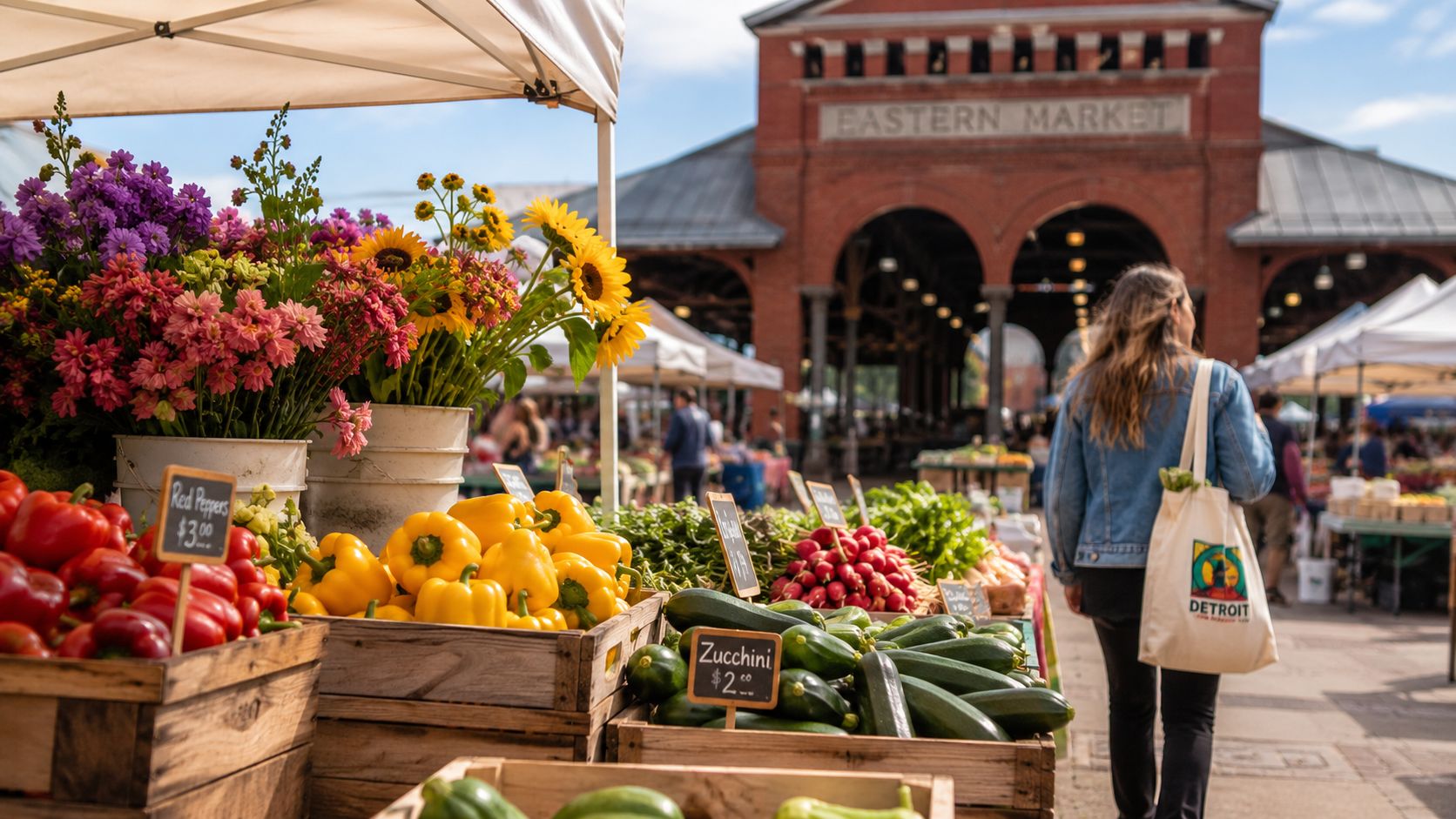
If your trip includes a weekend morning, Eastern Market is one of the smartest swaps you can make. It gives you local life without requiring a full detour, and it pairs naturally with Capitol Hill.
Markets are useful in short itineraries because they solve several problems at once. You can eat, browse, people-watch, and get a feel for the city in one stop.
The best travelers' market move in DC
Go hungry, but not in a rush. Eastern Market rewards wandering more than efficiency. Pick up breakfast or snacks, then walk the surrounding streets before the day gets crowded and hot.
For budget-conscious travelers, this can be more than a pleasant detour. It's a smart place to assemble a picnic and avoid another expensive sit-down meal near major sights. If you enjoy seeing how markets reveal local habits better than major attractions do, this story about the market culture in Aix-en-Provence captures a similar travel instinct.
A few ways different travelers use it well:
- Budget travelers: Buy food for later and reduce restaurant pressure for the rest of the day.
- Solo travelers: Ease into the morning somewhere social and low-stakes.
- Photographers: Focus on textures, signs, produce, and neighborhood detail instead of trying to force “landmark” shots.
Markets are where a city drops the performance and gets on with everyday life.
This stop won't replace the headliners, and it shouldn't. What it does is make your 2 days in Washington DC itinerary feel less interchangeable with every other first-timer's weekend.
8. Woodley Park & Rock Creek Park Outdoor Recreation & Hidden Oasis
When Washington starts feeling too formal, head for Rock Creek Park. It resets the trip. Trees, trails, creek sounds, and a version of the city that has nothing to prove. If your first day was all government grandeur, this is the place that loosens your shoulders.
Woodley Park gives you an easy access point, plus cafés nearby if you want a slow start or soft landing.
Use this as your pressure-release valve
Not every traveler needs another museum. Sometimes what saves a short city break is unstructured time. Rock Creek Park is ideal for that, especially if you've overloaded the rest of your itinerary with timed entries and long walks on pavement.
This area is a strong fit for several travel styles:
- Backpackers: Free outdoor time keeps the trip balanced and affordable.
- Solo travelers: Daylight walks on active paths offer space without isolation.
- Families or couples: The zoo nearby can be combined with park time for a less rigid half-day.
The Smithsonian's broader network also includes the National Zoo, which helps explain why this part of the city can work so well as a green counterpoint to the monument core. If your energy is fading by day two, choosing the park instead of one more indoor stop is often the better call.
What doesn't work is cramming this in as an afterthought. Give yourself enough time to slow down. Washington isn't only at its best when it's monumental. It's also good when it's leafy, quiet, and unexpectedly gentle.
2-Day Washington, D.C.: 8-Stop Comparison
| Attraction | Complexity 🔄 | Resources & Cost ⚡ | Expected Outcomes 📊 | Ideal Use Cases ⭐ | Key Advantages & Tips 💡 |
|---|---|---|---|---|---|
| The National Mall & Memorial Parks (Free Walking Tour) | Moderate, large walkable area, many sites, potential long queues | Low monetary cost (free museums) but time‑intensive; pack water; timed free tickets may be required | Broad historical and cultural overview; many photo opportunities; possible museum fatigue | First‑time DC visitors, budget cultural travelers, photographers | Free world‑class museums; prioritize 2–3 sites; arrive at openings to avoid lines |
| Georgetown Walking Tour (Historic Streets & Local Cafés) | Low, neighborhood strolls, minimal logistics; parking/transit can be tricky | Low to moderate, free to explore; dining/shopping can be pricey; limited direct Metro access | Intimate neighborhood feel, strong photo ops, relaxed slow travel experience | Slow travelers, foodies, shoppers, solo explorers | Visit mid‑week; use M4 bus; explore side streets and golden hour for best photos |
| Lincoln Memorial & Tidal Basin Cherry Blossoms (Seasonal) | Moderate, easy access but timing and crowd management critical during bloom | Low cost (free access); peak season requires early arrival and patience | High visual/seasonal impact; iconic monument experience; short peak window for blossoms | Photographers, seasonal visitors, reflective/short visits | Visit before 8 AM during bloom; check festival bloom predictions; combine nearby memorials |
| Library of Congress & U.S. Capitol Building (Guided & Self‑Guided) | Moderate‑High, advance bookings, security screening, scheduling constraints | Low monetary cost (free tours) but needs advance planning, ID, and time for security checks | Deep civic and architectural insight; access to rare collections and legislative spaces | History buffs, architecture enthusiasts, civics‑focused travelers | Book Capitol tours weeks ahead via representatives; bring photo ID; expect security lines |
| U Street Corridor & Howard University Area (Emerging Neighborhood) | Low, neighborhood exploration; evening planning for performances | Low to moderate, affordable dining and events; Metro access (U Street station) | Authentic cultural immersion, live music, and community‑centered experiences | Music lovers, cultural travelers, supporters of Black‑owned businesses | Attend daytime first, then evening shows; check venue schedules and support local vendors |
| Smithsonian National Museum of Natural History (Focused Visit) | Low, indoor, self‑guided; best as a focused 3–4 hour visit | Low cost (free entry); allocate 3–4 hours; museum app recommended | High educational value with iconic exhibits (Hope Diamond, fossils) | Families, science enthusiasts, solo learners | Arrive at opening; prioritize 3–4 exhibits; use the museum app to avoid crowds |
| Eastern Market (Saturday Farmers Market & Neighborhood Culture) | Low, simple market visit; timing (Sat morning) affects selection | Low cost to browse; purchases extra; bring cash and reusable bags | Local foodie experience, good value meals, neighborhood interaction | Sustainable travelers, foodies, budget travelers | Arrive early (7–8 AM); bring small bills and bags; sample before buying |
| Woodley Park & Rock Creek Park (Outdoor Recreation & Hidden Oasis) | Moderate, trail navigation and outdoor planning required | Low cost (free park and many activities); bring supplies; zoo can be crowded | Outdoor recreation, wildlife viewing, picnic and nature photography opportunities | Outdoor enthusiasts, families, photographers seeking green spaces | Download trail maps, visit spring/fall, pack water and picnic from local markets |
Your DC Itinerary, Your Way
The best version of a 2 days in Washington DC itinerary isn't the one that encompasses the most ground. It's the one that matches how you like to travel. Some people want the full civic core: Capitol, Library of Congress, the Mall, Lincoln, and a Smithsonian museum. Others want one day of icons and one day of neighborhood life, with Georgetown, U Street, or Eastern Market giving the trip a more personal shape.
That's why I like building-block planning for Washington. The city supports it unusually well. You can anchor one part of the trip around a fixed reservation, then use more flexible outdoor memorials and neighborhood stops to fill in the rest. If you wake up tired, shift toward Georgetown or Rock Creek Park. If the weather is perfect, stay outside longer at the Tidal Basin and the memorials. If you hit museum fatigue fast, choose one strong Smithsonian visit and stop there.
A simple way to think about it is this. Pick one major civic stop, one memorial block, one museum, and one neighborhood. That combination gives most first-time visitors a trip that feels rounded rather than rushed. It also keeps you from making the classic D.C. mistake of trying to “respect the city” by overloading every hour.
There's also a budget advantage to traveling this way. Washington is one of the rare major capitals where several of the most memorable experiences don't require high entrance fees. Outdoor memorials, much of the Smithsonian world, and neighborhood wandering can carry a trip surprisingly far. That means you can spend selectively on the parts that matter to you most, whether that's a great meal, a performance, or staying close enough to walk more and transit less.
For solo female travelers, this building-block style is useful because it lets you shape the day around your comfort level. Busy museum mornings, well-trafficked public spaces, early evening neighborhood walks, and a lighter transit load often create a smoother experience than trying to zigzag across the city. For photographers, the same flexibility matters for light. For backpackers, it matters for cost. For slower travelers, it matters for mood.
Two days in Washington won't give you everything, and that's fine. You don't need to conquer D.C. You need to come away with a few places that stay with you. Maybe it's the Capitol dome seen at the right hour, a long walk along the Tidal Basin, a café table in Georgetown, live music near U Street, or a quiet trail in Rock Creek Park after a packed day downtown.
Choose the right things, not all the things. That's how a short trip to Washington starts feeling meaningful.
If you want more thoughtful, budget-aware trip ideas in this same spirit, visit Travel Talk Today for practical guides that help you travel deeper, spend smarter, and build itineraries around real experiences instead of box-ticking.