Your Solo Adventure Awaits. Let’s Make It a Safe One.
You’re in a new city. The market is loud, the food smells different, and every turn feels like possibility. You notice details you’d miss if you were with other people. The rhythm of the street. The way locals order coffee. The side lane with laundry hanging above it. Solo travel gives you that kind of clarity. It’s unfiltered, personal, and often transformative.
It also asks more of you.
When you travel alone, no one is tracking the route while you watch your bag. No one is checking whether the taxi seems right. No one is there to say, “That street feels off. Let’s turn back.” You become the planner, the backup plan, and the final decision-maker. That sounds like pressure, but it’s also where confidence comes from.
Good solo travel safety tips shouldn’t make you smaller. They should make you steadier. The best safety habits don’t kill spontaneity. They protect it. When you’ve done the prep, built smart routines, and learned how to read a situation without spiraling, you can say yes to more of the trip that matters. The conversation with a shop owner. The last-minute cooking class. The early train to somewhere you’d never heard of a month ago.
That’s the frame for this guide. Not fear. Not paranoia. Practical confidence.
Some solo travelers already do this well. Location sharing and destination research rank among the most common solo travel safety habits, which tells you something important. The safest travelers aren’t necessarily the most anxious ones. They’re the ones who build systems before they need them.
What follows is a field-tested approach to moving through the world alone with more calm, better judgment, and fewer preventable mistakes.
1. Share Your Itinerary and Real-Time Location with Trusted Contacts

You arrive in a new city after a delayed flight, your phone is at 12%, and the driver starts taking a route you did not expect. In that moment, safety depends less on raw alertness and more on whether someone else already knows where you planned to be.
A vague “I’m in Lisbon this week” does very little. Share the details that would matter if you missed a check-in or needed help fast: your accommodation name, address, booking confirmation, arrival plan, and your next likely stop. Update it when plans change. Solo travel stays freer when the basics are covered.
This habit is not about creating supervision. It is about reducing the number of things you have to solve alone if a day goes sideways. The best version is light enough that you will keep doing it, even on easy trips to cities that are especially well-suited to solo travelers.
Build a check-in system you will follow under stress
Complicated safety plans fail first.
Use one or two trusted contacts, not a group chat full of people who will miss the important message. Pick people who are calm, responsive, and know the difference between a delayed train and a real problem. Then agree on a simple pattern:
- Share live location selectively: Use Google Maps, Apple Find My, or WhatsApp with one or two people you trust.
- Set specific check-in points: Message on arrival, after a long transfer, and before bed if you changed locations that day.
- Forward lodging details as you book: A confirmation email or a shared note is enough.
- Use a code phrase: Choose an ordinary sentence that means “call me now” or “help me end this conversation.”
Practical rule: If your plan has too many steps to remember while tired, rushed, or stressed, simplify it.
Leave a clean trail, not a constant stream of updates
Constant texting sounds responsible, but it trains people to tune out. A predictable rhythm works better.
If you are taking a late bus, send three updates: before boarding, on arrival, and once your door is locked. If you are heading into a low-signal area, say when you expect to be back online and what someone should do if they do not hear from you. That gives your contact a decision framework, not just information.
There is a psychological benefit here too. Solo travel confidence grows when you know you have backup without needing rescue. That is the sweet spot. You stay independent, but you are not operating in a vacuum.
Good safety systems also create room for deeper travel. Once the logistics are covered, it becomes easier to say yes to a dinner invitation from a hostel friend, a neighborhood festival, or an unexpected detour, because someone knows your baseline plan. Real freedom usually comes from structure, not from winging everything.
2. Research Destinations Thoroughly Before Arrival

You step out of the airport at 10:30 p.m., tired, phone at 18%, and suddenly every choice matters. Which taxi line is legitimate. Whether your neighborhood is still active at that hour. How long the walk from the station feels with a backpack and no local context.
Good research reduces the number of decisions you have to make while tired, rushed, or overstimulated. That matters more than broad labels like “safe city” or “unsafe country.”
Research neighborhoods, not just cities
Solo travelers get into trouble when they plan at the postcard level. A destination can be excellent overall and still have a few blocks, transit stops, or late-night routes that create unnecessary risk.
Before you arrive, check four things.
- Your exact area: Read recent accommodation reviews for lighting, noise, foot traffic, entrance security, and whether people mention feeling comfortable returning after dark.
- Your arrival path: Know how you will get from airport or station to your lodging before wheels touch the ground. Licensed taxi queue, train, hotel pickup, or app-based ride.
- Local scam patterns: Tourist scams are usually predictable. Fake transit help, distraction theft near ATMs, unofficial guides, and inflated taxi fares show up in the same places again and again.
- Social norms: Clothing, drinking culture, public behavior, and gender expectations shape how visible you feel. For a more specific look at that dynamic, this guide on how to travel alone as a woman adds useful context.
If you are still choosing a base, these best cities for solo travelers can help you compare places with independence in mind.
Use layered research, not one source
Government advisories have value. So do local news reports, recent hostel reviews, transit forums, neighborhood Reddit threads, and messages from people who arrived last week.
I trust patterns, not polished summaries. If five recent travelers mention the same unlit shortcut, train scam, or confusing bus terminal, I plan around it. If locals keep recommending one street over another for walking home, that tells me more than a generic roundup calling the city “friendly.”
This kind of preparation does more than lower risk. It builds confidence in stages. You start by learning the ground truth before arrival, then make better decisions on the ground, then widen your comfort zone trip by trip. That is a stronger safety model than avoiding half the map.
Research practical backup systems too. Save the name and address of a nearby clinic, confirm whether your destination has good healthcare access, and check which neighborhoods stay active if plans change late. Solo safety is rarely about hiding from experience. It is about giving yourself enough context to participate in a place without becoming easy to corner, confuse, or isolate.
3. Maintain Situational Awareness and Trust Your Instincts
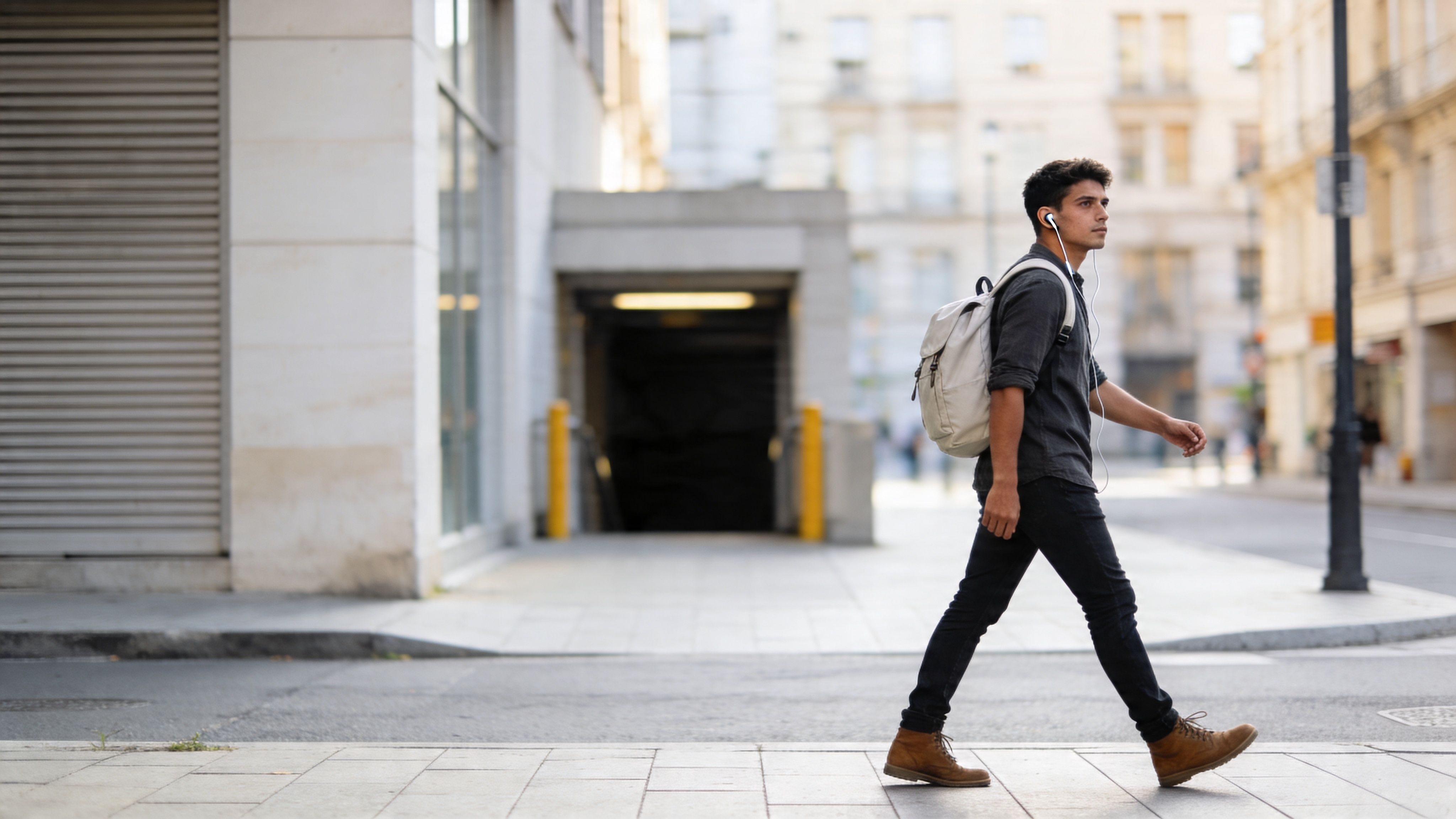
You step out of a station, check your map for ten seconds, and look up to realize the street has changed. Fewer people. Shuttered shops. One person paying too much attention to you. Solo safety often turns on moments that small.
Situational awareness is less about looking tough and more about shortening the time between noticing something and adjusting your plan. That skill gets sharper with practice. It is one reason solo travel becomes safer as your experience grows. You start catching small signals earlier, before a minor concern turns into a problem.
Awareness is a set of repeatable habits
Useful awareness is concrete and trainable.
- Keep your phone use deliberate: If you need directions, step into a shop, hotel lobby, or café instead of standing exposed on the sidewalk.
- Track who is around you: Notice if someone changes pace when you do, follows two turns in a row, or keeps trying to start contact after you shut it down.
- Read the environment fast: Open businesses, families, older residents, and regular foot traffic usually signal a space where help is closer.
- Check exits and friction points: Look for doorways, staffed counters, ride pickup spots, and the easiest route back to a busier street.
- Protect your attention: One earbud is enough. Both earbuds, alcohol, fatigue, and constant filming all reduce your margin for error.
If you want a more specific public-space safety lens, especially around social pressure and boundary-setting, this guide on how to travel alone as a woman adds useful nuance.
If your body is telling you to leave, leave. You do not owe anyone an explanation, your time, or your politeness.
The key is to act early
Instinct is useful, but only if it changes your behavior.
Travelers often get the signal and then talk themselves out of it. They do not want to seem rude. They do not want to offend someone, misread a situation, or look anxious. That hesitation is how people stay in bad setups longer than they should.
Leave sooner. Change cafés. Switch train cars. Step into a pharmacy. Ask a family or a shopkeeper for help. Call a ride before you feel trapped. Small course corrections are easy and quiet. Waiting usually makes the exit messier.
There is a deeper trade-off here. If your safety strategy is only avoidance, you end up tense, isolated, and less connected to the place around you. A stronger approach is graduated exposure. Start with environments where reading the room is easier, then widen your comfort zone as your pattern recognition improves. Confidence built this way is more durable than fake bravado, and it keeps you open to the kind of local connection that makes solo travel worth doing.
4. Use Reliable Transportation and Avoid High-Risk Travel Times
You land after dark, your phone is at 12%, the airport Wi-Fi is unreliable, and a stranger is telling you his taxi is “basically the same price.” That is the moment when small decisions get expensive.
Transport risk is rarely dramatic at first. It starts with fatigue, confusion, and too many unknowns at once. Solo travelers get safer when they treat transit like a system to set up in advance, especially on arrival days, border crossings, and late returns.
Pay for predictability when the stakes are higher
Cheap transport has its place. A tired arrival in an unfamiliar city is usually not it.
Use the option that gives you a paper trail, a clear pickup point, and fewer judgment calls under pressure. Good choices often include:
- App-based rides with visible driver details: Uber, Grab, Bolt, or the dominant local equivalent
- Accommodation-arranged pickups: especially useful for late arrivals or airports with aggressive taxi solicitation
- Official taxi stands: a better fallback when ride-share service is patchy
- Daylight transfers: if a route feels confusing or has a poor reputation, do it when businesses are open and the area is easier to read
I save money in low-consequence places. I do not usually save it on the first ride into town with my passport, cards, and electronics in one bag. That extra cost buys clarity.
Use timing as a safety tool
Night reduces your options. Streets get quieter. Fewer staff are around to help. Wrong turns take longer to fix.
A simple habit helps a lot. Do the complicated part in daylight if you can. Learn the station layout before you need it at 11 p.m. Find your hotel once when you are rested. Check how long the walk feels, not how short it looks on a map.
If a late transfer is unavoidable, reduce the number of variables. Pre-book the ride. Download offline maps. Screenshot the address in the local script if relevant. Keep enough battery for route-checking and a backup call.
Then stay engaged once you are in the car. Sit in the back. Watch the route on your own phone. If a driver proposes a detour you did not ask for, redirect calmly and clearly. You do not need to be confrontational. You do need to be decisive.
The broader goal is confidence, not fear. Start with transport choices that are easy to verify, then widen your range as you learn how a place works. That is graduated exposure in practice. You build judgment by stacking manageable wins, not by forcing yourself into chaotic situations before you are ready.
5. Secure Your Accommodations and Valuables

You arrive tired, drop your bag, and assume the room is fine because the lobby looked polished. That is how small accommodation mistakes turn into stolen chargers, missing cash, bad sleep, and a constant low-grade sense that you are exposed.
A room is your reset point. It should help you recover your attention, not drain it.
Good solo travel safety is not only about avoiding bad places. It is about creating a base that lets you relax enough to make better decisions everywhere else. If your lodging feels chaotic, every outing starts with less patience and worse judgment.
Read for safety, not aesthetics
Photos sell the dream. Reviews reveal the operating reality.
Scan reviews for patterns that affect your margin of safety: working locks, staffed reception, entry controls, late check-in reliability, secure lockers, and whether the street outside still feels manageable after dark. A beautiful room in an isolated area can be a worse solo choice than a plain guesthouse near shops, transit, and people who notice what is happening around them.
I also pay attention to friction. If multiple guests mention lost keys, broken lockers, confusing access, or staff who disappear at night, I move on. None of those issues sound dramatic on their own. Together, they create a place where problems are harder to fix.
Set up the room in the first five minutes
Do a quick security check before you unpack. Test the door, window latches, and any locker or safe. Confirm who can access the room and whether there is a staffed point of contact if something goes wrong.
Then organize for a fast exit and an easy return.
Keep your passport, primary card, charger, and a little cash in one consistent spot. If you use a room safe, store what would be hardest to replace, not what would be most annoying to lose. In hostels or shared apartments, lock your bag even for short absences. Petty theft usually comes from convenience, not planning.
If you are balancing cost and risk, these travel budgeting strategies that protect your options help you decide where paying a little more buys a lot more control.
Make yourself a harder opportunity
Security tools help, but their real value is simple. They slow people down, create noise, or force visibility.
That can mean a locker with your own padlock, a cable lock for a bag on an overnight train, or a portable door alarm in a budget room with weak hardware. None of those tools make you immune. They do increase the effort required, and that matters with opportunistic theft.
The larger goal is psychological as much as practical. Once you know your room setup works, you stop spending mental energy checking and rechecking everything. That confidence is useful. It lets you widen your range gradually, stay present, and build independence from a stable base instead of from constant vigilance.
6. Manage Money Strategically and Avoid Displaying Wealth
Money problems escalate fast when you’re alone. Lose your only card, flash too much cash, or use a bad ATM in a bad location, and a simple day turns into hours of cleanup.
The fix isn’t carrying less money in a vague way. It’s separating access.
Split funds by function
Never keep everything in one wallet.
A stronger setup looks like this:
- Daily spending money: One card and limited cash in your day wallet.
- Backup funds: A second card stored separately in your bag or room safe.
- Emergency reserve: A small amount of cash tucked away and left untouched unless needed.
- Digital backups: Bank numbers, card cancellation info, and document copies stored securely.
If you’re trying to keep your trip affordable while still making smart trade-offs, these smart travel budgeting tips help you protect both your wallet and your options.
Don’t advertise your budget or your valuables
Pickpockets, scammers, and inflated-price operators aren’t reading your bank balance. They’re reading your behavior.
They notice the traveler counting bills in public, fumbling across three cards at a kiosk, waving a flagship phone while asking where the cheap hostel is, or wearing luggage and gear that screams “all my valuables are right here.”
Street-level rule: Handle cash like locals do. Quietly, quickly, and without a performance.
Use bank ATMs in daylight when possible. If one feels exposed, skip it. If someone tries to “help” you at the machine, cancel and walk away. Learn a rough sense of local prices early so overcharging stands out before you pay it.
This part of solo travel safety tips doesn’t sound romantic, but it buys freedom. The less mentally occupied you are by missing money, fraud alerts, and emergency transfers, the more present you can be for the actual trip.
7. Develop Confidence Through Practice and Gradual Independence Building
You land in a new city, your phone battery is lower than expected, the station is louder than it looked online, and suddenly even a simple decision feels heavier than it should. That reaction is normal. Confidence on solo trips is built, not inherited.
Fear distorts judgment, which is why this matters. A rattled traveler is more likely to freeze, rush, attach themselves to the first persuasive stranger, or stay so cautious that they never build the skills that make solo travel safer.
The goal is not to become fearless. The goal is to get accurate. Experienced solo travelers get better at separating discomfort from danger, and that usually happens through repeated, manageable exposure.
Start smaller than your ego wants to
New solo travelers often make the trip harder than it needs to be because they want to prove they can handle everything at once. That approach creates noise. A better approach is to add independence in layers so each small win becomes usable evidence the next time you feel uncertain.
Try a progression like this:
- Take a walking tour or neighborhood orientation early: It gives you a mental map before you start improvising.
- Use one familiar area as your anchor: A known café, transit stop, or main street lowers decision fatigue.
- Add one new variable at a time: Solo dinner one night, public transit the next, then an early departure or day trip.
- Write down what you handled well: A few notes after a stressful moment helps you remember capability, not just anxiety.
I’ve found this works better than chasing a big confidence breakthrough. Real confidence usually arrives subtly. You solve a missed turn, recover from a language mix-up, or figure out a station on your own, and your body stops treating every unfamiliar moment like a threat.
If medical risk is part of what’s keeping you tentative, this guide to the best travel insurance for backpackers can help you reduce the consequences before you leave.
Build confidence through people, not isolation
Solo travel gets safer when you stop treating independence as social detachment.
A short conversation with a guesthouse owner, a cooking class, a language exchange, or a walking group can give you practical local intelligence faster than another hour of scrolling. You learn which street gets deserted early, which entrance people use at the station, or whether that scenic shortcut feels different after dark.
That kind of connection does two things at once. It gives you information, and it settles your nervous system. People move more confidently when they have context.
If you want support specifically for women practicing this kind of independence, this solo travel for women guide is a useful companion.
8. Prepare for Health and Medical Emergencies
Food poisoning at midnight in an unfamiliar neighborhood is not just a health problem. It can turn into a safety problem fast if you are dehydrated, confused, and trying to make decisions alone.
That is why medical preparation matters beyond worst-case scenarios. It reduces panic, shortens decision time, and gives you more control when your judgment is under strain.
Before departure, build a plan you can use while tired or stressed. Know which clinic or hospital you would go to in each major stop, not just in the city where you land. Save the address in your maps app, screenshot your insurance details, and keep a short written note with allergies, medications, blood type if relevant, and emergency contacts. If you take prescription medication, carry it in original packaging and bring copies of the prescription.
Insurance deserves more attention than a last-minute checkbox. The real question is not whether you have a policy. It is whether you understand the gaps. Many cheap plans are fine for trip delays and weak on outpatient care, pre-existing conditions, adventure activities, or evacuation. If you need help comparing options, this guide to the best travel insurance for backpackers is a useful place to start.
Small problems are the ones solo travelers dismiss, and those are often the ones that cause sloppy decisions.
Poor sleep, dehydration, heat, stomach issues, missed meals, and lingering pain all chip away at judgment. You get impatient. You accept help you would normally question. You push through one more bus ride, one more walk, one more late arrival, when what you really need is rest, fluids, and a simpler plan for the day.
Treat your physical condition as part of your safety read on a place. If you are run down, lower the difficulty. Stay closer to your accommodation. Use a known taxi instead of figuring out a complicated transfer. Eat somewhere straightforward. Ask for help sooner.
Carry a personal health kit that matches your actual trip, not a fantasy packing list. Keep any critical medication, basic first-aid supplies, and whatever you rely on for stomach issues or rehydration in your day bag or carry-on. Checked luggage is the wrong place for anything you may need in the first 24 hours.
The broader goal is confidence, not fragility. Prepared solo travelers are not trying to avoid every risk. They reduce the consequences, recognize trouble earlier, and respond before a manageable problem turns into a bad night.
9. Stay Connected and Maintain Digital Security
Your phone is your map, translator, boarding pass holder, bank key, camera, emergency contact list, and ride-booking tool. Losing access to it is more than an inconvenience.
Digital security is now part of physical safety.
Set up your device for failure before it fails
Do this before the trip, not after a problem starts:
- Enable device tracking: Apple Find My, Google Find My Device, or the manufacturer equivalent.
- Download offline maps: Google Maps and Maps.me both help when signal disappears.
- Turn on two-factor authentication: Especially for email, banking, and cloud storage.
- Back up key documents securely: Passport photo page, insurance details, visas, accommodation confirmations.
A local SIM or eSIM is often worth it on day one. Reliable data means you can reroute, translate, call, and verify without hunting for café Wi-Fi while stressed.
Use public Wi-Fi like it’s public
Because it is.
Avoid logging into banking on random networks. Use a VPN if you need to handle sensitive accounts. Keep your phone locked with biometrics or a strong passcode. Don’t hand it to strangers who offer to “help” with tickets or directions unless there’s no safer alternative.
This is also where tech can offer real support for solo travel safety tips when used well. A 2025 Skyscanner survey cited by The 5 Kilo Traveller found that 68% of solo travelers in Southeast Asia and Latin America felt safer using GPS-sharing apps during late-night walks. The useful takeaway isn’t blind faith in apps. It’s that the right features matter. Live location sharing, offline maps, and easy SOS access are practical tools, especially when transport plans change.
Tech won’t replace judgment. It extends it.
10. Build Local Connections and Engage with Communities Respectfully
You arrive in a new city after dark, your phone battery is lower than expected, and the street outside the station feels more chaotic than it did on the map. In that moment, safety often comes from something more human than gear. It comes from knowing where to step, who to ask, and whether anyone nearby recognizes you as more than a passing stranger.
Solo travelers are usually safer when they become familiar, not invisible. A short list of local touchpoints can steady a whole trip. The café where staff know your face. The hostel owner who tells you which ATM they use. The market vendor who corrects your pronunciation and then points you toward the better bus stop. That kind of connection gives you context, and context lowers risk.
Community also builds confidence by degrees. If you are new to solo travel, start small. Return to one or two places instead of trying to conquer a city in a day. Book a walking tour with a local guide on your first morning. Ask one practical question each day that a resident can answer from lived experience, such as which streets empty out early, where people buy transit cards, or what time a neighborhood stops feeling relaxed.
A few habits work well:
- Become a regular quickly: Visit the same café, food stall, or corner shop more than once.
- Choose locally run activities: Cooking classes, neighborhood tours, language exchanges, and community workshops often give better ground-level advice than traveler group chats.
- Ask specific safety questions: “How do people usually get home from here at night?” gets better answers than “Is this area safe?”
- Learn useful phrases: Greeting someone properly matters. So do “help,” “police,” “hospital,” and “please call a taxi.”
- Notice who lives there: Families, older residents, shopkeepers, and commuters usually signal a more stable street rhythm than a block built only for nightlife.
Respect matters because people can feel the difference between curiosity and extraction.
Dress for the setting. Ask before photographing people. Read the room before speaking loudly, drinking openly, or treating local customs like a travel obstacle. Residents are far more likely to warn you candidly, correct a bad plan, or step in when needed if you have shown basic respect first.
There is a trade-off here. Openness helps, but oversharing does not. Be friendly without announcing your room number, your full itinerary, or the fact that you are alone and unsure. The goal is to build real connection while keeping your private details private.
Many safety guides frame protection as withdrawal. Stay away. Keep distance. Trust no one. Some caution is sensible, but solo travel gets easier when you also know how to join a place well. Real safety is not only about avoiding problems. It is also about creating a web of small, ordinary relationships that make you harder to isolate and easier to help.
10-Point Solo Travel Safety Comparison
| Strategy | Implementation Complexity 🔄 | Resource Requirements ⚡ | Expected Outcomes 📊 | Ideal Use Cases ⭐ | Key Advantages / Tips 💡 |
|---|---|---|---|---|---|
| Share Your Itinerary & Real-Time Location with Trusted Contacts | Low–Medium: set schedules and enable apps | Low: smartphone, app, data/battery | Quicker emergency response; increased accountability | Solo travelers, solo female travelers, remote routes | Immediate help potential; schedule check‑ins, use code words, manage battery |
| Research Destinations Thoroughly Before Arrival | Medium–High: time‑consuming research | Medium: internet access, multiple sources | Better risk avoidance and planning | All travelers; especially urban explorers & photographers | Reduces surprises; check gov advisories, recent trip reports |
| Maintain Situational Awareness & Trust Your Instincts | Low: ongoing personal practice | Very low: attention and practice time | Early threat detection; increased personal agency | Solo female and first‑time solo travelers | No cost; avoid distractions, heed gut feelings |
| Use Reliable Transportation & Avoid High‑Risk Times | Medium: planning and bookings | Medium–High: paid transfers, apps | Reduced exposure to transport‑related risks | Budget backpackers, solo city travelers | Book reputable services, share ride details, avoid late‑night solo travel |
| Secure Accommodations & Valuables | Medium: vetting and selecting lodging | Medium: sometimes higher accommodation cost, safes | Safer base; lower theft and intrusion risk | Hostel users, budget travelers, solo female travelers | Read safety‑specific reviews, request secure rooms, use safes |
| Manage Money Strategically & Avoid Displaying Wealth | Medium: organizing funds and backups | Low–Medium: extra cards, money belt, safes | Minimized financial loss; backup access to funds | Budget‑conscious travelers | Split cash/cards, use ATMs in banks, avoid public displays |
| Develop Confidence Through Practice & Gradual Independence | Medium: staged exposure over time | Low–Medium: group activities, time | Greater independence and better decision‑making | First‑time solo travelers, those building skills | Start with group tours, set small goals, journal successes |
| Prepare for Health & Medical Emergencies | Medium: insurance & medical prep | Medium–High: insurance cost, meds, docs | Faster, appropriate medical care; financial protection | Travelers with conditions & remote trips | Buy comprehensive insurance, carry prescriptions and medical info |
| Stay Connected & Maintain Digital Security | Medium: setup VPN, 2FA, backups | Medium: SIM/data, VPN subscription, power solutions | Secure communications and reliable navigation | Digital nomads, remote area travelers | Use local SIMs/offline maps, enable 2FA, back up documents |
| Build Local Connections & Engage Respectfully | Medium: time and cultural effort | Low–Medium: time, language learning | Informal safety networks; authentic experiences | Travel enthusiasts, urban explorers, slow travelers | Learn basic phrases, support local businesses, attend community events |
From Confident Traveler to Transformed Explorer
Solo travel asks for a different kind of courage than group travel. It’s quieter. Less theatrical. It’s the courage to make decisions without outsourcing them, to recover when plans shift, and to keep moving with good judgment instead of panic. That’s why the best solo travel safety tips aren’t really about restriction. They’re about capacity.
When you share your movements with trusted people, research a destination properly, pay attention to your surroundings, and make smart transport choices, you’re building capacity. When you secure your room, separate your money, prepare for health issues, and protect your digital life, you’re building more of it. And when you practice independence gradually instead of demanding instant fearlessness from yourself, you stop treating confidence as a mystery and start treating it as a skill.
That matters because safety is not the same thing as avoidance.
A lot of travelers swing between two bad extremes. One is fear-based travel, where every stranger feels suspicious and every new place feels like a threat. The other is performative fearlessness, where people ignore obvious red flags because they want to feel spontaneous, worldly, or unbothered. Neither approach works well for long. One makes travel smaller than it should be. The other makes mistakes more likely.
The sweet spot is steadier than both. You stay open, but not porous. Friendly, but not naive. Flexible, but not unplanned.
That’s also where solo travel becomes richer. Once the basic safety systems are in place, your mind frees up. You can notice more. You can say yes more intelligently. You can build the kind of local connections that turn a trip from a checklist into an experience with texture. You stop spending all your energy on low-level uncertainty and start investing it in being present.
There’s another shift that happens too. You begin to trust yourself in a deeper way. Not because nothing difficult ever happens, but because you know you can respond. You know how to leave a situation early. You know how to ask better questions. You know when to spend more for safety and when not to. You know that discomfort doesn’t automatically mean danger, and that danger often announces itself subtly before it becomes obvious.
That’s a powerful form of freedom.
Travel Talk Today has always leaned toward meaningful travel over rushed travel. That philosophy fits solo safety well. Slowing down, learning local rhythms, returning to the same neighborhood spots, and moving with intention often make you both safer and more connected. You don’t need to dominate a place to get around successfully. You need awareness, respect, and a few solid systems.
So go. Book the trip. Walk the old streets. Take the train ride. Sit down in the market with the unfamiliar lunch. Learn the route home. Learn your own patterns too. The world doesn’t open up because you eliminate all risk. It opens up because you learn how to meet uncertainty with preparation and calm.
That’s when a solo traveler becomes something more than independent. That’s when you become transformed by the road, without being undone by it.
Travel Talk Today helps readers plan trips that are affordable, thoughtful, and grounded in real-world experience. If you want more practical guidance on safer solo travel, budget strategy, cultural immersion, and slower ways to explore, visit Travel Talk Today and start building a trip that feels both meaningful and manageable.