You're on a booking site, comparing airport rentals, and one listing jumps off the page. Ace is cheaper than the brands you recognize. Cheap enough that you stop scrolling and think, “Did I just find a steal?”
That moment is why so many people search for Ace car rental reviews.
The problem isn't that Ace is automatically bad. The problem is that a low headline rate can mean two very different things. Sometimes it means you found a workable budget option. Sometimes it means you found a rental that only stays cheap if everything goes smoothly, you know the rules, and you don't get caught flat-footed at the counter.
If you're hunting for a deal because airfare already hurt, hotels weren't kind, and you've been checking every angle for savings, the logic makes sense. A lower car rate can free up money for the rest of the trip, especially if you're already scanning guides to the best last-minute travel deals.
Ace sits right in that tension between smart saving and expensive hassle. The core question isn't “Is Ace good?” It's simpler than that. Are you the kind of traveler who can use Ace well? Some people can. Some really shouldn't.
Is That Ace Rental Car Deal Too Good to Be True
A cheap Ace listing usually appears at exactly the right moment. You've priced the majors, you've looked at airport locations, and then Ace shows up with a number that makes the whole trip feel possible again.
That's the appeal. Ace is often the rental you choose when the budget matters more than brand comfort.
But budget rentals work on a trade-off. You're not just buying a car. You're buying a process. If the process is smooth, the lower rate feels like a win. If pickup drags, policies feel strict, or the final bill changes shape at the counter, the savings can disappear fast.
Why the low rate feels so tempting
Ace attracts travelers who are willing to do extra homework. That includes reading policy details, checking airport transfer instructions, confirming insurance requirements, and being ready to document the car carefully.
That kind of prep changes the experience. A renter who expects friction and plans for it usually handles Ace better than someone who books it like a mainstream brand and expects the same margin for error.
Practical rule: A cheap rental only counts as a deal if the total trip still works when things run late, the counter asks for more documentation, or the final bill is higher than the search result.
The better question to ask before booking
Don't ask whether Ace is a scam. That's too blunt and not very useful.
Ask these instead:
- How tight is your schedule? If you're landing late, heading to a cruise, or driving straight to a wedding, delay risk matters more than rate.
- How comfortable are you with rental fine print? If policy language makes your eyes glaze over, this may not be your best fit.
- Can you absorb a dispute if one happens? Not everyone wants part of their vacation spent arguing over coverage, deposits, or damage notes.
That's the frame that makes Ace easier to judge. It's not just about price. It's about whether the savings are worth the amount of uncertainty you're personally equipped to handle.
The Bottom Line on Ace Rent A Car
ACE Rent A Car isn't a startup trying to look bigger than it is. It's been around since 1966, and ConsumerAffairs lists its headquarters in Indianapolis, Indiana. The same source notes KAYAK pricing benchmarks of $98 per day or $686 per week, which helps explain why budget travelers keep considering it even when reviews are mixed. You can see that context in ConsumerAffairs' company profile and pricing summary.
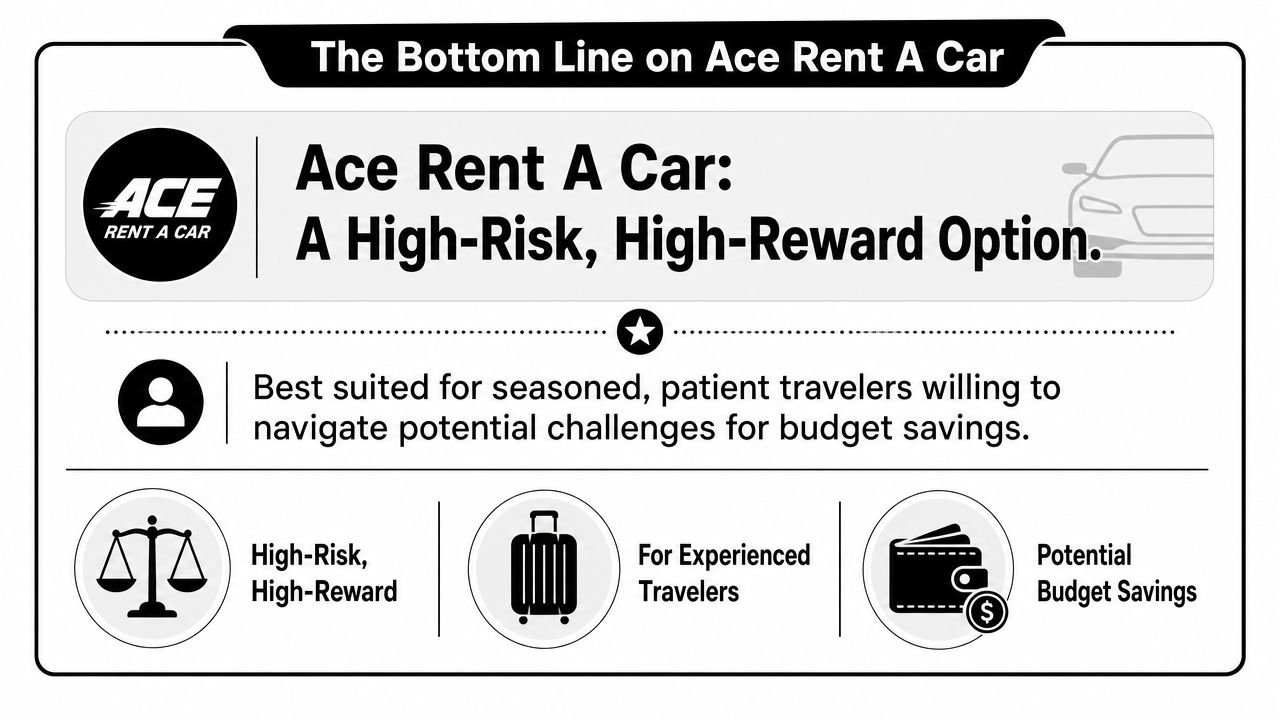
My practical verdict is simple. Ace is a high-risk, high-reward rental option. It can work for travelers who are patient, organized, and comfortable pushing back at the counter. It's a weak fit for anyone who wants a frictionless experience.
Where Ace fits in the market
Ace works best as a tool, not a default choice. If your top priority is reducing the upfront rate and you're prepared to manage details yourself, it can make sense. If your top priority is consistency, speed, or support, the lower base price may not be enough.
That split helps explain why Ace gets such polarized reactions. Some renters care most about getting from airport to hotel at the lowest possible cost. Others care about smooth pickup, predictable policies, and a brand with less variation from one location to the next.
The real top-level trade-off
Here's how I'd frame it in plain language:
- Best case: You get a usable car at a lower starting price, the location is well run, and the savings feel worth it.
- Middle case: The rental is fine, but pickup takes longer, the counter pushes extras, and you need to stay alert.
- Worst case: The cheap listing turns into a stressful transaction with policy arguments, charge confusion, or post-rental follow-up.
Ace makes the most sense when you treat it like a discount airline fare. It can be worth it, but only if you know exactly what you bought and what the rules are.
My rating framework
Instead of one score, I'd judge Ace on three separate questions:
| Category | Verdict |
|---|---|
| Price appeal | Strong |
| Consistency | Weak |
| Fit for nervous or first-time renters | Poor |
That's why broad yes-or-no reviews miss the point. Ace isn't universally smart or universally reckless. It's a calculated budget play, and whether it works depends heavily on the location and the renter.
What Real Renters Say in Reviews
The biggest mistake people make with Ace car rental reviews is reading only the angriest complaints or only the cheapest-price success stories. Neither tells the whole story.
The clearer pattern is inconsistency. Auto Rental News reported an industry survey in which ACE earned a 72% customer experience score and ranked 111th overall, while user-generated ratings on DiscoverCars can drop to 5/10 for certain airport locations. That location-by-location spread is the core fact to remember, and you can trace it through Auto Rental News' customer experience coverage.
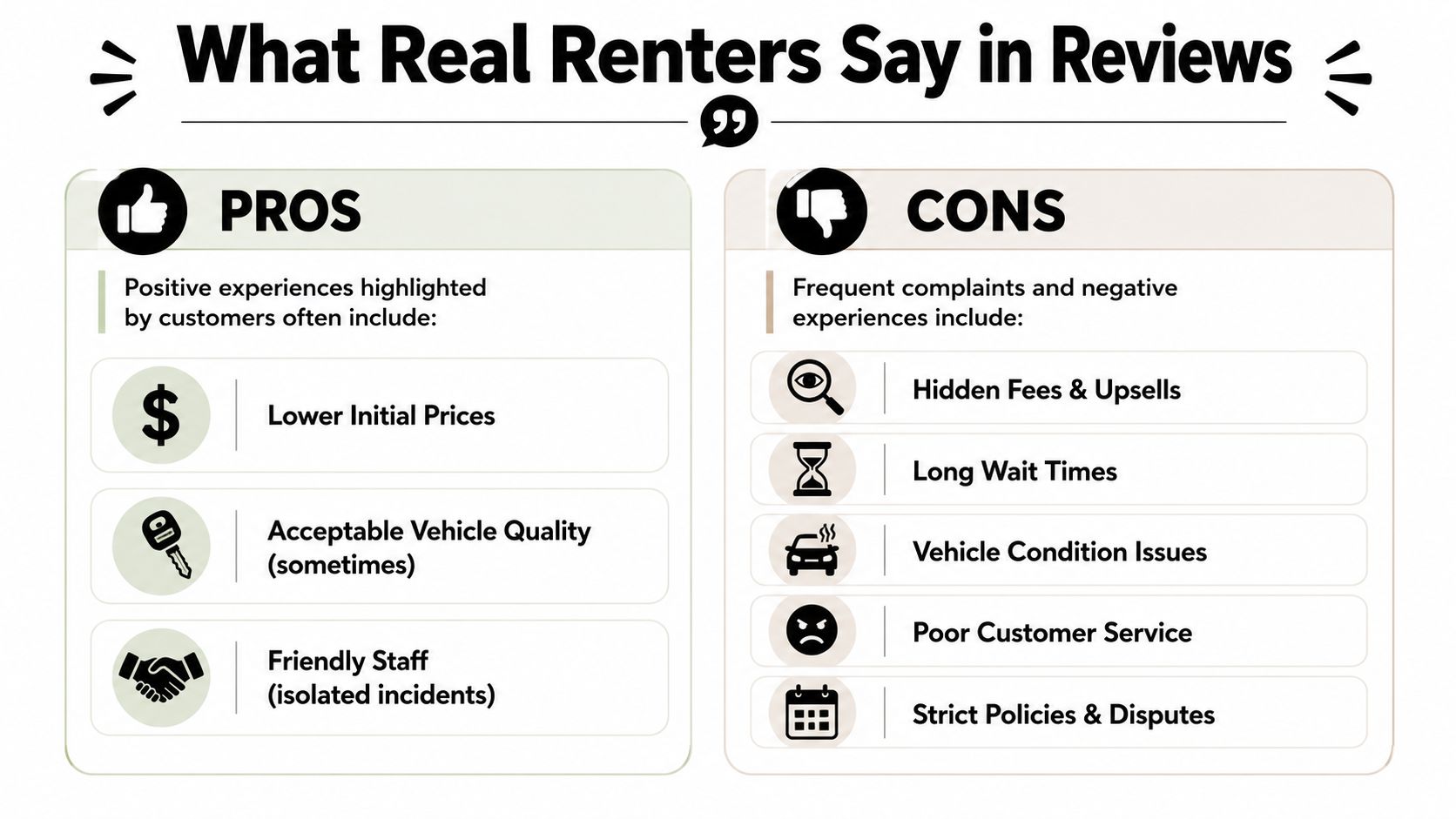
That means the brand name alone doesn't tell you enough. One airport can produce decent experiences. Another can generate the kinds of reviews that make travelers swear off the company entirely.
What people like when the rental goes well
The praise usually isn't poetic. It's practical.
Renters who leave satisfied reviews tend to focus on a few things:
- Lower search price: Ace gets attention because the opening rate is often more appealing than bigger brands.
- A usable car for the trip: If the vehicle is clean enough, runs well, and gets them where they need to go, many budget renters are content.
- Occasionally solid staff interaction: Some locations seem to have agents who move the line, explain the contract clearly, and don't turn pickup into a fight.
That's why Ace keeps showing up in deal searches and comparison apps. Travelers who care about cost control often keep it in the mix alongside tools like the best travel apps for trip planning and bookings.
What people complain about most often
The complaints are also consistent in theme, even when the details differ.
Counter friction
A lot of negative reviews center on the moment when the online booking meets the rental desk. That's where expectations can break apart. Travelers describe confusion over what's included, what proof is needed, and which protections the location will accept.
Delays and communication gaps
At busy airport locations, a delay feels worse than it sounds. If a shuttle takes too long, if the counter line crawls, or if instructions aren't clear, the stress compounds quickly, especially after a flight.
Vehicle condition and cleanliness
This doesn't mean every car is a problem. It means enough renters mention cleanliness or condition issues that inspection can't be treated as optional. A budget rental stops feeling cheap if you spend the trip worried about being blamed for something that was already there.
Read Ace reviews as location intelligence, not brand mythology. You're not trying to answer “Is Ace good?” You're trying to answer “How does this specific branch behave under pressure?”
The useful takeaway from the review pile
The positive reviews say Ace can work. The negative reviews say Ace can go sideways in very familiar ways.
Both can be true at the same time.
That's why I don't read Ace car rental reviews as a verdict on one company personality. I read them as a warning that execution varies, and your outcome depends a lot on where you rent, how carefully you prepare, and how much hassle your trip can tolerate.
Decoding the Real Cost Beyond the Advertised Price
The headline rate is the bait for your attention. The actual cost is what matters.
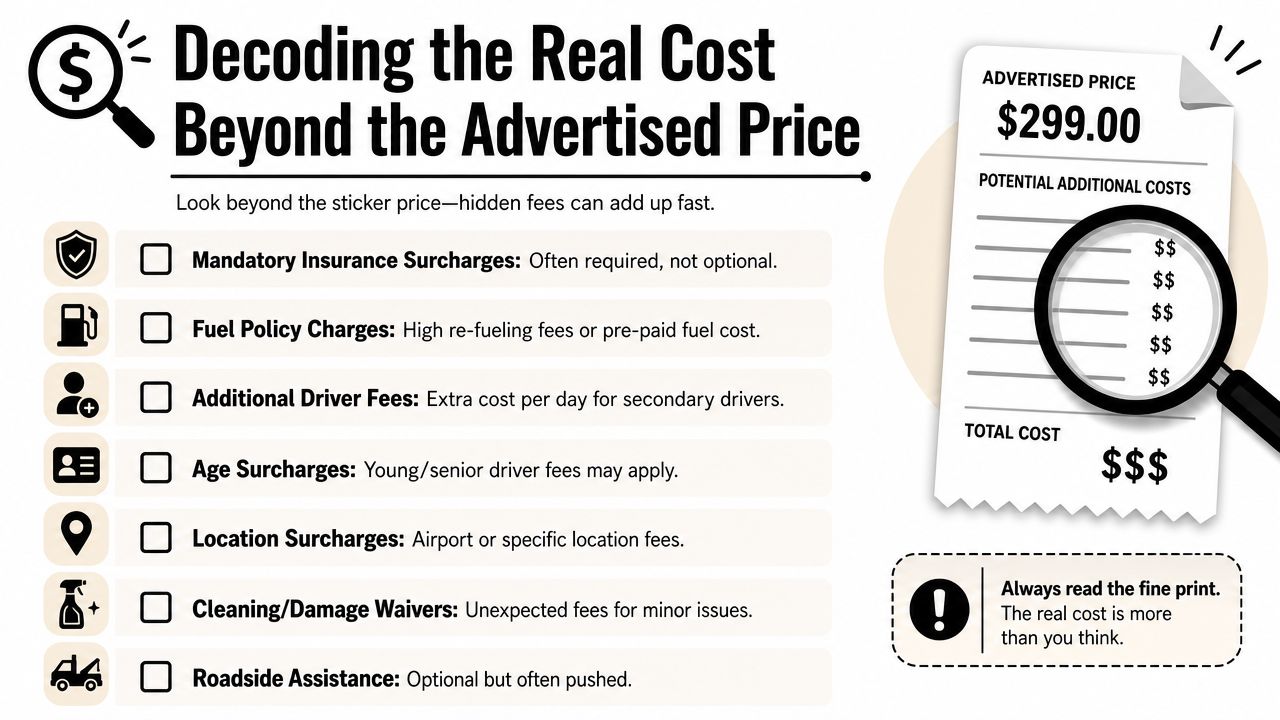
That gap shows up clearly in review aggregators. One analysis reports 1.5 stars from more than 2,209 Trustindex reviews and 1.2 stars from 645 verified ConsumerAffairs reviews, with recurring complaints about unexpected charges and insurance disputes. The snapshot is useful because it points straight at the issue that drives most frustration, and it's summarized in Testimonial's review analysis of Ace Rent A Car.
What the search result usually doesn't settle
A booking page gives you a starting point, not the final truth. The difference between those two can come from several places:
- Insurance acceptance: Your personal auto policy, travel policy, or credit card coverage may not be handled the way you expected at the counter.
- Deposit holds: Even if the rental itself seems affordable, a large temporary hold can wreck your trip cash flow.
- Airport and location fees: The convenience of airport pickup often comes with extra cost layers.
- Fuel and toll choices: These aren't always hidden, but they're often skimmed over until the counter agent presents them fast.
- Additional drivers and age-related surcharges: These can turn a cheap booking into a very average one.
If you're trying to offset rental costs with points strategy, it helps to understand which travel rewards cards can actually support your trip planning. Just don't assume a card benefit will automatically solve a rental counter disagreement.
A simple cost-audit method
Before booking Ace, I'd build the rental cost on paper in three layers.
Layer one is the booking price
Start with the total shown online, including taxes and obvious fees. Screenshot it.
Layer two is the counter risk
List every item that could change at pickup:
- Coverage proof
- Deposit amount
- Fuel policy
- Toll setup
- Additional driver need
- Arrival timing if your flight is delayed
This is the part many travelers skip. It's also the part that decides whether Ace stays cheap.
Layer three is the post-return risk
Ask yourself one harder question. If there's a disputed charge after the rental, do you have the documentation and patience to challenge it?
Counter test: If you can't explain the rental terms back to yourself in plain English before departure, you're not ready to book the cheapest option.
What works and what doesn't
What works:
- Booking only after reading location-specific rules
- Using a credit card with rental-related benefits, while still verifying what the desk will accept
- Budgeting for the hold, not just the rental rate
- Treating “optional” add-ons as decisions to evaluate before you arrive
What doesn't:
- Assuming all locations interpret coverage the same way
- Arriving rushed and trying to decide insurance questions on the spot
- Believing the cheapest listed total is automatically the cheapest real trip cost
This is the heart of the Ace decision. Not whether the initial price is low. Whether the fully loaded, real-world rental still makes sense for your budget and stress tolerance.
How to Navigate the Rental Process and Avoid Disputes
By the time most renters start protecting themselves, they're already at the desk. That's late.
The smartest move with Ace is to treat the rental like documentation work from start to finish. That sounds unromantic, but it's what reduces the chance of a cheap car becoming an expensive argument.

A public complaint pattern described through BBB and TripAdvisor discussions points to disputes focused less on the vehicles themselves and more on payment, overcharges, and refund disagreement after the rental ends. That's why careful records matter so much, and that pattern is summarized in this TripAdvisor complaint analysis reference.
Before you leave for the airport
Do these at home, not in line:
- Save every confirmation. Keep the reservation email, screenshots of the booking total, and any policy pages you relied on.
- Verify your protection plan. If you're relying on outside coverage, read the actual terms. Don't assume. If you want a broader safety net for the whole trip, compare options before departure with a travel insurance comparison guide.
- Bring the exact documents listed. License, card, and any paperwork needed to support your booking terms.
At the counter
At this point, discipline pays off.
Keep the conversation slow
Counter pressure works when travelers feel tired, rushed, or embarrassed to ask follow-up questions. Don't match that speed. Ask the agent to show you where each charge appears in writing.
Good script: “Please show me what is mandatory and what is optional before I sign.”
Less effective approach: nodding through the contract because there's a line behind you.
Don't argue emotionally
If you disagree with a charge or requirement, stay factual. Ask what policy supports it. Ask for a copy. Ask the agent to annotate the paperwork if something was explained verbally.
Get everything into a form you can photograph, save, or email to yourself. Memory is weak evidence.
At the car
Never drive off immediately.
Use your phone and do a full walk-around video. Then take close photos of:
- Bumpers and corners
- Windshield
- Wheels
- Interior stains or tears
- Fuel level
- Dashboard with mileage
If you see damage, get it acknowledged before leaving. If the lot staff can't or won't mark it, document the attempt and keep the timestamped media.
At return
Return is where tired travelers get sloppy. Don't.
Try to return during staffed hours if you can. Photograph the car again from the same angles, plus the parking position and fuel level. Keep the receipt or return confirmation.
If the return is unattended, take more photos than you think you need.
The habits that prevent most headaches
| Stage | Protective move | Why it matters |
|---|---|---|
| Booking | Save screenshots | Preserves the original offer |
| Pickup | Review every line item | Stops surprise add-ons from sliding through |
| Vehicle inspection | Take timestamped photos and video | Creates evidence for damage disputes |
| Return | Get written confirmation | Helps if charges appear later |
None of this guarantees a perfect experience. It does put you in a stronger position if something goes wrong, which is often the difference between a manageable annoyance and a long refund fight.
Who Should Rent From Ace and Who Should Book Elsewhere
The best way to use Ace car rental reviews is to stop treating them like a universal verdict and start using them like a traveler-fit test.
Some people are built for this kind of rental. They know how to read policy language, expect upsells, and keep calm when the process gets messy. Others are paying extra with a mainstream brand because their trip has no room for uncertainty, and that's a rational choice.
A recurring review pattern is that travelers with tight itineraries, first-time renters, and people with low tolerance for disputes, including solo travelers worried about safety and conflict, show up heavily in negative experiences. That makes Ace a poor match for risk-sensitive profiles, as reflected in this review-pattern summary focused on traveler suitability.
Ace is a reasonable bet for these travelers
The seasoned budget traveler
This person has rented before, understands that the lowest listing price isn't the whole story, and can handle counter friction without folding into a bad deal. They're flexible, organized, and not shocked by paperwork.
Ace can work here because the renter knows how to protect the transaction.
The backpacker or flexible city-hopper
If your schedule has breathing room and a pickup delay won't derail the whole trip, a cheaper rental can be worth the gamble. This traveler values cost control over polish.
That said, flexibility doesn't mean carelessness. It only works if you still inspect the car and document everything.
Ace is a bad fit for these travelers
First-time renters
First-time renters usually don't know which questions to ask, what protections they already have, or how to spot a problematic contract moment. That makes them easier to pressure and more likely to confuse optional products with mandatory ones.
Families with young kids
When you've got car seats, hungry children, luggage, and a tired partner, the cost of delay goes up fast. A family often needs a rental desk process that is boring, clear, and quick. Ace may deliver that at some locations, but I wouldn't count on it.
Travelers on a hard deadline
If you're driving to a cruise port, a wedding venue, a business meeting, or a remote lodging check-in, reliability matters more than chasing the lowest opening price. The cheap rate isn't worth much if one bad handoff ruins the day.
Solo travelers who want low-friction support
This is especially important for solo women and anyone who strongly prefers a smooth, predictable process. If dealing with a counter dispute in an unfamiliar place would make you feel unsafe, rattled, or cornered, that feeling should count in the booking decision.
Peace of mind has a price. For some trips, paying it is the smartest bargain available.
Ace vs alternatives at a glance
| Rental Option | Best For | Typical Cost | Key Risk |
|---|---|---|---|
| Ace | Experienced, patient, budget-focused renters | Lower advertised price relative to many major brands | More process friction and less predictability |
| Sixt | Travelers who want a middle ground between price and polish | Usually higher than the lowest-budget options | Still not immune to location-specific issues |
| Hertz | Travelers prioritizing familiarity and broader service infrastructure | Typically higher upfront cost | Paying more than necessary if your trip could tolerate a cheaper option |
I'm not putting exact prices in that comparison because they change by market, season, airport, and vehicle type. The point is what the extra spend usually buys you: smoother pickup, less policy ambiguity, and a lower chance that your rental becomes a side quest.
If you're planning a drive where timing and comfort matter, such as a scenic route with multiple stops, I'd lean toward the more predictable option. That matters even more on itineraries like a drive from Miami to Key West, where a rental problem can eat into the part of the trip you care about.
The final call
Book Ace if all of these are true:
- You're an experienced renter
- You can absorb delays
- You've read the policy details
- You're ready to document the vehicle thoroughly
- The savings still matter after you account for possible extras and hold amounts
Book elsewhere if any of these are true:
- You've never rented before
- Your itinerary is tight
- You're traveling with kids
- You hate conflict at service counters
- You value predictability more than a lower starting rate
Ace isn't automatically a trap, and it isn't automatically a win. It's a rental that rewards preparation and punishes assumptions. If that sounds like your travel style, the savings might be worth it. If not, paying more upfront can be the cheaper decision in the end.
Travel should feel informed, not stressful. If you want more practical, budget-savvy advice on smarter bookings, safer trip planning, and travel decisions that match your style, explore Travel Talk Today.