If you're looking for true all-inclusive Key West packages, the honest answer is simple: there's only one true all-inclusive resort in Key West, and most so-called all-inclusive options are really bundles of rooms, meals, activities, or credits. In a destination where visitors spent over $1.1 billion in Key West alone in 2019, the market is big enough to offer plenty of packages, but not many that work like a Caribbean unlimited-food-and-drink resort.
That's the advice most articles get wrong. They treat Key West like Cancun or Punta Cana, then wonder why travelers feel burned when the “all-inclusive” rate turns out to cover breakfast, a bike rental, and maybe one dinner credit.
Key West is different. That's not bad news. In fact, it can work in your favor if you book with your eyes open. This island is made for people who split their time between hotel downtime and the streets, water, and sunset rituals that give the place its personality. The problem isn't the packages. The problem is the label.
I've seen travelers overpay for meal plans they barely use, and I've seen others get real value because they knew exactly how they vacationed. If you want the best all inclusive Key West packages, stop asking whether a deal sounds convenient and start asking whether it matches how you'll spend your days.
Your Dream Key West Trip Starts Here
The biggest mistake travelers make in Key West is chasing a resort fantasy the island was never built to deliver. The better trip is easier than that. Pick a place that gives you comfort, walkability, and a few useful extras, then spend the rest of your time where Key West shines, on the water, in Old Town, and out at sunset.

That is why the marketing works so well. Travelers want one clean price and an easy vacation. Key West sells the dream of both, though these offers typically combine individual elements.
The island does have range. You can lounge by the pool in the morning, head into town for lunch, book a reef trip in the afternoon, and finish with live music after dark. If you want a sense of how much of the experience happens off-property, this guide to things to do in Key West is a useful reality check.
Why the dream sells so well
Key West has a large tourism economy, so hotels and travel companies have every reason to package rooms with credits, meals, and excursions. More packaging creates more choice, but it also creates more confusion. A polished offer can look generous while delivering very little if the included pieces do not match how you actually travel.
That is the part travelers miss.
A couple who spends all day exploring Duval, booking water trips, and trying different restaurants rarely gets full value from a heavy meal plan. A traveler who wants a quiet resort stay with most decisions handled may get solid value from bundled dining and on-site perks. The label matters less than the math.
Start with your trip, not the headline
Do not ask whether a package sounds luxurious. Ask whether you would have bought each included item on your own.
If the rate includes breakfast, a bike rental, and a sunset sail, count what those are worth to you, not what the hotel says they are worth. If you would skip the bike, eat brunch elsewhere, and already prefer a different charter, that package is inflated, not inclusive.
Key West rewards travelers who know their style. The best trip here usually comes from buying the right base, then adding only the extras you will make use of.
Decoding What All-Inclusive Really Means in Key West
Key West sells the phrase. It rarely delivers the Caribbean version of it.
Here, “all-inclusive” usually means a bundled rate with a room plus a few controlled extras, not a resort where your meals, drinks, and daily life are broadly covered from check-in to checkout. That marketing gap is where travelers overpay.
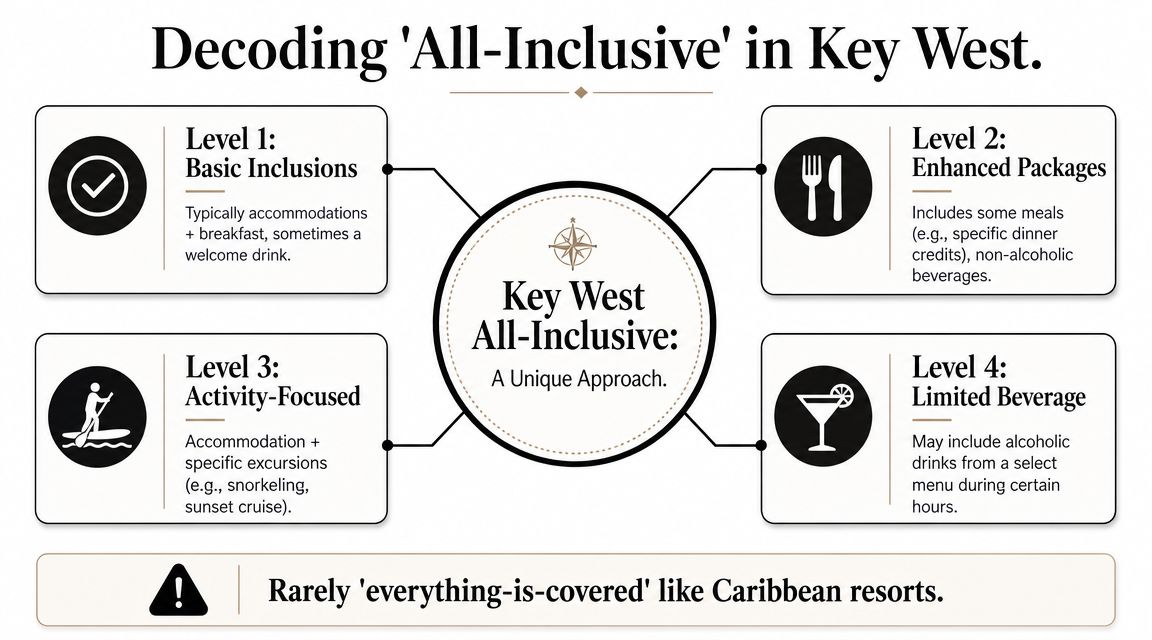
The practical question is simple. What does the package replace that you would have paid for anyway?
In Key West, the answer is usually one of four things:
- A meal bundle, often breakfast or a fixed number of meals
- A resort credit, which lowers the cost of dining, drinks, or spa services without fully covering them
- An activity add-on, such as bike rentals, a snorkel trip, or a sunset cruise
- A limited drink plan, usually restricted by menu, venue, time window, or brand
That is why I treat most Key West “all-inclusive” offers as package bundles, not true all-in deals. The label matters less than the usage.
If you are comparing islands and planning to split your stay across the Keys, this guide to getting from Key West to Islamorada helps frame how different each stop feels and how that affects where package value is relevant.
How to test whether the package is worth it
Skip the headline. Price the parts.
A simple package check works better than any marketing copy. Start with the nightly room rate without extras. Then add the true value of each included item based on what you would typically purchase. If the package includes breakfast and you usually grab coffee and Cuban toast in town, that breakfast has low value to you. If it includes a sunset sail you already planned to book, that inclusion may be worth full price.
Expedia's Key West all-inclusive vacation listings show how these offers are commonly structured. You will often see room rates paired with meal-plan upgrades or limited beverage options rather than broad, resort-wide coverage.
That setup works for some travelers. It fails for plenty of others.
A pool-first couple who wants to stay put, eat on-site, and avoid daily planning can get fair value from a heavier package. A traveler who spends all day on the water, bar-hops on Duval, and treats the hotel as a place to sleep usually gets trapped into paying upfront for benefits they barely use.
Rule to follow: Do not ask whether a Key West package is all-inclusive. Ask which line items it removes from your real trip budget.
What the fine print usually hides
Hotels structure offerings to protect their margins. Read every inclusion as if it has a limit, because it usually does.
- Drink coverage is narrow. “Included cocktails” may mean house brands, one bar, or certain hours only.
- Meal access can be controlled. Some plans cover specific restaurants, fixed menus, or daily caps.
- Excursions are not interchangeable. A bike rental is useful only if you planned to ride. It does not replace the value of a boat trip.
- Transportation is often separate. Airport transfers, parking, and getting around town may still hit your bill.
- Off-property spending adds up fast. Key West pulls people away from the resort, and once that happens, the package starts losing value.
My advice is blunt. In Key West, trust itemized math over the words “all-inclusive” every time.
Find the Right Key West Package for Your Style
The best package isn't the one with the longest inclusion list. It's the one that matches how you move through Key West.
Some travelers want to plant themselves at a resort and unwind. Others use the hotel as a base and spend the day out in town or on the water. Those two travelers shouldn't book the same package.
Comparing Key West package types
| Package Type | Best For | Typical Inclusions | Key Consideration |
|---|---|---|---|
| Resort package | Couples, families, convenience-first travelers | Room, some meals, drink plan, resort credit, limited activities | Great only if you'll use the hotel heavily |
| Flight plus hotel bundle | Planners who want one booking flow | Airfare and hotel together, sometimes with upgrade options | Useful for convenience, but inclusions can be thin |
| Activity-inclusive deal | Travelers who care more about experiences than hotel perks | Room plus snorkeling, sunset sail, bike use, or similar extras | Better fit for people who won't be on-site all day |
| Cruise or charter-based option | Travelers who want a water-focused trip feel | Lodging plus a specific boat or water element | Check exactly what's prearranged and what remains separate |
Who should book what
Resort packages are best for travelers who want to simplify decision-making. Families often like them because meals and on-site downtime are easier to manage when everyone isn't wandering in different directions. These are also the clearest fit for travelers who treat the hotel as part of the vacation, not just a bed.
Flight plus hotel bundles are usually better for people who value booking efficiency. They can be useful if you want one payment flow and don't need many extras. I like these for straightforward trips where the hotel matters, but not enough to justify a premium meal package.
Activity-inclusive deals are often the smartest middle ground. You're paying for experiences you'd likely buy anyway, instead of overcommitting to hotel food and drink. In Key West, that's often the more natural match.
Cruise and charter-style options appeal to travelers who want the island framed from the water. These can feel memorable fast, but they're less “all-inclusive stay” and more “trip with a themed anchor.”
The question that decides everything
The value of a Key West package depends heavily on how much time you'll spend at the hotel versus exploring. Expedia's Key West package framing makes this point clearly: packages work best for travelers with high on-site consumption, while travelers spending their days at places like Mallory Square or on off-site tours may lose value from bundled meals and drinks.
That's the part most booking pages bury. I won't.
If your ideal day includes a slow breakfast, a pool chair, a lazy lunch, a nap, an on-property cocktail, and dinner at the resort, book the package. If your ideal day includes coffee in town, spontaneous seafood stops, sunset wandering, and time on the water, keep your room flexible and buy only the activities you know you want.
A package is only a deal if it covers the version of Key West you'll actually experience.
Budgeting Your Key West All-Inclusive Vacation
“All-inclusive” is the wrong place to start. Start with your real trip habits.
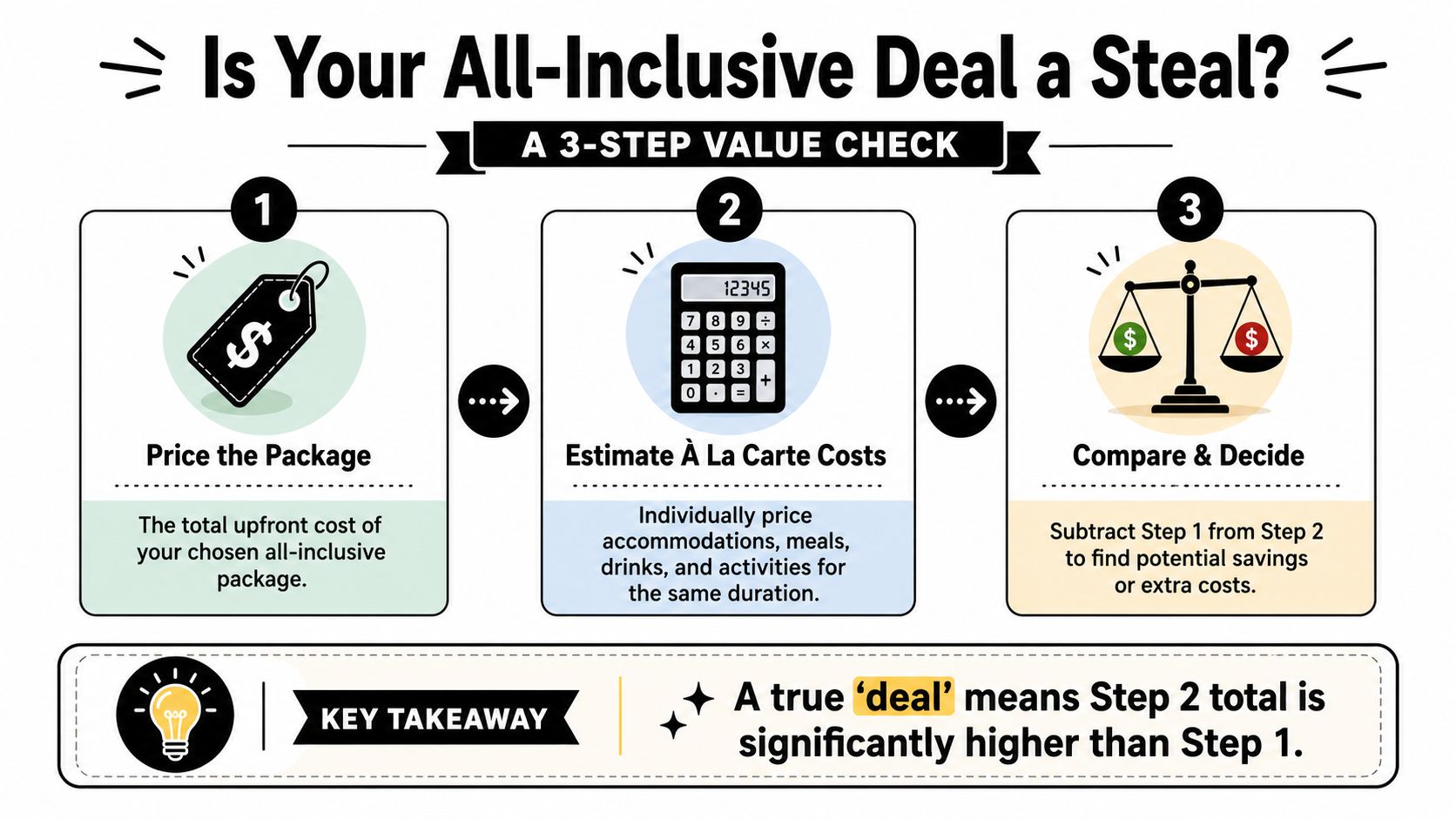
In Key West, a package only deserves your money if it beats the trip you would have booked anyway. That means comparing bundled pricing against your actual room, food, drink, and activity plans, not the fantasy version the booking page implies.
The three-step value check
Price the full package
Use the final checkout number, including taxes, resort fees, and any prepaid charges. The headline rate is marketing, not math.Build your real a la carte version
Price the same room on its own. Then add only the meals, drinks, and activities you would realistically buy. If you usually eat one hotel breakfast, one casual lunch in town, and one nice dinner out, price that. Don't inflate the comparison to make the package look smart.Judge the gap
If the package saves money on spending you were already going to do, book it. If the savings depend on you changing your habits to “get your money's worth,” skip it.
If you want a tighter trip plan before you book, these travel budgeting tips for building a realistic vacation budget will help you avoid paying for a package that only looks efficient on page one.
Focus on the two costs that decide the trip
In Key West, room cost and food usually carry the budget. That is why the best bundles reduce one or both in a clear, measurable way.
A good package does one of three things. It gives you a room discount you could not get separately. It includes meals you would eat at prices below what you would spend on your own. Or it bundles a high-value experience, such as a snorkeling trip or sunset sail, that you already planned to book.
Everything else is secondary.
Stop valuing every perk at face value
Travelers often overpay. Hotels list five or six inclusions, and people count all of them as savings. That's a mistake.
Use a stricter filter:
- Count only what fits your schedule. A daily lunch credit has little value if you'll be out on the water every afternoon.
- Cut the value of throwaway perks. A welcome cocktail, late checkout, or souvenir discount should not swing the decision.
- Treat resort credits with skepticism. Credits often apply to overpriced spa treatments, limited menus, or narrow time windows.
- Check the fine print on gratuities and fees. A package can look cheaper until service charges and taxes show up at checkout.
One more rule matters. If a package pressures you to stay on-property to justify the price, it is not giving you freedom. It is selling you a schedule.
That trade-off can work for some travelers. It is a poor fit for anyone who wants Key West for Duval Street dinners, harbor bars, sunset walks, and spontaneous stops that are better than the average bundled meal.
A smart budget in Key West is not about buying the biggest bundle. It is about paying only for the version of the island you want.
Smart Booking Tips for the Best Key West Deals
Timing matters more in Key West than most travelers realize. Wait too long, and the package you thought would save money starts looking ordinary.
The reason is basic supply and demand. As rooms fill, hotels don't need to sweeten the deal as aggressively. That usually means the best package value shows up earlier or on dates with softer demand.
Book around pressure, not hype
A market snapshot reported by TripAdvisor notes that Key West hotel occupancy reached 61.4% in October 2025, up 15.9% year over year, and that same summary also points to listed all-inclusive resort pricing from about $396 and Expedia all-inclusive hotel rates from $154. You can see the reference in TripAdvisor's Key West all-inclusive resort listings and market summary. The takeaway is straightforward: when occupancy rises, package inventory tightens and the pricing edge shrinks.
That's why I tell budget-conscious travelers to book early if they want a package, or go after off-peak dates if they want more options.
Direct booking versus OTA bundles
A lot of travelers get lazy at this point. They pick one channel and assume it's enough.
I'd compare at least two paths:
- Book direct with the property if the package includes meaningful on-site perks, dining plans, or credits the hotel controls directly.
- Check OTA bundles if you also need flights and want one checkout flow.
- Compare inclusion quality, not just price because two offers with similar totals can deliver very different real-world value.
The smartest way to shop
If you want the best chance at a real bargain, use this sequence:
- Start with your dates. Flexible dates usually beat rigid travel windows.
- Decide your trip style first. Relaxation-first and explore-all-day travelers should not shop the same offers.
- Check flight timing early. These best times to book flights can help you line up air and hotel strategy instead of buying one blindly.
- Read package exclusions line by line; fake value often hides within them.
- Favor modular value. In Key West, selective bundles often beat inflated “all-inclusive” branding.
Book Key West the way locals understand it. As a bundle market, not a blanket-inclusion market.
One more candid point. If you care about sustainable travel, Key West often rewards travelers who spend money intentionally across the island instead of trying to confine the whole trip to one property. That's another reason I prefer packages that leave room for local dining and independent activities.
Sample Itineraries with Estimated Price Ranges
The easiest way to judge all inclusive Key West packages is to picture how they play out in real life. Two travelers can book the same hotel and have opposite outcomes.
The relaxation seeker
This traveler wants ease, not optimization. The hotel is the point.
Day 1
Arrive, check in, settle into the pool or beach area, and stay local for the rest of the day. A meal-inclusive resort package works best here because the traveler will use the included lunch, dinner, and drinks. End the night with a simple walk to sunset viewing, then head back for a low-effort evening.
Estimated daily price range: Mid to higher end, because this traveler gets the most value from fuller hotel inclusions.
Day 2
Slow breakfast on property. Pool time. Maybe a short walk, maybe a spa treatment or cocktail hour if the property offers it. Dinner back at the resort or under a package dining plan.
Why the package works: This traveler spends enough time on-site to justify bundled meals and drinks.
Day 3
One off-property outing in the morning, then return to the hotel rather than building a day around outside spending. That preserves the package value and keeps the trip rhythm calm.
The adventurous explorer
This traveler likes Key West as a base camp, not a cocoon.
Day 1
Arrive and drop bags, then head out. Walk historic streets, grab food where the mood strikes, and catch sunset energy in town. A room-only stay or activity-inclusive bundle is usually better than a meal-heavy package.
Estimated daily price range: Lower to midrange if the room is simpler and spending is directed toward selected experiences instead of bundled dining.
Day 2
Morning snorkel or water excursion, lunch off-property, then an afternoon biking around neighborhoods and the waterfront. Dinner wherever looks good, not wherever the package dictates.
Why the package fails or succeeds: A dining-heavy package loses value fast here. An activity-led bundle can shine because it prepackages the very thing this traveler came to do.
A simple way to choose between them
Ask yourself these questions:
- Do you want your hotel to be the destination? If yes, go resort-heavy.
- Do you book your days loosely? If yes, avoid rigid meal plans.
- Do you care more about convenience or discovery? Your answer should decide the package type.
- Will you be back on property for lunch and drinks? If not, don't pay premium package rates for them.
Most disappointment with all inclusive Key West packages comes from booking the wrong style, not necessarily the wrong hotel. Travelers think they're buying freedom from decisions. What they're sometimes buying is a prepaid routine they won't follow.
Your Ultimate Checklist for Evaluating Key West Packages
Booking day is where Key West package marketing either holds up or falls apart. Pretty photos stop mattering here. What matters is whether the math works for the way you travel.
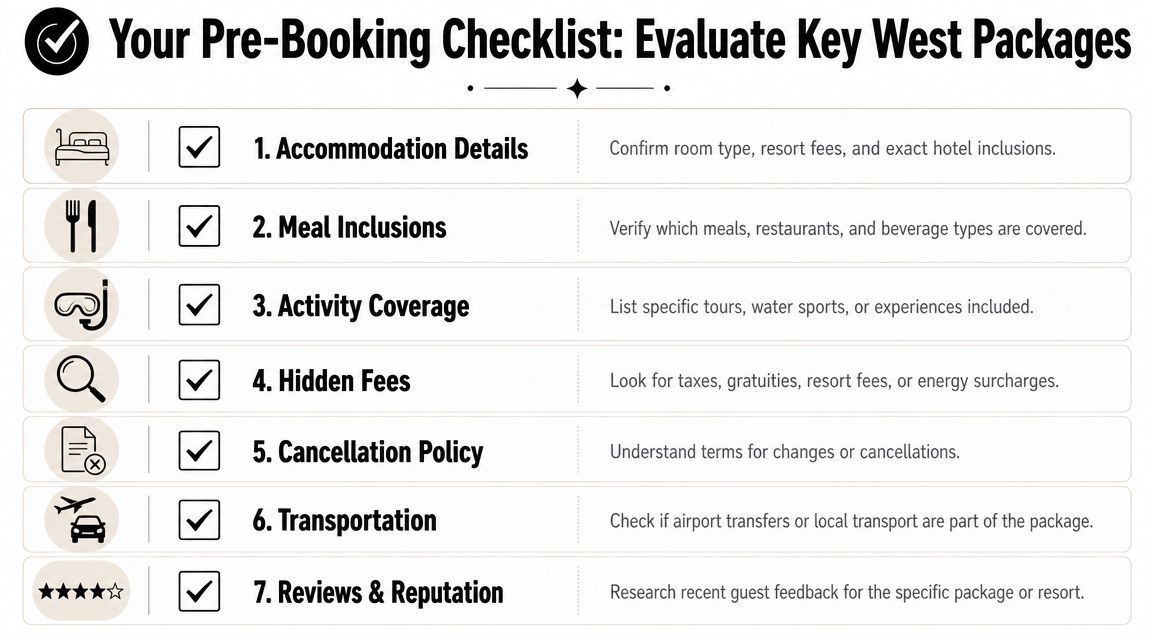
The pre-booking test
Run every package through this screen before you pay.
- What does “all-inclusive” mean here, exactly? In Key West, that label usually means a bundle, not a true resort-wide include-everything stay.
- Which meals are covered, and where? Breakfast included is useful. It is not the same as paying for lunch, dinner, snacks, and drinks.
- Are drinks actually included? Check for limited menus, house-brand restrictions, pool-bar only service, and short serving windows.
- Which activities are included by name? “Resort access” is marketing copy. A snorkel trip, kayak rental, bike use, or spa credit is a real inclusion.
- What transportation is covered? Airport transfers, parking, bikes, shuttle service, and ferry discounts can swing the value more than travelers expect.
- What fees show up later? Resort fees, taxes, gratuities, parking, and premium activity surcharges can wreck a package that looked cheap upfront.
- Will you be on property enough to use what you paid for? This is the question that separates a smart booking from a waste of money.
My blunt recommendation
Reject any package that makes you work to figure out the final cost. If meal rules, drink limits, blackout dates, or extra fees are buried in fine print, move on. Sellers use vague language for a reason.
I also pass on packages that try to trap Key West travelers into an on-site routine. That makes sense at a remote Caribbean resort. It makes less sense on an island where you can walk to better bars, better people-watching, and often better food.
Use this checklist like an accountant, not a dreamer
A package is only a deal if the included value beats what you would book yourself. Be strict.
- Match the package to your real habits
- Count only the inclusions you will use
- Price the same trip as room-only plus separate add-ons
- Read all dining and drink limits
- Check fees, taxes, gratuities, and parking before checkout
- Review cancellation rules and blackout dates
- Decide whether convenience justifies the markup
Keep a separate tab open with this travel planning checklist for comparing trip details so you do not miss small costs that add up fast.
If you remember one thing, remember this. In Key West, the best package is rarely the biggest one. It is the one with the least waste for your style of trip.
Travel Talk Today helps travelers book smarter, spend better, and skip the marketing fog. If you want practical trip planning advice that balances inspiration with real-world budgeting, explore Travel Talk Today .