When you picture Italy, what comes to mind? Is it the monumental history of Rome, the artistic legacy of Florence, or the romantic canals of Venice? While these iconic destinations are undeniably spectacular, they represent just one layer of this country's profound beauty. The true heart of Italy often beats strongest in its smaller, more intimate spaces, away from the throngs of tourists and the predictable itineraries. It’s found in the quiet cobblestone alleys, the lively local markets, and the unassuming trattorias where recipes have been passed down for generations.
This guide is your key to unlocking that deeper experience. We've curated a list of 12 of the most captivating towns in Italy, balancing world-renowned cities with hidden treasures that offer a more authentic glimpse into daily life. This isn't just a list of places to see; it’s a practical toolkit for traveling with intention. For each destination, you’ll find actionable advice tailored for solo adventurers, budget-conscious explorers, and anyone seeking to connect with the local culture on a more meaningful level.
Forget generic recommendations. Inside, we provide specific details on the best times to visit to avoid crowds, realistic budget estimates, and sustainable travel tips to help you leave a positive footprint. We'll show you how to navigate transport, find the most photogenic spots without the clichés, and experience the rhythm of life as the locals do. Get ready to move beyond the surface and discover the soul of Italy, one incredible town at a time.
1. Rome: The Eternal City
While often seen as a sprawling metropolis rather than a quaint town, Rome’s collection of distinct neighborhoods (rioni) gives it the intimate feel of many small towns in Italy fused into one glorious capital. It’s a city where every cobblestone street tells a story, a living museum that pulsates with a vibrant, contemporary energy. You can spend a morning lost in the ancient grandeur of the Roman Forum and Colosseum, and an afternoon sipping espresso in a trendy Monti cafe, feeling the seamless blend of past and present.
This contrast is what makes Rome an essential stop. It offers a historical depth that few places can match, while still being accessible to modern travelers, especially those on a budget. With a bit of planning, exploring Rome’s iconic sites doesn't have to be overwhelming or expensive.
Practical Tips for Visiting Rome
- Smart Sightseeing: Purchase a Roma Pass for discounted entry to museums and unlimited public transport access. For Vatican City, always book your tickets online weeks in advance to skip the notoriously long queues.
- Beat the Crowds: The key to a peaceful visit is timing. Arrive at major attractions like the Colosseum or St. Peter's Basilica right at opening (usually before 9 a.m.) to experience them with fewer people.
- Budget-Friendly Stays: Look beyond the historic center for accommodation. Neighborhoods like San Lorenzo (a lively university district) or Garbatella (known for its unique architecture) offer authentic local life at a fraction of the cost.
- Eat Like a Local: Steer clear of restaurants with picture menus near tourist hotspots. Instead, wander a few blocks away into residential areas to find authentic trattorias where Romans eat. This simple step elevates your culinary experience and saves you money. For more ideas on where to go, see our guide on the best cities to visit in Italy.
2. Florence: Renaissance Gem
The heart of the Italian Renaissance, Florence is less a town and more an open-air museum, where every alleyway and piazza breathes art and history. It’s a city that captivates with the architectural marvel of Brunelleschi's Duomo, the priceless masterpieces of the Uffizi Gallery, and the timeless charm of its cobblestone streets. Florence offers an unparalleled immersion into a pivotal era of human creativity, making it one of the most essential towns in Italy for culture seekers.
This artistic richness makes Florence a dream for photographers and urban explorers, though its popularity requires smart planning, especially during peak months. With a strategic approach, even budget travelers can experience its wonders, finding daily expenses as low as €50-60 during the quieter seasons.
Practical Tips for Visiting Florence
- Book Everything in Advance: Tickets for the Uffizi Gallery and the climb up the Duomo dome sell out weeks, sometimes months, ahead. Booking online is not just a suggestion; it’s a necessity to avoid disappointment.
- Time Your Visit Wisely: Visit during the shoulder seasons (March-April or September-October) for pleasant weather and significantly smaller crowds. This makes exploring the city far more enjoyable.
- Stay Outside the Center: Accommodation in the centro storico is expensive. Look for places in the Oltrarno neighborhood, just across the river. You’ll find authentic artisan workshops, great food, and save 30-40% on your stay.
- Capture the Perfect Shot: For the iconic sunrise shot of the city skyline, head to Piazzale Michelangelo early in the morning. The light is magical, and you’ll share the view with only a handful of others. It’s also a great spot for solo travelers to safely enjoy the scenery; find more inspiration in our guide to the best cities for solo travelers.
3. Venice: The Floating City
There is simply nowhere else on Earth like Venice. This enchanting island city, built entirely on water, trades roads for canals and cars for gondolas. Its labyrinth of narrow alleyways opens unexpectedly onto grand squares, all framed by stunning Byzantine-Venetian architecture. The complete absence of traffic creates a magical, otherworldly atmosphere, making it one of the most romantic and bewildering towns in Italy.
While its popularity means high costs and crowds, a visit to Venice is an unforgettable experience with the right strategy. By visiting in the shoulder season and planning wisely, you can uncover its authentic charm without the overwhelming tourist influx, experiencing the city as the locals do.
Practical Tips for Visiting Venice
- Smart Timing: Visit from November to March to avoid the largest crowds. Prices for accommodation and flights can drop by as much as 40%, and the atmospheric winter mist offers a unique photographic opportunity.
- Budget Accommodation: Stay on the mainland in Mestre or Marghera. These areas are a short, 10-minute train ride away and offer significantly cheaper lodging, allowing you to save your budget for experiences in the city.
- Get a Vaporetto Pass: Instead of buying expensive single-ride water bus tickets, purchase a multi-day vaporetto pass (a 3-day pass is around €40). It provides unlimited travel and is essential for exploring outer islands like Murano and Burano.
- Eat Like a Venetian: Skip the pricey restaurants around St. Mark's Square. Dive into the backstreets to find a bacaro (a local wine bar) and enjoy cicchetti (small, tapas-like snacks) with a glass of wine for a delicious and affordable meal. Discovering other ways to save on your trip can be found in our guide on budget travel hacks.
4. Cinque Terre: Coastal Hidden Gem
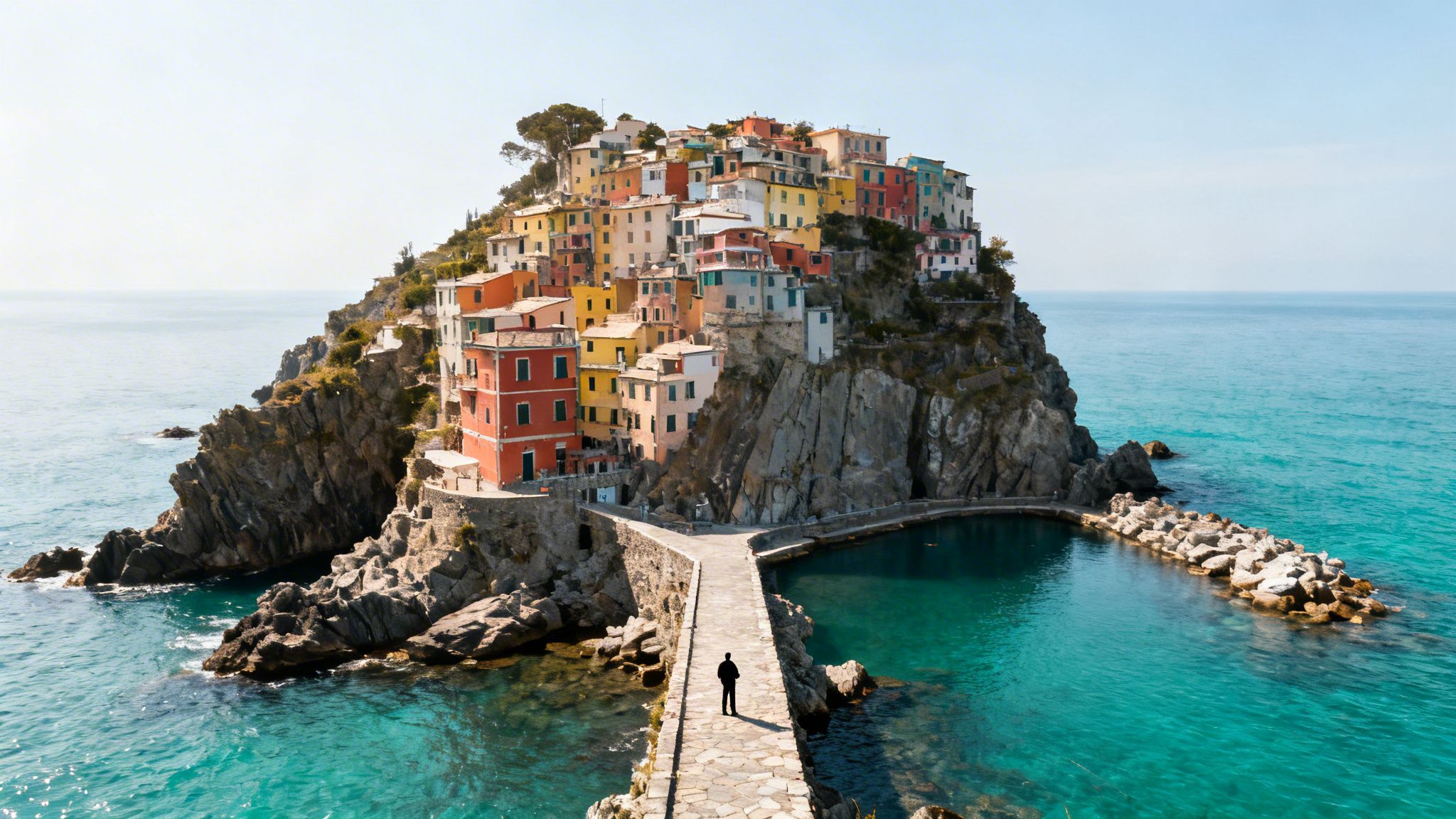
Cinque Terre is not just one town but a string of five enchanting, cliffside villages clinging to the Ligurian coastline. This UNESCO World Heritage site is a testament to slow travel, where centuries-old vineyards are carved into steep terraces and life moves at the pace of the sea. It offers a breathtaking escape into a landscape of dramatic coastal scenery, pastel-colored houses, and authentic fishing traditions, making it one of the most unique collections of towns in Italy.
The region’s charm lies in its car-free centers and the famous hiking trails that connect each village. It’s a place to disconnect from the urban rush and reconnect with nature, savoring homemade pesto and locally produced wine while overlooking the turquoise water. This focus on sustainable, authentic experiences makes it a haven for hikers and anyone looking to escape crowded tourist circuits.
Practical Tips for Visiting Cinque Terre
- Smart Travel Pass: The Cinque Terre Card is essential. For a daily fee, it gives you unlimited train travel between the five villages and access to all the paid hiking paths, which is the best way to explore the area.
- Hike Early: To experience the magic of the trails without the crowds, start your hikes between 6 a.m. and 7 a.m. This lets you enjoy the stunning coastal views in peace before the day-trippers arrive.
- Budget-Friendly Stays: For more affordable accommodation, base yourself in Monterosso or Riomaggiore, which offer a greater selection of guesthouses and homestays. Backpackers often find rooms for around €25-35 per night.
- Eat Smart: Restaurant prices in the villages can be high. Pack your own water and snacks for hiking to save money. For meals, look for small bakeries or "alimentari" (small grocery stores) for delicious, budget-friendly focaccia and local cheeses.
5. Milan: Modern Sophistication
Often overlooked for its more ancient counterparts, Milan is the dynamic heart of modern Italy, where fashion, design, and finance create a rhythm unlike anywhere else in the country. It’s a city of sleek skyscrapers and historic palazzos, a place where a visit to a world-class contemporary art gallery can be followed by an aperitivo along centuries-old canals. This blend of forward-thinking energy and deep-rooted history makes it one of the most compelling towns in Italy for the urban explorer.
Milan trades in sprawling ancient ruins for impeccably curated museums and a vibrant street culture. It’s a city that rewards those who look beyond the obvious, revealing hidden courtyards, innovative design districts, and a culinary scene that is both traditional and cutting-edge. It offers a glimpse into Italy's future while proudly displaying its magnificent past.
Practical Tips for Visiting Milan
- Book Key Tickets: Leonardo da Vinci's 'The Last Supper' is a must-see, but tickets sell out months in advance. Book online as soon as you know your travel dates. The cost is around €15.
- Embrace the Aperitivo: For a budget-friendly dinner, participate in the local tradition of aperitivo. From 6 p.m. to 9 p.m., bars in areas like Navigli offer extensive buffets for the price of a single drink.
- Stay Local: For an authentic Milanese experience, find accommodation in the Navigli district with its charming canals or Porta Garibaldi for its modern architecture and lively nightlife.
- Get Around Smartly: The Milanese metro is efficient and clean. Purchase a day pass for around €7.50 to get unlimited travel, making it easy to explore different neighborhoods from the artistic Isola district to the historic center.
6. Naples: Gritty Authentic Soul
Naples offers an experience that is unapologetically real. It's a city of chaotic energy, profound history, and a passionate soul that pulses through its narrow streets. While some travelers might find its intensity overwhelming, those who embrace it discover one of the most culturally rich and authentic towns in Italy. From the world-class Archaeological Museum to the vibrant street art and the birthplace of pizza, Naples is a sensory feast that rewards the adventurous spirit.
This is a city that defies simple categorization. It is a place of stunning beauty and raw urban grit, where ancient history coexists with a lively, contemporary culture. For budget travelers and food enthusiasts, Naples is a paradise, offering some of the best and most affordable culinary experiences in the country. It’s a destination for those who want to see Italy beyond the polished facade and connect with its true, unfiltered heart.
Practical Tips for Visiting Naples
- Safer Stays: Consider booking accommodation in the more upscale districts of Chiaia or the hillside neighborhood of Vomero. These areas are generally considered safer and more tranquil than the bustling Centro Storico, yet are well-connected by public transport.
- Guided Food Exploration: Naples is a street food mecca. To dive in safely and efficiently, join a guided food tour for around €15-€20. Local experts will lead you to the best pizza, sfogliatelle, and fried delights while sharing cultural insights.
- Easy Day Trips: The ancient ruins of Pompeii are a must-see. A round-trip train ticket costs about €15, with an entry fee of €13, making it an accessible and unforgettable historical excursion.
- Street Smarts: Practice common-sense safety. Avoid displaying expensive jewelry or electronics, and use a money belt or secure body bag for valuables. When exploring, especially as a solo traveler, stick to well-lit areas at night and consider going out in groups.
- Cultural Connection: Learning a few basic Italian phrases like "per favore" (please) and "grazie" (thank you) goes a long way. This simple sign of respect can open doors to warmer interactions and genuine local hospitality.
7. Amalfi Coast: Scenic Southern Splendor
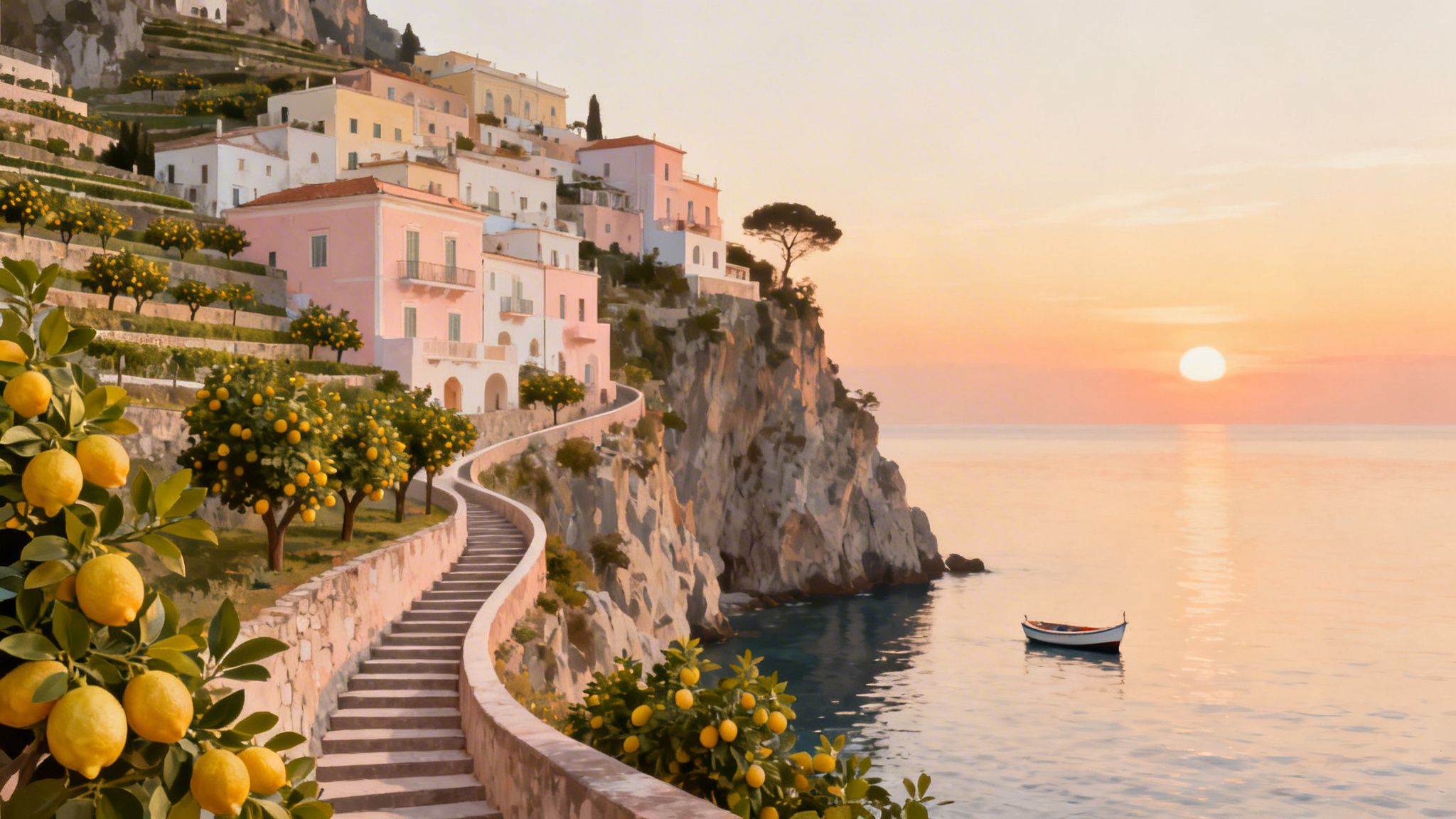
This UNESCO-listed stretch of coastline is not just one town but a breathtaking string of cliffside villages clinging to dramatic shores. The Amalfi Coast combines stunning natural beauty, from turquoise waters to lemon-scented gardens, with the charm of its famous towns like Positano and Amalfi. It’s a place where life slows down, inviting you to savor every panoramic view and sun-drenched moment, making it a dream for romantics and photographers alike.
While notorious for being expensive, the region's splendor is accessible to all with smart planning. The key is to experience its magic without falling into the tourist traps, allowing you to enjoy one of the most beautiful coastlines in the world. Its popularity means you'll share the views, but the scenery is worth it.
Practical Tips for Visiting the Amalfi Coast
- Strategic Stays: Base yourself in more affordable towns like Sorrento or Salerno and take day trips to the main villages. This strategy dramatically cuts accommodation costs while keeping the coast within easy reach.
- Best Time to Visit: Aim for the shoulder seasons of May-June or September-October. You'll find pleasant weather, fewer crowds, and lower prices compared to the peak months of July and August.
- Budget Transport: Skip the pricey ferries for inter-village travel. The SITA buses are a reliable and incredibly cheap alternative, with tickets often costing just a few euros.
- Dine Smart: Avoid the waterfront restaurants where prices are inflated. Walk just one street inland, and you'll discover authentic, delicious meals at half the cost. For an unforgettable experience, hike the Path of the Gods early in the morning for crowd-free vistas. By making conscious choices, your visit can support the local economy more directly; you can find more ideas with these sustainable travel tips.
8. Bologna: Food and Culture Hub
Known as La Grassa (the Fat One), Bologna is Italy's undisputed culinary capital. While it’s a city, its stunning medieval center, endless porticoes, and vibrant local life give it the feel of a perfectly preserved town. Less crowded than its famous Tuscan neighbors, Bologna offers a more authentic slice of Italian life, where the focus is on exceptional food, intellectual curiosity, and architectural splendor. It’s a place to slow down and savor every bite and every moment.
This is a city for those who travel to eat. Bologna is the heart of the Emilia-Romagna region, the birthplace of Parmigiano-Reggiano, prosciutto di Parma, and traditional balsamic vinegar. Beyond its culinary prowess, the city is home to the oldest university in the Western world, infusing its ancient streets with a youthful, energetic atmosphere. This blend makes it one of the most rewarding and genuine towns in Italy to explore.
Practical Tips for Visiting Bologna
- Culinary Immersion: Don’t just eat the food; learn to make it. Book a cooking class or a food market tour in the Quadrilatero district, with prices typically ranging from €25 to €60. This is the best way to understand the city’s soul.
- Budget-Friendly Base: Use Bologna as your strategic hub for exploring the Emilia-Romagna food triangle. Day trips to Modena (for balsamic vinegar) and Parma (for cheese and ham) are easy and affordable by regional train.
- Smart Accommodation: For budget stays, look for guesthouses and B&Bs in the university-adjacent neighborhoods. You can often find rooms for €35-€45 per night, especially during the off-season.
- Eat Like a Bolognese: The local secret is to make lunch (pranzo) your main meal. Many trattorias offer incredible multi-course lunch menus for just €8-€12. Also, remember to ask for tagliatelle al ragù, not spaghetti bolognese.
9. Verona: Shakespeare's City of Romance
More than just the backdrop for Shakespeare's most famous tragedy, Verona is one of the most enchanting towns in Italy, offering a perfect blend of Roman history, medieval charm, and Renaissance art. Nestled along the Adige River, the city exudes a romantic atmosphere without the overwhelming crowds of larger Italian destinations. You can feel its history come alive while exploring the magnificent Roman Arena, then lose yourself in the maze of cobblestone streets that inspired tales of star-crossed lovers.
This accessibility to both epic history and intimate moments makes Verona special. It serves as a fantastic base for exploring the wider Veneto region, from the prestigious Valpolicella vineyards to the shimmering shores of Lake Garda. It's a city that invites you to slow down, attend an opera under the stars, and fall in love with its timeless beauty.
Practical Tips for Visiting Verona
- Smart Savings: Purchase the Verona Card (€25 for 48 hours) for free or reduced entry to most major museums and monuments, including the Arena. It's an excellent value if you plan to visit multiple sites.
- Best Time to Visit: Aim for the shoulder seasons of April-May or September-October. You'll enjoy pleasant weather and fewer tourists than during the peak summer opera festival (June-September).
- Beyond the Balcony: To escape the Romeo and Juliet crowds, dine in authentic osterias in quieter neighborhoods like Veronetta, just across the river. You’ll find better food at more reasonable prices.
- Explore the Region: Use Verona as your hub for day trips. A guided wine tour to the nearby Valpolicella vineyards costs around €30-€50 and often includes several tastings. Regional trains also offer easy access to Lake Garda.
10. Siena: Medieval Tuscan Jewel
Stepping into Siena is like traveling back in time to the heart of medieval Tuscany. This perfectly preserved hill town is a masterpiece of Gothic architecture, where life revolves around the magnificent, shell-shaped Piazza del Campo. Famous for its thrilling biannual horse race, the Palio, Siena offers a more intimate and arguably more authentic Tuscan experience than its larger neighbor, Florence. It's a place for slow travel, where you can immerse yourself in art, culture, and the rolling hills of Chianti just beyond the city walls.
The city’s charm lies in its commitment to tradition and its slower pace of life. Here, you can truly savor the flavors of the region, from a glass of Brunello to a plate of handmade pici pasta, without the overwhelming crowds of other major Italian destinations. Siena is one of those special towns in Italy that rewards those who wander its narrow, winding alleys.
Practical Tips for Visiting Siena
- Optimal Timing: Visit during the shoulder seasons of April-May or September-October for pleasant weather and fewer tourists. Unless you're specifically going for the Palio (July 2nd & August 16th), avoid these dates as the city becomes extremely crowded and expensive.
- Budget Accommodation: For more affordable stays, look for lodging in the university neighborhoods, which are a short walk from the center but offer a more local and budget-friendly atmosphere.
- Panoramic Views: For the best view of the city and the surrounding Tuscan countryside, climb the 400 steps of the Torre del Mangia. The breathtaking panorama is well worth the effort.
- Go Beyond the Piazza: Explore the quieter, less-trafficked areas like the Contrada della Chiocciola or the area around the Basilica di San Domenico to find hidden gems and see daily Sienese life unfold. Day trips to nearby towns like Monteriggioni and San Gimignano are also easily managed.
11. Palermo: Sicilian Chaos and Culture
Sicily's capital, Palermo, is a city of magnificent contradictions. It’s a place where Arab domes sit beside Baroque churches, and the boisterous energy of ancient street markets flows through grand, sun-faded piazzas. Far from the polished feel of some other towns in Italy, Palermo offers an unfiltered, vibrant experience, a sensory overload of sights, sounds, and flavors that reflects its complex Arab-Norman and Italian heritage.
This city is for the traveler who wants to feel the pulse of authentic Sicily. It is a culinary heartland where street food is a revered art form and every corner reveals another layer of history. Embracing its chaotic charm is key to unlocking the soul of this unforgettable destination.
Practical Tips for Visiting Palermo
- Safe Stays: For first-time visitors or those seeking a quieter base, consider staying in the seaside neighborhood of Mondello or the historic, revitalized Kalsa district. While atmospheric, areas like Vucciria can be intense at night.
- Market Immersion: To truly understand Palermo’s food culture, take a guided tour of the Ballarò or Capo markets. Arrive between 7 and 9 a.m. to see them at their most authentic, bustling with locals.
- Mindful Exploration: Practice street awareness, especially after dark. Carry minimal valuables, keep your belongings secure, and avoid walking down empty or poorly lit streets alone.
- Eat Smart: The best food is often found where the locals are. Skip the tourist-heavy restaurants near major landmarks and dive into the side streets to discover authentic trattorias and street food stalls. This is where you’ll find the real taste of Palermo.
12. Lucca: Walled Renaissance Town
Nestled in Tuscany, Lucca offers a refreshing escape from the crowds that fill nearby Florence. This enchanting town is completely encircled by massive, intact Renaissance-era walls, which have been transformed into a tree-lined pedestrian promenade. Inside, a labyrinth of quiet cobblestone streets, charming piazzas, and Romanesque churches awaits, creating an atmosphere of authentic, slow-paced Italian life.
Lucca is perfect for travelers who want to immerse themselves in genuine Tuscan culture without a rigid itinerary. Its laid-back vibe and safe, walkable center make it one of the most delightful towns in Italy for romantic getaways, solo explorers, and anyone seeking a more relaxed experience. It’s a place where the main activity is simply enjoying the beautiful surroundings.
Practical Tips for Visiting Lucca
- Cycle the Walls: The absolute must-do activity is renting a bike (€8-15 per day) and cycling the 4.2-kilometer loop on top of the city walls. It provides stunning panoramic views and a unique perspective on the town.
- Climb Guinigi Tower: For a small fee (€4), you can ascend this famous tower, which is uniquely crowned with a garden of holm oak trees, offering the best viewpoint over Lucca’s rooftops.
- Embrace the Aperitivo: In the early evening, join the locals at a cafe in the stunning oval-shaped Piazza dell'Anfiteatro for a pre-dinner drink and snacks. It’s a quintessential Lucca experience.
- Authentic Stays: For true immersion, book accommodation within the old town walls. You can find lovely apartments and guesthouses for as little as €40-55 per night, especially during the shoulder seasons (spring and autumn). For more inspiration on undiscovered spots, explore our guide to hidden gems in Europe.
12 Italian Towns Comparison
Crafting Your Perfect Italian Journey
From the moment you step off the plane, Italy grabs hold of you. The journey through its captivating landscape, as we've explored, is not a simple A-to-B itinerary but a rich tapestry woven from ancient history, artistic brilliance, and the simple, profound joy of living. We've wandered through the grand boulevards of Rome, floated down the silent canals of Venice, and felt the vibrant, chaotic pulse of Naples. Each destination, from the sun-drenched cliffs of the Amalfi Coast to the medieval heart of Siena, offers a distinct flavor, a unique story waiting to be discovered.
The true magic, however, lies not in just seeing these places but in experiencing them. This guide was designed to be more than a simple list; it's a foundation for building an adventure that resonates with you personally. The challenge isn't finding beautiful towns in Italy; it's choosing which ones will form the chapters of your personal travel story.
Weaving Your Itinerary: From Inspiration to Action
The most rewarding trips are born from intentional planning. Instead of rushing to tick off every major landmark, consider what truly draws you to Italy. Is it the promise of culinary discovery in Bologna, the echoes of Renaissance masters in Florence, or the serene escape behind Lucca’s ancient walls?
The best Italian itinerary is not the one that covers the most ground, but the one that allows you to breathe in the atmosphere of the places you visit.
Think of the practical insights we've shared for each town as building blocks. Combine them to create a journey that fits your style and budget. Perhaps you'll pair the artistic intensity of Florence with the slower, more rustic pace of a smaller Tuscan town like Siena. Or maybe you'll contrast the northern sophistication of Milan with the raw, magnetic energy of Palermo in the south. The key is to create a rhythm that feels right for you, balancing iconic sights with the quiet moments of discovery that often become the most cherished memories.
The Philosophy of Meaningful Travel
At its core, this exploration of Italy's towns is an invitation to embrace a more conscious way of traveling. It's about prioritizing depth over breadth, connection over consumption. By following the principles of slow and sustainable travel, you do more than just see Italy; you become a part of its daily life, even if only for a short time.
Here are the core takeaways to carry with you:
- Travel with Intention: Don't let your trip be dictated by a generic checklist. Ask yourself why you want to visit each place. Your answer will guide you toward more personal and fulfilling experiences.
- Embrace the Local Rhythm: Choose the local trattoria over the tourist trap. Learn a few phrases in Italian. Shop at the morning markets. These small efforts build bridges and create authentic connections.
- Flexibility is Your Greatest Asset: Some of the best travel moments are unscripted. Allow yourself the freedom to linger in a piazza that captures your heart or to take a spontaneous detour down a charming alleyway. Your itinerary is a guide, not a contract.
- Safety and Awareness are Empowering: Especially for solo travelers, being prepared is the key to traveling with confidence. Our safety notes for each city are designed to empower you to explore freely and securely.
Your Italian adventure is a blank canvas. Whether you spend your days deciphering ancient ruins, perfecting your photography skills in Cinque Terre, or simply savoring a perfect espresso in a sunlit square, you are crafting a story that is uniquely yours. The spirit of la dolce vita isn't found in a single landmark or a famous dish; it's a state of mind, an appreciation for the beauty in the everyday. Go find your version of it among the incredible towns in Italy.
Ready to dive deeper and plan your next adventure with confidence? The Travel Talk Today community is your go-to resource for practical advice, insider tips, and supportive travel planning tools specifically designed for explorers like you. Join us at Travel Talk Today to access curated guides and connect with fellow travelers who are passionate about discovering the world.