You have this incredible dream of getting out there, seeing the world, and making a real difference. But then reality hits: the price tag. It’s a story I hear all the time. But here's the secret—volunteering abroad doesn't have to drain your bank account.
Volunteering abroad for cheap isn’t about cutting corners on your impact; it’s about being smart, resourceful, and knowing where to look. With the right approach, you can find incredible opportunities that cost just a few hundred dollars a month.
Making Meaningful Volunteering Affordable
When most people picture volunteering overseas, they think of those glossy brochures with all-inclusive packages and eye-watering fees. Those definitely exist, but they're just one small piece of the puzzle.
The real key to an affordable adventure is a simple mindset shift. Instead of asking, "Can I afford to do this?" start asking, "Which affordable path is the right one for me?" Once you do that, a whole world of possibilities opens up.
Three Paths To Affordable Volunteering Abroad
So, how do you actually do it? There are really three main ways to approach this, each with its own pros and cons. Think about what matters most to you—structure, independence, or rock-bottom cost—and see which one feels like the best fit.
Choosing the right model is the most critical decision you'll make in this entire process. It sets the stage for everything that follows, from your budget and fundraising goals to the kind of experience you’ll ultimately have on the ground.
This flowchart can help you visualize the decision-making process. It really boils down to how much support you need versus how much you want to save.
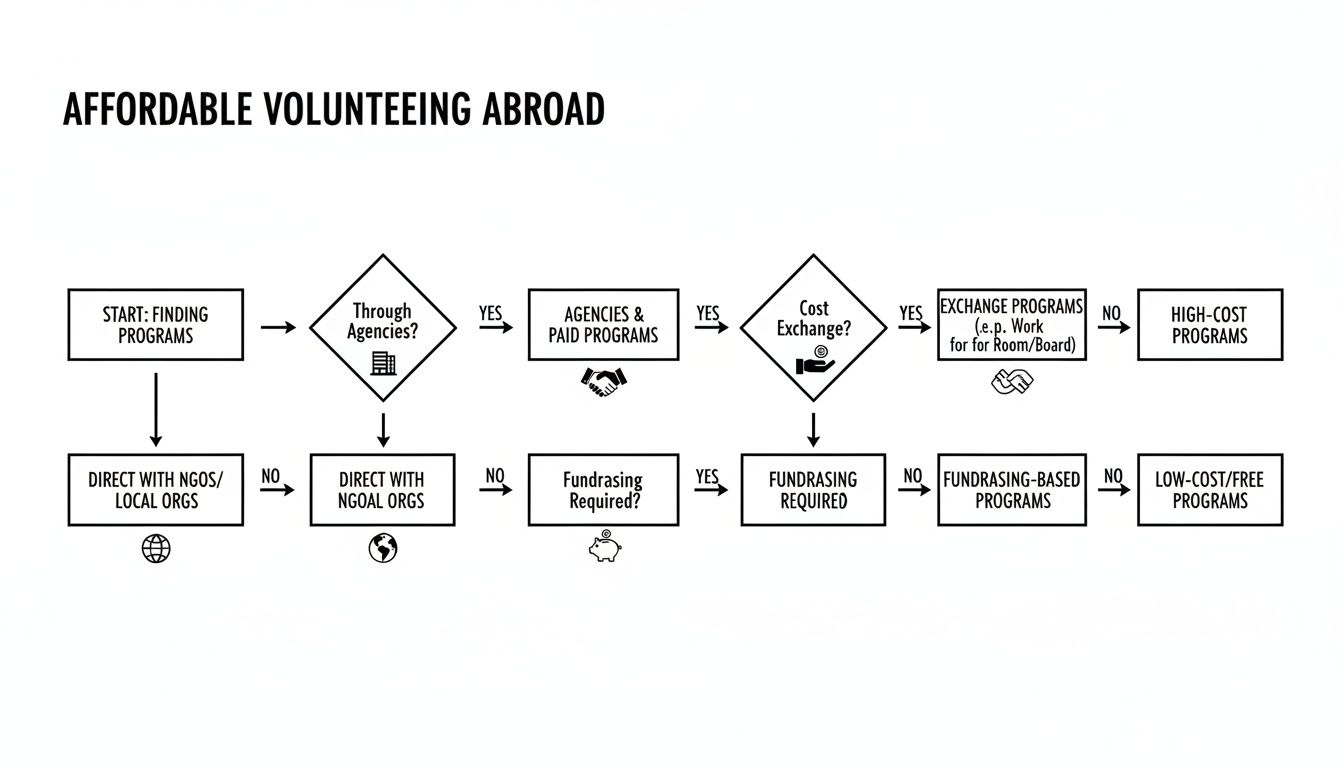
As you can see, there’s a trade-off. Agencies offer a safety net, but you pay for it. Going direct offers incredible value and authenticity, but it puts all the responsibility squarely on your shoulders.
By choosing a path that fits your budget, you're not just saving money; you're also taking ownership of your experience. This approach often leads to deeper cultural immersion and a more authentic connection with the community you're serving.
At the end of the day, this is about finding a way to give back without creating a financial burden for yourself. It’s also about ensuring your presence is a positive one. To learn more about how to make sure your trip is helpful and not harmful, check out this guide on sustainable tourism practices. It’s full of great insights for anyone wanting to travel with intention.
Alright, let’s dig in. You’ve got the dream, you’ve got the drive, but now comes the part that can feel like searching for a needle in a haystack: finding a legitimate, low-cost volunteer opportunity.
This is where you shift from dreamer to doer. It's less about endless scrolling and more about becoming a savvy researcher who knows how to spot the real deal. The internet is teeming with incredible grassroots projects, but they rarely have the marketing firepower of the big placement agencies. You just have to know how to find them.
The trick is to think like a detective. Forget generic searches. You need to get hyper-specific to cut through the noise and connect directly with the people on the ground.
Master Your Search Game
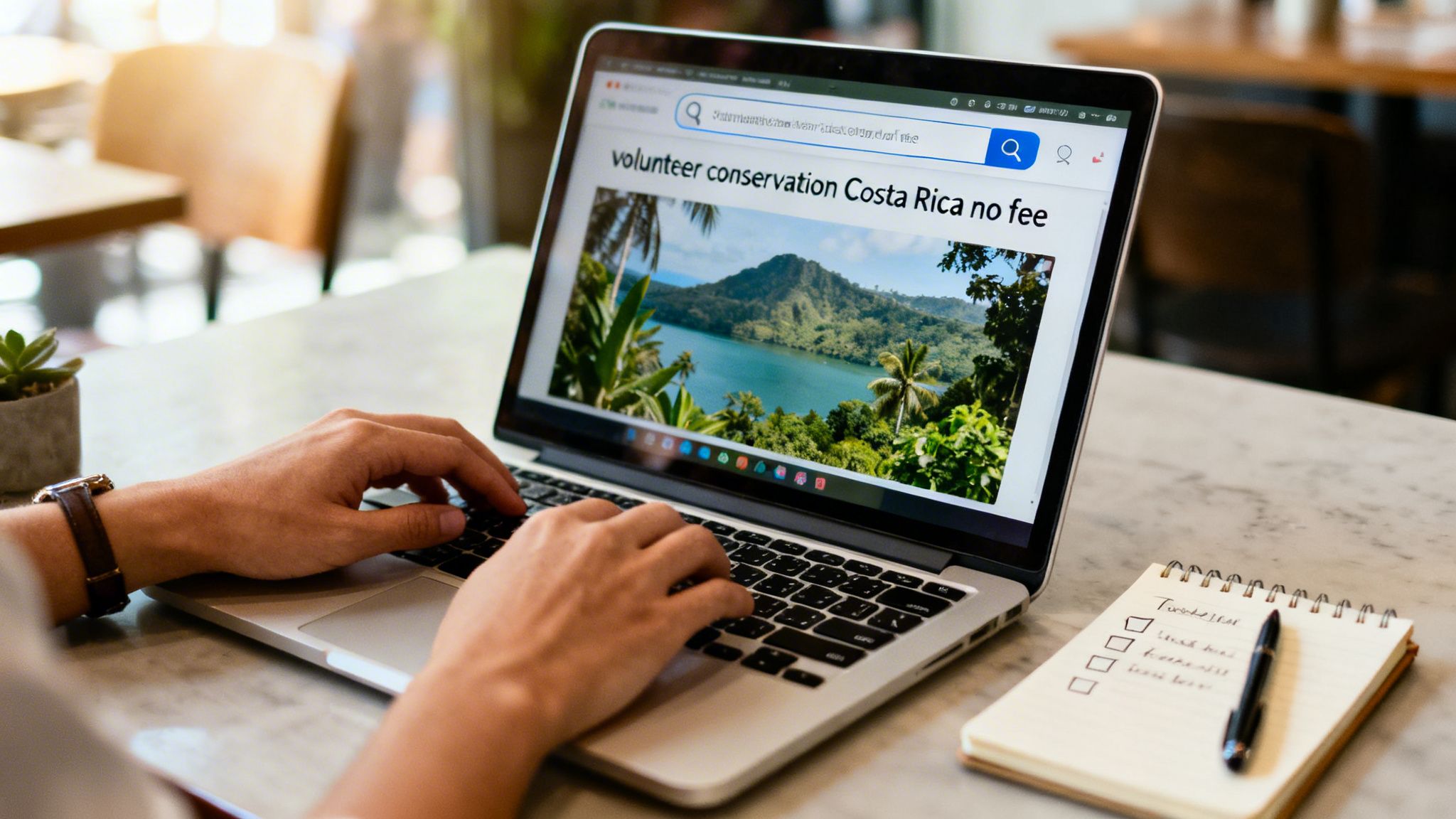
Your search bar is your most powerful tool for volunteering abroad for cheap. It’s all about combining the right keywords to unearth those hidden gems. Think layers.
- Go straight to the source: Combine your destination and cause with terms like "NGO" or "local organization". Think: "sea turtle conservation Costa Rica NGO" or "women's empowerment Peru local organization." This helps you find the actual projects, not just the companies that sell placements with them.
- Use the magic words: Add "no-fee" or "low-cost" to your search. "Ecuador animal rescue no-fee volunteer" will give you a completely different set of results than a broader search.
- Look for proof of impact: Try adding "annual report" or "financial transparency" to find organizations that are open and proud of how they operate.
This simple shift in how you search is what separates the budget-savvy traveler from everyone else. It’s how you bypass the expensive middlemen and ensure your time—and any money you do contribute—goes directly to the cause.
A Real-World Example: Finding a Conservation Role
Let’s talk about a volunteer I know, Alex. Alex was dead set on working with wildlife in Central America but was on a serious budget. At first, the search results were discouraging, filled with programs costing thousands.
So, Alex got specific. The winning search query? "Costa Rica wildlife rescue volunteer direct no program fee."
This led to the simple, no-frills website of a small, locally-run sloth sanctuary. It wasn't slick, but it was real. It clearly laid out their mission and what they needed from volunteers. Alex didn't just apply; a thoughtful email was sent with specific questions about daily tasks, what the fee did cover (a bunk bed and two meals a day), and what it didn't (flights, insurance, weekend fun). That direct conversation built trust and confirmed it was exactly the kind of authentic, low-cost opportunity they were looking for.
How to Vet Any Volunteer Organization
Found a promising lead? Fantastic. Now it’s time to put on your investigator hat. A credible, ethical organization will welcome your questions with open arms. Your mission is to confirm they are responsible, sustainable, and truly making a difference.
Here’s what you need to ask:
- Where does my money actually go? Don't be shy. Ask for a clear breakdown of any fees. A legitimate organization will have no problem explaining how your contribution supports the project, local staff salaries, and community initiatives.
- What's your relationship with the local community? The best projects are either community-led or have deep, respectful ties to the people they serve. You want to find an organization that empowers locals, not one that creates dependency.
- Can I talk to someone who has volunteered before? This is a huge one. An organization that’s confident in its work will happily connect you with past volunteers who can give you the real, unvarnished story of their experience.
Be wary of anyone who gets cagey about finances, can't clearly explain their long-term impact, or uses high-pressure tactics to get you to sign up. True impact is built on transparency and trust, not sales pitches.
Take Costa Rica, for example. It’s a hotspot for affordable conservation work, and for good reason. You can find programs starting from just $250 per week. It's set to be a top-five global destination in 2025 as the volunteer tourism market grows toward a projected $1,558.59 million by 2033. I've seen budget travelers find off-season flights from Europe for around $450, and with homestays available for $15/night, a two-week trip can easily come in under $1,000.
Ultimately, finding the right fit comes down to your own due diligence. When you combine smart searching with critical vetting, you’ll find a placement that aligns with your values, your budget, and your desire to make a real difference.
For a deeper dive into specific programs that tick these boxes, check out our curated guide on finding affordable volunteer abroad programs that fit your goals.
Building Your Realistic Volunteer Budget
Let’s be honest: talking about money can feel like the least exciting part of planning an adventure. But getting real with your budget isn't about limiting your dreams—it's about making them happen. A solid financial plan is your roadmap to freedom, turning that "what if" anxiety into a confident "I can do this."
Think of it this way: every minute you spend sorting out the numbers now is a minute you won't spend worrying about your bank account while you're actually out there, making a difference. The goal is to account for everything, so there are no surprises later on.
The True Cost of Volunteering
So, what does it really cost to volunteer abroad? The answer lies far beyond the program fee you see advertised online. To get a true picture, you need to think about the entire journey from start to finish.
Your expenses will generally fall into three main buckets:
- Getting There: This is all the prep work. We're talking flights, visa fees, essential vaccinations, and a good travel insurance policy. These are the big-ticket items you'll need to cover before you even think about packing.
- The Program Itself: This is where things can vary wildly. If you go with a placement agency, this is your biggest expense. For a work-exchange, it might just be a small membership fee. And if you connect directly with an NGO, it could be zero.
- Living Like a Local: Don't forget your day-to-day spending money! This covers everything from grabbing a coffee and taking the local bus to weekend excursions and picking up souvenirs. This category is so easy to underestimate, but it's crucial for a realistic budget.
Breaking down your costs this way helps you see where every dollar is going. For a deeper dive into organizing your finances, check out our guide on the 7 travel budget categories that save you money.
Sample Budgets For Volunteering Abroad
To see how these numbers play out in the real world, let's look at two totally different volunteer scenarios. This table illustrates how the type of program you choose can dramatically shift your costs, proving that a longer trip isn't always the more expensive one.
As you can see, the three-month work-exchange in Vietnam costs about the same as a one-month program in Costa Rica. Why? The near-zero program fee and lower daily living costs in Vietnam make all the difference, opening the door to a much longer, more immersive experience for the same price.
Your budget is your story told in numbers. It reflects your priorities, your travel style, and the path you’ve chosen. Getting it right is the foundation of a successful and stress-free volunteer experience.
Speaking of Vietnam, it's a perfect example of how budget-friendly destinations are capturing the hearts of volunteers. Interest in the country has absolutely exploded, with searches for volunteer opportunities soaring by an incredible 2,800% in Q3 2025.
It’s easy to see why. Affordable programs in this Southeast Asian gem can start as low as $200 per week, often bundling in homestay accommodation, meals, and even airport pickup. This massive trend shows that with smart planning, you can find life-changing opportunities in amazing places without breaking the bank.
Funding Your Trip With Creative Strategies
You’ve mapped out your budget and have a clear financial goal. Awesome. Now for the fun part—making that number a reality. Funding your volunteer trip is so much more than just saving money. It's your first chance to share your passion, bring your community along for the ride, and show how committed you are to making a difference.
Forget the old-school bake sale. These days, fundraising is all about telling a great story that truly connects with people. Your "why"—the reason you feel so strongly about this work—is your most powerful tool. People don't just donate to a trip; they invest in a cause they believe in, led by someone they trust.
Crafting a Compelling Online Campaign
Your online fundraising page on a platform like GoFundMe or FundMyTravel is your digital home base. It's where you invite everyone into your world and ask them to be part of your journey. A powerful campaign isn't a plea for cash; it's an invitation to join something bigger than yourself.
Here’s how to make it count:
- Lead with your heart: Don't just say what you're doing. Explain why this particular cause, whether it's saving sea turtles or teaching kids to read, means the world to you. Get personal.
- Be totally transparent: Break down your costs. When people can see exactly where their money is going—like "$25 covers my food for a day" or "$100 helps buy classroom supplies"—they feel much more connected to their contribution.
- Show the real impact: Talk about the organization you're joining and its mission. Help your supporters see the tangible difference their donation will make in a community or an ecosystem.
When you do this, you’re not just asking for money. You’re building a team. Your friends, family, and followers become genuine stakeholders in your mission, cheering you on from start to finish.
Thinking Beyond the "Donate" Button
While online platforms are amazing, never underestimate the power of good old-fashioned, face-to-face connection. Hosting a small, local event can build incredible momentum and bring your community together in a way a screen never can.
Get creative! Instead of a generic party, why not host a trivia night themed around your destination country? Or maybe a "pay-what-you-can" yoga class in the park? You can also offer up your own skills—like pet-sitting, tutoring, or a weekend of yard work—with all the earnings going straight into your volunteer fund. These personal touches often feel more meaningful and engaging than just sharing a link.
Volunteer Spotlight: Sarah's Story
Sarah, an aspiring teacher, needed to raise $2,000 for a six-week literacy program in Nepal. She launched an online page detailing her passion for education and a clear budget. To complement it, she hosted a community storytelling night where friends shared travel tales. The combination of a powerful online narrative and a unique local event helped her fully fund her trip in just one month.
Unlocking Grants and Scholarships
Here’s a pro tip that so many people miss: look for grants and scholarships. This is one of the absolute best ways for volunteering abroad for cheap. Countless foundations and organizations exist specifically to support international volunteers.
Start searching for terms like "volunteer abroad grant," "international service scholarship," or "youth travel funding." Check out resources like the Fund for Education Abroad or see if the volunteer organization you chose offers its own grants.
When you apply, really tailor your essays. Show them exactly how your passion and skills are a perfect match for their mission. A thoughtful, well-written application can dramatically reduce your out-of-pocket costs. And for even more ideas, our guide on the best credit cards for travel rewards has some great tips for covering flights and other big-ticket items with points.
You've picked your program, you’ve sorted out the budget, and the dream of volunteering abroad is starting to feel incredibly real. This is the exciting part! Now, it's all about nailing down the final details—the little things that will make the difference between a good trip and an unforgettable one.
This isn't just a checklist of chores; it’s the final stretch of your preparation. Each visa form filled out, each vaccine received, and each item packed is one step closer to your adventure. Getting this stuff right means you can land with confidence, ready to dive in and focus on what you came to do: make a difference.
Cracking the Code on Visas and Paperwork
Let's be honest, visas can feel like a bureaucratic nightmare. But with a little bit of forward planning, they are totally manageable. The rules can be wildly different from one country to another and often depend on how long you're staying, so you absolutely cannot leave this to the last minute.
Your first stop should always be the official embassy or consulate website for your destination. That’s the only place you'll find a truly accurate, up-to-date source of information—don't stake your trip on a random blog post from three years ago. Some countries might let you waltz in with a visa-on-arrival, while others will want you to start a detailed application process months ahead of time.
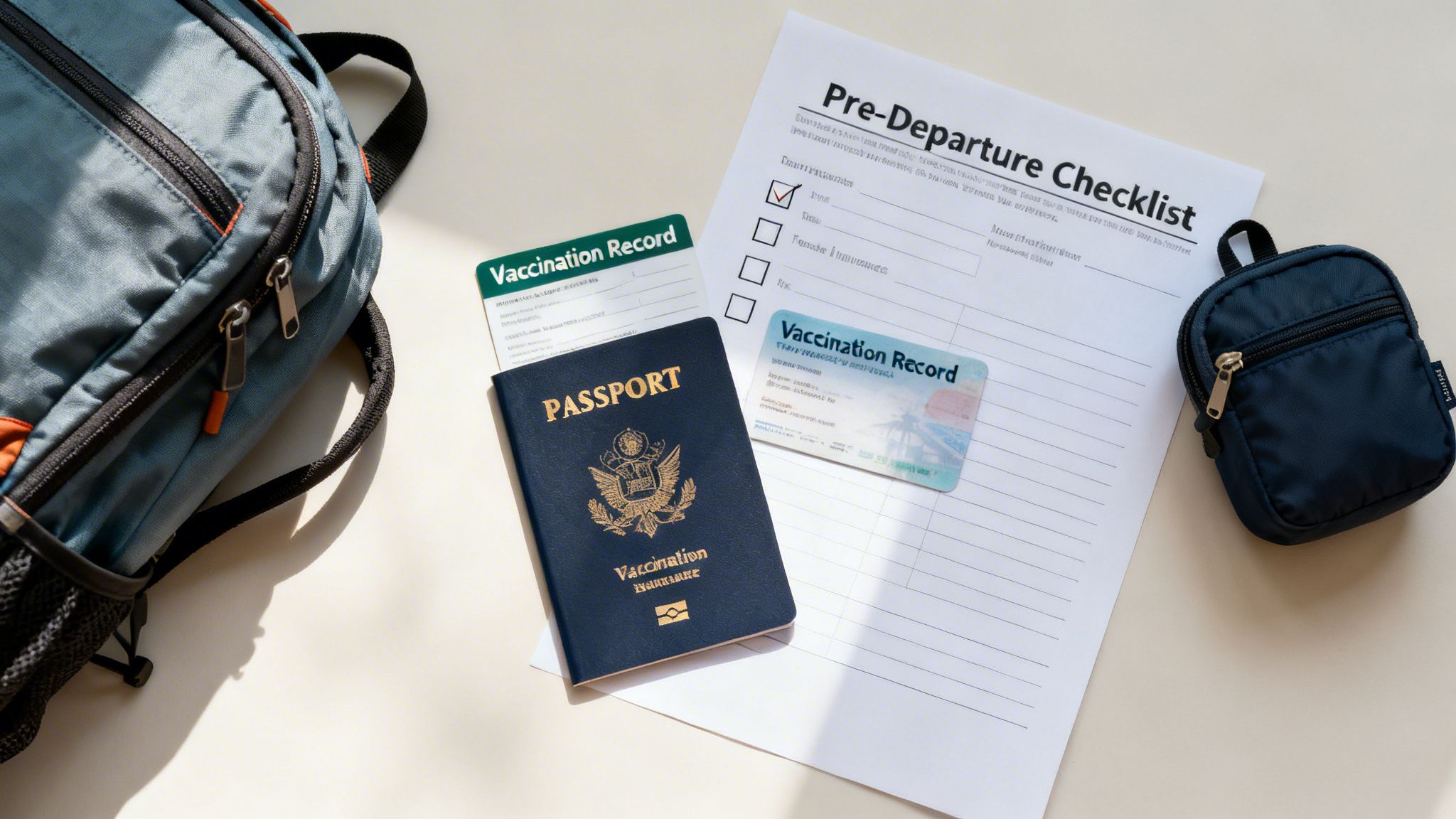
- Go Digital (and Analog): Scan and make paper copies of your passport, visa, flight details, and your official acceptance letter from the volunteer organization. Keep the copies separate from the originals. Trust me on this one.
- The Six-Month Rule: Check your passport's expiration date. It needs to be valid for at least six months after the day you plan to fly home. Many countries will turn you away at the border if it's not.
- Proof You're Leaving: Some border agents will want to see proof of onward travel, like your return flight ticket. Have it handy, either printed or on your phone.
Why You Can’t Afford to Skip Travel Insurance
I know, I know. When you're volunteering abroad for cheap, it’s tempting to cut corners. Travel insurance is not the place to do it. Think of it this way: a single unexpected medical issue could end your trip and land you with a bill for thousands of dollars. It's just not worth the risk.
Here’s the catch: your average, run-of-the-mill travel insurance often won't cover volunteering, especially if your work is physical or involves animals. You need a policy built for what you’re actually doing.
Make sure any plan you consider has:
- Solid Medical Coverage: This is the big one. It should cover everything from a nasty stomach bug to a serious emergency that requires medical evacuation.
- Volunteer-Specific Protection: Read the fine print! Double-check that the exact type of work you’ll be doing is listed and covered.
- Gear and Gadget Coverage: Having protection for your backpack, camera, or laptop brings a huge amount of peace of mind.
Companies like World Nomads or SafetyWing are popular with long-term travelers for a reason—they offer flexible plans that often meet the needs of volunteers. Read every word before you buy.
The Art of Packing Light and Smart
Packing for a volunteer trip is a skill. The goal is to be prepared for anything without feeling like you're hauling a small car on your back. It’s all about versatile, durable, and multipurpose items. For a really deep dive on this, our complete guide on how to plan a backpacking trip has some fantastic advice.
Packing smart isn’t about bringing everything you might need; it's about bringing only what you can’t live without. Every item should earn its place in your bag by serving multiple purposes.
Here are a few non-negotiables to get you started:
- A Solid First-Aid Kit: Pack the basics like bandages and antiseptic wipes, but also include any personal medications you need. It’s wise to carry these with a copy of your prescription or a doctor's note.
- Culturally Respectful Clothing: Do your homework on local customs. In many communities, this means lightweight, breathable clothes that cover your shoulders and knees.
- A Portable Power Bank: An absolute lifesaver. You’ll be so grateful for it when you’re on a long bus ride or staying somewhere with spotty electricity.
- A Small Gift from Home: This is such a simple but meaningful gesture. Bringing something small to thank your host family or local project leader goes a long way in building connections.
Taking care of these final steps is about more than just logistics. It’s about creating a foundation for an incredible experience, so you can show up ready to be present, engaged, and truly helpful from day one.
Got Questions? Let's Get You Some Answers
As you stand on the brink of this incredible journey, it's totally normal for a few last-minute questions to be swirling around in your head. Let's clear up those final uncertainties, so you can swap any lingering anxiety for pure, unadulterated excitement.
Think of this as your final confidence boost before you take the leap. Getting these things straight is the last step in turning that dream of volunteering abroad into a well-planned reality.
Are "Free" Volunteer Programs Actually Free?
This is probably the biggest question out there, and the honest answer is: it's complicated. In the world of budget travel, "free" rarely means you won't spend a single cent.
What it usually means is that the organization hosting you won't charge a program fee to participate. This is a huge deal—it knocks out what is often the single biggest expense. But you're still on the hook for getting yourself there and staying safe.
You'll almost always need to cover:
- Your round-trip flights.
- Any visa application fees for your destination country.
- Good travel and medical insurance (this is non-negotiable!).
- Necessary vaccinations or pre-trip medical checks.
The real magic of these "no-fee" gigs, especially the kind you find on work-exchange sites or with small, local NGOs, is that they often include room and board. In exchange for a few hours of your time each day, you get a place to sleep and meals on the table. That simple trade cuts your day-to-day spending down to almost nothing.
The bottom line: "Free" volunteering isn't a free vacation. But it is, without a doubt, the foundation for the cheapest and most authentic way to make a difference abroad. Just make sure you get it in writing what's covered before you commit.
How Do I Make Sure My Volunteering Is Ethical?
This is everything. Your goal is to make a positive impact, and that starts by choosing a project built on respect and sustainability, not pity.
Ethical volunteering is a partnership. It’s about lending your energy to community-led initiatives that empower local people for the long haul, rather than creating a cycle of dependency.
Your research here is absolutely crucial. The first and most important rule is to avoid any program involving direct, hands-on work with children in orphanages. Decades of solid research have shown this model can be incredibly harmful, often fueling exploitation and causing deep-seated attachment issues for the kids.
Instead, look for projects that are all about sustainable, long-term solutions. You want organizations that are transparent, driven by the community they serve, and willing to answer your toughest questions.
A genuinely ethical organization will be happy to talk about:
- How They Measure Impact: Do they have a real way of tracking their progress and making sure their work is actually helping?
- Local Leadership: Are local people in charge and making the decisions for their own community?
- Their Child Protection Policy: Even if you're not working with kids, any serious organization will have one.
Your job is to show up as a respectful partner and a willing pair of hands, not a savior. Choose a project that puts the local community first, and you’ll know your contribution is a responsible and meaningful one.
Can I Volunteer Abroad If I Don't Have Special Skills?
Yes! A thousand times, yes. This is a common fear that holds way too many amazing people back.
While a few very specific roles might require a doctor or an engineer, the vast majority of volunteer projects value your attitude and effort far more than your resume.
Honestly, the most sought-after qualities are often the simplest ones:
- A strong work ethic and a willingness to get your hands dirty.
- A positive, flexible attitude for when things inevitably don't go as planned.
- Genuine enthusiasm and a real desire to be part of the team.
So many of the skills you'll need—whether it's practicing English conversation with students, learning basic construction techniques, or helping with daily animal care—can be taught right there on-site. The project leaders get it; you're there to learn just as much as you are to help.
Be upfront about your experience on your application, but never, ever discount the power of your energy and commitment. Your passion is your greatest asset.
What's the Smartest Way to Handle Money on the Road?
Figuring out your money strategy before you go is the secret to staying on budget and keeping your stress levels low. A little prep now will save you a fortune in fees and a ton of headaches later.
First, get the right bank account. Find a checking account that has no foreign transaction fees and—the holy grail—reimburses you for international ATM fees. Banks like Charles Schwab and Capital One 360 are legendary among travelers for this, and fintech options like Revolut are also great.
Next, give your bank a heads-up about your travel plans—dates and destinations—so they don't freeze your card thinking it's fraud. Always carry at least two cards (a debit and a credit card is a perfect combo) plus a small stash of emergency US dollars. And the golden rule: keep them in separate, secure places.
When you need cash, stick to ATMs attached to official, well-known banks. Skip the random ones in convenience stores or hostels; their fees are higher, and they're more likely to be tampered with. For everything else, use your credit card. It offers better security and fraud protection. This simple system will keep your money safe and make your travel fund stretch as far as it can possibly go.
At Travel Talk Today, we believe that life-changing travel should be within everyone's reach. Our guides are built to give you the real-world tools and inspiration to explore the world affordably and with purpose. Start planning your next meaningful adventure with our resources at https://www.packlight-journeys.com.