Spring has a way of making restless people even more restless. You get one warm afternoon, one tree in bloom, one photo from a friend abroad, and suddenly your regular routine feels too small. That feeling is useful. It usually means you’re ready to go somewhere that feels alive again.
The hard part isn’t wanting a trip. It’s choosing one that fits the kind of spring you want. Some travelers want soft mornings under cherry blossoms and long walks with coffee in hand. Others want mountain trails reopening, wildflowers pushing through the thaw, or a city that finally moves outdoors after winter. And if you’re watching your budget, spring can be tricky. Go too late and prices climb with festival crowds. Go too early and you risk gray weather, closed trails, or a destination that hasn’t quite woken up yet.
That’s why this guide focuses on places where spring is the reason to go, not just a convenient time on the calendar. These are destinations where bloom season, shoulder season, and local energy line up in a way that rewards thoughtful planning. Some are iconic for good reason. Some are better if you stay just outside the obvious center. All of them work best when you travel with a little strategy.
You’ll find cities built for blossom-chasing, island escapes with flower festivals, and national parks where the natural environment transforms week by week. Beyond the sights, each stop includes practical ways to travel deeper, spend smarter, stay safer if you’re solo, and reduce your footprint while you’re there.
If you’ve been searching for the best places to travel in spring, start here. Not with a fantasy itinerary. With places you can use well.
1. Kyoto, Japan
Kyoto in spring is famous, crowded, expensive, and still worth it. That’s the honest version. When the sakura open, the city softens around the edges. Temple gardens catch fallen petals in the moss, the canals turn reflective and still, and even ordinary walks between train stations feel ceremonial.
The mistake most travelers make is treating cherry blossom season like an all-day spectacle. Kyoto works better in short windows. Go out early, disappear midday, then re-emerge in the evening when lanterns, cool air, and quieter streets change the mood again.
Where spring feels most vivid
The Philosopher’s Path is best at first light, before the photo queues begin. Maruyama Park has the classic hanami energy, but it’s more enjoyable if you accept that you’re going for atmosphere, not solitude. Nijo Castle and shrine illuminations bring a different side of the season, especially if you’ve already seen blossoms by day.
A simple rhythm works well in Kyoto:
- Start before sunrise: Walk canal paths and temple approaches when locals are out and tour groups aren't.
- Use midday for indoor culture: Tea houses, small museums, and neighborhood lunch spots give you a break when the city feels busiest.
- Save one evening for illuminations: Blossoms under soft lighting feel less hurried than daytime hotspot hopping.
Practical rule: In Kyoto, your alarm clock matters more than your itinerary.
Travel deeper
Book a minshuku or simple guesthouse early if you want the best value. The sweet spot for budget travelers is often a quieter residential area near a train or subway stop, not right beside the headline attractions. Convenience stores and station food halls are also your friend here. A seasonal bento eaten beside a riverbank is often better than an overpriced blossom-view restaurant reservation.
For solo travelers, Kyoto is one of the easier major cities to get around calmly, but evening temple grounds and quieter lanes can empty out fast. Keep your route home simple, save your accommodation in your map app offline, and don’t count on battery life after a long photo day.
Responsible travel matters a lot during blossom season. Don’t step into closed garden areas for photos, don’t shake branches for falling petals, and don’t block narrow paths with tripods. Kyoto rewards restraint. Move slowly, take less, notice more.
2. Seoul and Jinhae, South Korea
South Korea gives you two different spring trips in one. Seoul offers urban blossom season with parks, street food, and easy transit. Jinhae delivers the postcard version, where entire streets and waterfront stretches seem dusted in pale pink. Pairing them works well because each corrects the other. Seoul adds variety. Jinhae adds drama.
For many travelers, the best move is to base in Seoul and make the festival portion only part of the trip. That keeps costs and stress lower, especially if you don’t want your entire spring break to revolve around one crowded event.

How to split your time well
In Seoul, Yeouido and Seokchon Lake are the easy wins. They’re lively, social, and simple to access with a T-Money card. Go at night once, especially around Seokchon Lake, then return to a smaller neighborhood park in daylight for a calmer version of the same season.
Jinhae is different. You go for the full spectacle. Blossoms over train tracks, harbor views, festival energy, and heavy foot traffic. It’s not subtle, but it is memorable.
A practical approach:
- Use rail for flexibility: A KORAIL Pass can make city-to-city movement easier if you’re adding stops beyond Seoul.
- Keep your Seoul stay transit-focused: Lodging near a well-connected station saves time and late-night hassle.
- Treat Jinhae as an early-start destination: Crowds build quickly, and that changes the entire feel of the place.
Go early enough that vendors are still setting up. Blossom season looks different before the day turns performative.
Travel deeper
Temple stays are one of the smartest ways to balance the noise of spring festivals with something more grounded. If you book one, plan for the cultural rhythm rather than trying to force a packed sightseeing day around it. You’ll get more from simple routines, quiet meals, and mountain air than from racing back to the city for one extra photo stop.
Solo travelers usually find Korea straightforward, especially in Seoul, where transit is dependable and streets stay active into the evening. Still, festival nights can be tiring and disorienting. Pick one meeting point if you’re traveling with people, and if you’re alone, don’t push yourself into the last crowded train just because you want one more nighttime shot.
Sustainable habits are easy to apply here. Bring a reusable bottle, carry a small trash pouch when bins are scarce, and support independent eateries away from the main blossom corridors. Spring in Korea is at its best when you let yourself drift a little beyond the obvious.
3. Amsterdam and Keukenhof, Netherlands
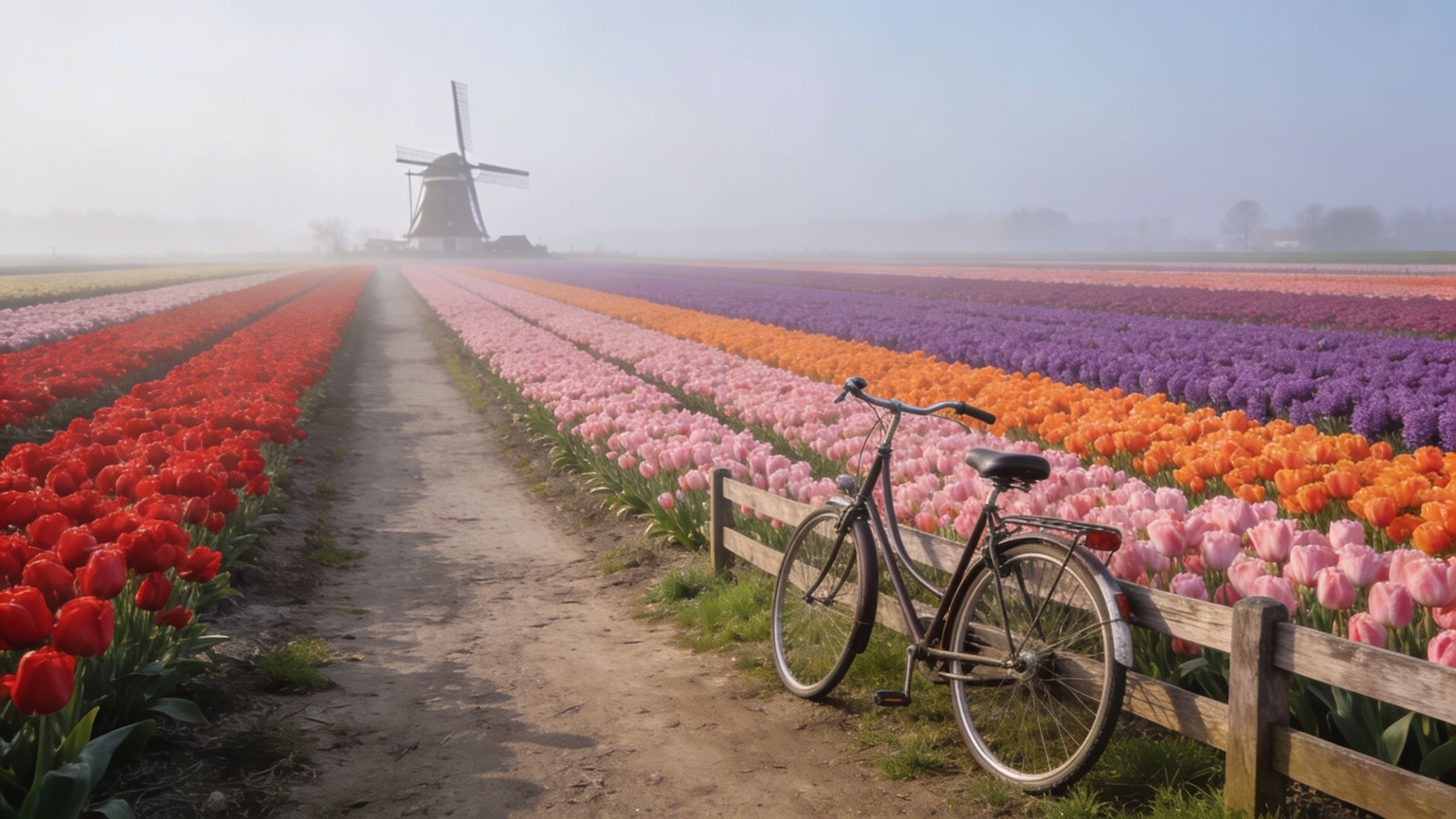
If Kyoto is about fleeting petals, the Netherlands is about unapologetic color. Spring here doesn’t arrive subtly. It rolls out in broad stripes across the countryside. Tulips, hyacinths, daffodils, canal reflections, market flowers, bike paths. The entire setting feels arranged for motion.
Amsterdam makes a good base, but not always the smartest one for every night. If you’re focused on flower season rather than nightlife, nearby towns can give you easier mornings and lower accommodation pressure.
The better way to do flower season
Keukenhof is polished, popular, and absolutely worth seeing once. The mistake is treating it as the whole trip. The greatest pleasure often comes after you leave the formal gardens and cycle or ride through the surrounding region, where color appears in long agricultural bands rather than curated displays.
A simple structure works:
- Reserve timed entry ahead: Keukenhof runs smoother when you aren’t buying decisions on arrival.
- Sleep in Haarlem or Leiden: Both make practical alternatives if Amsterdam rates spike or you want a calmer base.
- Bike outside peak park hours: The fields are most enjoyable when you’re not sharing every path with a crowd moving at phone-camera speed.

Travel deeper
Use an OV-chipkaart or local public transport planning app and stop pretending a rental car will make flower season easier. In this part of the Netherlands, trains, buses, and bikes usually beat driving for convenience and stress. Roads near major bloom sites can slow down fast, and parking eats into both time and budget.
For solo travelers, this is one of the most comfortable spring trips in Europe. Daylight stretches long, infrastructure is excellent, and it’s easy to pivot if weather turns. The main safety issue isn’t dramatic. It’s bike-lane confusion. Stay out of cycling lanes when walking, especially in Amsterdam, unless you enjoy being corrected at speed.
Respect the flower fields. Don’t walk into privately farmed rows for photos, and don’t assume every scenic path is public access. Some of the best spring images come from sticking to the road edge, using patience, and letting the natural scenery do the work.
4. Paris, France
Paris in spring gets romanticized so heavily that it can feel overrated before you even arrive. Then you land on a mild morning, chestnut trees are leafing out, café terraces are full again, and you remember why the cliché survived. Spring suits Paris because the city becomes more usable. You can walk for hours, sit outside without planning your life around weather, and string together museums, markets, and neighborhoods without burning out.
This is also one of the better city breaks for travelers who want atmosphere without needing a festival calendar to justify the trip.
How to keep Paris from becoming expensive too fast
Stay slightly outside the most photographed core. Canal Saint-Martin, parts of the 11th, or other well-connected neighborhoods can feel more lived-in and less punishing on your budget than sleeping near the major monuments. The city’s strength isn’t one landmark. It’s how well an ordinary day stacks up.
A few smart moves:
- Use a museum pass only if you’ll use it: Paris rewards selectivity, not attraction hoarding.
- Put Versailles on a weekday: The trip is smoother when you avoid the heaviest leisure traffic.
- Build your days by neighborhood: Crossing the city repeatedly wastes both energy and transit money.
Paris gets cheaper when you stop trying to perform Paris.
Travel deeper
Spring is a good season to slow down here. Buy bread, fruit, and cheese from neighborhood shops and turn one meal a day into a picnic in the Jardin du Luxembourg or along the Seine. You’ll spend less and notice more. The same applies to cultural planning. One museum and one long walk is usually a better Paris day than three rushed ticketed entries.
For solo travelers, Paris is manageable but requires normal city awareness. Keep your phone secure in transit hubs, stay alert around major tourist clusters, and don’t confuse busy public space with guaranteed safety. Confidence helps. So does not flashing fatigue, maps, wallet, and camera all at once.
If the weather shifts, don’t fight it. Spring rain in Paris is part of the texture. Pack shoes you can walk in, a compact layer, and a flexible plan. The city almost always gives something back.
5. Seville, Spain
Seville in spring feels like it was built for this season. Orange blossoms scent the streets, late afternoons soften the architecture, and public space becomes the center of life again. If you time it around Feria de Abril, the city turns exuberant. If you arrive just outside that period, you may enjoy Seville more day to day.
That’s the trade-off. Festival season brings energy you won’t get any other time. It also raises the difficulty level on sleep, budgets, and spontaneity.
What works and what doesn’t
The Alcázar, Plaza de España, and the lanes of Santa Cruz all shine in spring light, but they’re not the whole story. Some of Seville’s best hours happen in Triana, where flamenco bars, local cafés, and riverside walks feel less staged. If you’re here during major festivities, use the mornings for the classic sights and save the social side for later.
A practical pattern:
- Sleep across the river if central rates jump: Triana gives you character and easier breathing room.
- Move by bike when possible: Sevici can be a useful way to cut across the city quickly.
- Don’t overbook nights during feria: Part of the point is letting the city pull you along.
Travel deeper
If you get access to a caseta through local contacts, student groups, or expat networks, treat it as an invitation into a social world rather than a spectacle to consume. Ask questions, watch how people participate, and avoid treating every dress, dance, or horse parade as a prop for your feed. Seville is generous, but it notices the difference between curiosity and extraction.
Solo travelers should know that late nights are normal here in spring. That doesn’t automatically mean unsafe, but it does mean you need a plan for getting home. Choose accommodation in an area you’re comfortable returning to after dark, and don’t count on making brilliant transport decisions at the end of a long festival evening.
This is also a good city for lower-impact travel. Walk often, refill water, support family-run tapas bars away from the busiest plazas, and pace your days around the local rhythm instead of forcing nonstop sightseeing in the heat.
6. Hallerbos Forest, Belgium
Not every spring trip needs a capital city and a major event. Hallerbos proves that one short, well-timed nature escape can carry an entire season. When the bluebells bloom beneath the beech trees, the forest looks almost unreal. Soft violet ground cover, silver light through trunks, damp earth, birdsong. It feels less like a checklist stop and more like a mood.
That said, timing matters more here than almost anywhere else on this list. Go too early and the effect hasn’t arrived. Go too late and the magic thins out.
A small trip with a narrow window
Hallerbos works best as a focused outing, either from Brussels or paired with a slower few days in Belgium. The forest doesn’t need an overbuilt itinerary. It needs patience, decent shoes, and an early start. If you arrive after the rush, much of the serenity people come for has already been traded away.
The right approach is simple:
- Check bloom conditions before committing: Bluebell timing shifts with weather.
- Arrive before the main crowd: Quiet matters here.
- Add Halle, not another major city dash: A slower stop for coffee and pastries suits the day better than rushing onward.
Some places aren’t improved by doing more. Hallerbos is one of them.
Travel deeper
Stay on marked paths. That isn’t just etiquette. Bluebell carpets are fragile, and a better photo is never a good reason to damage them. The forest gives you enough from the trail if you slow down and work with light instead of forcing a composition.
Solo travelers often find this kind of day trip especially satisfying because it removes many of the usual friction points. Navigation is straightforward, there’s no nightlife logistics to manage, and the experience is inward by design. Still, tell someone your plan if you’re heading out early, and keep your phone charged for transit changes on the return.
Budget-wise, this is one of the best spring escapes in Europe because the experience itself doesn’t ask you to spend much. Pack lunch, carry water, and let the scenery be the event.
7. Madeira, Portugal
Madeira is what I recommend when someone says they want spring weather, flowers, hikes, sea views, and a trip that still feels a little outside the usual European city circuit. The island has range. You can spend one day on levada trails in the green interior and another in Funchal with market stalls, harbor light, and a slow meal that stretches into evening.
It also rewards travelers who don’t mind a bit of planning. Distances aren’t huge, but the terrain is steep, and “that viewpoint looks close” can be misleading fast.
Why Madeira works so well in spring
Flower season and hiking season line up beautifully here. Funchal’s Flower Festival gives the island a celebratory mood, but Madeira’s real spring strength is how easy it is to combine urban comfort with nature. You don’t have to choose between a scenic walk and a decent dinner. You can have both in the same day.
A few practical truths help:
- Rent a small car only if you’re comfortable with mountain roads: It opens options, but it isn’t relaxing for every driver.
- Go early on popular levadas: Narrow paths are better before group tours bunch up.
- Use local markets well: Fresh fruit, bread, and simple picnic supplies can cut costs without making the trip feel cheap.
Travel deeper
Madeira is a good destination for slow travelers because it rewards repetition. One favorite café, one repeated sunset viewpoint, one extra village detour. You don’t need to conquer the island. You need to let it settle. Eco-hostels and small guesthouses often support that better than bigger resorts, especially if you enjoy meeting other travelers and trading route advice.
For solo travelers, the main risk here is overconfidence on trails and roads. Weather can shift, trail conditions vary, and some viewpoints demand more caution than photos suggest. Start early, carry layers, and don’t let social media convince you every ledge is a place to stand.
Choose locally owned stays when possible, respect trail closures, and avoid leaving food waste at viewpoints. Madeira’s spring beauty feels abundant, but it still depends on traveler behavior.
8. Washington, D.C., USA
You arrive early, coffee in hand, and the city is still quiet enough to hear the water around the Tidal Basin. That is the version of spring in Washington, D.C. worth planning for. Go a few hours later on a peak bloom weekend, and the same walk can feel slow, crowded, and overpriced.
D.C. works well in spring because the trip does not collapse if blossom timing misses your dates. The cherry trees draw people in, but the city has enough free museums, walkable neighborhoods, and public spaces to carry the trip even if the petals are past their best. That flexibility matters if you are booking from out of town and do not want your whole budget riding on one narrow bloom window.
The smart play is to treat the blossoms as one part of the day, not the whole itinerary.
How to get the best version of the city
Start at the Tidal Basin early on a weekday if you can. Light is better, paths are easier to enjoy, and you will spend more time looking at the trees than waiting for gaps in the crowd. If central hotel prices jump during festival season, sleep outside the core. Arlington and Alexandria usually give better value, and both keep you close to Metro access.
A few choices make the trip smoother:
- Build around free anchors: Pair blossom viewing with a Smithsonian museum so weather or crowds do not wreck the day.
- Skip the rental car: Metro, buses, and walking are usually faster and cheaper than dealing with traffic and parking.
- Give yourself one neighborhood stop away from the postcard circuit: Dupont Circle, Capitol Hill, or a local café can make the city feel lived-in instead of staged for visitors.
Travel deeper
D.C. is a strong solo spring trip because the city gives you structure. You can fill a full day with public, well-trafficked places, and you do not need to rely on expensive tours or late-night plans to enjoy it. The trade-off is density. During cherry blossom season, packed trains, busy sidewalks, and distracted crowds create easy conditions for petty theft and bad decision-making. Carry less, keep your phone secure, and step away from the busiest zones once you have seen the headline views.
Responsible travel matters here more than travelers sometimes realize. The blossom areas absorb huge seasonal foot traffic, and the trees pay for careless behavior. Stay off restricted ground, respect barriers around roots, and do not push into planted areas for photos.
For budget travelers, few spring capitals are this forgiving. Free museums lower daily costs, public transit reduces friction, and a stay just outside the center often saves enough to cover better meals or an extra museum day.
9. Great Smoky Mountains National Park, USA
Spring in the Smokies is for travelers who’d rather hear water and birds than festival speakers. The park wakes up gradually. Lower elevations green first, wildflowers spread in waves, creeks run full, and the entire area feels newly rinsed. It’s not a glamorous spring trip, which is part of the appeal.
The best days here are usually built around one scenic drive, one moderate hike, and enough unstructured time to stop whenever the woods ask for it.
Where the season shows itself
Cades Cove gives you easy access and broad scenery. Roaring Fork Motor Nature Trail is excellent when you want something quieter and more enclosed. Porters Creek is a strong choice if you like your spring scenery with old stone walls, moving water, and a little bit of effort.
Keep the logistics simple:
- Download maps before entering the park: Signal can drop when you need it most.
- Camp or stay near your priority area: Driving across the region every day adds fatigue fast.
- Choose weekdays if you can: The park feels more generous when roads and trailheads are less clogged.
Travel deeper
This is a strong destination for budget travelers because the value comes from access to natural beauty, not expensive ticketed experiences. Rustic cabins, campgrounds, and simple groceries can carry the trip. Bring layers, a small first-aid kit, and realistic footwear. Spring trails can be slick even when the valley feels warm.
For solo travelers, the Smokies are manageable if you stay conservative with route choice and timing. Day hikes are ideal. Start earlier than you think you need to, leave your plan with someone, and don’t chase isolation for its own sake if you’re unfamiliar with the area.
The responsible-travel basics matter here more than people think. Stay on trail, keep distance from wildlife, pack out everything, and don’t pick the flowers you came to see. The park’s spring beauty is strongest when everyone leaves it alone.
10. Vancouver, Canada
You wake up to clear mountain light, spend the morning under cherry trees, then switch to a seawall ride or a market lunch before the rain rolls in. Vancouver handles that kind of spring day better than almost anywhere. It suits travelers who want beauty without building the whole trip around one famous bloom spot.
Spring works here because the city gives you range. Stanley Park, Queen Elizabeth Park, and the UBC area all show the season differently, and the backdrop matters as much as the blossoms. Water, forest, glass towers, and snow-dusted peaks sit in the same frame. If the weather turns, you still have good food, strong coffee, museums, and neighborhoods that reward slow wandering.
The practical advantage is flexibility. You can plan a light structure and still have a satisfying day if conditions shift.
A smart Vancouver spring day usually looks like this:
- Ride or walk the Seawall early: You avoid the busiest stretch and get calmer water views.
- Use a Compass Card and skip the car: Parking costs add up quickly, and transit covers the city well for a short stay.
- Treat North Shore outings as optional, not fixed: Lynn Canyon, Deep Cove, and nearby trails are much better when you adapt to weather and trail conditions.
- Split your time by neighborhood: Pair one marquee stop with a local area such as Mount Pleasant, Kitsilano, or Commercial Drive.
Travel deeper
Vancouver can get expensive fast, especially if you book late and stay downtown. I usually tell budget-conscious travelers to check Kitsilano, Mount Pleasant, or guesthouses near SkyTrain lines first. You give up very little convenience and often get a more grounded feel for the city. Granville Island is fun, but smaller grocers, casual sushi spots, and neighborhood bakeries often deliver better value.
Solo travelers generally find Vancouver approachable, especially in the core neighborhoods, but outdoor access changes the risk profile. Weather shifts quickly. Distances look shorter on a map than they feel on foot. Keep a layer in your bag, charge your phone before heading out, and share your plan if you’re going into wooded areas or less busy trails.
Responsible travel matters here, too. Stay on marked paths in parks, pack out your waste, and support local businesses outside the downtown core so your spending reaches more of the city. Vancouver is at its best in spring when you use the city as residents do: by transit, by bike, and at a pace that leaves room for weather, good meals, and an unplanned detour.
Top 10 Spring Travel Destinations Comparison
| Destination | 🔄 Planning complexity | 💡 Resource requirements | ⚡ Accessibility & pace | ⭐ Expected experience quality | 📊 Ideal use cases & key advantages |
|---|---|---|---|---|---|
| Kyoto, Japan | Medium–High: reserve lodging 3–4 months ahead; crowd timing needed | Moderate–High: peak-season prices; efficient public transit | Good transit but slow in crowds; best early mornings | Exceptional: iconic sakura vistas + deep cultural immersion | Photography, tea-ceremony experiences, illuminated nights |
| Seoul & Jinhae, South Korea | Medium: narrow bloom window; book festival/temple stays early | Moderate: good value for food/rooms; KORAIL pass recommended | Very accessible by rail; heavy crowds at festival sites | High: vibrant festivals, night displays, street-food culture | Festival attendance, food-focused city + day-trip itineraries |
| Amsterdam & Keukenhof, Netherlands | Medium: buy timed Keukenhof tickets; arrange bikes/travel | Moderate: park entry, bike rental; off-peak airfare deals | Fast and bike-friendly; weather-dependent | Excellent: unrivaled tulip displays and cycling scenery | Tulip photography, cycling tours, garden-day trips |
| Paris, France | Low–Medium: flexible shoulder-season planning; museum pass helpful | Moderate: shoulder-season savings; varied dining options | Highly walkable and transit-friendly; occasional showers | High: classic spring city ambience, cafés, museums | Art and gastronomy, relaxed strolling, museum-focused trips |
| Seville, Spain | Medium–High: festival dates vary, book early and plan timings | Moderate: affordable tapas but lodging spikes during festivals | Compact and walkable; heat can slow daytime activity | Very High: intense festivals, flamenco, vivid traditions | Feria/Semana Santa immersion, flamenco & festival photography |
| Hallerbos Forest, Belgium | Low: simple day-trip planning; check bloom tracker | Low: short train ride; free entry; minimal facilities | Easy access; trails can be muddy, arrive early | High for short-lived bluebell spectacle and photography | Short nature day trips, sunrise/sunset photography |
| Madeira, Portugal | Medium: island transfers; car rental advised for levadas | Moderate: flight/ferry + car rental; many eco-lodges | Moderate: slower pace, hike-focused; some remote spots | High: year-round blooms, levada hikes, festival atmosphere | Slow travel, hiking, eco-conscious floral festival visits |
| Washington, D.C., USA | Medium–High: hotels book 6+ months; festival coordination | Moderate–High: lodging peaks; many free cultural attractions | Highly accessible by Metro and bikeshare; crowded viewpoints | High: historic landmarks + cherry blossom spectacles | National Cherry Blossom Festival, museums, family outings |
| Great Smoky Mountains, USA | Low–Medium: trail and weather planning; check closures | Low: free park access; costs for camping/cabins if used | Moderate: hiking pace; variable mountain weather | High: rich wildflower diversity and ranger programs | Wildflower viewing, hiking, backcountry camping |
| Vancouver, Canada | Low–Medium: city logistics simple; some events require booking | Moderate: good transit; accommodations pricier during festivals | Excellent transit and bike-share; mild spring weather | High: abundant urban blossoms + outdoor activities | Urban blossom festivals, Seawall cycling, family-friendly outings |
Go Beyond the Guidebook, Create Your Own Spring Story
You arrive in a city at 7 a.m. The air is cool, the light is soft, and the streets still belong to locals on their way to work. Two hours later, the same place can feel overpriced, overphotographed, and harder to enjoy. Spring rewards travelers who understand timing.
The strongest spring trips in this guide all share that trait. They work because the season changes how the place feels on the ground. Kyoto’s blossom weeks alter the rhythm of the city. The Smokies come alive trail by trail as wildflowers emerge at different elevations. Madeira hits a sweet spot where hiking conditions, garden color, and manageable temperatures line up.
That matters because spring demand compresses fast around obvious names. Remitly’s spring break travel trends analysis found that familiar Florida destinations dominated U.S. search interest, which is a useful reminder for travelers who care about cost and breathing room, not just hype. The practical lesson is simple. If the headline destination is getting all the attention, the better trip often sits one train stop, one ferry ride, or one neighborhood away. In spring, proximity beats prestige more often than travelers expect.
The same logic applies across this whole list. Popular places are still worth visiting. They just need smarter handling. Stay just outside the busiest center. Visit major sights early on weekdays. Use local transit instead of last-minute rideshares. Book lodging with a kitchen or breakfast included when seasonal prices spike. Solo travelers should make arrival days easy, not ambitious. Daylight check-ins, one reliable transit route from the station or airport, and an offline map prevent a lot of avoidable stress.
Travel deeper, and the trip usually gets cheaper and better.
That is the part glossy roundups often miss. A spring destination is not only a backdrop for photos. It is a short-lived local season with pressure points. Cherry blossom corridors get crowded. Wildflower areas get damaged when visitors step off trail. Small historic districts can absorb only so much tour-bus traffic before the mood changes for everyone. Responsible choices matter here. Carry a reusable bottle or cup where refill points are common. Respect bloom barriers and marked paths. Spend money with neighborhood bakeries, family-run guesthouses, and local guides who know how to spread visitors more thoughtfully.
That philosophy is why each destination in this list works best with a practical plan attached. The Travel Deeper approach is not decoration. It is the difference between a rushed checklist and a trip with some texture. Solo safety, budget timing, and low-impact habits belong in the same conversation as scenery. If you know when to book, where to base yourself, and how to move around without adding friction, you get more from the place and leave less damage behind.
Use this list as a starting point. Then shape the trip around the season you want. Pick the quieter morning market over the midday queue. Choose the secondary neighborhood with better food and lower room rates. Leave space for one unscheduled walk, one local recommendation, and one change of plan because the weather or the blooms are better somewhere else.
Spring travel is short-lived by nature. That is exactly why it rewards care.
If you want more practical guides like this, Travel Talk Today is worth bookmarking. It’s built for travelers who care about budget, timing, safety, and meaning in equal measure, with grounded advice that helps you plan spring trips that feel richer, not just busier.