Imagine exploring ancient ruins, vibrant markets, and breathtaking landscapes without the financial stress that often accompanies travel. It's not a fantasy; it's the result of smart, strategic planning. The world is more accessible than ever, but rising costs can make the dream of a grand adventure feel just out of reach. This guide is your key to unlocking it, designed to prove that meaningful travel and a healthy bank account can coexist.
We're moving beyond the generic "pack light" advice to provide a comprehensive playbook of actionable budget travel hacks. This isn't just a random collection of tips; it's a structured system organized by the distinct phases of your journey. You will learn specific strategies for planning, booking, packing, and saving money on the ground. We will cover everything from mastering flight comparison tools and securing long-term rental discounts to leveraging volunteer exchanges for free accommodation.
This article is for the modern, thoughtful traveler. Whether you're a solo adventurer prioritizing safety, an eco-conscious explorer, or simply someone who wants to experience more of the world for less, these insights will empower you. The goal isn't just about saving money; it's about traveling smarter, longer, and more authentically. It’s about transforming your wanderlust from a distant dream into a well-executed reality. Let's dive into the game-changing hacks that will redefine how you see, and afford, the world.
1. Travel During Shoulder Season Instead of Peak Times
Imagine exploring Barcelona's Gothic Quarter without jostling through crowds or finding a tranquil spot on a Thai beach all to yourself. This isn't a fantasy; it's the reality of traveling during the "shoulder season." This savvy budget travel hack involves planning your trip for the weeks just before or after a destination's peak tourist period. You get the best of both worlds: pleasant weather and a fraction of the high-season costs and crowds.
This strategy unlocks significant savings while elevating your travel experience. Instead of competing with legions of tourists, you’ll find locals more relaxed and welcoming, offering a more authentic cultural exchange. The reduced demand means lower prices on everything from airfare to hotel rooms, making your dream destination suddenly much more accessible.
How to Master Shoulder Season Travel
To make this one of the most effective budget travel hacks in your arsenal, precise timing is key. Shoulder seasons vary dramatically around the world, so a little research goes a long way.
- Europe: Aim for April-May or September-October. You can explore the ancient streets of Rome or the sunny coasts of Portugal with comfortable temperatures and find accommodation for 40-60% less than in July or August.
- Southeast Asia: The periods bordering the monsoon season, like March-April or October-November in Thailand, offer lush landscapes, fewer tourists, and hotel discounts of up to 40%.
- South America: September to November (spring) is a fantastic shoulder season for destinations like Peru and Argentina, offering vibrant scenery before the summer rush.
Pro-Tip: Use flight comparison tools like Google Flights or Skyscanner. Their calendar view features make it easy to visually spot the price drops that signal the beginning of a shoulder season. Book these flights about two to three months in advance for the best deals.
By timing your travel strategically, you not only save money but also contribute to more sustainable tourism. Spreading visitors throughout the year reduces the strain on local infrastructure and environments, ensuring these beautiful places remain pristine for years to come.
2. Use Budget Airlines, Flight Comparison Hacks, and Travel Rewards
Picture yourself snagging a flight from London to Barcelona for the price of a few cups of coffee. This isn’t a lottery win; it’s the result of combining three powerful tools: budget airlines, savvy flight comparison techniques, and travel rewards. This trifecta of budget travel hacks transforms airfare from a major expense into a manageable one, unlocking destinations you thought were financially out of reach.
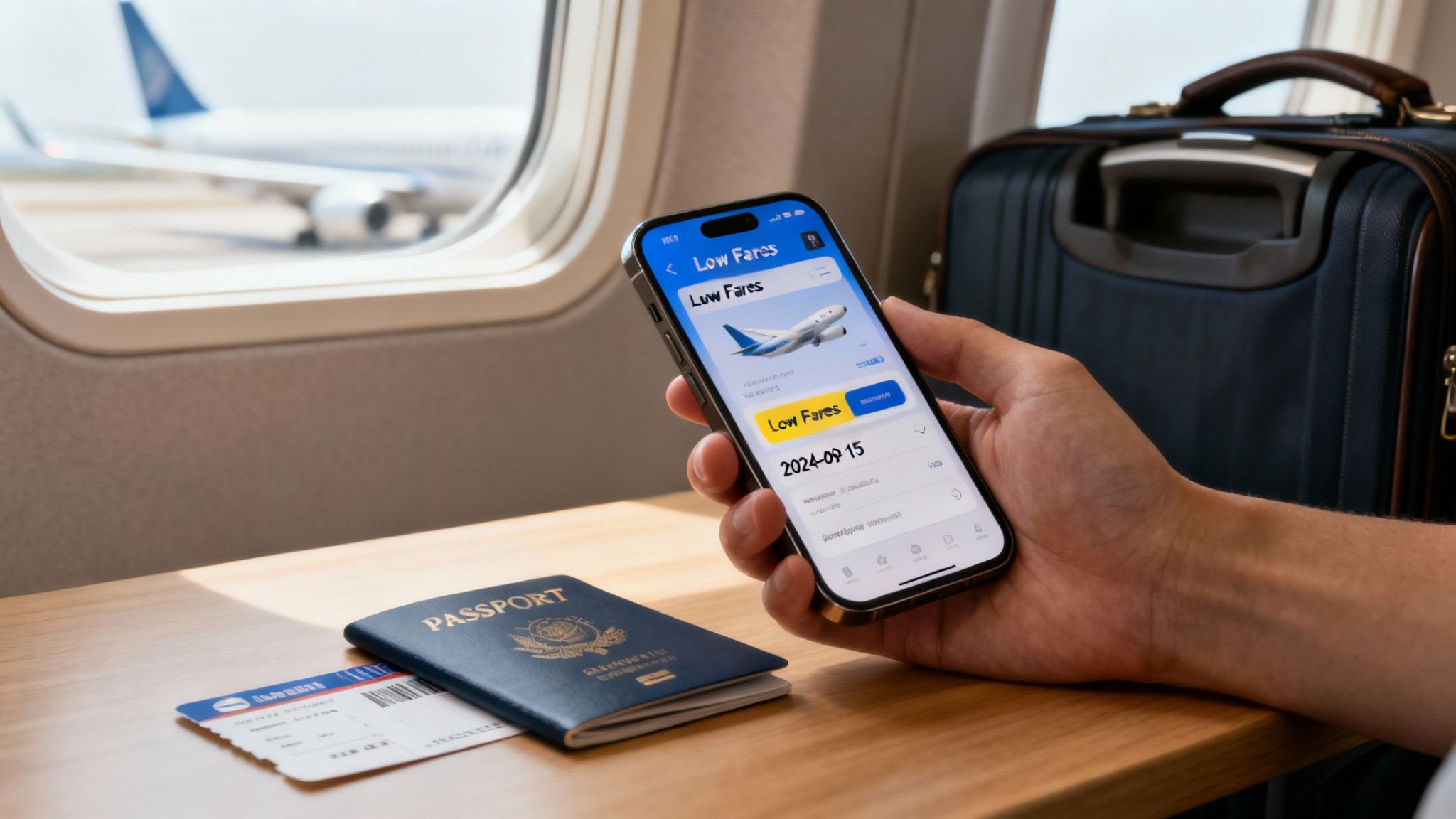
This strategy is about being smarter, not cheaper, in how you book. By leveraging ultra-low-cost carriers for short-haul trips, using comparison tools to find hidden deals, and accumulating points for long-haul flights, you create a powerful, cost-cutting system. You can book a spontaneous European city break for under £30 or redeem points for a business-class seat you'd never pay for in cash.
How to Master Flight Booking and Rewards
To make this strategy work, you need to be methodical. Treat finding a flight like a treasure hunt where the prize is a massive saving on your next adventure. A little effort here yields huge returns.
- Budget Airlines: For short-haul flights, carriers like Ryanair and EasyJet in Europe or AirAsia in Southeast Asia are unbeatable. You can often find one-way tickets for just $15-40, but remember to factor in baggage fees for a true cost comparison.
- Comparison Tools: Never book directly without checking multiple sources. Use Skyscanner, Google Flights, and Momondo simultaneously. Their "anywhere" and flexible date search features can reveal incredible deals you wouldn't find otherwise.
- Travel Rewards: Sign up for airline loyalty programs and consider a travel credit card like the Chase Sapphire Preferred. Points earned on daily spending can be redeemed for free flights or upgrades, effectively turning your grocery shopping into a flight to Paris.
Pro-Tip: Always search for flights in an incognito or private browser window. Many booking sites use cookies to track your searches and may increase prices if they see you repeatedly looking at the same route. Setting up price alerts on Kayak or Hopper can also automate the process, notifying you when fares drop.
By weaving these three tactics together, you attack the cost of travel from every angle. You secure immediate savings with low-cost carriers, find the absolute lowest market price with comparison tools, and earn long-term value through rewards, creating a sustainable cycle of affordable travel.
3. Stay in Hostels, Guesthouses, or Budget Accommodations
Forget the sterile, expensive hotel room. Picture yourself sharing travel stories over a communal dinner in Lisbon, getting insider tips from a local family in a Mexico City guesthouse, or waking up in a clean, stylish dorm room in Bangkok for less than the price of a movie ticket. This is the vibrant world of budget accommodations, one of the most powerful budget travel hacks for drastically cutting costs while enriching your journey.

This approach is about more than just saving money. It's a gateway to community and authentic cultural immersion. Opting for hostels, guesthouses, or homestays allows you to connect with fellow travelers and local hosts, unlocking a side of your destination that traditional tourists often miss. These accommodations typically cost $10-40 per night, a staggering savings compared to the $100-300+ price tag of a standard hotel.
How to Master Budget Accommodations
Choosing the right budget-friendly stay can transform your trip from good to unforgettable. It requires a bit of research, but the payoff in savings and experience is immense.
- Hostels for Community: Modern hostels are no longer just for students. Many offer private rooms, female-only dorms, and incredible amenities. In Berlin, dorms on Hostelworld start around €15-25, while in Bangkok, you can find quality spots for just $8-15 per night.
- Guesthouses for Authenticity: Guesthouses or homestays, like the Casa Gonzalez model in Mexico City ($20-30/night), offer a cozy, local experience. Staying in a residential neighborhood instead of a tourist hub can save you 30-40% and provide a genuine cultural exchange.
- Eco-Friendly Stays: Many networks, like Green Hostels in Portugal, are now eco-certified. Choosing them supports sustainable tourism practices, aligning your travel with your values.
Pro-Tip: Always read recent reviews on sites like Hostelworld or Booking.com, focusing on cleanliness, security (look for lockers!), and location. Booking a place with a shared kitchen allows you to prepare some meals, which can cut your food budget in half. Many also include free breakfast and social events like walking tours.
4. Cook Your Own Meals and Eat Like Locals
Picture yourself haggling for fresh mangoes in a bustling Bangkok market or preparing a simple, delicious pasta dish in a cozy Italian apartment. This is the heart of one of the most impactful budget travel hacks: shunning overpriced tourist restaurants in favor of self-catering and dining where the locals do. This strategy not only slashes your food budget by up to 75% but also immerses you deeply into the fabric of a place, turning a simple meal into a rich cultural experience.
By embracing local markets, street food stalls, and family-run eateries, you directly support small businesses and taste the true, unvarnished flavors of your destination. This approach offers unparalleled freedom, especially for travelers with dietary needs, and allows you to connect with the community on a more authentic level. It’s a delicious win-win for your wallet and your journey.
How to Master Local and Self-Catered Dining
To turn your food budget into a source of savings and adventure, focus on where and how you source your meals. A little planning transforms your culinary experience from a daily expense into a daily discovery.
- Vietnam: A steaming bowl of pho from a street vendor in Hanoi costs just $1-2, while a similar dish in a tourist-centric restaurant can easily be $8-12.
- Mexico: Explore local mercados where fresh produce is a fraction of supermarket prices and you can buy delicious street tacos for as little as $0.50 each.
- India: Enjoy a hearty and authentic thali meal at a local dhaba for $1-3, a stark contrast to the $10-20 prices you'll find in heavily touristed areas.
Pro-Tip: Make visiting a local market one of your first activities in a new city. Ask your hostel staff or host for their favorite spots to shop for groceries. Learning a few key food-related phrases in the local language, like "How much is this?" and "I would like one," will make the experience even more rewarding.
Balancing self-cooked meals with sampling street food and occasional local restaurant visits provides the perfect mix of savings and cultural immersion. Consider taking a local cooking class early in your trip; it’s a fun way to learn new skills and get insider tips on the best ingredients and dishes to try.
5. Travel Slowly and Use Long-Term Rental Discounts
Imagine truly living in Lisbon for a month, not just visiting, or becoming a regular at a neighborhood cafe in Mexico City. This is the essence of slow travel, a philosophy that exchanges a frantic itinerary for deep cultural immersion. This powerful approach isn't just more fulfilling; it’s one of the most effective budget travel hacks for drastically cutting costs by unlocking significant long-term rental discounts.
By staying in one place for several weeks or a month, you move beyond the expensive nightly rates designed for tourists. Landlords and platforms like Airbnb often offer substantial discounts, sometimes up to 50%, for monthly stays. This slower pace reduces your transportation costs, allows you to cook your own meals, and transforms your trip from a costly vacation into an affordable lifestyle experience.
How to Master Slow Travel Savings
To make this hack work, you need to shift your mindset from "seeing" a place to "living" in it. Planning for longer stays in destinations with a favorable cost of living is crucial.
- Southeast Asia: In cities like Chiang Mai, Thailand, a nightly Airbnb might cost $50, but a monthly rental can drop the per-night price to just $20-$30. This can save you over $600 a month on accommodation alone.
- Latin America: Digital nomad hubs such as Medellín, Colombia, or Mexico City offer vibrant culture and infrastructure. It’s common to find well-equipped apartments for $400-$600 per month, a fraction of the cost of staying in hotels.
- Europe: Even in more expensive regions, this strategy pays off. A long-term rental in a Portuguese town outside of Lisbon can be found for $700-$900 per month, while nightly hotel stays in the city center easily exceed $150.
Pro-Tip: Use Airbnb’s monthly stay filter to immediately see discounted rates. Don’t hesitate to message hosts before booking to inquire about an even better long-stay deal, especially during the shoulder season. Often, they are willing to negotiate for a guaranteed month-long booking.
Embracing a slower travel rhythm not only saves you a significant amount of money but also fosters a more meaningful connection with the places you visit. It supports local economies more directly and reduces your carbon footprint, making your adventures both affordable and sustainable.
6. Use Public Transportation and Walk/Bike Explore
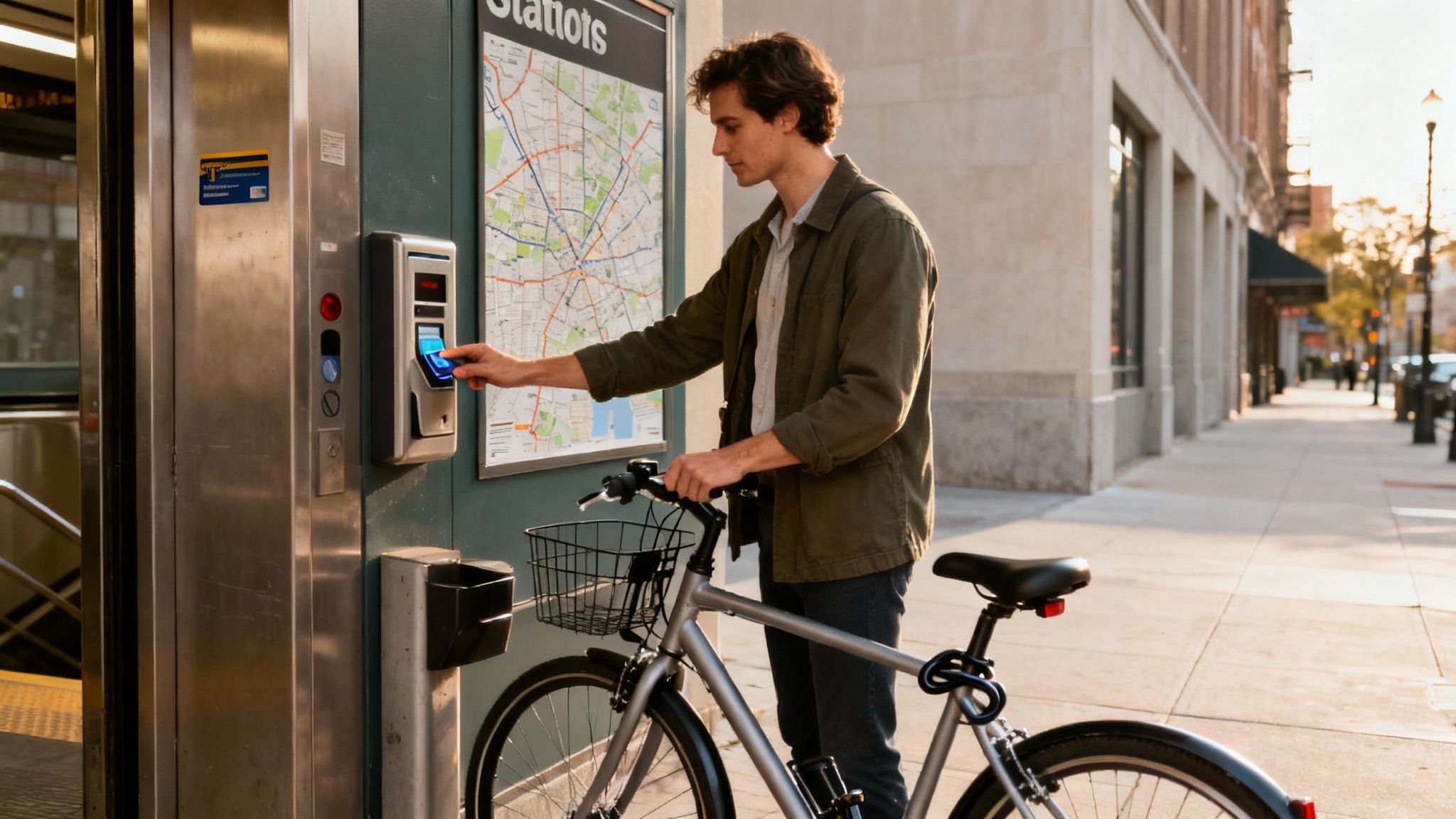
Imagine feeling the real pulse of a city, not from behind the glass of an expensive taxi, but by navigating its veins like a local. Swapping pricey ride-sharing apps for efficient subways, scenic walks, and breezy bike rides is one of the most powerful and authentic budget travel hacks. This approach drastically cuts your daily transport budget from a potential $30-50 down to just a few dollars, freeing up cash for more memorable experiences.
This strategy is about more than just saving money; it’s about deeper immersion. When you use public transport, walk through residential neighborhoods, or cycle along a river, you discover the city's hidden gems: the family-run bakery with the best pastries, the vibrant street art down a quiet alley, and the lively local park missed by every tour bus. It’s an invitation to experience a destination authentically and sustainably.
How to Master Local Transit and Exploration
Embracing local transport is easy with a bit of prep. Instead of defaulting to the most convenient option, a few simple steps can unlock massive savings and richer adventures.
- Mexico City: A single journey on the efficient Metro system costs a mere $0.25, a stark contrast to the $3-8 you might spend on a short Uber ride. This small change adds up to significant savings over a week.
- Bangkok: Navigate the bustling city with a one-day BTS Skytrain pass for around $4. Compare that to individual taxi rides, which can cost $8-15 each, especially in traffic.
- Copenhagen: This city is built for bikes. Renting one for about $15 a day allows you to explore like a true Dane, covering far more ground than walking while saving on transit costs.
- Barcelona: A T-Casual 10-ride metro pass costs just over €11, making each trip about €1.13. This is a huge discount compared to buying single tickets for every journey.
Pro-Tip: Upon arrival, immediately download a local transit app like Citymapper or Moovit. These apps provide real-time schedules, route options, and cost breakdowns, making it incredibly simple to navigate a new city's bus, tram, or metro system like a seasoned local.
By choosing to walk, cycle, or take the bus, you’re not just saving money. You’re reducing your carbon footprint and engaging with the city on a more personal level. This method transforms simple transportation into an integral and exciting part of your travel story.
7. Travel with a Friend or Small Group to Share Costs
Imagine renting a stunning private villa with an infinity pool in Bali for the price of a standard hotel room, or hiring a private guide to explore ancient ruins in Peru for less than a large group tour. These scenarios become a reality when you team up with a friend or a small group. This classic budget travel hack is rooted in the simple power of sharing expenses, dramatically reducing your individual financial burden.
Traveling together instantly slashes costs on major expenses like accommodation, transportation, and even food. Instead of shouldering the full cost of a hotel room, rental car, or a big grocery haul, you can split it two, three, or even four ways. This collaborative approach can easily reduce your per-person daily expenses by 30-50%, making your travel budget stretch further than you ever thought possible.
How to Master Group Travel Savings
To make this one of the most effective budget travel hacks in your toolkit, communication and organization are essential. Setting clear expectations from the start prevents financial friction and ensures a smooth journey for everyone.
- Accommodation: A private room for two in Europe might cost $100 per night, but splitting it brings your cost down to just $50 each. A four-person Airbnb or a campervan rental in New Zealand can offer even more significant per-person savings, often cutting lodging costs in half.
- Transportation: Renting a car in Spain for €40 a day becomes a bargain at just over €13 per person when split three ways, often cheaper and more convenient than individual public transport tickets. Similarly, a shared taxi or rideshare from the airport is far more economical than going solo.
- Tours & Activities: A private guide in Peru could cost $300 for a day. For a solo traveler, this is a splurge, but for a group of four, it's a manageable $75 each, offering a personalized experience for less than many generic group tours.
Pro-Tip: Before you even book a flight, have an open conversation about budgets and expectations. Use an app like Splitwise to track every shared expense transparently, from a cup of coffee to a train ticket. This keeps finances fair and eliminates awkward money conversations on the road.
By joining forces, you not only unlock incredible savings but also enhance your safety and create shared memories that last a lifetime. Traveling with others transforms a solo journey into a collective adventure.
8. Leverage Free Walking Tours, Activities, and Attractions
Imagine learning the hidden history of Berlin's street art from a local artist or exploring London's world-class museums without spending a single pound. This is the power of building your itinerary around free activities. This essential budget travel hack involves seeking out complimentary walking tours, museum days, and natural attractions to experience a destination’s culture and beauty in the most authentic way possible, entirely for free.
This strategy immerses you directly into the local scene, often led by passionate residents who offer insights you won't find in a guidebook. By replacing expensive, ticketed attractions with free alternatives, you can drastically reduce your daily spending. This allows you to reallocate your budget towards unique culinary experiences or other priorities, making your travel funds go much further.
How to Master Free Attractions
Tapping into a city's free offerings is simpler than you might think. A bit of pre-trip research is all it takes to unlock a wealth of experiences that enrich your trip without emptying your wallet.
- Free Walking Tours: Search for "free walking tour [city]" to find companies like Sandeman's New Europe. These operate on a pay-what-you-wish model. Instead of a €20-30 ticket, you can tip your guide €8-10 for a fantastic, informative tour.
- Museum Hopping: Many world-class cities offer free museum access. London’s major institutions like the British Museum and Victoria & Albert Museum are completely free. In Berlin, many museums offer free admission on the first Sunday of the month.
- Natural Wonders: Exploring nature is almost always free. Use apps like AllTrails to find incredible hiking routes near your destination, or simply wander through iconic public spaces like New York’s Central Park or the High Line.
Pro-Tip: Before you go, check local city tourism board websites and Facebook event pages. These are goldmines for finding free concerts, outdoor festivals, and community markets that provide a genuine slice of local life and culture.
By focusing on these free and low-cost activities, you connect with a destination on a deeper level. This approach is one of the most effective budget travel hacks because it proves that the most memorable travel moments aren't always the ones you have to pay for.
9. Volunteer, House-Sit, or Work Abroad for Free/Discounted Accommodations
Imagine waking up in a Tuscan farmhouse, a London flat, or a Costa Rican eco-lodge without paying a single cent for your stay. This isn't just wishful thinking; it's the incredible reality of trading your time and skills for free accommodation. This approach transforms your trip from a simple vacation into a deeply immersive cultural exchange, allowing you to live like a local and make a meaningful impact.
This strategy is one of the ultimate budget travel hacks for long-term travelers, as it virtually eliminates your biggest expense: lodging. In exchange for a few hours of work, caring for a home, or sharing your skills, you gain a free place to stay. This not only stretches your travel fund for weeks or even months but also connects you with local communities in a way that typical tourism never could.
How to Master Work Exchanges and House-Sitting
To make this hack work, you need to find reputable platforms and be clear about expectations from the start. A little preparation ensures a positive and rewarding experience for everyone involved.
- Volunteer Exchanges: Platforms like WWOOF (World Wide Opportunities on Organic Farms) and HelpX connect you with hosts who offer free room and board in exchange for a few hours of work per day. This could involve anything from gardening on a farm in France to helping at a B&B in New Zealand.
- House-Sitting: If you love animals and value your independence, house-sitting is a perfect fit. Websites like TrustedHousesitters allow you to care for someone's home and pets while they are away. You get a free, comfortable place to stay in over 130 countries, often in incredible homes.
- Work Abroad: For those seeking to earn money, teaching English in countries like Thailand or Vietnam often includes a salary ($800-$1200/month) plus free housing, allowing you to save money while living abroad.
Pro-Tip: Always vet your host or organization thoroughly. Read reviews, check references, and have a video call before committing. Clearly define the hours, duties, accommodation details, and what meals (if any) are included to ensure there are no surprises. Start with a short-term commitment of 2-4 weeks to test the waters.
By exchanging your time and skills, you unlock the ability to travel longer, deeper, and more affordably. You'll leave with more than just photos; you'll have stories, new skills, and lasting connections that enrich your life far beyond the trip itself.
10. Plan Flexible Itineraries and Embrace Spontaneity Over Packaged Tours
Imagine discovering a hidden waterfall recommended by a local artisan or deciding to stay an extra day in a charming village you’ve fallen in love with. This freedom is the reward for ditching rigid, pre-packaged tours. By planning your own flexible itinerary, you can sidestep the significant markups of tour companies, often saving 40-60%, while paving the way for more authentic and personal travel experiences.
This approach puts you in complete control, allowing you to travel at your own pace and pursue your genuine interests, not a predetermined schedule. You can linger longer at a museum that captivates you or take a spontaneous detour to a local festival. This method transforms your trip from a checklist of sights into a collection of unique, personal stories and connections.
How to Master Flexible Itinerary Planning
Embracing spontaneity doesn't mean having no plan; it means building a framework that allows for discovery. This is one of the most empowering budget travel hacks for independent travelers.
- Peru: A self-planned trip to Machu Picchu and the Sacred Valley can cost as little as $150-200 for transport and entry, compared to all-inclusive package tours that often run from $800 to $1,200.
- Thailand: DIY island hopping with local ferries and guesthouses might cost around $300-400 for a week, while an organized tour covering the same islands can easily exceed $1,500.
- Europe: Combining a rail pass with hostel stays typically averages $40-60 per day, a stark contrast to guided bus tours that charge $150-250 per day for a similar route.
Pro-Tip: Use a 30/70 planning rule. Research and pre-book about 30% of your must-see attractions or accommodations, especially for popular spots. Leave the other 70% of your time open to explore, take recommendations from fellow travelers, and say "yes" to unexpected opportunities.
Building buffer days into your schedule is crucial. For every two weeks of travel, try to leave three to four days completely unscheduled. These open days are your secret weapon for capitalizing on last-minute deals, resting when you need to, or extending your stay in a place that captures your heart, all while keeping your budget firmly intact.
Comparison of 10 Budget Travel Hacks
Your Adventure Awaits—Travel Smart, Not Hard
You've just navigated a comprehensive blueprint for transforming your travel dreams from an expensive fantasy into an achievable reality. The journey we've mapped out, from mastering flight comparison tools to embracing the slow travel movement, proves one fundamental truth: the richness of your travel experience is not measured by the money you spend, but by the resourcefulness you cultivate. The world isn't reserved for the wealthy; it's open to the wise, the curious, and the brave.
These are not just isolated tips; they are interconnected principles that create a powerful, sustainable approach to exploration. By choosing the shoulder season, you don’t just save on flights and accommodation; you gain a more authentic glimpse into a destination without the overwhelming crowds. When you cook your own meals using local market ingredients, you're not just cutting costs; you're participating in the daily rhythm of a new culture, tasting its true flavors and supporting local farmers directly. This is the essence of smart travel.
The Shift from Tourist to Traveler
The most crucial takeaway from this guide is the philosophical shift it encourages. Following these budget travel hacks moves you from a passive consumer of pre-packaged experiences to an active creator of your own unique adventure.
- Embracing Flexibility: A rigid itinerary is the enemy of budget travel. By staying flexible, you open yourself up to last-minute deals, spontaneous detours, and the kind of unexpected magic that rarely happens on a scheduled tour. This is where the real stories are found.
- Prioritizing Connection: Staying in hostels or volunteering isn't just about a free bed. It's about forging connections with fellow travelers and locals, sharing stories, and building a global community. These human connections are the souvenirs that last a lifetime.
- Valuing Authenticity: Choosing a free walking tour over an expensive bus tour or a local eatery over a tourist trap immerses you in the genuine pulse of a city. You learn its history from a passionate local, not a pre-recorded audio guide. This is how you truly see a place.
Think of each strategy as a tool in your adventure toolkit. Combining them amplifies their power. Imagine a trip where you fly a budget airline to Southeast Asia in the shoulder season, stay in a guesthouse with a shared kitchen, use public transport to explore, and join free city tours. The savings aren't just incremental; they are exponential, potentially extending a one-week vacation into a one-month expedition for the same price.
Your Next Steps to a World of Adventure
Knowledge without action is just trivia. The time to start planning is now. Don't wait for the "perfect" moment or a lottery win. Your adventure begins with the small, deliberate steps you take today.
- Choose One Hack to Master: Feeling overwhelmed? Pick just one strategy from this article to implement for your next trip. Maybe it's setting up price alerts for flights or researching volunteer opportunities on a platform like Workaway. Small wins build momentum.
- Create a "Dream Fund" Account: Open a separate, high-yield savings account and label it "Adventure Fund." Automate a small, weekly transfer. Watching this fund grow is a powerful motivator and makes your travel goals feel tangible and within reach.
- Start Local: You don’t need a passport to practice these skills. Plan a weekend trip to a nearby town using only public transport, staying in a budget-friendly guesthouse, and exploring free local attractions. It's the perfect training ground for your future global travels.
The path to becoming a savvy, world-wise traveler is a journey of a thousand small, smart decisions. It's about choosing curiosity over comfort, resourcefulness over luxury, and connection over consumption. By adopting this mindset, you unlock a world of possibilities that you may have once thought was beyond your grasp. The greatest adventures are not just about the places you go, but about the person you become along the way. Your journey is waiting.
Ready to turn these hacks into your next great adventure? At Travel Talk Today, we provide in-depth destination guides and community forums where travelers share real-time tips and a supportive network for your journey. Find your next destination and connect with fellow adventurers at Travel Talk Today.