That little hum of adventure you’ve been hearing? It’s getting louder. It's the daydream of dusty roads, the scent of unfamiliar street food, and the thrill of a train ticket to somewhere new. It’s time to stop scrolling and start planning.
This isn’t about just ticking boxes on a generic checklist. It's about taking that vibrant, exciting feeling and shaping it into a real, tangible journey that is uniquely yours. The first and most important step isn't picking a spot on the map—it’s figuring out what “backpacking” truly means to you.
Are you picturing a three-month soul-searching mission across South America? A fast-paced, party-filled tour of Europe’s most famous hostels? Or maybe a rugged, off-grid exploration of national parks right in your own backyard? Each of these adventures starts with a completely different blueprint.
So, What's Your Travel "Why"?
Before you even glance at a flight search engine, take a moment and ask yourself what you truly want from this experience. This is your "why," and it will act as your north star for every single decision that follows. Are you chasing personal growth, pure unadulterated fun, or a deep dive into another culture?
Chasing Adventure: Does the thought of trekking through mountains or diving into deep blue oceans get your heart racing? Your trip might center on places known for their adrenaline rush, like Patagonia or New Zealand.
Craving Connection: If you want to truly sink into a place, your focus will be on slow travel. Think longer stays in smaller towns, learning a few phrases of the local language, and soaking in the history.
Finding Your Tribe: Looking to make new friends from all over the world? Your itinerary should probably lean into the buzzing social scene of backpacker hubs in Southeast Asia or Central America.
The Personal Challenge: Is this trip about stepping outside your comfort zone and proving you can do it? A solo journey to a more demanding destination might be exactly what you need.
Your travel style is the soul of your trip. It shapes your pace, your budget, and the stories you'll tell for years. Getting this right from the very beginning is far more important than picking your first destination.
Building the Foundation of Your Trip
Once you’ve found your "why," you can start building the three pillars of your plan: duration, pace, and budget. These three are completely intertwined—tweak one, and the other two will have to adjust. It's a balancing act.
For example, a whirlwind two-week trip through expensive countries like Switzerland and Norway will demand a much bigger budget than a slow, two-month journey through the wonderfully affordable villages of Southeast Asia.
If you're looking for ideas that go beyond the usual tourist trail, our guide to off-the-beaten-path travel destinations is a great place to spark some inspiration.
Duration: How much time do you actually have? Be realistic. A longer trip doesn’t just mean more places; it means the freedom for a slower pace and the magic of spontaneous detours.
Pace: Do you want to hit a new city every 48 hours (fast-paced), or would you rather settle into a place for a week or more (slow travel)? Trust me, a slower pace often leads to more meaningful experiences and way less burnout.
Budget: What's the magic number you can save? Your budget is the ultimate reality check, directly influencing how long you can travel and where you can go.
By nailing down these core elements, you’re no longer just listing countries. You’re actively designing an experience that speaks to who you are and what you’re searching for. Every choice from here on out will build upon this foundation, leading you to the adventure you were meant to have.
Building Your Itinerary and Budget
This is where your daydream starts to take shape on a map. Crafting an itinerary isn't about creating a rigid, minute-by-minute schedule. It’s more like painting a picture of your perfect adventure, blending those can't-miss sights with the magic of spontaneous discovery.
Your first step is to dive into research, but let's go deeper than just a quick search for "best places to visit." Think about the feeling you're chasing. Do you want the vibrant, social energy of backpacker meccas like Thailand and Italy, or are you looking for the quiet thrill of discovering a hidden gem? The travel style you figured out earlier is your compass now.
So, how do we turn this dream into a workable plan?
From Wish List to Reality
Start by letting your imagination run wild. Create a massive "wish list" of everything that sparks your interest in a region. This isn't your final plan, just a brainstorm. Toss in cities, national parks, specific hikes, museums, and even that one street food stall you saw on a travel show.
Got your list? Now, pull up a map and start plotting every single point. You’ll almost immediately see geographic clusters form. This visual is pure gold—it helps you carve out a logical path, saving you from backtracking and wasting precious time and money.
My Best Advice: Don't just plan your destinations; plan your pace. I see so many first-timers burn out by hopping cities every two days. As a rule of thumb, give major cities at least three nights and consider a full week for places you really want to sink your teeth into.
The Financial Side of Freedom
Let's talk about money. A solid budget isn't a restriction; it’s the key that unlocks your adventure and lets you travel without worry. You're in good company—globally, around 45 million backpacking trips are taken each year. And it's a movement powered by youth, with travelers under 30 making up 23% of international arrivals in 2023.
Those adventurers spend, on average, just under €3,000 over a 41-day trip. The best part? A whopping 69% of that money stays in the local destination, directly supporting the communities you fall in love with. This data proves that affordable, long-term travel is more than possible.
This visual guide can help you think about how the different pieces of your trip fit together.
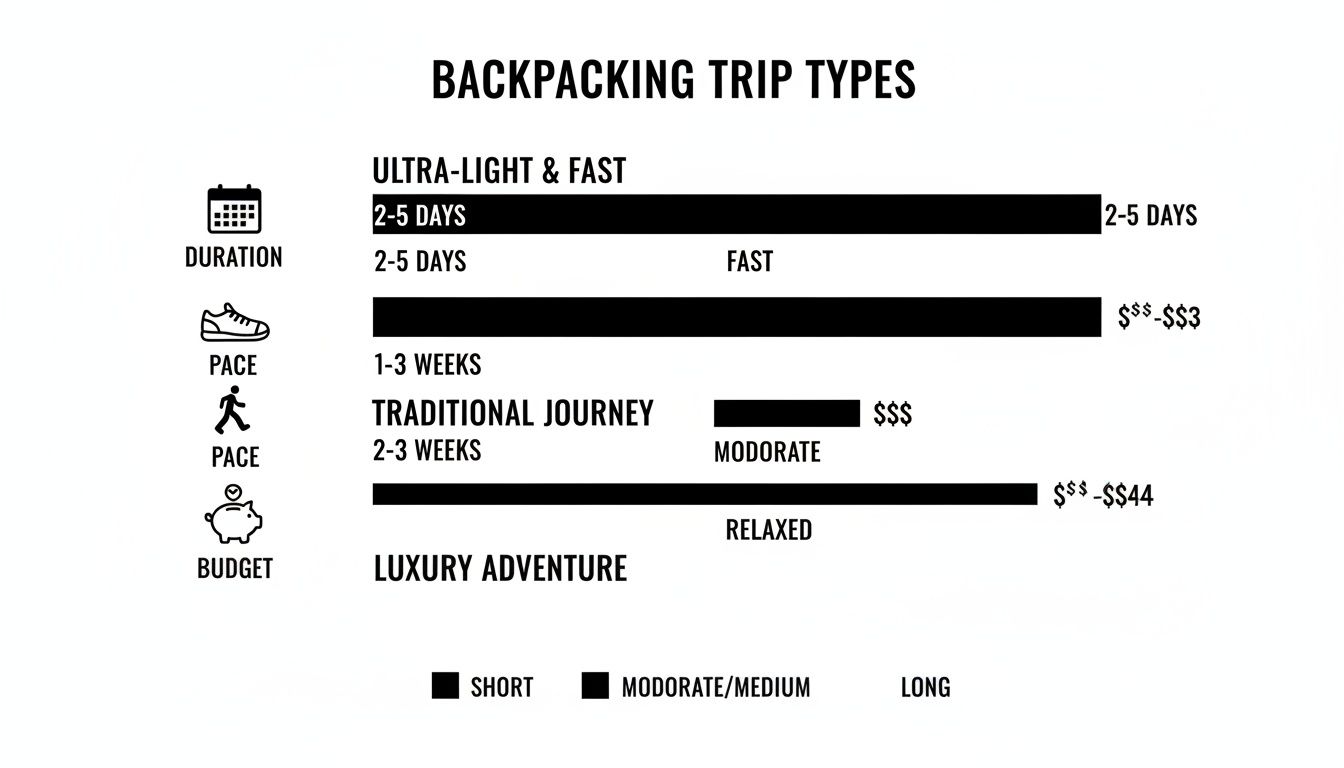
As the infographic shows, your trip's style is defined by how you balance your timeline, pace, and spending.
Crafting Your Backpacking Budget
Creating a budget can feel like a huge task, but it really just boils down to estimating your daily average spend and multiplying it by the number of days you’ll be on the road.
Here’s how I break it down:
- Daily Costs (The Variables): These are the flexible expenses that change day-to-day. A hostel dorm in Thailand might be $8, but in Italy, you could be looking at $40. Likewise, you could eat amazing street food in Vietnam for $15 a day or enjoy restaurant meals in Spain for $50.
- Major Costs (The Pillars): These are the big, mostly fixed expenses you’ll plan for first. Think flights, visas (which can run over $100 depending on the country), travel insurance (an absolute must!), and your essential gear.
To give you a clearer picture, here’s a sample breakdown for a month-long trip.
Sample Backpacking Budget Breakdown for a 4 Week Trip
This table provides a sample budget allocation based on a 4-week (28-day) trip, helping you prioritize spending and understand where your money will go.
| Category | Percentage of Budget | Example Cost (based on €2000 total) | Money-Saving Tips |
|---|---|---|---|
| Accommodation | 30% | €600 (€21/day) | Stay in dorms, look for hostels with free breakfast. |
| Food & Drink | 25% | €500 (€18/day) | Cook your own meals, eat street food, limit expensive drinks. |
| Activities & Tours | 20% | €400 | Prioritize free activities like hiking and city walking tours. |
| Local Transport | 10% | €200 | Use public transport, walk as much as possible, take overnight buses. |
| Miscellaneous | 15% | €300 | Includes souvenirs, laundry, and a small buffer for surprises. |
This is just a starting point, of course. For a deeper dive into organizing your finances, check out these 7 travel budget categories that save you money.
One final piece of advice that has saved me more times than I can count: build a buffer. Always, always add an extra 15-20% to your total estimated budget. This is your "oh no" fund for a missed bus, a spontaneous side trip, or just a well-deserved nice dinner. That financial cushion is what gives you true freedom on the road.
Nailing Your Bookings and Logistics
Alright, this is where the dream starts to become a reality. You’ve picked your destination, you know your budget—now it’s time to get into the nitty-gritty of booking your trip. I know, "logistics" sounds boring, but think of it as building the foundation for your grand adventure. Getting this part right is what lets you be spontaneous and worry-free later on.
Your flight is usually the first big ticket item. Timing this purchase can feel like playing the stock market, but there’s a method to the madness. For most international trips, the sweet spot is booking somewhere between two to eight months in advance. Any sooner and you’re looking at placeholder prices; any later and the dreaded last-minute price surge will get you. A pro tip I live by: if you have the flexibility, always try flying on a Tuesday or Wednesday. It’s almost always cheaper than a weekend flight.
With your flight locked in, you need to make sure you can legally enter the country. Don't gloss over this part. Visa rules can be a minefield, and they change all the time based on your passport and where you're headed.
- Europe's Schengen Zone: Many travelers get 90 days of visa-free travel within a 180-day period. But this isn't universal for all passports, so you absolutely have to check the rules for your specific nationality.
- Australia & New Zealand: These are backpacking meccas for a reason. Their Working Holiday Visas are legendary, often letting travelers under 30 or 35 live and work there for a year or more. These visas have strict quotas and application dates, so if this is your dream, you need to plan far ahead.
- Southeast Asia: The classic backpacker trail here often involves 30-day visa exemptions. But it's a patchwork of different rules. A country like Vietnam, for example, might require an e-visa ahead of time depending on your passport and how long you plan to stay.
Let me be blunt: The only source you should ever trust for visa info is the official government immigration website of the country you're visiting. Please don't risk your trip by relying on a random blog post from three years ago. I've seen people turned away at the border, and it's heartbreaking.
Finding Your Home on the Road
Ah, the great hostel debate: book ahead or show up and wing it? My answer after years on the road is a little of both.
I have a non-negotiable rule for myself: I always book my first 2-3 nights before I land in a new city. It's a game-changer. It means I can stumble off a long-haul flight, grab my bag, and head straight to a guaranteed bed. No stress, no wandering around a strange place exhausted at night. After I’m settled, the adventure can begin.
That said, you absolutely must book in advance during:
- Peak Season: Don't even try finding a last-minute bed in Europe during the summer.
- Major Festivals: Heading to Songkran in Thailand or Oktoberfest in Germany? Book months ahead or you'll be sleeping on a park bench.
- Late-Night Arrivals: Seriously, never, ever plan on finding a hostel at 2 AM.
When you’re scrolling through a site like Hostelworld, learn to read the reviews like a detective. Ignore the generic "it was great!" comments. Look for words like "safe," "clean," "lockers," and "social." An "atmosphere" rating is great for parties, but a high "cleanliness" score actually means you’ll get some sleep. And to keep all your reservations straight, check out our guide on the best travel apps.
The Most Important Thing You'll Book
If you take only one piece of advice from me, let it be this: Travel insurance is not optional. It is the single most important purchase you will make for your entire trip.
It's your safety net for everything—a cancelled flight, a stolen laptop, or a serious medical emergency that could cost you a fortune.
When you're looking at policies, don't just grab the cheapest one. Read the fine print. Does it cover:
- Every Country You're Visiting? Some policies have strange exclusions.
- The Fun Stuff? If you plan on trekking, scuba diving, or renting a scooter, you need to be sure "adventure activities" are included.
- Real Medical Emergencies? Look for a policy with at least $100,000 USD in medical coverage. Don't settle for less.
Here’s the bottom line: if you can't afford travel insurance, you can't afford to travel. It's a small price for the peace of mind that lets you say "yes" to adventure without a shadow of worry.
How To Pack Your Entire World Into a Backpack
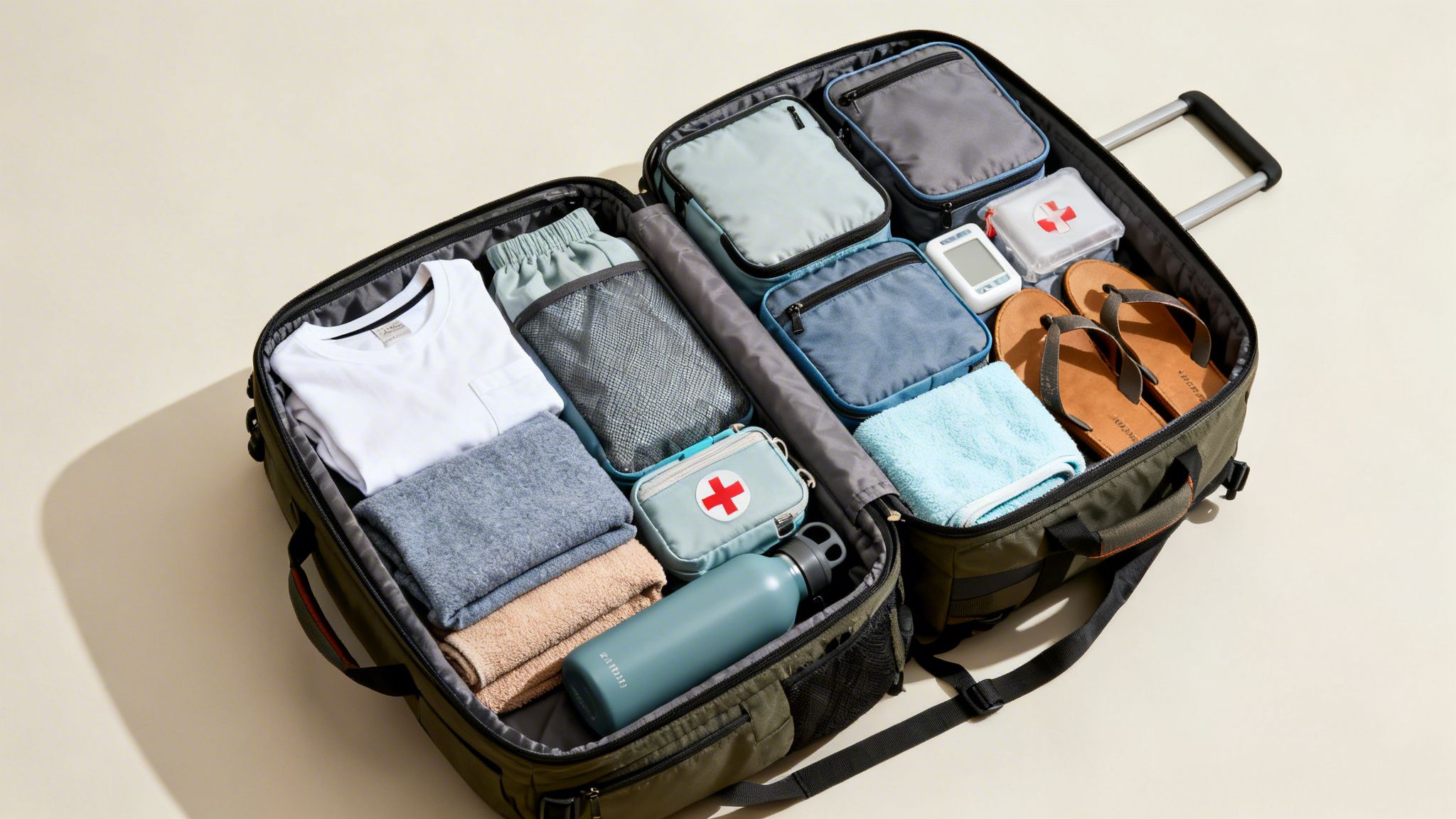
Let’s talk about your backpack. It’s so much more than just a bag—it’s your home on the move, your lifeline, your entire world neatly packed and strapped to your back. Mastering the art of packing is what separates a good trip from a truly incredible one. It's the difference between feeling weighed down and feeling utterly free.
This isn’t about just cramming things into a bag. It’s a mindset. It’s about being intentional and realizing how little you truly need to explore the world. The goal here is a light pack and an even lighter spirit, ready for anything.
Finding Your Perfect Pack
Before you even think about what to pack, you need the right pack. This is, without a doubt, one of the most important decisions you'll make. It’s not about the flashiest brand; it’s all about the fit.
The absolute key is finding a pack that fits your torso length, not just your height. A good outdoor shop can measure you properly, and it's worth the time. A pack that doesn't fit right will throw all its weight onto your shoulders, leaving you sore and miserable. A well-fitted pack, on the other hand, cleverly directs 80% of the load onto your hips. Trust me, you'll be able to walk for miles and barely feel it.
Then, you have to think about size, which is measured in liters.
- 30-40 Liters: This is the dream for minimalists, warm-weather wanderers, or short trips. You can usually get away with this as a carry-on, which is a huge win for your wallet and your sanity.
- 40-55 Liters: The sweet spot. This is my go-to size and what I recommend for most travelers. It’s versatile enough for a few weeks or even months on the road, without giving you so much space that you're tempted to pack your entire closet.
- 60+ Liters: Honestly, unless you're planning a serious multi-day trek in the wilderness carrying a tent and your own food, you probably don't need a pack this big.
The Real Art: What Goes Inside
Okay, you've got the pack. Now for the fun part. The mantra to repeat to yourself is versatility over variety. Every single thing that makes the cut needs to earn its place.
Think in terms of layers and a neutral color palette. Ditch the bulky cotton—it takes forever to dry and gets heavy. Instead, fall in love with merino wool and modern synthetic fabrics. They’re light, they pull sweat away from your skin, and you can wear them a few times before they even think about smelling. Three merino shirts are infinitely more useful than ten cotton ones.
The rookie mistake I see time and time again? Overpacking. Lay out everything you think you need. Now, be ruthless and put half of it back. You will never, ever meet a traveler who wishes they’d brought more stuff.
Get creative with multi-use items! A sarong is a perfect example—it can be a towel, scarf, skirt, or a blanket for the beach. And solid toiletries are a game-changer. Shampoo bars, conditioner bars, and toothpaste tabs save tons of space, they'll never explode in your bag, and they’re way better for the planet.
What To Leave At Home
What you don’t pack is just as important as what you do. Get rid of all those "just in case" items that are weighing you down mentally and physically. Unless you’re heading deep into the Amazon with no towns for hundreds of miles, you can almost always buy something if you find you desperately need it.
This goes for big fluffy towels (a small microfiber one is all you need) and especially shoes. You don’t need seven pairs. A solid pair of walking shoes that you've already broken in, a comfy pair of sandals or flip-flops, and maybe one pair of foldable flats is more than enough for almost any trip.
For a complete rundown of our tried-and-true favorites, our backpacking essentials checklist has you covered.
Learning to pack light is a skill you'll hone with every adventure. It’s a beautifully liberating feeling, teaching you what you really need to be happy, comfortable, and totally open to whatever the road has in store for you.
Staying Safe, Healthy, and Connected On the Road
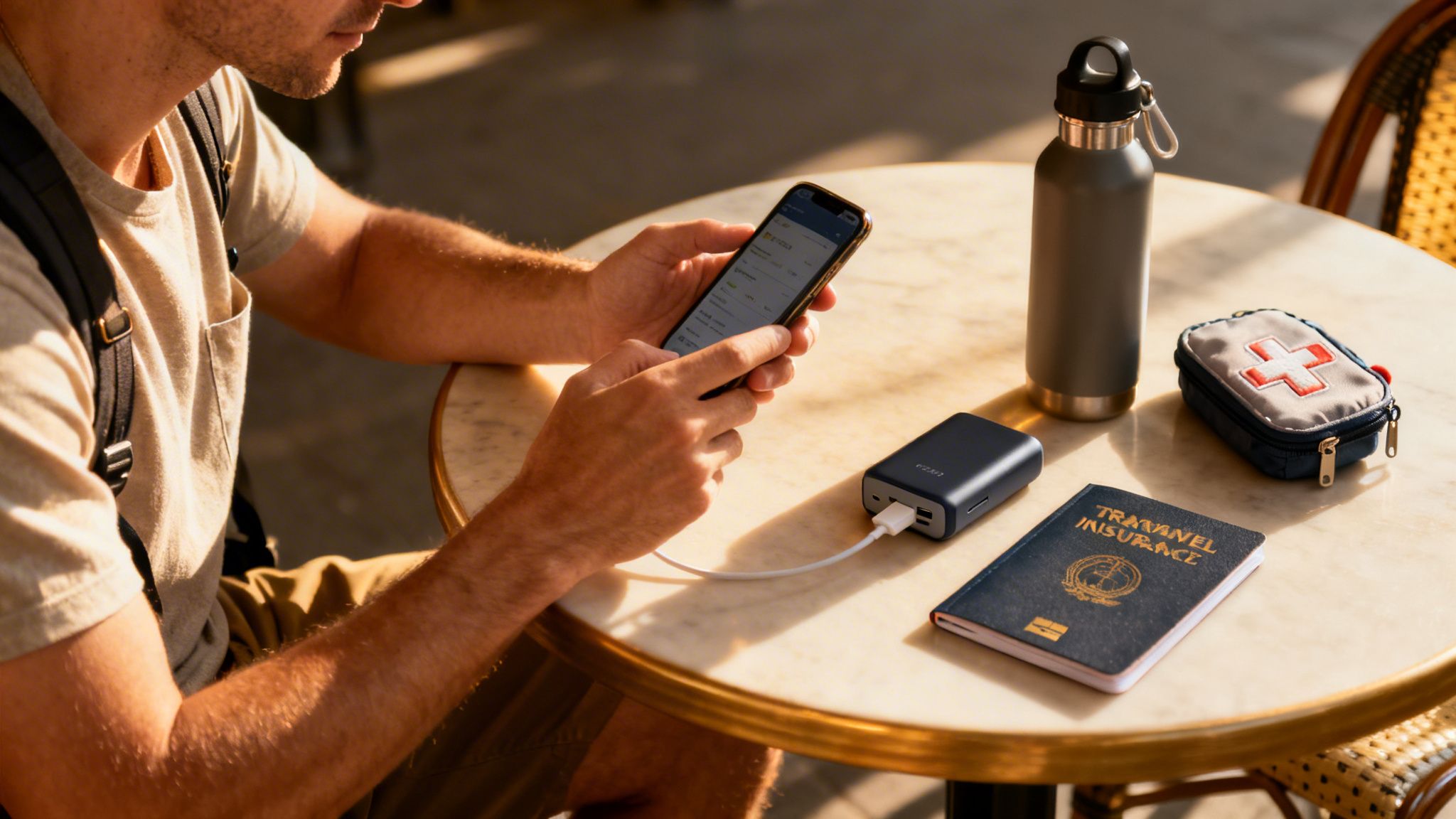
The real magic of backpacking isn’t found in being reckless—it’s in feeling so prepared and confident that you’re free to be completely present. This is where we build that foundation for your well-being, so you can truly soak in every single moment of your adventure.
We're going to dive into some real-world strategies for looking after your physical and mental health. This is all about practical advice that will empower you to travel with confidence, especially if you're venturing out on your own.
The Rise of the Solo Traveler
Traveling alone has become a genuine movement. Seriously, the global solo travel market is on a trajectory to hit an eye-watering USD 1.07 trillion by 2030. What's driving this? A deep-seated desire for freedom and self-discovery, with women making up a staggering 80% of all solo travelers.
After the pandemic, Google Trends registered a 761% explosion in searches for solo travel, and today, individuals are traveling three times more than groups. This wave is reshaping the adventure sector, where 73% of tour operators saw revenue growth in 2024. If you're a data nerd like me, you can dig into more solo travel statistics and data on Solo Traveler World.
Practical Safety for Every Traveler
Let’s get one thing straight: safety on the road isn't about paranoia. It’s about cultivating awareness. It’s about making small, smart choices that quickly become second nature, letting you relax and actually enjoy where you are.
Situational Awareness: This is your best friend. It just means paying attention. Walk with your head up and a sense of purpose. Notice who’s around you, especially in packed train stations or when you're out after dark.
Protect Your Gear: Don't make yourself a target by flashing an expensive camera or wads of cash. Use the lockers at your hostel—they're there for a reason. Keep your passport and main stash of cash locked up. I always carry a small daypack for my daily essentials, but I never let it out of my sight.
Nightlife Smarts: Going out is a huge part of the experience for many of us. The golden rule is to go with people you’ve met at your hostel. Before you leave, pick a spot to meet up if you get separated and make sure you know how you're getting home. And please, never leave your drink unattended.
A piece of advice I live by: Trust your gut. If a person or a place feels off, it probably is. Don’t ever feel bad about leaving a situation, turning around, or just saying "no." Your intuition is the most powerful safety tool you have.
Thriving on the Road: A Guide to Your Health
Staying healthy is what allows you to make the most of every day. A little prep work before you fly and some mindful habits on the road can make a world of difference.
Before you even pack your bags, make an appointment with a travel clinic or your doctor. They'll tell you about any recommended vaccinations for your destinations. Some of these require multiple shots over a few weeks, so you can't leave this to the last minute. Just as important is getting solid travel insurance. Our travel insurance comparison guide is a fantastic place to start if you want to understand what makes a good policy.
On-the-Go Health Tips:
Food and Water Safety: I always stick to street food stalls that are busy and where I can see the food being cooked right in front of me. If you have any doubt about the local tap water, use a filtered water bottle or just buy sealed bottled water. It's a simple way to stay hydrated and avoid getting sick.
Preventing Burnout: Honestly, the biggest health risk for most backpackers is just plain exhaustion. It’s tempting to pack your days, but you'll burn out. Intentionally schedule downtime to do nothing but rest and recharge.
Your First-Aid Kit: You don’t need a full paramedic bag, just a small kit with the basics: band-aids, antiseptic wipes, pain relievers, blister treatment (a lifesaver!), and any personal medications you need.
Staying Connected, Securely
It’s easier than ever to stay in touch, but the key is to do it smartly.
- SIM Cards vs. eSIMs: The cheapest way to get data is usually to buy a local SIM card when you land. But for sheer convenience, nothing beats an eSIM. You can download a data plan for your destination right to your phone without having to physically swap any tiny cards.
- Public Wi-Fi: A gift from the travel gods, but it can be risky. As a rule, never do any online banking or type in passwords on a public network. A Virtual Private Network (VPN) is an awesome tool that encrypts your connection, keeping all your personal data safe from prying eyes.
Your Mental Well-Being Matters, Too
The emotional journey of backpacking is just as real as the physical one. You’re going to have amazing days, and you might have some tough ones, too. It’s completely normal to feel a whole spectrum of emotions.
Culture shock, loneliness, and homesickness can pop up when you least expect them. The best thing you can do is just acknowledge those feelings. Chat with other travelers in the common room, call your family, or find a cozy café and just write in a journal for an hour. Remember that these moments are part of the process, and they often lead to the most profound personal growth. Preparing for the mental side of travel is what makes your trip not just exciting, but truly rewarding.
That leap from daydreaming about an adventure to actually booking the flight is filled with a million questions. It’s totally normal. Let's tackle some of the big ones that are probably swirling in your head right now.
Answering Your Biggest Backpacking Questions
Think of this as a conversation with a seasoned traveler who’s been in your exact shoes, trying to figure out the first steps.
How Much Money Do I Really Need to Save?
Ah, the million-dollar question. The honest-to-goodness answer is that it all comes down to where you're going. The best way I've found to wrap my head around it is to figure out a daily budget.
Here’s a realistic guideline I’ve used for years:
- Southeast Asia (like Thailand or Vietnam): You can live really well on $30-$50 USD a day. Seriously. Hostel dorms often come in under $10, and you can feast on incredible street food for just a few bucks.
- Western Europe or Australia: These spots definitely require more cash. I’d budget for $70-$100 USD per day to be comfortable, as accommodation and food will eat up a bigger chunk of your funds.
Once you have that daily number, just multiply it by how many days you'll be gone. Then, do this one crucial thing: add a 20% buffer. This isn't just for emergencies; it's your "say yes" fund for that spontaneous scuba trip or a last-minute flight to an island you just heard about.
A Pro Tip You Can't Ignore: Your pre-trip expenses are a beast of their own. Your main flight, travel insurance, visa applications, and quality gear (don't skimp on your backpack or shoes!) can easily tack on another $1,000-$3,000 to your savings goal. Factor that in from day one.
Should I Book All My Hostels in Advance?
This is a classic backpacker's dilemma, and the best answer lies somewhere in the middle. I swear by a hybrid approach that gives you both a safety net and the freedom to explore.
My non-negotiable rule? Always, always book your first one or two nights in a new city. Landing after a long-haul flight and knowing you have a bed waiting for you is a feeling of pure relief. It saves you from trying to navigate a strange city when you're exhausted and overwhelmed.
After you’ve settled in, you can loosen the reins. But there are a few times when booking ahead is an absolute must:
- Peak Season: Hitting Europe in the summer or a famous beach spot during the holidays? Book everything.
- Massive Events: If you’re going to something like Oktoberfest or Songkran, you need to book months—sometimes a year—in advance. No exaggeration.
Outside of those times, you'll have the incredible freedom to just go with the flow. Follow a tip from a traveler you just met, or use a hostel app to find a place for the next night. It’s the perfect blend of planning and pure adventure.
What Are the Biggest Mistakes First-Time Backpackers Make?
Every traveler has a mental list of things they wish they’d known on their first trip. Learning from our blunders will save you so much grief.
The number one mistake, hands down, is overpacking. You need so much less than you think. A heavy backpack is a happiness vampire—it sucks the joy out of everything. Be absolutely ruthless when you pack. Your back will thank you.
Another classic rookie error is a super-rigid itinerary. Backpacking magic lives in the unplanned moments. It’s the detour you take on a whim or the invitation from a new friend that leads to the best memories. You have to leave space for that to happen.
Finally, please don't make these two mistakes: skipping comprehensive travel insurance (it's non-negotiable) and being too scared to go solo. The fear of being lonely stops so many potential adventurers, but the backpacking community is one of the most open and social worlds you'll ever find.
How Can I Travel More Sustainably?
Traveling with a conscience isn't about perfection; it's about making a string of small, thoughtful choices that add up.
It starts right in your backpack. A reusable water bottle (a filtered one is even better), a travel coffee cup, and a small tote for shopping are your best defenses against single-use plastic. It's such a simple habit, but it makes a huge difference.
Try to embrace slow travel. Instead of tearing through ten cities in ten days, why not spend more time in fewer places? You'll cut down on your carbon footprint and, more importantly, you'll actually get to know a place and its people.
Make a real effort to support local businesses. Choose the family-run restaurant over the global chain. Buy your souvenirs from the person who actually crafted them. Hire a local guide to show you their city. Your money goes directly into the community.
And above all, just be a good guest. Learn a few phrases in the local language, be aware of cultural etiquette, dress respectfully, and always ask before you snap a photo of someone. These small acts of respect ensure the places we love stay wonderful for everyone.
At Travel Talk Today, we believe planning is the first step to an unforgettable adventure. We’re here to give you the tools and confidence to get out there and explore. Find your next journey with us at https://www.packlight-journeys.com.