The dream of seeing the world often comes with a hefty price tag, or so we're told. But what if I told you the secret to affordable travel isn't about pinching pennies, but about making smarter, more intentional choices that actually lead to richer adventures?
It’s a philosophy I’ve lived by for years. You can absolutely save money while traveling by mastering a few core skills: being flexible with your plans, embracing the local way of life, and getting creative with your on-the-ground spending. These aren’t just cost-cutting tricks; they're gateways to a deeper, more authentic connection with the places you visit.
Your Blueprint for Affordable Adventure
Let's shatter the myth that incredible travel experiences are reserved for the ultra-wealthy. This guide is built on a simple truth: every dollar you save on the big-ticket items—flights, accommodation—is a dollar you can pour back into the experiences that make a trip unforgettable. It’s not about sacrifice. It’s a powerful mindset shift from simply spending to truly experiencing.
The journey to making your dream trip a reality starts right now, long before you even think about packing. It begins with a bit of strategy and the firm belief that you can make this happen.
The Real Secrets to Budget Travel
So, where do the biggest savings come from? It's not about finding some magical, one-off deal. It’s about focusing your energy on a few key areas that consistently deliver huge returns.
The most significant savings almost always come from when and how you book your trip. Traveling during the shoulder seasons—those beautiful windows between the peak and off-seasons—can easily slash your flight and hotel costs by up to 50%.
Once you're there, your biggest daily costs will be food and a place to sleep. This is where you can make a huge impact. Ditch the overpriced tourist traps and start living like a local. Swapping restaurants for bustling food markets, delicious street food, and apartment rentals doesn't just save you a ton of cash; it immerses you in the real culture.
From hopping on public transit instead of hailing a cab to discovering free museum days, every small choice you make on the ground adds up. These little wins accumulate into massive savings over the course of a trip, turning every day into a fun, affordable exploration.
It’s all about redefining what "value" means on your trip. Value isn't a five-star hotel. It’s the charming guesthouse run by a friendly family. It’s not the expensive bus tour; it's the free hike to a breathtaking viewpoint a local barista told you about.
This shift in perspective is everything. It puts you in the driver's seat of your budget, empowering you to design a journey that perfectly aligns with your financial goals and your hunger for authentic connection. Just imagine using the money you saved on a generic hotel to fund a private cooking class in Thailand or a multi-day trek through Patagonia. That’s what this is all about.
To help you see the big picture, I've put together a quick breakdown of where your efforts will pay off the most.
Key Savings Areas at a Glance
This table highlights the main areas where smart planning can lead to significant savings, and more importantly, what those savings can unlock for your adventure.
| Savings Area | Potential Savings | What This Unlocks |
|---|---|---|
| Flexible Booking | 20-50% on flights & lodging | An extra week of travel or bucket-list activities |
| Eating Locally | 30-60% on daily food costs | More funds for unique dining or local market hauls |
| Free Activities | $20-$100+ per day | The ability to extend your trip or splurge on a special tour |
As you can see, focusing on these three areas isn't just about trimming your budget. It's a strategy for buying yourself more time, more freedom, and more of the incredible experiences that you'll remember for a lifetime.
Master the Art of Booking Flights and Timing Your Trip

Some of the biggest wins in your travel budget are secured long before you even think about packing. This is where the real magic happens, in the planning. Mastering the art of smart booking is what separates a good trip from an incredible, affordable one. Your most powerful tool here isn't a credit card—it's your calendar.
Timing is everything.
The single most effective way to stretch your travel funds is to avoid the peak season rush. Instead, aim for the "shoulder seasons"—those sweet spots just before or after the crowds descend. Imagine wandering through Rome in October, enjoying the crisp autumn air without the suffocating summer queues. It’s not just a more pleasant experience; it’s a dramatically cheaper one.
The Power of Shoulder Season Travel
Shoulder seasons are the travel world’s best-kept secret. You get fantastic weather, fewer tourists, and prices that haven't been inflated for the peak rush. A little bit of research is all it takes to find these golden windows.
For much of Europe, this means April-May and September-October. In Southeast Asia, it could be the months bracketing the main dry season.
Choosing these off-peak times can slash your flight costs by 30-50%. Think about that. Booking a flight to Paris in January instead of July can easily save you $200-$400 per ticket. Those aren't just numbers on a screen; that's your budget for amazing meals, museum entries, and unforgettable experiences.
Plus, you get a much more authentic feel for a place. When the streets aren't packed with tourists, you can connect with the destination on a deeper level.
Strategic Flight Booking Tactics
Once you’ve zeroed in on the right time to go, the hunt for the perfect flight begins. This isn't a lottery; it’s a game of strategy.
The key is to never book the first flight you see. Be patient.
Embrace Flexibility with Google Flights: The "Explore" map is a game-changer. If you know you want to travel in May but aren't tied to a specific city, you can see flight prices all over the globe. You might just discover an incredible deal to a place you hadn't even considered.
Let the Deals Come to You: Use tools like Skyscanner and Hopper to set up price alerts for your dream routes. They do the hard work for you, sending a notification the second a price drops so you can snag it.
Fly Mid-Week: It’s a simple trick, but it works. Flights on Tuesdays, Wednesdays, and Saturdays are almost always cheaper than the high-demand Friday and Sunday flights. Just shifting your dates by a day or two can unlock surprising savings.
My Go-To Pro Tip: Always check for nearby, smaller airports. Flying into Oakland instead of San Francisco, or London Stansted instead of Heathrow, can sometimes save you a bundle. The short bus or train ride into the city center is a tiny price to pay for a much cheaper ticket.
And what about budget airlines? They can be an incredible value, but you have to do the math. That super-low base fare is tempting, but make sure to account for baggage fees, seat selection, and other add-ons. If you're a minimalist who can travel with just a carry-on, they are often impossible to beat.
Ready to find that perfect booking window? We break it down even further in our guide on the best time to book flights.
By combining smart timing with the right booking tools, you’re no longer just accepting a price—you’re actively shaping your travel budget. It’s an empowering feeling that sets the stage for the entire adventure, freeing up your cash for what really matters: the experience itself.
Unlock Nearly Free Travel With Points and Rewards
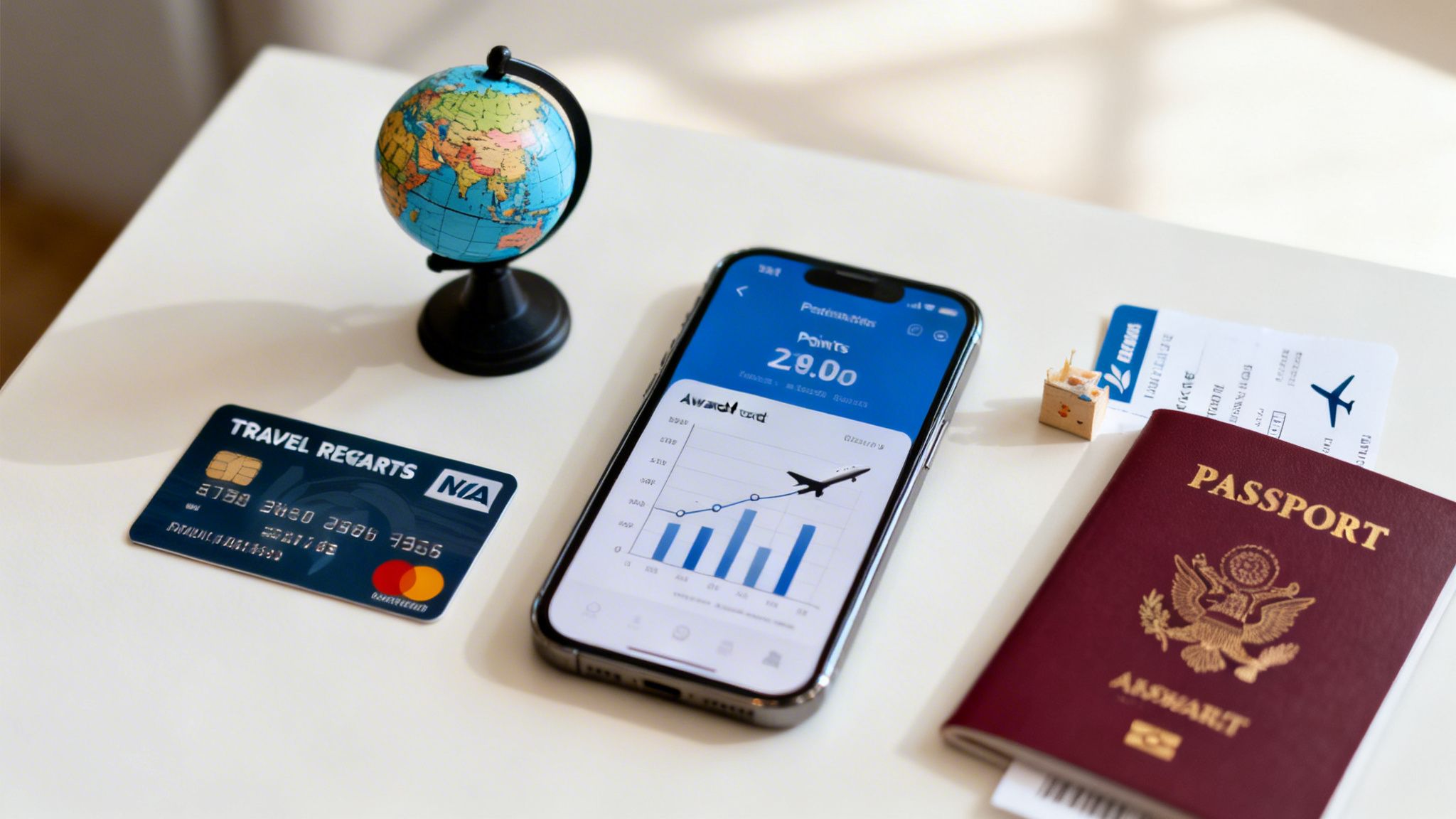
What if I told you the money you’re already spending on groceries, gas, and your phone bill could pay for your next vacation? It’s not a gimmick; it’s the wonderfully rewarding world of travel hacking, and it’s my absolute favorite way to see the world without breaking the bank.
The whole game is about being strategic. By channeling your everyday expenses through a travel rewards credit card, you rack up points that act like a special currency for flights and hotels. This simple shift in habit can dramatically lower—or even eliminate—the biggest costs of your trip.
Choosing Your First Travel Rewards Card
Diving into the world of rewards cards can feel a bit overwhelming, but you don't need to be an expert to get started. The goal is simply to find a great beginner card that matches your spending and travel goals.
The first thing I always look for is a big sign-up bonus. This is a massive chunk of points you get for spending a specific amount in the first few months of opening the card. These bonuses alone are often worth $500 to $1,000 in travel—easily enough for a round-trip flight.
A common mistake is thinking you need to spend more money to earn rewards. The real trick is to put your existing, planned spending on the card. Pay your rent, utilities, and groceries with it, and then—this is crucial—pay the balance in full every single month to avoid interest.
It’s also smart to look at cards with flexible points. Programs like Chase Ultimate Rewards are gold because you can often redeem points for 1.5-2 cents per point, turning everyday spending into huge savings. We're talking about shaving 20-40% off your booking costs. In fact, a recent report found that in 2025, nearly two-thirds of Americans planned to use points for their trips. For a solo traveler, a good sign-up bonus could save you $500 on a flight to Bali.
Finding the perfect card is a personal journey. To see what’s out there, check out our in-depth guide on the best credit cards for travel rewards to compare the top options for 2026.
From Points to Plane Tickets a Real-World Scenario
Let me show you how this works with a real example. A friend of mine, Sarah, had her heart set on Peru but couldn't stomach the $700 flight cost. Here's how she used points to make it happen for next to nothing.
First, she opened a card offering a 60,000-point bonus for spending $4,000 in the first three months. She didn’t go on a shopping spree; she just paid her normal expenses with the card—about $1,200 on groceries, $3,000 on rent, and $450 on bills. She easily hit the spending target with money she was going to spend anyway.
After three months, she had the 60,000 bonus points plus the points from her spending, totaling over 64,000. She then found a great deal, transferred 50,000 points to an airline partner, and booked her round-trip flight to Peru. Her out-of-pocket cost? Just $60 in taxes.
Sarah’s flight was essentially free, paid for by her regular monthly budget. That’s the magic of this strategy.
Smart Strategies to Maximize Your Rewards
Once the points start rolling in, a few key habits will make sure you’re getting the absolute best value. It’s not just about earning points; it’s about redeeming them wisely.
- Pay Your Balance in Full: I can't stress this enough. Rewards are only a "win" if you aren't paying high-interest charges that wipe out your savings. Always treat your credit card like a debit card.
- Transfer Points to Partners: The best value is almost always found by transferring your points to airline and hotel partners. This simple move can easily double the value of your points compared to booking through the credit card’s own portal.
- Look for Sweet Spots: Every loyalty program has hidden gems—routes or hotel categories where your points stretch further. A little research on travel blogs can turn a good redemption into an unforgettable one.
Getting into travel rewards is a mindset shift. It transforms your daily spending into a direct investment in your travel dreams. With a bit of planning, you can make those bucket-list trips happen, one point at a time.
Live Like a Local to Save on Lodging and Food

You’ve booked the flight. The excitement is real. But then comes the next big question: where will you stay and eat? This is where your trip can either become a standard, expensive vacation or an unforgettable, affordable adventure.
The secret? It’s all about shifting your perspective from being a tourist to becoming a temporary local. This simple change in mindset doesn't just save a surprising amount of cash; it opens the door to the kind of authentic experiences you'll be talking about for years.
Rethink Where You Stay to Cut Costs
The default for many travelers is a hotel right in the middle of the tourist zone, but that’s often the fastest way to drain your budget and miss out on the city's true character. The real magic unfolds in the neighborhoods where people actually live, work, and play.
An apartment rental is my go-to, especially if I’m staying for more than a couple of nights. Having your own kitchen is a huge win for your wallet, but it’s more than that. It’s about the simple pleasure of starting your morning with a coffee on your own balcony or discovering the best bakery on the block. You get a real feel for the place.
And the options don't stop there. Modern hostels have completely shed their old reputation, now offering chic private rooms that feel more like boutique hotels at a fraction of the cost. For those with a more flexible spirit, house-sitting can bring your accommodation costs down to zero—all for the rewarding task of looking after a home and maybe a friendly pet.
The goal is to find a comfortable home base, not just a room. When you stay in a real neighborhood, you shop at the local bakery, you discover the tiny park where residents walk their dogs, and you start to feel the city’s true pulse.
Thinking about where to set up camp in a city like Paris? Our guide on where to stay in Paris is a great resource for exploring different arrondissements to find a spot that’s both affordable and perfectly situated for a local-first experience.
Choosing these kinds of stays does more than save money. It connects you directly to the culture, turning a simple visit into a brief, immersive life abroad.
Eat Like a Local and Save a Fortune
Now for my favorite part of traveling: the food. It’s one of life’s greatest joys, but it can also be a massive budget-killer if you’re not careful. The trick is incredibly simple: go where the locals go. This almost always means walking a few blocks away from the main tourist drags.
Your first stop in any new city should be the local market. It's more than just a place to buy groceries; it’s the beating heart of daily life. Here you’ll find the freshest produce, incredible local cheeses, and warm bread for pennies on the dollar compared to a restaurant. Grab some supplies, find a scenic park, and have a picnic. It's a classic travel move for a reason—it’s cheap, delicious, and deeply satisfying.
And please, don't shy away from street food. From the sizzling night markets of Southeast Asia to the buzzing food trucks in the US, some of the most authentic and mouth-watering meals are served right on the sidewalk. A great tip I've learned is to join the longest line of locals. They know who’s making the good stuff.
When you do want a sit-down meal, hunt for the small, family-run spots tucked away on side streets. If the menu is only in the local language and the tables are filled with neighborhood regulars, you’ve struck gold. These are the places that serve food with soul, not just a high price tag.
To really see what this looks like in practice, let's break down a typical day’s food costs in a fantastic city like Lisbon.
Daily Food Budget Comparison Lisbon, Portugal
The table below shows just how much you can save by swapping tourist-trap meals for delicious local favorites.
| Meal | Tourist-Focused Dining Cost | Budget-Savvy Local Approach | Notes |
|---|---|---|---|
| Breakfast | €15 at a hotel buffet | €3 for a pastel de nata & coffee | Enjoying a classic Portuguese breakfast at a local 'pastelaria' is a must-do. |
| Lunch | €25 at a restaurant in Baixa | €8 for a 'bifana' sandwich & drink | Grabbing a delicious and filling pork sandwich from a local spot saves big. |
| Dinner | €40 for a tourist menu with Fado | €20 at a neighborhood 'tasca' | A 'tasca' is a small, traditional restaurant offering authentic food at local prices. |
| Snacks/Water | €8 for gelato and bottled water | €4 for market fruit & refilling a bottle | A refillable water bottle is one of the easiest ways to save money daily. |
| Total Daily Cost | €88 | €35 | Over 60% savings by simply eating like a local. |
Look at that difference. We're talking about over 60% savings—that’s an extra €53 a day. That money isn't just saved; it’s freed up for a surf lesson on the coast, a day trip to magical Sintra, or even just a few more days added to your trip.
Living and eating like a local isn’t about making sacrifices. It’s about upgrading your entire journey, enriching your experience, and coming home with better stories—all while spending far less.
Find Free and Affordable Activities Anywhere
Some of my best travel stories—the ones I tell over and over again—don't have a price tag attached. They’re born from stumbling upon a hidden courtyard in Rome, watching the sunrise over a quiet beach, or just getting completely, wonderfully lost in a new city. Learning to save money while you travel is less about penny-pinching and more about shifting your focus to these real, immersive moments that truly define a place.
You don't need a fat wallet to experience the heart of a destination. The secret is to start thinking like someone who lives there. This opens up a world of simple pleasures and authentic experiences that most tourists completely miss.
How to Find Priceless (and Free) Experiences
Every single city, from sprawling capitals to tiny villages, is packed with incredible things to do that won't cost you a cent. All it takes is a little bit of research before you go, and your itinerary can transform from expensive to priceless.
My first move in any new city? I always look for a free walking tour. These are usually run by passionate locals who work on a tip-basis. You get an amazing introduction to the city's layout, hear personal stories you'd never find in a guidebook, and can get insider tips on the best cheap eats. It’s a fantastic way to get your bearings.
Next, I become a detective of museum schedules. Almost every major museum has free admission days or hours, maybe on a Tuesday afternoon or the first Sunday of the month. A quick check on their website can easily save you $20-$30 per person. That's money you can put toward a fantastic local dinner instead.
I’ve learned that real adventure isn't found behind a ticket counter. It’s in the buzz of a public park, the quiet awe of an old church, or the simple joy of people-watching from a bench in a historic square. These moments are not only free—they’re what connect you to a place.
Seriously, don't be afraid to just wander. Put the map away for an afternoon and let your curiosity guide you. Following a winding cobblestone street just to see where it goes has led me to some of my most cherished memories, from discovering vibrant street art to finding quiet canals far from any tour group.
Move Like a Local and Spend Like One Too
How you get around a city and handle your cash can make or break your daily budget. Ditching the pricey tourist traps for savvy local habits is a total game-changer.
First things first: make public transportation your new best friend. A single taxi or rideshare can easily cost more than an entire day-pass on the local metro or bus system. Plus, it's an experience in itself—you get a real-time view of daily life and see parts of the city you’d otherwise speed past.
- Navigate like a pro: Before your trip, download an offline map app like Maps.me or the city’s official transit app. This will save you from burning through expensive data while trying to find your way.
- Walk, walk, walk: Walking is the ultimate free travel activity. It's great exercise, it helps you stumble upon hidden gems, and it’s the best way to truly soak in the atmosphere of a place.
- Use fee-free cards: Nothing stings like ATM fees. Get yourself a debit card that doesn't charge foreign transaction fees. Those little charges can easily add up to $50 or more over a trip.
Finally, when you’re browsing local markets, get a feel for the local customs. In many countries, friendly bargaining is part of the culture. It's not about being aggressive; it's a respectful interaction. Approach it with a smile—it’s a fun way to engage with vendors, and you can often save a bit of cash. If you're looking for even more ideas, you might want to check out our guide on free things to do in any city.
When you start weaving these free activities and smart habits into your travel style, you'll be amazed at how far your budget can stretch. More importantly, you'll come home with stories that money could never buy.
Your Travel Savings Toolkit and Budget Templates
Alright, let's get down to business. Planning is where the dream of travel starts to feel real, and getting a handle on your money is the single most empowering step you can take. This isn't about restriction; it's about building a smart financial plan so you can travel with freedom and confidence.
We'll kick things off with a simple financial checklist to get you started, then look at a couple of real-world daily budgets to show you what's possible.
Your Essential Pre-Trip Financial Checklist
Before you get lost scrolling through gorgeous destinations, a little bit of prep work on the financial front will pay off massively down the road. Think of this as your pre-flight check for your wallet.
- Create a dedicated travel fund. Seriously, this is a game-changer. Open a separate high-yield savings account and give it a name like "Thailand Adventure" or "Eurotrip 2026." Automate transfers, even if it's just $20 a week. You'll be amazed how quickly it grows when you’re not tempted to touch it.
- Become a flight-tracking ninja. Start watching prices on Google Flights or Skyscanner at least 3-4 months out. Set up price alerts for your dream route. You'll get an email the moment fares drop, so you can snag a deal without the guesswork.
- Never, ever skip travel insurance. I can't stress this enough. It might feel like a boring expense, but a good policy can literally save you thousands if something goes wrong. Compare different plans and find one with solid medical coverage that fits your budget.
- Get a fee-free debit and credit card. This is non-negotiable. Banks love to charge 2-3% on every single transaction you make abroad. Those little fees bleed your budget dry. Applying for cards with zero foreign transaction fees is one of the easiest, most effective ways to save money.
This checklist is the perfect launchpad for your financial planning. If you want to dive even deeper, we've got you covered in our complete guide on travel budgeting tips.
Sample Daily Budget Breakdown
To show you how this all comes together, let's look at how two different travelers might spend their money on a typical day. A daily budget isn't a rigid set of rules; it's a guide that helps you make conscious decisions about where you want your money to go.
Here's a look at how a backpacker in an affordable country compares to a mid-range traveler exploring Europe.
| Expense Category | Backpacker in Thailand (USD) | Mid-Range Traveler in Spain (USD) |
|---|---|---|
| Accommodation | $15 (Hostel Dorm) | $45 (Private Room in Guesthouse) |
| Food | $12 (Street food & local markets) | $25 (Cafe breakfast, market lunch, local restaurant dinner) |
| Activities | $5 (Temple entry fee) | $15 (Museum ticket) |
| Transportation | $3 (Scooter rental/shared taxi) | $5 (Metro day pass) |
| Misc./Drinks | $5 (Local beer/smoothie) | $10 (Glass of wine/coffee) |
| Daily Total | $40 | $90 |
See how it works? One traveler is thriving in Southeast Asia on just $40 a day, while another is comfortably exploring Spain for under $100. Both are having an amazing time, just by aligning their spending with their travel style.
Your budget is a direct reflection of your travel style. When you're intentional with your spending, you can craft a budget that fits both your wallet and your sense of adventure.
The chart below really drives this point home. You can slash your daily costs just by being smart about your activities and how you get around.

Choosing public transit, finding free museum days, and joining free walking tours are incredibly powerful ways to make your travel fund last longer. These are the tools and strategies I use on my own trips. Now it’s your turn to build a budget and launch your next great adventure.
Clearing Up Your Top Budget Travel Questions
As you start planning your adventure, a few common questions always seem to pop up. Let's tackle some of the biggest ones I hear from fellow travelers, so you can move forward with confidence.
Is It Cheaper to Book Flights and Lodging Separately?
In my experience, almost every single time, the answer is a resounding yes.
Vacation packages definitely sell convenience, but you pay a premium for it. Booking on your own puts the power back in your hands. It lets you be a true deal hunter, pairing that incredible flight deal you found on a budget airline with a charming, top-rated local guesthouse. That's a magic combination you'll almost never find bundled together.
How Far in Advance Should I Book?
Ah, the million-dollar question! Timing is everything.
For those big international trips, start watching prices 6-8 months out. The sweet spot for actually hitting "purchase" is usually around 2-4 months before you fly. For domestic travel, you have a bit more wiggle room—booking 1-3 months in advance is generally your best bet.
A word of caution: Booking super early (a year out) or waiting until the last minute are the fastest ways to overpay. The airlines have this down to a science, but with a little planning, you can beat them at their own game.
Here at Travel Talk Today, our mission is to empower you to see the world without breaking the bank. For more inside tips and destination guides, come say hello at https://www.packlight-journeys.com.