Imagine traveling the world without emptying your bank account, not by skipping experiences, but by making smarter choices. The secret isn't earning more; it's budgeting better. With rising costs, meaningful and affordable travel is more attainable than you might think, provided you have the right playbook. A well-managed budget is the ultimate travel tool, unlocking deeper, more authentic experiences and turning abstract dreams into concrete plans.
Forget generic advice like ‘pack snacks’ or ‘fly on a Tuesday.’ We are diving into high-impact, actionable travel budgeting tips that seasoned explorers use to see more of the world for less. This is not about restriction; it is about empowerment. It is about understanding how to allocate your money where it matters most to you, whether that is a cooking class in Chiang Mai or a museum pass in Paris.
This guide is your practical roadmap to transforming your travel goals from ‘someday’ to ‘soon.’ We will equip you with specific strategies to build a trip that is as financially savvy as it is unforgettable. You will learn how to master flight and accommodation bookings, eat well on a budget, and leverage slower travel to reduce costs and enrich your journey. We will also cover essential, often-overlooked topics like visa strategies and the non-negotiable need for an emergency fund. Let’s get started.
1. Budgeting for Travel: 50/30/20 Rule + Daily Budgets & Tracking
Transform your travel budget from a restrictive limit into a powerful tool for freedom and flexibility. This dual-layered method combines a high-level spending plan using the classic 50/30/20 rule with a ground-level daily tracking system. This approach provides both a clear big-picture allocation and the agility to make smart, real-time spending decisions on the road. It’s one of the most effective travel budgeting tips for ensuring you never run out of funds while still maximizing your experience.
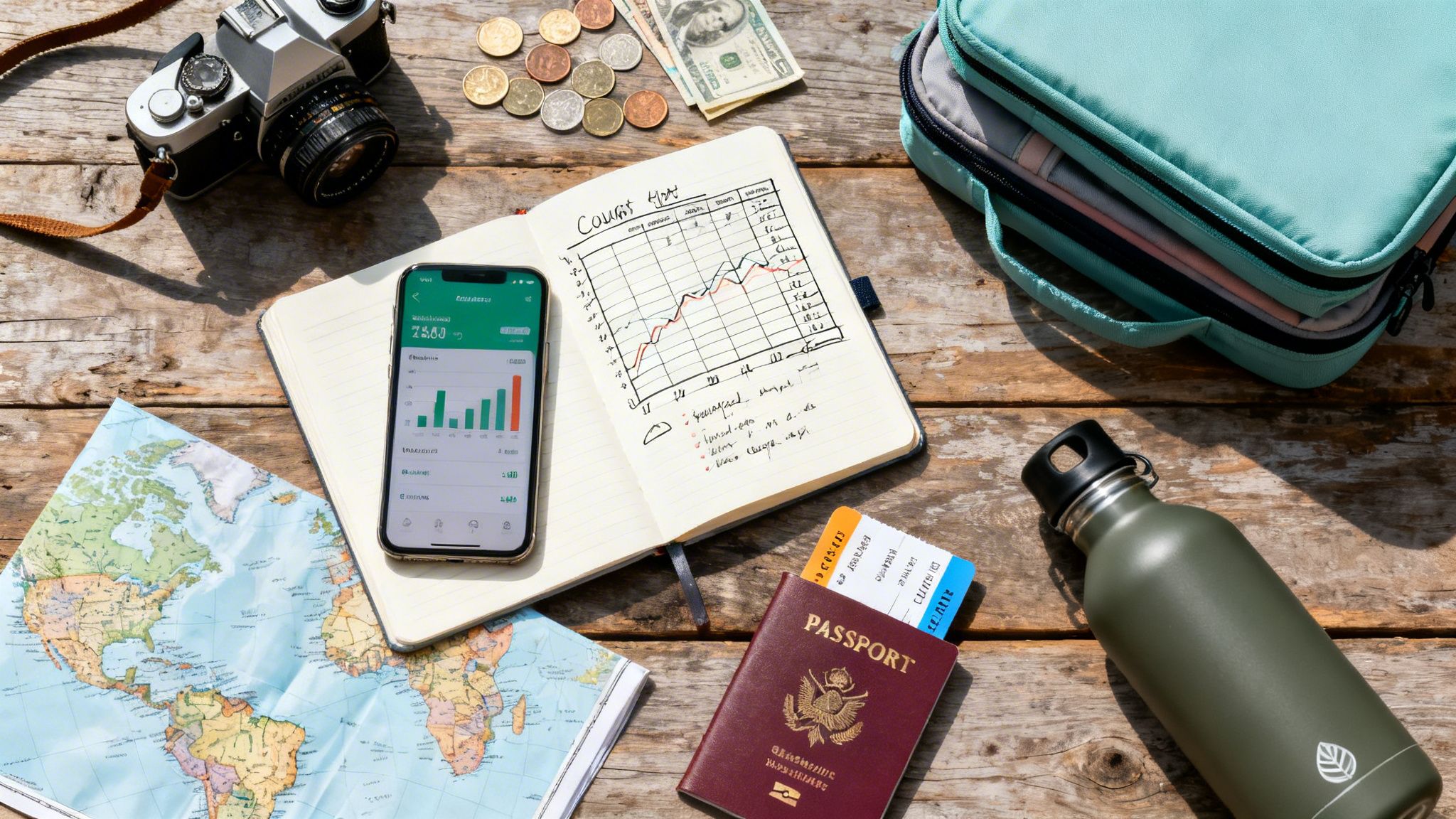
First, determine your total trip fund. Let's say you have $3,000 for a two-week adventure. You'll then allocate it:
- 50% for Essentials ($1,500): This covers your non-negotiables like flights, accommodation, and inter-city transport.
- 30% for Experiences ($900): This is your "fun fund" for tours, museum tickets, special meals, and spontaneous activities.
- 20% for Savings/Contingency ($600): This is your crucial buffer for unexpected costs, souvenirs, or a future trip fund.
Once you’ve allocated your total fund, the real magic happens with daily tracking. Research your destination's typical costs on sites like Numbeo to set a realistic daily budget. For example, if you budget €45/day for a trip to Portugal, and find your daily spending is closer to €35 by day four, you’ve just "found" an extra €40. This is money you can now consciously reallocate-perhaps to a surf lesson or a nice seafood dinner-instead of letting it vanish.
Pro-Tip: Take five minutes each evening to log your day's spending in a simple notes app or spreadsheet. Rounding up to the nearest dollar or euro makes tracking faster and builds a small, hidden cushion in your budget.
This method turns budgeting from a chore into a daily check-in that empowers your journey. Knowing exactly where your money is going gives you the confidence to say "yes" to the experiences that matter most. For a complete guide on starting from scratch, you can explore more on how to plan a trip on a budget to set your foundation.
2. Booking Flights Off-Peak: Timing and Tactics
Mastering the art of flight booking is one of the most powerful travel budgeting tips you can learn, turning a potentially huge expense into a significant saving. This isn't about finding a single secret "cheap day" but about understanding patterns in timing, demand, and airline pricing. By strategically choosing when you fly-both in terms of the season and the day of the week-you can unlock dramatically lower fares and free up hundreds of dollars for your actual travel experiences.
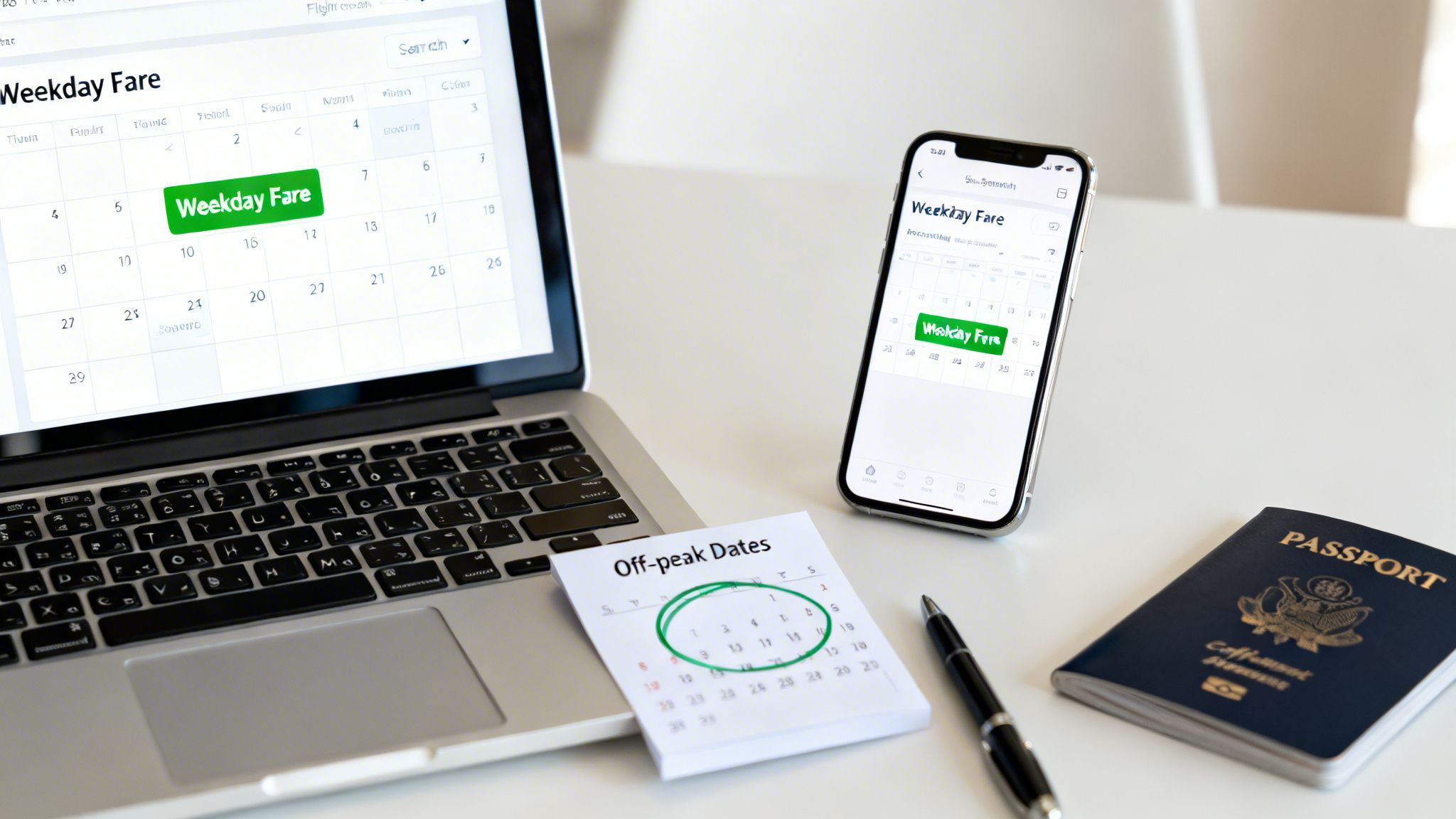
The core principle is to avoid flying when everyone else is. This means looking beyond peak summer and holiday periods and embracing the "shoulder seasons"-the months just before or after the high season. You can also save by being flexible with your departure and return days. For example:
- Day-of-Week Savings: Flying on a Tuesday or Wednesday from NYC to Europe can be around $150 cheaper than making the same trip on a Friday, as you avoid the weekend rush.
- Shoulder Season Advantage: Routes to Southeast Asia can be 30-40% cheaper during its shoulder season (e.g., April-June or September-October) compared to the peak dry season.
- Advance Booking Windows: Budget airlines often release their best fares 6-8 weeks in advance, while major international carriers typically require booking 2-3 months out for the best deals.
To put this into action, you need a proactive approach. Don't just search for flights once; make it a habit to monitor them. This allows you to spot a price drop and book with confidence, knowing you’ve secured a great deal.
Pro-Tip: Always clear your browser cookies or use an incognito/private window when searching for flights. Some airline and booking sites use dynamic pricing, which can show you higher prices based on your previous searches.
This tactical approach shifts your flight search from a passive expense to an active savings opportunity. Setting up alerts on Google Flights, Skyscanner, or Hopper automates the process, letting the deals come to you. For a deeper dive into these methods, you can find a complete guide on how to save money on flights to refine your booking strategy.
3. Accommodation Swaps and House-Sitting Programs
Imagine eliminating your biggest travel expense - accommodation - entirely. House-sitting and home exchange programs transform this dream into reality, allowing you to live like a local for free in exchange for caring for a home and often, beloved pets. This strategy is one of the most powerful travel budgeting tips available, turning a major cost into an authentic, residential experience that can save you thousands.

The premise is a simple, trust-based exchange. Homeowners going on vacation need someone reliable to care for their property and pets. In return, you get a free place to stay. This can range from a chic Barcelona apartment for four weeks to a countryside cottage in France. Many long-term travelers report saving over $20,000 annually, making extended stays in otherwise expensive destinations accessible.
- House-Sitting: You care for someone's home and pets while they are away. Platforms like TrustedHousesitters connect sitters with homeowners globally.
- Home Exchange: You swap your own home with someone in another location for a set period. This is ideal for homeowners who want to travel without paying for hotels.
This approach works best for slow travel, as the setup and commitment are more suited for stays of a week or longer. To get started, build a compelling profile on a reputable platform that requires background checks and reviews. Highlight your reliability, experience with animals (if applicable), and excellent communication skills.
Pro-Tip: Begin by applying for shorter, local house-sits (1-2 weeks) to build your profile with positive reviews. This credibility will make you a much more attractive candidate for competitive, long-term sits in popular destinations.
By swapping hotel bills for pet-sitting duties, you not only slash your budget but also gain an immersive cultural experience. You'll shop at local markets, meet neighbors, and discover a side of the destination most tourists never see. For those seeking deep connection and significant savings, house-sitting is a game-changer.
4. Eat Like a Local: Budget Food Strategies
Turn every meal into an authentic cultural discovery while saving a significant portion of your travel fund. This strategy focuses on bypassing overpriced tourist traps and embracing local culinary scenes, from vibrant street food stalls to bustling markets. Adopting this approach not only drastically cuts your daily food expenses but also connects you more deeply with your destination's heart and soul. It’s one of the most delicious and effective travel budgeting tips for experiencing a place like a true insider.
Food is often a traveler's third-largest expense, but it doesn't have to be. By eating where locals eat, you can enjoy better food for a fraction of the price. The cost difference is often staggering:
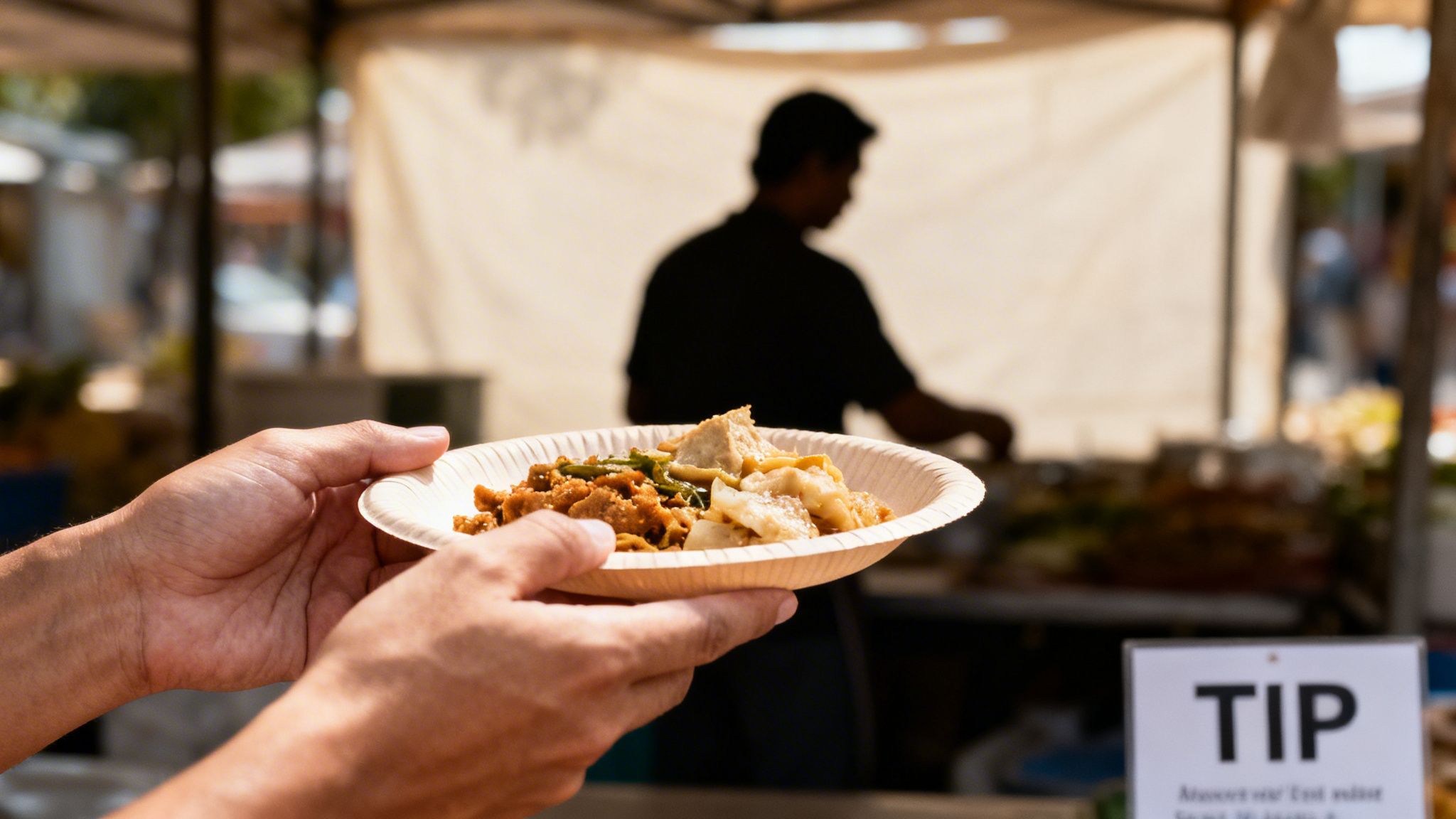
- Thailand: A delicious and filling meal from a street vendor in Bangkok can cost just $2-3, compared to $15-20 for a similar dish in a restaurant targeting tourists.
- Mexico City: Seek out a "comida corrida" (a set lunch menu) for a multi-course meal costing only $3-4, while tourist-focused taquerias might charge $8-12.
- Vietnam: A steaming bowl of authentic pho from a local shop is typically $1-2, a stark contrast to the $5-8 charged in tourist areas.
Embracing this philosophy is simple. Start by observing where the locals gather. A long line of residents is a far better indicator of quality and value than a high rating on a tourist app. Explore neighborhood markets for breakfast, fresh fruit, and snacks, which is much cheaper than a daily cafe habit.
Pro-Tip: Make lunch your main meal of the day. Many countries offer incredible value with fixed-price lunch menus ("menu del día," "plat du jour"), which can be up to 40% cheaper than ordering the same items à la carte for dinner.
Self-catering is another powerful tool. A quick trip to a local supermarket for breakfast items, drinks, and snacks can save you a small fortune. Learning a few key food-related phrases like "How much is this?" or "I would like..." in the local language can also open doors to better prices and friendlier service. This approach to food transforms your budget from a limitation into a passport for genuine culinary adventures.
5. Use Free Walking Tours and Community-Led Experiences
Unlock the heart of a city without emptying your wallet by tapping into the vibrant world of free and community-led tours. These experiences swap high upfront costs for a tip-based model, connecting you directly with passionate local guides. This is more than just a cost-saving measure; it’s a way to gain authentic insights, support local entrepreneurs directly, and discover hidden gems that larger commercial tours often miss. It stands out as one of the best travel budgeting tips for culturally curious explorers.
These tours operate on a simple, powerful principle: you pay what you feel the experience was worth at the end. This model incentivizes guides to deliver exceptional, engaging, and memorable tours. You'll hear the stories behind the monuments, not just the dates, and find the best local haunts, not the tourist traps.
- In Barcelona, a free tour might lead you through the Gothic Quarter's labyrinthine alleys, sharing tales of medieval history that bring the ancient stones to life.
- In Lima, you could join a community-led tour in the bohemian Barranco district, with your contribution directly supporting local artists and social projects.
- In Prague, choosing a free tour could save you significantly. While a commercial tour might cost €30-€45, a fair tip for a fantastic free tour is typically around €10-€15.
The real value here is the direct connection. You're not just a customer; you're a guest being shown around a guide's home city. This often leads to the best, most personalized recommendations for food, music, and further exploration that no guidebook can offer.
Pro-Tip: Always try to book directly through a guide's or a small company's website rather than a large third-party aggregator. This ensures more of your tip goes straight into their pocket. Also, commit to tipping fairly for a quality experience to keep this incredible model sustainable.
This approach transforms sightseeing from a passive activity into an interactive exchange. By participating, you’re not just saving money; you’re investing in the local community and gaining a richer, more genuine travel experience. To discover more ways to explore on a shoestring, check out these ideas for free things to do in any city.
6. Embrace Slow Travel: Deeper Experiences for a Lower Daily Cost
Challenge the "whirlwind tour" mentality and discover one of the most impactful travel budgeting tips: go slower. Embracing longer stays in fewer locations dramatically reduces your daily expenses while enriching your travel experience. Instead of rushing through a checklist, you get to live like a local, uncovering hidden gems and forming genuine connections, all while your budget stretches further than you thought possible.
The cost savings of slow travel are significant. Transportation, often a major budget drain, is minimized. Accommodation costs plummet when you book for weeks or months instead of nights. For example, a four-week stay in Lisbon could average €40-50 per day, whereas a frantic four-day visit might see daily costs soar to €80-100 due to pricier short-term lodging and constant transit.
- Accommodation Savings: Monthly Airbnb rates often include discounts of 30-50%. A nightly hotel in Barcelona might be €50, but a monthly apartment rental could be €700, dropping your daily rate to just over €23.
- Reduced Transport Overhead: Fewer travel days mean less money spent on expensive flights, trains, or buses between cities. This money can be reallocated to local experiences.
- Slower Spending Patterns: When you aren't rushing, you have time to find local markets, cook some of your own meals, and discover free activities, naturally lowering your daily spend.
Pro-Tip: Establish a "home base" for 2-3 weeks in a central location. From there, you can take affordable day trips to surrounding areas without the hassle and expense of packing up and moving all your luggage every few days.
This approach transforms your trip from a mere vacation into a temporary life abroad. It allows you to build a routine, find your favorite neighborhood cafe, and truly absorb the culture around you. If you’re dreaming of a slow-travel adventure, you can explore some of the best ways to travel Europe at a pace that is kind to both your wallet and your soul.
7. Travel Insurance and Emergency Funds: Non-Negotiable Budgeting
Think of travel insurance and an emergency fund not as expenses, but as your ultimate travel safety net. This two-part financial shield protects your journey from unexpected disruptions, turning potential trip-ending disasters into manageable inconveniences. By treating these as non-negotiable line items in your budget, you empower yourself to travel with confidence, knowing you're prepared for whatever the road throws at you. It’s one of the most critical travel budgeting tips for safeguarding your financial and personal well-being.
First, allocate a portion of your budget to comprehensive travel insurance before you even book flights. The cost is a tiny fraction of what you could face without it. For instance, a €50 monthly policy could cover a staggering $15,000 hospital bill from a scooter accident in Thailand. The second part is your emergency fund, a separate stash of accessible cash. This is for immediate problems that insurance won't solve instantly.
- Travel Insurance: Covers catastrophic events like major medical emergencies, trip cancellations, or lost luggage. A backpacker's €600 insurance reimbursement for a cancelled flight allows them to rebook without derailing their trip.
- Emergency Fund: A liquid cash reserve (e.g., €200-€500) for smaller, urgent issues. This fund could be used to replace a lost passport or pay for a taxi to a different airport after a missed connection, preventing a minor hiccup from ending your adventure.
The key is to view these as investments in your peace of mind. Your insurance handles the big "what-ifs," while your emergency fund gives you the immediate resources to solve problems on the ground. Keep the emergency money separate and accessible, perhaps through a dedicated ATM card or as hidden cash, so you aren't tempted to dip into it for daily spending.
Pro-Tip: Always purchase your insurance policy shortly after booking your trip. This often ensures you're covered for pre-trip issues and may include coverage for pre-existing conditions. Read the fine print carefully, especially for exclusions related to adventure sports or high-risk activities.
This proactive approach to budgeting protects both your finances and your ability to enjoy your travels without constant worry. For help finding the right policy, you can explore a detailed travel insurance comparison to match a plan to your specific destination and activities.
8. Public Transportation and Walking: Minimizing Transport Costs
Trade expensive taxi fares for authentic, ground-level experiences by making public transport and your own two feet your primary modes of travel. This approach doesn't just offer enormous savings; it immerses you in the daily rhythm of a city, revealing its character in a way that private cars never can. Choosing to walk, cycle, or take the metro is one of the most powerful travel budgeting tips for turning a major expense into a minor one, all while discovering hidden gems along the way.
The cost difference is often staggering. In Barcelona, a single taxi ride might cost €15-€20, while a T-Casual pass gives you 10 journeys on the metro or bus for just over €12. In Prague, a 3-day public transport pass covering trams, buses, and the metro can be purchased for around €13, a cost you could easily exceed with just one or two taxi trips. By opting for the metro in Mexico City, you can cross vast distances for a few pesos, freeing up your budget to explore the vibrant neighborhoods of Condesa and Roma on foot.
To make this strategy work seamlessly, a little preparation goes a long way:
- Download Offline Maps: Before you arrive, download your destination’s map on an app like Google Maps or Maps.me. This lets you navigate transit routes and walking paths without needing an internet connection.
- Research Multi-Day Passes: Nearly every major city offers tourist or multi-day transit passes. Wait until you arrive and get a feel for the city layout before purchasing a 3 or 5-day pass (typically €15-€30) to ensure it’s a good value for your itinerary.
- Travel Light: Navigating a crowded bus or metro station is far easier with a daypack than with bulky roller luggage. This mobility is key to using public transport effectively.
Pro-Tip: Ask the staff at your accommodation for advice. They can provide invaluable, current information on the best routes, the safest lines to use at night, and any local ticketing apps that might offer discounts.
By embracing local transit, you’re not just saving money; you’re actively participating in the city’s life. Every bus ride and every walk is an opportunity for a spontaneous discovery, turning the simple act of getting around into a memorable part of your adventure.
9. Travel During Shoulder Season: Cost and Experience Sweet Spot
Discovering the sweet spot between peak prices and unpredictable weather is the key to unlocking immense value. Shoulder season travel, the periods just before and after a destination's high season, offers a perfect balance of affordability, pleasant weather, and smaller crowds. It’s a strategic choice that can dramatically lower costs without compromising the quality of your trip, making it one of the most effective travel budgeting tips for savvy explorers.
This approach focuses on timing your visit to avoid the massive demand that drives up prices during peak months. The difference in cost can be substantial, freeing up hundreds of dollars in your budget for more memorable experiences.
- Barcelona, Spain: A hotel room that costs €120-150 per night in July might only be €50-70 in April or May.
- Peru: Traveling in September or October means clearer skies for trekking than in the peak months of June-August, along with lower tour and accommodation prices.
- Greek Islands: Visiting in April-May allows you to enjoy the beautiful scenery and beaches without the overwhelming crowds and premium pricing of August.
To take full advantage of this timing, start your research early. Pinpoint your destination's high season, then identify the shoulder months on either side. These periods often deliver the best of both worlds: good weather and open attractions, but with a more relaxed atmosphere and the ability to connect more authentically with the local culture.
Pro-Tip: Even within the shoulder season, be mindful of local holidays or major events. A single holiday week can cause a temporary spike in prices, so a quick check of a local event calendar can save you from an unexpected budget hit.
Booking your main accommodations about 4-6 weeks in advance during shoulder season usually strikes the right balance between securing a good price and having plenty of options. By timing your travel this way, you shift from paying a premium for crowds to investing in a richer, more personal travel experience.
10. Visa Strategy and Long-Term Travel Optimization
Turn your passport into an engine for extended, affordable travel by mastering the art of visa strategy. For long-term adventurers, this isn't just about legal entry; it's about building a sustainable travel lifestyle. By understanding and planning around visa rules, exemptions, and long-stay options, you can transform a short vacation into months of exploration without breaking the bank or the law. This is one of the most powerful travel budgeting tips for anyone dreaming of more than just a two-week trip.
The core idea is to move with intention, maximizing your time in countries where you can stay longer for free or cheap. Instead of paying for expensive long-term visas upfront, you can "hop" between countries, using your visa-free periods strategically. This approach keeps your per-day costs low and your travel timeline flexible.
- Schengen Zone Shuffle: The 90/180-day rule in Europe's Schengen Area is a classic example. You can spend 90 days in countries like France or Italy, then spend the next 90 days in nearby non-Schengen countries like Albania, Turkey, or the UK before your Schengen clock resets.
- Southeast Asia Stretch: Many nationalities receive a 30-day visa exemption for Thailand. This can often be extended for another 30 days for a small fee, allowing a two-month stay. Combine this with similar exemptions in Malaysia and Singapore for a long, varied, and affordable regional tour.
- Latin America Looping: Mexico is famously generous, often granting 180-day tourist permits on arrival. This allows for a deep, six-month immersion without any visa fees, significantly lowering the financial barrier to long-term travel.
The key is proactive planning. Create a rolling itinerary in a spreadsheet or calendar to track your entry and exit dates for each visa jurisdiction. Knowing your passport's power is essential; use online visa lookup tools to see where you can go and for how long. The financial impact is immense: extending your stay reduces the need for frequent, expensive flights and allows you to settle in and find cheaper local deals on food and transport.
Pro-Tip: Before paying for a costly visa extension, calculate the "visa run" math. Sometimes, a cheap round-trip flight to a neighboring country to reset your visa clock is more cost-effective than the official extension fee and paperwork.
10 Travel Budgeting Strategies Compared
| Strategy | Implementation complexity 🔄 | Resource requirements 💡 | Expected outcomes 📊 | Ideal use cases ⚡ | Key advantages ⭐ |
|---|---|---|---|---|---|
| Budgeting for Travel: 50/30/20 + Daily Tracking | Medium–High: daily reconciliation and reallocation | Time-intensive daily tracking; apps/spreadsheet; moderate budgeting skill | Strong spend control, fewer surprises, better mid-trip choices | Multi-week trips, tight budgets, slow travel | Predictability, contingency buffer, data-driven adjustments |
| Booking Flights Off-Peak | Medium: requires flexibility and ongoing monitoring | Low monetary cost; time to set alerts and compare fares | High airfare savings on many routes; fewer crowds | Flexible dates, international routes, cost-focused itineraries | Significant ticket savings, cumulative itinerary reductions |
| Accommodation Swaps & House-Sitting | High: profile building, vetting, scheduling commitments | Low lodging costs but high time/commitment; platform fees possible | Very large accommodation savings; authentic residential stays | Long stays (2+ weeks), slow travel, pet-friendly scenarios | Near-zero lodging cost, kitchen access, real local immersion |
| Eat Like a Local: Street Food & Self-Cater | Low–Medium: simple research and some language effort | Low cost; market access; basic cooking where possible | Big food-cost reductions; more authentic meals | Destinations with strong street-food culture, budget travelers | Cost savings, cultural authenticity, dietary control |
| Free Walking Tours & Community Experiences | Low: easy to join but quality varies | Minimal cash for tips; booking via local platforms | Good local insight at low cost; direct community support | City orientation, first-day exploration, budget travelers | Cost-effective local guides, personalized recommendations |
| Longer, Slower Travel | Medium: requires calendar flexibility and planning | Time availability is primary resource; possible lower monthly rents | Lower daily costs, deeper immersion, better wellbeing | Remote workers, sabbaticals, travelers seeking depth | Lower per-day cost, stronger community ties, less fatigue |
| Travel Insurance & Emergency Funds | Low–Medium: purchase is simple; policy details need review | Requires upfront premiums + liquid emergency reserves | High financial protection; less catastrophic risk | All travelers, adventure activities, solo travelers | Safety net for medical/cancellation costs, peace of mind |
| Public Transportation & Walking | Low: learning routes/map prep required | Very low monetary cost; extra time for travel between points | Major transport cost reduction; local perspective | Urban stays, light-pack travelers, sustainable travel | Cheap, sustainable, promotes neighborhood discovery |
| Travel During Shoulder Season | Medium: needs date research and calendar flexibility | Moderate savings potential; timing research required | Significant savings with better crowds/weather balance | Popular destinations where peak crowds are an issue | Lower prices with decent conditions and fewer tourists |
| Visa Strategy & Long-Term Optimization | High: ongoing legal research and documentation | Time-intensive research; application fees; planning tools | Enables extended, legal low-cost stays; avoids penalties | Long-term travelers, digital nomads, extended itineraries | Legal long-stay options, cost-effective multi-month travel |
Your Journey to Smarter Travel Starts Now
The journey you've just taken through these ten travel budgeting tips is more than a simple list of ways to save money. It's a blueprint for a fundamental shift in how you see and experience the world. This isn't about pinching pennies until a trip feels restrictive; it's about gaining control, making intentional choices, and unlocking a style of travel that is richer, deeper, and far more rewarding.
Think back to the core ideas we explored. By implementing a financial framework like the 50/30/20 rule, you’re not just saving for a trip; you’re building a sustainable travel lifestyle. You are creating a system that works for you, month after month, turning distant dreams into achievable goals. When you master the art of booking flights in the shoulder season or on off-peak days, you are essentially buying yourself more time, more experiences, or even another trip with the money saved.
These are the building blocks of financial freedom on the road.
From Theory to Takeoff: Your Actionable Next Steps
The difference between a dreamer and a doer is action. Reading these travel budgeting tips is the first step, but applying them is where the real adventure begins. Don't feel overwhelmed by the need to implement everything at once. The key is to start small and build momentum.
Here are a few immediate actions you can take right now:
- Choose One Destination: Pick a place you've been dreaming of. Now, open a new browser tab and research its shoulder season. See the price difference for yourself.
- Draft a Micro-Budget: Using the daily budget examples as a guide, create a hypothetical daily spending plan for that destination. How much for food? Transport? One small activity? This simple exercise makes the abstract feel real.
- Explore One New Platform: Spend ten minutes browsing a house-sitting website or looking up free walking tours in a city that interests you. You’ll be amazed at the world of affordable opportunities that exists beyond traditional hotels and paid attractions.
The most powerful travel budgeting tip is simply this: start before you feel ready. Your confidence will grow with every dollar you save and every smart decision you make.
Why Mastering Your Budget Matters
Ultimately, what we've discussed goes far beyond the numbers on a spreadsheet. It’s about the "why" behind your travels. When you save money on a flight, you free up funds to take a local cooking class. By choosing a house-sit over a hotel, you might gain a furry companion and a neighbor who tells you about the best hidden bakery in town. Opting for slow travel doesn't just cut costs; it allows you the time to build genuine connections and see a place through the eyes of those who call it home.
Mastering these concepts empowers you to say "yes" more often. Yes to spontaneous adventures, yes to extending your stay, yes to experiences that aren't in the guidebooks. It transforms you from a passive tourist into an active, engaged explorer. This is how you create stories you'll tell for a lifetime, not just rack up a list of sights you’ve seen. The world is vast and full of wonder, and a smart budget is the key that unlocks it all. Your journey to smarter, more meaningful travel truly does start now. The only question left is: where will your budget take you first?
Ready to connect with a community that puts these principles into practice? At Travel Talk Today, we curate group trips and share resources focused on authentic, budget-conscious, and sustainable travel. Join us to find your next adventure and travel with like-minded explorers. Travel Talk Today