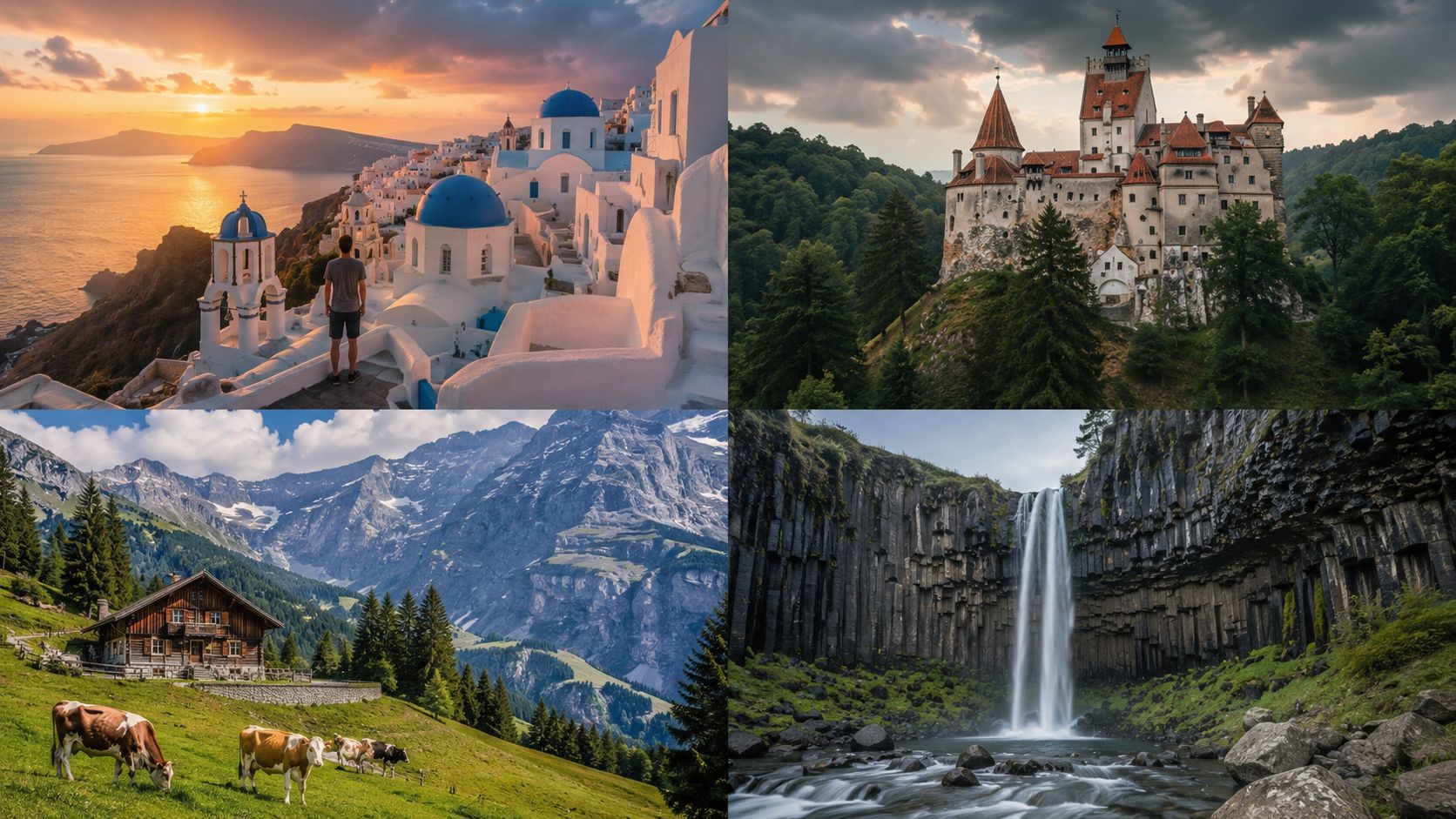
The coolest places to visit in Europe aren't always the cities with the longest queues, highest room rates, or most recognizable skylines. A memorable trip can come from eating in a neighborhood market, taking a regional bus to a quiet lake, or choosing a secondary city close to a famous landmark.
This list balances iconic highlights with less obvious bases across southern, central, eastern, and northern Europe. Southern and Mediterranean Europe remains the continent's most visited sub-region, with 344.1 million international arrivals in 2025, representing 42.5% of European arrivals according to the European tourism overview. That popularity creates exceptional cultural opportunities, but it also makes timing, transport, and neighborhood choice essential.
Use these recommendations by matching each destination to your travel mood. Choose Barcelona for architecture and beaches, Krakow for serious history at a lower cost, Ljubljana for slower sustainable travel, or Iceland for terrain that looks unlike anywhere else. Compare the trade-offs fairly, then pair nearby stops instead of trying to collect every famous city.
Travel Talk Today helps travelers plan that kind of journey with practical budgeting, solo-travel guidance, sustainability ideas, and lower-impact itineraries. Start with one destination that fits your priorities, then build outward carefully.
1. Barcelona, Spain
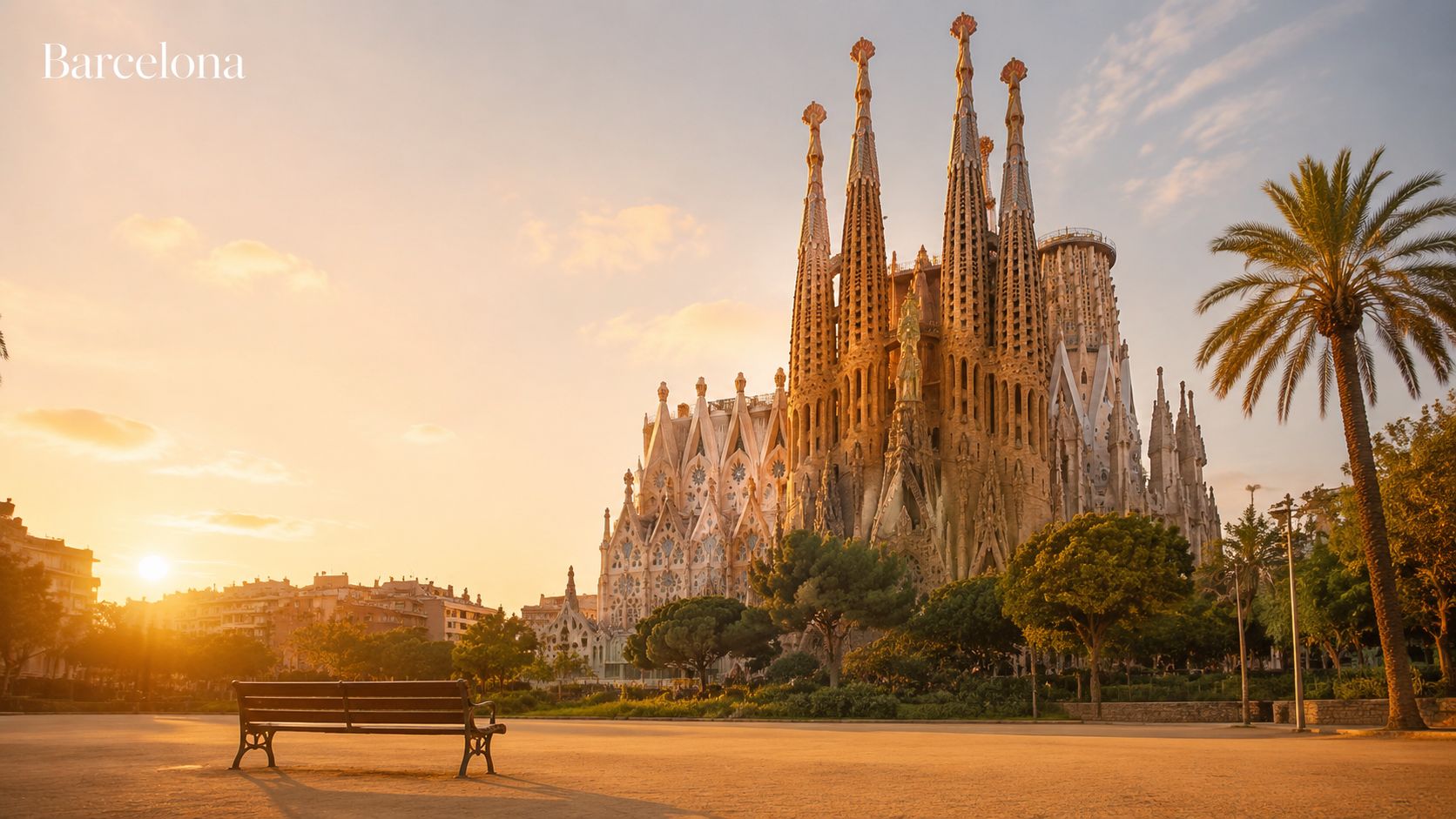
Barcelona earns its place among the coolest places to visit in Europe through contrast. Gaudí's modernist architecture, Catalan traditions, beach life, food markets, and creative neighborhoods all sit within a city that rewards walking rather than rushing from attraction to attraction.
Begin with the Sagrada Família, then move toward the quieter edges of Gràcia. Park Güell, the Gothic Quarter, Barceloneta, and La Boqueria Market can fill a day, but the city becomes more rewarding when you leave room for ordinary street life. Buy fruit or seafood at the market, share inexpensive tapas away from the busiest avenues, and look for neighborhood fiestas in Gràcia during August.
Practical rule: Book major attractions online, then keep at least one afternoon free for unplanned neighborhood wandering.
Make Barcelona work on a budget
Stay in Hostafrancs or Sant Antoni rather than the central Gothic Quarter. You'll usually get better access to local restaurants and transport while avoiding the premium attached to the most famous streets. A Barcelona Card can also make sense if you're combining museums with public transport, while free walking tours from Plaça Reial offer an inexpensive orientation.
Visit Sagrada Família on a Sunday afternoon if that fits your schedule, and check Park Güell's free-access periods before you travel. Eat according to local rhythms, with lunch in the early afternoon and dinner later in the evening, instead of relying on restaurants directly beside landmarks.
Route and responsible travel
Use Barcelona as a base for a slower Catalonia route. Spend two days in the city, add a day around Montserrat or the coast, and return by regional rail rather than changing hotels every night. For neighborhood ideas, use this guide to the best neighborhoods in Barcelona.
Keep valuables secure in crowded transit areas, avoid blocking residential doorways for photographs, and choose locally owned cafés over businesses designed only for passing visitors.
2. Krakow, Poland
Krakow combines medieval architecture, Jewish heritage, affordable food, and difficult historical lessons in a compact setting. It's a strong choice for solo travelers who want cultural depth without the scale of a major capital.
Start in the Old Town, but don't spend the whole visit there. Walk through Kazimierz, visit its synagogues and courtyards respectfully, and spend an evening in a small restaurant rather than treating the district as a nightlife backdrop. Wawel Cathedral offers free entry separately from the castle complex, and many museums offer free admission on the first Sunday of the month.
A thoughtful Krakow itinerary
Spend the first morning around the Main Market Square and Wawel Hill. Use the afternoon for Kazimierz, then return after dark for a quieter walk along the river. Reserve another day for Auschwitz, allowing time to approach the visit as historical education rather than a casual excursion. Hostels can help arrange tours at better value than booking blindly through a large intermediary, but reserve in advance because availability can be limited.
Milk bars, Poland's traditional budget cafeterias, provide simple local meals at accessible prices. Pod Baranami restaurants and neighborhood beer halls can also suit travelers who want a social evening without committing to an expensive dining experience.
- Best timing: Visit in May or September for a more comfortable balance of weather and visitor levels.
- Best base: Kazimierz offers atmosphere, walkability, and access to independent food spots.
- Best transport tactic: Compare overnight buses with daytime departures when moving between cities, and check the arrival time before choosing the cheaper option.
Krakow's historic center is easy to explore on foot, while night buses help connect you with other Polish destinations. Solo travelers should still use normal nighttime awareness, particularly around nightlife areas and unfamiliar transport hubs.
3. Ljubljana, Slovenia
Ljubljana feels deliberately human-scaled. Its riverside cafés, compact center, green spaces, creative venues, and nearby Alpine regions make it one of Europe's best destinations for travelers who prefer depth over spectacle.
Walk across Dragon Bridge at sunset, browse the Green Market, and continue into Tivoli Park. Metelkova Mesto adds a completely different mood, with community-managed cultural spaces and an alternative arts scene. The city's size means you can see major sights without spending the day underground or crossing enormous urban distances.
The slower way to see Ljubljana
Rent a bicycle when you want to move beyond the center, but don't turn every hour into a transport problem. Ljubljana rewards pauses. Sit beside the river, buy local produce, and use the city as a base for a carefully chosen excursion rather than stacking several day trips together.
A Ljubljana Card can combine transport and museum access for travelers planning several paid visits. The tip-based Ljubljana Free Walking Tour from Prešeren Square is useful on a first day, while Tivoli Park and many public spaces cost nothing to enjoy.
Ljubljana works best when you treat its small scale as the attraction, not as a reason to leave immediately.
Take a bus to Lake Bled for an easy regional outing, then return to Ljubljana instead of paying for a second base if your trip is short. A simple itinerary could include two days in the capital, one lake day, and one open day for the local market, galleries, or a nearby trail.
Stay outside the Old Town, such as in Polje, if you want more residential surroundings and better value. Carry a reusable bottle, use trains and buses where practical, and avoid treating fragile natural areas as picnic sites. The city's green reputation is strongest when visitors support it through ordinary choices.
4. Lisbon, Portugal
Lisbon delivers tiled façades, steep streets, historic trams, Atlantic light, and a strong food culture without requiring you to spend every day inside paid attractions. It's especially good for solo travelers because hostels, walking tours, cafés, and public viewpoints make it easy to build a full day around low-cost activities.
Stay in Príncipe Real or Santos rather than defaulting to Baixa. These neighborhoods offer local restaurants, creative spaces, and a more relaxed evening atmosphere. Take Tram 15 instead of forcing yourself onto Tram 28 at peak times, and use the city's free miradouros for views across the rooftops.
Eat and move like a local
A pastel de nata from a neighborhood bakery is a better budget choice than a pastry bought beside a major attraction. Order the menu do dia at lunchtime, when restaurants often serve their main meal in a set format, and look for small tavernas away from the riverfront. A longer transport pass can be worthwhile for a stay of several days, but calculate your expected journeys before buying it.
Lisbon's hills make comfortable shoes essential. Don't underestimate the effort of crossing the city on foot, particularly in hot weather. Break up sightseeing with shaded parks, local cafés, and early starts.
- Free viewpoint: Miradouro da Senhora do Monte offers a strong city panorama without an observation-deck fee.
- Affordable culture: Many churches and monasteries have free entry, though respectful clothing and behavior matter.
- Creative outing: A street-art tour in Alcântara can connect you with local artists and the city's changing visual culture.
Use the train for a day trip to Sintra, then choose your attractions instead of trying to see every palace in one hurried visit. For more ideas, browse these activities in Lisbon. Lisbon's tourism pressure is real, so keep noise down in residential buildings, don't photograph people without permission, and support independent businesses outside the most saturated streets.
5. Prague, Czech Republic
Prague looks like a storybook, but the best experience comes from treating it as a living city rather than a backdrop for a checklist. Medieval lanes, Charles Bridge, riverside views, neighborhood beer halls, and layers of architecture give solo travelers plenty to explore on foot.
Visit Charles Bridge at sunrise, then let the crowds arrive without following them. Vinohrady and Žižkov offer better everyday dining and a more local evening scene than the busiest parts of Old Town. You can still walk through Old Town Square, but don't let it dictate where you sleep, eat, or spend every hour.
A practical Prague base
Choose accommodation in Vinohrady or Žižkov and use trams to reach the historic center. Local pubs away from the tourist core generally offer a more authentic meal and a less inflated bill. Street vendors can also provide quick food when you're moving between neighborhoods.
Free walking tours departing from Old Town Square are useful for orientation, provided you tip appropriately and remember that the guide's income depends on that contribution. A CityCard may suit travelers visiting several major attractions, but it won't automatically save money for someone focused on architecture, parks, and public spaces.
The cheapest Prague itinerary is also one of the most memorable. Walk early, eat outside the center, and use beer halls as social spaces rather than paying for packaged nightlife.
Plan a three-part day: sunrise at Charles Bridge, architecture and cafés in the center, then an evening in Žižkov. For a deeper attraction guide, use what to do in Prague. Keep your phone and wallet secure in dense crowds, and avoid restaurants using aggressive street touts. Respect residential courtyards and don't turn quiet neighborhoods into late-night party zones.
6. Dubrovnik and the Dalmatian Coast, Croatia
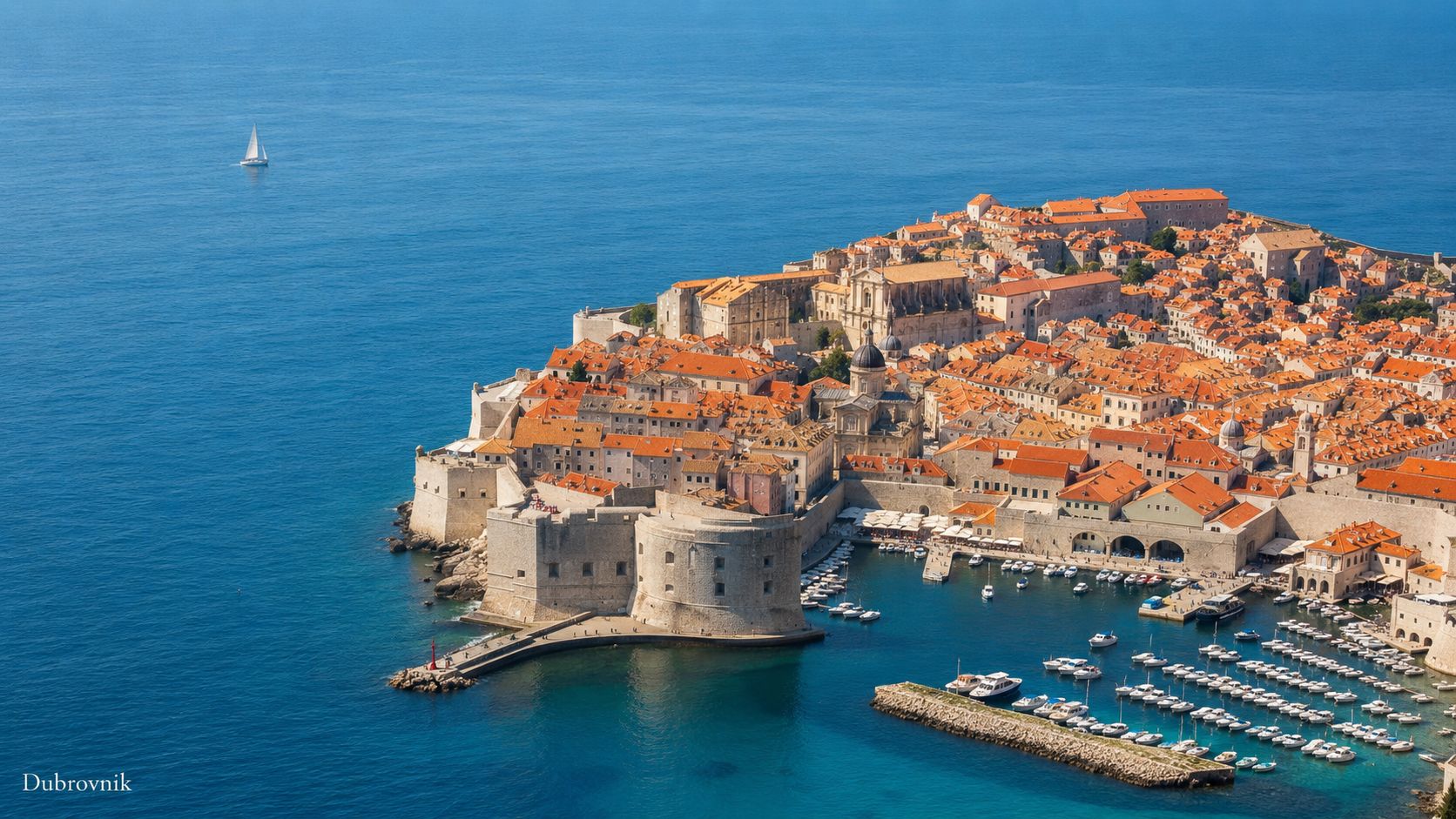
The Dalmatian Coast offers clear water, stone towns, island ferries, seafood, and dramatic coastal scenery. Dubrovnik is the headline attraction, but it shouldn't be your only base. The wider coast becomes more enjoyable when you slow down and include smaller places such as Hvar or Korčula.
Dubrovnik's walls and Old Town are extraordinary, yet crowd density changes the experience. Dubrovnik ranks among Europe's most crowded cities by tourists per inhabitant, reaching 27.42 tourists per inhabitant, while Venice reaches 21.26 in the same comparison the European overtourism index shows. That means early sightseeing, shoulder-season travel, and accommodation outside the historic core aren't minor preferences. They're practical planning decisions.
Build a calmer Adriatic route
Stay in Lapad or Ploče rather than inside the Old Town. You'll have better access to everyday services and can walk or use local transport into the historic center. Visit in May, June, September, or October for a more comfortable coastal rhythm, then use ferries to connect islands instead of booking an expensive private boat.
- Low-cost water time: Rent a kayak or swim from public beaches rather than paying for a private beach club.
- Local food strategy: Eat away from the waterfront, where restaurants serve residents as well as visitors.
- Cultural pairing: Add a wine visit on the Dalmatian mainland or spend more time on Korčula instead of extending your Dubrovnik stay.
Check ferry schedules carefully, especially outside the high season, and keep a backup route if weather affects sailing. Read this guide on when to visit Croatia before booking. Protect the coast by carrying water, avoiding single-use plastics, and staying on marked paths.
7. Athens, Greece
Athens pairs ancient monuments with street art, neighborhood tavernas, strong café culture, and a city rhythm that becomes more approachable once you move beyond Plaka. The Acropolis dominates the skyline, but the city's character appears in Exarcheia, Gazi, Monastiraki, and the streets between them.
Arrive at the Acropolis when it opens or visit later in the day, then spend the hottest hours inside a museum or in a shaded café. The Acropolis Museum and archaeological sites deserve time rather than a hurried photograph. Afterward, order gyros or souvlaki from a busy local vendor, then explore Exarcheia's street art with attention to the neighborhood's political and cultural identity.
Use Athens as a gateway
Stay in Exarcheia or Gazi for a more lived-in atmosphere and easier access to independent restaurants. Public transport is usually more practical than taxis for budget travelers, especially when traffic slows surface journeys. Local tavernas often make lunch the best value meal, and a house wine can turn a simple meal into a relaxed social experience.
A strong four-day plan keeps the city central:
- Day one: Acropolis area and the Acropolis Museum.
- Day two: Ancient Agora, Monastiraki, and neighborhood food.
- Day three: Exarcheia, Gazi, and street art.
- Day four: A ferry outing to Hydra, Aegina, or Poros, subject to current schedules.
Museums may offer free admission on the first Sunday of the month, so check official visitor information before planning around it. Athens is a busy city, and visitors should watch belongings in crowded areas, carry water during hot spells, and dress appropriately at religious sites. Choose family-run tavernas and refillable bottles over disposable convenience purchases.
8. Budapest, Hungary
Budapest combines grand architecture, Danube views, thermal baths, Art Nouveau details, and an energetic nightlife scene. It can feel cinematic without demanding a luxury budget, especially when you separate the city's expensive-looking landmarks from its affordable everyday life.
Base yourself in the Jewish Quarter or District VI, then explore both sides of the river. Walk the Danube embankment, climb toward Buda Castle, and reserve a weekday morning for a thermal bath. Ruin bars are more enjoyable early in the evening, before noise and prices rise, while local pubs called kocsma offer a better setting for Hungarian dishes and conversation.
A social, low-cost Budapest day
Start with a free walking tour from Deák Square, then eat at a market or neighborhood pub. Spend the afternoon at a thermal bath, comparing admission options before you go. In the evening, join a small ruin-bar crawl if you want company, but don't assume a packaged tour is necessary. A relaxed solo traveler can also choose one bar, order locally, and leave when the atmosphere changes.
The Budapest Card may suit visitors combining transport, museums, and spa discounts. Otherwise, standard public transport and a selective attraction plan can keep spending under control. Visit Parliament from the outside even if you skip the guided interior tour, then cross the river for nighttime views.
Crowd-smart choice: Book the bath you want for a weekday morning, and treat the city's famous nightlife districts as neighborhoods with residents, not open-air party venues.
Travel between Buda and Pest using public transport and walking routes rather than relying on taxis. Keep an eye on your belongings around nightlife crowds, verify prices before ordering, and avoid damaging historic spaces for photographs. Budapest is at its best when you combine spectacle with ordinary local routines.
9. Iceland
Iceland belongs on a list of the coolest places to visit Europe for its volcanic terrain, waterfalls, glaciers, black-sand beaches, and geothermal experiences. Reykjavik provides cafés, galleries, pools, and nightlife, while the Ring Road connects the country's more dramatic scenery.
The trade-off is clear. Iceland is expensive, so budget travelers need a different strategy rather than unrealistic spending expectations. Self-catering, discount supermarkets such as Bonus and Krónan, shared transport, and a shorter route can make the trip manageable. Free natural attractions often provide the strongest memories, including hikes, waterfalls, and public geothermal areas.
Choose the right scale
You don't need to complete the entire Ring Road to have a meaningful Iceland trip. A Reykjavik and Golden Circle itinerary reduces driving, accommodation changes, and weather exposure. If you want a longer road trip, a campervan can combine transport and lodging, but check insurance, road conditions, campsite rules, and seasonal access before signing a contract.
Travel between September and May for quieter conditions and potentially lower prices, accepting shorter daylight and colder weather. Group tours make more sense for specialized activities such as caving, while independent travelers can explore many accessible viewpoints without paying for a guide.
Plan each driving day conservatively. Icelandic weather changes quickly, and a beautiful road-trip plan can become unsafe when travelers treat a schedule as more important than conditions. Use this four-day Iceland guide for a shorter framework, stay on marked paths, never cross barriers for photographs, and respect fragile moss and coastal areas.
10. The Balkans
Kosovo, North Macedonia, and Albania offer mountain trails, lakes, ancient settlements, lively food scenes, and hospitality that feels personal rather than packaged. This region is a strong fit for solo travelers who want adventure and cultural immersion while keeping logistics flexible.
Start with a city pairing such as Pristina and Skopje, or build a route through Tirana and northern Albania. Buses and minibuses are often the most practical way to move between towns, though schedules can be less predictable than rail networks in western Europe. Family-run guesthouses provide a more direct connection with local communities and can make a stop feel less anonymous than a standard hotel.
A flexible Balkan itinerary
Spend your first days in Tirana, then travel toward mountain villages or Lake Ohrid. Continue to Skopje for food, markets, and urban history, or head toward Pristina for a different perspective on contemporary Balkan life. Experienced hikers can explore the Accursed Mountains, but they should arrange navigation, weather information, and border requirements before setting out.
Learn basic greetings in the local language. A small effort improves daily interactions and helps you avoid treating hosts as service providers rather than people. Hire local guides for demanding hikes or culturally sensitive sites, and ask permission before photographing residents.
- Transport approach: Use buses and minibuses, confirm departure points locally, and leave schedule space for delays.
- Accommodation approach: Choose family-run guesthouses and ask hosts for recommendations.
- Safety approach: Carry offline maps, keep documents secure, and check current border and travel advice before crossing countries.
The Balkans reward patience. Don't force a tightly packed route across several borders. Choose fewer places, spend money with local restaurants and guides, and leave natural areas exactly as you found them.
Top 10 Coolest Places in Europe, Comparison
| Destination | Planning Complexity 🔄 | Cost & Logistics ⚡ | Experience Quality ⭐ | Ideal Use Cases 💡 | Key Advantages 📊 |
|---|---|---|---|---|---|
| Barcelona, Spain | Medium, advance booking for major sites; summer crowd planning 🔄 | Moderate, good public transit, many budget food options ⚡ | ⭐⭐⭐⭐, modernist architecture + beaches | Budget cultural travelers, beach & architecture seekers | Gaudí landmarks; walkable neighborhoods; affordable tapas; strong transit 📊 |
| Krakow, Poland | Low, compact city; book Auschwitz tours in advance 🔄 | Very low, cheap hostels/meals; walkable center ⚡ | ⭐⭐⭐⭐, medieval architecture, deep history | History-minded budget travelers, solo explorers | Large Market Square; Kazimierz Jewish Quarter; exceptional value 📊 |
| Ljubljana, Slovenia | Low, very walkable; limited flight access to plan 🔄 | Low–Moderate, cheap transport, bike-friendly city ⚡ | ⭐⭐⭐, green, relaxed, human-scale capital | Sustainable travelers, short-stay explorers, day-trippers to Lake Bled | Car-free center; strong sustainability; proximity to nature 📊 |
| Lisbon, Portugal | Medium, hilly terrain, tram crowding; pickpocket awareness 🔄 | Low–Moderate, affordable meals, good transit passes ⚡ | ⭐⭐⭐⭐, historic charm, street art, food culture | Photographers, foodies, solo urban travelers | Trams & tiles (azulejos); beaches & Sintra day trips; friendly locals 📊 |
| Prague, Czech Republic | Low–Medium, avoid tourist traps; off-center booking advised 🔄 | Very low, excellent public transport and cheap food ⚡ | ⭐⭐⭐⭐, fairytale architecture & beer culture | Backpackers, architecture lovers, nightlife seekers | Prague Castle, Charles Bridge, strong value for money 📊 |
| Dubrovnik & Dalmatian Coast, Croatia | Medium–High, ferry schedules, island logistics, season timing 🔄 | Moderate, island ferries affordable but accommodation spikes in summer ⚡ | ⭐⭐⭐⭐, Adriatic coast, islands, water activities | Coastal travelers, island-hoppers, snorkeling/kayak fans | UNESCO Old Town; clear waters; island diversity; ferry network 📊 |
| Athens, Greece | Medium, Acropolis timing to avoid queues; heat planning 🔄 | Low, very affordable street food; good transport & ferries ⚡ | ⭐⭐⭐⭐, ancient heritage + lively street culture | History enthusiasts, budget travelers, island day-trippers | Acropolis & museums; vibrant street food; easy island access 📊 |
| Budapest, Hungary | Low, straightforward logistics; book spas at peak times 🔄 | Very low, cheap meals, affordable thermal baths ⚡ | ⭐⭐⭐⭐, thermal baths, architecture, nightlife | Spa-seekers, budget couples, nightlife-oriented travelers | Széchenyi baths; Danube views; ruin bars; strong value 📊 |
| Iceland (Reykjavik & Ring Road) | High, vehicle/ring-road planning, seasonal/weather considerations 🔄 | High, expensive accommodation, petrol; wild camping can reduce cost ⚡ | ⭐⭐⭐⭐⭐, unique, otherworldly landscapes | Nature photographers, road-trippers, adventure travelers | Dramatic landscapes (waterfalls, glaciers); midnight sun; safe infrastructure 📊 |
| Balkans Region (Kosovo, N. Macedonia, Albania) | Medium, cross-border buses, variable infrastructure 🔄 | Very low, cheapest in Europe for food/hostels; transport inexpensive ⚡ | ⭐⭐⭐⭐, authentic culture, dramatic nature | Budget adventurers, hikers, cultural immersion seekers | Lowest prices; welcoming locals; diverse landscapes & heritage 📊 |
Build a Cooler Europe Trip, Not Just a Longer Checklist
The strongest European trip usually includes one clear anchor, one regional pairing, or one contrasting destination. Choose Barcelona with a slower Catalonia add-on, Krakow with another Polish city, or Dubrovnik with a quieter Dalmatian island. Pair Ljubljana with Lake Bled, Athens with one carefully chosen island, or Prague with Budapest if you're comfortable with a longer central European route.
Don't try to visit all ten destinations in one journey. Each transfer consumes time, introduces delay risk, and encourages you to treat neighborhoods as scenery. A shorter itinerary gives you space to return to a market, learn a few local phrases, use public transport confidently, and spend money with independent businesses.
Timing matters as much as destination choice. Current travel sentiment points toward shorter, experience-led breaks, with 82% of Europeans planning to travel in spring or summer 2026 and a preference for fewer getaways of four to six nights, according to the European travel sentiment analysis. That supports a practical approach, choose one base, make one or two deliberate excursions, and avoid building a trip around constant hotel changes.
Cooler and quieter destinations also deserve more attention. Recent travel trend reporting describes travelers moving away from overcrowded hotspots toward cooler-weather and less saturated places, with bookings rising for destinations including Czechia and Iceland in the Amadeus Europe travel insights. Use that shift intelligently, not as another trend to copy. Prague early in the day, Iceland outside its busiest periods, and Dalmatian islands beyond Dubrovnik can all reduce pressure while improving the experience.
Europe's cultural density makes slower travel especially rewarding. UNESCO's World Heritage List contains 1,248 properties worldwide, while the European Union has about 350 World Heritage Sites and the wider European geographic area contains more than 470 in UNESCO's World Heritage List. You don't need to visit every celebrated monument. Choose one site, understand its history, and behave as a guest in the surrounding community.
Use this planning sequence:
- Set a daily budget: Separate accommodation, food, transport, attractions, and an emergency reserve.
- Choose the timing window: Compare shoulder season, heat, daylight, crowd levels, and weather rather than focusing only on cheaper rooms.
- Map the transport route: Favor direct trains, regional buses, ferries, and walkable bases. Confirm current schedules before departure.
- Reserve essential attractions: Book only the landmarks that require advance entry, then protect free time around them.
- Select a responsible base: Stay in a neighborhood with local services, refill water, carry reusable bags, and avoid short-term rentals that displace residents where housing pressure is visible.
- Plan for personal safety: Share your route, keep copies of documents, use official transport, and trust your judgment when a situation feels wrong.
Travel Talk Today is useful for turning inspiration into practical decisions. Its resources cover budgeting, solo travel, safety awareness, sustainable tourism, cultural immersion, and lower-cost timing strategies. You can also use destination guides to compare famous European centers with alternatives such as Albania and other underexplored Balkan routes.
The coolest places to visit Europe aren't defined by popularity alone. They're the places that match your travel style, respect your budget, and leave enough room for genuine contact with local life.
Travel Talk Today offers practical destination guides, budgeting frameworks, solo-travel advice, and lower-impact ways to plan European trips. Visit Travel Talk Today to compare affordable routes, discover quieter destinations, and turn this list into a realistic itinerary.