You land in Lisbon, drop your bag, and head out thinking the city will be easy to cover in an afternoon. Twenty minutes later, you are climbing a steep cobbled street in the wrong shoes, the tram stop is packed, and the café with the perfect view has a line down the block.
That first reality check is useful. Lisbon rewards timing, pacing, and route choices far more than big spending. A cheap tram ride can beat a taxi for sightseeing. A free miradouro can give you more than a paid attraction at the wrong hour. A neighborhood meal three streets off the main drag often costs less and feels more like the city you came to experience.
Lisbon also works well for travelers who like to cover a city on foot, especially if you already enjoy the rhythm of Europe's most walkable cities. The catch is the hills. Distances look short on a map, but effort matters here, so the best days mix walking with smart transit instead of forcing everything into one long uphill loop.
This guide focuses on activities that give a strong return on time, money, and cultural value. You will find practical costs, transit shortcuts, solo travel notes, and lower-impact choices that help you enjoy Lisbon without burning through your budget or your energy.
The goal is simple. Spend less on friction, and more on experiences you will remember.
1. Explore Alfama's Hidden Streets on Foot
If you only do one neighborhood properly, make it Alfama. It's the part of Lisbon that still feels shaped by the city's oldest rhythms. The lanes are tight, the staircases twist unexpectedly, and half the reward comes from getting slightly lost.

Walk early. Between 7 and 9am, Alfama feels lived in rather than performed for visitors. You'll catch laundry out the window, deliveries coming in, and older residents moving through the streets before the photo stops fill up.
What works in Alfama
Start near Miradouro de Santa Luzia, drift toward Largo das Portas do Sol, then peel away from the obvious paths. The side lanes leading down toward the Sé Cathedral are often better than the main viewpoints because they give you texture, not just a skyline shot.
For travelers who like city breaks on foot, Lisbon rewards the same approach that defines the most walkable cities in Europe. Short distances look easy on a map, but the hills change the calculation. In Alfama, “nearby” can still mean a steep climb.
- Wear real shoes: Smooth-soled sandals are a mistake on Lisbon cobblestones.
- Use offline maps: Narrow lanes can make navigation annoying when your signal stutters.
- Budget for lunch smartly: Small local eateries usually beat scenic terrace spots on value and atmosphere.
Practical rule: In Alfama, the best photos usually happen one street away from the street everyone else is using.
What doesn't work is rushing. Alfama is weak as a box-ticking stop and excellent as a slow wander. If you're a solo traveler, it's also one of the easiest places to enjoy alone because you're rarely doing “nothing.” You're walking, noticing, pausing, and listening.
2. Ride Historic Tram 28 for Budget Sightseeing
Tram 28 is iconic for a reason. Visit Portugal highlights the tram as a common way for locals and visitors to move through historic districts, and one guide notes that Tram 28 makes around 30 stops through areas including Alfama, Chiado, São Jorge Castle, and the National Assembly in the official Lisbon region guide.
That said, the tram is not automatically a good experience. It's only good if you treat it like public transport first and sightseeing second.
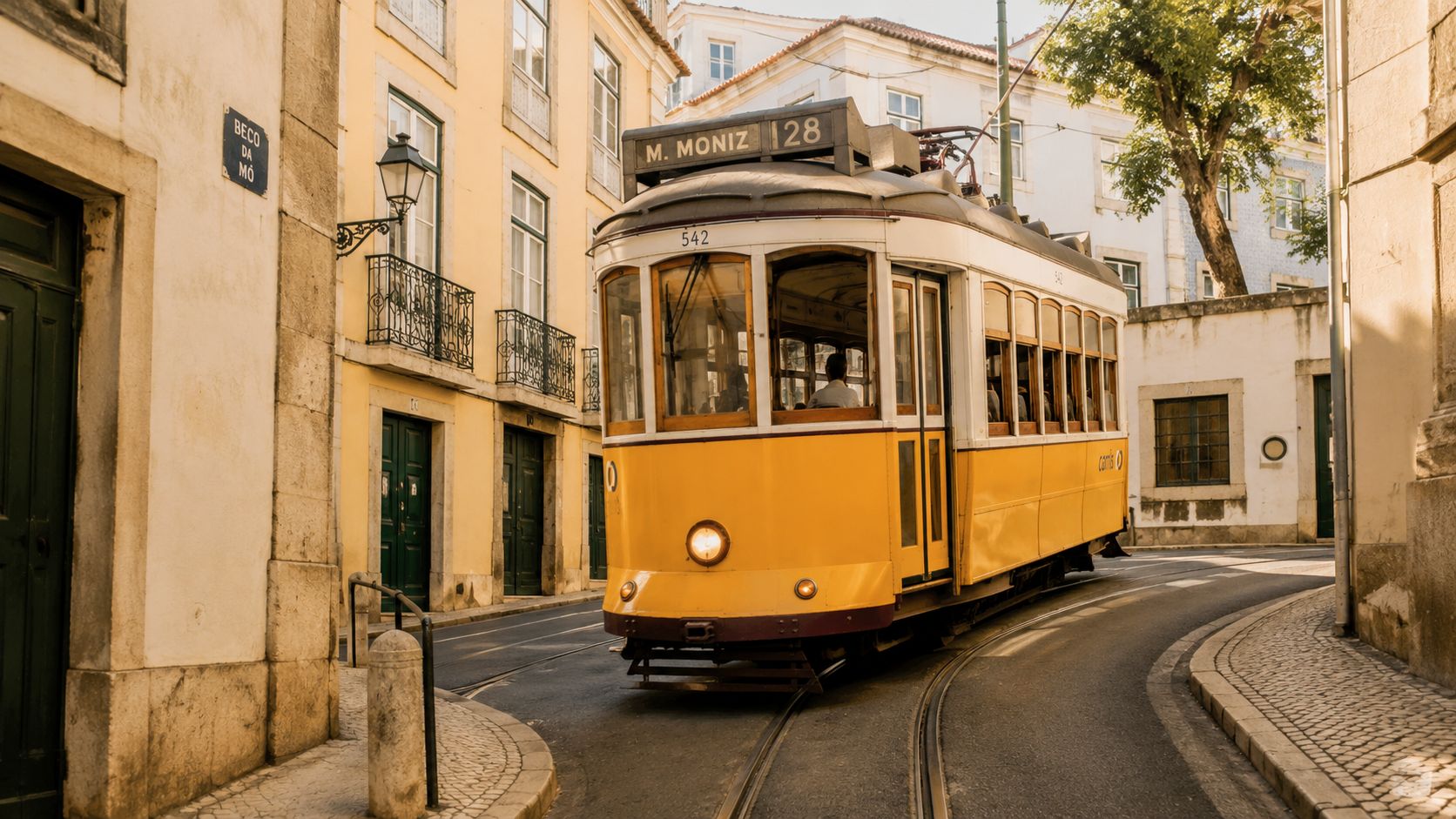
Board early, ideally from Praça da Figueira, when your chances of getting a seat are better. If you try at peak sightseeing hours, you may spend the ride standing, compressed between backpacks, unable to see much beyond the window frame.
How to make Tram 28 worth it
Use the ride to connect neighborhoods rather than as a full scenic loop. Hop off at Sé if you want Alfama. Get off near a viewpoint and continue on foot. That hybrid approach usually feels less frustrating and more useful.
Keep your bag in front of you. Don't flash your phone near the doors. Have your fare sorted before boarding if possible, because fiddling with payment while the tram lurches uphill is annoying for you and everyone else.
Tram 28 is best when it solves a hill you didn't want to climb.
What doesn't work is joining a long queue at midday because every guide told you it's unmissable. It is missable if the line is absurd. Lisbon gives you enough strong alternatives that you shouldn't sacrifice half a morning for one crowded ride.
3. Visit Belém's Free and Budget-Friendly Cultural Sites
Belém is where Lisbon goes broad and monumental. The waterfront opens up, the architecture gets grander, and the city's seafaring story becomes impossible to ignore. Visit Portugal identifies two UNESCO World Heritage Sites in the metropolitan area, the Jerónimos Monastery and the Tower of Belém, both noted in the Lisbon destination guide.
You don't need to pay for every entry to make Belém worthwhile. In fact, one of the smartest budget moves is to treat Belém as an exterior-heavy day with selective interiors.

The monastery facade and the tower from the outside already deliver a lot. Add the riverside promenade, gardens, and a pastry stop, and you've built a strong half day without stacking ticket costs.
Spend where it matters
If a museum you care about has a free-entry window, use it. If not, choose one indoor stop rather than trying to cram them all in. Belém is better as a paced district than as a queue marathon.
- Arrive early: Tour groups change the mood fast.
- Eat a little away from the biggest lines: Famous pastry shops are fun, but not every pastry needs to come from the most famous counter.
- Bring water and a snack: The riverside is a good picnic zone.
Belém also gives photographers a nice trade-off. Morning light is cleaner and crowds are lower. Late afternoon is prettier on the river, but the most popular sightlines get busier.
4. Discover Street Art and Urban Culture in Intendente
If your idea of Lisbon is only tiled facades and old trams, Intendente resets the picture. This neighborhood shows the city's contemporary side. You'll see murals, independent galleries, small cafés, secondhand shops, and the visible push-pull between local life and gentrification.
That tension is part of why Intendente is worth your time. It feels less polished than the postcard districts, and for many travelers that makes it more interesting. You're not chasing one landmark. You're reading the area block by block.
How to explore it well
Go in daylight, especially if you want photos. Mid-morning through afternoon is best for seeing detail on walls and browsing shops when they're open. Midweek usually feels more local than weekend-heavy areas elsewhere in central Lisbon.
Take screenshots of murals or galleries you want to find, because you'll often spot one thing and then drift into another street entirely. That's not bad planning. That's how Intendente works.
- Start with coffee, not a fixed route: A short café stop helps you observe the neighborhood's pace.
- Look for gallery openings: They can be a low-cost way to engage with local art.
- Be respectful with photography: Murals are public, but homes and people still aren't props.
What doesn't work is expecting a neat attraction circuit. Intendente is better for urban explorers, solo travelers, and photographers than for anyone who wants a single headline sight with a tidy entrance and exit.
5. Hike Monsanto Forest Park for Free Nature and Panoramic Views
Lisbon can feel dense and steep for days on end. Monsanto is the reset button. It's the city escape that many short-stay visitors skip, which is exactly why it can be such good value.
The appeal here isn't one monument. It's air, shade, and distance from the central tourist churn. If your trip has been all stone, queues, and hills lined with souvenir shops, a few hours in green space can save your energy and your budget.
Why Monsanto earns a spot
This is one of the strongest free activities in Lisbon, Portugal if you like walking but don't need a museum attached to every outing. A simple route linking viewpoints and picnic spots can feel more restorative than another paid attraction.
For travelers who prioritize outdoor time, this belongs in the same conversation as other adventurous things to do that don't require a premium booking to feel memorable. Bring water, proper shoes, and food you want to eat.
Go early. Lisbon heat changes a pleasant walk into a grind faster than many first-time visitors expect.
A practical approach is to keep this flexible. If the weather is mild and you're moving well, extend the walk. If you're tired, do a shorter viewpoint route and leave. Monsanto works because it doesn't demand a perfect schedule.
What doesn't work is showing up underprepared. This is still urban nature, but it's not a decorative garden loop. You'll enjoy it far more if you treat it like a real walk.
6. Explore Príncipe Real's LGBTQ+ Culture and Designer Shopping
Príncipe Real gives you a different kind of Lisbon. It's elegant, social, and polished without being as frantic as some of the city's core tourist strips. It also has a long-standing reputation as one of the city's LGBTQ+ friendly areas, which shapes the neighborhood's bars, cafés, and overall atmosphere.
This isn't the district for the cheapest shopping. It is, however, a good place to spend lightly and still enjoy yourself. Window-shopping, gallery browsing, and people-watching all work well here.
Spend selectively in Príncipe Real
Come in the morning if you want the neighborhood at a calmer pace. The garden and miradouro feel more local then, and cafés are easier to enjoy without hovering for a table.
The smart budget move is simple. Skip a full upscale meal unless that's your priority. Have coffee and a pastry, browse the boutiques, check for gallery events, and save your heavier spending for something you care about more.
- Use the neighborhood as a slow hour, not a shopping mission
- Favor cafés over designer retail if you're watching your budget
- Return later for a drink if you spot a happy-hour board that looks worthwhile
What works here is restraint. Príncipe Real shines when you let it be atmospheric. If you try to turn it into a bargain hunt, you'll probably leave annoyed.
7. Kayak the Tagus River for a Unique Water-Based Perspective
Some city activities look better on a booking page than they feel in real life. Kayaking the Tagus usually isn't one of them. It offers a perspective you can't get from miradouros or tram windows. Lisbon opens up differently from the water. The waterfront monuments feel less isolated, and the city's scale makes more sense.
This is one of the few paid experiences on this list that can justify itself if you want one active splurge. It also balances well against museum-heavy days.
Before you book
Choose your timing carefully. Early morning and late afternoon are usually more comfortable than the middle of the day, when glare and heat can flatten the experience. If you're a beginner, a guided outing is easier than trying to improvise logistics and conditions yourself.
Wear clothes you don't mind getting wet. Bring sun protection that won't annoy you halfway through. If you plan to use your phone, a waterproof case isn't optional.
A river activity only feels budget-friendly if the weather, timing, and transport to the launch point all make sense together.
What doesn't work is squeezing this into a day already packed with central sightseeing. Give it room. Water-based activities in Lisbon, Portugal are best when you treat them as the main event, not an add-on.
8. Visit Sintra's Palaces and Quinta da Regaleira on a Day Trip
Sintra is the classic day trip from Lisbon for good reason. It changes the texture of your trip fast. Lisbon is urban, sunlit, and open to the river. Sintra feels cooler, greener, and more theatrical.
Still, many people do Sintra badly. They try to see everything, spend too much on transport jumps inside town, and end the day exhausted. The better move is to choose fewer sites and protect your energy.
The budget-aware way to do Sintra
Take an early train and focus on two priorities. For many travelers, that means one major palace and one place with more atmosphere and garden wandering. That pairing usually gives a better day than trying to force in every famous stop.
If you enjoy scenic urban escapes, think of Sintra as one of those day trips from Florence-style side journeys where discipline matters as much as destination choice. Pick the highlights that fit your interests, not the maximum count.
- Bring food: On-site eating is often the easiest place to overspend.
- Wear shoes with grip: Paths can be steep and slippery.
- Leave before you're fried: An earlier return can feel smarter than squeezing every last stop.
What works in Sintra is commitment to a limited plan. What doesn't work is chasing completeness. You're far more likely to remember one palace properly and a good walk between sites than four rushed entries.
9. Experience Local Markets and Street Food at Ribeira Market
Ribeira Market is useful, lively, and not always good value. That's the honest version. If you know that going in, it can still be one of the more enjoyable food-focused activities in Lisbon, Portugal.
The traditional market side gives you one kind of energy. The famous food hall gives you another. One is better for browsing and observing. The other is better when your group wants different things and nobody can agree on one restaurant.
How to avoid overspending here
Go in the morning if you want a calmer feel and better browsing conditions. Walk the full loop before buying anything. The first thing you see is rarely the best use of your appetite or your money.
If you eat in the food hall, build your meal gradually instead of ordering big from the first stall that catches your eye. One snack, one savory plate, one shared dessert is often a better strategy than committing too early.
- Compare first: The market rewards one slow lap before spending.
- Carry a reusable bag: It's handy if you buy produce or snacks for later.
- Treat famous stalls carefully: High visibility doesn't always mean best fit for your budget.
What doesn't work is expecting a hidden local secret. Ribeira is a known stop. Use it accordingly. Great for variety and convenience. Less great if your main goal is the cheapest meal in town.
10. Lisbon on a Budget Practical Tips and Safety Notes
Portugal's tourism sector recorded 2.2% growth in overnight stays, 3.0% growth in guests, and 5.0% growth in tourism revenue in 2025, according to Turismo de Portugal's overview. For visitors, the takeaway is straightforward. Demand is healthy, and price pressure can show up faster than you expect on popular dates and in the most obvious areas.
That doesn't mean Lisbon has to be expensive. It means timing and choices matter more than ever.
The habits that save money and stress
The broad short-stay market in Portugal averaged about 61% annual occupancy in 2025, with August at 85%, July at 76%, June at 69%, an average stay near 5.13 nights, and more than 111,000 active rentals by July 2025, according to the Portugal vacation rental market snapshot. Summer gets tighter. Shoulder periods usually feel easier on both pricing and breathing room.
Use that reality to shape your days. Start popular visits early. Save indoor museums or long lunches for the busiest hours. Leave room for neighborhoods, parks, and viewpoints that don't require a queue.
For anyone tightening costs before departure, these travel budgeting tips are the same kind of thinking that works well in Lisbon. Spend intentionally on one or two anchor experiences, then let walking, public transport, markets, and free viewpoints carry the rest.
Crowds aren't just annoying. They change what an activity is worth.
A few ground rules help almost everyone:
- Keep offline maps ready: Old neighborhoods can be awkward for navigation.
- Wear shoes you trust: Lisbon's hills punish fashion-first decisions.
- Keep bags secure on trams and in queues: Petty theft risk is easiest to manage with simple habits.
- Compare cafés: The nearest terrace to a major sight is rarely the best value.
- Carry water and a snack: Convenience buying near major attractions adds up fast.
Top 10 Lisbon Activities Compared
| Activity | 🔄 Implementation Complexity | ⚡ Resource Requirements | ⭐📊 Expected Outcome | Ideal Use Cases | 💡 Key Advantages |
|---|---|---|---|---|---|
| Explore Alfama's Hidden Streets on Foot | Moderate, steep, maze-like streets; requires stamina and navigation | Low, comfy shoes, water, offline map | ⭐⭐⭐⭐ Authentic cultural immersion; excellent photo ops | Independent explorers, photographers, early-morning visits | Free viewpoints, spontaneous discovery, authentic streetscape |
| Ride Historic Tram 28 for Budget Sightseeing | Low, hop-on historic tram but manage crowds and boarding timing | Low, single fare or transport pass; anti-theft vigilance | ⭐⭐⭐ Good landmark exposure; comfort varies with crowding | Quick sightseeing, budget travelers seeking iconic experience | Affordable, iconic transit, no advance booking |
| Visit Belém's Free and Budget-Friendly Cultural Sites | Low, straightforward tram ride; plan around free-entry windows | Low–Moderate, tram fare; optional museum entrance fees | ⭐⭐⭐ High cultural value; low-cost if limiting to exteriors | Budget culture day, waterfront walks, free-museum planners | Free exterior views, riverside promenade, fewer central crowds |
| Discover Street Art and Urban Culture in Intendente | Low, mostly self-guided walking; exercise situational awareness | Low, camera, small purchases (coffee, vintage finds) | ⭐⭐⭐ Strong visual/cultural insights; highly photogenic | Street-art lovers, budget cultural explorers, photographers | Free art exploration, local vibe, supports sustainable shopping |
| Hike Monsanto Forest Park for Free Nature and Panoramic Views | Moderate, trail variety and limited signage; basic navigation needed | Low, sturdy shoes, water, offline maps; public transport | ⭐⭐⭐ Good solitude and vistas; cost-free nature access | Hikers, picnickers, nature/landscape photographers | Large urban forest, panoramic viewpoints, free access |
| Explore Príncipe Real's LGBTQ+ Culture and Designer Shopping | Low, easy to stroll; planning for nightlife or shopping advised | Moderate, higher prices for dining/shopping; occasional cover fees | ⭐⭐⭐ Safe, vibrant neighborhood with upscale options | LGBTQ+ travelers, shoppers, gallery-goers, people-watching | Welcoming community, safe streets, free garden viewpoint |
| Kayak the Tagus River for a Unique Water-Based Perspective | Moderate, requires swimming confidence and weather awareness | Moderate, rentals/guided tours €20–45; life vest and basic gear | ⭐⭐⭐⭐ Unique vantage point; strong photography and novelty value | Active travelers, photographers, small groups, sunset paddles | Unique low-angle views, flexible pacing, often cheaper than boat tours |
| Visit Sintra's Palaces and Quinta da Regaleira on a Day Trip | High, multiple sites, steep terrain, timed entries; physical demands | Moderate–High, train fare + palace tickets (Pena €22+, combos available) | ⭐⭐⭐⭐ Iconic architecture and landscapes; can be costly and crowded | Day-trippers, history/architecture enthusiasts willing to pay | Spectacular palaces, UNESCO-worthy sites, dramatic scenery |
| Experience Local Markets and Street Food at Ribeira Market | Low, easy to navigate but busy at peak times | Low, food tastings €4–20; Time Out stalls vary in price | ⭐⭐⭐ Authentic culinary exposure; mix-and-match tasting value | Foodies, budget diners, cultural learners, morning visits | Wide vendor variety, affordable tasting options, historic market hall |
| Lisbon on a Budget: Practical Tips and Safety Notes | Low, pre-trip planning and on-the-ground vigilance | Very Low, public transport passes, reusable items, basic supplies | ⭐⭐⭐⭐ Practical savings and safety improvements; reduces surprises | First-time visitors, budget travelers, transit-heavy stays | Consolidated transport, timing, and safety tips to save money and time |
Your Lisbon Adventure Awaits
You step out early, before the tram lines build and before the sun turns every uphill walk into work. A bakery is opening, someone is dragging chairs onto a pavement terrace, and the city feels far more generous than it does at noon. That timing matters in Lisbon. So does pacing, route choice, and knowing when a paid experience is worth the money.
The best activities in Lisbon, Portugal reward travelers who make a few smart decisions. Walk Alfama instead of forcing a taxi into steep lanes. Use Tram 28 for a useful stretch, not as a slow-moving endurance test. In Belém, combine free riverfront time with one paid site you most want to experience. In Sintra, fewer stops usually mean a better day and lower costs.
That is the pattern across this guide. Lisbon gives you plenty, but it charges extra for bad timing, crowded plans, and convenience purchases that are easy to avoid. A picnic or market breakfast can beat a tourist-heavy lunch. A reusable water bottle and transit pass can save more over three days than travelers expect. Solo travelers also do well here if they stay aware of pickpocket risk on busy trams, avoid isolated areas late at night, and keep enough flexibility to change plans around weather or crowds.
Some trade-offs are straightforward. Ribeira Market is fun, but not always the cheapest place to eat. Príncipe Real is pleasant without turning into a shopping spree. Kayaking gives a memorable view from the water, but only on the right weather day and only if the price fits the rest of your budget. Monsanto is nearly free, though it asks for time, decent shoes, and a little planning.
Lisbon is popular, and that makes intention more useful than ambition. You do not need to do everything. You need a short list that matches your energy, budget, and interests, then enough open space to notice the city between the headline stops.
Use this guide as a framework. Spend where Lisbon gives real value. Save where the city offers the same pleasure for less. Choose public transport when it is faster, walk when the streets are the attraction, and favor local businesses that make the experience feel grounded rather than packaged.
If you like practical trip planning with a similar mindset, Travel Talk Today is one relevant place to keep researching before you go.
If you want more budget-aware city guides, smarter timing advice, and practical trip-planning ideas, visit Travel Talk Today. It's a useful next stop for travelers who want memorable trips without wasting money on the obvious choices.