You're probably staring at a few wildly pink photos, wondering whether Mexico's pink lakes are a real travel experience or just a carefully cropped social media trick. That's the right question to ask. Some of these places are genuine natural spectacles shaped by salt, light, and microscopic life. Others are better approached as seasonal color phenomena in bigger wetland or desert environments, not guaranteed neon pools waiting on demand.
Mexico's pink lakes reward travelers who show up with realistic expectations. The best trips aren't built around grabbing one photo and leaving. They work when you pair the water with birdlife, salt-making history, local food, and slower overland travel. That keeps costs down, spreads your spending into nearby communities, and takes pressure off fragile sites.
This guide is practical on purpose. You'll get the famous stop in Yucatán, but also broader regions where pink-toned lagoons and salt basins can be experienced more peacefully and more responsibly. I'm focusing on what works, what usually disappoints, and how to build a trip that feels worthwhile even if the water is softer rose than electric pink on the day you visit.
The short version is simple. Go for the scenery, not just the color. Visit in strong sun when possible. Respect access rules. Treat these places as living ecosystems and working salt zones, not theme-park backdrops. That's how pink lakes in Mexico become memorable for the right reasons.
1. Laguna Rosa (Las Coloradas, Yucatán)
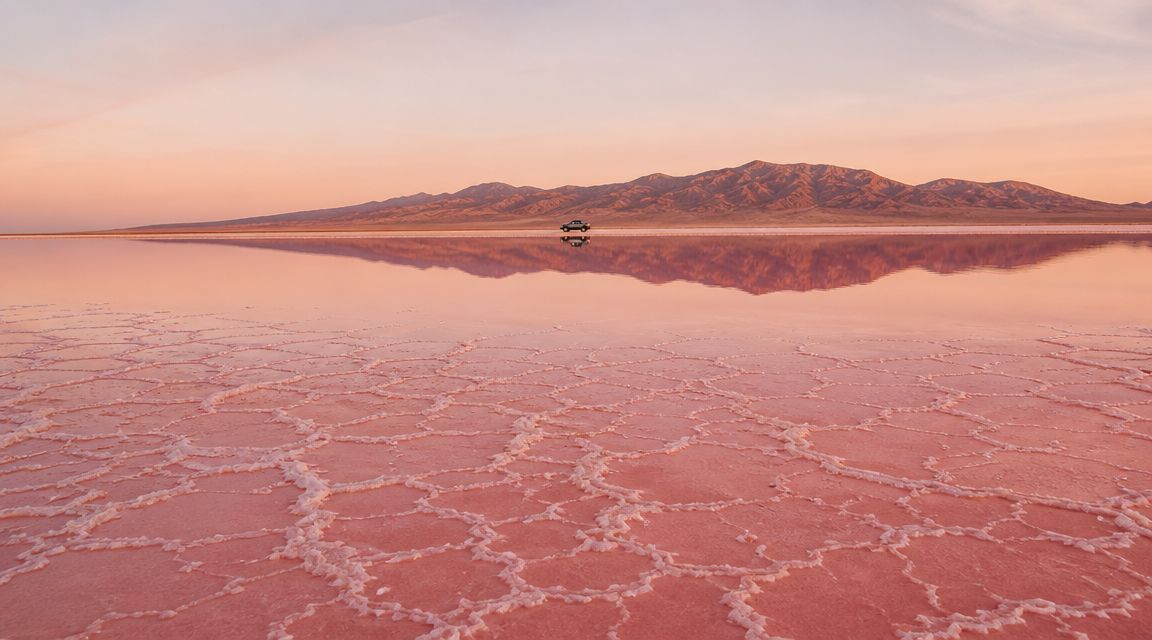
You arrive after a long drive across northern Yucatán, the sun is high, and the water finally shifts from pale coral to a sharper pink. That moment is real. So is the fence, the controlled access, and the reminder that Las Coloradas is a working salt-production area, not an open natural swimming spot.
Las Coloradas is Mexico's best-known pink lake stop, though the name usually refers to a group of salt evaporation ponds rather than one single lake. The color comes from extreme salinity and the microorganisms that thrive in it, found within a wider reserve of mangroves, birds, and coastal wetlands. This overview of Las Coloradas and its salt ponds gives useful background on how the site is laid out.
The smartest way to visit is to treat Las Coloradas as half of a day, not the whole story. Pair it with Río Lagartos, especially if you care about value. The ponds deliver the visual payoff, but the wider area gives the trip depth through boat rides, flamingo habitat, and a stronger sense of how this coast works. That combination usually feels more satisfying than making a long round-trip just for a short guided circuit and a few photos.
Timing matters here. Strong sun often brings out the color better than soft morning or late-afternoon light, and access is typically handled through guided formats because the ponds are part of an active salt operation. This guide to visiting Las Coloradas responsibly is a helpful reference on conditions and visit timing.
What to expect on the ground
Expect rules. You may be limited to designated viewpoints or guided routes, and swimming is off the table.
That can disappoint travelers who arrive expecting freedom to wander, but the restriction has a reason. Salt production supports local jobs, and the surrounding ecosystem is fragile. Respecting those limits is part of visiting responsibly, especially in a place that already gets heavy attention online.
Budget and trade-offs
Las Coloradas can be done on a moderate budget, but it rarely feels cheap once you add transport, entrance logistics, food, and a second stop nearby. Guided access usually comes in several formats, including walking, bicycle, and vehicle-based tours, with different pricing tiers depending on what is running that day, as outlined in this family travel breakdown of Las Coloradas access and tour formats.
For a better value trip, base yourself in Valladolid or Río Lagartos instead of building this as a long excursion from the resort corridor. Bring water, cash, sun protection, and realistic expectations about color. If the ponds are vivid, great. If they are softer rose than neon, the day still works when you've built it around wildlife, local food, and the salt flats rather than one perfect photo.
2. Laguna de Salada de Torrevieja Connection Sites (Baja California Sur)
Baja California Sur suits travelers who like the idea of pink water but don't need a branded attraction with gates and fixed circuits. In the state's salt basins and shallow lagoons, you'll sometimes find pink-toned water created by the same general recipe travelers chase elsewhere: salinity, heat, shallow depth, and microorganisms. The experience is different from Las Coloradas because the appeal is the wider desert setting, not a single famous photo point.
The trade-off is uncertainty. You won't find the same level of signage, tourism infrastructure, or packaged access. That's good for travelers who want a quieter setting, and not so good for anyone hoping to show up with no planning and be guided by the crowd.
Best approach for independent travelers
A self-drive route out of La Paz works well if you're comfortable with remote conditions. The key is treating the pink lagoon as one stop in a bigger Baja journey that might also include coastal viewpoints, small towns, or a local salt-production area where residents can explain how the basin changes over time. That approach is more affordable than chasing a single premium excursion and usually more rewarding.
What doesn't work is assuming every pink-toned basin will look vivid all day. In Baja, color can appear subtle, especially in flatter light. I'd rather arrive expecting pastel mineral shades and be surprised than arrive expecting a neon lake and leave disappointed.
How to keep the trip responsible
- Ask before entering: Many salt areas are working environments or lie near sensitive habitat. If a local caretaker, cooperative member, or resident says no entry, take that seriously.
- Bring your own basics: In remote Baja, affordability comes from self-sufficiency. Pack food, plenty of water, and offline navigation so you don't force last-minute purchases at inflated roadside prices.
- Support local services: If someone offers guiding, transport advice, or access coordination, paying fairly usually does more for the area than racing through for free photos.
Go in cool-season weather if you can. The experience is better when you're observing the landscape instead of just trying to outlast the heat.
For photographers, Baja's edge is atmosphere. Salt crust, desert plants, and low-built settlements often create stronger images than the water alone.
3. Laguna Madre Pink Zones (Tamaulipas)
Laguna Madre is better understood as a coastal system than a single headline lake. In some shallow zones, pink coloration can appear when salinity and biological conditions line up. That makes it a compelling pick for travelers who prefer a multi-activity destination over a one-stop photo outing.
Expectations matter most here. You're not visiting a fenced attraction with one promised viewpoint. You're visiting a working coastal environment shaped by wind, bird migrations, fishing activity, and changing water conditions. If you like dynamic places, it's a great fit. If you want certainty, it may frustrate you.
Why this one appeals to practical travelers
Laguna Madre gives you more than color. A budget trip here can include shoreline walks, birdwatching, local boat outings, and simple seafood meals in nearby communities. Even if the water only shows a faint blush, the day can still feel full and worthwhile.
That makes it one of the more honest options among pink lakes in Mexico. The pink is a bonus, not the entire product.
What works and what doesn't
What works is hiring a local fishing guide or boat operator who already knows the lagoon's changing conditions. They won't promise a perfect pink scene, but they can usually steer you toward the most interesting water, birdlife, and quiet corners. What doesn't work is relying on random map pins and expecting easy public access to the best shallows.
- Pack for observation: Bring binoculars, a hat, and shoes you don't mind getting salty.
- Watch the wind: Strong wind can flatten the mood fast. Even beautiful lagoon systems become hard to enjoy when conditions turn harsh.
- Stay flexible: Give the area more than a quick stop. A slower plan gives you more chances to catch good light and better water color.
If you're the kind of traveler who enjoys a place more when local people still use it for everyday life, Laguna Madre has that energy. It feels lived-in, not staged.
4. Laguna de Términos Salt Basins (Campeche)
Campeche offers a softer, more ecological version of the pink-lake idea. In and around the broader wetland environments linked to Laguna de Términos, some salt-influenced basins and shallow waters can show pink tones under the right conditions. The bigger reward here isn't a single dramatic viewpoint. It's the mix of mangroves, birds, fishing communities, and a slower Gulf Coast rhythm.
Travelers often miss this because they search for one famous lake name and move on. That's a mistake. Campeche works best for people who care about natural features within their environment.
A better way to experience it
Base yourself in a city or town with regular lodging and do day outings with local ecotourism operators. This keeps costs predictable and lets you avoid the common mistake of trying to improvise transport deep into wetland territory. It also spreads your spending into places where tourism can complement local livelihoods instead of replacing them.
You don't visit this region to tick off a bright pink lake and leave in half an hour. You go to paddle through mangrove channels, watch how light changes over shallow water, and learn how wetlands, salt, and birdlife connect.
The most satisfying pink-water trips are usually the ones where you'd still be glad you came if the lake looked coral, copper, or pale rose instead of hot pink.
Realistic expectations
This is not a guaranteed color-show destination. Some days the visual drama comes from mirrored mangroves, bird movement, and open sky rather than obvious pink water. That's still a win if you approached it correctly.
For affordability, Campeche also has an advantage. You can combine pink-water searching with heritage neighborhoods, local markets, and low-key coastal meals instead of paying for a specialized attraction every day. For sustainable travel, that kind of diversified trip is often the better model.
5. Laguna Cejar-Style Salt Lagoons (Interior Baja California Sur)
Interior Baja California Sur attracts travelers who want a salt-lagoon experience without much commercialization. Some inland lagoons and mineral basins can take on pink or reddish tones in the right light, and the stark desert setting gives them a quiet, almost meditative feel. If Las Coloradas feels too managed for your taste, this style of trip may suit you better.
But this isn't a casual outing. The main trade-off is safety. Remote desert salt lagoons can be beautiful and affordable if you plan well, yet they punish sloppy travel habits fast.
Safety is part of the budget
A lot of travelers focus on saving money and forget that in Baja's interior, preparation is the money saver. Having enough water, a reliable vehicle, offline maps, and a local guide or driver where needed is what prevents expensive mistakes. The cheapest-looking plan on paper can become the most costly one if you get stuck, lose signal, or misjudge a road.
For solo travelers, especially solo women, the best version of this trip usually involves either a trusted guide or a well-communicated itinerary with someone who knows exactly where you're going. Remote beauty is still remote.
Who should choose this option
Choose these inland Baja lagoons if you like silence, self-sufficient travel, and the feeling of earning a place rather than arriving at a polished attraction. Don't choose them if you need facilities, guaranteed access, or social-media-ready convenience.
- Pack for the terrain: Sun cover, sturdy footwear, first-aid basics, and extra drinking water matter more than extra camera gear.
- Treat flotation carefully: Some mineral lagoons invite the fantasy of effortless floating. Don't assume local conditions are safe for bathing without local advice.
- Stay light on impact: Desert basins look empty, but they're often fragile. Tire tracks, litter, and off-route wandering linger.
This is one of the most rewarding ways to explore pink lakes in Mexico if your travel style already leans minimalist and patient.
6. Laguna Ojo de Liebre Salt Lagoon System (Baja California Sur)
Ojo de Liebre stands out because the salt story and the wildlife story sit side by side. Near San Ignacio, this lagoon system is known for its marine life and salt-production environment, and at times the water in parts of the system can take on pink-tinted hues tied to salt operations and mineral concentration. It's one of the few places where an industrial backdrop doesn't automatically reduce the experience. It can even deepen it.
That's because the visit can feel educational instead of decorative. You're seeing how people work with a harsh environment, and how conservation and industry sit in uneasy but visible proximity.
Why this trip often feels worth the effort
Ojo de Liebre works best when you pair lagoon viewing with whale season and a stay in San Ignacio. Suddenly the economics improve. Instead of spending money to chase one visual effect, you're building a richer trip around a whole region. That's usually the more budget-conscious choice in a remote part of Baja.
The practical downside is distance. This isn't somewhere you drop into casually from a resort strip. It rewards travelers who already like road travel and don't mind structuring a route around a remote base.
How to travel this one well
Book with San Ignacio-based operators when possible. Local guides tend to give better ecological context, and your spending stays in the town rather than disappearing into outside booking chains. Bring layers even if Baja sounds hot on paper. Water excursions can feel colder than many travelers expect.
A good trip here isn't rushed. Give the lagoon time. Explore the town. Add another nearby nature or history stop if your route allows. Ojo de Liebre becomes much more memorable when it's part of a slow desert-coast journey rather than an isolated mission for pink water.
7. Laguna de Alchichica Pink Water Phenomenon (Veracruz)
Alchichica offers a different angle on the whole idea. Rather than a classic salt-production pond, this crater-lake setting is better approached as an occasional pink-water phenomenon. In warm periods, blooms and changing water conditions can tint parts of the lake in reddish or pinkish tones, but the appeal isn't just the color. It's the contrast between volcanic geography and unexpected water hues.
That makes it a smart pick for travelers who want a central Mexico trip with lower costs and more cultural variety around it. You can pair nature with town visits, markets, and regional food instead of committing to a remote single-purpose destination.
Why this one is underrated
Alchichica is the kind of place where realistic travelers often have a better time than checklist travelers. If the water isn't especially pink that day, you still have a striking crater lake in dramatic surroundings. That's a strong floor for any trip.
It also works well for travelers who like weekday pacing. Smaller inland destinations often feel calmer and more authentic outside weekend peaks, and that tends to make the whole experience cheaper and easier.
Practical strategy
Research recent local photos before you go, then treat the trip as a region-wide outing instead of a single-lake gamble. That's the key. If the color is present, great. If it's subtle, you still have hiking, birdlife, roadside food, and nearby cultural stops to anchor the day.
Don't chase perfection. Chase a well-built route. Pink water is seasonal and changeable. A good itinerary protects you from disappointment.
Among pink lakes in Mexico, Alchichica appeals most to travelers who enjoy unusual geology and don't need the most famous name to feel satisfied.
Comparison of 7 Mexican Pink Lakes
A useful comparison is not about which lake looks best on Instagram. It is about which one fits your budget, tolerance for uncertainty, and travel style without putting pressure on fragile places. Some of these spots reward careful timing. Others work better because the region around them gives you enough value even if the pink tones are faint that day.
| Site | Best For | Budget Reality | Access Friction | Color Reliability | Strongest Add-On Value | Wildlife / Nature Focus | Best Trip Style |
|---|---|---|---|---|---|---|---|
| Laguna Rosa (Las Coloradas, Yucatán) | First-time visitors who want the clearest classic pink-lake experience | Usually one of the easier options if paired with a wider Yucatán route | Controlled access, but straightforward for most travelers | Higher than most Mexican sites in the right season | Ría Lagartos, boat trips, coastal villages | Flamingos and coastal wetlands | Day trip or overnight from Valladolid, Tizimín, or Río Lagartos |
| Laguna de Salada de Torrevieja Connection Sites (Baja California Sur) | Independent travelers who enjoy remote desert routes | Costs rise fast if you need 4WD, fuel, and camping setup | High, due to rough roads and limited services | Moderate to low, depends heavily on conditions | Desert camping and remote-road exploration | Desert ecology more than waterbird concentration | Self-drive loop with strong preparation |
| Laguna Madre Pink Zones (Tamaulipas) | Birders and travelers who want more than one activity in the same area | Better value if you stay several days and combine coast, birding, and beach time | Moderate, with weather and wind affecting plans | Variable, but the broader region still delivers | Coastal towns, migration periods, water sports | Strong birdlife payoff | Flexible regional trip rather than a single-stop mission |
| Laguna de Términos Salt Basins (Campeche) | Travelers who care about biodiversity and community-based experiences | Mid-range once guide costs are shared | Moderate to high, often guide-dependent | Moderate, pink is a bonus rather than a guarantee | Mangroves, fishing culture, reserve access | Very strong for birds and wetland habitats | Guided eco-trip with cultural stops |
| Laguna Cejar-Style Salt Lagoons (Interior Baja California Sur) | Travelers willing to trade comfort for isolation and unusual salt-lagoon experiences | Among the pricier options once guide, transport, and water needs are added | High, with real self-sufficiency required | Variable | Floating, desert solitude, night skies | More about geology and desert settings | Short expedition with a local guide |
| Laguna Ojo de Liebre Salt Lagoon System (Baja California Sur) | Travelers who want educational value and a bigger nature trip | Good value if combined with whale season | Moderate, easier with booked operators | Pink tones are not the main draw | Whale watching and salt-industry context | Outstanding marine wildlife in season | Multi-day Baja itinerary |
| Laguna de Alchichica Pink Water Phenomenon (Veracruz) | Travelers based in central Mexico who want a lower-cost wild card | Usually affordable, especially as a regional detour | Low to moderate | Lower than the coastal salt lakes | Crater-lake scenery, towns, food stops | Birdlife and unusual geology | Day trip or overnight with backup activities |
A few patterns stand out fast.
Las Coloradas is still the simplest answer for travelers who want the strongest odds of seeing vivid pink water without complicated logistics. Ojo de Liebre gives more overall trip value if whales are part of the plan. Laguna Madre and Alchichica make more sense for travelers who build good regional itineraries and do not expect the lake alone to carry the whole day.
The hardest mistake to fix is choosing based only on photos. Interior Baja sites can look incredible, but they ask more from you in fuel, planning, and heat management. Campeche and Tamaulipas often reward patient travelers more than rushed ones, especially if birdlife, food, and local guiding matter as much as color intensity.
For quick trip planning, use this shortlist:
- Choose Las Coloradas for the strongest first pink-lake trip.
- Choose Ojo de Liebre for a nature-heavy Baja trip with whales and salt heritage.
- Choose Laguna Madre for birding and a multi-activity coast itinerary.
- Choose Términos if you want conservation context and community value.
- Choose interior Baja salt lagoons if you are prepared, self-sufficient, and comfortable with uncertainty.
- Choose Alchichica if you want the lowest-commitment detour with solid backup value.
The best lake is usually the one that still feels worthwhile if the pink is subtle. That is the standard I use, especially for budget-conscious trips where every transport day and every paid tour needs to earn its place.
Your Guide to a More Meaningful Pink Lake Trip
Mexico's pink-water destinations are easiest to enjoy when you stop treating them like guaranteed spectacles and start treating them like place-based experiences. That shift changes everything. You plan better, spend better, and notice more. Instead of asking only, “Will the lake be bright pink?” you start asking better questions. Who manages access here? Is this a working salt site? What else nearby makes the trip worthwhile? Where will my money go?
Las Coloradas is still the reference point for most travelers, and it earns that reputation. It's visually striking, unusual, and rooted in a real salt-making environment. But it's also controlled, popular, and easiest to appreciate when paired with the wider Ría Lagartos area. The lesser-known lagoons and pink zones in Baja, Tamaulipas, Campeche, and central Mexico require more flexibility, yet they often deliver the richer travel story.
Affordability comes from building regional trips, not obsessing over a single photo stop. Base yourself in practical towns. Use local guides when access or ecology calls for it. Carry your own water and sun protection. Keep your plans adaptable. Those habits lower costs and reduce stress at the same time.
Sustainability matters even more here than it does at many mainstream viewpoints. Some of these sites are fragile ecosystems. Some are working industrial areas. Some are both. Stay on approved routes, don't pressure guides to bend rules, and don't leave anything behind. If you can choose between a locally run outing and a generic transport chain, pick local. The difference may seem small on one trip, but multiplied across many visitors, it shapes what kind of tourism these places receive.
The best pink lake trips don't just leave you with a bright gallery on your phone. They leave you with a deeper sense of how salt, sun, wildlife, labor, and the natural environment come together in Mexico. That's what makes the journey stick. Go with curiosity, patience, and respect, and these unusual waters will give you far more than a postcard view.
If you want more practical, budget-conscious guides like this one, visit Travel Talk Today for thoughtful destination ideas, smarter trip planning, and sustainable travel advice that helps you see more while spending with intention.