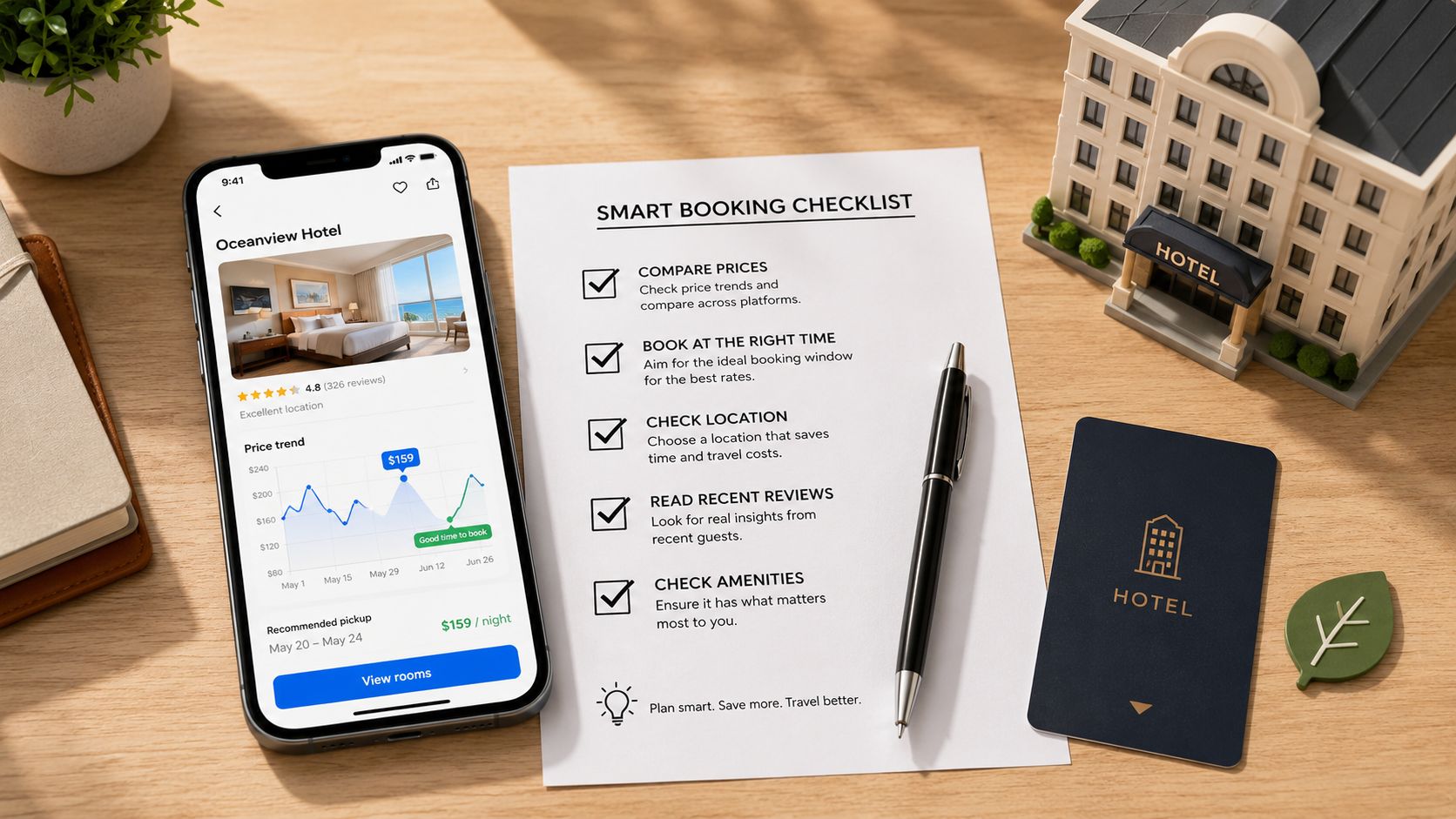
New York City sits on a lot of dream trip lists for one reason. It feels bigger than a vacation. It feels like stepping into places you've seen in films, songs, and street photos for years.
Then the planning tab opens, and the mood changes fast. Hotels look painful. Flights don't help. A simple search can make the whole idea of cheap trips to New York City sound unrealistic.
It isn't.
The mistake most travelers make is treating NYC like a place where savings come from tiny sacrifices. Skip one coffee. Walk an extra mile. Hunt for the absolute cheapest room and hope for the best. That approach usually creates a tiring trip, not a good one.
A better approach is to pull the two biggest levers first. Go at the right time, and stay in the right neighborhood. Those two decisions do more for your budget than obsessive penny-pinching ever will. They also tend to produce a more interesting trip, because New York gets richer when you stop seeing Midtown as the center of everything.
Your Dream NYC Trip on a Real-World Budget
You open ten hotel tabs, add up a few meals, check flight prices, and suddenly New York looks like a trip you should postpone for "someday." That reaction is common. It is also often based on planning the city the wrong way.

NYC gets far more affordable once you stop treating every expense like a battle. The better move is to set priorities early, protect the experiences you care about, and use timing and neighborhood choice to bring the total down. That approach usually produces a better trip, too. You see more of the city, eat better, and avoid paying premium prices for convenience that barely improves the experience.
Smart budget travel is about choosing well
A good New York budget trip still leaves room for the parts that make the city memorable. Morning coffee from a corner spot. A long walk through brownstone blocks or a busy Queens food strip. One museum you are keen to see. A late view from the waterfront. Those are usually worth protecting.
The trade-off is simple. Spend with intention on what shapes the day, and cut costs on what does not.
For many travelers, that means:
- Choosing transit access over a famous address: A stay near a reliable subway line in Brooklyn, Queens, or Upper Manhattan can save real money without making the city feel far away.
- Paying for function, not bragging rights: A clean room, decent sleep, and a safe area matter more than a lobby you'll only pass through twice a day.
- Keeping one or two planned splurges: A great meal, a Broadway discount ticket, or a special view feels better when the rest of the budget is under control.
Practical rule: Spend where New York gives you energy. Save where it only sells you convenience.
Start with a framework, not random deals
The travelers who handle NYC well on a budget usually build the trip in the right order. First set the total budget. Then decide how much of it goes to lodging, flights, food, and a short list of priorities. After that, compare neighborhoods and travel dates instead of chasing the single cheapest option on every booking site. A practical guide to how to plan a trip on a budget can help you set that framework before you book anything.
This city rewards smart planning more than extreme thrift. Midtown is not the only version of New York worth paying for. Staying in Brooklyn, Queens, or Harlem often lowers costs and gives the trip more personality at the same time.
The Secret to an Affordable NYC Trip Is Timing
A Tuesday arrival in late January can make New York feel like a different city than a Saturday check-in in July. The room is often cheaper. The subway platforms are less packed with visitors. The same museum, skyline view, or neighborhood walk costs less to reach and takes less effort to enjoy.
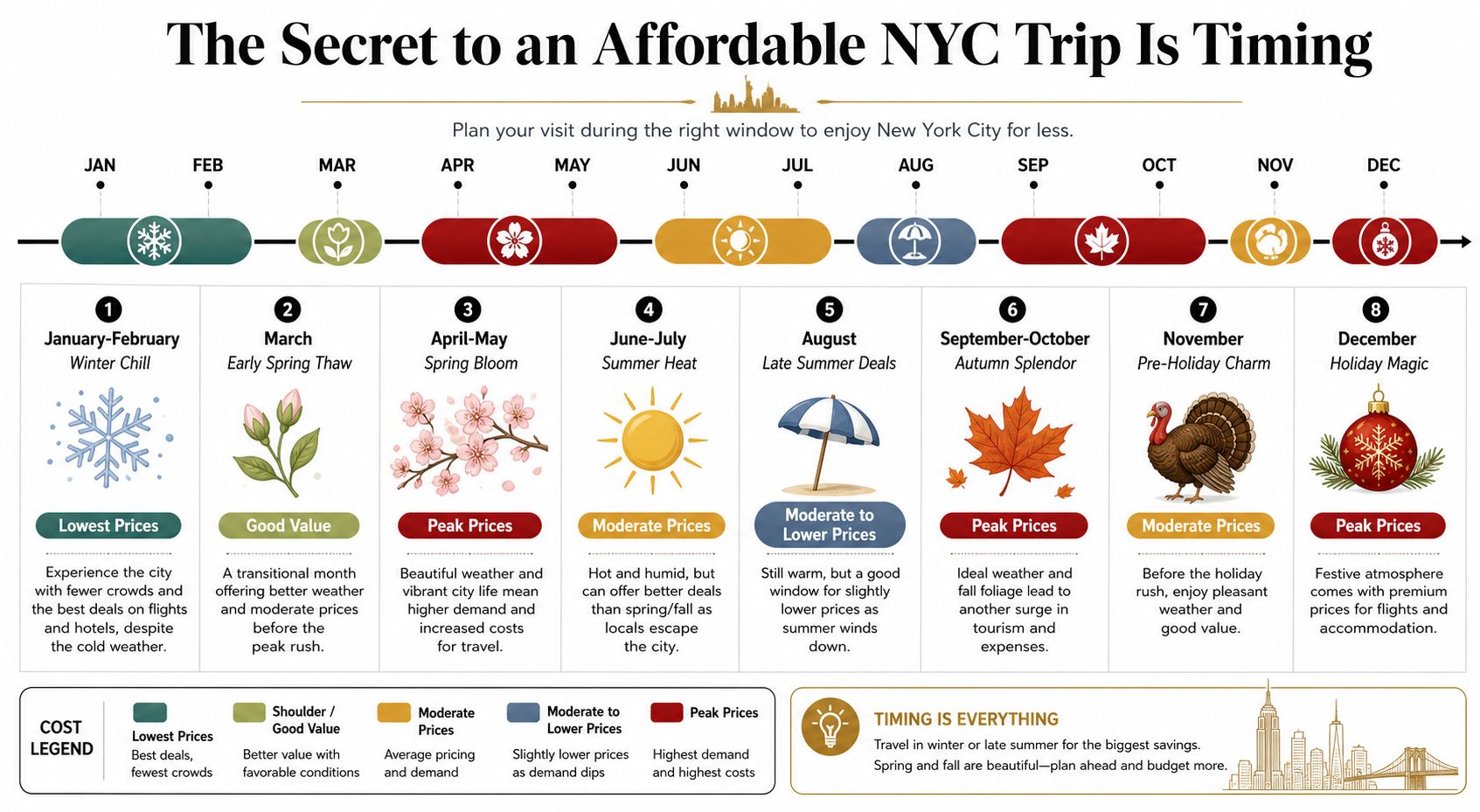
That is why timing does so much of the budget work in NYC. Good dates lower your two biggest fixed costs first, then make the city easier to use well. You get more flexibility on where to stay, which often opens better-value neighborhoods in Queens, Brooklyn, or Uptown Manhattan instead of forcing a cramped Midtown booking at the wrong price.
Winter is the clearest savings window
The best-value stretch usually starts right after the holiday rush and runs through much of late winter. Prices often soften once the New Year's crowds leave and before spring demand picks up.
The trade-off is simple. You need to be comfortable with cold weather, earlier sunsets, and the fact that some of New York's best summer pleasures are off the table. Rooftops matter less. Long park breaks matter less. A warm coat, waterproof shoes, and a plan built around indoor stops matter more.
For many budget travelers, that trade works well. Winter is excellent for museum days, classic diners, coffee shops, bookstores, comedy clubs, and long walks through neighborhoods that feel more local when visitor traffic drops. It is also a good season for outer-borough exploring because you can move through places like Astoria, Jackson Heights, Prospect Heights, or Harlem without paying peak-season rates just to sleep near Times Square.
Shoulder season is often the best balance
Travelers who want better weather without paying peak prices usually do best in the shoulder months. Early spring and stretches of fall often give you a better mix of comfort, crowd levels, and room to choose neighborhoods strategically.
When budgeting for a trip, planning outperforms penny-pinching. A trip in a lower-demand week can save more than skipping small indulgences once you arrive. It can also let you stay somewhere with stronger food options and better street life, which makes the trip feel richer even if the budget stays controlled.
Fall is especially strong for travelers who want to walk a lot and spend time outdoors without summer's heavier prices and crowds. Spring can look appealing for the same reason, but it is not automatically a bargain. If that season is on your shortlist, read this guide to visiting New York in May before you book, because pleasant weather and lower prices do not always line up.
Peak periods are expensive for predictable reasons
Summer and December cost more because demand is stronger. Families travel during school breaks. Holiday visitors fill rooms. Plenty of travelers are willing to pay extra for warm evenings, festive events, or the classic year-end New York atmosphere.
Sometimes that premium is worth it. The mistake is paying it by default.
A practical approach is to choose your season based on what you want to do. If your trip is built around parks, outdoor dining, and long daylight hours, paying more for warmer months can make sense. If your priorities are food, neighborhoods, museums, and the general energy of the city, lower-demand dates usually deliver better value.
Timing also shapes where the trip feels most rewarding. In busy, expensive periods, travelers often cluster in the same central zones and pay for convenience. In quieter windows, it is easier to base yourself in a well-connected area outside the usual tourist core, save money, and spend your days seeing a more interesting version of New York. That is a major budget advantage. Better timing does not just cut costs. It gives you better choices.
Smart Savings on Flights and Lodging
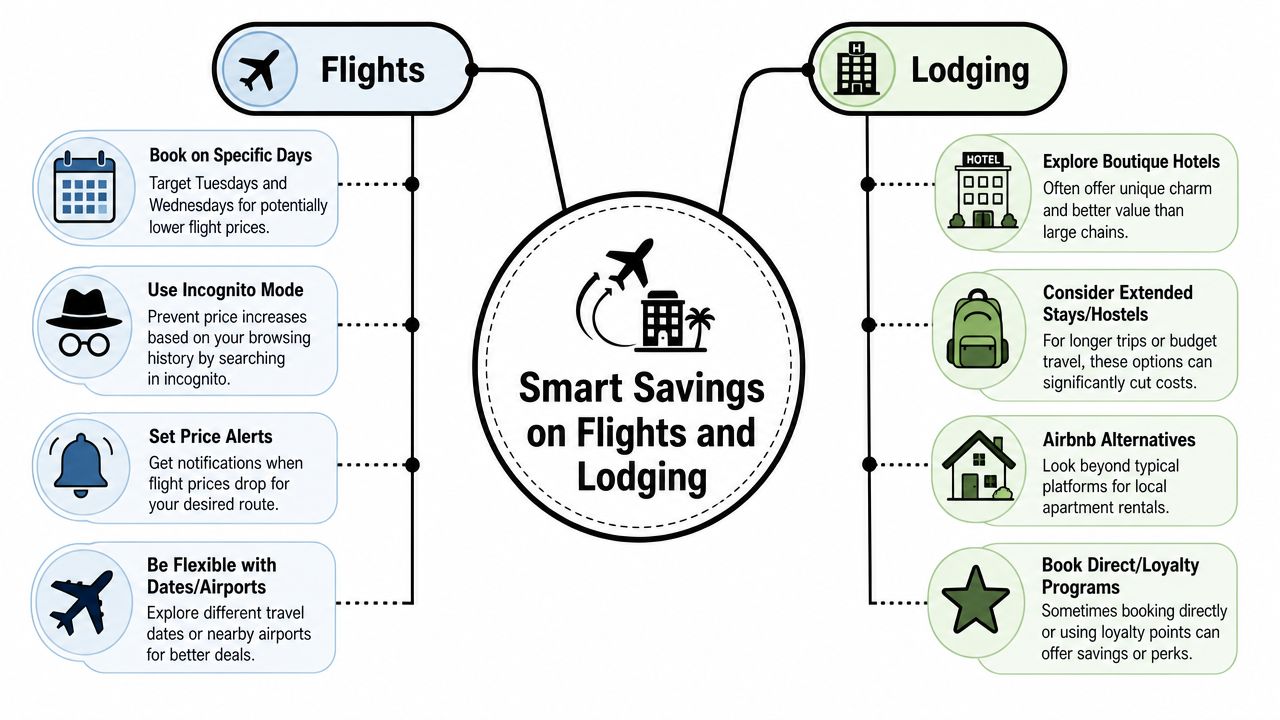
A cheap New York trip often comes down to two decisions made before you leave home. Which airport you fly into, and which neighborhood you sleep in. Get those right, and the rest of the budget gets much easier to manage.
How to approach flights without overcomplicating it
Flight savings usually come from flexibility, not from spending hours chasing a perfect fare. The lower-demand periods covered earlier often produce the better prices. A one- or two-day shift can matter more than any booking hack.
Start with all three major airports. JFK gets many long-haul and international deals. LaGuardia is often the easiest for domestic arrivals. Newark can be the cheapest option on some routes, but the savings only count if the transfer into the city still makes sense for your itinerary.
A practical checklist:
- Search a range of dates: Midweek departures and returns often price better than Friday or Sunday.
- Compare total trip cost: Include airport transfers, baggage fees, and arrival time, not just the headline fare.
- Set alerts early: Google Flights, Hopper, and Kayak are useful for watching routes before you are ready to book.
- Use a personal ceiling: If the fare fits your budget and your schedule, book it. Waiting for a slightly lower price can cost you the better itinerary.
If you want a stronger system for timing and fare tracking, this guide on how to find cheap flights for city trips is worth keeping open while you search.
The biggest lodging mistake in NYC
The expensive mistake is booking Midtown by default.
Midtown does offer convenience, especially on a first trip or a short weekend. It also gives many budget travelers the weakest value in the city. Rooms tend to be smaller, prices are higher, and the neighborhood can feel like a transit hub you pass through rather than a place you enjoy returning to at night.
New York rewards travelers who treat lodging as a strategy, not just a place to sleep. A hotel or hostel a few subway stops from the tourist core often buys you lower rates, better food nearby, and a more interesting street life. That trade-off is usually worth it unless your trip depends on walking back to your room several times a day.
Where budget travelers get real value
The strongest play is to match your base to your trip style.
Queens works well for travelers who care about practical pricing, strong transit, and excellent food without paying Manhattan premiums. Brooklyn makes sense if you want cafés, nightlife, waterfront walks, and easy access to lower Manhattan. Harlem suits travelers who want architecture, music history, and a neighborhood with real personality instead of a hotel district.
Frommer's cheap New York City tips also point budget travelers toward neighborhoods outside the usual tourist core, which lines up with what works on the ground. Saving money here is not only about trimming the room rate. It often leads to a better trip.
Use the trade-offs clearly:
| Neighborhood approach | What works | What to watch |
|---|---|---|
| Midtown-first | Easy access to major sights, simple for very short stays | Higher rates, more noise, weaker neighborhood feel |
| Brooklyn-based | Better value, good food, local energy, strong subway access | Longer rides to some uptown attractions |
| Queens-based | Solid prices, diverse dining, practical transit options | Less classic Manhattan atmosphere outside your door |
| Harlem or Upper Manhattan edge | Character, history, better value than central hotel zones | More planning if most of your itinerary is downtown |
One rule has saved me money again and again. Stay somewhere you will enjoy before 9 a.m. and after 8 p.m. In New York, those hours shape the trip more than people expect.
For cheap trips to New York City, neighborhood selection is not the backup plan. It is one of the main ways to cut costs without shrinking the experience.
Exploring NYC Without Spending a Fortune
A good budget day in New York rarely hinges on one huge save. It comes from stacking smart choices: a scenic walk instead of a paid observation deck, a strong lunch special instead of a forgettable sit-down meal in Midtown, a neighborhood plan that cuts subway backtracking and impulse spending.
That is why this city works better with a strategy than with a deprivation mindset.
Build your days around high-value free experiences
New York gives you a long list of experiences that feel major without requiring a ticket. The key is to stop treating free sights like filler between paid ones.
Central Park is better in sections than as a marathon. Pick one area, such as the Mall, Bethesda Terrace, or the Reservoir loop, and spend real time there. The High Line works the same way. Go early or near sunset, walk it slowly, then step off into Chelsea or the Meatpacking District instead of rushing to the next checklist stop.
Downtown, DUMBO earns its popularity because the value is real. You get bridge views, waterfront space, skyline photos, and an easy walk onward to Brooklyn Bridge Park. The Staten Island Ferry is another reliable move if your goal is harbor scenery and a Statue of Liberty view without paying for a cruise.
A practical free-day rhythm looks like this:
- Morning: Park, waterfront, or neighborhood streets before crowds build
- Midday: Library, market hall, or casual café for a reset
- Late afternoon: Bridge walk, pier, or skyline viewpoint
- Evening: One high-energy area for atmosphere, then back to your own neighborhood before the expensive habits kick in
If you want more zero-cost options, use this list of free things to do in New York and beyond and match it to the borough you are already exploring.
Use neighborhoods as your itinerary
Budget travelers can improve the trip fast. Instead of crossing the city three times for isolated landmarks, give one area half a day and let the details do some of the work.
Lower Manhattan is good for a walk-heavy day. Street grids change, waterfront views open up, and the ferry gives you a reset without adding much cost. Brooklyn often gives better value over a full afternoon because the food, parks, and casual stops sit close together. Queens is strongest when the day revolves around eating well. Harlem rewards slower pacing, especially if you care about architecture, music history, and places that still feel lived in rather than packaged for visitors.
This approach saves money in ways travelers often miss. Fewer transit hops. Fewer panic coffees. Fewer overpriced meals grabbed near a major attraction because the day got away from you.
New York rewards people who let one neighborhood carry the day.
Eat well without turning every meal into a splurge
Food usually decides whether a budget holds. The city makes it easy to eat brilliantly for a fair price, and just as easy to spend too much on convenience.
As noted earlier, a modest daily food budget in New York is realistic if you plan around one stronger meal and keep the rest simple. That usually means breakfast from a bagel shop, bakery, deli, or grocery run. Lunch is often the best value meal, especially in neighborhoods with strong local lunch traffic. Dinner deserves a decision before you get hungry. Go cheap and classic, pick a local favorite, or make it your one splurge.
A few rules work well on the ground:
- Keep breakfast fast and inexpensive: Save time and money for the rest of the day.
- Use lunch for variety and value: Many of the city's best casual meals show up before dinner prices do.
- Choose dinner on purpose: Last-minute dinner decisions in tourist zones are expensive.
- Watch the snack budget: Convenience-store drinks, pastries, and late-night slices can add up to more than a planned meal.
Value beats the absolute lowest price
The cheapest option is not always the smartest one. A weak $6 meal can turn into a second lunch, a coffee stop, and a snack an hour later. A solid $12 to $15 lunch from a deli counter, food hall stall, or neighborhood spot often keeps the day on track.
That trade-off matters in New York.
Some of the best budget meals in the city come from places that do one thing well and do it fast: slice shops, dollar dumpling spots, taco counters, halal carts, Dominican takeout, Chinatown noodle shops, and unfussy delis. They are part of the trip, not a compromise. In many cases, heading into Brooklyn, Queens, or Upper Manhattan gives you both a better meal and a better price than staying near the main tourist corridor.
Save on the obvious big-ticket items, but do not ignore the small daily decisions. In New York, those are usually what separate a stressed, expensive trip from a smart one.
Sample NYC Itineraries for Every Budget
You land on a low-fare Tuesday, drop your bag in Queens instead of Midtown, and suddenly New York looks very different on paper. The trip feels doable. You are not cutting every corner. You are using the two biggest savings levers well: timing and neighborhood choice.
That matters more than squeezing another few dollars out of lunch.
Sample daily budget for a solo traveler in NYC
A realistic budget day in New York changes most based on where you sleep and how many paid attractions you decide to stack together. As noted earlier, hostel-style stays can keep costs down, food is manageable if you eat like a local instead of a tourist, and subway use keeps transportation predictable.
Use this framework as a planning tool, not a promise:
| Expense Category | Low-End Estimate | Higher Budget Version | Notes |
|---|---|---|---|
| Accommodation | Budget hostel or very basic room | Better-located hostel or simple hotel room share | The biggest swing factor. Outer-borough stays often win on value |
| Food | Simple breakfast, casual lunch, practical dinner | One nicer meal plus two low-key meals | Food costs rise fast in tourist zones |
| Transport | Subway and walking | Subway, walking, and occasional rideshare | Transit stays reasonable if you group neighborhoods |
| Activities | Mostly free | One or two paid highlights | A single ticketed attraction can change the day's total |
| Daily Total Before Major Splurges | Lower end budget day | Moderate budget day | Keep your paid picks intentional |
| 7-Day Framework | Budget-focused week | More flexible week | The total depends heavily on lodging choice and attraction count |
The point is simple. New York can be affordable when you stop treating Manhattan hotel rates and nonstop ticketed attractions as the default.
One day in NYC on a budget
A one-day visit works best when you stay compact. Pick one core area, then add one contrast neighborhood.
A strong version looks like this: start in Lower Manhattan, take the Staten Island Ferry for big views at no extra sightseeing markup, walk through the Financial District or along the waterfront, then head into Brooklyn for the afternoon. DUMBO, Brooklyn Heights, and Brooklyn Bridge Park give you skyline views, good walking, and plenty of room to shape the day around your energy level.
Dinner is where people lose the plot. Skip the panic meal beside a major attraction. Eat in the neighborhood you are already exploring, or near your train line home.
Three rules keep a one-day budget trip strong:
- Cluster your stops: Less zigzagging means fewer tired, expensive decisions.
- Use one paid highlight at most: A museum, observatory, or show can fit. Two or three usually turns into a rushed day.
- Save rideshares for a real need: Late arrival, airport transfer, bad weather, or a safety concern are solid reasons.
If you are out early or returning late, basic travel safety tips for city trips matter more than trying to save a few dollars on the wrong route.
Three days for a first affordable NYC trip
Three days is enough to build a trip with range. The trick is to divide the city by feel, not by a giant checklist.
Day 1: Lower Manhattan and the water
Start with places that reward walking. Lower Manhattan, the ferry, civic buildings, old streets, and the waterfront all fit together well. Add one indoor stop if the weather turns or you want a break.
This day stays affordable because the area itself does a lot of the work.
Day 2: Brooklyn or Queens
Smart planning triumphs over simple penny-pinching. Instead of paying Midtown prices all day, spend time in a borough where daily life is part of the experience. In Brooklyn, that might mean Prospect Park, brownstone blocks, and a casual food stop. In Queens, it could mean a neighborhood with great regional food and easier room rates if you stayed nearby.
You often get a better meal, a less stressful day, and a stronger sense of the city.
Day 3: Uptown contrast or one classic splurge
Use the last day for Harlem, Upper Manhattan, or one paid attraction you most wish to experience. By now, the city should feel less like a list of landmarks and more like a set of neighborhoods with different rhythms.
That shift usually saves money too. Travelers who know what kind of day they want spend less than travelers who keep chasing the next famous stop.
A practical three-day spending pattern:
- Day 1: Mostly free sights and lots of walking
- Day 2: Neighborhood-focused day with strong food value
- Day 3: One chosen splurge or a second borough day
Five days for travelers who want depth, not rush
Five days is where New York starts to reward restraint. You can stop forcing every icon into the same 48 hours. That usually improves the trip and lowers the total spend.
A budget-smart five-day shape looks like this:
Arrival and local setup
Keep the first day close to your lodging. Learn your subway line, find a dependable coffee spot, and get oriented.Classic Manhattan day
See the places you came for, but keep them grouped. Midtown and Central Park can work well together if you do not overbook.Outer-borough culture day
Build one full day around Brooklyn, Queens, or Upper Manhattan. This is often the best-value day of the trip and the one people remember most.Interest-based day
Pick your lane. Museum day, architecture walk, bookstore crawl, food crawl, waterfront route, or live music.Departure day
Keep it local and low-stress. A final neighborhood walk beats paying for a rushed attraction you cannot enjoy.
Where to splurge and where not to
Good splurges create a clear memory. Weak splurges solve bad planning.
Worth considering:
- A museum you are eager to see
- One great meal in a neighborhood known for it
- A view or performance that matters to you
Usually not worth it:
- Paying extra to sleep in the middle of the tourist core
- Taking repeated rideshares because the subway feels unfamiliar
- Buying attraction after attraction without enough time to enjoy them
My rule in New York is straightforward. Spend where the city gives something specific back. Save on location prestige, rushed transport, and anything chosen out of fatigue. That is how a cheap trip to New York City starts feeling like a smart one, not a stripped-down one.
Your Booking Timeline and Safety Essentials
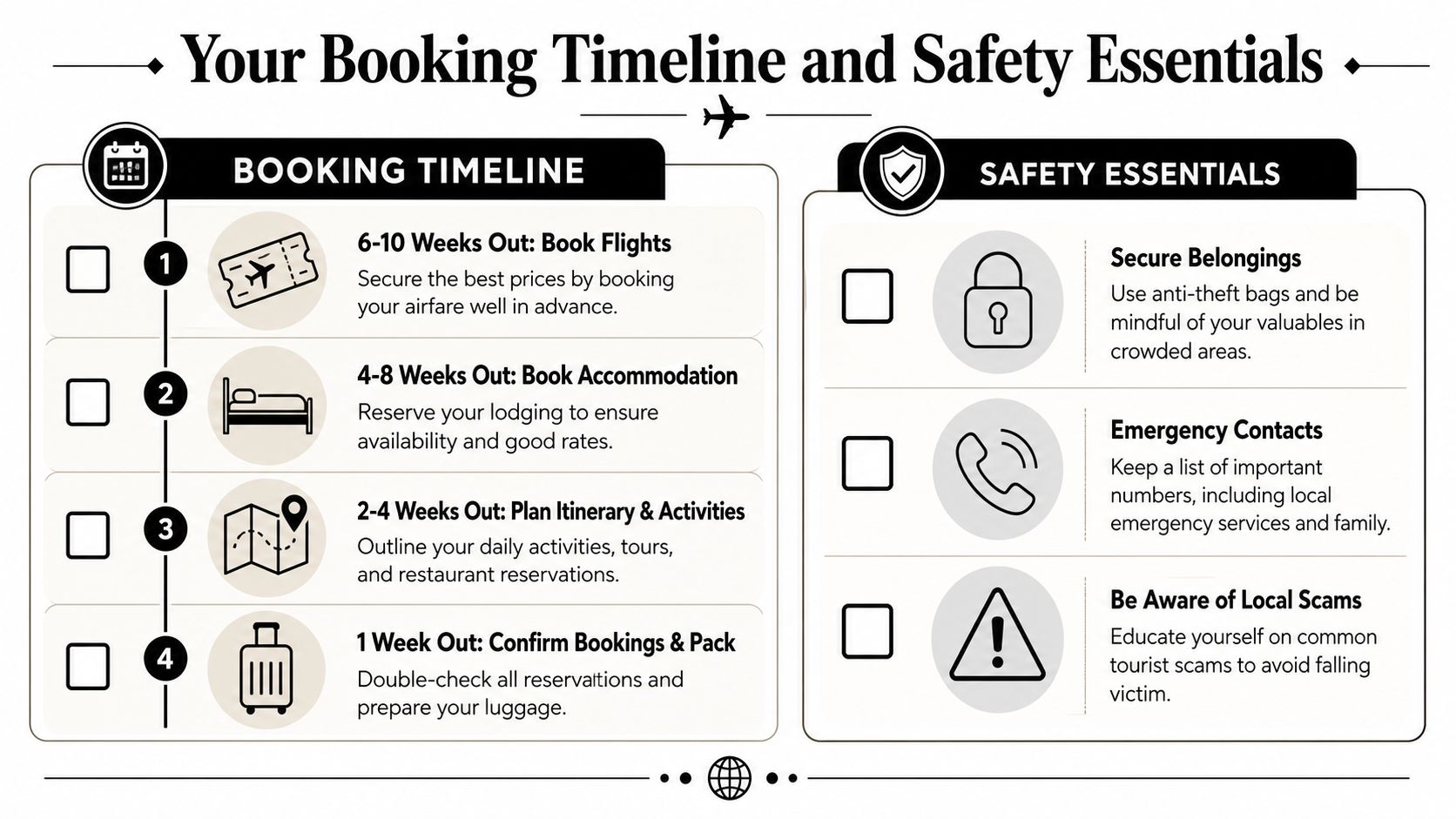
Prices in New York punish hesitation more than they reward obsessive deal-hunting. A simple booking rhythm usually saves more than hours spent refreshing fare pages.
Booking timeline that keeps costs under control
The smartest approach is to make your biggest money decisions in the right order. Start with dates, then choose the neighborhood, then fill in the details. That sequence matters in NYC because a well-placed stay in Queens, Brooklyn, or Upper Manhattan often does more for your budget than squeezing a few extra dollars out of a flight.
Use this timeline:
6 to 10 weeks out
Set your travel dates and watch flights seriously. Once the fare fits your budget and schedule, book it. Waiting for the perfect price often means paying more later.4 to 8 weeks out
Book lodging. Compare neighborhoods by subway access, late-night comfort, and food options nearby. A hotel or rental outside the tourist core can cut costs without making the trip harder.2 to 4 weeks out
Build your map. Save restaurants, stations, grocery stops, and the paid sights that matter to you. This is also when I check whether a cheaper room still feels worth it once I factor in daily transit time.1 week out
Recheck confirmation emails, airport transfer plans, weather, baggage rules, and check-in instructions. A missed detail can wipe out the savings you worked for.
Keep your planning practical, not obsessive. As noted earlier, timing matters, but neighborhood choice is often the bigger long-term win.
This is also a good time to review a solid set of travel safety tips for city trips so your plan covers more than price.
Safety in NYC without fear-driven advice
New York rewards alert travelers. It does not require paranoia.
For solo travelers, especially on a first visit, the useful habits are simple and repeatable:
- Know your route before you leave. Do the thinking while you have Wi-Fi and a full battery, not on an empty platform late at night.
- Keep your phone charged. It handles directions, mobile payments, booking records, and backup communication.
- Stay aware in crowded areas. Packed trains, busy stations, and major sightseeing corridors are where people get careless with wallets and phones.
- Use judgment late at night. If you are tired, carrying bags, or heading into an unfamiliar area, paying for the safer-feeling option is often money well spent.
Street-smart habits that actually help
A few habits prevent a lot of avoidable problems:
- Carry only what you need for the day
- Keep valuables zipped and close to your body
- Ignore anyone pressuring you into a purchase or “help” you did not ask for
- Step into a store, hotel, or café if you need to get oriented
One rule matters more than the rest. If a money-saving choice leaves you isolated, confused, or worn down, it is not a strong budget decision.
Good budget travel in New York feels steady. You know where you are going, you leave room for changes, and you spend a little more when it clearly buys comfort, time, or peace of mind.
Your Affordable Big Apple Adventure Awaits
New York doesn't become affordable because you outsmart every tiny expense. It becomes affordable when you make a handful of strong decisions early.
Choose the right season. Be willing to stay outside Midtown. Use neighborhoods as part of the experience, not as compromises. Build your days around walks, transit, parks, waterfronts, local food, and one or two paid highlights that matter to you.
That's the secret behind cheap trips to New York City. Smart planning creates freedom. It gives you room to enjoy the city instead of constantly calculating whether you can afford the next hour.
A budget trip to NYC can still feel cinematic. You can wake up in Brooklyn or Queens, grab a simple breakfast, ride the subway into Manhattan, spend hours walking through places you've wanted to see for years, then come back through a neighborhood that feels local and alive. That's not a lesser version of New York. In many cases, it's the better one.
If the city has been sitting on your someday list because the price seemed too high, move it to the planning stage. Start with dates. Then neighborhoods. Then a realistic daily budget. Once those pieces are in place, the trip stops feeling impossible and starts feeling close.
Travel planning gets easier when the advice is practical, current, and grounded in real traveler priorities. For more destination guides, budgeting strategies, and smarter ways to build meaningful trips, visit Travel Talk Today.