You land in Montreal on a Friday, drop your bag, and suddenly every choice feels expensive. Stay too long in Old Montreal and the trip starts to feel staged. Chase too many neighborhoods and you spend your weekend in transit. Follow a generic list and you miss the version of the city that would have suited you best.
Montreal is a strong three-day city because the core districts connect well and each area has a distinct mood. The main challenge is fit. A solo traveler out at night needs a different plan than someone trying to keep the whole weekend under control on a tight budget. A traveler who cares about low-impact choices should not be pushed into the same route as someone who wants classic first-time highlights.
That is the gap most Montreal guides miss.
Instead of one standard schedule, this guide gives you five complete 3-day Montreal itineraries built for different traveler types and priorities. You can choose the classic route for a first visit, an underground and hidden-gems version, a sustainability-focused plan, a solo female traveler route shaped around smart logistics and social options, or a budget-hacker itinerary that keeps daily costs realistic without making the trip feel cheap.
I plan Montreal by rhythm as much as by map. Mornings are best for markets, parks, and historic districts before crowds build. Afternoons work better for neighborhood wandering and museum time. Nights depend on your style. You might want jazz, natural wine, late bagels, or a quiet walk back to a well-located hotel. The right itinerary should account for those trade-offs from the start.
If you have used city guides like this 3 days in New Orleans itinerary, the idea is similar. Start with a traveler profile, then follow a plan that matches the way you move through a city.
Pick the version that sounds like you, then adjust the edges. That is usually how the best Montreal weekends work.
1. Classic Montreal: Old World Charm & Urban Culture (Day 1: Old Montreal & Downtown | Day 2: Plateau & The Marais | Day 3: Mount Royal & Neighborhoods)
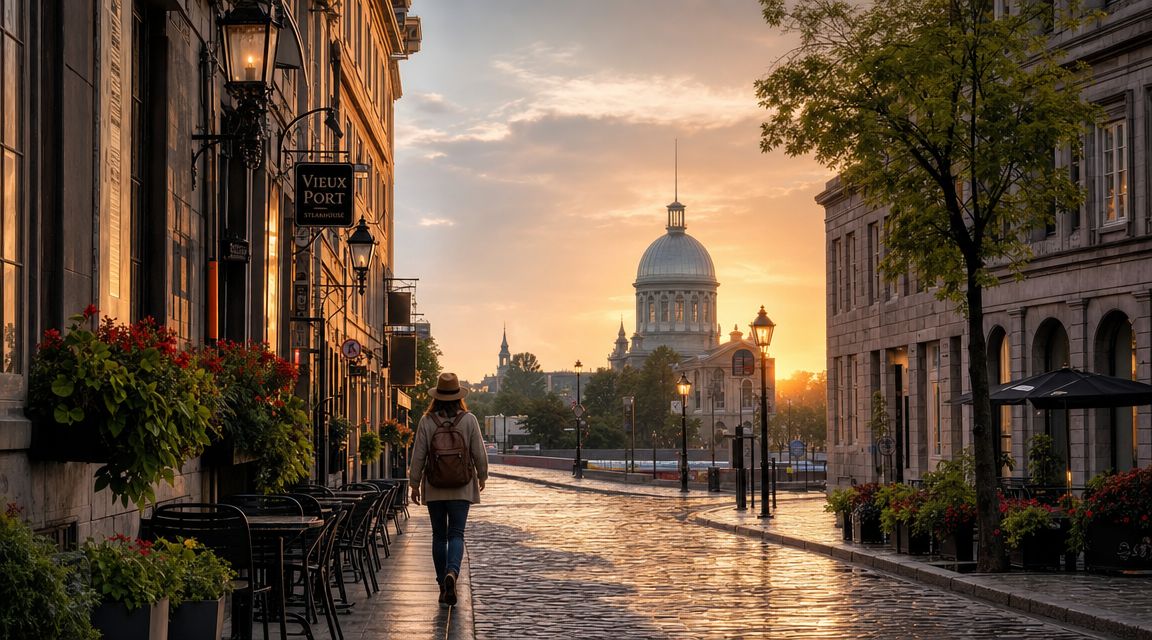
You land in Montreal, drop your bag, and have one immediate choice. Chase the postcard version of the city for three straight days, or use the classic route as a smart first framework and still leave room for neighborhoods with real local life. This itinerary is built for the second option.
For a first visit, the order matters. Start with Old Montreal and downtown so the city's history and present-day energy connect early. Move to the Plateau and Mile End on day two, where the pace slows and the personality sharpens. Finish with Mount Royal and nearby neighborhoods on day three, once you already have the city's basic geography in your head.
Day-by-day flow
Day 1 belongs to Old Montreal, the Old Port, and a slice of downtown. Begin early, before the cobblestone lanes fill with tour groups and weekend photo stops. Pointe-à-Callière is a strong first museum choice because it gives context without eating half the day. After that, walk the riverfront, then shift downtown in the afternoon for shopping streets, churches, public squares, or a museum, depending on your energy.
The trade-off on day one is simple. Old Montreal is beautiful, but it can turn stage-set pretty by midday. I would not stay there all afternoon unless you have a specific reservation or museum in mind. The better move is to enjoy the architecture, get your bearings, and then let downtown show you the modern city.
Day 2 works best in the Plateau and Mile End, with enough slack in the schedule to follow whatever pulls you in. A bakery line that looks promising. A bookstore you did not plan for. A terrace lunch that runs long. This is also the day to follow your own interests. Design shops, murals, indie fashion, bagels, parks, and small galleries all fit here better than another big-ticket sight. If your travel style usually favors streets with strong neighborhood identity over headline attractions, this day has the same appeal as other off-the-beaten-path city experiences.
Day 3 starts on Mount Royal. Go early. The paths are calmer, the lookout feels less crowded, and the climb is easier before the day warms up. After the mountain, keep the rest of the day light. Outremont, the lower Plateau, McGill-adjacent streets, or a return to downtown all work, depending on where you are staying and how much walking you still want.
Practical rule: On a classic first trip, schedule one anchor in the morning and one neighborhood focus in the afternoon. Montreal improves when you leave room for detours.
A few choices make this version stronger:
- Choose your base carefully: Old Montreal is atmospheric, but Plateau, Quartier des Spectacles, or the edges of downtown usually give you better food access and easier evening movement.
- Walk the interesting parts, skip the filler: Use the metro to cross bland stretches or save your legs late in the day. Save walking time for Old Montreal, the Plateau, Mile End, and park routes.
- Treat meals as part of the itinerary: In Montreal, a long lunch or late coffee stop often becomes the thing you remember. Build around that instead of squeezing food between sights.
- Leave one reservation slot open: A classic route should feel polished, not overmanaged. One flexible slot each day lets you adjust for weather, energy, and local recommendations.
What works, what doesn't
This itinerary works because it introduces Montreal in layers. Day 1 gives you origin and orientation. Day 2 adds texture and everyday culture. Day 3 pulls back for the wider view, then sends you back into residential streets with better judgment about where to spend your final hours.
It works especially well for first-time visitors who want a strong all-around trip without committing to a niche version of the city. It is the broadest of the five itineraries in this guide, but it still has a point of view. You are not trying to cover everything. You are choosing the version of Montreal that balances history, neighborhood life, food, walkability, and a few classic views.
What tends to fail is overpacking downtown museums, old-city landmarks, and restaurant reservations into the same day. Montreal is not hard to fill. It is hard to pace well. If you treat this route like a checklist, you will spend half your weekend in transit, lines, or recovery mode.
Used properly, the classic itinerary gives you the city many first-timers want, without trapping you in the most tourist-heavy version of it.
2. Underground Montreal & Hidden Gems (Day 1: Underground City & Architecture | Day 2: Off-the-Beaten-Path Neighborhoods | Day 3: Underground History & Local Secrets)
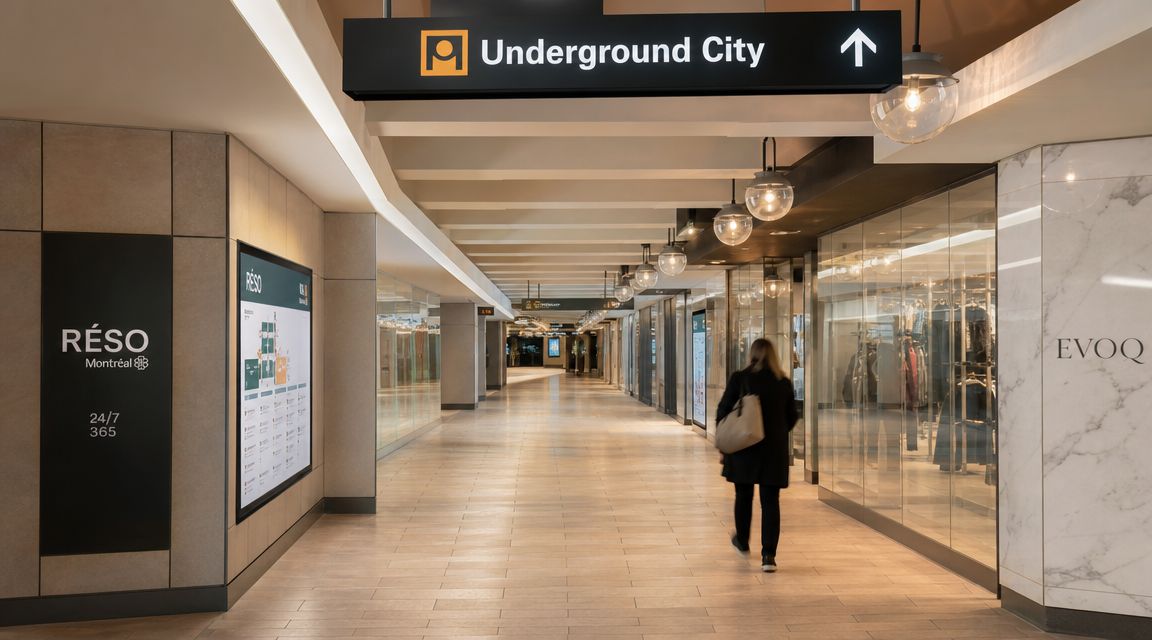
You step out of the metro, the weather turns, and your day does not fall apart. That is the appeal of this version of Montreal. It is built for travelers who care less about famous façades and more about how the city works.
Among the five 3-day Montreal itineraries in this guide, this one suits travelers who like patterns, infrastructure, and neighborhoods that still feel lived-in. Start with the Underground City and downtown architecture, then spend a full day in districts that sit outside the standard first-timer loop. Finish with the quieter layers of local history, the kinds of places people find because they noticed a side street, not because an algorithm pushed them there.
Use Day 1 to read the city from the inside
Montreal's underground network is easy to dismiss as a bad-weather backup. It is more useful than that. The passages, concourses, food courts, office towers, plazas, and metro links show how downtown functions hour by hour. If you want to understand daily Montreal, spend part of your first day below street level, then surface often to compare what changes above ground.
This works best if you keep the route tight. Focus on one downtown cluster instead of trying to "do" the whole network. I usually recommend pairing the interior corridors with nearby architectural stops so the day feels coherent rather than mall-heavy. The trade-off is simple. You will skip a few headline attractions, but you will gain a much stronger sense of rhythm, weather strategy, and local movement.
Watch where office workers pause. Notice which indoor spaces feel public and which feel purely commercial. That distinction tells you a lot.
Day 2 should feel local, not obscure for the sake of it
The hidden-gems mistake is chasing places because they sound secret. Montreal rewards a better approach. Pick neighborhoods with distinct identities and give them time.
Griffintown works if you want newer development, canal access, and a look at how industrial land has been repurposed. Saint-Henri usually delivers a stronger food-and-street-life day, especially if you want cafés, small shops, and a more grounded pace. Hochelaga is a better choice for travelers who already know central Montreal or want a less polished, more residential read on the city.
Do not stack all three into one day. Choose one western route or one eastern route, then commit. You will spend less time in transit, eat better, and remember more.
A place feels interesting when you stay long enough to notice its ordinary details.
Day 3 is where this itinerary gets its edge
Return to the idea of underground Montreal, but widen the definition. History here is not only in museums with long labels. It is in the connections between transit, commerce, winter design, older institutions, and the side streets people pass without stopping.
This is the day for smaller galleries, independent bookstores, overlooked public spaces, and coffee shops tucked behind busier corridors. Some of my best Montreal hours have come from leaving one planned stop unfinished because the block behind it looked more promising. That kind of flexibility matters more on this itinerary than on the classic one.
If this travel style already appeals to you, you will probably also like these off-the-beaten-path destinations.
A few practical choices make this route better:
- Download offline maps before Day 1: Underground corridors and side-street wandering get frustrating fast when your signal drops.
- Time downtown for weekday midday if possible: The underground network is far more revealing when people are actively using it.
- Limit yourself to one anchor stop per neighborhood: One museum, one market, or one café cluster is enough. The rest of the value comes from walking.
- Use a low-waste day bag and refillable bottle: This style of trip involves a lot of movement, and basic sustainable travel habits that reduce waste on city breaks make the day easier as well as lighter.
What works, what does not
This itinerary works for travelers who enjoy observation, urban design, and neighborhoods with uneven edges. It is a poor fit for anyone who wants a neat greatest-hits weekend. Montreal can support that kind of trip, but this is not that version.
The common failure point is overestimating how much wandering energy you have. Hidden-gems days sound effortless on paper. In practice, they require judgment. Build in one long sit-down break each day, keep your neighborhood choices limited, and accept that a good under-the-radar itinerary often looks modest in photos.
Shoulder season helps. Spring and early fall usually make this route easier because you can move between indoor and outdoor spaces comfortably, with enough local activity to keep the city feeling alive but not overrun. Hidden corners lose their charm when every stop turns into a crowd-control exercise.
3. Sustainable Montreal: Green Spaces & Ethical Experiences (Day 1: Mount Royal & Urban Parks | Day 2: Local Food & Ethical Businesses | Day 3: Community Projects & Sustainable Neighborhoods)

You wake up in Montreal, skip the rideshare, and reach a trailhead before the city fully warms up. That is the right start for a lower-impact itinerary here. Montreal rewards travelers who keep their days compact, walk between neighborhoods, and spend money with independent businesses instead of treating the city like a checklist.
This version of 3 days in Montreal works best for travelers who want their choices to match their values without turning the trip into homework. It is one of five complete routes in this guide, and its strength is focus. Fewer long transfers. More time in parks, markets, and neighborhood businesses that make the city feel lived-in.
Day 1. Keep it green and geographically tight
Start with Mount Royal, then stay in the surrounding urban park system instead of zigzagging across the island. The mountain gives you a quick read on Montreal's layout, but the bigger win is pace. A morning on foot changes the tone of the whole trip.
After the lookout, continue into nearby residential streets or another green space rather than chasing major sights in every direction. Sustainable city travel is often a planning decision, not a sacrifice. One well-shaped area can carry an entire day if the walking is good, the food options are local, and you are not burning time in transit.
A practical rule I use in Montreal is simple. One anchor stop, one park stretch, one neighborhood meal. That structure keeps the day calm and keeps your spending local.
Day 2. Use markets to eat better and spend better
Day 2 belongs to local food systems. Markets are useful here because they reduce packaging, support regional producers, and make it easy to build a flexible day around what looks good instead of locking yourself into overpriced brunch reservations.
Jean-Talon gets the attention, but Atwater Market often makes more sense for this itinerary. It pairs well with a walkable route, and the surrounding area gives you room to turn a food stop into an afternoon instead of a crowded errand. Buy breakfast or picnic supplies, choose one independent restaurant for a proper meal, and leave space for a bakery, coffee stop, or small grocery purchase that supports the neighborhood.
That trade-off is worth making. You may skip one famous food photo, but you get a day that feels less crowded, less wasteful, and more connected to the city around you.
Day 3. Choose neighborhoods that still function as neighborhoods
Use the last day for places where daily life is still the main attraction. Look for canalside paths, local bookshops, community cafés, repair-minded boutiques, small grocers, and residential blocks with public space built into them. Those areas usually tell you more about Montreal than another hour in a souvenir-heavy corridor.
This approach also helps on budget.
Walking-focused neighborhoods cut transport costs and reduce the temptation to fill gaps with expensive convenience purchases. If you want to travel thoughtfully beyond this trip, the habits overlap with the kind of practical safety and independence strategies women can use when traveling alone, especially around route planning, daylight timing, and choosing areas where it is easy to linger without pressure to spend.
Local-first lens: A sustainable Montreal day leaves you with park time, meals tied to a real neighborhood, and purchases from businesses you would be happy to see again on your next visit.
If you're trying to travel more thoughtfully in general, not just on this one trip, these broader sustainable travel tips pair well with Montreal's walkable, neighborhood-driven rhythm.
4. Solo Female Traveler's Montreal: Safety-Smart & Social (Day 1: Vibrant Neighborhoods & Social Venues | Day 2: Food Culture & Market Exploration | Day 3: Cultural Institutions & Community Meetups)
You arrive in Montreal on your own, drop your bag, and have one decision to make before sunset. Do you build a night that feels fun and easy to exit, or do you gamble on a vague nightlife plan and sort out the return later? For solo travelers, that choice shapes the whole trip.
This itinerary works best for women who want both independence and contact with other people, without turning every evening into a logistics problem. Montreal is friendly, social, and easy to enjoy alone, but the smart version of solo travel here depends on staying close to transit, picking neighborhoods with steady street life, and keeping your night in one area.
STM service hours matter. As summarized in this solo-travel-focused Montreal itinerary, the metro usually stops around 1:00 a.m., with some variation by station and day. That makes late-night improvising less appealing than it sounds in a generic city guide.
Day 1 with safety built in
Start in the Plateau or a central downtown pocket where cafés, shops, and bars create natural foot traffic from late afternoon into the evening. The goal on your first day is not to cover as much ground as possible. It is to get comfortable fast.
I usually recommend one anchored social activity on Night 1. A walking tour, a small food experience, a language exchange, or a hostel event gives you structure and a built-in end point. You meet people without needing to commit to a full night out with strangers.
Keep your accommodation strategy practical. A stylish place in the wrong area can cost you confidence after dark. If your budget is tight, use the same logic that applies in these practical ways to save money while traveling: spend where it reduces friction later, especially on location and transport.
The best solo plan is the one you can leave easily, not the one that looks busiest on social media.
Day 2 for food culture and low-pressure social time
Make Day 2 your interaction day. Markets, bakeries, lunch counters, and casual cafés are ideal for solo travelers because they create small, natural conversations without any pressure to perform socially. You can ask what to order, sit at a counter, linger over coffee, and still keep full control of your schedule.
This is also the right day to avoid cross-city zigzagging. Pick one food-heavy zone and stay with it. Jean-Talon Market can fill hours on its own if you combine it with nearby cafés and neighborhood wandering. Mile End also works well if you want a mix of bakery stops, bookstores, and a relaxed crowd. The trade-off is simple. The more neighborhoods you try to stack into one solo day, the more time you spend checking maps and second-guessing your route.
A few habits make a noticeable difference:
- Choose one evening neighborhood and stay there: Dinner, a bar, and a dessert stop in the same area is easier than hopping between districts.
- Save your exact address offline: It helps when your phone battery drops or you need a quick rideshare pickup.
- Sit at counters or communal tables: They create conversation more naturally than isolated two-top seating.
- Call the night a little early on Day 2: Solo travel gets better when you leave yourself energy for the last day.
Day 3 for culture, community, and a confident finish
By Day 3, the city starts to feel legible. Use that to your advantage. Plan a museum, a bookstore, a public institution, or a daytime meetup in a neighborhood that already felt good to you earlier in the trip. That familiarity lowers decision fatigue, which is a significant hidden cost of solo travel.
This is the day to do the quieter version of Montreal. Spend time in places where being alone feels normal, not conspicuous. Museums, university-adjacent cafés, well-loved local bookstores, and daytime community events all work well here. If you want company, choose something with a shared focus rather than open-ended nightlife. A workshop, reading, gallery event, or small group tour gives you conversation starters and a clear reason to be there.
Three days is a strong fit for this travel style. It gives you one day to settle in, one day to be outward-facing, and one day to enjoy the city with more confidence than you had on arrival.
If you want broader preparation before the trip, these practical ideas on how to travel alone as a woman are worth reading before you build your evening plans.
5. Budget-Hacker Montreal: $60/Day Reality Route (Day 1: Free Attractions & Hostels | Day 2: Markets & Street Food | Day 3: Off-Peak Activities & Neighborhood Gems)
Land in Montreal with a hostel bed booked, a transit pass loaded, and no pressure to “do it all,” and $60 a day stops sounding unrealistic. This itinerary works for travelers who care more about smart trade-offs than cheap bragging rights.
The biggest mistake is choosing the lowest nightly rate without pricing the rest of the trip. A bed near a metro line or within walking distance of central neighborhoods often saves enough on transit, time, and impulse spending to come out ahead. In Montreal, convenience has a cash value.
Day 1 without wasting money
Keep the first day light and mostly free. Walk Old Montreal, continue toward the Old Port, then drift into downtown on foot. That gives you orientation, architecture, and a feel for distances before you spend money on museums or attractions that may not fit your energy level after arrival.
Use this day to set up the rest of the trip well. Find your closest grocery store, note one reliable cheap breakfast spot, and identify the metro station you will practically use, not the one that only looks good on a map. Montreal rewards travelers who cluster their days by area.
Transit is usually the right place to be disciplined, not stingy. A short stay gets much easier when you use the metro and buses as your base plan instead of paying for occasional rideshares that wreck the budget.
Day 2 where the savings actually happen
Day 2 is where budget travel either starts to feel clever or starts to feel restrictive. The difference is food strategy.
Build the day around markets, snack bars, bagel shops, and casual counters. Start with a filling breakfast that costs little, keep lunch flexible, and save your sit-down meal for the neighborhood where you already plan to spend the evening. That cuts backtracking and helps you avoid tourist-strip pricing.
The pattern I trust in Montreal is simple:
- Breakfast from a bakery, bagel shop, or hostel groceries: fast, cheap, and easy to repeat
- Lunch from a market stall or counter-service spot: good variety without committing to a long meal
- Dinner only after a full afternoon out: better decisions, fewer overpriced panic meals
This itinerary is one of five different 3-day Montreal approaches in the article, and that matters here. A budget plan should not feel like a watered-down version of the “classic” trip. It should prioritize free city texture, cheap excellent food, and neighborhoods that still feel rewarding without paid entry fees.
Day 3 for value over bragging rights
Use the last day on experiences that hold up even when you spend very little. Walk the Lachine Canal or another neighborhood route, browse bookstores, sit in a park, watch local street life, and spend time in areas where Montreal feels lived-in rather than staged for visitors. These are low-cost hours that still give the trip shape.
Timing matters too. Shoulder-season travel usually makes this route easier. Prices are often less aggressive, popular areas feel more breathable, and long walks stay pleasant enough to replace paid indoor entertainment for much of the day.
If you want to tighten the math before you book, these practical tips on saving money while traveling pair well with Montreal, especially for accommodation, food timing, and transit planning.
3-Day Montreal Itinerary Comparison
| Itinerary | 🔄 Complexity | ⚡ Resources | ⭐ Expected outcomes | 💡 Ideal use cases | 📊 Key advantages |
|---|---|---|---|---|---|
| Classic Montreal: Old World Charm & Urban Culture (3 days) | Low–Moderate 🔄 (walkable routes, simple pacing) | Moderate ⚡ (3‑day transit pass, mixed free/paid sites) | ⭐⭐⭐⭐ Authentic cultural immersion, photogenic moments | Cultural immersion, photographers, flexible travelers | Walkability, mix of free/paid experiences, easy customization |
| Underground Montreal & Hidden Gems (3 days) | Moderate 🔄🔄 (complex underground navigation, mapping needed) | Low–Moderate ⚡ (free RÉSO map, few paid stops) | ⭐⭐⭐ Unique, offbeat discoveries and indoor exploration | Urban explorers, winter visits, budget-focused travelers | Climate-controlled routes, fewer crowds, distinctive photos |
| Sustainable Montreal: Green Spaces & Ethical Experiences (3 days) | Moderate 🔄🔄 (coordination with market/community schedules) | Low–Moderate ⚡ (farmers markets, Bixi, small fees for experiences) | ⭐⭐⭐⭐ Low-impact travel with strong local/community connection | Eco-conscious travelers, slow-travelers, food market fans | Lowest carbon footprint, supports local economy, healthy activities |
| Solo Female Traveler's Montreal: Safety-Smart & Social (3 days) | Low–Moderate 🔄 (safety-first routing, social programming) | Moderate ⚡ (verified hostels, group activities, regular transit) | ⭐⭐⭐⭐ Safe, social, confidence-building urban experience | Solo female travelers seeking safety + social options | Well-populated routes, organized meetups, safety resources |
| Budget-Hacker Montreal: $60/Day Reality Route (3 days) | High 🔄🔄🔄 (advanced planning, strict budgeting) | Very Low ⚡ (hostels $20–25, market meals, tip-based tours) | ⭐⭐⭐ Cost-effective full immersion with limited paid attractions | Backpackers, gap-year travelers, travel hackers | Extremely low cost, replicable framework, resourcefulness lessons |
Your Montreal Adventure Awaits
Montreal is one of those rare cities that supports different travel styles without punishing you for choosing one lane. You can spend 3 days in Montreal chasing history and architecture. You can spend them drifting through markets and neighborhoods. You can build the whole trip around low-cost meals, safer solo evenings, or a more thoughtful footprint. All of those versions can work.
The key is not trying to combine every version into one weekend.
That's what derails most short trips here. Travelers hear that Montreal has compact core districts, great food, strong neighborhoods, festivals, museums, parks, and late-night energy, and they respond by stacking too much into every day. Then they spend more, rush more, and end up remembering logistics instead of atmosphere.
A better approach is to decide what kind of trip you want before you book your first dinner or museum. If you're a first-timer, the classic route gives you a clean introduction. If you hate obvious tourist circuits, the hidden-gems route will feel more honest. If your spending matters as much as your footprint, the sustainable route brings those two goals together. If you're traveling solo, especially as a woman, the safety-smart plan gives you structure without shrinking your freedom. And if the budget is tight, Montreal still offers a strong city break when you anchor yourself in transit, markets, and walkable neighborhoods.
That flexibility is the city's real advantage. Montreal can feel old-world in the morning, defiantly local in the afternoon, and modern by evening. You can move from centuries-old streets to festival spaces, from public markets to quiet residential blocks, from a mountain overlook to a dense urban corridor, all within one short trip if you sequence it well.
That's why 3 days works so well here. It's enough time to build context, not just collect highlights. Enough time to notice the difference between a neighborhood you passed through and one you understood. Enough time to make choices that fit you instead of copying the loudest itinerary online.
Use these five plans as frameworks, not rules. Shift the order if weather changes. Swap a museum for a market if you're overloaded. Shorten a district and linger over lunch if the street feels right. The strongest travel plans don't lock you in. They give you a smart starting point, remove the obvious mistakes, and leave room for the city to surprise you.
That's the version of Montreal worth chasing.
Travel Talk Today helps you turn rough trip ideas into smart, realistic plans. If you want more practical guides on affordable city breaks, slow travel, solo safety, and meaningful ways to explore, spend time with Travel Talk Today.