The world feels smaller than ever, with tourist hotspots overflowing and authentic experiences harder to find. But what if the most memorable journeys aren't on the bestseller list? This guide is your antidote to the predictable, a roadmap for the traveler yearning for something more-the quiet cobblestone street, the shared meal with a local family, the trail no one else is hiking. Forget the endless queues and overpriced souvenirs. It's time to discover the profound beauty and genuine connection waiting just beyond the familiar.
We are venturing past the crowded and commercial to explore 10 powerful strategies for discovering truly unique off the beaten path destinations. This isn't just another list of places; it's a new way to think about travel itself. Instead of simply telling you where to go, we'll show you how to find these hidden gems on your own terms.
Inside, you will find actionable approaches for every type of adventurer:
- For the Budget Backpacker: Learn how to find incredible value by exploring underrated neighboring countries or visiting popular regions during their "shoulder" seasons.
- For the Solo Female Traveler: We'll highlight strategies that prioritize safety without sacrificing adventure, such as immersing yourself in community-focused homestay networks.
- For the Eco-Conscious Explorer: Discover how to support conservation and local communities by visiting responsible wildlife sanctuaries and post-crisis destinations ready for mindful tourism.
From leveraging seasonal shifts for better prices and fewer crowds to finding vibrant urban neighborhoods hidden in plain sight, these concepts will reshape how you see the world. Forget just visiting a place; it's time to connect with it. Let's find your next great adventure.
1. Slow Travel Micro-Destinations
Imagine unpacking your bag not just for a night, but for a month. Slow travel micro-destinations are a profound departure from the whirlwind tourist trail, inviting you to settle into a single small town or neighborhood for several weeks. This approach swaps a rushed itinerary for deep, meaningful connections with a place and its people. It’s about becoming a temporary local, discovering your favorite coffee shop, learning a few words of the language, and truly understanding the rhythm of daily life far from major tourist hubs.

This method is one of the most effective ways to find off the beaten path destinations because you create the path yourself. Instead of focusing on a country’s famous landmarks, you choose a home base and explore its surrounding character. Think of the artisan communities in Oaxaca, Mexico; the historic, bohemian quarter of Balat in Istanbul; or the rejuvenated, community-focused neighborhoods of Medellín, Colombia. These places reward time with authenticity.
How to Embrace Slow Travel
- Book Long-Term: Secure monthly rates on platforms like Airbnb, which can offer discounts of 40-60% compared to nightly prices.
- Arrive and Explore: Spend your first few days walking different neighborhoods before committing to one. This helps you find a vibe that truly fits your personality.
- Connect Before You Go: Join local Facebook or community groups a couple of months before your trip. It’s a great way to ask for advice and make initial connections.
- Volunteer for Your Stay: Consider using platforms like Workaway or WWOOF to exchange a few hours of work for accommodation, fully immersing you in a local project or family life.
- Travel in the Shoulder Season: Visiting in months like May, June, September, or October often means better prices, fewer crowds, and a more genuine atmosphere. For those planning an extended stay, researching the best ways to travel Europe can provide excellent region-specific strategies.
2. Underrated Neighboring Countries Strategy
Imagine standing on a pristine Adriatic beach, surrounded by ancient ruins, but without the dense crowds and high prices of its famous neighbor. This is the core idea of the Underrated Neighboring Countries Strategy. It involves visiting lesser-known countries located right next to major tourism hubs, allowing you to experience similar cultures, landscapes, and histories at a fraction of the cost and with far more authenticity.
This approach is one of the smartest ways to discover off the beaten path destinations because it uses popular spots as a jumping-off point. Instead of fighting for space in Greece, you could explore Albania's stunning Ionian coast. Instead of the well-trodden paths of Costa Rica, Nicaragua offers equally beautiful colonial architecture and volcanic landscapes for a much lower daily budget. Think of Moldova’s rustic wine regions next to Romania, or Georgia’s incredible mountain scenery and cuisine bordering Turkey. These places offer rich experiences without the tourist tax.
How to Use the Neighboring Country Strategy
- Plan Overland Routes: Design your trip to cross land borders between a popular country and its underrated neighbor. This is often more affordable and adventurous than flying.
- Research Recent Intel: Read blog posts from the last one to two years and join country-specific Reddit communities (like r/Albania or r/Nicaragua) for current prices, safety tips, and travel advice.
- Check Visa Policies: Before you go, confirm visa-free or visa-on-arrival rules for your nationality to ensure a smooth and seamless border crossing.
- Find Cheap Connections: Use Skyscanner's 'Everywhere' feature from a major hub airport. This can reveal surprisingly cheap flights to airports in neighboring, less-visited nations.
- Focus on Border Towns: Start by exploring border towns. They often provide a gentle introduction to the new culture and can be visited as a day trip or a short, multi-day excursion. You'll find a world of difference just a few miles away.
3. Seasonally Inverted Destinations
Instead of following the crowds, consider flipping the calendar. Seasonally inverted travel means visiting destinations during their "off-season," which often aligns with the opposite season in the Northern Hemisphere. This strategy unlocks a world of advantages, from dramatically lower prices and fewer tourists to more authentic interactions with locals who aren't overwhelmed by peak-season demand. It’s about experiencing a place as it truly is, not just as a postcard for high-season visitors.
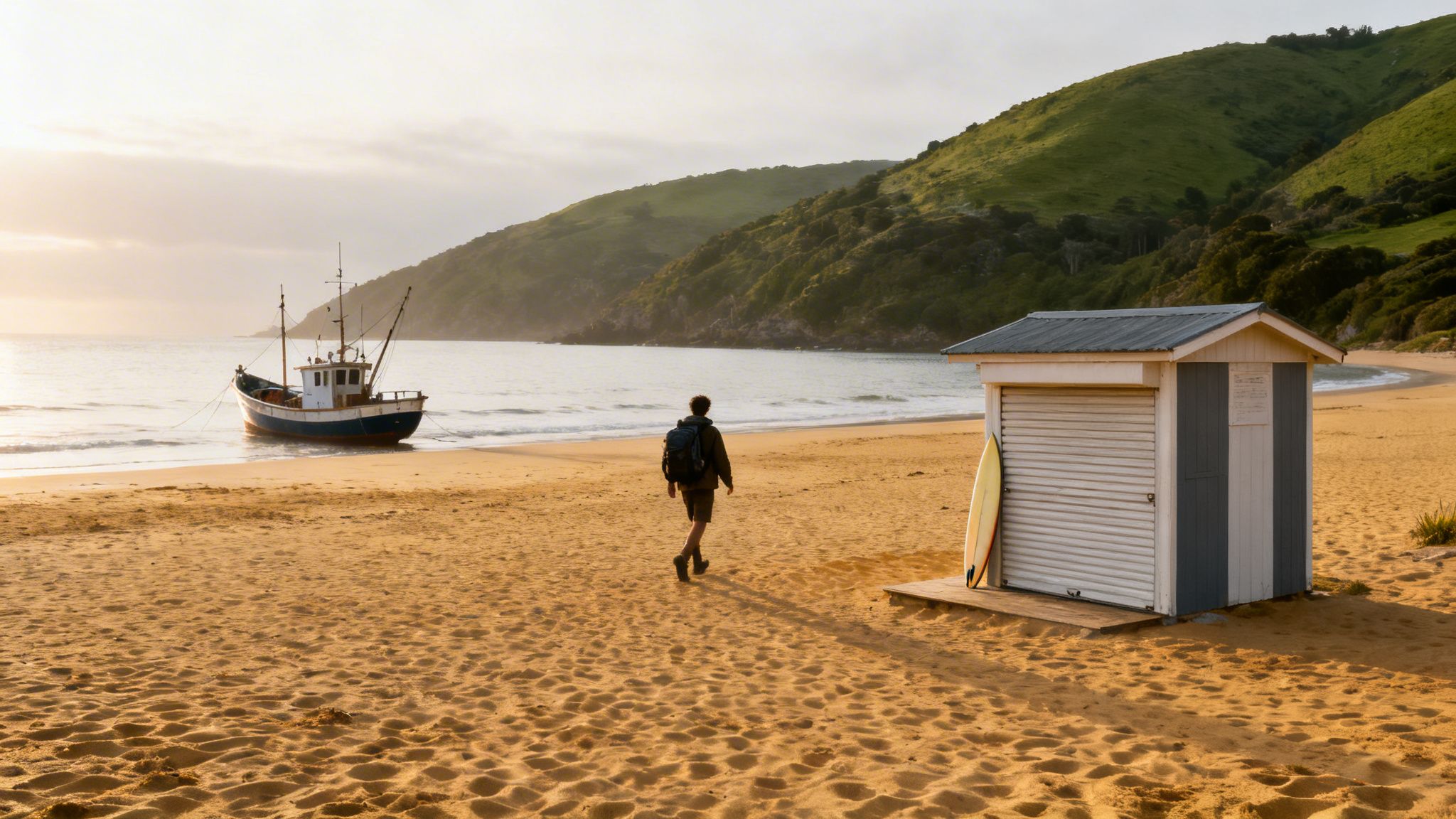
This counter-seasonal approach is a powerful tool for discovering off the beaten path destinations in plain sight. A destination's "rainy season" can translate to lush, vibrant landscapes, afternoon showers, and deep discounts, rather than all-day downpours. Think of Argentina and Chile in July, when their winter offers perfect hiking conditions in the north, or Southeast Asia from June to October, where the "green season" brings landscapes to life at 40-60% less cost. This is your chance to see a popular place without the popular rush.
How to Master Seasonal Inversion
- Book Smart: Secure flights 6-8 weeks in advance for the best off-season deals. Traveling mid-week can often shave an additional 20-30% off your airfare.
- Verify Weather Conditions: Use historical data on sites like Weather Underground to see what "rainy season" actually means. It might just be a brief, predictable afternoon shower.
- Check Local Calendars: An international off-season can be a local peak season for festivals and cultural events, offering you a unique and authentic experience.
- Embrace the "Green Season": Marketers often use the term "green season" instead of "rainy season." Searching for this term can reveal promotions and highlight the beauty of the landscape during this time.
- Plan for Rain Days: Build flexible activities into your itinerary. A rainy afternoon is a perfect excuse to take a cooking class, explore a local market, or visit a museum. Budget travelers can find great value this way.
4. Post-Crisis or Recently-Reopened Destinations
Visiting a destination as it recovers from a crisis or reopens after a long closure is a powerful way to travel with purpose. These places, emerging from political shifts, natural disasters, or global events, offer a unique window into a community's resilience. For travelers, it means experiencing a destination with fewer crowds, often at a significant discount, and receiving a genuinely warm welcome from locals who appreciate the support. It is a chance to see a place in a state of renewal and contribute directly to its economic recovery.
This approach to travel is one of the most impactful ways to find off the beaten path destinations because tourism infrastructure is often just re-emerging, focused on local enterprise. Consider Puerto Rico’s resurgence after Hurricane Maria, where revitalized beaches and new boutique hotels welcomed travelers back with open arms. Similarly, Bali’s post-pandemic reopening saw a return to its serene roots with heavily discounted villas and a focus on wellness, while Christchurch, New Zealand, reinvented its city center with creative and resilient urban design after its 2011 earthquake.
How to Travel Responsibly to Recovering Areas
- Check Official Sources: Always consult official government tourism board websites for the most current safety declarations and travel advisories.
- Seek Recent Information: Read travel blogs and articles published within the last 3-6 months. Older content will not reflect the current situation on the ground.
- Support Local Businesses: Make a conscious effort to spend your money at locally-owned guesthouses, restaurants, and tour operators rather than large international chains.
- Get Comprehensive Insurance: Purchase travel insurance that specifically includes coverage for disruptions related to the area’s recent history.
- Engage with Humility: Be mindful that you are a guest in a community that has been through a difficult time. Always ask for permission before photographing sensitive areas and listen with respect.
- Volunteer with Vetted Groups: If you wish to help, connect with established, reputable organizations like those recommended by Responsible Travel to ensure your efforts are genuinely beneficial.
5. Urban Alternative Neighborhoods
Step just a few subway stops away from the tourist-choked city center and discover a world where the real city lives and breathes. Urban alternative neighborhoods are residential areas in major metropolises that offer an authentic glimpse into daily life, far from the inflated prices and commercialized experiences of central tourist zones. This approach is about trading guidebook-featured districts for the vibrant, lived-in communities where locals dine, shop, and connect.
Choosing these areas is one of the most direct ways to find off the beaten path destinations right within a major city. Instead of battling crowds in Barcelona's Gothic Quarter, you can sip coffee with artists in Gràcia. In Bangkok, you can swap the backpacker scene of Khao San Road for the trendy, local-favored cafes of Ari. Other examples include staying in Berlin's Kreuzberg instead of Mitte, or exploring the residential side of San Telmo in Buenos Aires instead of just the tourist market.
How to Find Your Urban Haven
- Map It Out: Use Google Maps to identify neighborhoods with good transit links but fewer "Top Sights" icons. Look for clusters of local businesses like bakeries, small parks, and laundromats.
- Filter Your Search: When booking on platforms like Airbnb, filter by neighborhood and read the host-written guides to find areas described as "local favorites" or "bohemian."
- Follow Local Bloggers: Seek out alternative travel blogs or street photography communities that focus on specific cities. They often highlight the most authentic and visually interesting areas.
- Join a Community Group: Find neighborhood-specific Facebook groups before your trip. Ask for recommendations on the best local restaurants, markets, and hidden spots directly from the people who live there.
- Go Tourist-Free for a Day: Dedicate at least one full day a week to exploring only your immediate neighborhood. Visit the morning market, use the local library, or simply people-watch from a park bench.
- Live Like a Local: Use the city’s transit card, like an Oyster card in London, to blend in with commuters. This small act helps shift your mindset from tourist to temporary resident. For those exploring Europe, this local-first approach can be applied even in smaller cities, and researching the most charming towns in Italy can reveal similar opportunities on a smaller scale.
6. Visa-Free Passport Advantage Routes
Imagine crafting a multi-country adventure where borders feel more like welcome mats than barriers. Visa-free passport advantage routes are strategically planned journeys that use your passport’s visa-free access to hop between countries without the cost, delays, or bureaucracy of applying for visas. This approach turns your passport into a key, unlocking seamless, long-term travel across entire regions, letting you focus on the experience instead of the paperwork.
This method helps you discover off the beaten path destinations by making it easy to explore lesser-known neighbors of popular countries. Instead of being anchored by visa restrictions, you have the freedom to follow your curiosity. Consider a U.S. passport holder exploring Central America from Guatemala to Costa Rica, or an Australian traveler island-hopping through Southeast Asia. These routes are built on freedom of movement, allowing for spontaneous detours and deeper regional immersion.
How to Plan Your Route
- Verify Your Access: Use resources like the Henley Passport Index or VisaHQ to get a clear picture of which countries you can enter visa-free and for how long.
- Double-Check Official Sources: Always confirm entry requirements on official embassy or consulate websites 4-8 weeks before your trip, as policies can change unexpectedly.
- Plan Your Longest Stays: Start your journey in a country that offers the longest visa-free period, like 90 days, to give yourself a stable base before moving on.
- Use Real-Time Tools: Websites like the IATA Travel Centre provide up-to-the-minute information on travel document requirements, ensuring you don’t face any surprises at the border.
- Keep Digital Backups: Maintain cloud-based copies of your passport, travel insurance, and any necessary health records. This can be a lifesaver if your documents are lost or stolen. For expert insights on passport optimization, Nomad Capitalist offers deep dives into maximizing your travel freedom.
7. Festival and Event-Based Travel Timing
Imagine stepping into a destination not as a spectator, but as a participant in its most vibrant traditions. Festival and event-based travel timing is a powerful strategy for experiencing a culture at its peak. Instead of simply visiting a place, you align your trip with a local festival, harvest, or cultural celebration. This approach transforms a standard vacation into a deeply immersive event, allowing you to connect with the genuine heart and soul of a community during its most expressive moments.
This method reveals true off the beaten path destinations by shifting your focus from a location to an experience. Instead of choosing a city, you choose a celebration. Think of celebrating Día de Muertos in a small town in Oaxaca, Mexico, far from the commercialized events; joining a local wine harvest in a Spanish village during September; or finding a regional German town with its own authentic alternative to the massive Oktoberfest crowds. These moments are fleeting, authentic, and unforgettable.
How to Time Your Travel for Events
- Book Strategically: Secure accommodation for the days immediately following a major festival. Prices can drop by 30-50%, yet the celebratory atmosphere often lingers.
- Go Hyper-Local: Use local language search terms (e.g., "fiestas populares en Andalucía" instead of "festivals in Spain") to discover regional events that aren't marketed to international tourists.
- Join the Community: Find festival-specific Facebook groups a few months in advance. They are excellent sources for logistical advice, carpooling, and accommodation tips from locals and past attendees.
- Volunteer for Access: Contact festival organizers about volunteer opportunities. This can often lead to free entry, accommodation, and an unparalleled behind-the-scenes experience.
- Stay Nearby, Not On-Site: During massive events like the Venice Biennale, stay in a nearby town like Padua or Treviso. You'll enjoy equal authenticity and avoid the inflated prices and crowds.
8. Responsible Wildlife and Nature Sanctuaries
Step away from mass tourism and into the heart of conservation by visiting responsible wildlife and nature sanctuaries. These are not zoos or tourist traps but dedicated havens where animal welfare and environmental protection come first. Instead of exploitative entertainment like animal riding, these centers focus on rehabilitation, research-led education, and genuine conservation, offering a chance to observe magnificent creatures in an ethical, natural setting.

Choosing these places is one of the most powerful ways to support off the beaten path destinations where local communities and ecosystems benefit directly. Think of the Elephant Nature Park in Thailand, which champions sanctuary-based education over riding, or the Borneo Rainforest Lodge in Malaysia, where tourism funds orangutan rehabilitation. These experiences replace a fleeting thrill with a profound connection to the natural world and the people working to protect it.
How to Find Ethical Sanctuaries
- Verify Credentials: Before booking, check for accreditations from organizations like the Global Federation of Animal Sanctuaries (GFAS) or review guidelines from World Animal Protection.
- Ask the Right Questions: Contact the facility and ask directly: Is there any animal riding? Do you have a no-breeding policy? Do you employ and support the local community?
- Budget for Impact: Expect to pay 15-20% more than you would for unethical alternatives. This premium directly funds conservation, animal care, and community initiatives.
- Volunteer Your Time: Many sanctuaries offer volunteer programs that provide deep immersion at a lower cost, often with discounts of 50-70% for meaningful, hands-on engagement.
- Dig into the Details: Understanding the principles behind these choices is key. To get started, you can explore the basics of sustainable tourism practices to make more informed decisions on your journey.
9. Digital Nomad Hub Second Waves
The first wave of digital nomads flocked to hubs like Bali, Chiang Mai, and Lisbon, creating vibrant communities but also driving up prices and diluting local culture. Now, a "second wave" is emerging, where remote workers seek out less-saturated cities that offer the same benefits-affordability, community, and infrastructure-but with a more authentic, pioneering spirit. These destinations are true off the beaten path destinations for the modern remote worker.
These second-tier hubs are where you find the next great community. Instead of heading to the crowded beaches of Canggu in Bali, nomads are discovering the quieter jungle culture of Ubud or the mountain tranquility of Chiang Rai in Thailand. In Colombia, neighborhoods like Laureles in Medellín offer a more local feel than the tourist-heavy El Poblado. Similarly, coastal Da Nang in Vietnam is becoming a popular alternative to the bustling streets of Hanoi or Ho Chi Minh City, providing a perfect balance of work and wellness.
How to Ride the Second Wave
- Research Emerging Hubs: Use platforms like Nomad List and sort by newer or "fast-growing" cities. Read forums and join dedicated Facebook groups for these spots to get on-the-ground insights.
- Test the Waters: Plan a 4-8 week stay before committing long-term. This gives you enough time to check internet speeds, find your favorite coworking space, and see if the community fits your vibe.
- Be a Pioneer: Second-wave cities may have fewer established resources. Embrace a self-sufficient mindset, be prepared to solve small challenges, and enjoy the reward of helping to shape a new community.
- Connect Locally: Look beyond the expat bubble and engage with the local startup and entrepreneur scenes. These communities are often English-speaking and offer a fantastic way to integrate.
- Check the Infrastructure: Before you book, verify internet quality through user-reported data on sites like Speedtest Global Index. Reach out to coworking spaces directly to ask about their community and reliability. To explore more options, check out this guide to top-tier digital nomad destinations for comparison.
10. Homestay and Homestay Network Immersion
Imagine waking up to the smell of homemade tortillas in a Mexican kitchen or learning the delicate art of a Japanese tea ceremony from your host family. Homestay immersion moves beyond typical tourism, placing you directly into the daily life of a local family. It is an exchange where you trade the anonymity of a hotel for a spare room, shared meals, and genuine human connection. This model offers an unparalleled depth of cultural understanding, turning your trip into a living education.
This approach is one of the most powerful ways to discover off the beaten path destinations because your experience is defined by people, not just places. You gain access to a neighborhood’s hidden gems through local eyes, from the best market stalls in India to the liveliest dance halls in Brazil. It is about sharing stories over dinner, participating in family celebrations, and building friendships that last long after you leave, making it one of the most authentic travel experiences possible.
How to Embrace Homestay Immersion
- Vet Your Hosts: Use trusted platforms like Homestay.com or vetted cultural exchange organizations. Always read reviews and communicate with potential hosts before booking to ensure a good fit.
- Set Clear Expectations: Before you arrive, have an open conversation about dietary needs, your daily schedule, and household rules. This prevents misunderstandings and makes for a smoother stay.
- Bring a Thoughtful Gift: A small, simple gift from your home country is a wonderful gesture of appreciation and an excellent conversation starter.
- Learn Basic Phrases: Arriving with 20-30 essential words and phrases in the local language shows respect and a genuine desire to connect with your host family.
- Participate Actively: Offer to help with daily chores like cooking or shopping. This is not about being a guest but about becoming a temporary member of the family.
- Be Flexible and Open: Embrace the family’s daily routines, even if they differ from your own. Flexibility is the key to a rewarding homestay experience. A stay of at least two to four weeks is ideal for building a genuine bond.
Off-the-Beaten-Path Destinations — 10-Point Comparison
| Strategy | Implementation complexity 🔄 | Resource requirements ⚡ | Expected outcomes 📊 | Key advantages ⭐ | Ideal use cases | Quick tip 💡 |
|---|---|---|---|---|---|---|
| Slow Travel Micro-Destinations | Moderate — multi-week commitments, some language prep | Low–Moderate — affordable monthly rents, time-intensive | Deep cultural immersion, lower costs; ⭐⭐⭐⭐ | Authentic local ties and significant savings | Remote workers, long-term budget travelers, cultural immersion seekers | Book monthly for discounts; use Workaway/WWOOF |
| Underrated Neighboring Countries Strategy | Moderate — research borders, transport, visas | Low — cheaper daily costs but may need overland travel | Comparable attractions at much lower cost; ⭐⭐⭐⭐ | High value for money, fewer crowds | Budget backpackers, overland adventurers, photographers | Use Skyscanner 'Everywhere'; check recent visa rules |
| Seasonally Inverted Destinations | Low–Moderate — season knowledge and flexible dates | Low–Moderate — off-season flight deals, flexible schedule | Off-season pricing, better weather in many cases; ⭐⭐⭐⭐ | Big discounts and unique seasonal displays | Flexible travelers, nature photographers, remote workers | Book 6–8 weeks ahead; verify historical weather data |
| Post-Crisis / Recently-Reopened Destinations | High — ethical research, safety/insurance checks | Moderate — variable infrastructure and insurance needs | Exceptional pricing and meaningful local impact; ⭐⭐⭐⭐ | Support recovery, uncrowded authentic experiences | Ethically-minded travelers, volunteers, community-focused explorers | Check official tourism boards; buy comprehensive insurance |
| Urban Alternative Neighborhoods | Low — choose non-tourist residential areas via maps | Low — local prices, longer commutes to sights | Genuine urban living and cost savings; ⭐⭐⭐⭐ | Local prices, authentic daily life, better photography | Remote workers, photographers, solo travelers | Use Google Maps + transit stations to pick neighborhoods |
| Visa-Free Passport Advantage Routes | High — route planning tied to passport strength | Low (financial)–High (research/time) | Maximize destinations; save visa costs and time; ⭐⭐⭐⭐ | Eliminates visa fees/wait times, enables spontaneous travel | Long-term travelers, digital nomads, strong-passport holders | Verify with Henley Passport Index and embassy sites |
| Festival & Event-Based Travel Timing | Moderate — align dates, possible advance bookings | Low–Moderate — timing may raise short-term costs | Authentic cultural access, post-event discounts; ⭐⭐⭐⭐ | Cultural immersion, unique photos, volunteer opportunities | Cultural travelers, photographers, festival-goers | Arrive 3–4 days after main dates for discounts; plan months ahead |
| Responsible Wildlife & Nature Sanctuaries | Moderate — vet operators and book in advance | Moderate–High — higher fees, possible physical effort | Ethical conservation support and authentic sightings; ⭐⭐⭐⭐ | Direct conservation impact, educational experiences | Conservation-minded travelers, nature photographers | Verify credentials (World Animal Protection), expect higher costs |
| Digital Nomad Hub Second Waves | Moderate — research emerging cities and coworking options | Moderate — stable internet, coworking/coliving costs | Lower costs with growing infrastructure; ⭐⭐⭐ | Better value than primary hubs, authentic local life | Remote workers, long-term nomads, explorers of authenticity | Check Nomad List and Speedtest before committing |
| Homestay & Homestay Network Immersion | Moderate — vet family, set expectations and boundaries | Low — often meals included, social energy required | Rapid language learning and deep cultural integration; ⭐⭐⭐⭐ | Direct support to families, authentic daily routines | Language learners, students, solo cultural travelers | Use vetted platforms, discuss dietary and household rules beforehand |
Your Journey to the Unseen Starts Now
As we've journeyed through these strategies and destinations, one core truth becomes clear: finding "off the beaten path destinations" is less about geography and more about a shift in perspective. It's the conscious decision to step away from the crowd, to trade the familiar for the fascinating, and to seek genuine connection over curated perfection. The world’s most rewarding travel stories aren't found in guidebooks; they are written by those who dare to look beyond the highlighted route.
This isn't about rejecting popular places entirely. It's about enriching your travels by applying a new lens. It’s about recognizing that for every overcrowded city center, there's an alternative neighborhood brimming with local life, and for every famous national park, there's a smaller, community-run sanctuary doing incredible conservation work. True exploration is an art of intention.
From Ideas to Itinerary: Your Next Steps
The difference between a travel daydream and a real adventure is a single, actionable step. Don't let this inspiration fade. Here’s how you can turn these concepts into your next great journey:
Choose One Strategy to Start: Feeling overwhelmed? Pick just one of the ten strategies we covered. Perhaps it's the Underrated Neighboring Countries Strategy. Look at a country you love and then research its less-visited neighbor. What does it offer that's different? How do the costs compare? This simple exercise can reveal incredible opportunities.
Redefine Your 'Why': Before you book a flight, ask yourself what you truly want from this trip. Is it solitude? Cultural immersion? A chance to contribute? Answering this question honestly will guide you away from generic "top 10" lists and toward places that align with your personal goals, like a volunteer-focused trip or a deep dive into a homestay network.
Start Your 'Off-Path' Research: Open a new tab and start digging. Instead of searching for "things to do in [Country X]," try more specific queries inspired by this article:
- "Digital nomad hubs outside of [Popular City]"
- "Community-based ecotourism in [Region]"
- "Visa-free travel routes for [Your Passport] in South America"
The quality of your adventure is often determined by the quality of your questions. The deeper you dig, the more unique your path will become.
The True Value of Unconventional Travel
Venturing to off the beaten path destinations offers more than just a unique stamp in your passport or an impressive photo for your feed. It’s an investment in a more profound, responsible, and personal way of seeing the world. When you support a homestay in a rural village, you're not just a tourist; you're a participant in a local economy. When you choose an ethical wildlife sanctuary, your travel dollars directly fund conservation.
"The goal is to move from being a consumer of a place to a contributor and a guest. This mindset shift is the very heart of meaningful travel."
These experiences change us. They build resilience, foster empathy, and shatter our preconceived notions. You learn to communicate without a shared language, to find beauty in imperfection, and to trust in the kindness of strangers. These are the souvenirs that last a lifetime, long after the trinkets have been forgotten. The world is a vast, complex, and beautiful place, and the most vibrant parts are often hidden just out of sight. Now you have the framework to find them. Your journey to the unseen truly does start now. Go find your story.
Ready to dive deeper and connect with a community of travelers who value authentic experiences? At Travel Talk Today, we provide the resources, expert guides, and community support to help you plan these kinds of meaningful adventures. Visit Travel Talk Today to find your next off the beaten path destination with confidence.