You're at a station in Europe with a small backpack, a coffee that cost less than airport water, and a full day ahead of you. The choice is simple. Rush through security and spend the day in transit, or board a train and let the journey do some of the work of the trip itself.
That trade-off is why scenic rail matters. On the right route, the hours between cities are not filler. You watch mountain passes build slowly, coastal stretches open up carriage by carriage, and village life appear without the usual blur of highways and terminals. For travelers trying to keep costs under control, reduce flight-heavy itineraries, and travel at a slower pace, trains solve more than one problem at once.
This guide covers famous rides, but its core purpose is to show how to use them well. Some trains are worth a calculated splurge. Others are better as short segments booked on regular regional services rather than premium panoramic cars. Solo travelers also have different priorities than couples or families. Daylight arrivals, easy station transfers, and routes with frequent service often matter as much as the view.
If you are still deciding whether rail fits your itinerary, this guide to the best ways to travel Europe helps frame where trains make the most sense.
Scenic rail tourism is no longer a niche corner of the market. Future Market Insights notes in its Europe rail tourism sector report that demand for rail travel with a tourism focus is growing across Europe. In practice, that means fuller peak-season departures, sharper price differences between booking early and late, and more premium products designed to tempt travelers into spending more than they need to.
The routes below reward thoughtful planning and smart booking. Sometimes the best-value move is to ride the headline train once and accept the premium. Sometimes the smarter call is to skip the branded experience, bring your own lunch, and take the same line on a standard service for far less. That is the difference between a pretty train ride and a trip that feels well built.
1. Glacier Express (Switzerland)
You board in a tidy Swiss station with coffee in hand, expecting a beautiful train ride. By the end of the booking process, you may also be looking at seat reservation fees, a meal you do not need, and a day that eats a large share of your trip budget. The Glacier Express earns its reputation, but it rewards selective spending more than automatic upgrades.
The route between Zermatt and St. Moritz delivers the Swiss postcard in motion. Wide valley floors give way to high passes, small villages, timber chalets, and long curves that let you see the train threading through the surroundings ahead. It is a polished experience, but the main choice is not whether the scenery is good. It is how much you should pay to experience it well.
My practical rule is simple. Decide first whether you want the full branded journey or the best section of it. Many travelers get most of the visual payoff from riding a shorter segment on the same corridor and saving the rest of their budget for another Swiss route, an extra night in the Alps, or a better-located hotel.
How to make it worth the price
A few decisions make a noticeable difference on this train:
- Ride in shoulder season if you can: You usually get a quieter carriage, fewer reflections from neighboring phones, and an easier time booking the seats you want.
- Bring food onboard: Swiss train catering is pleasant, but a supermarket lunch bought before departure keeps this route from becoming an all-day premium spend.
- Book for the side and time that match your priorities: If photos matter, window glare and sun angle matter almost as much as the mountain views.
- Use the route inside a wider rail plan: If Switzerland is only one part of your itinerary, this guide to the best ways to travel Europe by rail and budget will help you decide where a premium scenic train fits and where standard services make more sense.
Practical rule: Pay for the route once. Skip the extras unless they improve your day in a clear way.
For solo travelers, this is one of the easier headline rail experiences in Europe. Stations are orderly, connections are clear, and the passenger mix is broad enough that traveling alone does not feel unusual. The main trade-off is less about safety than stamina. It is a long sitting day, so pack light, keep valuables close when you visit the restroom or dining car, and avoid tight same-day onward connections if you arrive tired.
The sustainable choice here is straightforward too. If you already plan to cross Switzerland, the Glacier Express can replace a flight or long car transfer while turning the journey itself into the highlight. Slow travel only works, though, if it stays financially realistic. On this route, that usually means choosing one premium Alpine ride with intention, not stacking every famous Swiss train onto the same week.
2. West Highland Line (Scotland)
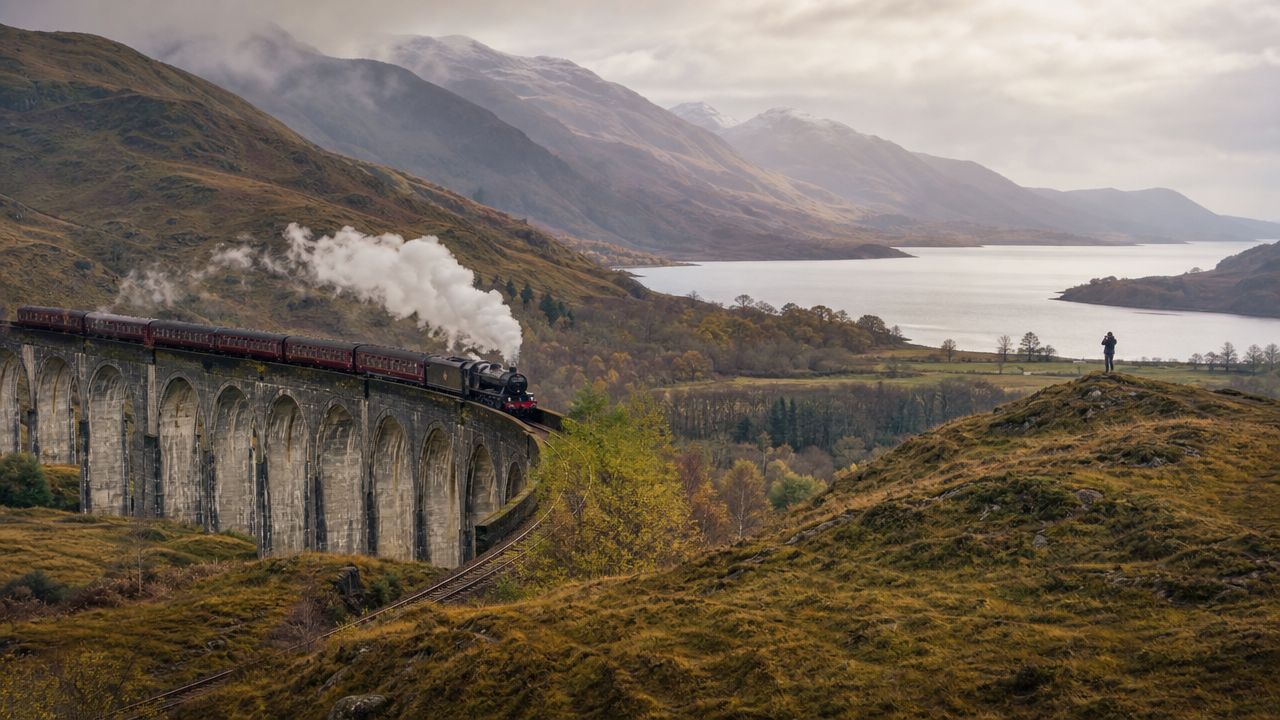
If Switzerland feels polished, the West Highland Line feels elemental. The route from Glasgow toward Mallaig moves through a version of Scotland that looks raw even in good weather. Moorland, lochs, scattered cottages, and long grey distances do most of the work. You don't ride this line for luxury. You ride it because the Highlands look dramatic even when the clouds sit low.
That's part of why it works so well for budget-conscious travelers. You can take a standard service train and still get one of the strongest scenery-to-cost ratios in Europe. The premium steam option gets the headlines, but the regular train is often the smarter move unless the heritage experience itself is your goal.
Best strategy for budget and views
On this line, flexibility matters more than upgrades. If the weather is decent, break the journey rather than treating it as one straight transfer. Glenfinnan is the obvious stop, but that doesn't make it a tourist trap. It's obvious because it's excellent.
A few choices usually pay off:
- Choose the standard train first: You still get the Highland scenery without turning one journey into your whole Scotland budget.
- Base in Fort William if possible: It's often a more practical overnight stop than Mallaig.
- Carry rain gear no matter the forecast: Scottish weather changes fast enough that optimism isn't a strategy.
Solo female travelers usually find this route comfortable because it's public, visible, and well-trodden by hikers, rail fans, and day-trippers. The main caution isn't personal safety so much as logistics. Remote stations can feel quiet, and onward transport can be thin if you miss a connection or linger too long for photos.
If you're debating whether to stop or stay on board, stop. The West Highland Line rewards people who step off and let the landscape breathe for a while.
3. Bernina Express (Switzerland-Italy)
You board in Switzerland with glacier views outside the window and step off in Tirano in time for an Italian dinner that costs far less than one in St. Moritz. That shift is the main appeal of the Bernina Express. It gives you a high-alpine rail day and a practical border crossing in one move.
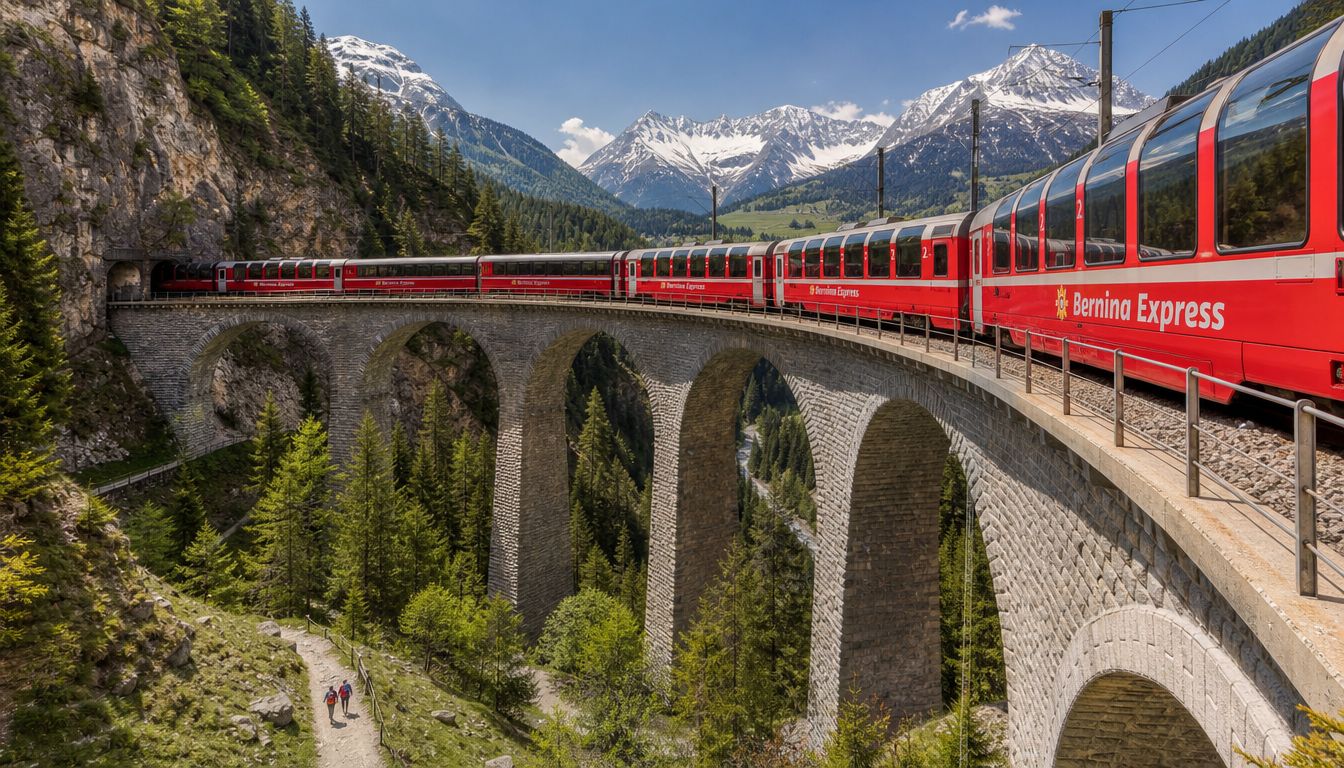
What makes the route memorable is not just the scenery but the way the railway handles it. The train climbs through serious mountain country, threads through spirals and viaducts, and then eases into a softer southern finish. For travelers who like train travel with a clear sense of progress, this line delivers. You feel the geography change hour by hour.
How to ride it smartly
The expensive mistake is treating the Bernina Express as a luxury splurge that begins and ends in Swiss resort towns. A better value often comes from using the route as part of a broader, slower trip. Ride south, stay in Tirano, and continue through Italy after a night or two. That approach fits well with a more practical slow travel style, because the journey becomes part of the trip instead of a pricey day excursion.
A few choices tend to pay off:
- Price the regular regional trains against the named Bernina Express: The route is the star, not the branding. Standard services on the same line can save money and still give you the key views.
- Take an early departure if photos matter: Morning light is usually kinder to the big mountain sections, and you get more margin if weather or connections shift.
- Sleep in Tirano or another Italian stop after the ride: This is often where the budget resets. Hotel and dinner costs usually drop once you cross the border.
- Bring your own food: A bakery stop in Chur or a grocery run before boarding gives you a better lunch for less.
Solo travelers usually do well here. It is popular, easy to understand, and busy enough that you are rarely isolated. The main caution is logistical rather than personal. Seats can fill, panoramic cars attract distracted passengers, and station stops are short, so keep your bag close and know your platform before the train arrives.
One trade-off is worth being honest about. The panoramic Bernina Express carriages are comfortable and easy, but the windows can create more reflections for photography. Travelers who care more about cost control and cleaner shots often prefer the regular trains on the same route.
4. Bergen Railway (Norway)
Norway does scenery on a big scale, and the Bergen Railway has the range to prove it. You leave one city, cross hard mountain country, and arrive at another city that feels shaped by water and weather. It isn't a gimmick line built for tourists. That's why it works. You're using a serious transport link that also happens to be beautiful.
This route makes the most sense for travelers who want one long rail day that can anchor a broader Norway itinerary. If you're trying to see fjords, mountains, and smaller settlements without renting a car, this line is one of your strongest frameworks.
Where the value actually is
The expensive mistake is assuming every Norwegian rail experience needs to be bought as a neat package. It doesn't. The stronger play is to book the main line thoughtfully, then decide separately whether the Flåm branch belongs in your plan.
The route also fits naturally with a slower style of travel. If you're building an itinerary around fewer stops and deeper stays, this is the kind of journey that supports the whole philosophy of slow travel in practical terms.
What tends to work:
- Book ahead if your dates are fixed: Norway rewards travelers who don't leave major routes to the last minute.
- Pack substantial snacks: Train food is convenient, but grocery-store planning gives you more freedom and less friction.
- Consider a stop at Myrdal rather than racing through: It opens the door to adding Flåm on your terms.
The line is especially good for solo travelers who don't want to drive in unfamiliar conditions. Stations are manageable, signage is generally clear, and the train itself removes the pressure of navigating mountain roads while trying to admire the scenery. The trade-off is weather. Norway's beauty often arrives wrapped in cloud, rain, or mist. Accept that early, and you'll enjoy the journey more.
5. Jacobite Steam Train / Fort William to Mallaig (Scotland)
The Jacobite is the route people book when they want rail travel to feel cinematic. Steam, polished carriages, vintage atmosphere, and Highland scenery all come bundled together. If the West Highland Line is the practical choice, the Jacobite is the indulgent one.
That doesn't mean it's a bad value. It means you should book it for the right reason. If you care about heritage railways, period atmosphere, or the simple pleasure of hearing a steam locomotive work through the Highlands, this can be your one deliberate splurge. If you only want the view, the regular service often gives you enough.
When the splurge makes sense
The Jacobite works best when you strip away the extras and keep the core experience. A basic ticket plus your own picnic usually beats paying for dining packages unless the onboard meal is part of the treat you're after.
A few guidelines help keep the romance from becoming regret:
- Book well ahead for popular periods: This train has a specific audience, and that audience plans early.
- Arrive early for platform photos: You'll get a calmer look at the locomotive before the boarding rush starts.
- Pair it with standard regional trains elsewhere: That contrast helps the steam segment feel special rather than obligatory.
Worth paying for: the heritage atmosphere.
Usually not worth paying for: every premium add-on attached to it.
For solo travelers, the Jacobite feels easy. Staff are used to excited visitors, carriages are social without being pushy, and the route is famous enough that you're unlikely to feel isolated. The main caution is expectation management. Some travelers expect a private movie set. What they get is a very popular heritage service. Go in wanting a memorable rail day, not a flawless fantasy, and you'll have a better time.
6. Rhaetian Railway (Graubünden, Switzerland)
The Rhaetian Railway is for travelers who love the Swiss mountain experience but don't want all of it filtered through one headline train. This network in Graubünden gives you more flexibility, more local texture, and more chances to shape your own route. It feels less like buying a postcard and more like wandering through the system that produced the postcard.
That matters if you care about pacing. Some travelers don't want one marquee ride followed by a scramble to the next country. They want a cluster of scenic days, shorter hops, village stays, and enough freedom to get off when a valley or viaduct catches their eye.
Why independent travelers often prefer it
The Rhaetian network lets you build around your interests. If you like architecture and railway engineering, some sections satisfy that better than the famous point-to-point services. If you like hiking, this is one of the easiest rail regions in Europe to combine with short walks and overnight stops.
A practical approach looks like this:
- Use regional flexibility to your advantage: Move between lines instead of treating one named train as the whole experience.
- Stay in smaller mountain towns: They often feel calmer at night and can turn a transit day into a proper Alpine stay.
- Carry proper shoes: Some of the best views aren't at the platform. They're a short walk away.
For photographers, this network is gold because it encourages repetition. You can revisit a section under different light instead of hoping one pass gives you everything. For solo travelers, that also means less pressure. You don't need to “get it all right” in one expensive booking. You can move, pause, and adjust.
7. Cinque Terre Railway (Italy)
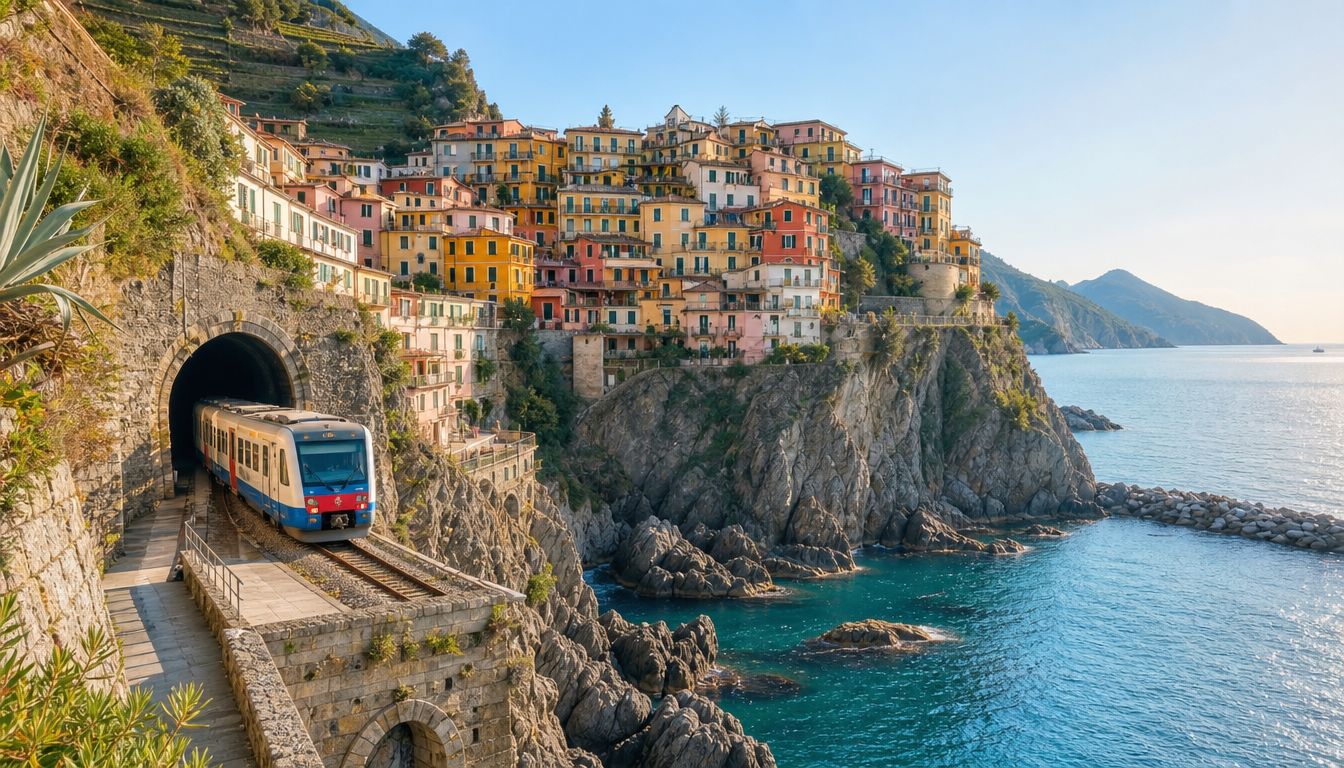
Not every great scenic rail journey needs to be long. The Cinque Terre Railway is short, practical, and relentlessly photogenic. It threads between villages clinging to the Ligurian coast, with tunnels, sea views, station arrivals that drop you close to the action, and enough frequency to keep the day moving.
This is one of the most accessible scenic train routes in Europe for travelers who want Mediterranean beauty without a luxury budget. According to the fare ranges cited in this cinematic travel video overview, the Cinque Terre Railway typically costs between $3 and $10 per single ride, which is exactly why it works so well for backpackers and short-break travelers. It lets you keep costs controlled while still moving through one of Italy's most visually rewarding coastal regions.
The budget move most travelers miss
Don't sleep in the villages unless that's the splurge you've chosen on purpose. Base in La Spezia or another practical nearby stop, then ride in early. You'll save money, get easier food options, and avoid dragging luggage through steep lanes and crowded platforms.
A good day here usually follows a simple pattern:
- Start early: The villages are far better before the heaviest day-tripper wave.
- Mix train rides with walking: A full rail-only day can feel rushed and repetitive.
- Use the area as part of a larger Italy trip: It pairs well with a broader route through some of the best cities to visit in Italy.
Solo female travelers often rate Cinque Terre highly because the villages are lively, compact, and used to independent visitors. The main challenge is crowd density, not threat level. Keep your phone secure at station bottlenecks, travel with water, and don't underestimate the fatigue that comes from heat, stairs, and constant stop-start sightseeing.
8. Flåm Railway (Flåmsbana, Norway)
The Flåm Railway is short enough to fit into a day and dramatic enough to dominate it. Waterfalls, steep mountain walls, and a descent that feels improbably engineered make it one of the easiest Norway highlights to understand immediately. Even travelers who arrive skeptical usually step off impressed.
The route also sits in a useful middle ground. It's famous, but it's still practical. If you pair it with the Bergen line or nearby ferry travel, you can build a full day that feels expansive rather than overly curated.
How to keep Flåm from becoming a conveyor belt experience
Flåm gets busy because it's easy to package and easy to sell. The trick is to create some breathing room around the train itself. Don't treat it like a single photo opportunity sandwiched between crowds. Give yourself time in Myrdal or Flåm, and the whole excursion feels less transactional.
What usually improves the experience:
- Take an early departure if you can: Earlier trains often feel calmer.
- Pack food before you board: Buying provisions in a regular shop gives you better value and more choice.
- Pair rail with water or walking: A ferry segment or local hike makes the day feel complete.
This route is excellent for solo travelers because the logistics are simple and the scenery is communal. People talk, point, and share windows without much awkwardness. The downside is that the train's popularity can make it feel crowded at peak times. If you prefer quiet observation over collective excitement, aim for shoulder season and avoid the middle of the day.
9. Gotthard Panorama Express (Switzerland)
Some scenic routes impress by going higher and wilder. The Gotthard Panorama Express works differently. It layers experiences. Lake travel, mountain rail, and a gradual shift in scenery create a day that feels both scenic and civilised. This isn't the route for adrenaline. It's the route for travelers who like transitions, comfort, and the feeling of moving through old transport geography rather than merely across it.
It's especially strong if you want one of your travel days to function as both sightseeing and recovery. You're moving, but you're not rushing. You're seeing a lot, but not in a way that leaves you exhausted by evening.
Who gets the most from it
This route is best for travelers already committed to Switzerland rather than people dropping in for a single famous train. It rewards pass-holders, slower itineraries, and anyone who likes elegant logistics.
A few practical notes matter:
- Bring your own lunch: Swiss station groceries can turn this into a very pleasant picnic-style journey.
- Sit strategically: On scenic lines, side choice can matter more than class.
- Use it on a lower-energy day: The route shines when you let it unfold instead of trying to cram another major activity around it.
For solo travelers, this is one of the calmer premium-style scenic days in Europe. The boat portion breaks up the rhythm nicely, and there's less of the “everyone is chasing the same photo” mood you sometimes get on more famous mountain trains. If your ideal rail day includes quiet observation, readable logistics, and scenery that changes in stages, this one delivers.
10. Narrow Gauge Railways of Eastern Europe (Romania & Bulgaria)
If the Swiss and Scottish classics are the polished stars of scenic train routes in Europe, the narrow gauge railways of Eastern Europe are the rewarding side roads. They don't always have the same global branding, and that's part of the appeal. You get mountain scenery, heritage character, and a stronger sense that the railway still belongs to the region rather than to a tourism campaign.
These lines suit travelers who enjoy a little friction. Schedules may need double-checking. Stations may feel sparse. Information may be less polished. But the payoff is authenticity, lower overall travel costs, and the pleasure of finding something memorable without joining the same queue as everyone else.
The trade-off is real, and so is the value
You have to prepare better here than on Western Europe's flagship routes. Offline maps help. Printed or saved schedules help. A little language preparation helps a lot. But for travelers comfortable with that, these routes can become the most distinctive days of the whole trip.
A smart approach includes:
- Download everything in advance: Don't rely on station Wi-Fi or mobile signal in remote stretches.
- Carry cash: Smaller operators and rural stops can be inconsistent with cards.
- Build slack into your itinerary: Tight connections turn charmingly rustic into stressful very quickly.
These routes are also a strong fit for travelers who want to go beyond the standard circuit and explore hidden gems in Europe. Solo travelers can enjoy them safely, but the practical rule is simple. Plan more than you think you need to. Share your route, arrive before dark when possible, and don't assume the same level of tourist support you'd get in Switzerland or Norway.
Some of the best rail days in Europe happen on lines you've never seen on a poster.
Top 10 Scenic Train Routes in Europe, Comparison
| Route | 🔄 Implementation complexity | ⚡ Resource requirements | ⭐ Expected outcomes | 📊 Ideal use cases | 💡 Key advantages / tips |
|---|---|---|---|---|---|
| Glacier Express (Switzerland) | Moderate, long 8‑hr continuous route, advance booking needed | Medium‑High, CHF 39–279 (passes lower) | ⭐⭐⭐⭐, Panoramic Alpine vistas, UNESCO landscape | Bucket‑list scenic day trips, photography, multi‑class travelers | Panoramic windows, year‑round; book off‑season and use Swiss Travel Pass |
| West Highland Line (Scotland) | Low, regional service with simple logistics; steam option adds planning | Low, £15–30 standard; Jacobite steam higher (£40–65) | ⭐⭐⭐, Rugged Highland scenery and iconic viaducts | Budget scenic travel, flexible day trips, Harry Potter fans | Affordable rover tickets; alight at Glenfinnan for photos |
| Bernina Express (Switzerland–Italy) | Moderate, cross‑border coordination, popular seats | Medium, CHF ~49 standard; passes reduce fares | ⭐⭐⭐⭐, Dramatic viaducts, steep alpine descent | Route combining Alpine and Italian culture, photography groups | Panoramic windows standard; book mid‑week/morning for best light |
| Bergen Railway (Norway) | Moderate‑High, very long route, multi‑segment planning | Medium, kr200–800 (advance fares cheaper) | ⭐⭐⭐⭐, Fjords, mountains, waterfalls across long distance | Multi‑day Nordic itineraries, fjord access, hiking combos | Combine with Flåm branch; book 2–4 weeks ahead for best rates |
| Jacobite Steam Train (Fort William–Mallaig) | Low, short heritage route but seasonal & limited frequency | Medium, £40–65 basic; higher with dining | ⭐⭐⭐, Immersive heritage, iconic film‑linked experience | Heritage enthusiasts, Harry Potter tourists, single splurge | Unique steam experience; skip dining package to save money |
| Rhaetian Railway (Graubünden, Switzerland) | High, extensive network, best with multi‑day planning | Medium, CHF 10–50 single; Pass CHF 99–139 (7 days) | ⭐⭐⭐⭐, Multiple UNESCO sections, varied alpine engineering | Multi‑day scenic circuits, photography tours, rail enthusiasts | Graubünden Holiday Pass offers strong value; combine Albula & Bernina |
| Cinque Terre Railway (Italy) | Low, short coastal route, frequent transfers and tunnels | Low, €2–5 per trip; €14.50/day Card | ⭐⭐⭐, Coastal village vistas, convenient hiking access | Budget Mediterranean day trips, village immersion, slow travel | Cinque Terre Card for trains+hiking; base in La Spezia to save on lodging |
| Flåm Railway (Flåmsbana, Norway) | Low, short branch, simple logistics but very popular | Low–Medium, kr220–280 advance; double last‑minute | ⭐⭐⭐⭐, Steep gradients, waterfalls, UNESCO recognition | Short scenic day‑trips, photography, fjord combinations | Book early, take morning departures, combine with fjord ferry |
| Gotthard Panorama Express (Switzerland) | Moderate, combined train+boat coordination, seasonal boat ops | Medium‑High, CHF 110–130 full; CHF 75–90 with Swiss Pass | ⭐⭐⭐, Varied mountain‑to‑lake landscapes, historic route | Leisurely transport + sightseeing, historical interest tours | Best value with Swiss Travel Pass; bring own lunch to save costs |
| Narrow Gauge Railways (Romania & Bulgaria) | High, irregular schedules, more independent planning | Very Low, €5–15 single; €20–40 day passes | ⭐⭐⭐, Authentic heritage scenery, unique local encounters | Budget adventure travel, off‑beat railway photography | Low cost and authenticity; prepare offline maps, cash, flexible plans |
Your Journey Starts Now: Planning Your European Rail Adventure
The best scenic train routes in Europe don't all ask for the same kind of traveler. Some reward money. Some reward patience. Some reward the traveler who knows when to splurge and when to step back from the premium version of the same scenery. That's the key lesson. A great rail trip isn't about booking the most famous name on the map. It's about matching the route to your budget, pace, and tolerance for logistics.
If you want pure efficiency with spectacle, Switzerland remains hard to beat. Its rail culture is deep, and its scenic trains are built to make the window feel like part of the experience. If you want drama at a lower entry point, Scotland gives you huge atmosphere without requiring luxury spending. If you want a shorter coastal rail experience that still feels iconic, Cinque Terre is one of the easiest wins. And if you're the kind of traveler who enjoys earning the experience through a bit more planning, Eastern Europe's narrow gauge routes can be unforgettable.
Budgeting well starts with honesty. Ask yourself whether you want one headline journey or a full rail-based trip. If it's one headline journey, spend on the route that matters most to you and save elsewhere. Sleep outside the most famous stops. Shop before boarding. Travel midweek when you can. Keep restaurant cars for the routes where lingering over a meal is part of the point, not a default habit.
Timing matters just as much. Shoulder season usually gives you the best balance of scenery, breathing room, and manageable prices. You won't control the weather, especially in mountain regions, but you can avoid the densest crowds and the most inflated accommodation demand. On scenic routes, that often improves the experience more than any seat upgrade.
For solo travelers, especially solo women, rail remains one of Europe's strongest tools for independent travel. The major routes in this guide are visible, structured, and commonly used by other independent travelers. The practical safety habits are familiar. Keep devices secure at crowded stations, don't leave bags unattended while chasing photos, download key tickets and schedules in advance, and avoid arriving in small remote stops after dark if you haven't arranged onward transport. Confidence on rail usually comes from preparation, not bravado.
Sustainability also belongs in the conversation. Scenic rail works best when you stop treating destinations like trophies and start treating movement as part of the travel experience. That means fewer rushed hops, more overland transitions, and more nights in fewer places. It often creates a better trip anyway. You remember the changing scenery, the station cafés, the villages you almost skipped, and the conversations that only happen when you aren't sprinting for a gate.
Start with one route. Build around it carefully. Leave room for weather, for delays, for an extra stop that looks promising from the window. Europe's most memorable train journeys rarely reward rigid overplanning. They reward thoughtful planning, then a willingness to let the line carry you.
Travel Talk Today helps you turn scenic rail dreams into realistic itineraries with practical guides on budgeting, slow travel, solo safety, and smarter route planning. Explore more thoughtful travel advice at Travel Talk Today.