You're probably here because the usual Italy plan no longer feels enough. You've seen the city highlights, the postcard villages, the glossy infinity pools, and the perfectly plated pasta shots. What you want now is quieter. More grounded. More human. You want to wake up somewhere that smells of earth and citrus instead of diesel, where breakfast comes from the same land you can see from your window.
That's the pull of agritourism in Italy. It isn't just a place to sleep in the countryside. At its best, it's a way of stepping into the rhythm of rural Italian life. You hear tractors in the morning, not hotel carts in a hallway. Dinner isn't a themed “farm-to-table experience.” It's often the family's way of life, served to you with little fuss and a lot of pride.
For budget travelers, it can also be one of the smartest ways to experience Italy more fully. For solo travelers, especially women, it offers peace, beauty, and space. But that same remoteness can come with real logistical questions that many dreamy travel posts skip over. Can you get there without a car? Will your phone work? Who knows where you are if it doesn't?
This guide is for the traveler who wants the romance and the reality. If you're craving a slower, more rooted trip, you might also enjoy this look at slow travel in Italy.
Introduction Beyond the Postcard Perfect
My favorite mornings in the Italian countryside never began with a checklist. They began with small things. Shutters creaking open. Light falling across terracotta floors. A basket of bread left near the kitchen door. Somewhere outside, someone had already been working for hours.
That's the first shift agritourism in Italy asks of you. It moves you away from consuming Italy and into noticing it. You don't just pass through vineyards, olive groves, orchards, and mountain pastures. You stay among them. You eat from them. You start to understand that the land isn't decoration. It's livelihood.
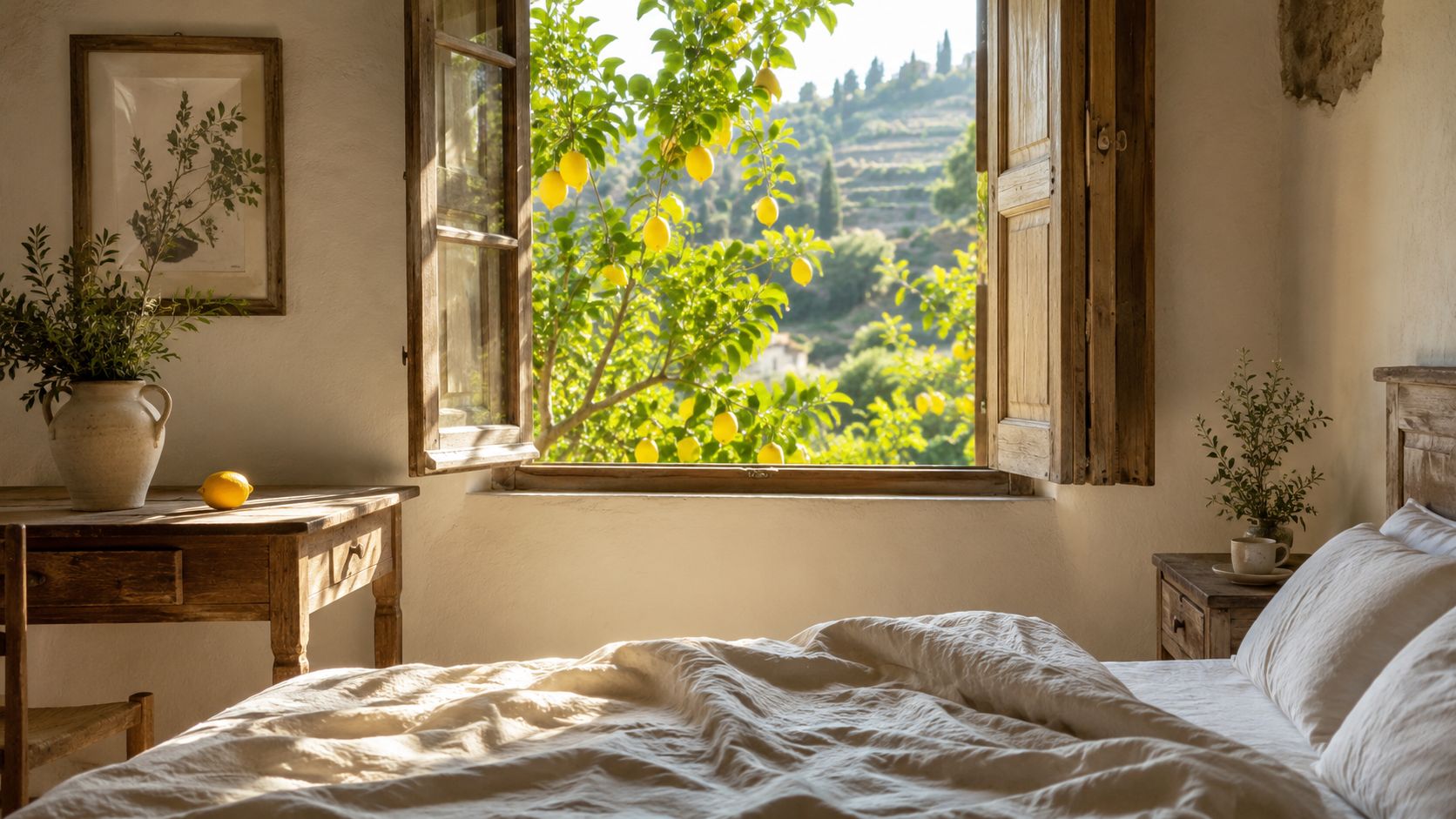
A good agriturismo stay can feel wonderfully simple. Warm bread with olive oil. A conversation in broken Italian and generous gestures. A dog sleeping in the shade beside a stone wall. The luxury isn't always polish. Often, it's access. You're close to the land, close to the food, and close to a version of Italy that many travelers rush past.
Why this kind of stay changes a trip
Hotels can be efficient. Agriturismi are personal. The difference matters.
When you stay on a farm, your host may also be the person pruning vines, bottling olive oil, gathering eggs, or baking the crostata you eat after dinner. That connection changes how you remember a place. It stops being just a destination and starts feeling like a lived environment.
Some of the most memorable moments in Italy happen when nothing “major” is scheduled at all.
This is also why agritourism in Italy appeals so strongly to travelers who care about authenticity without needing luxury. You can still have beauty, comfort, and excellent food. You just experience them in a setting that feels rooted rather than staged.
What many travelers miss
There's a reason these stays inspire such loyalty. They invite you into a different pace, but they also ask you to prepare differently. Rural charm can come with gravel roads, limited transport, and patchy connectivity. That doesn't make agriturismi less appealing. It makes them worth approaching with open eyes.
If you do that, you get something rare. Not just a room with a view, but a doorway into Italian rural culture.
The True Meaning of Italian Agriturismo
A lot of travelers use agriturismo as shorthand for any pretty rural stay in Italy. That shortcut causes trouble. If you expect a small country hotel and arrive at a working farm with set meal times, uneven Wi-Fi, and a host who disappears to harvest olives before dinner, the experience can feel confusing instead of charming.
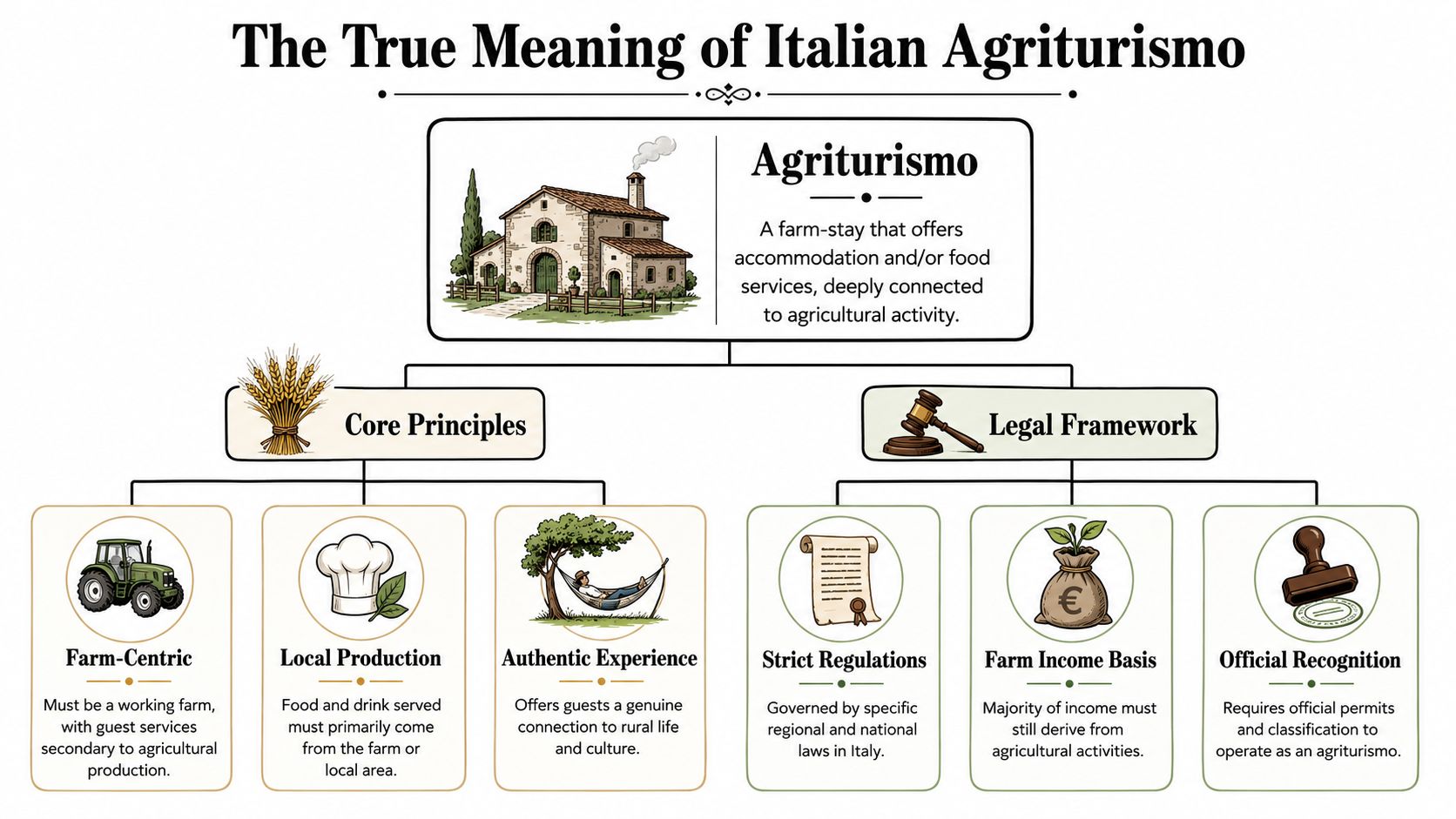
In Italy, agriturismo is a protected term, not a mood or marketing label. The basic idea is straightforward. Agriculture has to remain the core activity, and guest hospitality grows out of that working farm life. The farm is the engine. The guest stay is the second layer.
Farm first, hospitality second
The clearest way to understand a real agriturismo is to compare it to a family kitchen. In a restaurant, everything is built around the guest. In a family kitchen, the meal still welcomes you, but the room has another purpose. Life is already happening there.
That is how an agriturismo works. You are staying on an active agricultural property that also receives visitors. Grapes, olives, vegetables, grain, dairy, honey, orchards, or livestock are not decorative touches. They shape the pace of the day, the meals on the table, and the way the property runs.
For travelers, this changes expectations:
- Meals follow the farm's calendar. Dinner may reflect what was harvested that week, what the family produces, or what nearby farms provide.
- Service often feels human rather than scripted. You may check in with the owner's son, ask breakfast questions in the kitchen, or wait a little while someone finishes feeding animals.
- The setting is practical as well as beautiful. Tractors, crates, work sheds, muddy boots, and barking dogs are part of the experience.
That practical side is not a flaw. It is often the whole point. If you want the kind of stay that brings you into daily life rather than placing you beside it, cultural immersion travel experiences often begin in places exactly like this.
It also helps explain one safety issue many glossy travel posts skip. Rural authenticity can come with a real digital disconnect. On some farms, your host is not sitting at a staffed front desk with instant replies, and your phone signal may weaken the farther you get from town. For solo female travelers, especially, understanding that difference early helps you plan smarter. You are booking a farm that hosts guests, not a hotel that happens to look rustic.
The spighe system explained
Agriturismi are not usually measured in hotel stars. They are classified with spighe, or wheat ears.
Many travelers see a higher number and assume it automatically means a better stay. A better comparison is a train seat class. More comforts and services can make the trip easier, but they do not guarantee the most memorable experience.
Here is the practical read:
| Spighe level | What it often suggests |
|---|---|
| 1 to 2 spighe | Simpler, more rustic accommodation with fewer extras |
| 3 spighe | A middle ground with comfort and character |
| 4 to 5 spighe | Broader services, more polished spaces, and added conveniences |
A lower-spighe property may serve unforgettable homemade meals and offer more direct contact with the family running the farm. A higher-spighe stay may give you air-conditioning, a pool, clearer check-in procedures, and more support if you are arriving late or traveling alone.
Neither type is automatically superior. They suit different travelers.
If you are worried about poor signal, late arrivals, or being alone in a remote area, the spighe rating can be one clue, though not the only one. Higher-rated properties often provide more structure. Lower-rated ones can be wonderful, but they may require more independence, better advance communication, and more comfort with rural unpredictability.
What the legal framework protects, and how that helps you
The rules around agriturismo do more than guard a label. They help keep farms active and make it possible for rural families to host guests without abandoning agricultural work.
For you, that has a very practical benefit. The term agriturismo should point to a stay where farming still shapes daily life. That gives you better questions to ask before booking, and those questions can tell you a lot about fit and safety.
Ask things like:
- What does the farm produce during the season I'm visiting?
- Are meals based on the property's products or nearby producers?
- Who handles check-in if I arrive in the evening?
- How reliable is the mobile signal on the property?
- Is there Wi-Fi in the rooms, only in common areas, or not consistently at all?
Those last questions matter more than many travelers expect. In rural Italy, digital disconnect is not always romantic. Sometimes it just means you cannot message your host from the gate, call a taxi easily, or confirm directions after dark. Knowing that before you arrive helps you choose the right kind of agriturismo for the trip you actually want.
A true agriturismo offers something richer than a themed country stay. It gives you access to working rural life. The magic is real, but it works best when you understand what you are walking into.
A Taste of the Regions Your Agriturismo Guide
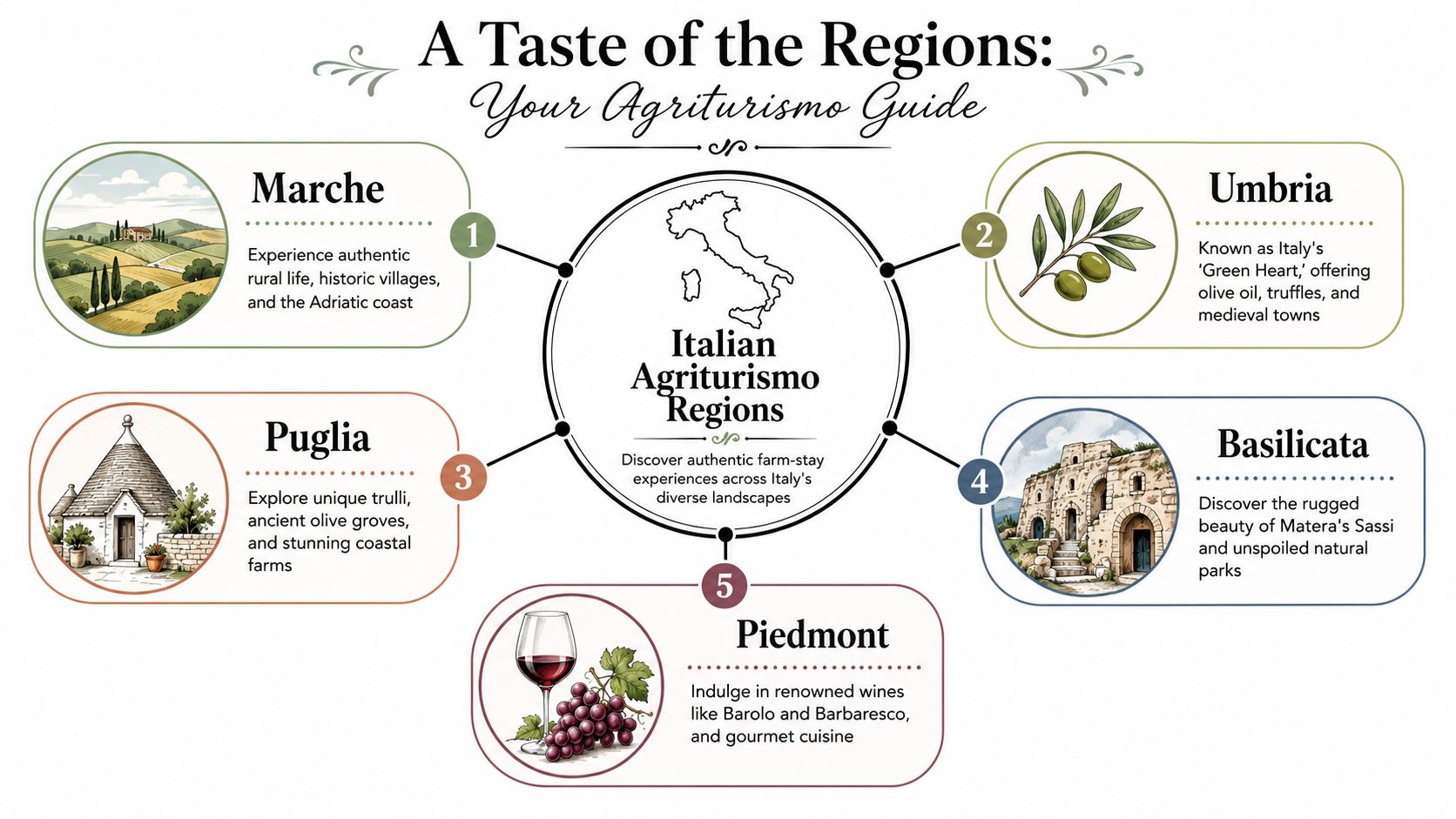
Italy doesn't offer one countryside mood. It offers many. The charm of agritourism in Italy is that each region expresses farm life differently. The food changes. The scenery changes. Even the architecture shifts from one area to the next.
Most first-time travelers fixate on Tuscany. Tuscany is lovely, but it isn't the whole story. Some of the richest stays happen in places that receive less attention and reward slower, more curious travelers.
Umbria for quiet depth
Umbria feels inward-looking in the best way. Hills fold into one another. Stone towns sit high above fields and olive groves. The pace is less performative than in more famous regions, which makes it ideal if you want your days to be full of long lunches, small roads, and unhurried wandering.
An Umbrian agriturismo often suits travelers who want:
- A calmer base for medieval towns and countryside drives
- Food-centered days shaped by olive oil, local pasta, and seasonal ingredients
- A less crowded atmosphere without sacrificing beauty
If your dream trip includes reading under a tree, taking one thoughtful day trip, and returning for a simple dinner on the farm, Umbria makes sense.
Puglia for sun, stone, and olive country
Puglia has a different energy. It's brighter, flatter in places, and full of dry-stone textures, ancient olive groves, and whitewashed architecture. Some rural stays here are in masserie, which can overlap aesthetically with what travelers seek from an agriturismo, though not every masseria falls under the same legal definition.
Puglia is especially good for travelers who love:
- Strong visual character, from trulli to fortified farm buildings
- Easy pairing of coast and countryside
- Long, simple meals built around olive oil, vegetables, bread, and local tradition
A stay here can feel expansive. Morning on the farm. Afternoon by the sea. Evening in a lantern-lit courtyard.
Marche for travelers who dislike obvious choices
Marche is one of those regions people remember with a slightly stunned expression. Why isn't everyone talking about this place more? It gives you rolling hills, historic villages, and access to the Adriatic side of Italy, all without the same volume of attention as the standard circuit.
This region works well if you want variety without long transfers. You can spend one day inland among farms and hill towns, then shift your mood completely with a coastal outing.
For a wider sense of smaller destinations worth pairing with a rural stay, browse these beautiful towns in Italy.
Basilicata for rugged atmosphere
Basilicata isn't always first on a traveler's list, which is part of its strength. It can feel stark, dramatic, and firmly rooted. If polished wine-country aesthetics aren't your priority, and you'd rather experience a place with edges and history, this region has real pull.
An agriturismo base here suits travelers who enjoy:
- scenery that feels less manicured
- quieter roads and fewer crowds
- a stronger sense of discovery than familiarity
It's not the region I'd suggest to someone who wants ease above all else. It is the region I'd suggest to someone who wants memory.
Piedmont for wine lovers and serious eaters
Piedmont speaks to a different type of traveler. The countryside here can feel elegant without being flashy. Vineyards shape the horizon, and meals often become the center of the day.
If you're interested in a farm stay linked to wine country, Piedmont is one of the clearest fits. It rewards travelers who enjoy tasting, lingering, and structuring a trip around what's on the table and in the glass.
If your idea of sightseeing includes a cellar, a hilltop village, and a slow dinner rather than a museum queue, Piedmont may be your region.
How to choose your match
Use your travel style, not just the prettiest photos.
| If you want... | Look first at... |
|---|---|
| Quiet, green, reflective days | Umbria |
| Sunlit farm stays with access to the sea | Puglia |
| Under-the-radar balance of coast and hills | Marche |
| Rugged landscapes and fewer travelers | Basilicata |
| Wine-focused countryside with gourmet appeal | Piedmont |
A region shapes everything. The breakfasts, the roads, the architecture, the conversation at dinner. Pick the atmosphere you want to live inside for a few days, not just the one you want to photograph.
Planning Your Trip Budget and Season
Agritourism in Italy can be affordable, but only if you match your expectations to the kind of property you're booking. The biggest mistake travelers make is assuming all rural stays are automatically cheap. Some are simple farm rooms with few extras. Others feel closer to boutique country estates.
The better question isn't “Is agriturismo budget-friendly?” It's “What kind of farm stay fits the way I travel?”
What shapes the price
A few things usually matter more than the region name on the listing.
- Level of comfort: A rustic room with basic furnishings will usually feel very different from a suite with polished design and added services.
- Included meals: Breakfast may be simple, generous, homemade, or not included at all. Dinner can transform both value and convenience.
- Access: Remote stays may offer lower apparent prices but require a car, transfers, or extra planning.
- Season: Harvest periods, summer coast demand, and holiday weeks can shift availability and cost.
For budget travelers, the sweet spot is often a modest property where the experience comes from the setting and the hosts, not from a long list of amenities.
Choosing the right season
Each season changes the feel of a farm stay more than it changes a city break.
Spring brings green scenery, blossoms, and the feeling that rural Italy is waking up. It's a lovely choice if you enjoy walking, markets, and mild days.
Summer suits travelers who want long light, outdoor meals, and the option to combine countryside with beaches or swimming. It can also mean hotter afternoons and busier roads in popular areas.
Autumn has special appeal because farm life feels especially tangible then. Harvest energy, cooler evenings, and deeper food moods make it a favorite for many return visitors.
Winter is quieter and more selective. Not every property is ideal at that time, but the right one can feel intimate and restorative, especially if you want fireplaces, hearty food, and near-total stillness.
How long to stay
Many travelers shortchange the experience by booking only one night. That's enough to sleep on a farm. It's not enough to settle into one.
A better rhythm is often:
- Arrival day to decompress and learn the property
- One full day to stay mostly local
- Another full day for a nearby town, hike, tasting, or cooking experience
That structure gives the stay room to breathe. You stop treating the countryside as a backdrop between major destinations.
If you're trying to keep the whole trip manageable, this guide to travel budgeting tips can help you decide where to spend more and where to stay simple.
Booking Safely and Smartly Especially for Solo Travelers
You arrive at a country station in late afternoon. The host said a taxi could come, but the driver cancels. Your phone shows one bar, then none. The farm is only a few kilometers away, yet in that moment it may as well be much farther.
That is the version of agriturismo many glossy guides skip.
For solo female travelers in particular, rural peace and rural vulnerability can exist at the same time. A farm stay can feel grounding, generous, and deeply safe. It can also become stressful fast if your arrival plan depends on mobile data, instant replies, or a ride that never comes. Good preparation turns that risk from a vague fear into a manageable problem.

The digital disconnect matters more than the photos suggest
Many agriturismi are in places chosen for quiet, space, and distance from urban life. That is part of their appeal. It also means phone service can be weak, Wi-Fi can be limited, and directions can become harder to follow once you leave the main road.
For a couple with a rental car, that may be an inconvenience. For a solo traveler arriving by train, bus, or taxi, it can shape the whole stay.
A rural property works a bit like a small island. Once you arrive, daily life may be lovely and calm. Reaching it, leaving it, or changing plans on short notice takes more forethought than it would in a city. That is why I treat connectivity as a safety question, not a luxury question.
Before booking, assume nothing. “Immersed in nature” may mean birdsong and olive trees. It may also mean no shops nearby, no street lighting, and no reliable signal at the gate.
Questions to ask before you book
Listing descriptions are written to sell atmosphere. Your job is to test logistics.
Ask direct questions:
- How is the phone signal on the property? If you know your carrier, ask whether it works there.
- Is Wi-Fi available in the rooms, or only in shared spaces?
- What happens if I arrive late because of a train delay? Ask for the exact process.
- Can a taxi or rideshare reliably reach the property?
- What is the nearest village, station, pharmacy, and grocery shop?
- Are room doors, windows, and entry gates secure?
- If the main host is unavailable, who handles emergencies or late arrivals?
The tone of the reply matters too. Clear, specific answers usually signal a host who runs the property with care. Vague answers can be a warning sign, especially if you are depending on public transport.
One smart habit helps more than travelers expect. Ask the host to send written arrival instructions that include landmarks, road names, gate details, and a backup contact. Screenshot everything before travel.
A safety routine that reduces stress
Solo travel in the countryside works best when you build layers of backup, much like carrying two flashlights instead of one. You hope to use neither, but you travel better knowing both are there.
Use this routine before departure:
- Download offline maps. Save the property, nearest town, train station, and a backup hotel or guesthouse.
- Share your full plan with someone you trust. Include the property name, address, host contact, and expected arrival time.
- Carry a charged power bank and cable. Weak signal drains batteries faster.
- Write key details on paper. Keep the host number, address, and directions in your bag.
- Plan first arrival during daylight if possible. Country roads and property signs are easier to read before dark.
- Keep cash for transport changes. Rural drivers and small businesses may not welcome last-minute card issues.
- Save the local emergency number and the nearest taxi contact.
- Change plans early if communication feels unreliable. Confusing directions, long reply gaps, or unclear pickup arrangements are reasons to choose caution.
That last point matters. Instinct is useful, but early action is better. If something feels off before arrival, fix it while you still have options.
Booking channels and common sense
Direct booking gives you more room to ask detailed questions. A booking platform gives you a message history, payment record, and clearer cancellation terms. Either can work well. Choose the option that gives you the clearest written record and the easiest way to prove what was promised.
Then read reviews like a careful friend, not a dreamer. Beautiful sunsets tell you very little. Comments about road access, host responsiveness, check-in reliability, lighting, room locks, and solo comfort tell you a lot.
Affordable and authentic should never mean exposed and guessing. The right agriturismo lets you relax because the practical pieces are solid first. Once those are in place, the magic of rural Italy has room to do what it does best.
Sample Itineraries to Inspire Your Journey
It helps to see what a farm stay looks like in practice. Not as a fantasy reel, but as lived days. The best itineraries leave room for long meals, slow mornings, and the occasional change of plan.
A four-day food-centered stay in Emilia-Romagna
Day 1
Arrive in the afternoon and keep the day simple. Walk the property, settle in, and eat dinner on-site if it's offered. The first evening is for grounding yourself, not rushing out again.
Day 2
Spend the morning on the farm. If there's a cooking class, tasting, or informal visit to the kitchen or production space, this is the day to do it. Keep the afternoon loose for a nearby village.
Day 3
Make one focused food excursion. A local market, a producer visit, or a lunch in a nearby town is enough. Return early and enjoy the farm at dusk, when these places often feel most magical.
Day 4
Have a slow breakfast, buy something edible to take with you if the farm sells products, and move on without cramming in one more attraction.
A five-day solo retreat in Sicily
Day 1
Arrive with daylight to spare. Confirm the next day's transport options and test the Wi-Fi or signal immediately so you know what you're working with.
Day 2
Stay close. Read, walk, journal, rest, and learn the property layout. Solo travel becomes easier when you know your environment well.
Day 3
Take a day trip to a historic town or archaeological site, then return before evening. One outward-looking day balances the inward pace of the stay.
Day 4
Use the farm as your destination. Linger over breakfast. Talk to the hosts if they're open. Photograph details instead of chasing a packed itinerary.
Day 5
Depart with a buffer. Remote properties and island logistics reward patience.
A three-day family countryside break in the Dolomites
If your family wants nature without overcomplication, keep the structure light.
- First day: Arrive, explore the grounds, and let children adjust to the new environment.
- Second day: Plan one gentle hike or scenic outing, then leave time for animals, open space, and an early dinner.
- Third day: Enjoy the farm itself before departure. Children often remember the low-key parts most vividly.
If your wider Italy plan includes city time too, it can help to pair a farm stay with one strong base and a few smart excursions, much like these day trips from Florence.
The best agriturismo itinerary usually has fewer moving parts than your first draft.
Agriturismo FAQ and Your Mindful Traveler Checklist
A few questions come up again and again, especially for first-time rural travelers.
FAQ
Do I need to speak Italian?
No, but a few polite phrases help a lot. Warmth, patience, and courtesy go far, especially in smaller rural settings.
Is a car necessary?
Often, yes. Not always, but many properties are easier with your own transport. If you won't have a car, confirm the final arrival step in detail before booking.
Are agriturismi good for children?
Many are. Open space, animals, and a relaxed environment can make them excellent for families. Still, each property is different, so check whether the layout and setup suit your family's needs.
Can dietary restrictions be handled?
Sometimes very well, sometimes only with advance notice. Ask early and be specific. Don't assume a rural setting means unlimited flexibility.
Your mindful traveler checklist
Before you go, keep these habits in mind:
- Learn the farm's identity: Know what the property produces and what kind of stay you're booking.
- Arrive respectfully: Rural hospitality is often personal. A warm greeting matters.
- Show interest: Ask about the land, the harvest, or the local food if your hosts seem open to sharing.
- Support the farm directly: If they sell olive oil, jam, wine, or other products, buying from them is one of the best ways to give back.
- Travel lightly on the land: Use water carefully, follow property guidance, and treat the working farm as someone's livelihood, not just your scenery.
- Prepare for remoteness: Especially if you're traveling solo, know your transport and communication plan before you arrive.
Agritourism in Italy is one of the most rewarding ways to travel there. It gives you beauty, yes. But above all, it gives you context.
If you want more thoughtful, practical trip planning like this, Travel Talk Today is a smart next stop. It's built for travelers who want meaningful experiences, sharper budgeting, and safer, more connected journeys without losing the joy of discovery.