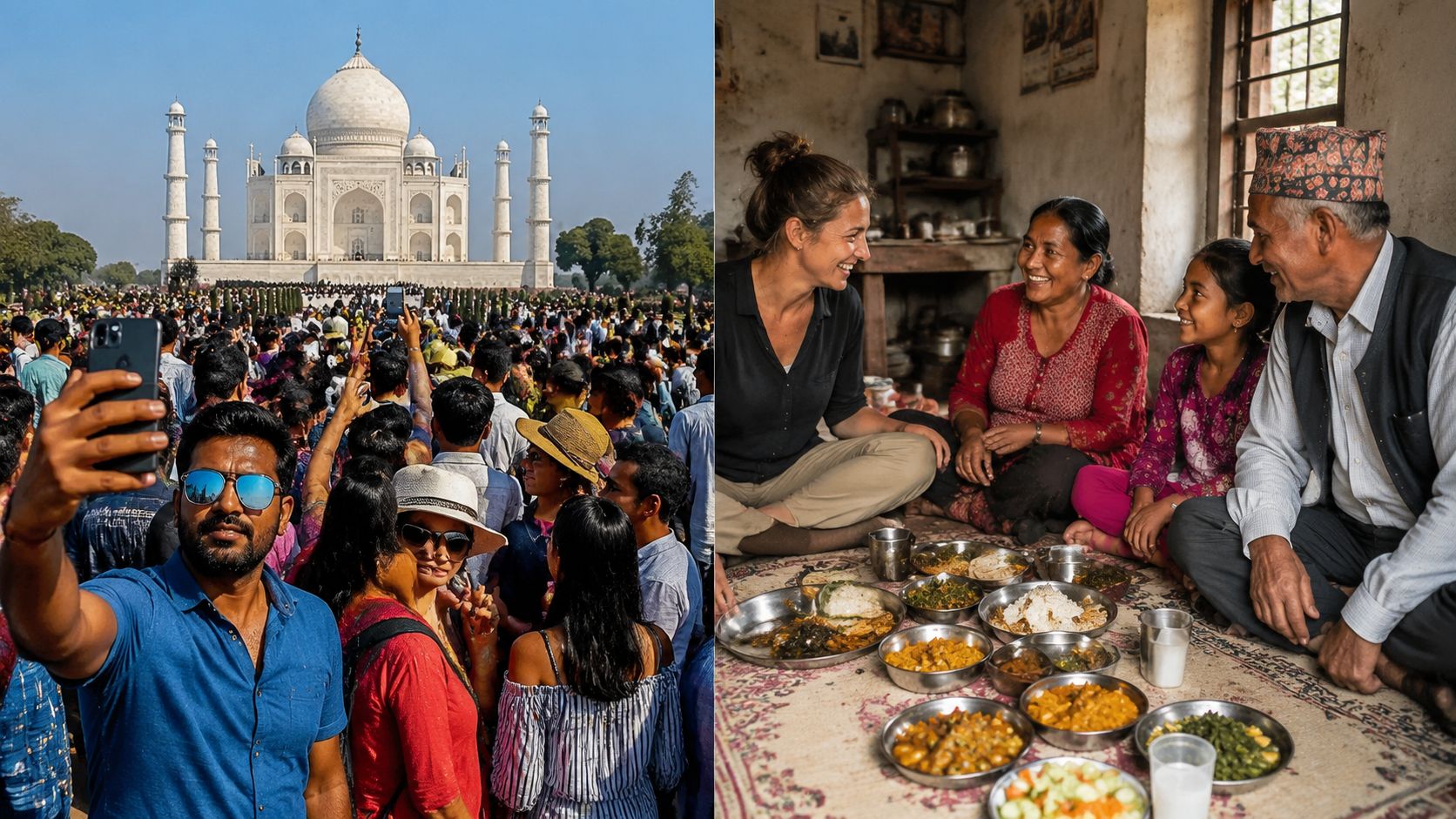
You're probably here because you've felt the split that so many travelers feel now. One trip gives you the checklist photo, the crowded viewing platform, the souvenir that could've been bought anywhere. Another gives you a seat at someone's table, a story behind the food, a walk through a village with a person who lives there, and the odd but wonderful feeling that you were a guest rather than a consumer.
That second kind of trip has a name. Community Based Tourism.
It sounds like an industry phrase, but the idea is simple. Travel should benefit the people who call a place home. It should leave communities with more control, more income, and more pride in what they choose to share. For travelers, it offers something harder to package and far more memorable: real human connection.
Beyond the Postcard a New Way to See the World
A lot of travel today is designed for speed. You arrive, line up, take the photo everyone else took, and move on. You may have seen the landmark, but you haven't really met the place.
Then there's the other version. You spend an evening in a family-run homestay. Someone shows you how dinner is prepared. A grandmother laughs at your clumsy pronunciation. A local guide points out what has changed in the neighborhood over the years, and what the community is trying to protect. You go home remembering faces, not just buildings.
That shift in what travelers want is no small side trend. The global Community Based Tourism market reached US$721.7 billion in 2024 and is projected to reach US$1.5 trillion by 2030, with a projected CAGR of 12.3%, according to Research and Markets on the global CBT market. The important part isn't just the scale. It's what the growth says about people. More travelers want experiences that feel grounded, respectful, and socially responsible.
What travelers are really looking for
Many people don't set out searching for “CBT” as a term. They search for quieter things:
- A slower pace that leaves room for conversation, reflection, and local rhythm
- More meaningful stays where hospitality doesn't feel scripted
- A clearer impact so their money supports people nearby, not just distant companies
If that sounds familiar, you'll probably also connect with the mindset behind slow travel and why it changes the way a trip feels.
Travel feels different when the highlight isn't what you looked at, but who welcomed you in.
Community based tourism offers a practical answer to a very modern travel question: how do you see a place without flattening it into a backdrop? You go where local people lead, host, and decide what tourism should look like on their own terms.
Understanding the Heart of Community Based Tourism
The easiest way to understand community based tourism is to stop thinking like a spectator. Think like an invited guest at a neighborhood gathering.
If you drive past, snap photos, and leave, you've consumed the scene. If you're welcomed in, bring curiosity, listen, contribute fairly, and respect the house rules, you're participating in something shared. That's the heart of CBT.
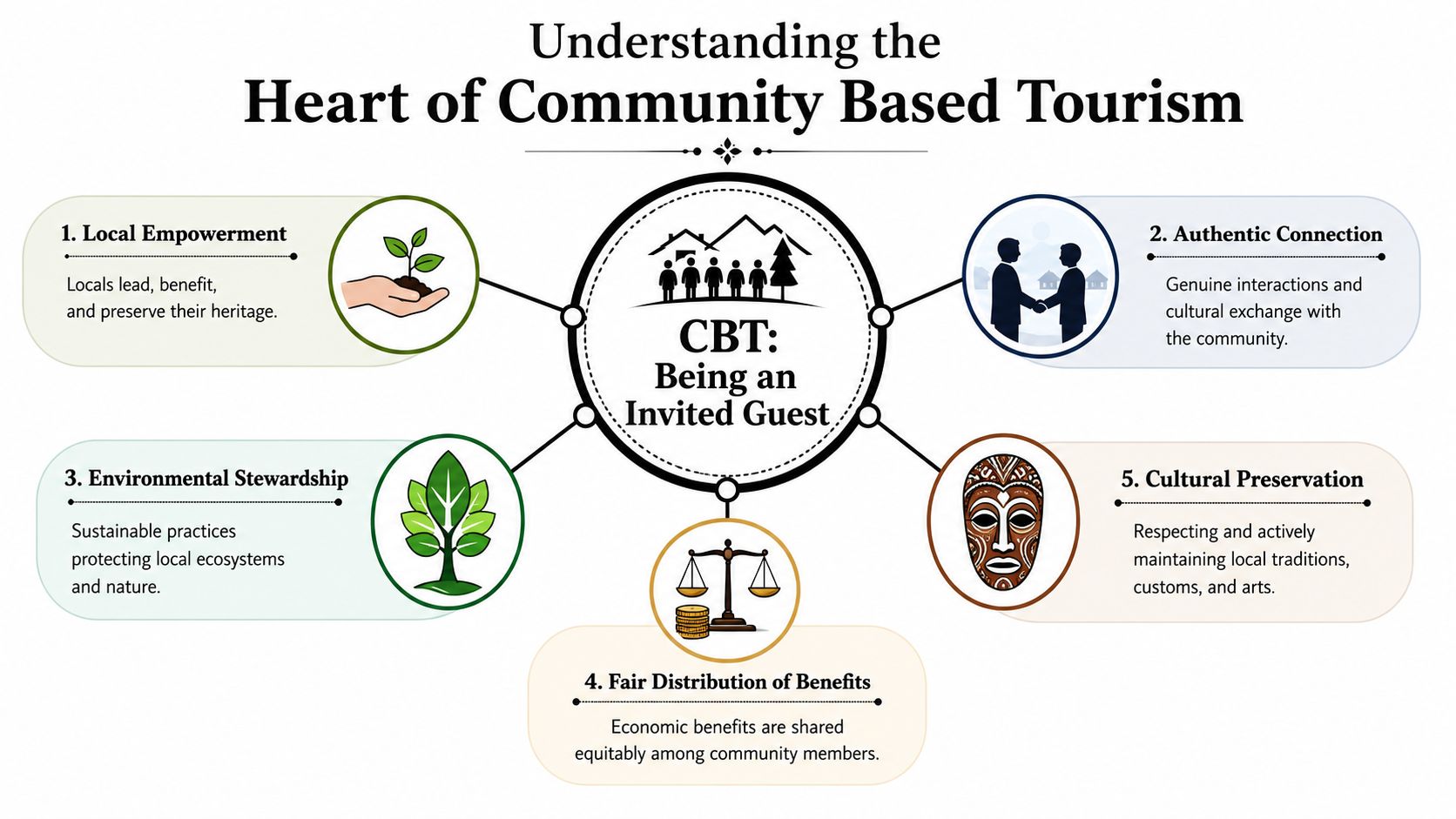
Ownership matters more than the marketing
Lots of tours use words like local, authentic, or community. Those words can mean almost anything. The fundamental question is simpler and more important: who owns and controls the experience?
In genuine community based tourism, local residents aren't just staff members. They shape the tourism offer itself. They may run the homestay, guide the walk, organize the craft workshop, manage the bookings through a cooperative, or decide together how earnings are used.
According to the World Bank's tourism overview, community based tourism supports approximately 18,000 initiatives globally, all centered on putting local communities at the center of tourism development so they retain control over operations and revenue.
What that looks like on the ground
A community-run experience often includes some or all of these features:
- Shared decision-making. A village committee, cooperative, or steering group helps decide pricing, visitor limits, and how tourism fits local life.
- Locally led activities. Hosts, cooks, guides, drivers, and artisans come from the community itself.
- Benefits beyond one household. Income may support several families, local jobs, or agreed community priorities.
- Cultural boundaries set by locals. Residents choose what they want to share and what should remain private or sacred.
That's why CBT feels different from a regular tour with a local guide. The difference isn't only proximity. It's governance.
Why this can be confusing
Travelers often assume a small business automatically counts as community based tourism. Sometimes it does. Sometimes it doesn't.
A family-owned guesthouse is local, which is good. But CBT usually goes a step further. It asks whether the broader community has a voice and whether tourism strengthens collective wellbeing, not just one business.
Simple test: if the community could change the rules, pause the activity, or redirect the benefits, you're closer to genuine CBT.
If you enjoy trips that prioritize learning over consuming, cultural immersion travel ideas that go deeper than sightseeing often overlap beautifully with this model.
Why Choosing Community-Led Travel Matters
The biggest reason to choose community-led travel is practical. It changes where the money goes.
In conventional mass tourism, 80% of expenditures often leak to external operators instead of benefiting the local community, while the CBT model increases local revenue retention through local ownership, according to Allied Market Research on community-based tourism. That one contrast explains a lot. You can stay in a destination, spend money there, and still leave very little behind for the people who live there.
For the community
When local people own and run tourism, they're in a stronger position to shape what kind of tourism they want. That matters economically, but it also matters socially.
Community-led travel can help communities:
- Keep income closer to home through locally owned stays, meals, guiding, and craft sales
- Protect traditions with dignity by sharing skills, stories, foodways, and ceremonies on their own terms
- Support stewardship of place because forests, coastlines, farmland, and heritage sites become part of a living local economy
- Build confidence and bargaining power when residents organize together rather than dealing with tourism as isolated workers
This is one reason many travelers move from broad ideas about ethics toward more specific choices about what sustainable tourism actually looks like in practice.
For the traveler
The benefits aren't only moral. They're deeply personal.
A community-led trip often teaches you how to pay attention. You notice the timing of meals, the way people greet elders, the reasons a festival matters, the difference between a performance staged for tourists and a tradition still rooted in daily life. You may learn to cook something, weave something, plant something, or just sit still long enough to understand why the area matters to the people living in it.
Here's the exchange at its best:
| What mass tourism often gives | What community-led travel can give |
|---|---|
| Efficient access | Human connection |
| Standardized service | Personal hospitality |
| Surface-level commentary | Local perspective |
| Predictability | Mutual learning |
| Souvenirs | Memory with meaning |
The deeper reward
Travel changes when you stop asking, “What can I get from this place?” and start asking, “How can I be here well?”
That mindset doesn't make a trip less enjoyable. It usually makes it richer. You come back with fewer bragging rights and better stories. You remember the host who explained local farming challenges. The guide who introduced neighbors by name. The artisan who told you why a pattern or material matters.
The best travel memories often come from being included in ordinary life for a little while.
How to Find Truly Authentic Community Run Tours
Many travelers often face a quandary. They want to support real community based tourism, but the internet is full of polished promises. Some experiences are truly community-run. Others are merely community-themed.
A good place to start is not with international marketing, but with local relevance. Research highlighted by Destinations International on empowering community-based tourism notes that successful CBT models often build a domestic foundation first, meaning they cultivate local involvement and domestic tourism before expanding outward. That's useful for travelers because experiences trusted by local or domestic visitors often have stronger roots than those designed only for foreign eyes.
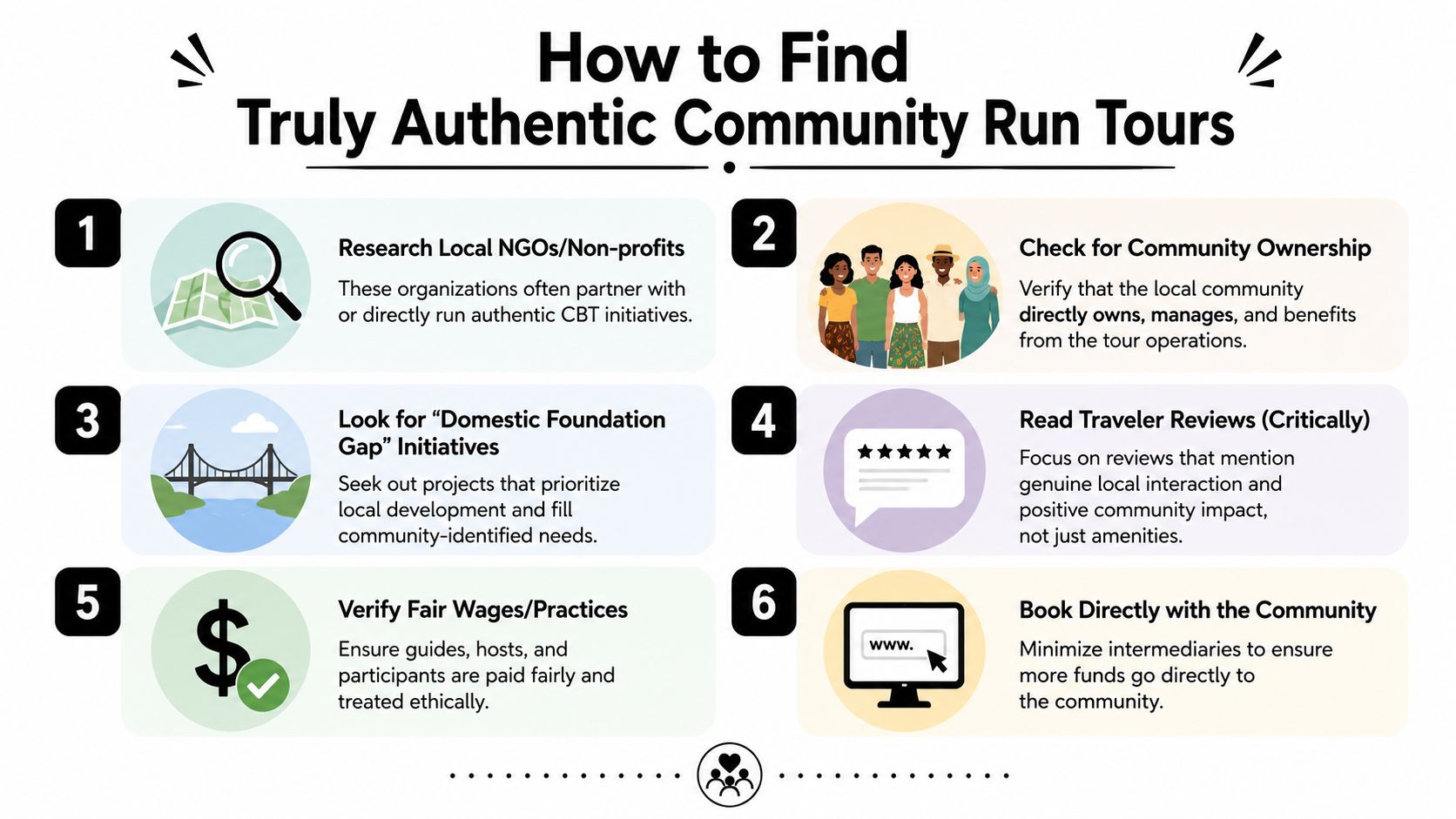
Start where locals already look
Before you book on a giant global platform, try a few smarter routes:
Local cooperatives and associations
Search for tourism cooperatives, women's groups, artisan collectives, or village tourism committees in the destination.Regional NGOs and social enterprises
These groups often partner with communities over time, not just during peak seasons.Domestic travel forums and local-language searches
If you can translate a few search terms, you'll often find options that aren't optimized for international audiences.Responsible specialist operators
Some small agencies work directly with communities and are transparent about who leads and benefits.
If you're trying to move past generic sightseeing, these same habits can also help you uncover authentic travel experiences that don't feel mass-produced.
Use a vetting checklist before you pay
You don't need to interrogate people. But you do need to ask clear, respectful questions. A genuine operator should be able to answer them without vague language.
Here's a practical checklist:
Who owns this experience?
Ask whether the business is owned by a family, a cooperative, a village group, or an outside company.Who makes decisions?
Find out who sets prices, chooses activities, and decides how tourism is managed.How are benefits shared?
You're listening for concrete explanation, not broad claims like “we support locals.”Who will host or guide me?
Community members should play a visible, central role.Can I book directly?
Fewer middlemen often means more money stays closer to the community.
Signs of community-washing
Sometimes the warning signs are subtle. Sometimes they're not.
Be cautious if you notice:
- Heavy branding, light detail. The website tells a beautiful story but never names the community structure behind it.
- Only outsider testimonials. Reviews talk about comfort and scenery, but say little about local hosts, learning, or shared benefit.
- No answer on ownership. If nobody can clearly explain who runs the project, that's a problem.
- Culture presented as a performance product. Activities feel staged with no context, consent, or local voice.
Ask one follow-up question
If you only ask one extra thing, ask this: “How does this experience benefit the wider community, not just the booking company?”
That question often changes the whole conversation. Strong answers usually mention local jobs, shared management, community priorities, or direct local leadership. Weak answers drift back to marketing language.
Booking rule: if an operator can explain community ownership in plain language, that's a good sign. If they hide behind buzzwords, keep looking.
An Ethical Traveler's Guide to Community Stays
Finding a good community stay is only half the work. The other half is showing up well.
A community-based trip doesn't ask you to be perfect. It asks you to be observant, humble, and willing to adapt. That matters even more in a homestay or village-led experience, where you aren't just passing through a commercial setting. You're entering someone's lived environment.
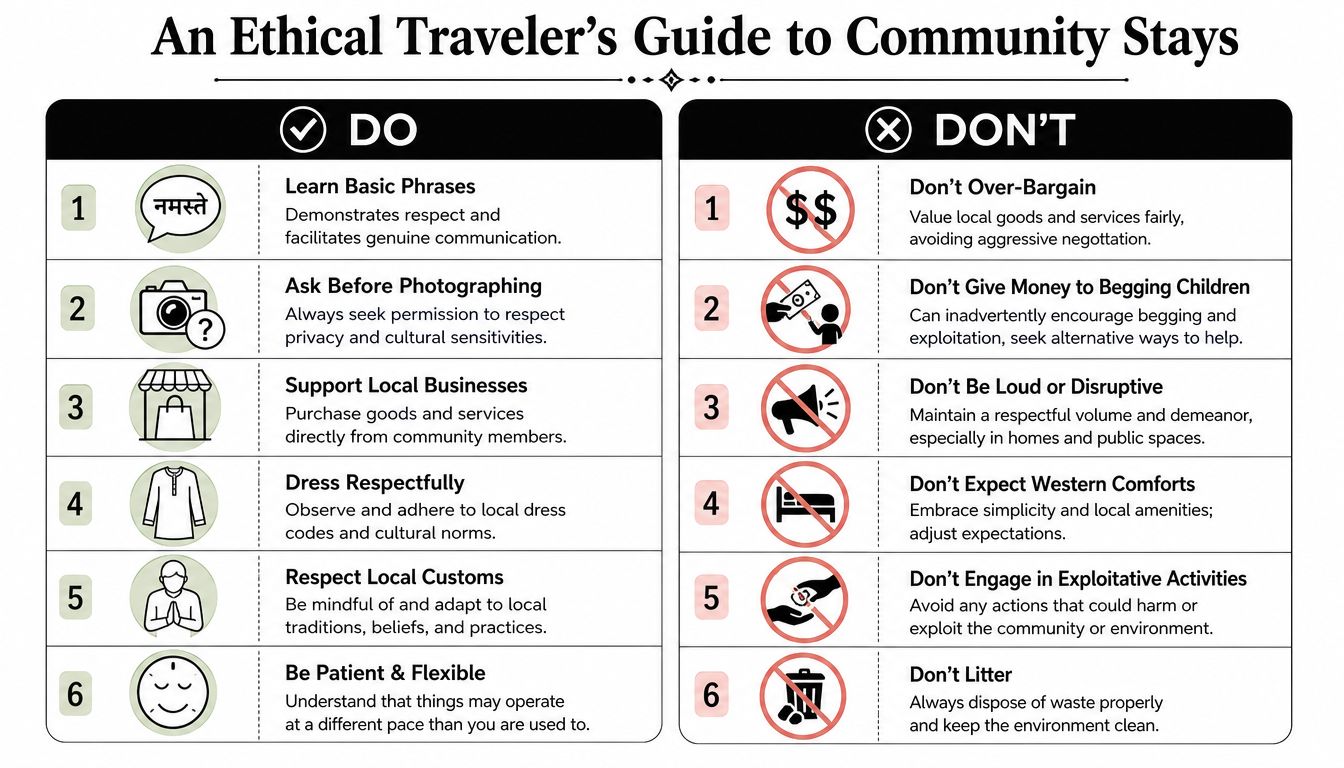
A simple code of conduct
| Do | Don't |
|---|---|
| Learn a few basic phrases to show effort and respect | Don't over-bargain when buying directly from locals |
| Ask before taking photos of people, homes, or ceremonies | Don't give money or candy directly to children |
| Buy from local artisans and producers when possible | Don't be loud or disruptive in homes or shared spaces |
| Dress in a way that fits local norms | Don't expect Western comforts in every setting |
| Observe local customs first before jumping in | Don't join exploitative activities just because they're offered |
| Be patient with timing and logistics | Don't litter or leave a trace of carelessness |
The moments that matter most
Photo etiquette is a big one. Many travelers mean well, but a camera can turn people into scenery very quickly. Ask first. If the answer feels hesitant, let it go.
Gift-giving is another area where good intentions can go sideways. If you want to help, ask your hosts what's appropriate. Buying from local businesses, paying fairly, or supporting community-approved initiatives is often more respectful than handing things out informally.
For many travelers, especially those navigating unfamiliar settings solo, confidence comes from preparation. Sustainable tourism practices that work in real trips can help you build habits that are respectful without feeling stiff or anxious.
Adjust your expectations, not your respect
Your shower may be simpler. The Wi-Fi may be patchy. Dinner may happen on local time rather than your schedule.
That isn't a failure of the experience. It's often part of what makes the stay real. Flexibility turns inconvenience into insight.
Respect doesn't mean acting formal. It means noticing what matters to your hosts, then responding with care.
How to Know You've Made a Real Impact
Most travelers judge a trip by the usual things. Was it beautiful? Was it smooth? Did I get good photos?
Those questions aren't wrong, but they're incomplete. In community based tourism, the better question is whether the experience strengthened local agency and shared benefit. Expert frameworks described in this CBT impact matrix guide from Bibliotheca Alexandrina move away from simple visitor counts and toward measures like who benefits, how widely benefits are shared, and how many stakeholder groups participate in planning.
What that means for a traveler
You won't be running surveys after breakfast. But you can pay attention to the right signals:
- Who was visible in leadership during your stay or tour
- Whether local voices shaped the experience instead of just servicing it
- Whether benefits seemed broad rather than concentrated in one gatekeeper
- How the community talked about tourism as something they direct, not just endure
Small actions that extend your impact
A thoughtful traveler can do more than pay and leave.
Try these:
Write better reviews
Mention local guides by name when appropriate, describe what you learned, and note signs of community leadership.Share stories with care
On social media, center the people and context, not just your own performance as a traveler.Recommend selectively
Send friends to places that showed respect, transparency, and local control.Stay in touch appropriately
If hosts invite it, follow up, ask how to support future visits, or recommend direct bookings.
A meaningful footprint isn't only financial. It's also the dignity you reflect back in the stories you tell.
Common Questions About Community Based Tourism
Is community based tourism always more expensive
Not always. Sometimes it costs less because you're booking more directly and skipping layers of intermediaries. Sometimes it costs about the same as a conventional tour, but the value feels different because you're paying for access, context, and local leadership rather than just transport and logistics.
If a price seems higher, ask what's included and who benefits. A clear answer matters more than a bargain headline.
Is it safe for solo travelers
It can be, especially when you're entering a setting where people know one another and know you're expected. That said, community based tourism isn't a magic shield. Use the same judgment you would anywhere: communicate arrival plans, read reviews carefully, ask detailed questions, and trust your instincts if something feels off.
For solo female travelers, the best sign is often responsiveness. If a host or organizer answers clearly about sleeping arrangements, transport, local customs, and who will meet you, that's encouraging.
What if I don't speak the language
You don't need perfect grammar. You need respect, patience, and a willingness to look slightly foolish for a few minutes. Learn greetings, thank-yous, and basic courtesy phrases. Translation apps help, but tone matters more than perfection.
Some of the warmest travel moments happen when both sides are working a little to understand each other.
How do I know it's not fake community branding
Ask direct questions about ownership, decision-making, and how benefits are shared. If the answers stay vague, move on. Genuine community-run experiences usually explain themselves plainly because they're proud of how they work.
Will it feel less comfortable than a hotel
Sometimes, yes. But less standardized doesn't mean less welcoming. Many travelers find that what they lose in polish they gain in warmth, perspective, and memory.
If you want more thoughtful, affordable guidance for planning trips that connect you more authentically to the places you visit, explore Travel Talk Today. It's a smart resource for travelers who care about meaningful experiences, cultural respect, and practical ways to travel well without overspending.