We’ve all been there—standing in a crowded square, camera in hand, feeling like we’re just checking a box. But what if travel could be more? What if it could be about trading that checklist for a sense of genuine curiosity?
This is the soul of authentic travel. It's the difference between merely seeing a place and truly feeling its pulse. It’s about engaging with its people, its culture, and its everyday rhythms in a way that feels personal and unscripted.
So, What Does Authentic Travel Actually Mean?
I know, "authentic" is a word that gets thrown around a lot. But let's get to the heart of it. Authentic travel isn't about some impossible quest for an "untouched" paradise. It's a simple, powerful shift in your own mindset—from being a spectator to becoming a participant.
Think of it this way: conventional tourism is like watching a movie about a country. Authentic travel is like being invited to be an extra in its daily scenes.
This shift happens in the small moments. It’s choosing a local cooking class in someone's home over a packed tourist restaurant. It's that spontaneous chat with a shopkeeper that becomes more memorable than the monument you were rushing to see. It’s about being present, open, and brave enough to step just a little outside your comfort zone.
Tourist Activities vs Authentic Experiences
To really grasp this shift, it helps to see it side-by-side. The goal isn't to say one is "bad" and the other is "good," but to help you see how a small change in your approach can completely change the texture of your trip. Here’s a quick comparison to help you move from being a spectator to a participant.
Seeing the difference? It's about depth over breadth. It's about the story, not just the snapshot.
Moving From Sightseeing To Connection
At its core, an authentic journey is about putting human connection and personal growth ahead of the perfect Instagram photo. It’s when you start caring about the story behind the meal as much as the meal itself. You don’t just see the sights; you seek to understand their place in the heart of the community.
"Authentic travel happens when you slow down enough to feel a country’s rhythm. It’s when you let go of the plan, connect with its people, and come home with stories instead of just souvenirs."
This approach naturally leads to a richer, more profound experience. Instead of a slick, air-conditioned bus, maybe you find yourself on a bustling local train. It might be less glamorous, sure, but the shared smiles, the sounds, and the raw, unfiltered glimpse into daily life is a souvenir you can’t buy.
The Hierarchy Of Meaningful Travel
Not all travel leaves the same mark on us. The most unforgettable journeys are always built on a foundation of authentic connection, which sets them apart from more surface-level trips.
This simple chart shows how authentic experiences are the key ingredient in truly meaningful travel.
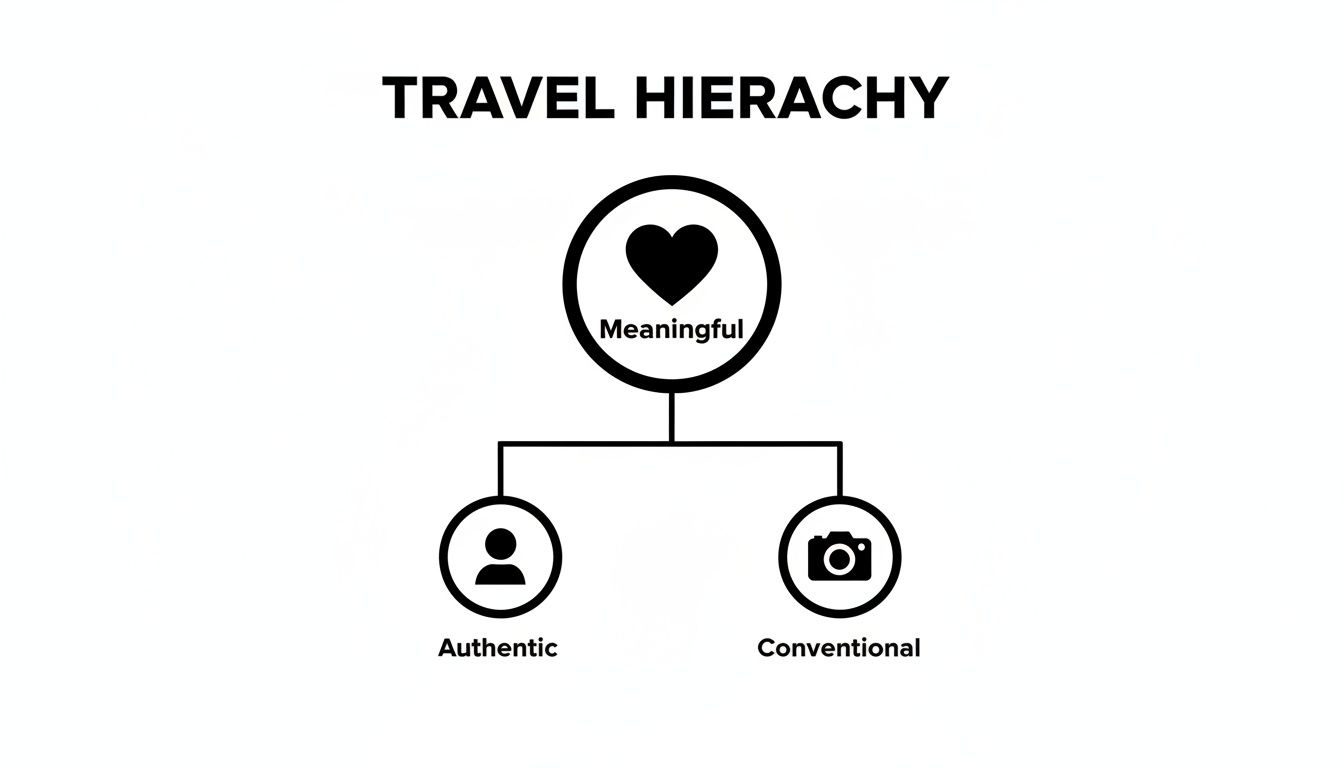
As you can see, while both paths are valid ways to see the world, it’s that commitment to authenticity that transforms a vacation into something that stays with you forever.
This kind of travel almost always goes hand-in-hand with sustainability. When you choose authentic experiences, you're naturally supporting local families, small businesses, and economies directly. If you want to dive deeper into this, you can learn more about how your choices impact the places you visit in our guide to sustainable tourism practices.
Ultimately, it’s this shift—from a passive observer to an engaged, curious participant—that unlocks the magic. It’s what turns a simple trip into a collection of life-shaping stories and forges a real, lasting bond with the world. And that, right there, is what authentic travel is all about.
Why Seeking Authenticity Transforms Your Travels
Let's be honest, seeking "authenticity" has become a bit of a buzzword. But when you strip away the marketing, it points to something real and powerful—a way of traveling that changes you. It's the difference between seeing a place from behind a bus window and actually feeling its pulse. This shift isn't just about what you see; it’s about who you become.
Every time you step just a little outside your comfort zone, you grow. Maybe it's figuring out the local bus system in Hanoi or simply saying "yes" to a cup of tea offered by a shopkeeper in Marrakech. These small acts of courage build a quiet confidence that a perfectly planned resort vacation just can't touch. You learn to trust yourself.
Fostering Deeper Human Connection
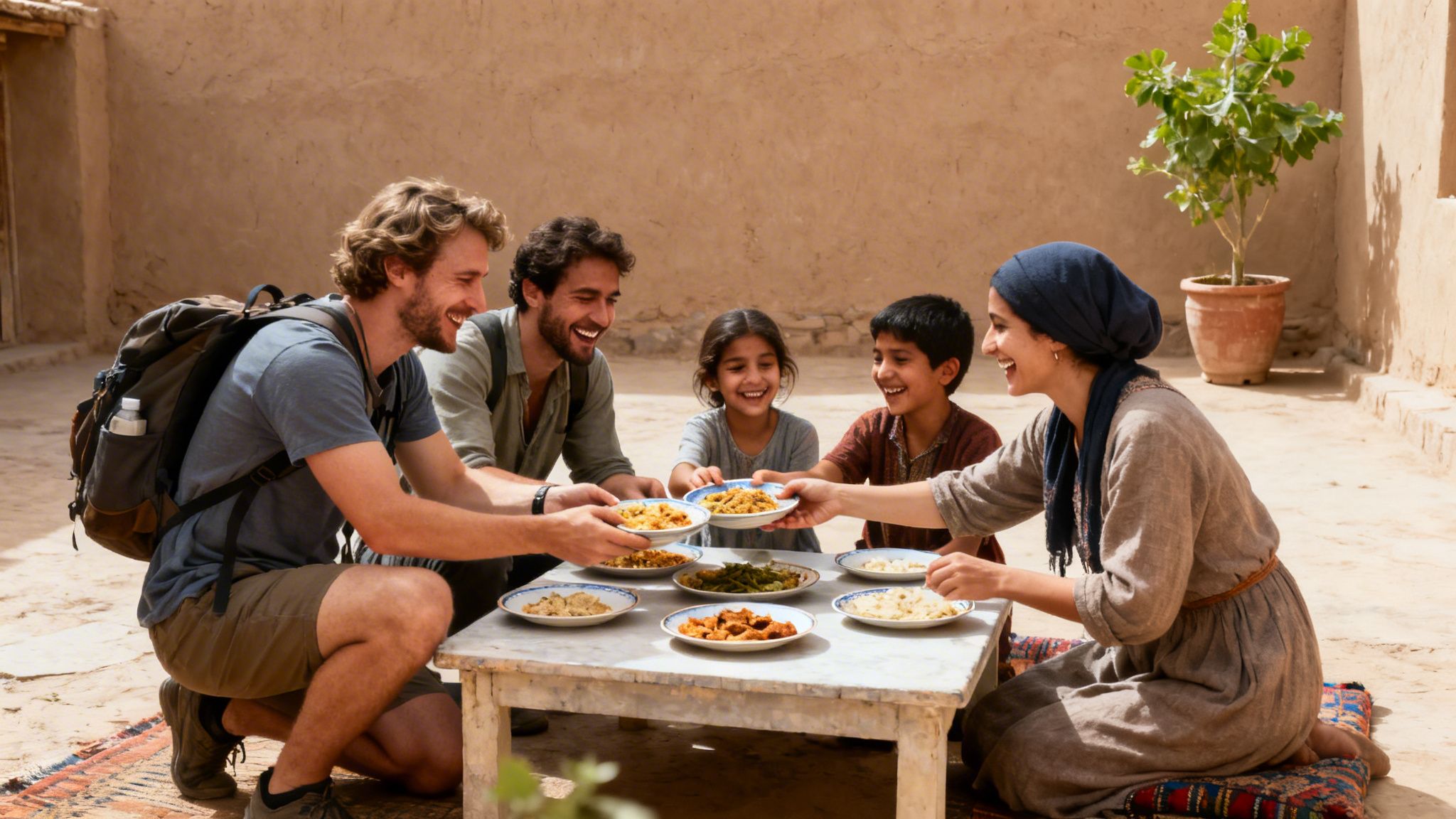
At the end of the day, what we’re all really looking for are authentic travel experiences that remind us we're all connected. It’s about finding our shared humanity, even when we don't share a language.
These are the moments that truly expand your world. Suddenly, a news headline about a distant country isn't just an abstract event. It has a face—the face of the woman who sold you bread, the family you shared a laugh with, or the guide who showed you his hometown with such pride. You bring that empathy home, and it stays with you.
Supporting People and Places Directly
Traveling this way also has a wonderful side effect: it’s naturally more sustainable. When you decide to really engage with a place, your money becomes a direct vote for the local community.
Instead of your dollars flowing to a faceless corporation, they go straight to the people who make a place special. This could mean:
- Staying in a family-run guesthouse, where your fee helps pay for school uniforms.
- Buying a handmade souvenir directly from the artisan, ensuring they earn a fair wage for their incredible skill.
- Hiring a guide from the community to show you around, which keeps local stories and jobs alive.
This kind of tourism builds up a community instead of just passing through it. It helps preserve the culture you came to see in the first place, leading you to incredible spots like these hidden gems in Europe and all over the globe.
The real souvenir from an authentic trip isn't a new stamp in your passport. It's a new way of seeing the world and our place in it—the quiet understanding that every small interaction can build a bridge.
Creating Memories That Last a Lifetime
Think about your past travels. What are the moments that truly stick with you? Is it the slightly out-of-focus picture of a monument, or the memory of laughing so hard you cried while trying to learn a local dance?
Authentic travel is about collecting stories, not just sights. It's the unscripted, beautifully messy, and perfectly imperfect moments that become the highlight reel of your life. These experiences don't just give you a good memory; they challenge you, change you, and connect you more deeply to the world and, most importantly, to yourself. That's the real prize.
How to Plan Genuinely Authentic Adventures
Turning that daydream of a truly meaningful trip into a real-life itinerary is an adventure all on its own. It’s all about a simple shift in mindset: looking past the giant, one-size-fits-all booking sites and learning to listen for a place's real heartbeat. We’re hunting for the kinds of experiences that aren't mass-marketed because they’re too busy being part of genuine, everyday life.
This means you have to start thinking less like a tourist and more like a curious local. Forget just searching for the "top 10 things to do." Instead, ask yourself: if I just moved here, where would I look to find out what’s really going on?
Finding the Pulse of a Place
The moments that stick with you for years rarely happen on the main tourist drag. The real magic is found in the side streets, the neighborhood festivals, and the community hangouts. Your first move is to find the same resources that locals and savvy expats use to navigate their own city.
Here are a few search tricks to get you started:
- "Festivals in [city] during [month]": This is your ticket to cultural celebrations meant for the community, not just for visitors. You could find yourself in the middle of Medellín's Feria de las Flores or stumbling upon a lively neighborhood street fair in Rome.
- "[City] expat forum" or "foreigners in [city] Facebook group": These online groups are absolute treasures. They're filled with honest, up-to-the-minute advice on everything from the best hidden-gem restaurants to trusted local guides.
- "Local events calendar [city]" or "cultural agenda [city]": This will point you toward free concerts in the park, pop-up art shows, and farmers markets that never make it into the guidebooks.
Just a few small tweaks to what you type into that search bar can pull back the curtain on the vibrant, living culture you came to see.
Choosing Accommodations with Soul
Where you lay your head at night can completely define your trip. An anonymous hotel room keeps the world at arm's length, but the right accommodation can pull you right into the fabric of a place and open the door for real connection.
Think about staying somewhere that offers a true sense of place:
- Homestays: There's no faster way to immerse yourself than by living with a local family. You’ll share meals, swap stories, and get an unfiltered view of what daily life is really like.
- Farm Stays (Agriturismos): Especially popular across Europe, these stays connect you to the land and the people who cultivate it. It’s a beautiful, grounding experience.
- Small, Family-Run Inns or Guesthouses: Often, the owner is also your best guide. They’re personally invested in their community and eager to share their favorite spots with you.
The most authentic travel experiences begin when you prioritize connection over convenience. Choosing a guesthouse where the owner knows your name over a sprawling resort is the first step toward building a real relationship with a place.
Budgeting for Authentic Travel
There's a myth that this kind of deep, meaningful travel has to be expensive. The truth? It’s almost always cheaper. When you step away from the tourist traps and start living like a local, you naturally spend less money and gain far richer experiences.
Your wallet will thank you when you:
- Eat Like a Local: Forget the restaurants with picture menus and inflated prices. For lunch, follow the line of office workers to find the most delicious and affordable meals. Street food stalls aren't just a cheap eat; they're a culinary masterclass in a region's true flavors.
- Use Public Transportation: A taxi might be quick, but it's an isolating bubble. The local bus, train, or tuk-tuk is a rolling documentary of daily life. It’s not just cheaper—some of the best conversations I’ve ever had have been on a crowded shared ride.
- Embrace Free Community Events: From open-air markets and religious processions to people just gathering in a park, you’ll find that the best things in travel—just like in life—are often completely free.
Remember, your most valuable asset on the road is flexibility. It’s great to have a plan, but the most profound and authentic travel experiences are usually the ones you could never have planned for. Leave room in your schedule to say "yes" to a spontaneous invitation or to simply get lost down an interesting-looking alley. And if you're looking for more ways to make every dollar count, be sure to check out our essential trip planning tips for every budget.
Navigating Your Journey Safely and Ethically
When we chase after authentic travel, we’re really looking for connection. It’s an invitation to step behind the curtain and see the world in a more profound, meaningful way. But this deeper access comes with a responsibility—a quiet promise to travel with awareness and to make sure our footprints are positive ones. This isn't about memorizing a long list of rules. It’s about cultivating a mindset of being a thoughtful, welcome guest, no matter where you find yourself.
This journey starts long before you even think about packing. It begins with a spark of curiosity and a genuine hunger to understand the place you’re visiting. The goal is to shift from being a mere consumer of experiences to becoming a respectful participant in the daily life you've been so graciously invited into.
The Foundation of Ethical Travel
Think of ethical travel as being grounded in a simple, shared humanity. A smile is a universal language, of course, but learning just a few words in the local tongue—"hello," "thank you," "excuse me"—can change everything. It’s a small effort that sends a powerful message: I see you, I respect your culture, and I’m grateful to be here.
Photography is where this really comes into play. It's so tempting to snap that perfect portrait of a weathered fisherman or a giggling child, but we have to remember to ask first. A person's image is their own, not a souvenir. Often, you don’t even need words. Just point to your camera with a questioning look. A nod is your green light; a shake of the head or a hesitant look means you lower your camera, offer a smile, and move on. No harm done.
The most authentic connections are built on a foundation of mutual respect. When you prioritize the comfort and dignity of local people over getting the perfect photo, you are already traveling more ethically.
Avoiding Exploitative Situations
One of the most crucial skills you can develop is the ability to spot—and steer clear of—activities that exploit people or communities. This is especially true for anything that feels like a "human zoo," where indigenous groups are essentially put on display for tourists. If an experience feels transactional, staged, or like it’s stripping people of their dignity, it probably is.
Before you book a tour or visit a village, get in the habit of asking some tough questions:
- Who benefits? Is the money I’m paying going directly into the hands of the community, or is it lining the pockets of a foreign tour company?
- Is it educational or performative? Does this feel like a genuine exchange, or are people being paid to act out a caricature of their own culture?
- Is there a sense of agency? Do the local people seem proud and willing to share their world, or do they look disengaged, uncomfortable, or pressured?
True authentic travel experiences empower communities; they never, ever reduce them to a spectacle.
Empowering Safety for Solo Female Travelers
Safety is a priority for every traveler, but women exploring the world on their own often carry an extra layer of concern. The secret isn't to travel in fear, but to travel with empowerment. It’s about sharpening your instincts and using smart, practical strategies to keep yourself safe while soaking in the incredible freedom of solo adventure.
Your first line of defense is choosing your home base wisely. Scour reviews from other solo female travelers. Look for guesthouses in well-lit, busy areas and consider places with a 24-hour reception or even female-only dorms for extra peace of mind.
Technology can be your best friend. Share your live location with a trusted contact back home, download offline maps so you're never truly lost, and make sure local emergency numbers are saved in your phone. A portable charger is an absolute must-have in your daypack. Another great resource is connecting with local women or other female travelers in online groups to get real-time safety advice and build a sense of community. While solid travel insurance is a must for anyone, it offers an essential safety net. You'll want to review a detailed travel insurance comparison to find a policy that truly covers your back.
Above all else, trust your gut. If a person or a situation feels wrong, it is. Don’t hesitate to leave immediately. You don't owe anyone an explanation or an apology—your safety is your number one job. By blending smart preparation with a confident spirit, you can explore the world deeply, ethically, and completely on your own terms.
Inspiring Itineraries for Authentic Experiences
Okay, enough talk. Let's get to the good stuff. It's one thing to discuss authentic travel, but it’s another thing entirely to see what it actually looks like on the ground. The real magic happens when you start piecing together an adventure that feels like it was made just for you.
Think of these itineraries as starting points, not strict rules. They’re idea-starters designed to ignite your imagination. Feel free to mix, match, and mold them into a trip that speaks to your passions, whether that’s food, art, or connecting with a community on a deeper level.

The Culinary Explorer in Vietnam
If you believe the fastest way to the heart of a culture is through its food, then Vietnam is calling your name. This 3-day deep dive into Hanoi’s food scene will take you far beyond the usual tourist traps and right into the kitchens and markets where the city’s soul truly simmers.
Day 1: A Street Food Safari. Forget the tour bus. Your guide is a local university student who knows the Old Quarter’s winding alleys like the back of their hand. They’ll lead you to their favorite hidden spots for bún chả and show you the proper way to dip phở cuốn, all while sharing stories that bring the city to life.
Day 2: The Family Kitchen. Journey to a family home on the edge of the city for a cooking class you’ll never forget. You won’t be learning from a professional chef, but from a mother who has perfected these family recipes over a lifetime. The best part? Sitting down together to share the incredible meal you just made.
Day 3: From Farm to Table. Head out to the countryside for a day trip to a local farm. You'll see exactly where those fresh herbs and vegetables you've been eating come from. After helping with the morning harvest, you’ll enjoy a rustic lunch made with ingredients picked just moments before. It’s a beautiful, full-circle moment.
The Community Seeker in Costa Rica
Is your travel style all about making real human connections and leaving a place a little better than you found it? This 4-day journey into the heart of Costa Rica is built for you. The entire trip revolves around a community-owned eco-lodge, meaning your stay directly fuels local conservation efforts and empowers the village.
This is where you’ll find some of the most powerful authentic travel experiences possible.
You’ll spend a day getting your hands dirty in a reforestation project, planting native trees alongside the very families who are fighting to restore their ancestral lands. Then, a naturalist from the village will guide you on a hike, pointing out medicinal plants and animal tracks with wisdom passed down through generations, not learned from a book. Evenings are for swapping stories over simple, home-cooked meals, giving you an unfiltered window into their world.
The most meaningful journeys are often those where you give as much as you receive. Participating in a community project, no matter how small, transforms you from a visitor into a temporary member of the community.
The Creative Soul in Portugal
For those of us who feel the pulse of a city through its art, music, and craftsmanship, Lisbon is a masterpiece waiting to be discovered. This 3-day itinerary is all about connecting with the creative fire of the city, led by the very artists who are stoking it. It’s a perfect plan for anyone wanting to explore unique, off-the-beaten-path travel destinations.
Here’s a glimpse of what your adventure could look like:
A Night of Fado: Skip the polished tourist shows. A local music lover will guide you to their favorite neighborhood tasca in the Alfama district—a tiny, unassuming bar where the raw, soul-stirring sound of Fado is shared among friends.
An Artisan Workshop: Spend an afternoon getting your hands dusty in a tile-painting workshop. You won’t just be buying a souvenir; you’ll learn the rich history of Portugal’s famous azulejos and create your own piece with guidance from a master artisan.
An Urban Art Tour: See the city’s streets through the eyes of a local street artist. They’ll show you Lisbon’s most incredible murals, revealing the hidden stories and social critiques you’d never find on your own. It's an insider's look into a vibrant and vital subculture.
Your Blueprint for a Deeper Journey
Alright, this is where the magic really begins. We've talked about what authentic travel means, but now it's time to roll up our sleeves and build a trip that truly resonates. Meaningful travel isn't something you stumble upon by accident; it's something you create with intention.
Think of this less as a rigid checklist and more as a set of gentle prompts—your personal compass for finding connection, not just another destination. This isn’t about over-planning your days. It’s about preparing your heart.
Before You Even Pack Your Bags
The most profound travel moments are often sown weeks before you leave home. This initial prep work is what opens your mind and lays the foundation for real, human connection. Trust me, a little bit of effort here will completely change the texture of your trip.
- Learn the Local Lingo: Go beyond the basic "hello" and "thank you." Try to learn at least 10 useful phrases that show you're genuinely interested. Think things like, "This is delicious!" or "Can I take your photo?" It’s a small gesture of respect that can unlock incredible conversations.
- Find a Genuinely Local Experience: Make it a point to book at least one tour or activity where your money directly supports the community. This could be a cooking class in a family's kitchen, a walking tour guided by a city native, or a visit to an artisan cooperative.
- Read a Story from Their World: Dive into a novel or memoir by a local author. This is your chance to understand the culture from the inside out—to grasp the hopes, dreams, and struggles in a way no travel guide could ever explain.
While You're There
Once your feet are on the ground, your most important job is to stay curious. This is the time to let go of the strict itinerary and follow your intuition. It's about shifting from a spectator to a participant.
The real soul of a place reveals itself when you slow down. It's in the rhythm of a bustling market, the way strangers greet each other on the street, the quiet hum of a neighborhood as the sun goes down.
Here are a few ways to step off the beaten path:
- Brave a Restaurant with No English Menu: Wander a few blocks away from the main tourist drag and find a place filled with locals. Use a translation app, point with a smile, and see what happens. Some of the best meals of my life have come from these little leaps of faith.
- Spend an Afternoon Just Being: Find a bench in a neighborhood park or grab a coffee at a local cafe. Put your phone away. For a solid hour, just watch. This is how you feel the true pulse of a city.
- Ride the Local Bus or Train: Ditch the taxi for a day. Navigating public transportation offers an unfiltered window into the everyday lives of the people who call that place home. It’s a small adventure in itself.
When You Return Home
The journey isn't over just because you've unpacked. The real transformation happens when you take the time to process what you saw, felt, and learned, weaving those threads back into your own life.
- Journal Your "Aha!" Moments: Write about how the trip challenged your perspective. What surprised you? Did a conversation change how you see the world? Get it down on paper.
- Share the Stories, Not Just the Selfies: When people ask about your trip, tell them about the person you met who shared their family's history, or the moment of unexpected kindness that moved you. Go deeper than a list of landmarks.
- Keep the Connection Alive: Did you fall in love with the food? Find a local restaurant that serves it. Did you discover a musician? Follow them on social media. Keep practicing those few phrases you learned. Let the experience live on with you.
Your Authentic Travel Questions Answered
The idea of diving deep into a new culture is incredible, right? But it's totally normal for a few 'what ifs' to pop up as you start planning. Let's walk through some of the biggest questions I hear from travelers who are ready to go beyond the typical tourist trail.
Is Authentic Travel More Expensive?
This is the number one question I get, and the answer almost always surprises people: no, it's often much cheaper! Authentic travel naturally pulls you away from overpriced tourist zones and drops you right into the heart of real, local life.
Think about it. When you eat at a chaotic, wonderful local market instead of a tourist-menu restaurant, you save money. When you choose a cozy, family-owned guesthouse over a big chain hotel, you save money. You're not just cutting costs—you're redirecting your money to the people who make the place special. It’s less about five-star luxury and more about five-star connection.
How Can I Connect Without Speaking the Language?
Don't let a language barrier hold you back. While learning a few basic phrases ("hello," "thank you," "delicious!") is a beautiful sign of respect, you don't need to be fluent to form a bond. A genuine smile is understood everywhere on earth.
A shared activity is a shared language. Whether it’s a cooking class, a craft workshop, or a local sports game, the experience itself becomes the common ground for connection, proving that words are only one way to communicate.
And for the practical stuff? We're lucky to have amazing tools at our fingertips. Translation apps are brilliant for ordering from a tricky menu or asking for directions. Plus, many local guides speak fantastic English and are eager to be that bridge, sharing stories and insights you’d never find in a guidebook.
How Do I Spot a Genuinely Authentic Experience?
This is where you learn to trust your gut. A truly authentic experience feels like a two-way street, not a one-way performance. It’s about mutual curiosity and respect. Ask yourself: does this feel real?
Look for the little signs. Are locals eating here too? Is your guide sharing personal anecdotes, or just reading from a script? Genuine authentic travel experiences are woven into the fabric of the community. Find those small, independent businesses where your presence feels welcomed, not just monetized. Smaller travel blogs and forums are often your best bet for finding these hidden gems, far away from the polished marketing of major booking sites.
Ready to turn these ideas into your next great adventure? Travel Talk Today is your go-to resource for planning trips that are both meaningful and affordable. Discover practical tips, hidden-gem destinations, and everything you need to travel more thoughtfully.