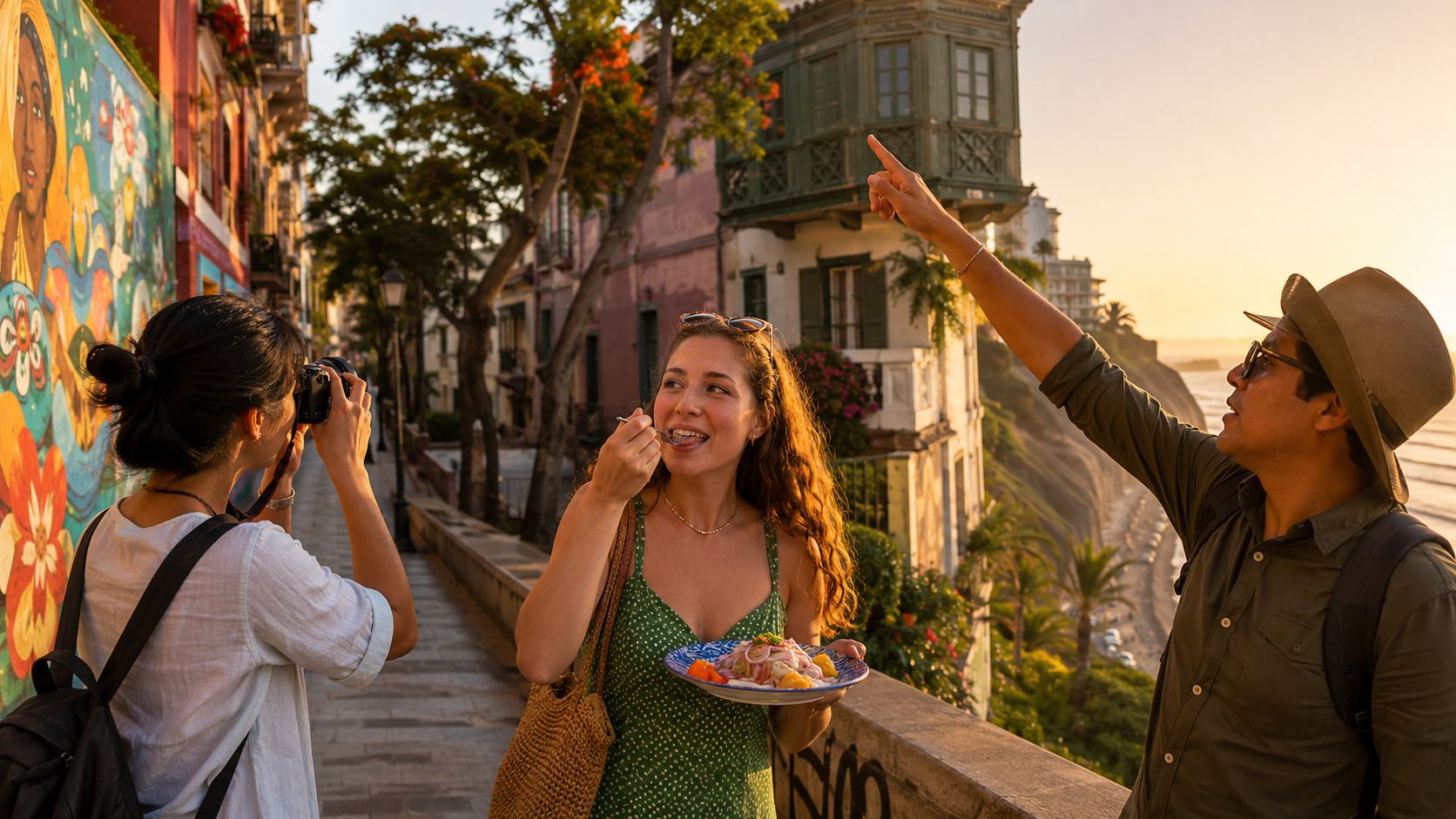
I once watched two travelers leave the same town with completely different memories. One had a phone full of landmark photos. The other remembered the grandmother who laughed at his clumsy greeting, handed him a bowl of soup, and taught him how to eat it properly.
Beyond the Postcard An Introduction to True Immersion
Most trips are built around movement. See the church. Snap the square. Catch the train. Find the next view. You come home tired, sometimes happy, and occasionally a little unsettled by how quickly the experience flattened into a slideshow.
Cultural immersion travel asks something different of you. It asks you to stay long enough to notice how a place breathes. Not just what it looks like, but how people greet one another, when shops get busy, what silence means at the dinner table, and why a neighborhood gathers where it does.
A postcard trip says, “I was there.” An immersive trip says, “I learned something while I was there.”
That shift matters because this isn't some fringe style of travel. The cultural tourism market was valued at USD 7.25 billion in 2024 and is projected to reach USD 16.95 billion by 2032, according to Data Bridge Market Research's cultural tourism market analysis. That tells us travelers are putting real value on heritage, traditions, and experiences rooted in local life.
The moment when travel becomes personal
Think about the difference between taking a cooking class at a resort and learning to make one local dish in someone's home kitchen. In the first, you may learn a recipe. In the second, you might also learn why the dish is cooked on certain days, who usually prepares it, what ingredient substitutions signal class or region, and why everyone laughs when you hold the spoon the wrong way.
That's the heart of immersion. It turns places into relationships.
A useful test: If your day could have happened almost anywhere, you were traveling. If it could only have happened there, you were probably immersing.
Many first-time travelers worry that meaningful travel requires a dramatic leap. It doesn't. You don't need to disappear into a remote village or reject every popular sight. You need curiosity, humility, and a willingness to participate in daily life instead of staying behind the glass of tourism.
The reward isn't just a better trip. It's a different way of seeing people, and often yourself.
What Is Cultural Immersion Travel Really
A simple way to understand cultural immersion travel is this. A tourist can act like a hotel customer. An immersive traveler tries to act like a thoughtful house guest.
A hotel customer asks, “What am I paying for?”
A house guest asks, “How do I behave well in someone else's space?”
That doesn't mean you need to stay in a literal home. It means you travel with a relational mindset instead of a transactional one. You're not just consuming a destination. You're entering a living place where people already have routines, values, pressures, humor, and histories that don't exist for your entertainment.
Participation matters more than proximity
Many readers get stuck here. They assume immersion means “going far off the beaten path.” Not necessarily. You can stay in a well-known city and still achieve cultural immersion. You can also visit a remote place and remain sealed off from local life.
Immersion is less about geography and more about participation.
Here's what that often looks like in practice:
- You change your routine. You take the local bus instead of defaulting to taxis.
- You accept small friction. You slow down enough to buy fruit from the market, ask questions, and wait through imperfect communication.
- You choose recurring contact. You return to the same café, bakery, or food stall until you become familiar rather than anonymous.
- You learn context. You stop asking only “What should I see?” and start asking “How do people here live?”
This is one reason interest has moved into the mainstream. In a survey of 2,301 U.S. adults, 53% said it is essential to learn about new cultures and gain perspective when traveling, and 58% said it is vital to learn about the culture of the destination they visit, as reported by Travel Agent Central's coverage of the survey.
What travelers are actually looking for
People often say they want “authentic” travel, but that word can get fuzzy fast. Usually, they mean a few specific things.
| Traveler impulse | What they often want |
|---|---|
| Tired of sightseeing | A reason to slow down |
| Tired of crowds | More human-scale interaction |
| Tired of staged experiences | Real conversation and context |
| Tired of spending without meaning | A stronger connection to place |
If that sounds familiar, you might enjoy these authentic travel experiences that go beyond box-ticking.
Immersion doesn't require perfection. It requires repeated, respectful contact with ordinary life.
A better definition to carry with you
Cultural immersion travel is the practice of entering a place as a learner. You observe, but you also participate. You spend money with awareness. You let local rhythms shape your day. You leave room to be corrected.
That last part matters. Real immersion includes moments when you realize your assumptions were wrong. Oddly enough, that's often when the trip starts becoming memorable.
The Ethical Compass of an Immersive Traveler
The deeper you go into a place, the more ethics matter. Surface tourism can still do harm, of course, but immersive travel puts you in closer contact with people's homes, beliefs, work, celebrations, and vulnerabilities. Good intentions alone won't guide you well enough.
Ethical travel isn't a checklist. It's a compass. It helps you ask better questions before you act.
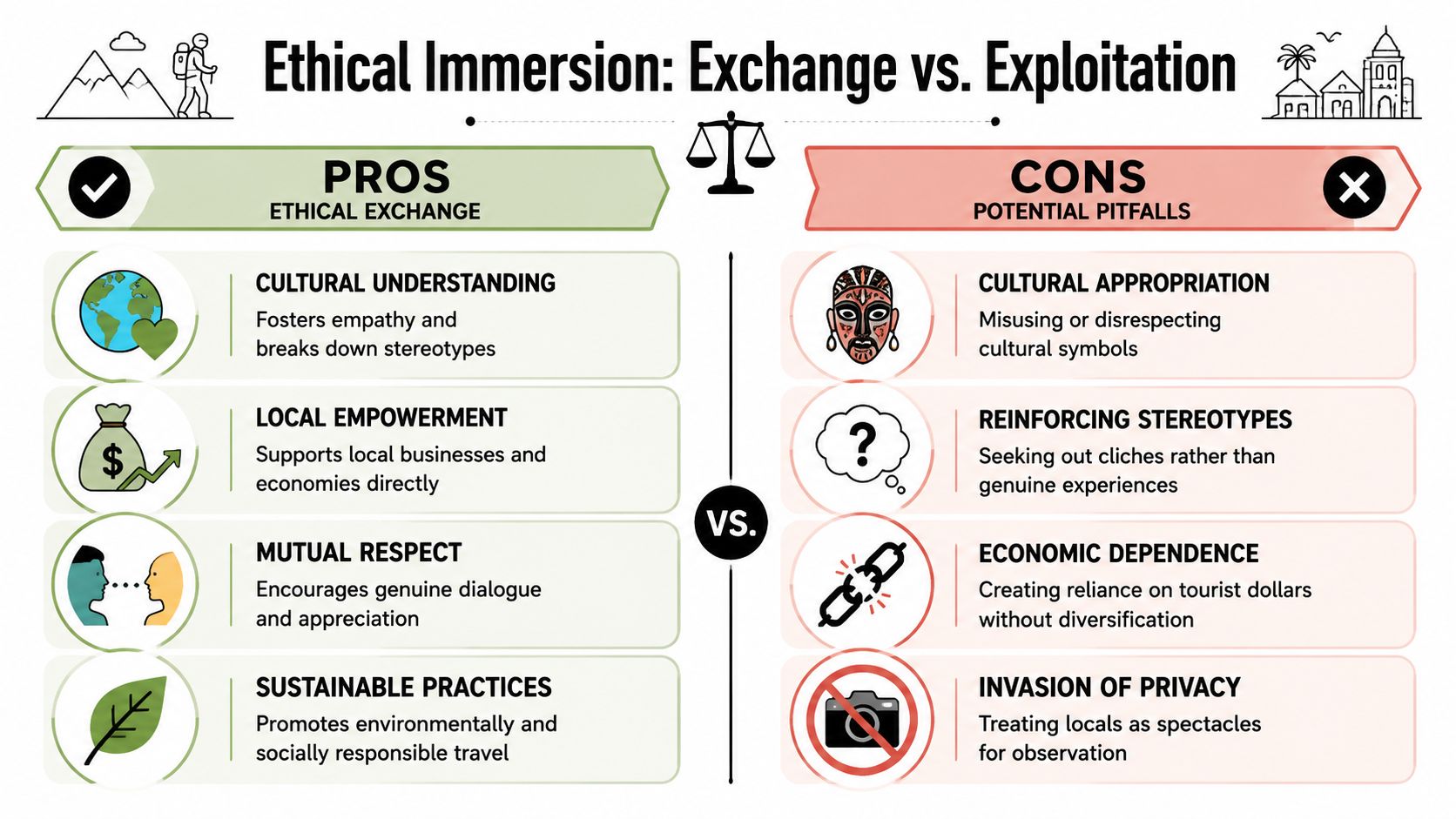
Exchange versus extraction
A useful distinction is this. Are you entering a situation to exchange, or to extract?
Exchange looks like paying local people fairly, asking permission before photographing them, accepting that some spaces aren't yours to enter, and understanding that not every meaningful experience needs to become content for social media.
Extraction looks like collecting people's lives as atmosphere. It turns ceremonies into spectacles, neighborhoods into aesthetics, and personal stories into souvenirs.
Ask yourself:
- Who benefits from this interaction
- Who is taking the risk
- Who has the power to say no
- Would I behave this way in my own community
Spend in ways that match your values
Where your money goes shapes the kind of travel economy you reinforce. A family-run guesthouse, a local guide, a neighborhood workshop, and a market stall often circulate money differently than large, detached systems built around visitor convenience.
That doesn't mean every global business is unethical and every local option is pure. It means you should stay alert.
A grounded way to choose is to favor businesses and experiences that show some combination of the following:
- Local ownership: The people hosting the experience have a visible stake in it.
- Clear consent: Community participation looks voluntary, not pressured.
- Cultural context: You're being taught, not just entertained.
- Respectful limits: The host is comfortable setting boundaries.
For travelers who want a broader framework, these actionable sustainable tourism practices pair well with immersive travel.
Ethical filter: If an experience promises “real local life” while isolating locals from the terms of that experience, step back.
Photography, privacy, and humility
The camera can turn a warm encounter into a cold transaction in seconds. Before taking a photo, pause. Is this person participating, tolerating, or trapped by politeness? Those are different things.
A better habit is to build the interaction first. Buy the tea. Learn the name. Share a few words. Ask. Accept no quickly and graciously.
Ethics also includes humility about what you understand. You may be welcomed into a ritual, meal, or conversation without fully grasping its meaning. Don't rush to explain the culture back to itself after one afternoon. The most ethical travelers stay teachable.
How to Plan and Budget for Immersive Travel
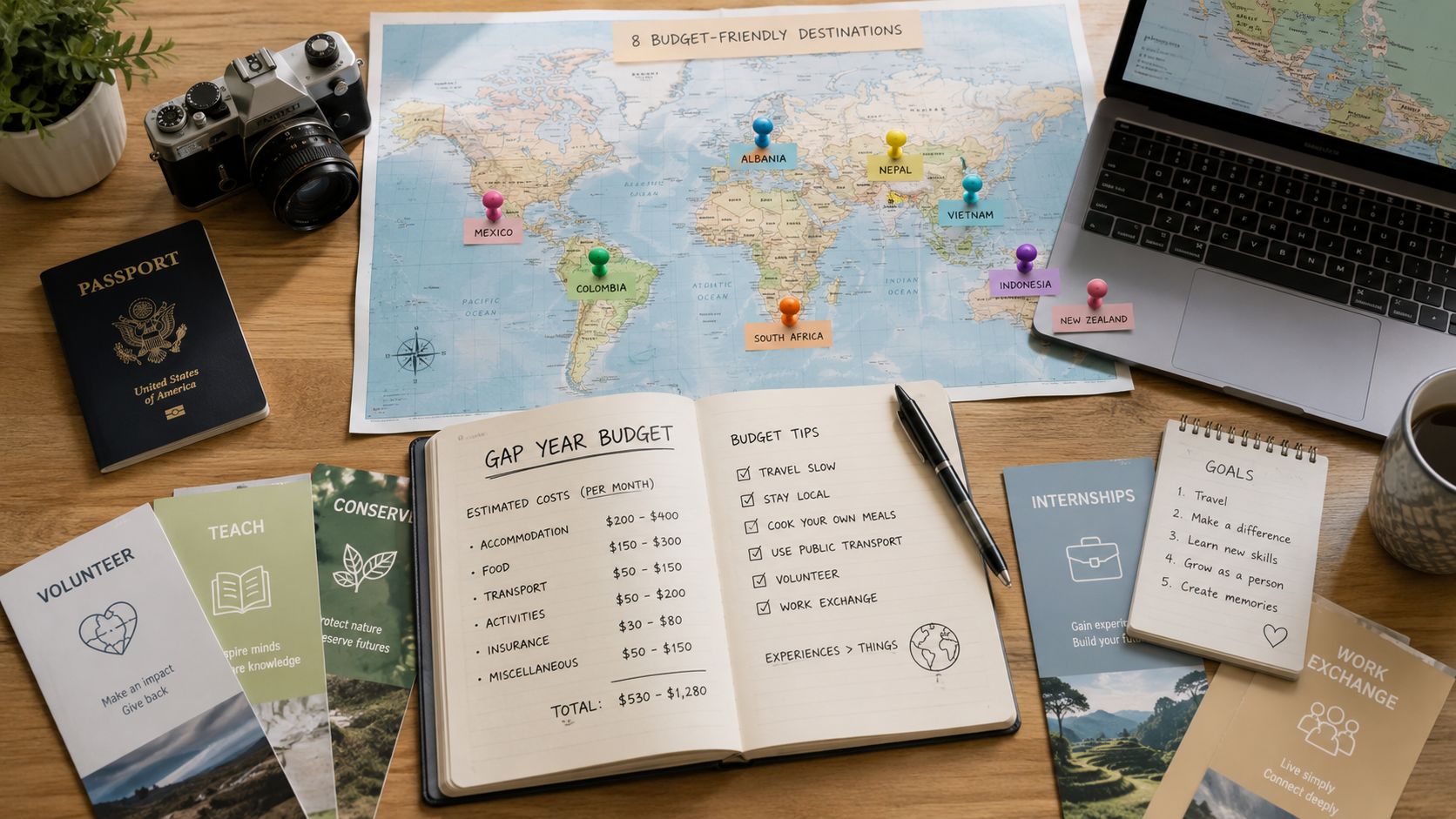
One reason people postpone cultural immersion travel is simple. They assume it costs more. A boutique “local experience” sold to tourists often does. But real immersion often becomes more affordable when you stop paying for distance from local life.
That gap in advice is real. One underserved budgeting angle notes that 42% of backpackers and budget travelers specifically seek immersive experiences but fear they are unaffordable, and 68% of budget-conscious solo travelers are left unable to plan immersive trips due to cost uncertainty. Those figures matter because many travelers don't need motivation. They need a planning method.
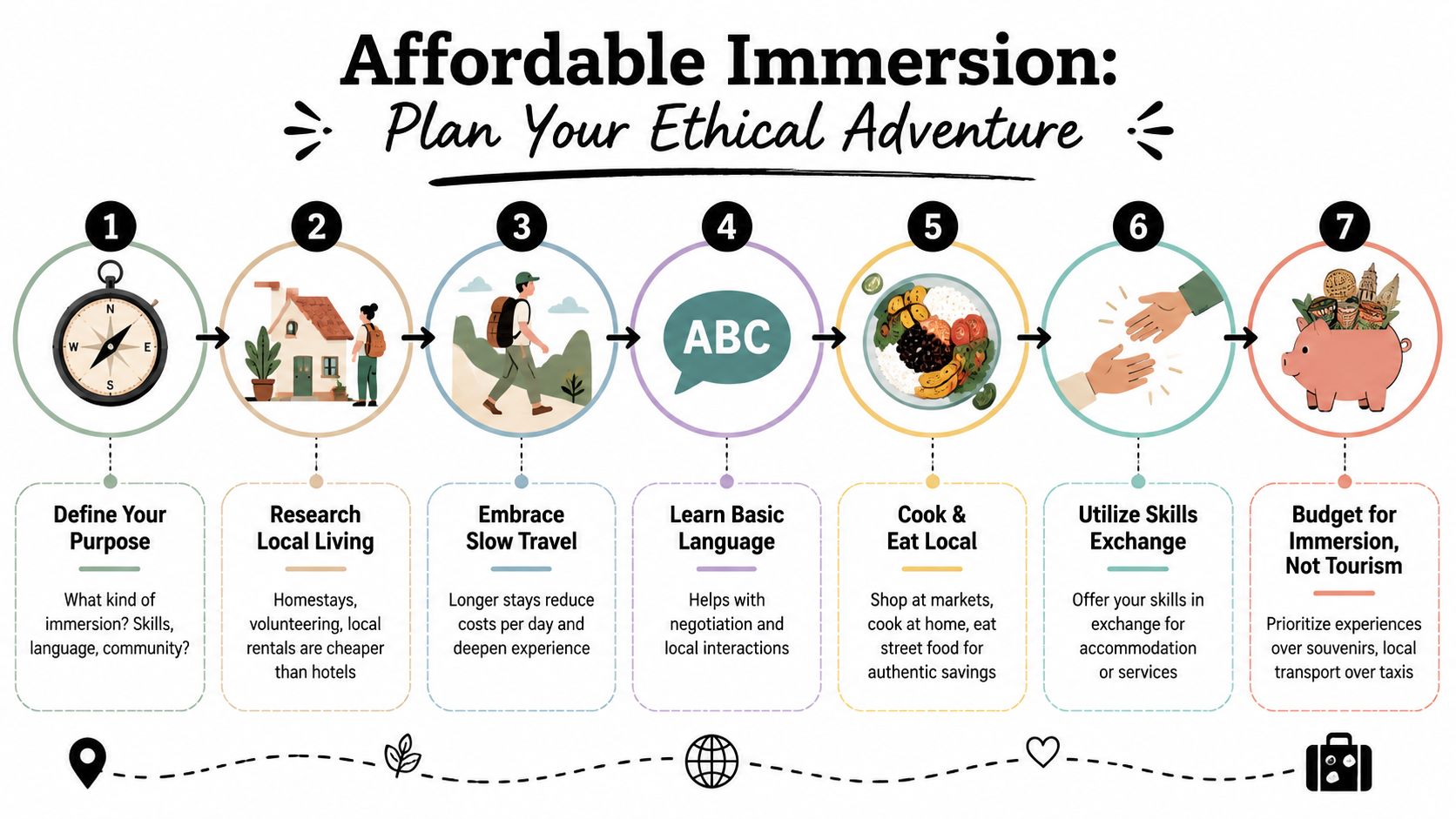
Budget for contact, not for convenience
A standard trip budget often centers comfort upgrades. Private transfers. Central hotel zones. Fast-moving itineraries. Restaurant districts designed for visitors. Immersion works better when you shift your budget toward repeated local contact.
Try this four-part framework.
1. Pick one anchor, not five highlights
Choose a destination where you can stay long enough to become recognizable. A week in one neighborhood often teaches more than racing through three cities.
Your anchor might be:
- a language school
- a homestay
- a volunteer role with clear boundaries
- a recurring workshop like cooking, weaving, or dance
If language learning is part of your plan, this guide to studying Spanish in Guatemala is a good example of how immersion and affordability can overlap.
2. Build your spending around daily life
Ask practical questions before you book anything.
| Budget category | Tourism default | Immersion-minded alternative |
|---|---|---|
| Sleep | Hotel chain | Homestay or locally owned guesthouse |
| Transport | Airport transfers and taxis | Public transport and walking |
| Food | Restaurant hopping | Markets, street food, simple local spots |
| Activities | Prepackaged tours | One or two skill-based or community-led experiences |
This doesn't mean you must choose the cheapest option every time. It means you should notice when you're paying extra to stay separated.
3. Leave room for unplanned participation
Overbooking is the enemy of immersion. If every day is packed, you'll miss invitations, conversations, neighborhood events, and ordinary errands that often become the richest memories.
Set aside part of your budget for things you discover on the ground. A local class. An extra week in the same place. A shared meal. A short bus ride to a nearby town someone recommended.
A good immersion budget has slack in it. Not waste. Slack.
A simple planning sequence
When you're unsure where to begin, use this order:
Choose the purpose
Language, food, history, craft, faith, music, or community service. Your purpose shapes your spending better than a generic bucket list.Research local living first
Don't start with top attractions. Start with neighborhoods, transport habits, community spaces, and typical meal patterns.Book only your first layer
Secure arrival, your first stay, and a basic communication setup. Keep the rest flexible if your destination allows it.Price experiences by connection value
Ask, “Will this create interaction, skill, or understanding?” If not, it may belong lower on the list than you think.
A tight budget doesn't block immersion. In many places, it can push you closer to local systems, which is often where the learning begins.
On the Ground Strategies for Authentic Connection
Once you arrive, immersion becomes less about planning and more about rhythm. Small repeated actions matter more than dramatic one-off experiences. Here, many travelers either open the door to connection or drift back into the tourist bubble.
Expert guidance points to four strong levers: local language lessons, public transport, homestays or locally owned lodging, and community events. Together, they create the contact points that move travel beyond transactions and into daily life, as described in A Little Adrift's guide to deeper cultural immersion.
Use the three-phrase rule
You don't need conversational fluency to begin. You need a short set of phrases you can use often and sincerely.
Start with:
- Hello
- Thank you
- A genuine question
That third phrase is the breakthrough. Not “How much?” but something human and simple. “What do you recommend?” “Is this made here?” “Do people usually eat this in the morning?” “Did you grow up in this town?”
A phrase like that invites explanation, not just service.
Turn ordinary errands into entry points
Travelers often chase “authentic experiences” while skipping the most obvious ones. Daily life is full of openings.
Ride local transport with your eyes up
On a bus, tram, or shared van, you learn how people queue, where they make room, when they speak softly, and what counts as normal patience. Even when no conversation happens, you're absorbing social rhythm.
If someone does speak to you, don't rush. Let the exchange be small. A small exchange repeated over several days often matters more than a single intense encounter.
Return to the same places
Familiarity changes everything. The first visit is a transaction. The fourth is often a relationship in miniature.
Go back to the same fruit stall, bakery, tea shop, or lunch counter. Recognition builds trust, and trust opens conversation.
Try becoming a regular before trying to become “immersed.” The second usually grows from the first.
Choose activities with shared attention
The easiest conversations don't always happen face-to-face. They often happen when you're doing something alongside others.
Good examples include:
- Cooking classes with local hosts
- Community sports or movement classes
- Art or craft workshops
- Religious or seasonal events where visitors are clearly welcome
- Volunteer roles with defined tasks and local leadership
Shared attention lowers pressure. You aren't interviewing people about their culture. You're joining a moment that already has its own purpose.
Ask better questions
A lot of travelers accidentally flatten conversation by asking broad questions too early. “What is your culture like?” is too big. “What do families usually do on Sundays here?” is answerable.
Better questions are concrete, local, and humble. They assume you don't know much, because you probably don't yet.
Connection on the road rarely arrives as one huge cinematic scene. More often, it comes in layers. A greeting. A joke. A correction. A shared table. A return visit. That's how cultural immersion travel becomes real.
Staying Safe as a Solo and Immersive Traveler
Immersion can make travel more rewarding. It can also introduce risks that generic advice doesn't address well, especially when you're solo and especially when you're a woman. “Be aware” is too vague to help when you're deciding whether to trust a host, join an informal outing, or attend a local event in a place where you don't know the social rules.
That gap isn't hypothetical. One underserved safety angle notes that 57% of solo female travelers abandon immersive programs due to unaddressed safety concerns during unstructured community interactions. The point isn't to make you fearful. It's to recognize that deep participation needs deeper preparation.

Vet people, not just places
A destination can be broadly safe while a specific situation is not. That's why immersive travel requires person-level screening.
Before saying yes to a homestay, guide, volunteer setup, or invitation, look for signs of structure.
For homestays
Check for:
- Independent reviews with detail rather than generic praise
- Clear communication before arrival
- Specific sleeping arrangements
- Clarity about who lives in the home
- A plan for arrival, keys, and late-night access
If answers are vague, keep asking. If the host becomes irritated by reasonable safety questions, that is information.
For local guides or informal activities
Pay attention to:
- whether someone is recommended by a trusted local business or school
- whether route, timing, and cost are clear before departure
- whether there's pressure to isolate you from your own plans or contacts
A trustworthy setup can explain itself without making you feel guilty for checking.
For a broader foundation, these solo travel safety tips are useful alongside immersion-specific planning.
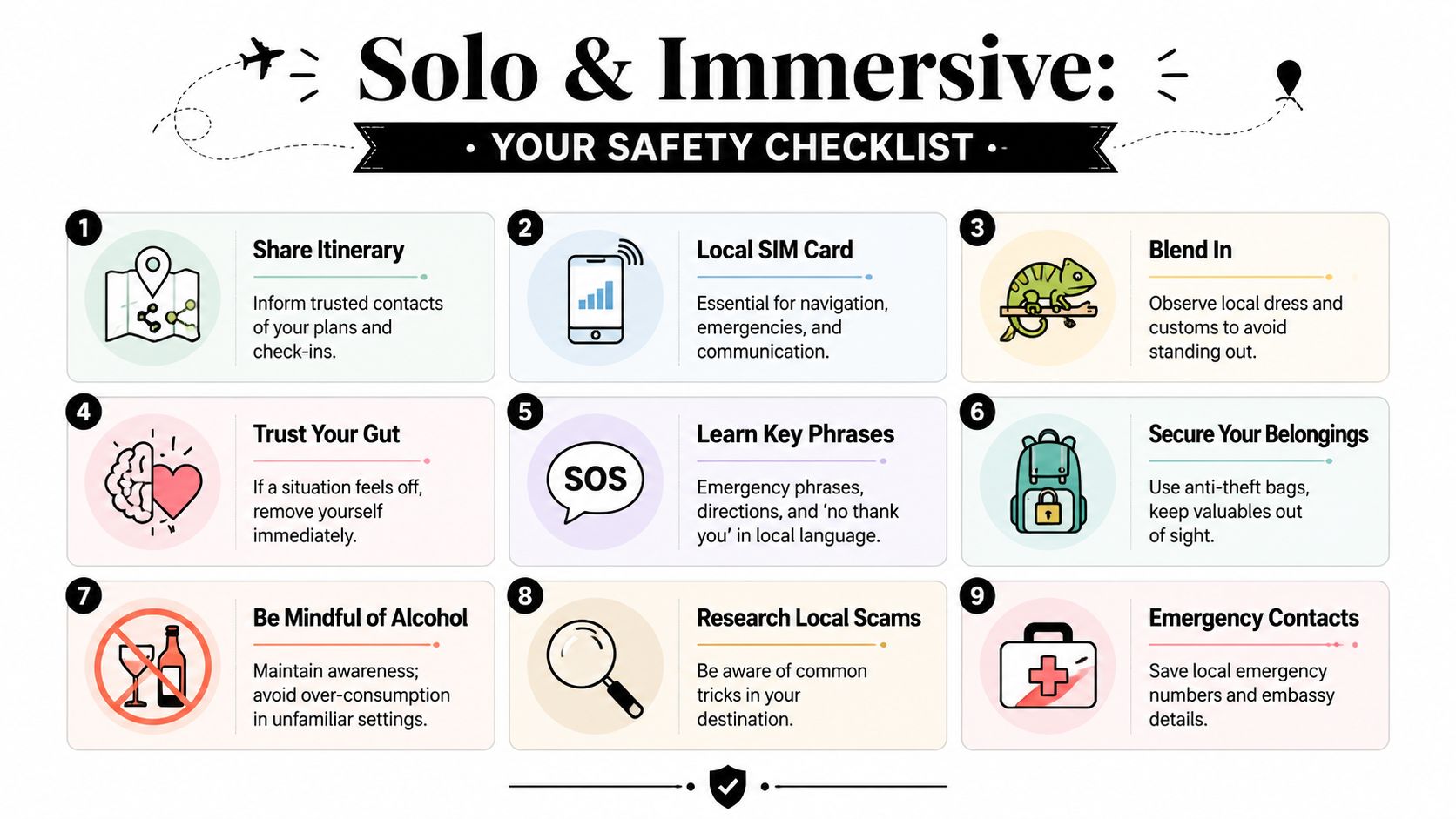
Build your own safety infrastructure
Don't outsource all responsibility to hosts or programs. Create a simple system you control.
| Safety layer | What to do |
|---|---|
| Communication | Get a local SIM or reliable data access quickly |
| Check-ins | Share a routine with one trusted person |
| Movement | Learn how to leave an area independently |
| Boundaries | Decide in advance what you won't do alone |
| Exit plan | Keep enough money and battery to change plans fast |
This is especially important in remote or socially intense settings, where politeness can pressure you to continue with plans that no longer feel right.
If you feel yourself negotiating against your own discomfort, pause. You don't need a courtroom-level case to leave.
Respect culture without surrendering judgment
Solo travelers, particularly women, sometimes feel torn between cultural sensitivity and self-protection. You can honor local norms without overriding your instincts.
That may mean dressing more conservatively than you would at home, avoiding one-on-one social situations that feel ambiguous, or declining invitations that place you in private settings too quickly. None of that makes you closed-minded. It makes you responsible.
A good rule is to let trust build in layers:
- public before private
- daytime before nighttime
- group before solo
- known contact before new contact
Immersive travel should stretch you, not corner you. The safest travelers aren't the ones who say yes to everything. They're the ones who know how to slow a situation down.
Your Journey Begins Before You Leave
The best part of cultural immersion travel is that it doesn't begin at the airport. It begins the moment you stop treating travel as consumption and start treating it as education.
That change is available to almost anyone. You don't need a luxury budget. You don't need to be fearless. You don't need perfect language skills. You need a few sturdier habits. Stay curious. Spend carefully. Choose repeated contact over polished convenience. Protect your safety without apologizing for it.
A meaningful trip usually grows from small decisions. Which neighborhood you stay in. Whether you learn ten phrases before arrival. Whether you leave time for ordinary life. Whether you ask permission. Whether you go back to the same café tomorrow.
If volunteering is part of the kind of immersion you want, start by looking at affordable volunteer abroad programs that can support thoughtful planning. Then go one step smaller. Download a language app. Watch a film from the place you're curious about. Eat at a family-run restaurant in your own city and ask about the region the food comes from.
That's how this kind of travel starts. Not with a grand declaration. With attention.
If you want more practical, grounded guidance for affordable and meaningful trips, Travel Talk Today offers step-by-step advice on budgeting, slow travel, cultural immersion, volunteering, and solo travel safety so you can plan journeys that feel deeper than a checklist.