Picture this: you’re on a month-long adventure, hopping between cities and climates, all with just a single carry-on. Sound impossible? I used to think so, too. But this isn't some travel fantasy; it’s what happens when you get smart about your fabrics. The secret lies in quick-dry travel clothes—game-changing garments that pull sweat away from your skin, fight off odors, and dry out in hours, not days.
The Secret to Packing Lighter and Traveling Longer

The dream of traveling light—really light—is about so much more than just avoiding checked bag fees. It’s about freedom. It’s the ability to navigate a crowded train station without wrestling a giant suitcase or to change your plans on a whim. The trick isn't about packing less; it's about packing smarter, with a core wardrobe where every single item pulls its weight.
Unlock a New Style of Travel
Travelers everywhere are ditching their bulky, slow-drying cotton clothes, and the market is definitely paying attention. It’s not just a niche trend; people are voting with their wallets. In 2026, the market for quick-dry travel t-shirts has already climbed past $2.1 billion and is on track to hit a staggering $4.7 billion by 2033. This isn't just about hype; it's about performance. We're talking about fabrics that wick moisture seven times faster than cotton and can go from a sink wash to bone-dry in less than two hours. If you're curious about the numbers behind this shift, the quick-dry apparel market report on MarketIntelo.com breaks it down.
What does this actually mean for your trip? It means you can:
- Wash your clothes in the sink at night and have them ready to wear by morning. No more searching for a laundromat.
- Slash your luggage weight and breeze past the baggage claim carousel for good.
- Always be ready for an adventure, whether it’s a sudden downpour during a city walk or a spontaneous hike.
- Travel more mindfully by realizing you need far fewer items to live comfortably on the road.
The real goal here is to build a travel wardrobe that works for you. It’s about creating a system that gives you the freedom and flexibility to focus on the experience, not the stuff you brought with you.
By choosing a few key pieces of quick-dry clothing, you completely change how you move through the world. You stop being a tourist burdened by luggage and become a traveler ready for anything. To get the rest of your trip organized, our comprehensive travel planning checklist is the perfect place to start. This is how you travel lighter, stay out longer, and make your journey truly your own.
Choosing Your Adventure-Ready Wardrobe Fabric by Fabric

If I’ve learned one thing after years on the road, it's that the secret to a brilliant travel wardrobe isn't just about what you pack—it’s about the very fabric of your clothes. Becoming a bit of a fabric detective is your first step to unlocking true travel freedom.
Think of it this way: the tag on a garment tells a story. It reveals whether that shirt is ready for a humid jungle trek in Costa Rica or a windy coastal walk along the cliffs of Ireland. They aren't all created equal, and knowing the difference is what separates a rookie packer from a seasoned traveler.
This is about more than just picking a shirt that feels light. It's about matching the right material to the adventure. You wouldn't wear the same thing exploring the sweltering streets of Bangkok as you would on a multi-day hike in the mountains of Peru. Choosing wisely means more comfort, less laundry, and a much lighter bag.
The Core Synthetic Performers
Synthetics are the backbone of most modern travel gear, and for good reason. They are tough, lightweight, and engineered to dry at lightning speed.
Nylon: I think of nylon as the workhorse of my travel bag. It’s exceptionally strong and holds up against scrapes and snags, which is why it’s perfect for gear that takes a beating, like hiking pants or a reliable travel shell. When you see it blended with a bit of spandex, you get that essential stretch for comfort on long-haul flights or active days.
Polyester: This is your champion for wicking away moisture. Polyester fibers are designed to pull sweat from your skin and push it to the fabric's surface where it can evaporate quickly. This makes it an absolute must for base layers, workout gear, and anything you’ll be wearing in seriously hot weather.
The love for these fabrics is nothing new. The rise of synthetics forever changed how we travel, allowing us to arrive with fewer wrinkles. In the 1950s, data showed 40% of air travelers chose synthetics for this very reason. Fast forward to today, and with airlines tightening carry-on rules, recent surveys show 55% of backpackers now consider quick-dry fabrics essential for keeping their luggage under 10kg—often saving $50-$100 in baggage fees per flight. You can learn more about the history of travel apparel on Bluffworks.com.
To help you decide, here’s a head-to-head comparison of the most popular quick-dry fabrics. This table breaks down their best use cases, pros, and cons to help you build the perfect travel wardrobe.
Quick Dry Fabric Comparison for Travelers
| Fabric Type | Best For | Drying Time | Odor Resistance | Durability |
|---|---|---|---|---|
| Nylon | Hiking pants, outerwear, backpacks | Fast | Low | Very High |
| Polyester | T-shirts, base layers, workout clothes | Fastest | Low to Medium | High |
| Merino Wool | Base layers, socks, shirts for multi-day wear | Medium | Very High | Medium |
| Lyocell (TENCEL™) | Casual shirts, dresses, everyday travel wear | Medium | High | Medium |
Choosing the right fabric mix is a game-changer. A wardrobe with a few key pieces of polyester, a durable nylon layer, and a merino base can handle almost any adventure you throw at it.
Nature’s Technical Fabric
While synthetics are workhorses, don’t overlook nature's own high-performance hero: merino wool.
Merino Wool: Forget any thoughts of a scratchy, old-fashioned winter sweater. Modern merino wool is ultra-fine, incredibly soft, and a true master of temperature regulation. It keeps you warm when it's cold and breathes to keep you cool when it's hot.
But its real superpower for a traveler? Its natural resistance to odor. You can genuinely wear a merino shirt for days on end without it smelling, a priceless quality on a long trip with limited laundry access.
- Best Use Case: It's absolutely perfect for base layers, t-shirts, and socks, especially on multi-day treks or in climates where the temperature swings throughout the day.
- Key Benefit: The ability to manage temperature and odor means you can pack far fewer items. It’s a minimalist traveler's dream come true.
With this knowledge, you can start building a smarter, lighter, and more capable travel wardrobe. Once you've got your fabrics sorted, the next step is piecing it all together. For a complete packing list, don't miss our guide on the ultimate backpacking essentials checklist to make sure you're ready for anything.
From Closet to Carry-On: Crafting Your Ultimate Travel Wardrobe
Alright, you’ve got the scoop on the best quick-dry fabrics. Now for the fun part: turning that knowledge into a travel wardrobe that works as hard as you play. This is where we move beyond the science of textiles and into the art of packing. The goal isn't to stuff a suitcase for every possible "what if," but to curate a small, smart collection of clothes that sets you free.
A truly great travel wardrobe is all about versatility. Every single item should earn its spot by playing well with others. My secret? I build my travel kit around a core of neutral colors—think classic black, grey, navy, or even a nice olive green. Then, I'll toss in one or two accent colors through a scarf or a t-shirt. It’s amazing how you can create dozens of different looks from just a handful of pieces.
The Magic of a Capsule Wardrobe
When you’re pulling items from your closet, think in terms of the "Rule of Three." It's a simple guideline I swear by: for every pair of bottoms you pack, you should have three different top options. This little trick is your ticket to maximum outfits with minimum bulk. A great pair of travel pants can be your sightseeing staple with a casual tee, get dressed up with a nicer blouse for dinner, and then layered with a long-sleeve merino shirt when the temperature drops.
Let’s imagine you're packing for a two-week trip somewhere with unpredictable weather, like Colombia. You could be sweating through a day in coastal Cartagena and then shivering through a cool evening in mountainous Bogotá.
Here’s what a practical, 12-piece capsule might look like:
Tops (6):
- 2x merino wool t-shirts: Absolute game-changers for their odor resistance on long, busy days.
- 1x polyester blend t-shirt: Perfect for intense heat or a sweaty hike since it dries in a flash.
- 1x stylish TENCEL™ top: Something breathable that looks sharp for a nice dinner out.
- 1x long-sleeve merino base layer: Your go-to for layering, sun protection, or just a bit of extra warmth.
- 1x lightweight fleece or zip-up: A cozy, indispensable layer.
Bottoms (3):
- 1x pair of durable, stretchy travel pants: A nylon-spandex blend is fantastic for all-day comfort.
- 1x pair of convertible hiking pants or lightweight joggers.
- 1x versatile skirt or dress made from a quick-dry fabric.
Outerwear & Extras (3):
- 1x packable waterproof rain shell: Don't leave home without it.
- 1x stylish scarf: Adds warmth, elevates an outfit, and can even act as a head covering.
Shoes (1-2):
- 1x pair of comfortable, all-purpose walking shoes or trail runners. You live in these.
This tiny collection is your foundation for everything from exploring city streets to hitting a light trail, and it all fits into a carry-on. Of course, you’ll want to tweak this based on your own style. An urban explorer might swap the hiking pants for a pair of smart travel trousers, while an adventure junkie will double down on purely functional gear.
Mastering the Art of the Pack
You've picked your clothes. Now, how you pack them is what truly makes the difference. This is where packing cubes and smart rolling techniques become your absolute best friends.
I used to think packing cubes were just for keeping things tidy. I was wrong. They are powerful compression tools. When you roll your clothes tightly and stuff them into cubes, you squeeze out all the dead air, shrinking their volume dramatically.
Here’s my simple, three-step method for a perfectly packed bag:
- Roll, Never Fold. Seriously. Tightly rolling your clothes is the single best way to minimize wrinkles and save an unbelievable amount of space.
- Cube It Up. Give your clothes categories. I use one cube for tops, one for bottoms and dresses, and a smaller one for underwear and socks. No more digging through a messy backpack to find that one clean shirt.
- Fill Every Nook and Cranny. Those shoes you’re packing? They’re not just shoes—they’re storage containers. Stuff them with socks, underwear, or even your charger cables to make use of that empty space.
Building a streamlined travel wardrobe is one of the most rewarding skills you can learn. If you're gearing up for a bigger adventure, our complete guide on how to plan a backpacking trip dives even deeper into long-term travel logistics. When you pack with intention, you travel lighter, feel more agile, and are ready for absolutely anything the road throws your way.
The Art of Sink Washing and On-the-Go Laundry
The real magic of traveling with quick-dry clothes isn't just a lighter backpack—it's the incredible freedom from ever needing a laundromat. Once you learn how to do a quick wash on the go, you can refresh your wardrobe anywhere. I’m talking about a boutique hotel sink in Paris or even a bucket in a rustic Himalayan guesthouse. This simple skill transforms a handful of clothes into an endless supply of fresh outfits.
It all starts with what you're washing with. Forget about bulky liquid detergents that risk spilling all over your bag. The smart move these days is to pack ultra-light alternatives. I personally swear by laundry detergent sheets, which are paper-thin and dissolve in water. Solid detergent bars are another brilliant, TSA-friendly option. Both are spill-proof and work wonders on a small batch of clothes.
Your Sink Washing Toolkit
Washing in a sink is faster than you'd think. All you really need is your soap and a universal sink plug. Seriously, don't leave home without one; you'd be surprised how many hotel and hostel sinks are missing a stopper. It's a tiny item that can be a total trip-saver.
Another pro tip? A simple dry bag can double as a portable washing machine. Just toss in your clothes, add a bit of water and soap, seal the top, and give it a good shake. It's surprisingly effective for getting the grime out.
This is where having a well-planned capsule wardrobe really pays off.
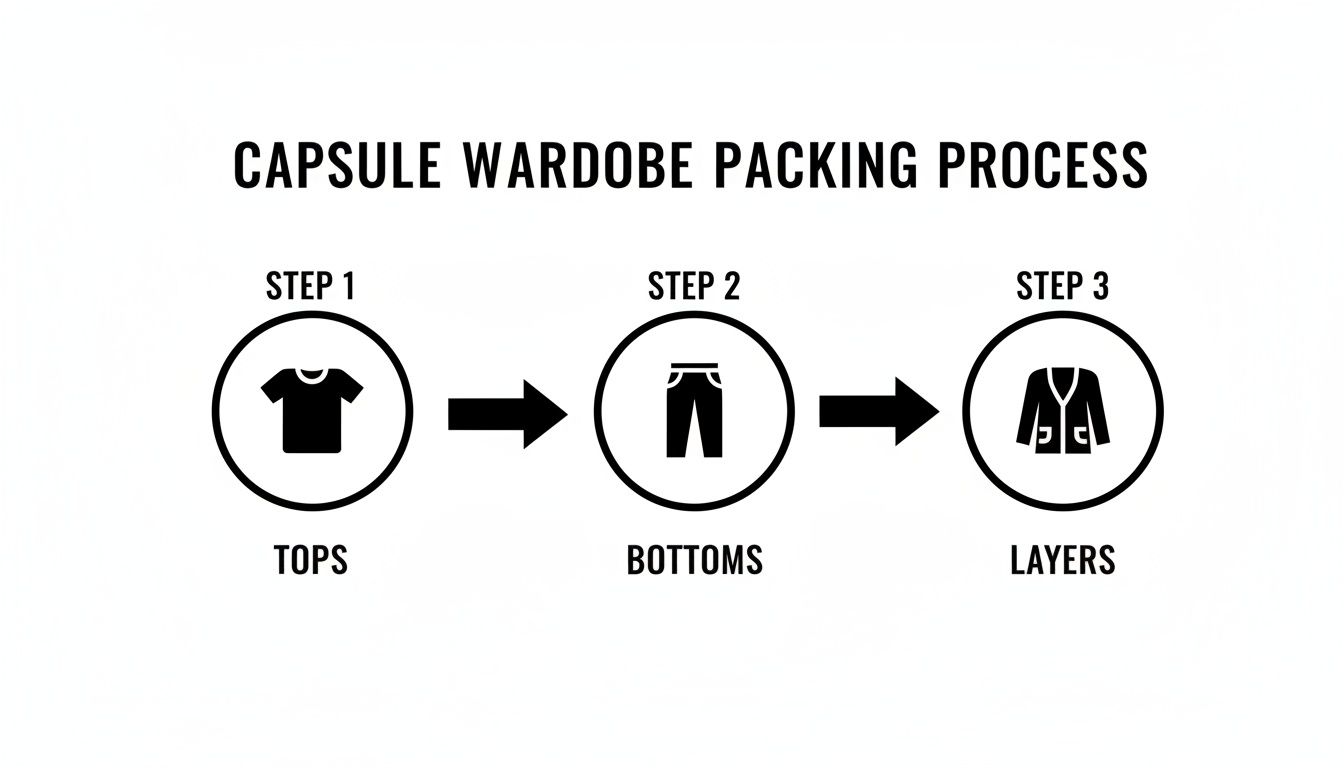
When you build your packing list around a few core tops, bottoms, and layers that all work together, laundry day on the road becomes effortless. You’ll always have something clean ready to wear while another piece hangs to dry.
After a quick wash, the next part is key to a fast turnaround: getting the excess water out. Whatever you do, don't twist or wring your high-tech fabrics—it can stretch and damage the fibers over time. Instead, learn the “traveler’s burrito roll” technique.
Lay a towel flat, place your wet garment on it, and roll them up tightly together. Press down firmly—or even stand on the roll—to squeeze as much water as possible from the clothing into the towel. This one trick will cut your drying time in half, easily.
Creative Drying Strategies
Now for the final piece of the puzzle: hanging your clothes to dry. This is where you can get a little creative! A travel clothesline with suction cups is a fantastic gadget to have. In a pinch, though, you can use hangers on a shower rod, drape clothes over the back of a chair, or even use the top of a door frame.
The goal is to get as much air circulating around the fabric as possible. If I’m in a humid place like Southeast Asia, I’ll try to hang things near a fan or an air-conditioning unit. In colder climates, placing them near a radiator (but not touching it!) works like a charm.
Using these methods, your clothes will be dry, fresh, and ready for another day of adventure before you’ve even finished your morning coffee. To round out your travel knowledge, check out our guide packed with more essential backpacking tips for beginners and take your next trip to a new level.
Sustainable Choices and Budget-Friendly Finds
Building your travel wardrobe is about more than just finding clothes that dry fast. It’s a chance to pack smarter, travel lighter, and make choices that align with your values—all without breaking the bank. You absolutely can have high-performance gear without feeding the fast-fashion machine or emptying your savings.
It really comes down to a shift in thinking. Forget buying a cheap, flimsy shirt you’ll only wear for one trip. The real secret is investing in quality pieces that are built to last. One amazing pair of travel pants that sees you through five years of adventures is so much better than buying a new, mediocre pair every season. This isn't just better for the planet; it's one of the smartest financial moves a traveler can make.
Travel Gear with a Conscience
Let's be honest—the textile industry can be pretty rough on the planet. The good news is that many forward-thinking travel and outdoor brands are stepping up to change that. As you shop, keep an eye out for companies that are open about their manufacturing process and champion the use of recycled materials.
It's incredible what’s happening in fabric technology. A huge amount of high-performance polyester is now spun from recycled plastic bottles, literally turning trash into your next travel treasure. Choosing these recycled quick-dry fabrics is a small decision that adds up to a massive positive impact.
The difference we can make is staggering. By choosing durable, long-lasting gear, we push back against a fast fashion industry that generates 92 million tonnes of textile waste each year. And by opting for recycled fabrics, we can help slash water consumption in the production process by an unbelievable 79%. Learn more about the environmental impact of fashion from Earth.org.
Making these kinds of thoughtful choices is a huge part of traveling well in this day and age. If you're passionate about this, our guide on how to travel sustainably is packed with more ideas for lightening your footprint.
Finding Quality on a Backpacker's Budget
Adopting a "buy it for life" philosophy doesn't mean you need a six-figure salary. I’ve built my entire travel kit on a modest budget by being strategic. With a little savvy, you can score top-tier quick-dry clothing for a fraction of the price.
Here are a few of my go-to methods for finding a great deal:
- Shop the Off-Season: This is the oldest trick in the book for a reason. Hunt for your summer gear in the fall and your insulated layers in the spring. Retailers are desperate to clear out inventory, and that means huge discounts for you.
- Become an Outlet Pro: I've found some of my all-time favorite pieces at outlet stores and on sites like REI Outlet or Backcountry. You’ll find last season’s colors and styles for a steal, but the core technology is often exactly the same.
- Look Beyond the Big Names: While the major brands get all the attention, there are tons of smaller, direct-to-consumer companies making phenomenal gear without the giant marketing budgets. Spend some time reading reviews—you'll uncover some hidden gems.
For anyone traveling on a budget, this approach is a total game-changer. A single, quality quick-dry shirt can easily last over 50 washes without looking worn out—that's a lifespan three times longer than your average fast-fashion top. Over a few years, that durability can save you over $200 a year in replacement costs and cut your pack weight by up to 60%, saving you a small fortune on checked bag fees.
Your Quick-Dry Questions, Answered
Making the switch to a quick-dry travel wardrobe is a game-changer. It feels like unlocking a secret level of travel freedom. But with that freedom come a few practical questions. Let's dig into the common concerns I hear all the time so you can build your perfect travel kit with total confidence.
You might be picturing yourself hunched over a sink every single night doing laundry. I get it. But the magic of these fabrics is their incredible efficiency—and with a little strategy, that won't be your reality.
How Many Outfits Do I Actually Need?
For a full month on the road, you can thrive with a surprisingly small collection of just 5-7 core quick-dry pieces. This isn’t about feeling deprived; it’s about packing smart. The whole point is to create a simple, rotating system so you never feel like you're running low on clean clothes.
The system is simple: wear one, wash one, have one dry or ready to go. Because these garments dry so fast—often completely overnight—you’re never left in a lurch.
A solid minimalist capsule might look like this:
- 3-4 Tops: A mix of T-shirts and a long-sleeve for layering options.
- 2 Bottoms: A great pair of pants that can be dressed up or down, plus shorts or a versatile skirt.
- 1-2 Layers: A lightweight fleece or a merino wool top is perfect for dealing with unexpected chills or aggressive air conditioning.
The secret is making sure every single item works with everything else. When you pick neutral, complementary colors, a handful of pieces can suddenly create dozens of outfits. You’ll be amazed at how light your bag is, and you'll sidestep those dreaded checked bag fees.
Do Quick-Dry Clothes Start to Smell?
Ah, the million-dollar question. We’ve all had that old polyester gym shirt that seemed to hold onto odors for dear life. It’s a fair concern, but thankfully, fabric technology has come a long, long way.
While basic polyester can still be a bit of a funk-magnet, the best travel brands are tackling this head-on. There are two main heroes in the fight against odor:
- Merino Wool: This natural fiber is pure magic. Its structure is naturally antimicrobial, meaning it actively fights off the bacteria that cause smells in the first place. You can honestly wear a merino shirt for several days straight without a hint of odor, which is an absolute lifesaver on multi-day treks or when you're far from a laundromat.
- Antimicrobial Treatments: You'll also see many synthetic garments treated with high-tech finishes like Polygiene or HeiQ Fresh. These treatments are woven into the fabric and work to stop bacteria from growing, keeping your clothes smelling fresh for far longer.
If you’re traveling solo or heading out on a long adventure where laundry access is spotty, investing in pieces with these features is one of the smartest moves you can make.
Are They Really Worth the Higher Price?
It’s true, a technical travel shirt almost always costs more than a cheap cotton tee from a big-box store. But think of it as an investment, not an expense. These pieces are engineered for the long haul—they’re built to withstand the rigors of travel and often last 3 to 5 times longer than their fast-fashion counterparts.
Over time, you'll save a lot by not having to constantly replace worn-out clothes. And the immediate savings are real, too. Skipping checked baggage fees can easily save you $50-$100 per flight. When you add up the durability, the convenience of packing light, and the money saved on fees, the value becomes undeniable.
At Travel Talk Today, our mission is to help you travel smarter, lighter, and with more intention. For more deep dives into packing strategies and destination guides, explore all our resources at Packlight Journeys.