Ready to Trade Routine for the Road?
Dreaming of cobblestone streets in Europe or vibrant markets in Southeast Asia, but the thought of planning your first backpacking trip feels overwhelming? You're not alone. The leap from dreaming to doing is often the biggest hurdle for any new traveler, a chasm filled with what-ifs and where-to-starts. This guide is your bridge across that gap. We're cutting through the noise and confusion to deliver a clear, actionable roadmap designed specifically for first-time adventurers. Forget generic advice; we've assembled ten essential backpacking tips for beginners that cover the real-world challenges and opportunities you'll face on the road.
This isn't just another checklist. We're diving deep into the practical skills that turn a good trip into an incredible one. You'll learn how to choose the right gear without overspending, master the art of minimalist packing, and find safe, budget-friendly accommodation. More importantly, this guide is built to instill confidence. We will cover crucial safety practices for solo travelers, especially women, and show you how to travel thoughtfully and connect deeply with the places you visit.
Drawing on insights from seasoned explorers and the practical strategies we live by, this plan goes beyond just saving money. It’s about empowering you to explore independently, make smart decisions, and return home with more than just souvenirs. This is your foundation for building a lifetime of meaningful travel. Let’s turn your wanderlust into a well-packed, unforgettable reality.
1. Start with a Lightweight Backpack (40-50L capacity)
Your backpack is more than just a bag; it's your mobile home, your constant companion on the road. The single most impactful choice you can make is selecting a pack that liberates you rather than weighs you down. For a beginner, the 40-50 liter (L) range is the sweet spot. This capacity is perfectly suited for trips lasting a week or more, forcing you to pack with intention and avoid the classic rookie mistake of overpacking. A lighter bag means more freedom, less fatigue, and an easier time hopping on and off buses, trains, and rickshaws.
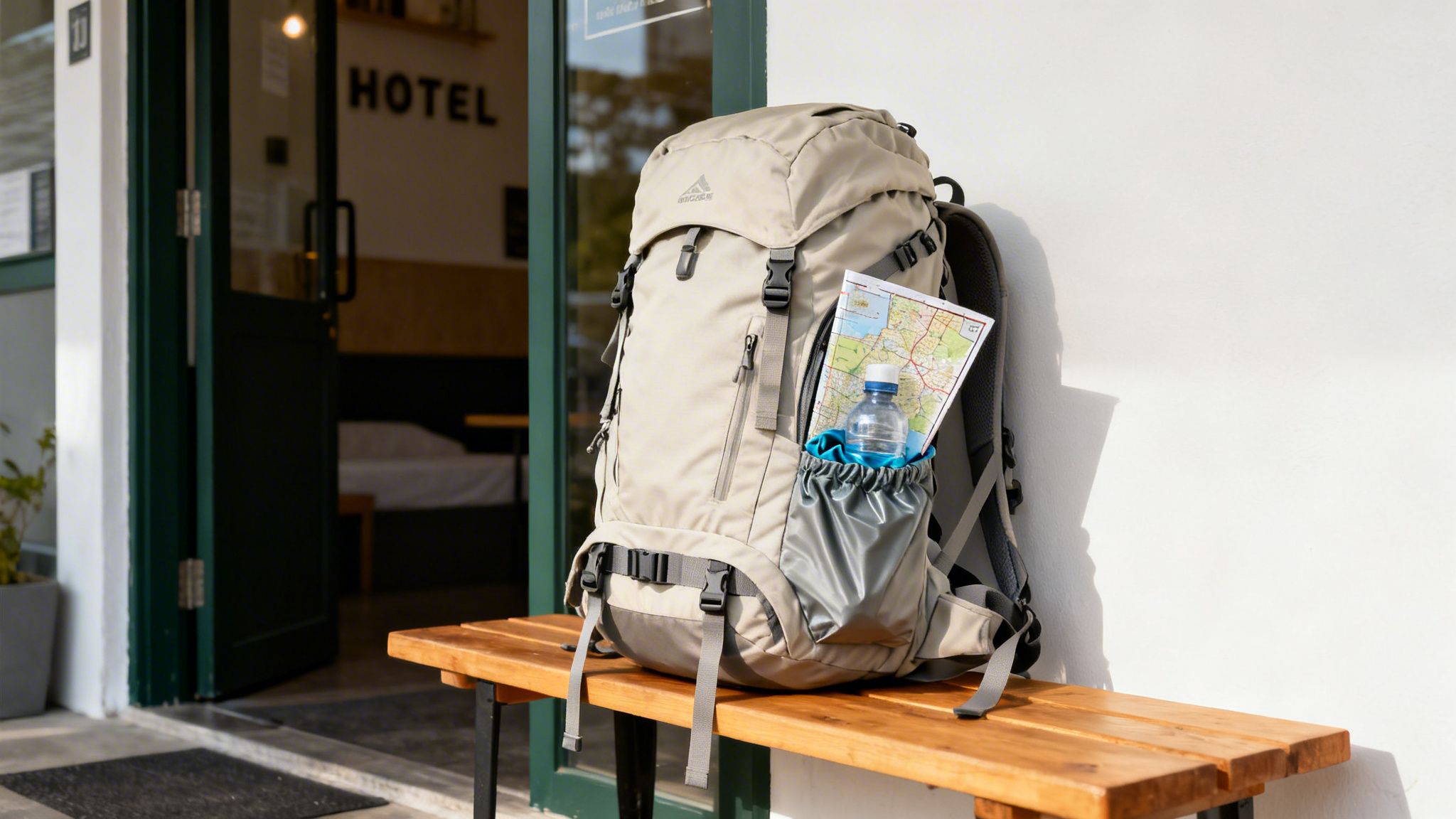
This philosophy is one of the most essential backpacking tips for beginners because it sets the tone for your entire journey. A smaller pack encourages a minimalist mindset, saving you money on checked baggage fees and reducing your physical and environmental footprint. It simplifies your life, allowing you to focus on the experience instead of managing your possessions.
How to Choose Your Perfect Pack
Finding the right backpack is a personal journey. Great entry points include the legendary Osprey Farpoint 40, a favorite among global backpackers for its durability and comfort. For those on a tighter budget, the Decathlon Forclaz 40L offers incredible value, while the REI Co-op Flash 45 appeals to those looking to minimize every ounce.
Here are a few actionable steps to guide your selection:
- Test It Weighted: Never buy a pack without trying it on with weight inside. A store can provide weighted bags to simulate a real load. Walk around and see how it feels.
- Focus on the Fit: A quality hip belt is non-negotiable. It should comfortably hug your hip bones, transferring about 80% of the pack's weight to your legs, your body's strongest muscles.
- Check the Features: Look for a built-in rain cover or invest in a separate one. Water-resistant material is a huge plus. Also, consider front-loading or "clamshell" openings, which allow you to access your gear like a suitcase, rather than digging from the top down.
2. Master the Art of Minimalist Packing
Minimalist packing isn't about deprivation; it's about liberation. This philosophy is the true secret to affordable, stress-free backpacking. By carefully selecting versatile, multi-purpose items, you drastically cut down on luggage weight, eliminate surprise airline baggage fees, and lessen the mental load of managing too much stuff. This mindset aligns with sustainable travel and stretches your budget further than you ever thought possible.
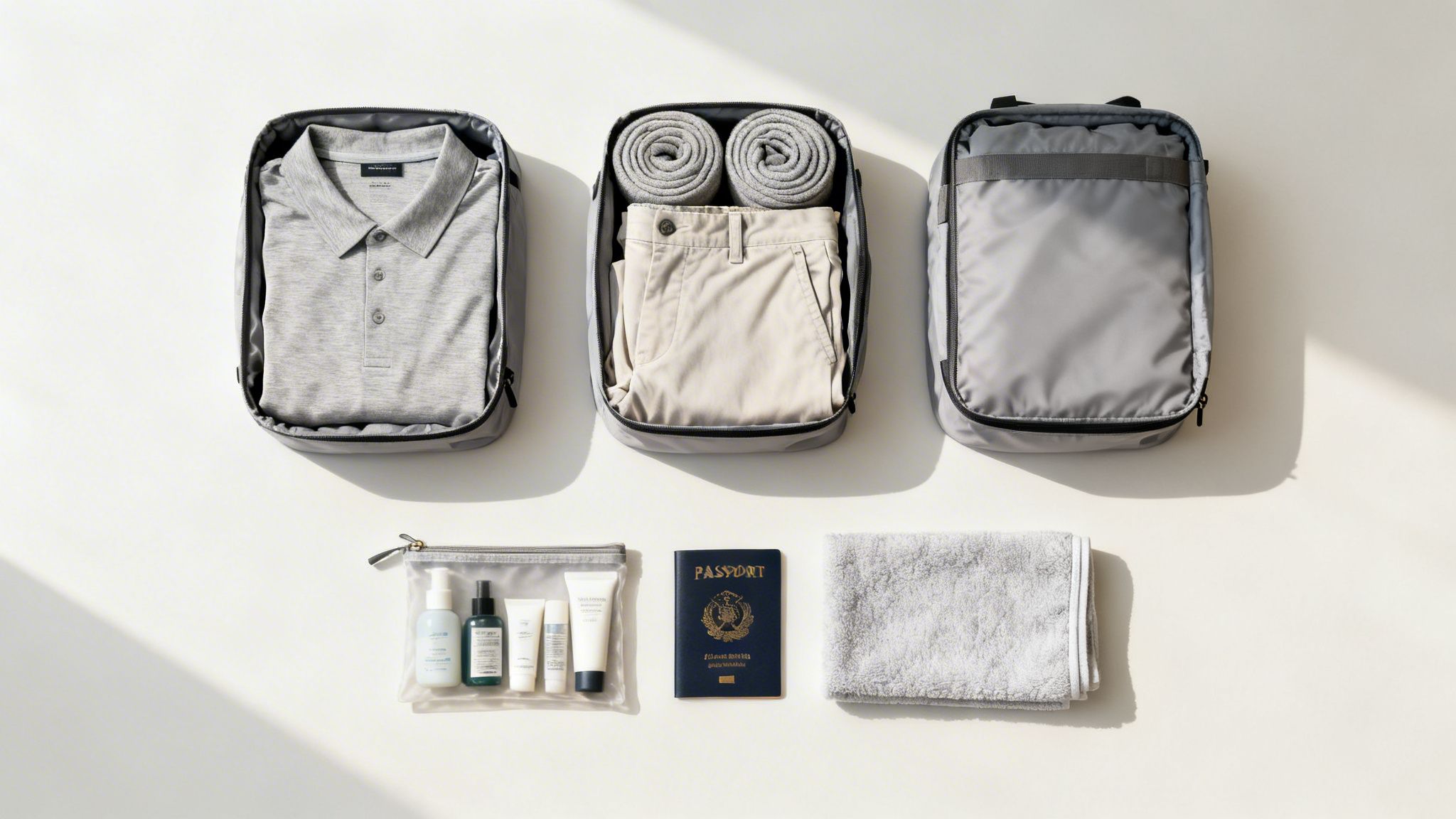
This approach is one of the most crucial backpacking tips for beginners because it fundamentally changes how you travel. You'll move with ease, feel lighter on your feet, and spend less time rummaging through your bag. This freedom is popularized by the digital nomad community and sustainable brands like Patagonia, who prove you can do more with less. By packing only what you need, you make room for what truly matters: the experience.
How to Pack Like a Pro
Adopting a minimalist mindset requires a strategy. Think like Steve Jobs with his signature turtleneck: create a simple, repeatable "uniform" with items that work together effortlessly. The goal is to maximize your options while minimizing your inventory.
Here are a few actionable steps to guide your minimalist packing:
- Lay It All Out: Before anything goes in your bag, create a detailed list and lay every single item out on your floor. This visual check is the best way to spot redundancies and remove non-essentials. For a great starting point, check out this comprehensive backpacking essentials list.
- Roll, Don't Fold: This classic technique genuinely saves space and reduces wrinkles. Use packing cubes, championed by brands like Herschel Supply Co., to compress clothes and keep your pack incredibly organized.
- Embrace Neutral Colors: Stick to a core palette of black, gray, navy, and tan. This ensures every top matches every bottom, creating dozens of outfits from just a few key pieces.
- Invest in Performance Fabrics: Merino wool is a backpacker's best friend. It’s odor-resistant, temperature-regulating, and quick-drying, meaning one shirt can do the work of three cotton ones.
3. Choose Hostels and Budget Accommodation Strategically
Your accommodation is where you recharge, connect with fellow travelers, and find a slice of home on the road. For most backpackers, lodging is the biggest expense after flights, often eating up 30-40% of the daily budget. By being strategic about where you stay, you can slash these costs significantly while enriching your travel experience. Hostels, in particular, are the lifeblood of the backpacking community, offering not just a bed but a social hub, a kitchen, and a wealth of local knowledge.
This approach is one of the most critical backpacking tips for beginners because it directly impacts your budget and your social life. Choosing the right hostel isn't just about saving money; it’s about finding your tribe, sharing stories, and getting insider tips that guidebooks miss. It transforms a solo trip into a shared adventure and a simple stay into a memorable cultural exchange. These savvy choices give you the freedom to travel longer and more deeply.
How to Find Your Perfect Stay
Booking the right budget accommodation is an art form that balances cost, comfort, and community. Start your search on platforms like Hostelworld, which offers millions of listings and verified reviews that are invaluable for first-timers. For a truly local experience, Couchsurfing provides free stays with hosts, while Airbnb private rooms can sometimes be cheaper than a dorm bed, especially for couples.
Here are a few actionable steps to guide your selection:
- Read Recent Reviews: Filter reviews from the last three months. Look for specific mentions of "cleanliness," "safety," "social vibe," and "good for solo female travelers." A lively atmosphere is great, but not if it means you can't sleep.
- Prioritize Kitchen Access: A hostel with a shared kitchen is a budget game-changer. Cooking just one meal a day instead of eating out can save you a small fortune over a multi-week trip. Free breakfast is another huge bonus.
- Check the Location: Pin the hostel on a map. Is it close to public transport? Can you walk to major sights? Staying slightly outside the main tourist-heavy district often provides better value and a more authentic neighborhood feel. If you're looking for more ways to cut costs, explore these other powerful budget travel hacks.
4. Use Public Transportation Instead of Taxis and Rides
Taxis and rideshares are convenient, but they are also budget killers, easily consuming 15-25% of a backpacker's funds. Mastering a city's public transit system is not just about saving money; it's about diving headfirst into the local culture. Hopping on a city bus, metro, or ferry offers a real, unfiltered glimpse into the daily life of a destination in a way that a private car window never can.
This philosophy is one of the most powerful backpacking tips for beginners because it stretches your budget further while deepening your travel experience. You can save 70-90% on transport costs, freeing up money for activities, food, or extending your trip. It also supports sustainable tourism by reducing your carbon footprint and contributing directly to public services.
How to Master Local Transit
Becoming a public transport pro is easier than you think. In London, an Oyster Card can cut travel costs by 50% compared to single-fare tickets. In Tokyo, a single Suica or Pasmo card grants seamless access to all trains, buses, and metros. Similarly, Bangkok's BTS Skytrain offers fares for as little as $0.50, a massive saving over a $5-10 taxi ride through city traffic.
Here are a few actionable steps to navigate any city like a local:
- Download Offline Resources: Before you arrive, download offline city maps on Google Maps and get a transit app like Citymapper or Moovit. This ensures you can find your way without needing Wi-Fi or data.
- Invest in a Transit Pass: Upon arrival, one of your first stops should be a ticket kiosk. Ask about multi-day or weekly passes; they almost always offer the best value for travelers.
- Embrace Walking and Biking: For any destination under 2 kilometers, walk. You'll discover hidden alleyways, local shops, and amazing street art. Many cities also have affordable bike-sharing programs for medium-distance journeys.
5. Eat Like a Local: Street Food, Markets, and Budget Restaurants
Food can easily account for 20-30% of a backpacking budget, but it also offers the most direct and delicious pathway into a new culture. Eating where the locals eat isn't just a budget-saving trick; it’s an invitation to experience the authentic heart of a destination. Choosing street vendors, bustling markets, and humble family-run restaurants over tourist traps will immerse you in genuine flavors while saving you 60-80% on meal costs. This approach supports small, local economies, turning every meal into a meaningful exchange.

This is one of the most rewarding backpacking tips for beginners because it transforms a daily necessity into a grand adventure. Imagine savoring a steaming bowl of pho from a stall in Hanoi for $2 instead of paying $8 at a tourist-focused eatery, or grabbing fresh tacos from a Mexican mercado for less than a dollar. As champions of local cuisine like Anthony Bourdain showed the world, the most memorable meals are often served on a plastic stool on a busy sidewalk, not in a fancy dining room.
How to Find Authentic, Affordable Food
Diving into the local food scene is easier than you think. You can start by exploring food tours on platforms like Withlocals or Airbnb Experiences, which provide a guided introduction. For independent exploration, YouTube creators like FunForLouis often showcase incredible street food finds.
Here are a few actionable steps to help you eat well on a budget:
- Follow the Crowd: The best indicator of quality and safety is a long line of locals. A busy stall with a quick turnover means the ingredients are fresh.
- Use Technology: Download Google Translate to use its camera function for instant menu translations. This simple tool breaks down language barriers and opens up a world of culinary options.
- Ask for Recommendations: Hostel staff, tour guides, and even friendly locals are your best resources. Ask them for their favorite spots for an affordable, delicious meal.
- Explore Beyond the Main Square: Walk two or three blocks away from major tourist attractions. The prices drop significantly, and the food quality often skyrockets as you enter neighborhoods where locals live and work.
6. Travel During Shoulder Seasons for Best Value and Fewer Crowds
Your timing is just as crucial as your packing list. Traveling during the "shoulder seasons," the periods just before and after a destination's peak tourist season, can completely change your trip for the better. This strategy offers the perfect blend of good weather, fewer crowds, and significantly lower prices, often saving you 40-60% on flights and accommodation. Imagine exploring the ruins of Machu Picchu without a massive crowd or finding a quiet spot on a Thai beach-that's the magic of the shoulder season.
This approach is one of the most powerful backpacking tips for beginners because it elevates your experience from a simple tourist trip to a more authentic cultural immersion. With fewer people, you'll have more meaningful interactions with locals, find it easier to book that top-rated hostel, and support a more sustainable tourism model by reducing the strain on local infrastructure during peak months. This is how you discover hidden gems and create stories that go beyond the typical travel itinerary.
How to Master Shoulder Season Travel
Timing your adventure perfectly requires a bit of research, but the payoff is enormous. For example, visiting Europe in April-May or September-October can cut your costs by nearly half compared to a summer trip. Similarly, the best time to explore Southeast Asia's wonders is often March-April or November, just outside the busiest December-February window.
Here are a few actionable steps to help you plan your shoulder season journey:
- Become a Price Detective: Use Skyscanner’s "Whole Month" feature to visually identify the cheapest days to fly. Set price alerts on Google Flights two to three months before your ideal travel dates to catch fare drops.
- Target Mid-Week Flights: Regardless of the season, booking flights for a Tuesday, Wednesday, or Thursday can often yield an additional 5-10% in savings compared to weekend travel.
- Ask for a Deal: Once you're in the shoulder season, don't be shy about asking hostels or guesthouses for weekly or monthly discounts. They are often more flexible when they aren't fully booked, which can lead to big savings on longer stays.
7. Plan Slow Travel: Stay Longer in Fewer Places
In the rush to see everything, many first-time backpackers fall into a frantic rhythm, changing cities every few days. A far more enriching and sustainable alternative is the philosophy of slow travel: staying longer in fewer places. Instead of a whirlwind tour, imagine spending weeks or even a month in a single location, allowing you to move beyond the surface-level tourist experience and truly connect with a place. This approach not only deepens your cultural immersion but also dramatically reduces travel costs and fatigue.
Embracing this mindset is one of the most powerful backpacking tips for beginners because it shifts your goal from checking off a list to living like a local. By minimizing transit days, you save money on buses, trains, and flights while opening up opportunities for significant accommodation discounts. You start to recognize faces, find your favorite market stall, and uncover hidden gems that day-trippers will never see. This method fosters a genuine connection, transforming a simple trip into a meaningful life experience.
How to Adopt a Slow Travel Mindset
Transitioning to a slower pace requires intentional planning but offers immense rewards. Popular hubs for this style include Chiang Mai, Thailand, where digital nomads thrive on a budget of $10-15 per day, and Medellín, Colombia, known for its strong community of extended-stay travelers. In Da Nang, Vietnam, many backpackers live comfortably for an entire month on what a single week might cost elsewhere.
Here are a few actionable steps to help you slow down:
- Negotiate Long-Term Rates: Don't be afraid to ask for a weekly or monthly discount at hostels and guesthouses. Many offer 15-30% off their nightly rate for extended stays, but you often have to inquire directly.
- Book a Monthly Apartment: Use the "Monthly Stay" filters on sites like Booking.com or look for 30+ day stays on Airbnb. These options are frequently much cheaper than hotels and provide a more authentic living experience.
- Establish a Home Base: Choose a city to be your base for a month and explore the surrounding region through shorter, 1-2 day trips. This eliminates the hassle of constantly packing and unpacking your entire life.
- Find Your Community: Look for local expat and digital nomad groups on social media. They are an invaluable resource for finding accommodation, getting advice, and making new friends who share your travel style.
8. Secure Travel Insurance and Health Precautions
Think of travel insurance as your ultimate safety net, the one thing you hope you never need but will be eternally grateful for if you do. It’s a non-negotiable part of your pre-trip planning, protecting you from potentially catastrophic medical bills, lost baggage, or unexpected trip cancellations. For a backpacker, especially a solo traveler or someone heading to developing countries, it provides a peace of mind that is simply priceless.
This step is one of the most vital backpacking tips for beginners because it shifts your mindset from simply planning a trip to preparing for a responsible adventure. A minor illness or a stolen phone can quickly derail a tight budget, but with the right coverage, these setbacks become manageable inconveniences rather than trip-ending disasters. It’s about building resilience into your journey so you can focus on the incredible experiences ahead.
How to Prepare for a Safe and Healthy Trip
Choosing the right insurance and taking health precautions is about assessing your specific travel plans. Great options for backpackers include SafetyWing, which offers a flexible, subscription-style model perfect for long-term travelers, and World Nomads, known for its excellent coverage of adventure sports. For those wanting comprehensive plans, Allianz Global is a trusted name, while many premium credit cards also offer surprising travel protection benefits.
Here are a few actionable steps to get you started:
- Book It Early: Purchase your travel insurance policy as soon as you book your flights or major accommodations. This ensures that your trip cancellation coverage is active from day one.
- Prioritize Medical Evacuation: When comparing plans, confirm that medical evacuation is included. This is crucial if you plan to visit remote areas where local medical facilities may be limited.
- Organize Your Health: Visit a travel clinic or your doctor 4-6 weeks before departure to get necessary vaccinations and prescriptions. Always carry medications in their original bottles with a doctor's note to avoid issues at customs.
- Go Digital: Scan your passport, visa, and insurance policy documents. Save them to a secure cloud service like Google Drive or Dropbox so you can access them from anywhere, even if your physical copies are lost or stolen. You can check out this detailed travel insurance comparison for more information.
9. Use Budget Flight Tools and Flexible Booking Strategies
Your flight will likely be the single largest expense of your backpacking adventure, often eating up 30-50% of your total budget. Mastering the art of finding affordable airfare is not just a money-saving tactic; it's a skill that unlocks longer trips, more destinations, and greater freedom. By using the right tools and staying flexible, you can dramatically cut your flight costs, sometimes by as much as 70%, turning a budget-breaking expense into a manageable one.
This strategy is one of the most powerful backpacking tips for beginners because it gives you direct control over your biggest cost. Instead of accepting the first price you see, you can play the game to your advantage. This means more money in your pocket for local food, spontaneous excursions, and maybe even extending your trip by another week.
How to Find Your Perfect Flight
Hunting for cheap flights is part scavenger hunt, part strategy. The key is using powerful search aggregators that compare hundreds of options instantly. Tools like Google Flights and Skyscanner are essential; they include budget carriers like Europe's Ryanair and Southeast Asia's AirAsia that traditional search engines might miss.
Here are a few actionable steps to secure the best deal:
- Be Flexible with Dates: Use Google Flights' "Flexible dates" calendar view to see prices across an entire month. Flying on a Tuesday instead of a Friday can often save you 20-40%.
- Explore Nearby Airports: Don't just search for your primary destination's main airport. Check the "nearby airports" box. Flying into a secondary airport, like London Stansted (STN) instead of Heathrow (LHR), can save you a significant amount.
- Set Smart Price Alerts: Don't book impulsively. Use tools like Kayak or Hopper to set price alerts for your desired route. You'll get an email when the price drops, allowing you to book at the optimal time.
- Go Incognito: Some experts believe airlines use cookies to track your searches and raise prices, a practice known as dynamic pricing. Open an incognito or private browser window (Ctrl+Shift+N) to search for flights anonymously and potentially see lower fares.
For a deeper dive into these techniques, you can find a lot more information on how to find cheap flights and master the booking process.
10. Build Safety Practices for Solo Travelers, Especially Women
Venturing out on a solo backpacking trip is an incredibly empowering experience, but it also requires a proactive approach to safety, especially for women. This isn't about fear; it's about preparation. Building smart, consistent safety habits allows you to move through the world with confidence, fully immersing yourself in new cultures without sacrificing your peace of mind. It’s about being informed, aware, and in control of your journey.
Implementing these strategies is one of the most vital backpacking tips for beginners because it enables freedom rather than restricting it. Knowing you have a safety net and clear protocols in place lets you say "yes" to spontaneous adventures, connect authentically with locals, and embrace the unexpected. It transforms anxiety into awareness, allowing you to focus on the magic of the moment. For a deeper dive into this topic, you can learn more about how to travel alone as a woman and build a solid safety plan.
How to Stay Safe and Travel Confidently
A confident traveler is a less likely target. Your best defense is a combination of preparation, awareness, and trusting your intuition. For example, many hostels like ClinkNOORD in Amsterdam or St Christopher's in London now offer female-only dorms with keycard access for added security. Apps such as TravelGirls Connect help you link up with other female travelers in your destination.
Here are a few actionable steps to integrate into your travel routine:
- Communicate Consistently: Before you leave, share your detailed itinerary with a trusted contact back home. Set up a regular check-in schedule, even if it's just a quick "I'm safe" message on WhatsApp. Use Google Maps' location-sharing feature for an added layer of security.
- Be Situationally Aware: Walk with purpose and avoid looking lost, even if you are. Download offline maps so you can navigate without having your phone out constantly. Trust your gut; if a person, place, or situation feels wrong, remove yourself immediately without worrying about being polite.
- Secure Your Space: Arrive at your destination during daylight hours when possible. Book accommodations with consistently high reviews from other solo female travelers. Carry a portable door lock or a rubber doorstop for extra security in your dorm or private room.
- Respect Local Norms: Research and respect the local dress code and customs. Dressing modestly in more conservative countries can help you blend in and avoid unwanted attention. Connecting with local women through a cooking class or a walking tour can also provide valuable cultural and safety insights.
Backpacking for Beginners: 10-Tip Comparison
Your Adventure Is Just One Step Away
You’ve made it through the ultimate guide of backpacking tips for beginners. From choosing that perfect 40-liter pack to mastering the art of slow travel, you now possess the foundational knowledge to turn a dream trip into a tangible reality. The journey from armchair traveler to seasoned backpacker might seem immense, but it begins with small, deliberate actions.
The tips we’ve covered aren’t just a random assortment of advice; they are a strategic framework for smart, sustainable, and deeply rewarding travel. Think of them as interconnected pillars supporting your entire adventure. Your minimalist packing list directly impacts your mobility on public transport. Your choice to travel in the shoulder season not only saves you money but also offers a more authentic connection to the places you visit. Every piece of advice builds on the next, creating a holistic approach to seeing the world.
From Theory to Takeoff: Your Actionable Next Steps
The difference between dreaming and doing is action. Reading these backpacking tips for beginners is the first step, but now it’s time to put them into motion. Don't let the sheer volume of information paralyze you. Instead, focus on these three immediate takeaways:
The Practical First Move: Your journey starts at home. Take thirty minutes this week and do one tangible thing. Research one hostel in your dream destination. Open a dedicated savings account for your travel fund. Practice packing your current bag using the minimalist principles we discussed. Small wins build momentum.
The Safety Mindset: Re-read the section on solo travel safety. Internalize the advice about sharing your itinerary, trusting your intuition, and being aware of your surroundings. Safety isn't about fear; it's about empowerment. Knowing you can handle yourself confidently is the key to unlocking true freedom on the road.
The Financial Reality Check: Budgeting is the engine of your travels. Use the budget-saving strategies as a checklist. Can you swap one expensive habit for a travel contribution? Start tracking flight prices for a route you're interested in, even if you don't plan to book today. Understanding the financial side makes your trip feel less like a fantasy and more like an achievable goal.
"The goal is not to see the world in a week. The goal is to feel the world, one city, one conversation, one sunset at a time."
Embracing the backpacker mindset is about more than just saving money or traveling light. It's a conscious choice to prioritize experiences over possessions, connection over comfort, and growth over routine. It's about learning to be resourceful in a new city, finding beauty in the unplanned detours, and discovering a strength within yourself you never knew existed. The skills you build on the road, from navigating foreign transport systems to communicating across language barriers, will serve you for the rest of your life.
This guide has given you the map and the compass. You know how to pack, how to budget, and how to stay safe. The only thing left to do is take that first, exhilarating step. The world isn’t just a collection of landmarks on a map; it's a living, breathing tapestry of stories waiting for you to become a part of them. Your adventure is waiting.
Ready to find your next destination or connect with a community of fellow travelers? Travel Talk Today offers in-depth guides, real-time travel alerts, and forums where you can exchange backpacking tips for beginners with people who are on the road right now. Continue your journey with us at Travel Talk Today.