The most popular advice about solo female travel in Morocco is also the least useful: “Morocco is safe if you use common sense.” That sentence hides the issue. Violent crime against tourists is rare, but street harassment, persistent attention, unsolicited guides, and scams in crowded medinas can shape your entire day. You don't need a guide who tells you to relax. You need a plan for what to say, where to walk, when to leave, and which destinations match your tolerance for social friction.
Morocco can be exhilarating, generous, beautiful, and tiring in the same afternoon. This guide focuses on the practical decisions that make the difference, from choosing Essaouira over another intense medina night to booking a staffed riad and refusing a stranger who insists he knows the way.
What Solo Female Travel in Morocco Actually Feels Like
Morocco isn't usually difficult because a violent threat waits around every corner. The friction is more ordinary and more persistent. In a busy medina, someone may call out as you pass, comment on your appearance, offer directions you didn't request, or follow you for longer than feels comfortable. Official guidance for female visitors warns that unwanted following and harassment can occur frequently in tourist areas and on public transport, with reports ranging from persistent verbal attention to physical contact or violence, as outlined by Japan's official Morocco travel safety guidance.
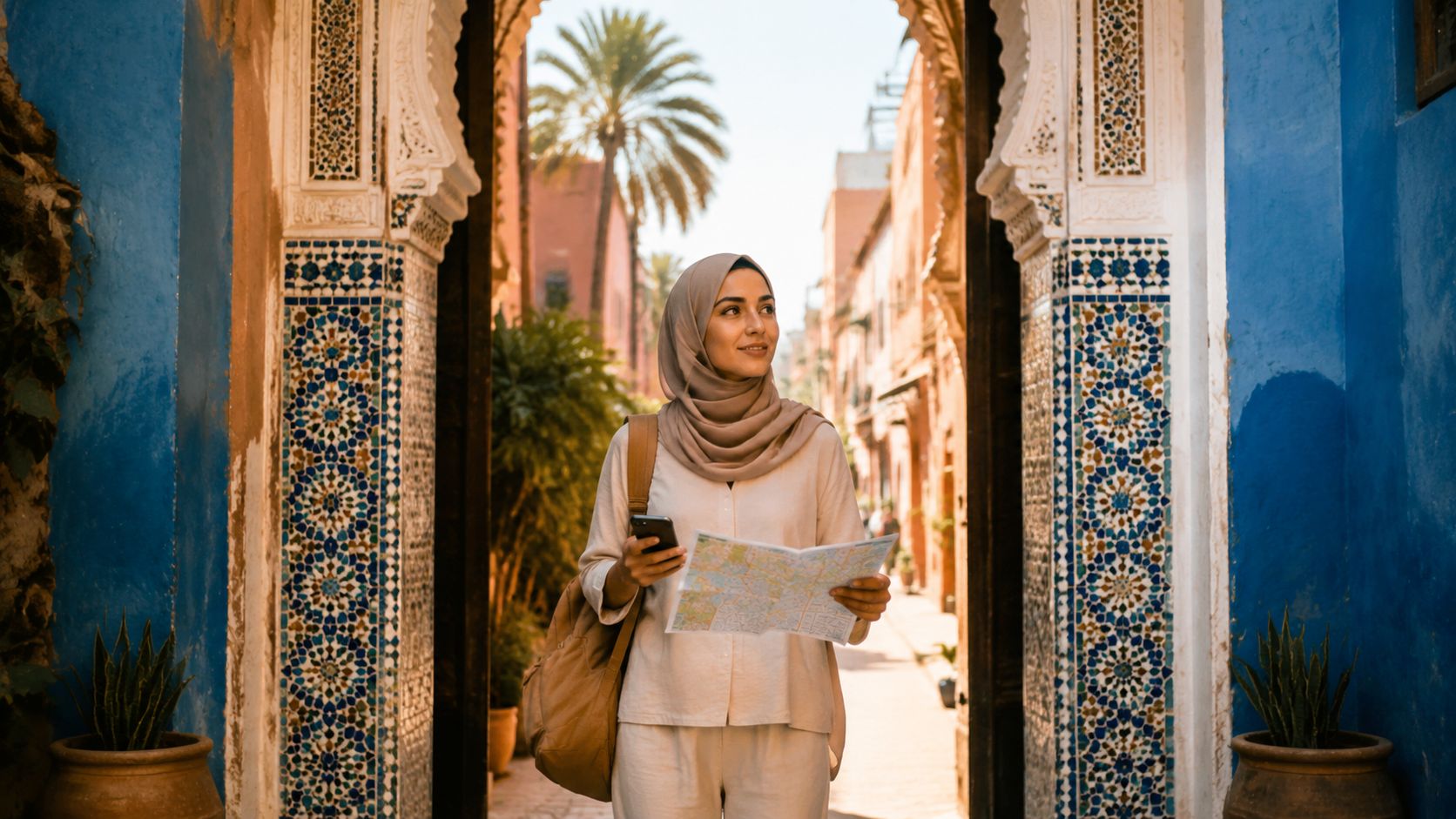
Arriving alone can feel like entering a moving machine. Diesel fumes mix with cooking smoke, motorbike horns cut through conversations, and boys call from alley entrances while shopkeepers quickly assess whether you're lost, rushed, or likely to buy. The same medina can feel entirely different once you step through a riad door. Inside the courtyard, water, tile, shade, and a locked entrance create a sharp contrast with the public lanes.
The setting changes the experience
Tourist arteries produce the most attention because that's where sellers, unofficial guides, and opportunistic scammers find visitors. Residential alleys can be quieter, but they may also be poorly lit, confusing, and difficult to exit quickly. During daylight, you can pause at a café, check your map, or ask accommodation staff to redirect you. At night, those same choices become less comfortable, especially when the route requires walking through empty lanes.
The difference between Marrakech and a coastal town isn't cosmetic. Independent safety guidance identifies persistent street harassment and opportunistic scams as the main concerns in dense tourist medinas such as Marrakech, Fes, and Casablanca, rather than violent crime, according to Country Reports' Morocco crime guidance. Smaller cities and rural areas generally offer a calmer rhythm, though no destination guarantees privacy or polite attention.
Practical rule: Plan for a harassment-managed trip, not a harassment-free trip.
Read this alongside broader solo travel advice for women, but don't reduce Morocco to a binary safe-or-dangerous answer. The useful question is whether your route, accommodation, transport, and evening habits give you enough control to enjoy the country.
The Safety Picture Behind the Headlines
Country-level safety rankings can mislead solo travelers because they combine very different experiences. A visitor worrying about a stolen phone, a woman being followed through a souk, and a traveler facing violent crime aren't dealing with the same risk or the same solution.
Morocco received roughly 14.5 million international arrivals in 2023, a baseline that shows the scale of the tourism environment solo women enter, according to GuideMe's Morocco solo female safety guide. Travel reporting places Morocco 114th out of 177 countries on a women-specific security index, while the broader Global Peace Index places it 78th out of 163 countries, as reported in that same guide. These figures don't predict your afternoon in a souk. They do show why a country can attract large numbers of visitors while still requiring more preparation than many Western European destinations.
A 2024 Morocco National Tourism Office survey found that 62% of solo female travelers felt safe or very safe, an increase of 14 percentage points from 2021, according to Moroccan Travel Trips' safety comparison. Travel Ladies reports that women living in Morocco rate overall safety at 3.6 out of 5 and crime at 2.2 out of 5, which points to a moderate risk profile rather than an extreme one. Perception data has limits, but it helps separate general confidence from the specific discomfort women describe in public spaces.
Match the response to the risk
Petty theft deserves ordinary urban precautions. Keep your phone out of sight in crowds, close your bag, and don't stop at the edge of a packed square while distracted by performers or menus. Dense tourist areas such as Jemaa el-Fnaa and the Fes tanneries require more attention because crowds create opportunities for theft and pressure selling.
Harassment needs a behavioral response. Walk with purpose, avoid extended conversations with unofficial guides, use a firm refusal, and return to a hotel, café, or staffed attraction if someone continues following you. Violent crime against tourists is not the central planning problem described by the available guidance, but physical contact or threats should be treated seriously and reported.
| Risk Type | Likelihood | Most Effective Response |
|---|---|---|
| Petty theft in dense tourist zones | Concentrated in crowds | Use a closed crossbody bag, protect your phone, and keep valuables divided |
| Verbal harassment and persistent attention | Common in busy medinas and transport areas | Keep moving, refuse clearly, avoid debate, and use staffed public places |
| Being followed | A recurring concern in tourist areas | Change direction toward a hotel or shop, call accommodation staff, and don't lead the person to your room |
| Violent crime against tourists | Described as rare in travel guidance | Avoid isolated routes, seek immediate help, and report physical threats |
For a wider set of practical precautions, use these solo female travel safety tips. The goal isn't to spend your trip scanning every stranger. It's to reserve your attention for the situations where route choice, crowd density, and time of day change your exposure.
Cultural Etiquette and Boundaries That Matter
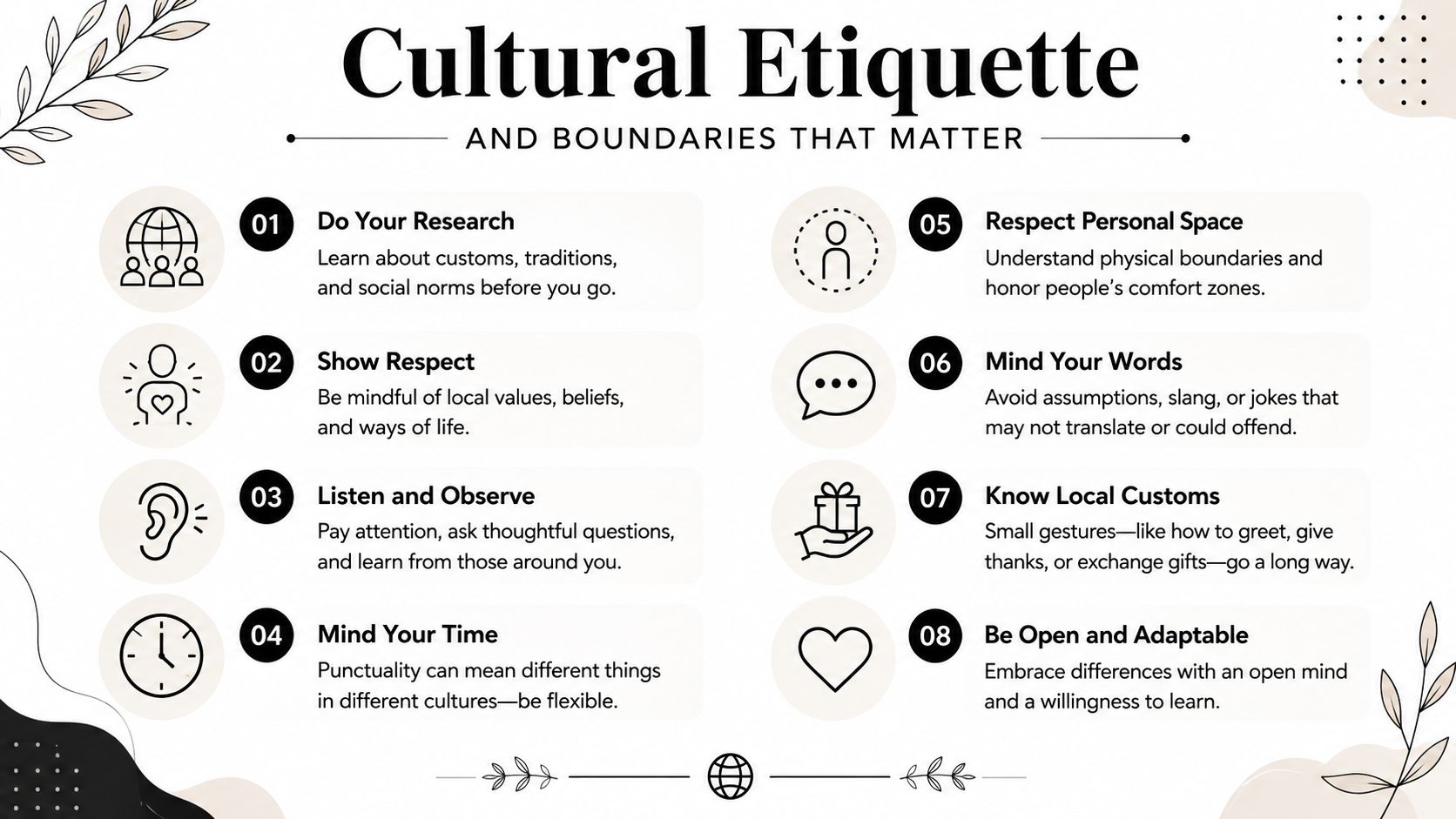
Etiquette won't stop every catcall, and clothing won't make you invisible. It can, however, reduce avoidable attention and make ordinary interactions easier. Dress with loose trousers, longer skirts, and lightweight tops that cover the shoulders, especially in conservative urban settings such as Fes and Chefchaouen. Essaouira feels more relaxed, but practical coverage still helps on long walks and in residential areas.
You don't need to wear a headscarf as a non-Muslim visitor. Carry a large scarf anyway. It works as shoulder coverage, sun protection, and a useful layer when entering a religious or conservative setting.
Use short refusals
Long explanations invite negotiation. Keep your voice calm, look ahead, and use one sentence:
- Polite Arabic: “La shukran,” meaning no, thank you.
- Tour refusal: “La, ma bghitsh guide,” meaning no, I don't want a guide.
- Clear English fallback: “No, thank you. I have directions.”
Don't smile apologetically if someone keeps walking beside you. Repeat the same phrase and move toward a shop with several customers, a hotel entrance, or a staffed attraction. If a person claims a street is closed, don't follow him. Check with your accommodation or an official attraction employee instead.
Treat photos as a consent issue
Ask before photographing people, particularly women in veils, market workers, and children. Performers may expect payment, and photographing animals used in tourist entertainment can create an uncomfortable confrontation. Put the camera away if someone objects. Your right to take a travel photo doesn't outweigh the practical value of ending a tense interaction quickly.
You're most likely to attract concentrated attention when arriving alone at a bus station, entering a souk, or walking after dark. Avoid accepting tea from a stranger if you don't want a longer interaction. In a formal invitation, tea can be a warm social gesture, but in a sales setting it often begins a conversation you may not have the energy to manage. Learn more about respectful interaction through this guide to cultural immersion travel.
Choosing Where to Go for a Calmer Solo Experience
Don't choose destinations only by fame. Choose them by how much social friction you can absorb each day. Marrakech delivers energy, attractions, and straightforward onward connections, but its medina also brings the highest volume of touts, sales pressure, and unsolicited direction. Fes offers deeper cultural immersion, yet its medina can be especially disorienting when you're alone.
Essaouira is my strongest recommendation for a first solo trip that needs breathing room. The coastal setting, walkable center, and slower pace make it easier to recover after a demanding city day. Chefchaouen offers a similarly gentle rhythm, though its hills and transport connections mean you should plan arrivals rather than improvise.
| Region | Street Harassment Level | Night Walking Comfort | English/French | Day Trips | Women-Run Stays | Best For |
|---|---|---|---|---|---|---|
| Marrakech | High in medina corridors | Limited in dark alleys | Strong tourist coverage | Excellent | Good availability | First-time visitors who want energy and structure |
| Fes | High around the medina | Limited without a clear route | French and tourist English | Strong | Available with research | Travelers seeking history and cultural depth |
| Essaouira | Lower, though not absent | Better around active central areas | Tourist English and French | Good | Good availability | A calmer coastal base |
| Chefchaouen | Moderate | Comfortable on active routes, quieter elsewhere | Tourist English and French | Good | Available with research | Slow travel, photography, and short stays |
| Rif valleys | Lower in quieter communities | Depends heavily on the lodging location | More French than English | Limited to moderate | Less predictable | Travelers comfortable with rural logistics |
| Sahara | Depends on camp and route | Not a walking destination at night | Tour-dependent | Excursion-based | Operator-dependent | Small-group travelers who want desert access |
The Sahara works best through a small-group tour with clear pickup arrangements. It isn't the place to test spontaneous solo logistics, especially if your comfort depends on predictable transport and easy access to staff.
Choose one headline city, then add one calmer region. That combination gives you cultural intensity without forcing every day to carry the same level of negotiation.
If street pressure drains you quickly, skip a back-to-back Marrakech and Fes schedule. Base yourself on the Atlantic coast or in Chefchaouen, then visit a major medina with a planned guide and a defined exit time.
Sample Itineraries for 7, 10, and 14 Days
A good Morocco itinerary doesn't maximize city count. It limits the number of times you arrive tired, negotiate transport, decode an unfamiliar medina, and search for a locked entrance.
Seven days
Start in Marrakech and stay near a riad entrance that your driver can reach. Use your first day for orientation, then spend a second focused day in the medina during daylight. Take a CTM or organized transfer to Essaouira for two nights, using the coast as a reset rather than squeezing in another shopping corridor. Return to Marrakech for your departure, or continue by pre-arranged transfer if your flight timing allows.
This route is best for a first visit because it gives you one intense city and one calmer base. Don't add Chefchaouen unless you're willing to accept a long transfer and less recovery time.
Ten days
Spend three nights in Marrakech, then travel by train or pre-booked private transfer to Fes. Book a half-day licensed medina guide in Fes, not because you can't walk independently, but because orientation is the fastest way to reduce confusion. Continue to Chefchaouen for two nights, then join an overnight desert excursion through a women-friendly operator with clear inclusions and pickup details.
Keep the final night near your departure route. A desert circuit followed by a rushed airport transfer is a poor ending, even if the itinerary looks efficient on paper.
Fourteen days
Give Marrakech three nights, Fes three nights, and Chefchaouen two nights. Add a quieter Rif stay or Atlantic coast pause, then use the remaining time for a High Atlas excursion with a reputable driver or small group. Build in a genuine rest day after the desert or a long mountain transfer.
Use ONCF trains for practical city connections where the route fits, CTM or Supratours buses for established intercity travel, and private drivers when a direct transfer prevents multiple negotiations. Avoid placing Marrakech, Fes, and another medina-heavy stop on consecutive days.
For more planning structure, use these travel itinerary templates.
Where to Stay and How to Move Around
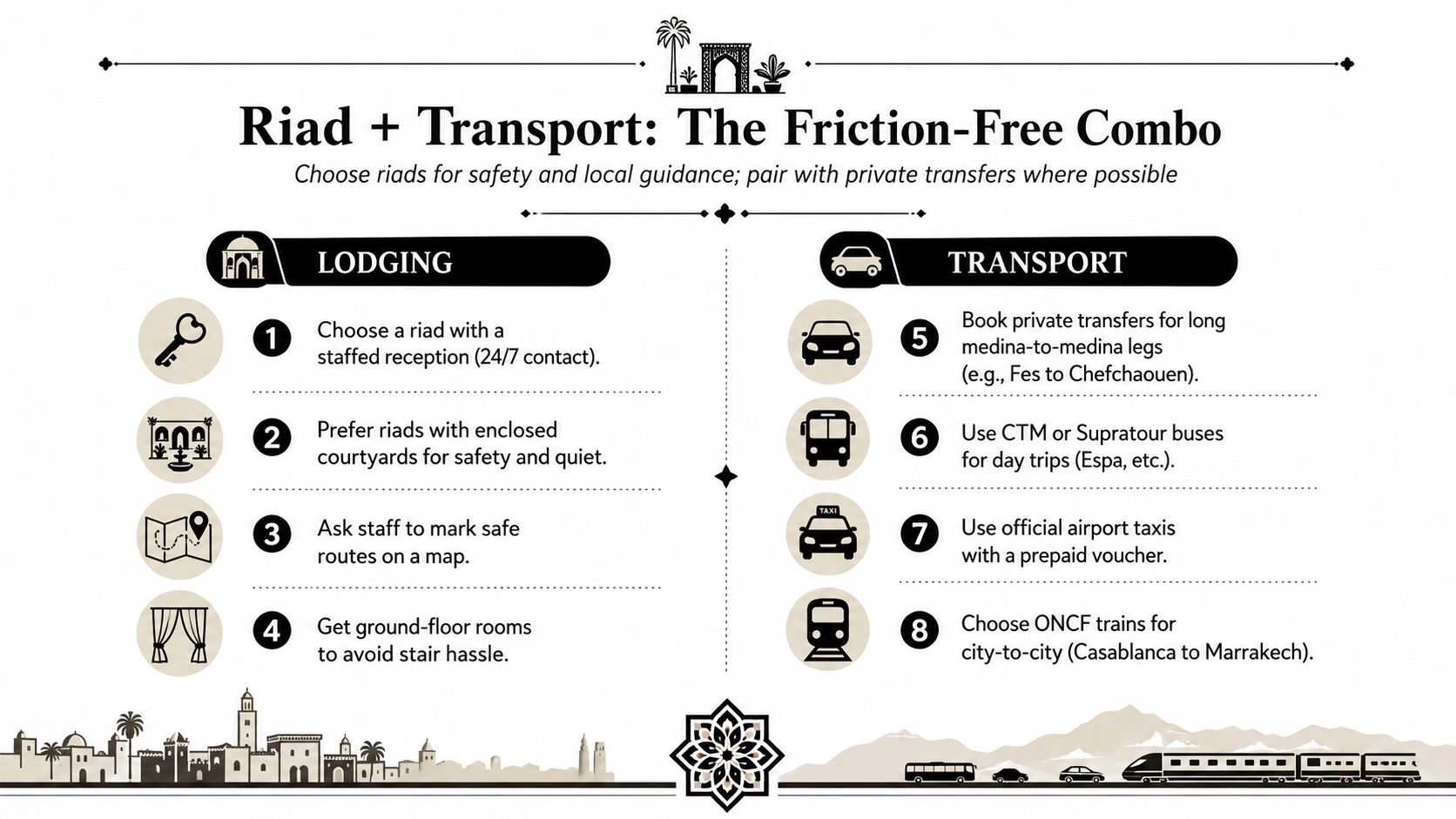
Accommodation and transport are one decision, not two. A beautiful riad deep inside a maze can become a poor choice if you arrive after dark and must walk from a taxi drop-off with luggage. A simpler property near a recognizable gate, with staffed reception and secure locks, often gives a solo traveler more control.
Choose a riad with an enclosed courtyard, a secure entrance, and staff who answer messages promptly. Ask for written arrival directions and request that the property meet your taxi if the vehicle can't reach the door. Read reviews from women and solo travelers, but focus on comments about arrival, noise, locks, staff availability, and the walk back at night.
Build transport around predictable handoffs
ONCF trains connect major cities including Casablanca, Marrakech, and Fes. CTM and Supratours buses serve smaller destinations and day-trip routes. For petit taxis, confirm the meter or agree on the price before entering, and don't share a taxi with an unknown man to save time or money.
Pre-book an airport transfer, especially for a late arrival. Don't arrive at a bus station after dark if you can choose an earlier departure. At a station, ignore unsolicited offers and walk directly to the official ticket counter, your booked driver, or the pickup point provided by your accommodation.
Female dorms can work well in Marrakech, Fes, and Essaouira when the hostel has lockers, clear access controls, and reception coverage during the day. A women-only or family-run label is useful, but the property's actual arrival process matters more than the label.
Ask riad staff to mark the easiest route to a main street and a reliable taxi point. That small briefing can prevent the most stressful part of a first evening, getting lost close to your own accommodation.
Packing, Health, and Emergency Planning
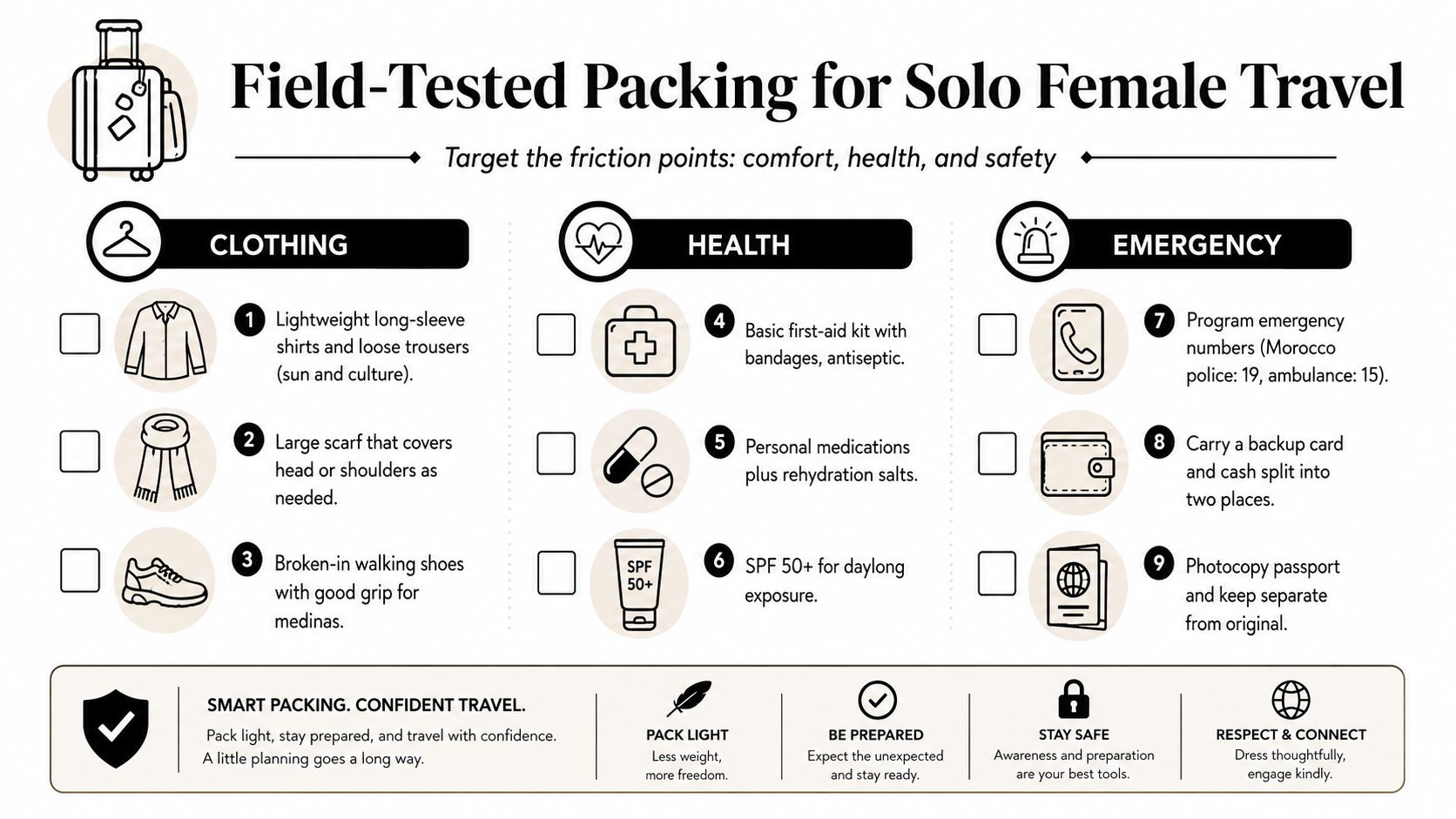
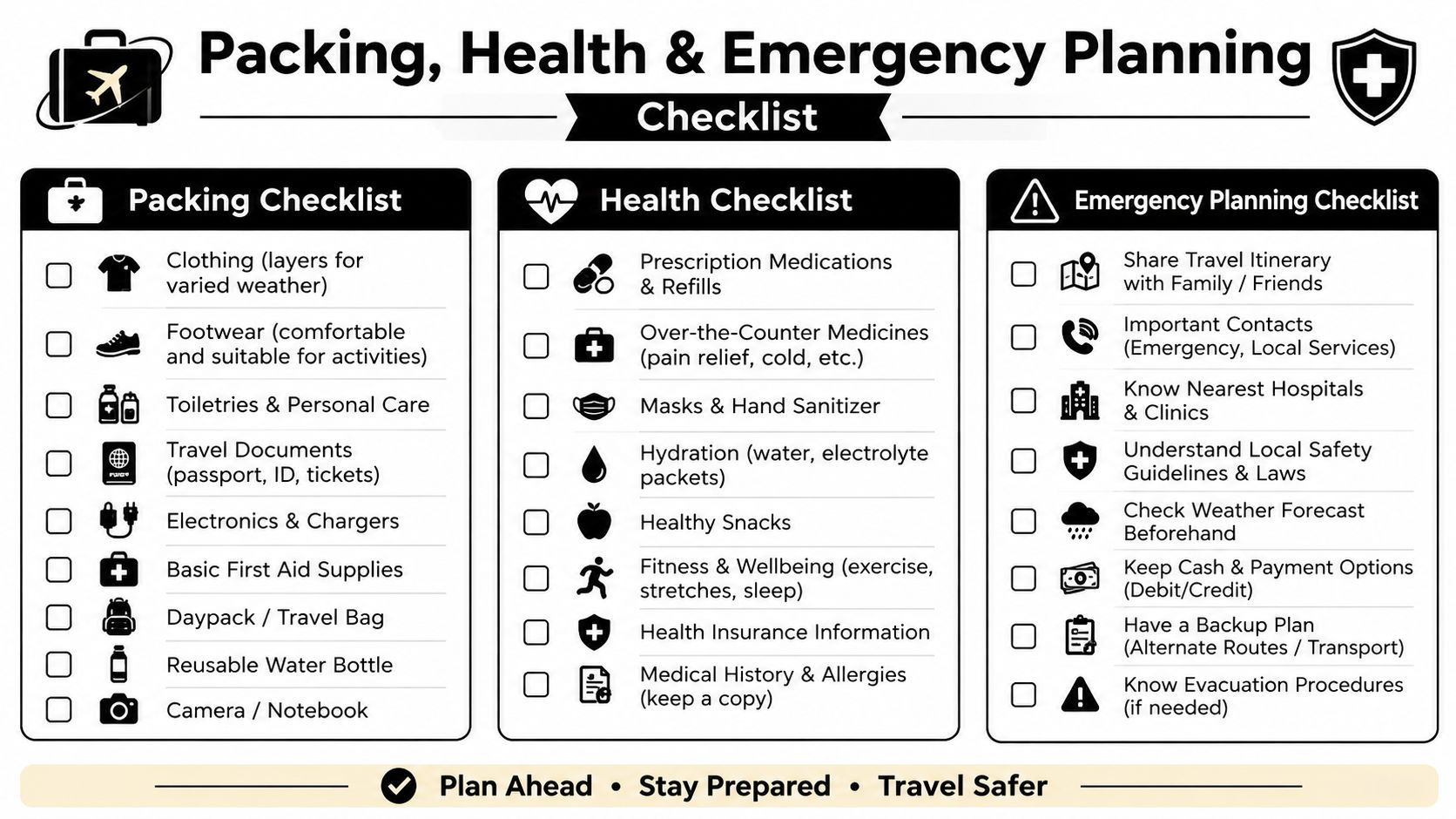
Pack for walking, heat, dust, and small logistical failures. Lightweight long sleeves and loose trousers are more useful than an outfit designed only for photographs. Add a large scarf, broken-in shoes with grip for uneven medina surfaces, and a crossbody bag with a locking zipper.
Your health kit should be practical rather than excessive. Bring personal medications, blister care, antiseptic, antihistamine, oral rehydration salts, sunscreen, and motion-sickness medication if long mountain or desert drives affect you. Check routine vaccination advice with a qualified medical professional before departure, and carry medication in its original packaging.
Prepare for the boring emergencies
Save your embassy contact details offline and write them on paper. Keep a photocopy of your passport and insurance information separately from the originals. Split backup cards and cash between your bag and accommodation rather than carrying everything in one place.
Morocco's commonly cited emergency numbers are 19 for police and 15 for ambulance, as included in the supplied emergency-planning guidance. Confirm local arrangements with your accommodation because tourist police and regional services can vary, and save the specific contacts for Marrakech or Fes before you arrive.
Use a simple check-in plan with someone at home. If your phone disappears, go to your riad, a major hotel, a police station, or a staffed transport office and use their phone. If you miss a bus, don't accept a stranger's replacement ride on the spot. Buy a new ticket through the official operator or ask accommodation staff to arrange a licensed alternative.
Travel insurance should cover medical treatment, trip interruption, and activities you plan to do. Compare policies with this travel insurance comparison guide, then store the policy number offline.
A Confident Decision Framework for Your Trip
Morocco isn't a test of bravery. It's a sequence of small operational choices. The best trip usually belongs to the traveler who chooses a manageable arrival, a well-reviewed property, a realistic number of medinas, and a quieter region where she can lower the pace.
Use this checklist before booking:
- Match the route to your friction tolerance. If persistent attention exhausts you, don't stack Marrakech, Fes, and Casablanca without a recovery stop.
- Choose accommodation for access, not only atmosphere. A staffed riad with clear arrival instructions beats a beautiful property that leaves you stranded in confusing alleys.
- Keep medina exploration inside daylight windows. Mark one exit route and one staffed fallback location before you start walking.
- Book the difficult transfers. A private driver or organized small-group connection can be worth the cost when it removes repeated haggling and late arrivals.
- Leave space for a calmer base. Essaouira, Chefchaouen, the Atlantic coast, or a quieter Rif stay can balance a high-energy city.
Ask yourself three direct questions. Can you refuse persistent attention without feeling responsible for the other person's reaction? Will you be comfortable changing plans when a route feels wrong? Do you have enough time and budget to pay for a safer, simpler transfer when necessary?
If the answer is yes, Morocco belongs on your shortlist. The destination offers cultural depth, extraordinary food, layered history, and memorable human encounters, but it rewards preparation more than improvisation. Choose an itinerary built around your comfort, not another traveler's highlight reel.
Plan your Morocco route with practical destination guides, safety checklists, budgeting tools, and slow-travel ideas from Travel Talk Today . Visit the site before you book to build a trip that balances cultural immersion, affordability, and the confidence to travel independently.