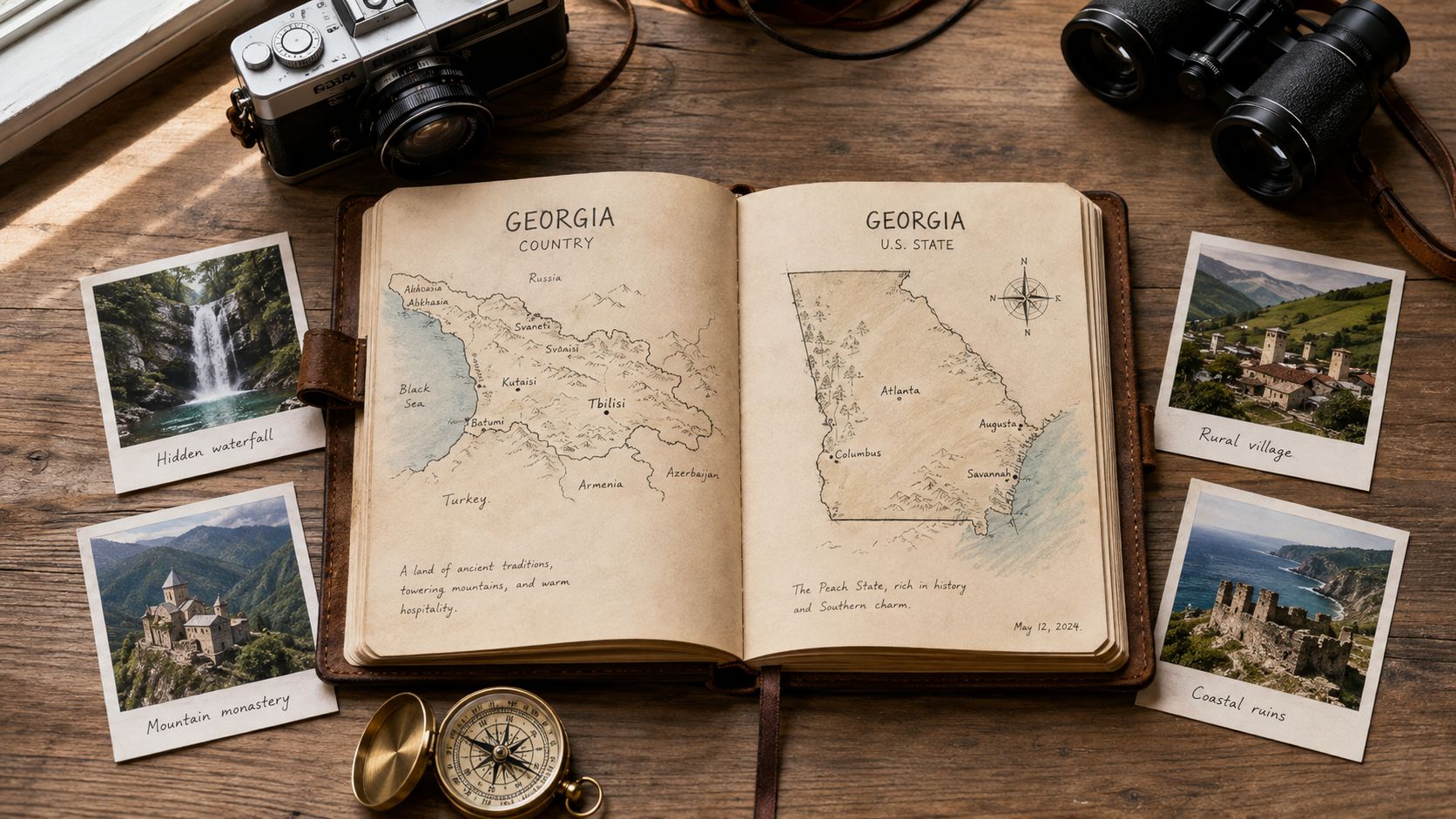
Georgia beyond the familiar means Georgia the country, not the U.S. state. The most popular advice often treats meaningful travel as a choice between expensive private tours and a checklist of famous landmarks. That misses the point. Some of the best experiences come from taking a marshrutka, staying with a local family, walking a little farther, and giving one place enough time to reveal its character.
This guide to hidden gems in Georgia moves by experience rather than a simple ranking. You'll find spiritual heritage near Tbilisi, mountain culture in the High Caucasus, wine immersion in Kakheti, coastal scenery around the Black Sea, and borderland history in the south and southwest. The practical details help you match each destination to your time, comfort level, transport options, interests, and budget.
Georgia's tourism market has grown well beyond niche travel. International travelers reached 9,357,964 in 2019, almost three times the country's population that year, and tourism revenue from international visitors reached $4.1 billion in 2023 according to ITB's overview of Georgia's tourism growth. The quieter strategy is no longer finding a place nobody knows. It's choosing a place where your visit can be slower, more local, and less concentrated. Travel Talk Today offers the budgeting, safety, and thoughtful-travel perspective needed to plan that kind of trip.
1. Sighnaghi and the Alazani Valley
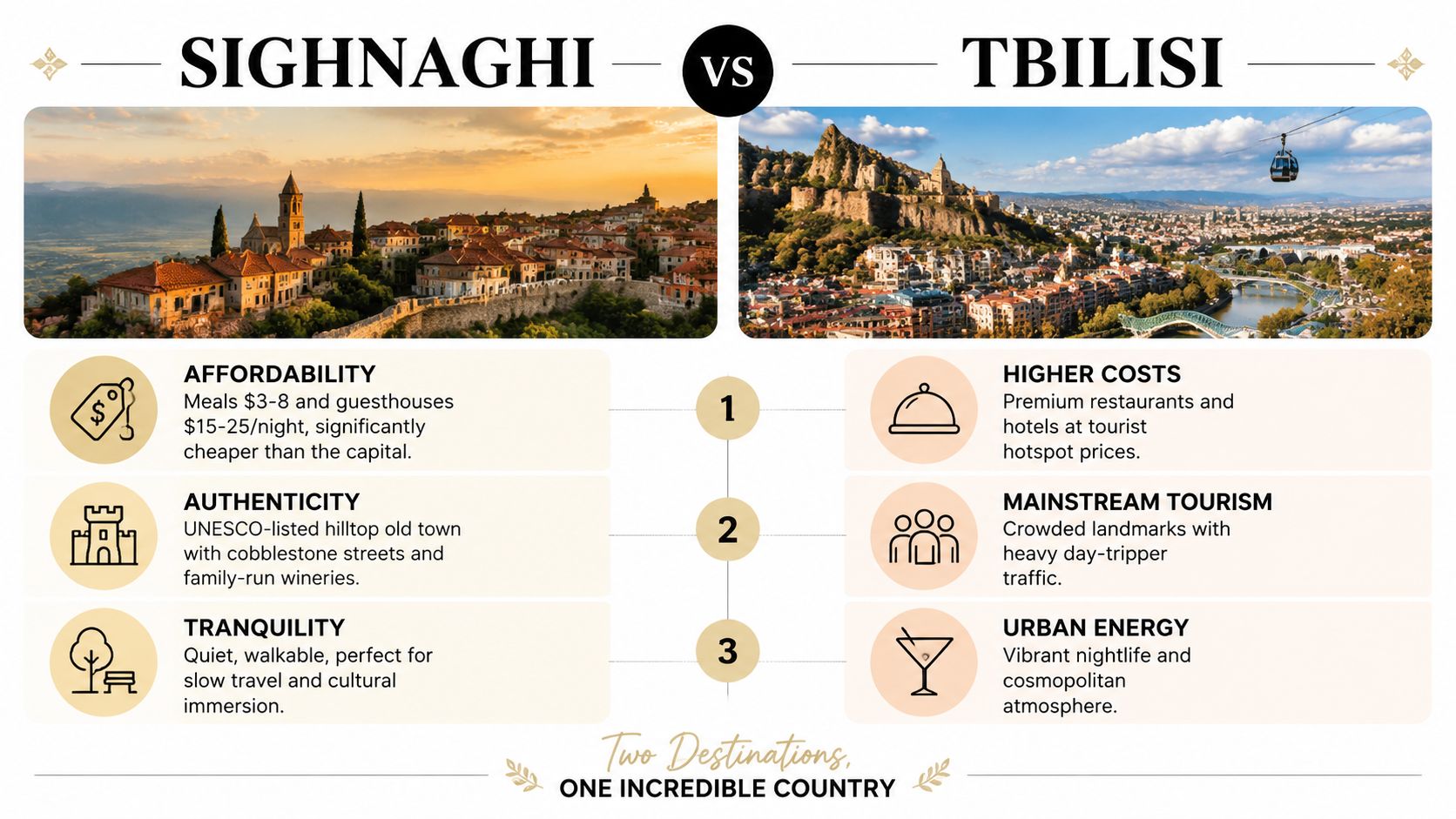
Sighnaghi is an easy introduction to Georgia's wine country, with cobbled lanes, painted balconies, hilltop views, and a relaxed rhythm that feels far removed from Tbilisi. The town overlooks the Alazani Valley and works well for travelers who want cultural immersion without committing to a remote mountain journey.
Start with an early walk along the old walls and quiet streets. Day visitors may arrive later from Tbilisi, so mornings give photographers softer light and a calmer relationship with the town. Rather than treating Sighnaghi as a backdrop for a quick tasting, use it as a base for conversations with winemakers, family meals, and smaller cellar visits.
Make wine tourism local
Pheasant's Tears is a useful example of the region's blend of traditional and modern wine practice. Boutique properties such as Sighnaghi Hotel can pair local bottles with dinner, while family guesthouses often offer homemade food and informal tastings. A local guide can help arrange introductions to wineries that aren't obvious from the main streets.
- Transport: Geobus and marshrutkas connect Tbilisi with Sighnaghi, with the journey taking about 2.5 hours and costing $2 to $4, based on the supplied trip plan.
- Best timing: September and October bring harvest activity, while early spring and autumn generally offer more comfortable walking conditions.
- Stay: Choose a family-run guesthouse for meals, regional advice, and a more personal experience.
- Daily planning: The supplied budget guide places a typical day at $40 to $60, including a guesthouse, meals, and tastings.
Practical rule: Schedule fewer wineries than you think you need. The value comes from time at one cellar, not from collecting tasting-room stamps.
For more ideas on choosing places with character over crowded icons, compare this stop with underrated travel destinations.
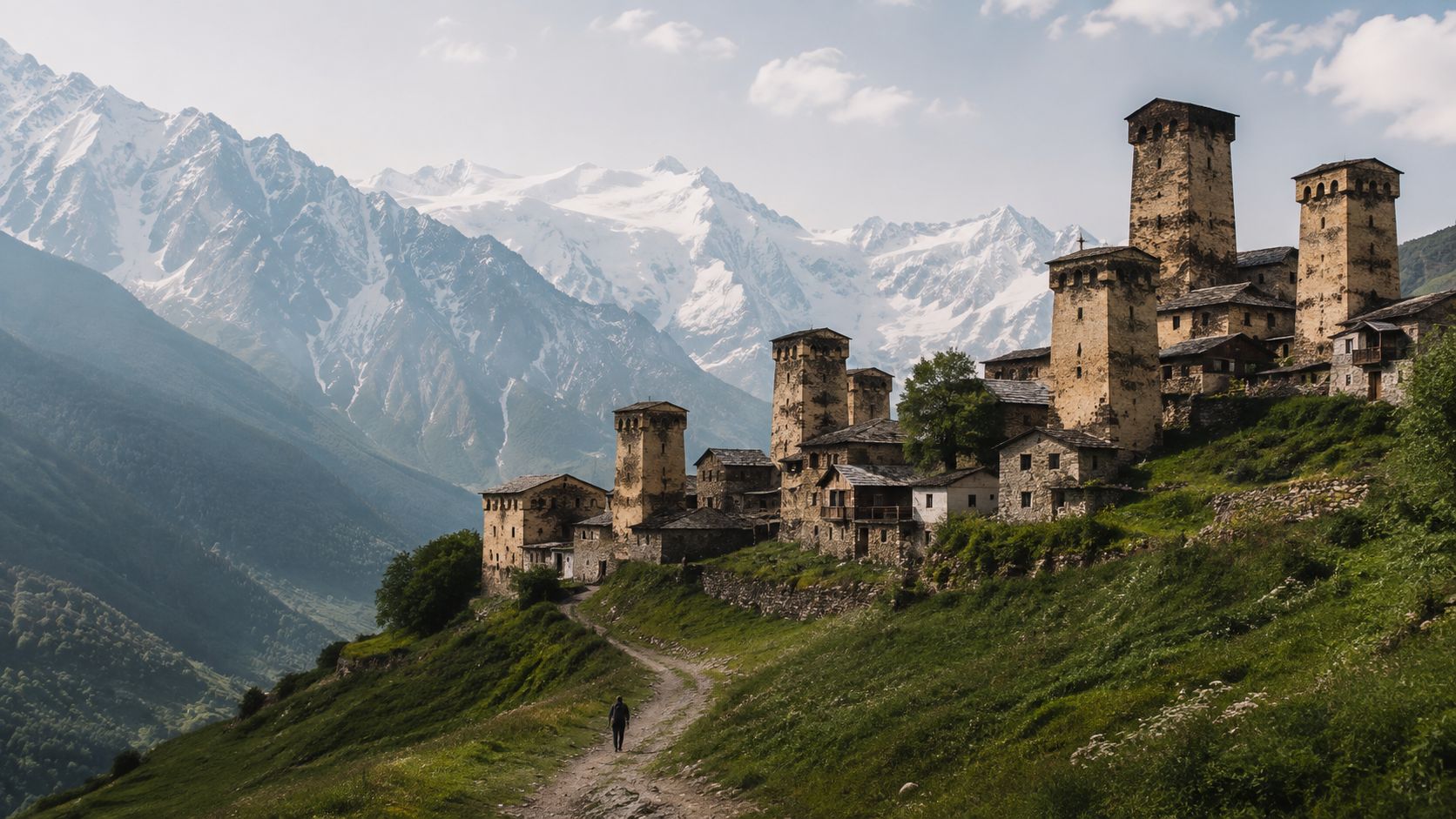
2. Mestia and Svaneti for Alpine Culture
Mestia is the practical gateway to Svaneti, a highland region shaped by stone towers, alpine valleys, and a strong local identity. The villages feel culturally distinct from the rest of Georgia, and Svan communities preserve their own language traditions alongside Georgian.
This isn't the destination for a rushed overnight. Mountain weather can change quickly, roads take time, and trekking routes reward travelers who build in flexibility. Mestia makes a good base for shorter walks, while longer journeys toward Ushguli require more preparation and a realistic view of changing conditions.
Trade comfort for access
Family guesthouses are the best source of practical information. A place such as Ushba Guesthouse can connect visitors with cooking experiences, local food, and mountain guides. Guesthouse referrals are often more useful than booking a generic excursion in advance because local hosts can assess the day's weather and route conditions.
- Transport: The supplied route suggests flying from Tbilisi to Zugdidi, followed by a marshrutka to Mestia, which takes about 3 hours and costs $5 for that leg.
- Season: June through September is the practical trekking window in the supplied plan.
- Guides: Local guides arranged through guesthouses are listed at $25 to $35 per day.
- Preparation: Bring dependable rain gear, allow an acclimatization day, and discuss altitude medication with a doctor before travel.
- Daily planning: The supplied budget range is $45 to $70, including accommodation, meals, and guiding.
The self-guided Guli Pass route can suit experienced hikers, but independence shouldn't become stubbornness. If visibility drops, trails are unfamiliar, or you're traveling alone, a local guide is a sensible investment. Keep your photography respectful around homes, working animals, and religious spaces. Ask before photographing people, especially during meals or village gatherings.
3. Batumi and the Black Sea's Subtropical Edge
Batumi is Georgia's coastal counterpoint to the mountains. The city combines a seafront boulevard, older Ottoman and Soviet traces, modern buildings, public gardens, and easy access to pebble beaches near the Turkish border. It's a useful choice for travelers who want a gentle pace, urban convenience, and coastal scenery in one base.
The best version of Batumi isn't a full day spent beside the busiest stretch of beach. Walk the boulevard early, explore the Old Town, and use local transport to reach Sarpi. The city's public spaces make it possible to keep costs controlled, especially if you buy picnic supplies from markets rather than eating every meal in restaurants.
Build a low-pressure coast day
The boulevard gardens are free public spaces where residents gather, stroll, and watch the sea. The Ali Pasha Mosque remains a working religious site, so visitors should follow local prayer-time etiquette and dress modestly. Street vendors offer khachapuri, khinkali, and Adjarian specialties for $1 to $3, according to the supplied destination plan.
- Transport: The train from Tbilisi takes about 5 hours and costs $5 to $8 in the supplied guidance.
- Beach access: Sarpi is reachable by marshrutka in about 5 minutes, or by a longer coastal walk.
- Best timing: April, May, September, and October offer a better balance of warm weather, manageable crowds, and accommodation availability.
- Stay: Choose an Old Town guesthouse so you can walk to food, architecture, and the waterfront.
- Daily planning: The supplied range is $30 to $50, including accommodation, food, and attractions.
Batumi's popularity also makes it a useful example of why the phrase “hidden gem” needs care. In 2024, Adjara absorbed 2.5 million inbound visits, while Tbilisi received 3.4 million, according to Georgia's official inbound tourism statistics. Treat Batumi as a flexible base, then spend time in less concentrated coastal areas instead of assuming every part of the city remains off the radar.
For more affordable seaside planning, see these affordable beach destinations.
4. Vardzia and the Cave Monastery
Vardzia turns history into a physical journey. The monastery complex is carved into a mountainside in southern Georgia, with caves, churches, living spaces, and pathways opening across the canyon wall. Its scale is impressive, but the experience becomes more meaningful when you slow down enough to notice how the site uses rock, shadow, height, and water.
A quick visit from Tbilisi is possible, yet it's a poor fit for anyone who wants time for photography or historical context. Stay in Aspindza and use the extra time to explore without racing the return transport. Local homestays can add a human dimension that the monumental site alone can't provide.
Respect the site as a monastery
A self-guided walk follows marked routes through the main chambers, but a local guide can explain the complex's religious and defensive significance and help you find less obvious passages. Aspindza guesthouses may also arrange meals, river experiences, and introductions to nearby communities.
- Transport: The supplied plan gives the marshrutka journey from Tbilisi to Aspindza as about 4.5 hours, costing $4 to $6, followed by a short drive to Vardzia.
- Best timing: April, May, September, and October are preferable for walking in comfortable conditions.
- Clothing: Cover your shoulders and wear knee-length trousers or skirts for monastery access.
- Equipment: Sturdy shoes and ample water matter because paths are uneven and shade is limited.
- Daily planning: The supplied guide places the budget at $40 to $55, including accommodation, meals, and a guide.
Early morning light can pick out the cave facades and canyon contours, but photography shouldn't override worship or preservation. Don't climb beyond marked paths, touch painted surfaces, or use a religious service as a staged photo opportunity. Georgia's heritage appeal has international weight. UNESCO lists 4 World Heritage properties in Georgia, including 3 cultural sites and 1 natural site, as shown in the UNESCO country profile.
For broader trip planning, use this guide to things to do in Georgia country.
5. Kazbegi and the Gergeti Pilgrimage
Kazbegi, officially Stepantsminda, offers the dramatic mountain image many first-time visitors expect from Georgia, but it works best when approached as a living mountain town rather than a viewpoint stop. The village sits beneath Mount Kazbek and provides access to Gergeti Trinity Church, glacier routes, and the Darial Gorge.
The road from Tbilisi follows the Military Highway and delivers striking scenery before you arrive. Once there, resist the temptation to fit the church, a long trek, and a return to the capital into one rushed day. Weather can erase the views that made you come, especially later in the day.
Plan around weather, not wishful thinking
The hike to Gergeti Trinity Church is a strong low-cost experience because it combines exertion, scenery, and spiritual heritage. Starting at 6 to 7 AM, as recommended in the supplied plan, gives you a better chance of clearer conditions and quieter paths. Wear layers. Mountain temperatures can shift sharply between day and night.
- Transport: Marshrutkas from Tbilisi take about 3.5 hours and cost $6 to $8 in the supplied guidance.
- Season: May through September is the preferred trekking period.
- Guides: Arrange local help through a guesthouse, with the supplied guide range at $25 to $30 per day.
- Stay: A guesthouse or Rooms Hotel Kazbegi can help arrange guides and group walks.
- Daily planning: The supplied budget is $45 to $65, including accommodation, meals, and guiding.
- Safety: Ask your guesthouse about current access conditions near the border before planning remote routes.
A glacier trek is not merely a longer version of the Gergeti walk. It requires route judgment, appropriate equipment, and a guide who understands current conditions. Travelers who want a quieter experience can photograph the church from the surrounding slopes, then spend the afternoon in the town rather than chasing another viewpoint. For route inspiration, browse these hiking destinations.
6. Kvareli and Tsinandali for Wine Immersion
Sighnaghi introduces Kakheti, but Kvareli and Tsinandali offer a quieter way to understand Georgian wine. The focus here is less on polished tasting rooms and more on family cellars, qvevri production, village meals, and the relationships that develop when you stay for several days.
Georgia's wine tradition makes this region especially suited to slow travel. Ask your guesthouse to arrange introductions before you arrive, since smaller producers may not operate like formal visitor attractions. A family host can often provide better context than a large itinerary, explaining how wine is made, served, and connected to local hospitality.
Let the cellar set the schedule
Family-run qvevri cellars use traditional fermentation methods, while homestays may add cooking lessons and long meals. The supplied plan recommends arranging local wine guides through guesthouses, with a listed rate of $20 to $25 per day. Treat that fee as access to knowledge and introductions, not just transport between vineyards.
- Transport: Take a marshrutka from Tbilisi to Kvareli, then use a taxi to Tsinandali. The supplied plan lists that short taxi connection at $1 to $2.
- Timing: September harvest visits can provide hands-on cultural immersion and quieter pricing.
- Stay: Plan 3 to 5 days if you want relationships rather than a sequence of tastings.
- Daily planning: The supplied budget is $35 to $50, including a guesthouse, meals, and wine experiences.
- Courtesy: Learn a few Georgian wine terms and ask before photographing cellars, family members, or private property.
The trade-off is convenience. You may need to coordinate by phone, wait for a host, or change plans around village life. That uncertainty is part of the point. A tightly packed schedule can deliver more stops, but a flexible stay gives you a better chance of understanding why qvevri wine belongs to the region's cultural identity.
7. Dilijan as a Cross-Border Extension
Dilijan is in Armenia, not Georgia, but it makes sense as an extension for travelers already moving through the southern Caucasus. The forested alpine town offers a different architectural and cultural atmosphere, with access to Parz Lake, woodland walks, Armenian food, and monasteries such as Haghartsin.
This is not a substitute for a Georgian destination. It's a deliberate cross-border addition for travelers who have enough time and are comfortable handling border logistics. A rushed day trip can turn into a long transport day, so an overnight stay usually makes more sense than trying to collect Dilijan as another tick on a regional itinerary.
Make the border part of the plan
Check visa requirements, border status, and current travel advisories before booking transport. The supplied route from Tbilisi takes 3 to 4 hours by minibus and costs $8 to $10, but border procedures and traffic can affect the day. Don't assume that a route shown in an old blog post still operates in the same way.
- Best timing: May through September offers the most suitable conditions for outdoor activities in the supplied plan.
- Stay: Choose a local guesthouse for traditional Armenian meals and advice about woodland routes.
- Activities: Combine Parz Lake with a monastery walk instead of packing in distant attractions.
- Guiding: Local guides are listed at $15 to $20 per day for monastery trekking.
- Daily planning: The supplied budget range is $30 to $45, including accommodation, meals, and activities.
- Cultural respect: Learn basic Armenian greetings and follow local guidance around religious sites.
Travelers who want maximum simplicity should stay in Georgia. Travelers who value cultural contrast and can absorb a little uncertainty may find Dilijan a rewarding addition. Keep copies of essential documents, confirm return transport, and tell your accommodation where you're going, particularly if traveling independently.
8. Mtskheta and Jvari for Accessible Spiritual Heritage
Mtskheta and Jvari prove that a meaningful trip doesn't need a remote destination. Mtskheta, Georgia's ancient capital, sits close to Tbilisi, while Jvari Monastery rises above the confluence of the Mtkvari and Aragvi rivers. Together, they create a compact day focused on architecture, Christian heritage, and quiet observation.
The most common mistake is arriving with the tour groups, photographing the view, and leaving before the town has had time to settle. Take the marshrutka to Mtskheta, walk through the town, and climb toward Jvari if conditions allow. The walk adds effort, but it also creates a stronger sense of arrival than a vehicle stopping directly at the monastery.
Choose the slower route
The supplied plan gives the marshrutka from Tbilisi to Mtskheta as about 30 minutes, costing $0.25. A walk from Mtskheta to Jvari takes about 1.5 hours, and the route can make the visit feel less like a transfer between attractions and more like a pilgrimage.
- Timing: Arrive before 9 AM to avoid larger tour groups, or visit after 4 PM for softer light.
- Dress: Wear long trousers or skirts and cover your shoulders at active religious sites.
- Spiritual etiquette: Morning prayers take place from 8 to 10 AM in the supplied plan. Observe respectfully and don't photograph worshippers without permission.
- Daily planning: The supplied day-trip budget is $20 to $30, including transport, meals, and activities.
- Extension: Continue toward the wine region and stay overnight instead of returning immediately to Tbilisi.
Community-based tourism works best when local people benefit from your time and spending. That might mean eating at a family business, buying regional products directly, or choosing a locally run guide. Read more about community-based tourism before planning the visit.
9. Akhaltsikhe and Rabat Fortress
Akhaltsikhe sits in southern Georgia near the Turkish border, where military, religious, and commercial histories overlap. Rabat Fortress reflects that layered past through buildings and restorations shaped by different periods and communities. The result isn't a single clean historical narrative. It's a place best understood through comparison, questions, and local explanation.
A guide changes the experience substantially. Without context, you may notice walls, towers, and courtyards but miss how the town's borderland position influenced architecture and daily life. Local guides can also help you distinguish accessible areas from places where military sensitivity or preservation rules apply.
Stay long enough for the town
The supplied plan recommends 2 to 3 nights, which gives you time to visit Rabat, explore Sapara Monastery, and have meals or conversations beyond the fortress. A traditional Turkish bath can add another layer to the town's cultural story, but confirm current opening arrangements locally rather than relying on old listings.
- Transport: The supplied route lists about 30 minutes from Gonio by marshrutka, costing $1 to $2, or about 2 hours from Batumi for $4 to $5.
- Best timing: April, May, September, and October offer more comfortable conditions for walking.
- Guiding: Local fortress guides are listed at $15 to $20 per day.
- Daily planning: The supplied budget range is $40 to $55, including accommodation, meals, and guiding.
- Courtesy: Respect restricted areas, military presence, religious buildings, and local requests about photography.
The Turkish border adds logistical interest, but don't build your itinerary around crossing unless your nationality, documents, and current conditions allow it. A better plan is to treat Akhaltsikhe as a destination in its own right, then decide whether the border is practical after checking official advice.
10. Gonio and Sarpi at the Mountain-Sea Border
Gonio Fortress and Sarpi Beach create one of Georgia's most distinctive coastal combinations. At Gonio, archaeological remains meet the Black Sea and the country's southwestern frontier. At Sarpi, a pebble beach and border setting place Georgia and Turkey within the same view.
The experience works because the two stops feel connected but not identical. Begin at Gonio early, when the fortress walls offer clearer light and fewer organized visitors. Then continue toward Sarpi for swimming, a coastal walk, or a meal prepared by local cooks. Keep the day loose. Services become more limited as you move away from Batumi, so carry water and snacks.
Use Batumi as the practical base
The supplied plan suggests a 2 to 3 day Batumi, Gonio, and Sarpi itinerary. Staying in Batumi gives you more accommodation and dining choices, while day trips keep luggage and transport simple. A local guide arranged through a Batumi guesthouse can explain the fortress's maritime and military setting, with the supplied guide rate at $20 to $25 per day.
- Timing: Visit Gonio between 6 and 8 AM for cooler conditions and better photographic light.
- Walking: The supplied plan describes a coastal walk from Batumi to Sarpi taking 2 to 3 hours, but check the route and road conditions before setting out.
- Food: Fishing-village meals can include fresh fish, with the supplied plan listing $4 to $6 for that experience.
- Photography: Bring binoculars for the coastline and wildlife, but don't photograph border infrastructure or people without permission.
- Preservation: Stay on marked paths inside the fortress and avoid touching archaeological surfaces.
- Daily planning: The supplied budget range is $35 to $50, including Batumi accommodation, transport, and meals.
This is a place for observing geography as much as sightseeing. The sea, fortress, mountains, and border all share one compact area, but each demands a different kind of attention.
Hidden Gems of Georgia, 10-Site Comparison
| Destination | 🔄 Access & complexity | ⚡ Cost & logistics | ⭐ Experience & quality | 📊 Ideal use cases | 💡 Quick tips |
|---|---|---|---|---|---|
| Sighnaghi: The City of Love | Marshrutka/2.5h from Tbilisi; narrow steep streets; limited English outside tourism | ⚡ Budget-friendly: ~$40–60/day; guesthouses $15–25/night | ⭐ Romantic, UNESCO old town, strong wine culture and photo ops | Wine lovers, slow-travelers, solo travelers seeking cultural immersion | 💡 Stay in family guesthouses; visit Sept–Oct for harvest; hire a local guide |
| Mestia & Svaneti | Remote mountain hub; seasonal road/flight access; trekking logistics complex | ⚡ Moderate budget: ~$45–70/day; guides $25–35/day | ⭐ Authentic alpine culture, UNESCO tower houses, top trekking scenery | Adventure trekkers, photographers, cultural exchange seekers | 💡 Visit Jun–Sep; hire guides via guesthouses; allow acclimatization day |
| Batumi: Black Sea Town | Easy access (train/flight); coastal transport common; crowded in summer | ⚡ Low–moderate cost: ~$30–50/day; guesthouses $15–20/night | ⭐ Subtropical beaches, botanical gardens, eclectic architecture | Beach seekers, budget travelers, food and photography enthusiasts | 💡 Go Apr–May or Sep–Oct for fewer crowds; stay in Old Town |
| Vardzia: Cave Monastery | Very remote 4 hr drive; poor roads and minimal services; limited signals | ⚡ Low–moderate cost: ~$40–55/day; nearest services in Aspindza | ⭐ Deeply historical/spiritual UNESCO site with dramatic canyon views | History buffs, solitude seekers, photographers | 💡 Hire Aspindza guide, bring water and sturdy shoes, wear modest clothing |
| Kazbegi (Stepantsminda) | 3.5 hr via Military Highway; weather-dependent; border proximity considerations | ⚡ Moderate cost: ~$45–65/day; guides $25–30/day for treks | ⭐ Iconic mountain vistas, Gergeti Church, accessible trekking | Trekkers, mountaineers, landscape photographers | 💡 Visit May–Sep; start hikes early; plan for altitude and layers |
| Kvareli Wine Region (Tsinandali) | Marshrutka + local taxi; fragmented vineyards require coordination | ⚡ Budget-friendly: ~$35–50/day; guesthouses $12–18/night | ⭐ Intimate natural wine experiences, family-run qvevri cellars | Wine students, slow-travel immersion, small-group tastings | 💡 Arrange guesthouse introductions before arrival; stay 3–5 days; join harvest |
| Dilijan (Armenia) | Cross-border logistics; 3–4 hr transfer from Tbilisi; passport/visa checks | ⚡ Ultra-budget option: ~$30–45/day; guesthouses $10–15/night | ⭐ Lush forests, Parz Lake, historic monasteries, distinct Armenian culture | Day-trip alternative, forest photography, inexpensive overnight stays | 💡 Check border/visa status; prefer 1–2 night stays for better immersion |
| Jvari Monastery & Mtskheta | 30 min from Tbilisi; easy day-trip access | ⚡ Very low cost day trip: $20–30 including transport | ⭐ Ancient UNESCO spiritual sites with strong historical value | Cultural day-trippers, families, first-time visitors to Georgia | 💡 Arrive before 9 AM to avoid crowds; wear modest clothing |
| Akhaltsikhe & Rabat Fortress | Southern border town; limited services and English; planning required | ⚡ Moderate budget: ~$40–55/day; basic accommodations | ⭐ Multi-layered fortress architecture and multicultural heritage | Archaeology and history enthusiasts, off-the-beaten-path travelers | 💡 Hire local guide, stay 2–3 nights, research border/visa needs |
| Gonio Fortress & Sarpi Beach | Short transfer from Batumi; some military/restriction issues possible | ⚡ Low cost when based in Batumi: ~$35–50/day | ⭐ Unique fortress-by-sea setting; fishing village character | Combined beach + history day trips, coastal photographers | 💡 Visit Gonio early morning, walk to Sarpi for scenic coastal route; buy fresh fish locally |
Choose the Georgia That Rewards You
The best destination depends less on a universal ranking than on the kind of attention you can give it. If you have limited time, choose Mtskheta and Jvari. Their proximity to Tbilisi makes them practical, and the combination of ancient capital, active religious sites, river confluence, and hilltop architecture offers genuine depth without a long transfer. Arrive early, dress respectfully, and walk where possible.
For wine and slower days, choose Sighnaghi or Kvareli. Sighnaghi offers the easiest introduction, with a picturesque town and access to the Alazani Valley. Kvareli and Tsinandali suit travelers who want family cellars, qvevri traditions, cooking, and time to build relationships. Don't turn either region into a race between tasting rooms. One thoughtful visit can be more memorable than a packed schedule.
Mountain travelers have a clearer choice. Kazbegi is more accessible and works well for a short trekking base, especially if Gergeti Trinity Church is your anchor. Mestia and Svaneti require more planning, but they offer deeper immersion in alpine villages, tower architecture, and local culture. Build in weather flexibility, carry layers and rain protection, and use guesthouse recommendations when deciding whether a guide is needed.
For history and solitude, Vardzia or Akhaltsikhe deserve extra time. Vardzia rewards visitors who want a dramatic spiritual and archaeological setting, while Akhaltsikhe suits travelers interested in borderland history and cultural layering. Staying locally helps you avoid reducing either place to a photograph taken between transport connections.
Georgia's tourism demand is substantial. In 2025, the country recorded 7,803,239 international traveler visits, up 5.9% year over year, and tourism revenue reached about $4.69 billion, according to the 2025 tourism statistics overview. That growth makes practical choices more important. The most promoted places may no longer feel hidden, and transport, lodging, and seasonal access can change quickly.
Before departure, verify current transport schedules, border conditions, weather, water quality, road access, and local security advice. Check whether mountain routes are open, confirm accommodation arrangements, and ask hosts about areas with restrictions. At monasteries and churches, cover your shoulders and knees, keep voices low, and never treat worship as a photo prop.
Use local guides when terrain or history demands it, stay in family-run guesthouses when possible, carry water and warm layers, and leave no trace in caves, mountains, beaches, and protected areas. Georgia's protected-site network includes 14 places on UNESCO's Tentative List, alongside its 4 World Heritage properties, according to the UNESCO Georgia profile. Those places need visitors who value care as much as access.
Choose one anchor destination first. Add nearby experiences instead of trying to cross the whole country at speed, then build your budget and safety plan around that slower route. Travel Talk Today can support the process with practical destination advice, budgeting guidance, solo-travel resources, and ideas for more meaningful, lower-impact journeys.
Use Travel Talk Today to compare affordable destinations, plan safer independent travel, and build a Georgia itinerary around local culture rather than crowded checklists. Start with one region, set a realistic budget, and turn the hidden-gem idea into a trip that gives communities, and your own curiosity enough time.