The most meaningful discoveries in Mexico City don't require standing in the longest museum queue or repeating the same Roma, Condesa, and Coyoacán itinerary. The city's strongest hidden gems are often found in working markets, neighborhood churches, university grounds, volcanic terrain, and cultural spaces where residents outnumber visitors.
This guide maps 10 lesser-known experiences across Cuauhtémoc, Centro, Coyoacán, Pedregal, UNAM, and Xochimilco. Each recommendation includes the practical details that determine whether a stop works for your trip, including location, timing, likely cost level, transport, last-mile planning, accessibility, safety, photography etiquette, and a useful pairing.
The approach also fits Travel Talk Today's focus on affordable, culturally sensitive, and lower-impact travel. You won't need expensive packages for most of these stops. You will need patience, basic planning, a few Spanish phrases, and the willingness to treat neighborhoods as lived-in communities rather than scenery.
Mexico City's official tourism network recognizes 21 Magical Neighborhoods and 55 original villages, showing that local districts are part of a formal cultural-preservation system rather than random discoveries. The city's tourism guide also organizes 100 curated stops across eight routes, including Centro Histórico, Coyoacán and Xochimilco, and the Roma-Condesa-Polanco corridor. Start with one route, then let the city's rhythm do the rest.
1. Biblioteca Vasconcelos for a Free Literary Escape in Cuauhtémoc
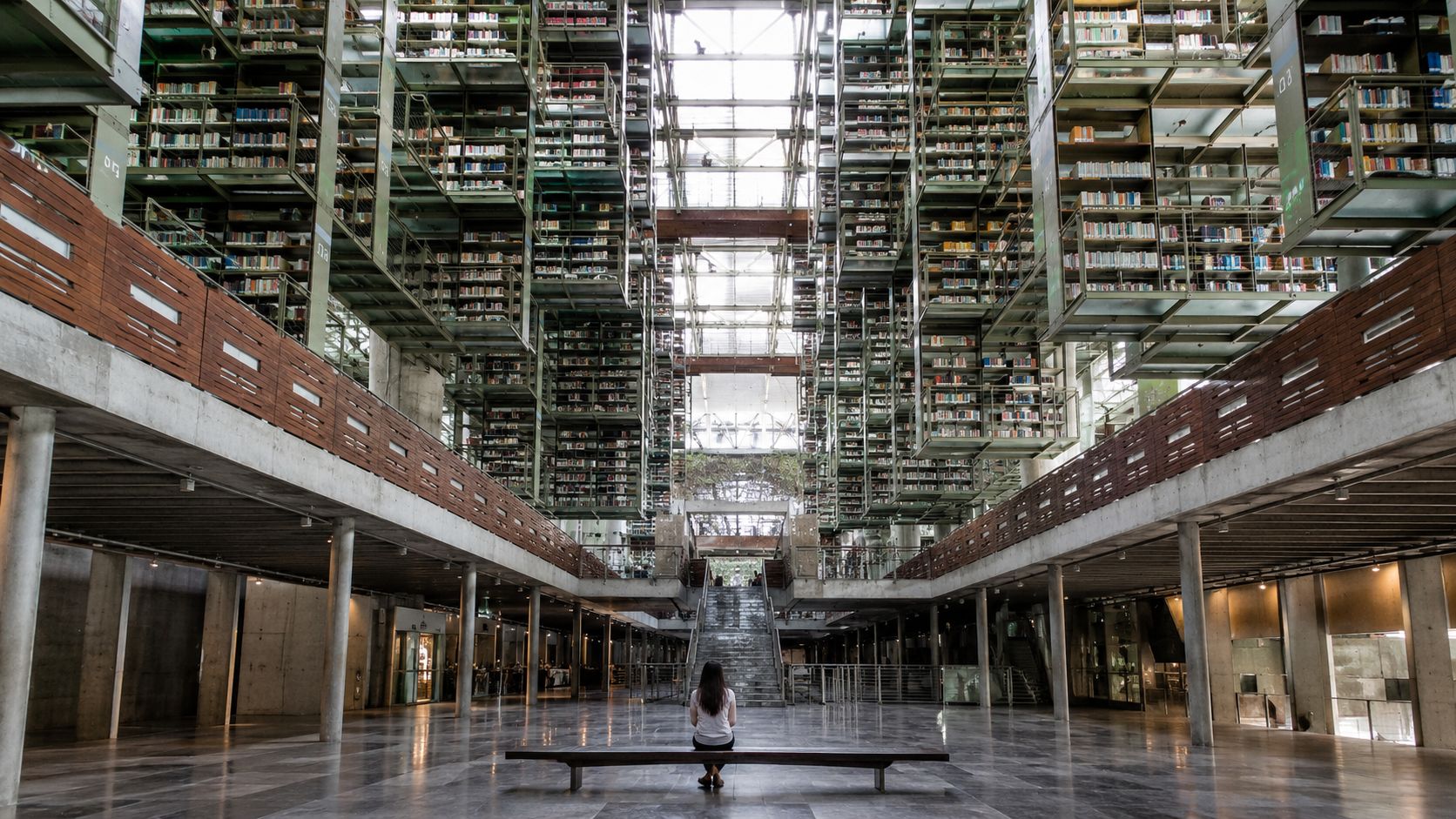
Biblioteca Vasconcelos is the kind of place that makes a familiar city feel new. Its vast interior, suspended bookshelves, staircases, skylights, and layered walkways create a dramatic photographic setting, but the building works best when you treat it as a public library first and an architectural attraction second.
The library offers free access to its collections and cultural programming, making it one of the easiest low-cost hidden gems in Mexico City for a solo traveler. Spend a focused morning reading, photographing the structure from different levels, and watching local students and residents use the space. Weekday mornings, especially between 9 and 11 AM, are the calmest window according to the practical visit plan for this stop.
Make the architecture your route
Enter slowly rather than rushing straight toward the central view. Look upward from the lower levels, then move through the suspended bookcases and bridges. Natural light changes the mood of the building throughout the morning, so photographers should allow time for both wide architectural frames and quieter details.
Download the library map and check its event calendar before leaving your accommodation. Free talks, exhibitions, or cultural activities can turn a quick photo stop into a fuller visit. Bring water and a small snack, but keep the space quiet and clean.
Photography rule: You can photograph the architecture, but don't turn other readers into props. Ask before taking identifiable portraits, and avoid flash when it could disturb visitors.
The library pairs well with a relaxed Cuauhtémoc walk and is a strong choice for travelers following affordable ideas for free things to do. Use public transport for the main journey, then plan the final walk in daylight. Keep valuables close in busy transit areas, and leave with enough time for a nearby café or neighborhood lunch.
2. Antiguo Colegio de San Ildefonso for Revolutionary Murals and Student History
Antiguo Colegio de San Ildefonso rewards travelers who read buildings as historical layers. The former preparatory school sits in Centro and combines colonial architecture with politically charged mural work associated with artists including Diego Rivera and David Alfaro Siqueiros. Its significance comes from the collision of place and image, not from checking off another museum.
Give the visit 90 to 120 minutes if you want to examine the courtyards, stairways, façade, and murals without rushing. A paid guide is a worthwhile choice here because the political references and historical context can be difficult to interpret from a quick glance. Read about the Mexican Revolution before arriving, then let the building show you how education, art, and public life became connected.
Turn it into a Centro history walk
Don't isolate San Ildefonso from its surroundings. Pair it with Templo Mayor, nearby museums, and the streets of Centro Histórico. UNESCO describes the Historic Centre and Xochimilco as a cultural area built in the 16th century on the ruins of Tenochtitlan, and identifies five Aztec temples and Latin America's largest cathedral within the heritage site. UNESCO's description of the Historic Centre and Xochimilco gives useful context before you explore.
The wider historic core contains about 9,000 buildings, including 1,550 declared historically important, so a short walk can reveal more architectural depth than a tightly packed attraction schedule. That density also creates practical challenges. Centro can become crowded, loud, and tiring, so keep your route compact and use daylight strategically.
- Best timing: Arrive before late afternoon for better light and a more comfortable walk.
- Budget approach: Spend on interpretation rather than adding several unrelated paid attractions.
- Photo etiquette: Photography is generally possible in many areas, but follow posted rules and avoid blocking corridors.
- Safety habit: Carry only what you need and keep your phone secure when moving through crowded streets.
Leave the area before evening if you're unfamiliar with the route. The experience is strongest when you slow down enough to connect the murals with the streets around them.
3. Mercado de Jamaica for Dawn Flowers and Local Commerce
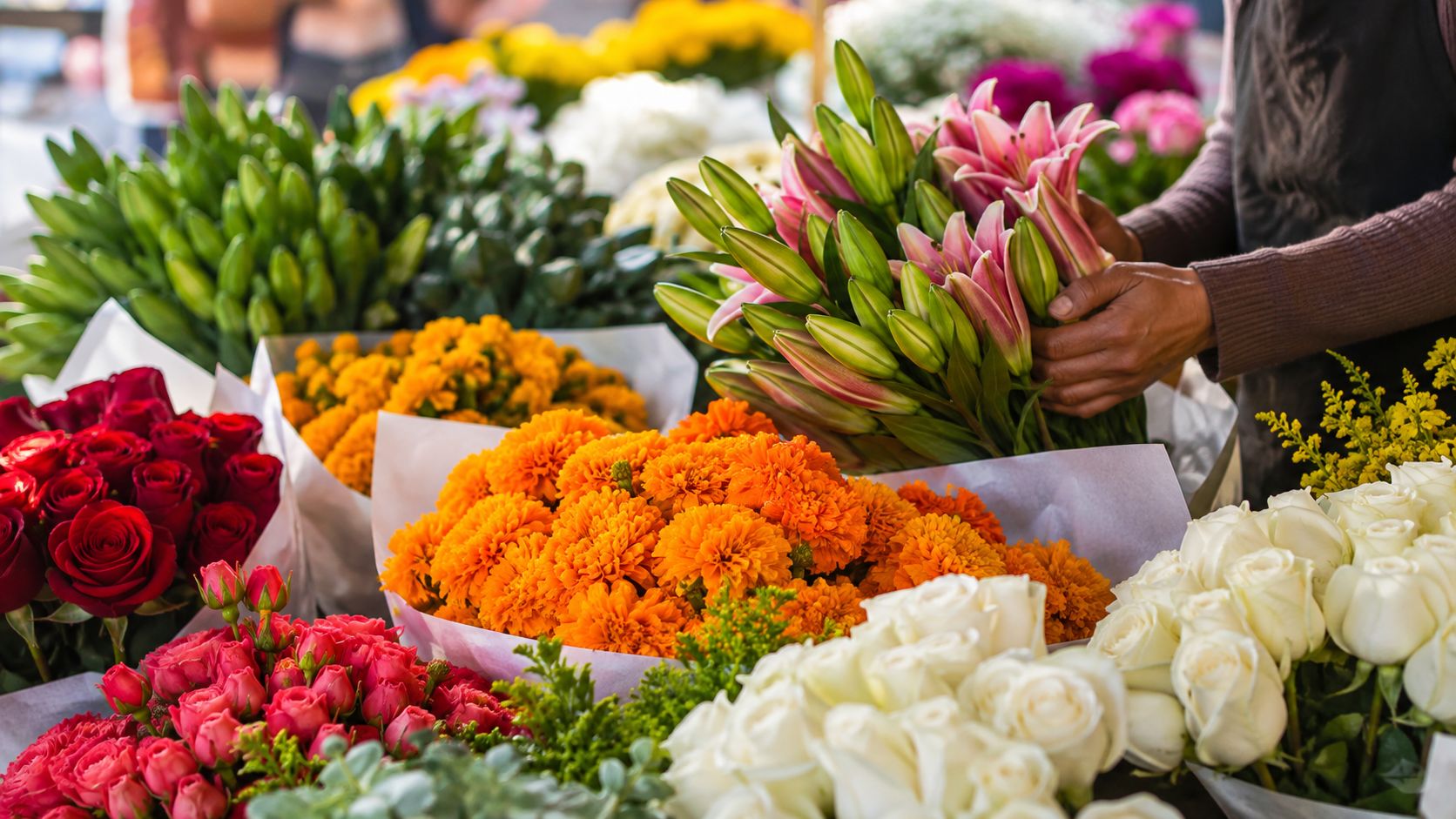
Go to Mercado de Jamaica before the rest of the city has fully started. The market's flower stalls bring color, fragrance, wet floors, quick transactions, and constant movement together in a setting that feels more like a workplace than a curated visitor experience.
Arrive around 6:30 or 7 AM, when vendors are active and the selection is at its strongest. Metro Line A to Jamaica station makes the market accessible without an expensive ride, although you'll want to plan the final entrance carefully and keep your belongings secured. Wear closed-toe shoes because the ground can be wet, and carry a reusable bag if you plan to buy flowers or produce.
Photograph people with permission
The market is excellent for photography, especially in the soft early light, but vendors are working. Ask before making a close portrait, don't handle arrangements without permission, and don't block a stall while composing a shot. Learning Spanish numbers and a few basic buying phrases will make purchases easier and signal respect.
Cash is the practical choice. Use a small wallet or money belt, keep your phone away while moving through dense areas, and consider visiting with a companion if you're not comfortable navigating busy markets alone.
Allow 60 to 90 minutes for the flower section and the adjacent produce market. Taste, smell, and observe before buying. A small purchase from a vendor supports the market more directly than treating it as a free photo set.
Community-based tourism guidance can help you approach working environments in a way that benefits local people rather than extracting images from them. Jamaica also fits naturally into a broader morning focused on food, flowers, and everyday commerce. Leave enough time to eat nearby before continuing to another district.
4. Pulquería Culture Tours for an Evening in Coyoacán
Pulquerías offer a different kind of cultural experience. These traditional bars serve pulque, a fermented agave drink with deep pre-Hispanic roots, and some neighborhood establishments retain a working-class atmosphere that feels far removed from polished cocktail districts.
Go between 6 and 10 PM, when the rooms are liveliest, but don't treat the visit as a nightlife challenge. A local friend or a guide-led cultural route is the best option if you don't speak much Spanish or you're unfamiliar with the neighborhood after dark. Choose a casual pulquería in Coyoacán or nearby areas, order slowly, and observe how regulars use the space.
Drink with curiosity, not performance
If you're new to pulque, try a plain serving first or choose a curado, a fruit-flavored version. Ask what's available rather than assuming every bar offers the same style. Cash is essential because many traditional establishments don't accept cards.
Spanish greetings matter more than elaborate conversation. Say hello, thank the person serving you, and learn a few phrases before arriving. Don't photograph people without permission, and never use flash in a crowded room.
The safest evening plan is simple, arrive with company, stay in the venue, and arrange your return before the final drink.
Female solo travelers should choose a group setting for comfort and risk awareness. Keep your route short, use a trusted ride service for the return, and avoid wandering into unfamiliar adjacent neighborhoods after closing.
This experience belongs in a broader culturally immersive travel plan, not as a quick alcohol stop. Pair it with an earlier Coyoacán walk, then use the pulquería as a chance to listen, taste, and meet local culture on its own terms. Dress casually, keep your camera away unless invited, and let the evening remain social rather than staged.
5. Iglesia de Santa Catarina for a Quiet Baroque Pause
Iglesia de Santa Catarina is a short stop with real atmosphere. Its baroque façade and decorated interior sit within a working parish in Coyoacán, while the surrounding plaza remains a neighborhood gathering place rather than a theatrical backdrop for visitors.
Visit mid-morning, around 10 or 11 AM, when the light is useful for studying the exterior and the plaza often feels calmer. Check the mass schedule before entering. A church is not an empty museum, and the presence of worshippers should determine how long you stay, where you stand, and whether you take photographs.
Let the plaza set the pace
Start outside. Study the façade, sit in the plaza, and notice how residents use the space. Then enter if no service is underway. Cover your shoulders, wear longer trousers or a longer skirt, and keep your voice low.
Photography should focus on the exterior and plaza. If worshippers are present, put the camera away unless permission is clearly given. This restraint makes the visit more respectful and often gives you a better sense of the place than constant shooting.
- For architecture lovers: Look for the contrast between the church's ornate details and the simple rhythm of the plaza.
- For budget travelers: Treat it as a free or low-cost cultural pause, then eat at a neighborhood café.
- For slow travelers: Stay long enough to observe local routines instead of rushing toward the next landmark.
- For accessibility planning: Expect uneven streets and possible steps, and confirm current access conditions before setting out.
Coyoacán's colonial streets, museums, and traditions form part of the city's broader cultural fabric, and the district works best as a half-day neighborhood rather than a chain of isolated photo stops. Santa Catarina gives the afternoon a quieter center. Follow it with coffee, a modest local meal, or a slow walk through nearby streets.
6. Anahuacalli Museum for Diego Rivera's Pre-Hispanic Collection
Anahuacalli Museum is a destination for travelers who want one concentrated cultural experience rather than a massive museum day. Diego Rivera designed the dark brick building to resemble an ancient temple, creating a powerful relationship between the architecture and his collection of pre-Hispanic artifacts, sculptures, and contemporary works.
The museum holds more than 2,500 pre-Hispanic objects, a figure stated in the planning information for this recommendation. The collection is substantial, but its value comes from the atmosphere and Rivera's personal vision as much as from the individual objects. A guide available on-site can help explain the collection's references and prevent the visit from becoming a fast climb through galleries.
Choose focus over volume
Allow 2 to 3 hours, including time around the building and the surrounding neighborhood. Weekday mornings offer the best chance of a quieter visit. Wear shoes suitable for walking, especially if you plan to connect Anahuacalli with other Coyoacán stops.
Photography rules vary by gallery, so check signs on entry and ask staff when uncertain. The building itself deserves patient attention. Look at how the brick, stairways, shadows, and openings control your movement through the museum.
This is not the best choice for travelers trying to squeeze in every major attraction. It's ideal for someone who has a free morning, enjoys architectural photography, and wants a focused encounter with Rivera's interests. Pair it with Iglesia de Santa Catarina or a later café stop, but don't stack it with too many large museums.
Travelers who want a broader historical overview may prefer a larger institutional collection. Anahuacalli offers something different, a more intimate and highly designed experience. Keep the route daylight-based, arrange the last-mile transport in advance, and leave energy for the neighborhood rather than treating the museum as a box to tick.
7. MUAC for Contemporary Art and a Full UNAM Day
MUAC, the Museo Universitario Arte Contemporáneo, works best as the anchor of a university-campus itinerary. Its exhibitions bring Mexican and international contemporary art into a striking modern building, while UNAM's gardens, paths, and public spaces create a slower setting than the city center.
Check the current exhibition schedule before traveling. Contemporary programs change, and the quality of your visit depends on choosing exhibitions that match your interests. Plan for 2 to 3 hours, especially if you want to read wall text, attend a free artist talk, or explore the building rather than rushing through galleries.
Plan the campus, not only the museum
UNAM is too large for casual improvisation. Download or consult a university map, identify the museum entrance, and decide whether Espacio Escultórico belongs on the same day. Tuesday through Friday is the strongest window for avoiding heavier visitor traffic, according to the practical plan for this stop.
Photography is usually allowed in galleries, but signage controls the details. Turn off flash when required and respect restrictions around specific works. Bring water and wear comfortable shoes because the campus involves more walking than a standard museum district.
For safety planning, keep valuables close and avoid unlit shortcuts when leaving. Solo travelers should map the return route before entering the exhibitions, particularly if they expect to stay until late afternoon. Travel Talk Today's guide to safe areas in Mexico City is useful background, but no neighborhood label replaces time-aware route planning.
MUAC suits curious travelers who enjoy ideas, architecture, and the intellectual energy of a public university. Combine it with gardens or Espacio Escultórico, eat before leaving campus, and resist the temptation to add several distant attractions afterward. A complete UNAM day feels rewarding because you give the campus room to unfold.
8. Espacio Escultórico for Geometry on Volcanic Ground
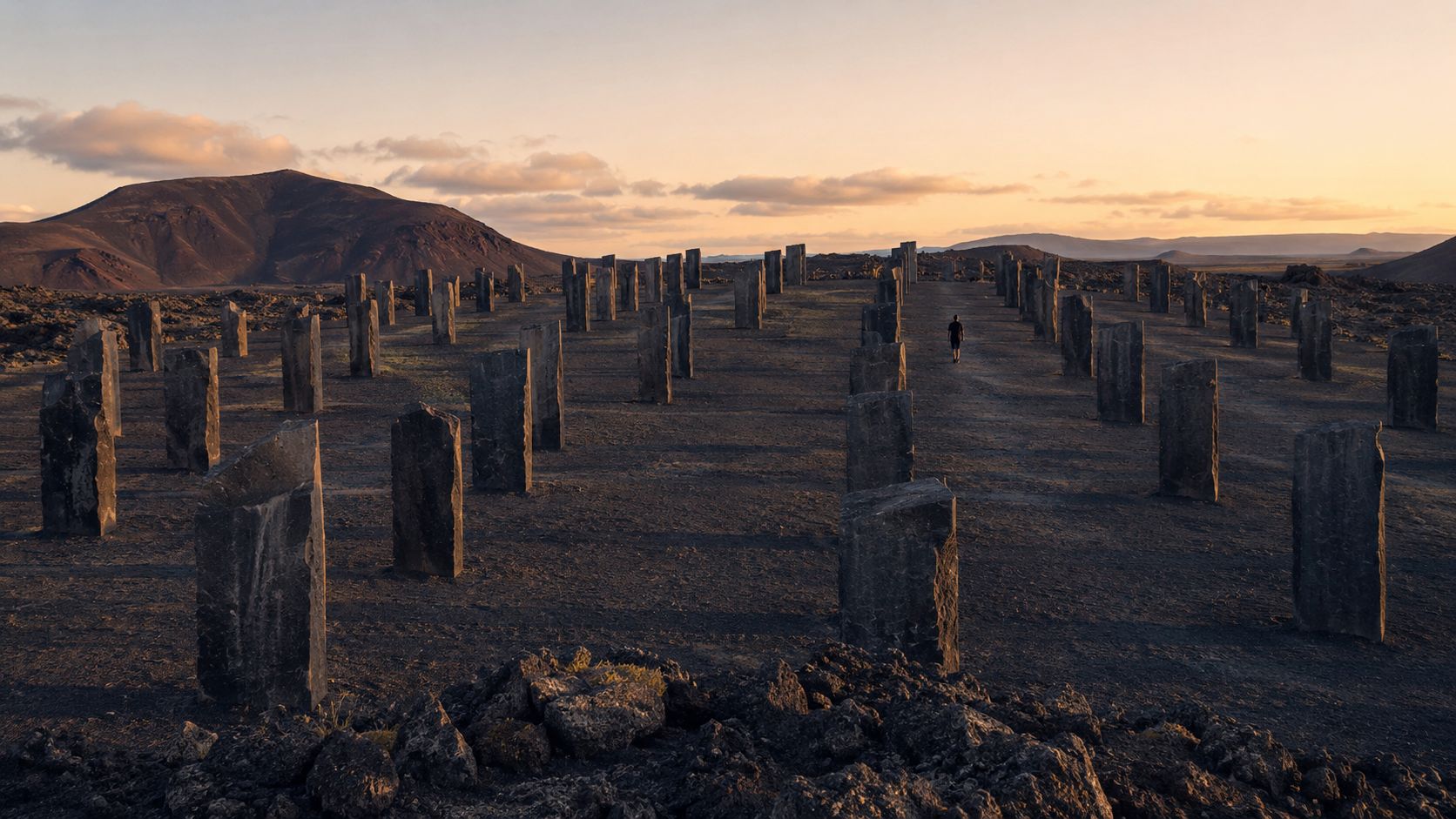
Skip Espacio Escultórico if you want an easy campus stop. Choose it for silence, stark geometry, and photographs shaped by volcanic ground. On the UNAM campus in Pedregal, 60 slate monoliths form a geometric arrangement among irregular lava formations. The installation dates to 1979 and is associated with Mathias Goeritz, according to the planning information for this stop.
Late afternoon offers the strongest visit, between 4 and 6 PM, when low light creates long shadows and sharper contrast. Set up a car or pre-booked transport for the final approach. Walking casually from a distant station is uncomfortable and inefficient.
Plan for exposure and uneven terrain
Firm-grip shoes are necessary. The volcanic surface is rough, the site is open, and shade is limited. Bring water and sun protection, then charge your phone before leaving so navigation and transport coordination do not become problems.
Give the site time to change. Photographers can begin with repeated monoliths, then widen the frame to show the uneven lava around them. Stay off the sculptures and protect the terrain. A restrained approach works best here. Watch one set of shadows develop instead of taking a series of identical frames.
Confirm the return ride before sunset, and go with a companion if the campus and route are unfamiliar. Keep the visit within daylight, particularly if you are traveling alone.
Best pairing: Visit MUAC first, then continue to Espacio Escultórico for a late-afternoon shift from curated contemporary art to raw volcanic terrain.
Budget more time for transport than for admission. Spanish is useful for arranging the ride and confirming the pickup point, while offline directions help once you leave the main campus routes. The reward is a rare feeling of distance inside Mexico City, with an experience suited to travelers who value unusual photographs and quiet over conventional sightseeing.
9. Parque Viveros de Coyoacán for a Local Urban Forest Break
Parque Viveros de Coyoacán is where Mexico City residents go to move, breathe, meet friends, and spend time outdoors. The urban forest and nursery feel more lived-in than formal, with joggers, families, dog walkers, and people using the paths as part of ordinary daily life.
Come on a weekday morning, ideally between 8 and 11 AM, when the park is calmer and the air feels cooler. Give yourself 2 to 3 hours if you want to explore at an unhurried pace. This isn't a quick green backdrop for a single photograph. Follow the paths, observe the nursery activity, and use the park as a decompression point after denser cultural visits.
Keep the route comfortable
Good walking shoes matter. Some paths or edges may be uneven, and conditions change with weather, so bring water, snacks, and sun protection. The park is easier to enjoy during the dry season, from November through April, according to the visit plan for this recommendation.
Travel alone or in a small group, stay aware of your surroundings, and keep your belongings secure. Use daylight for the main visit, then transition to a nearby café or cultural site while you still have energy. Don't turn quiet areas into loud picnic zones, and give runners and local users space.
- For photographers: Look for patterns in tree trunks, paths, nursery beds, and everyday movement.
- For solo travelers: Keep your route visible and avoid isolated shortcuts.
- For families: Choose a shorter loop and plan a nearby meal afterward.
- For budget travelers: The park provides a substantial low-cost morning without requiring a tour or complicated booking.
Viveros pairs naturally with Coyoacán's churches, plazas, cafés, and museums. It gives the neighborhood a rhythm that famous attractions alone can't provide. Visit when you want your itinerary to feel less like a sequence of tickets and more like a day lived outdoors.
10. Xochimilco's Chinampas for Sustainable Agriculture Beyond the Boats
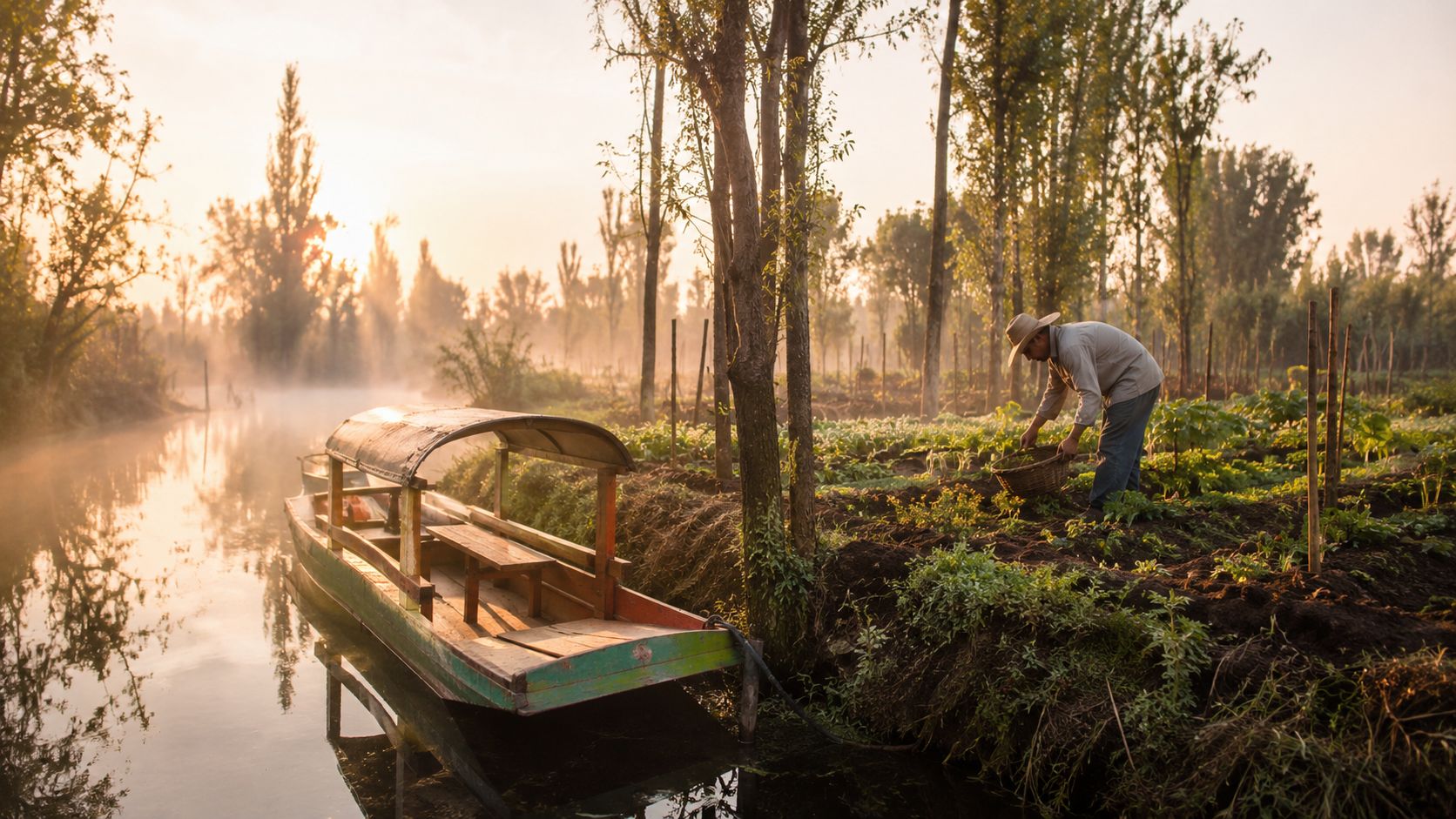
The most meaningful Xochimilco experience may happen away from the party boats. Working chinampas, the region's traditional agricultural plots, connect visitors with local farmers who continue producing food in an area shaped by ancient water-management practices.
Arrive at dawn, when farmers are working and the markets begin to open. Book directly with a farmer cooperative or a community organization whenever possible. The planning information for this recommendation identifies Grupo Autónomo de Chinameros as one organization to investigate, but confirm current availability and meeting arrangements before traveling.
Build the visit around farmers' knowledge
A small, community-focused tour can explain how chinampas function, what farmers grow, and why the environment matters. Ask questions, listen, and buy produce when offered. Cash is important because farmers may not accept cards, and a purchase creates a direct connection between the visit and the local economy.
Wear waterproof shoes and carry sun protection. The transition from street to canal can involve boats, docks, and uneven surfaces, so travelers with mobility concerns should ask organizers about access before booking. Learn basic Spanish vocabulary related to farming, water, food, and sustainability. Even simple questions can make the exchange more personal.
Respectful practice: Ask before photographing farmers, homes, tools, or crops. A working chinampa is someone's livelihood, not a themed attraction.
The chinampa tradition has continued for more than 600 years, according to the supplied planning information. That long continuity makes this one of the strongest sustainable-travel experiences on the list, especially for visitors interested in regenerative food systems rather than passive sightseeing. Sustainable tourism practices offer useful principles for choosing community-led experiences.
Combine the morning with Xochimilco's Archaeological Museum if time and energy allow. Keep the schedule flexible, carry cash, and avoid adding a crowded party-boat itinerary that would undermine the quieter purpose of the visit.
10 Hidden Gems in Mexico City, Quick Comparison
| Experience | 🔄 Implementation complexity | ⚡ Resource requirements | ⭐ Expected outcomes | 📊 Ideal use cases | 💡 Key advantages / tips |
|---|---|---|---|---|---|
| Biblioteca Vasconcelos | 🔄🔄, easy entry, multi-level wayfinding | ⚡, Free admission; short visit time | ⭐⭐⭐, Calm architectural & reading retreat | Solo travelers, photographers, budget explorers | Free, iconic architecture, AC & Wi‑Fi; visit 9–11 AM |
| Antiguo Colegio de San Ildefonso | 🔄🔄, stairs & modest navigation | ⚡⚡, $5–7 admission; guide recommended | ⭐⭐⭐, Strong historical/art insight | History buffs, art lovers, Centro walkers | Intimate revolutionary murals; allocate 90–120 min |
| Mercado de Jamaica | 🔄🔄🔄, crowded dawn logistics | ⚡⚡, Low cost; cash preferred; early start | ⭐⭐⭐, High sensory, photo & commerce impact | Photographers, budget shoppers, cultural explorers | Wholesale flowers, peak 6–9 AM; secure valuables |
| Pulquería Culture Tours | 🔄🔄, evening social dynamics | ⚡, Very low cost per drink; cash only | ⭐⭐, Authentic nightlife cultural immersion | Cultural immersion seekers, social solo travelers | Historic venues, live music; go in groups if alone |
| Iglesia de Santa Catarina | 🔄, simple respectful visit | ⚡, Free (donations); brief stop | ⭐⭐, Quiet architectural & spiritual experience | Architecture lovers, spiritual travelers, photographers | Baroque interior; check mass times and dress modestly |
| Anahuacalli Museum | 🔄🔄, residential access + museum layout | ⚡⚡, $6–8 admission; moderate travel time | ⭐⭐⭐, Deep Rivera context + unique architecture | Diego Rivera fans, art historians, cultural explorers | Rivera-designed pyramid; combine with Coyoacán sites |
| MUAC (UNAM) | 🔄🔄, campus navigation required | ⚡, Free admission; allow 2–3 hours | ⭐⭐⭐, World-class contemporary exhibitions | Serious art lovers, students, photographers | Free quality shows; check exhibition schedule in advance |
| Espacio Escultórico | 🔄🔄, transport + uneven terrain | ⚡, Free access; bring water and sun protection | ⭐⭐, Minimalist sculpture landscape for photos | Photographers, contemplative visitors, creatives | 60 monoliths, best at golden hour; arrive by car/Uber |
| Parque Viveros de Coyoacán | 🔄, straightforward park trails | ⚡, Free; 2–3 hour relaxed visit suggested | ⭐⭐, Urban forest, local leisure routines | Nature lovers, joggers, solo travelers | 40 ha of trails and birding; wear good shoes, bring water |
| Xochimilco's Chinampas | 🔄🔄🔄, cooperative booking, dawn starts | ⚡⚡, $15–30 for farmer tours; cash, early morning | ⭐⭐⭐, Educational sustainable-agriculture experience | Sustainable travel advocates, agri-enthusiasts | Book direct with farmer cooperatives; arrive at dawn, wear waterproof shoes |
Build a Slower Mexico City Day
The best way to use these hidden gems in Mexico City is to group them by geography and energy rather than chasing all ten. A Centro art-and-history day can begin at Antiguo Colegio de San Ildefonso, continue through nearby heritage streets, and end before evening crowds and transport fatigue build. Add Biblioteca Vasconcelos on a separate Cuauhtémoc morning if you want architecture, reading, and a low-cost reset rather than another tightly scheduled museum sequence.
A Coyoacán culture-and-green-space day can start at Iglesia de Santa Catarina, continue through cafés and neighborhood streets, then move to Parque Viveros for a slower outdoor stretch. Anahuacalli deserves its own focused block because the building, collection, and surrounding area require attention. Add a pulquería only when your return route, language comfort, and company make an evening visit sensible.
For an UNAM architecture-and-art day, visit MUAC first and explore the campus with a map. Continue to Espacio Escultórico in the late afternoon, but arrange transport and finish before darkness. The combination gives you contemporary exhibitions, university settings, engineered geometry, and volcanic terrain without crossing the city repeatedly.
An early Xochimilco sustainability morning should center on a chinampa cooperative or farmer-led visit. Buy produce, ask permission before photographing, and leave enough time for the canals or Archaeological Museum only if the route remains comfortable. Mercado de Jamaica offers another strong dawn option when you want flowers, produce, and everyday commerce without a formal tour.
Verify opening hours, admission rules, event schedules, and meeting points before departure. Carry water throughout the day, keep cash available for markets and community visits, and use daylight strategically for unfamiliar routes. Respect worship services, working vendors, farmers, readers, and residents who didn't agree to become part of your travel content.
Mexico City rewards travelers who accept a little friction. Learn greetings, numbers, and simple questions in Spanish. Choose public transport when the route is clear, arrange a reliable last-mile option when it isn't, and avoid treating lower-crowd districts as risk-free just because they're less famous. Visitor research has consistently placed accessibility, tourism infrastructure, safety, and tourist information among the city's most valued attributes, with scores of 8.21, 8.20, 8.20, and 8.19 out of 10 respectively in a 2016 survey based on 3,794 effective interviews across eight measurement waves. The city tourism survey report supports a key lesson, hidden places work best when the route is clear.
Save one itinerary now, learn a handful of Spanish phrases before you go, and choose the stop that matches your time, budget, comfort, and curiosity. A thoughtful visit might produce fewer photos, but it will give you stronger memories and a more respectful connection with the city.
Travel Talk Today offers practical budgeting frameworks, solo-travel safety guidance, sustainable tourism ideas, cultural immersion resources, and destination guides for travelers who want more than checklist sightseeing. Visit Travel Talk Today to plan a lower-cost Mexico City route that supports local communities and leaves room for genuine discovery.