You're probably staring at a map of Italy with too many tabs open. Rome. Florence. Venice. Cinque Terre. Amalfi Coast. Bologna. Sicily. Puglia. Everyone online tells you to “do Italy” in ten days, which usually means dragging a suitcase over cobblestones, standing in ticket lines, and eating one forgettable meal between train changes.
I've done Italy the rushed way. It's exhausting. You collect landmarks and lose the country.
The better version is smaller. One village in Tuscany for a week. One apartment in Lecce. One market vendor who starts recognizing you by the third morning. One café where you stop checking your phone because the point of the day is the day itself. That's the reward of slow travel in Italy. Not more pins on a map. More texture in your memory.
If you're burned out on checklist travel, trust that feeling. Italy punishes hurry and rewards attention.
Beyond the Bucket List Embracing Italy's Slower Pace
I once watched a couple in Florence eating takeout pizza on the curb while arguing over whether they could still make their timed entry somewhere else. They had luggage with them. They looked miserable. By sunset they were on a train, headed for another city they wouldn't have time to understand either.
A week later, in a Tuscan hill town, I spent an entire afternoon doing almost nothing. Coffee in the piazza. A walk past shuttered houses. A long lunch that turned into a conversation with the owner about olive harvests and why the local red tasted different from the wine in the next valley. That day had no headline attraction. I remember it far more clearly.
That's slow travel in Italy. Connection over collection. It's not about moving slowly for the sake of it. It's about staying put long enough for a place to stop performing for you and start revealing itself.
What changes when you stop chasing highlights
On a fast trip, Italy becomes a sequence of logistics. Train times. Check-in windows. Museum reservations. Restaurant lists you found on social media. You spend half your energy arriving somewhere new.
On a slow trip, Italy becomes a rhythm. You learn when the bakery opens. You know which street gets shade in the afternoon. You stop asking, “What should I see next?” and start asking, “How do people live here?”
That shift matters more than any destination choice.
- You notice flavor more clearly: Regional pasta shapes, local dialects, different coffee habits, small-town market routines.
- You spend less energy on transit: Fewer packing days, fewer station sprints, fewer expensive mistakes.
- You remember people, not just monuments: The butcher, the guesthouse owner, the woman selling pecorino, the old men arguing in the square.
Slow travel isn't lazy travel. It's selective travel.
If your last trip felt like admin with better scenery, take that as a sign. Italy doesn't need to be conquered. It needs to be inhabited, even briefly.
Why Choose the Path Less Traveled in Italy
The best reason to slow down in Italy is simple. The country makes more sense that way.
Italy isn't built for chugging. It's built for sipping, like a serious Barolo. Rush it and you miss what makes it good. Stay longer and ordinary things become the trip: washing produce from the market, hearing church bells mark the afternoon, learning that your town shuts down at certain hours and nobody apologizes for it.
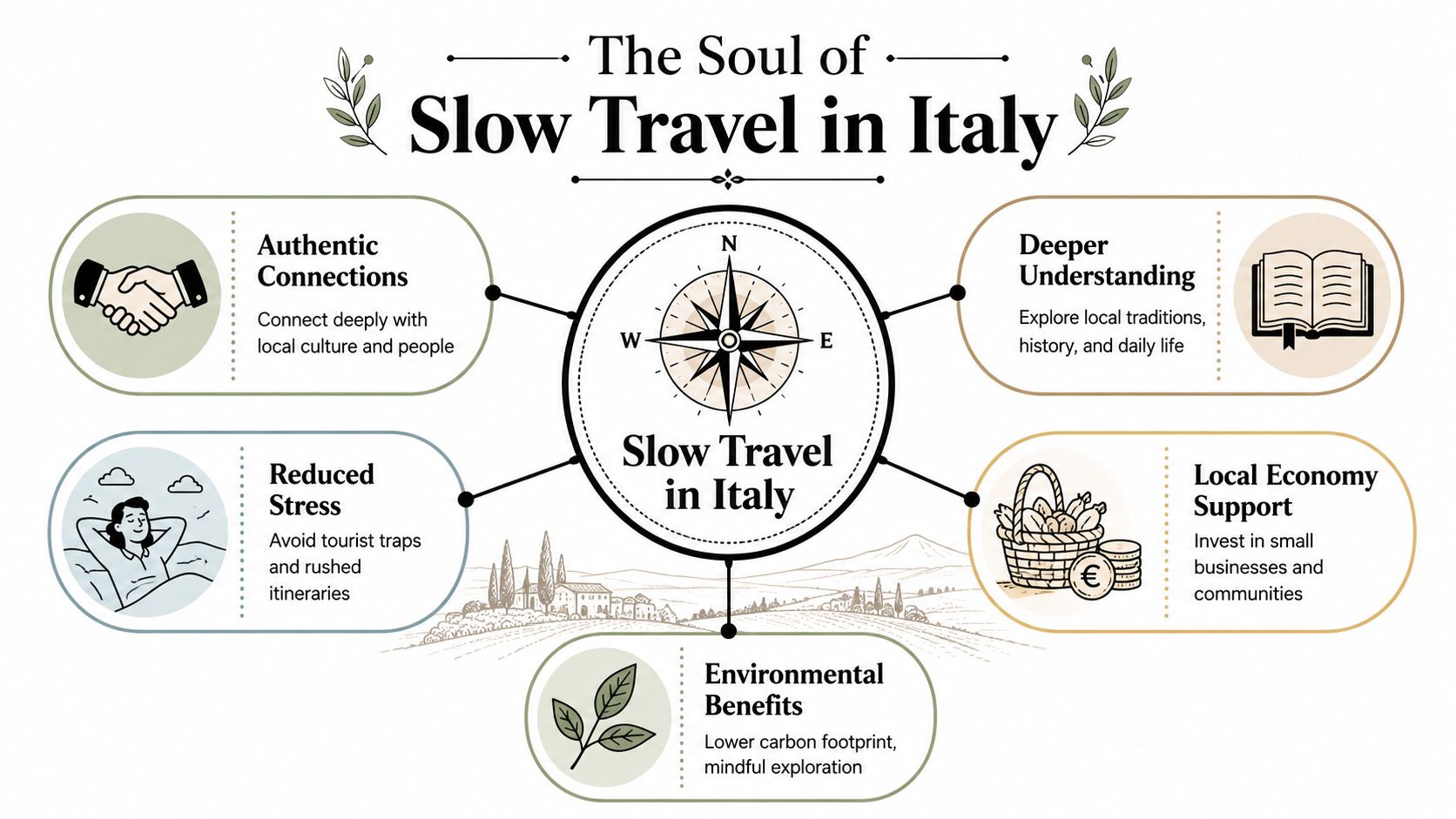
The trend is already clear. 84% of Italian travel providers surveyed in 2024 reported a measurable increase in demand for slow travel, 92% noted parallel growth in experiential travel, and 90% expect the trend to continue according to Flywire's 2024 travel trend insights for Italian travel providers. That doesn't surprise me at all. Travelers are tired of speed masquerading as depth.
Depth beats coverage
A rushed itinerary gives you broad exposure. A slow itinerary gives you understanding.
Spend three nights each in Rome, Florence, and Venice, and you'll leave with photos. Spend two weeks in one region and you'll leave with context. You'll know why one town prizes one dish and the next town swears by another. You'll start to see how geography shapes food, architecture, and daily habits.
If you want a broader primer on the philosophy, this guide on what slow travel really means is worth reading. The short version is this: you stop treating places like trophies.
It feels better on the ground
Fast travel creates low-grade stress all day long. You're always checking out, checking in, scanning timetables, or worrying about what you're missing. Slow travel cuts that noise.
A few things happen when you settle in:
- Meals improve: You stop grabbing mediocre food near major sights and start eating where locals return.
- Your judgment improves: You can spot overpriced tourist setups faster once you've seen a place at different times of day.
- Your body relaxes: You walk more naturally, sleep better, and stop hauling your life from platform to platform.
Practical rule: If your itinerary needs a spreadsheet to function, it's too crowded for Italy.
Your money goes further in smarter ways
Slow travel isn't automatically cheap, but it usually leads to better decisions. When you stay longer, you're less likely to pay panic prices. You can shop at local markets, book apartments with kitchens, and choose one good base instead of paying the “convenience tax” of constant movement.
More important, your spending lands differently. A family-run agriturismo, a neighborhood wine bar, a local cooking class, a produce stall at the weekly market. That money circulates in the place you're visiting instead of vanishing into the most polished tourist funnel.
You stop performing your trip
This is the part nobody talks about enough. Slow travel in Italy gives you permission to stop trying to “maximize” everything. You don't need to earn your vacation by exhausting yourself.
Some of the best hours in Italy are uneventful on paper. A bench in Orvieto. Laundry drying over a side street in Palermo. A train ride through green countryside with no agenda at the other end. Those moments are why people come back changed.
How to Plan Your Extended Stay in Italy
The biggest planning mistake people make is choosing too many places. Don't start with a list of cities. Start with a base region.
Pick one area and let it anchor the trip. Tuscany, Umbria, Puglia, Sicily, Liguria, or a slice of Campania all work well, but the right choice depends on how you like to travel. If you love markets, hill towns, and a kitchen-table pace, central Italy is hard to beat. If you want sea air, long lunches, and less polished tourism, head south.
Choose a region that matches your habits
Don't choose based on online hype. Choose based on what you want your days to feel like.
Ask yourself:
- Food first or scenery first: If meals are the center of the trip, pick a region whose local cooking excites you enough to repeat it often.
- Train freedom or car freedom: Some areas work beautifully with regional rail. Others are much easier if you drive.
- Social atmosphere or retreat: A lively base town helps solo travelers. A rural stay works better if you want quiet.
A lot of travelers default to Florence because it's famous. That's not always the smartest base. Florence is better as a visit than a home for many slow travelers, especially if your goal is calm. If you're building your trip around that area, use a smaller town nearby and dip into the city when you need it. This sample Florence itinerary can help you decide what deserves a day trip versus a stay.
Stay longer than feels comfortable at first
Travelers often underestimate how long it takes to settle in. The first few days are still orientation. You're figuring out groceries, transit, opening hours, and your own energy.
A good rule is to build around one place long enough that it becomes familiar. That's when the trip changes shape. You stop consuming and start participating.
Here's the structure I recommend:
- For a first experiment: Choose one base and commit to staying put long enough to build routines.
- For a richer trip: Use one primary base and, if needed, one secondary base in the same region.
- For a month or more: Split your time only if the second place offers a clearly different environment or rhythm.

Get the season right or the trip fights back
Season matters more in Italy than many travelers admit. Spring and autumn are the optimal windows for slow travel in Italy. Mild weather supports outdoor activities, visitor density drops by 40 to 60% compared to peak summer, and seasonal events like Tuscan wine harvests and Umbrian truffle fairs deepen the experience, as noted in this guide to slow travel in Italy.
That advice is dead on.
Summer can still work, but it often pushes you into survival mode. Heat changes how much walking you'll enjoy, and crowds change the mood of entire towns. Slow travel needs breathing room. Spring and autumn give you that.
Build a budget around everyday life
Budget travel works better when you stop pricing your trip like a short vacation. Think in weekly rhythms, not constant treats.
Focus on these categories:
- Accommodation: Apartment rentals, agriturismi, and simple guesthouses often make more sense than short-stay hotels.
- Food: Shop at markets, cook some meals, and save restaurants for places you want to linger in.
- Transit: Fewer long-distance moves usually means fewer expensive booking mistakes.
- Experiences: Spend on one memorable class or local event rather than stacking paid attractions every day.
The cheapest day in Italy is often the day you stay put, shop locally, cook simply, and walk everywhere.
For solo travelers, the budget equation can be trickier because you can't split lodging. In that case, choose a smaller town with good transport and book a room with kitchen access. You'll save money fast without sacrificing atmosphere.
Your Guide to Slow Transportation and Accommodation
Italy gives you plenty of ways to move around, but not all of them support a slower trip. The flashy option isn't always the right one. High-speed trains are excellent when you need to cross distance efficiently. They're less useful when the point is to understand a region.
Regional transport asks more patience from you. That's often a good trade.
Choose transport that matches the trip
For moving between major cities, high-speed rail is efficient. For living inside a region, treni regionali and local buses are usually more relevant because they connect the places where slow travel gets interesting.
Earlier, I covered why timing matters. The same logic applies to movement. Don't optimize every transfer for speed. Optimize for fewer transfers, simpler days, and access to places you'll enjoy.
Here's the practical comparison.
| Transport Mode | Average Cost | Best For | Slow Travel Fit |
|---|---|---|---|
| Regional train | Lower than high-speed options | Day trips between towns, flexible regional exploring | Excellent for travelers based in one area |
| High-speed train | Higher than regional options | Long-distance jumps between major cities | Good for arrival and departure days, not daily slow travel |
| Intercity or local bus | Usually budget-friendly | Reaching smaller towns without rail access | Useful, but schedules require patience |
| Rental car | Highest overall once fuel and parking are considered | Rural areas, beaches, hill towns, remote farm stays | Excellent when public transport is thin |
| Walking and local transit | Low daily spend | Small towns, city neighborhoods, market days | Best option once you've chosen the right base |
When a car is worth it
A car is not freedom everywhere in Italy. In many cities it's a nuisance. Parking, restricted traffic zones, and stress can wreck a good day.
Rent one when your base is rural, when you're staying at an agriturismo, or when you want access to mountain-and-sea combinations that public transport handles poorly. Skip it if you're basing in a compact city or well-linked town and planning mostly rail day trips.
A simple test helps. If your ideal days involve vineyards, trailheads, farm stays, or tiny villages with awkward schedules, rent the car. If your ideal days involve cafés, markets, churches, and one easy train ride, don't.
Pick accommodation that slows you down in the right way
Hotels are fine. They're just rarely the best tool for slow travel in Italy.
Better options include:
- Agriturismi: Best for countryside stays, local food, and a quieter rhythm. You'll trade some convenience for atmosphere.
- Apartment rentals: Ideal for longer stays, cooking, laundry, and feeling less like a transient visitor.
- Family-run guesthouses: Good for solo travelers who want privacy with some human connection.
- Work exchange or volunteering arrangements: Useful if your goal is time, routine, and community more than sightseeing.
Book the place where you can imagine doing laundry, making breakfast, and staying in for a rainy afternoon. That's the one you can actually live in.
My blunt advice on booking
Don't chase the prettiest listing photos. Chase location, kitchen access, walkability, and reviews that mention quiet sleep and responsive hosts. A beautiful remote stay can become a trap if you don't drive. A plain apartment near a market can become the highlight of the whole trip.
For solo women, I'd choose central over isolated unless you specifically want retreat time and have transport sorted. Coming home after dinner should feel easy, not like a logistics puzzle.
Ideas for Genuine Cultural Immersion
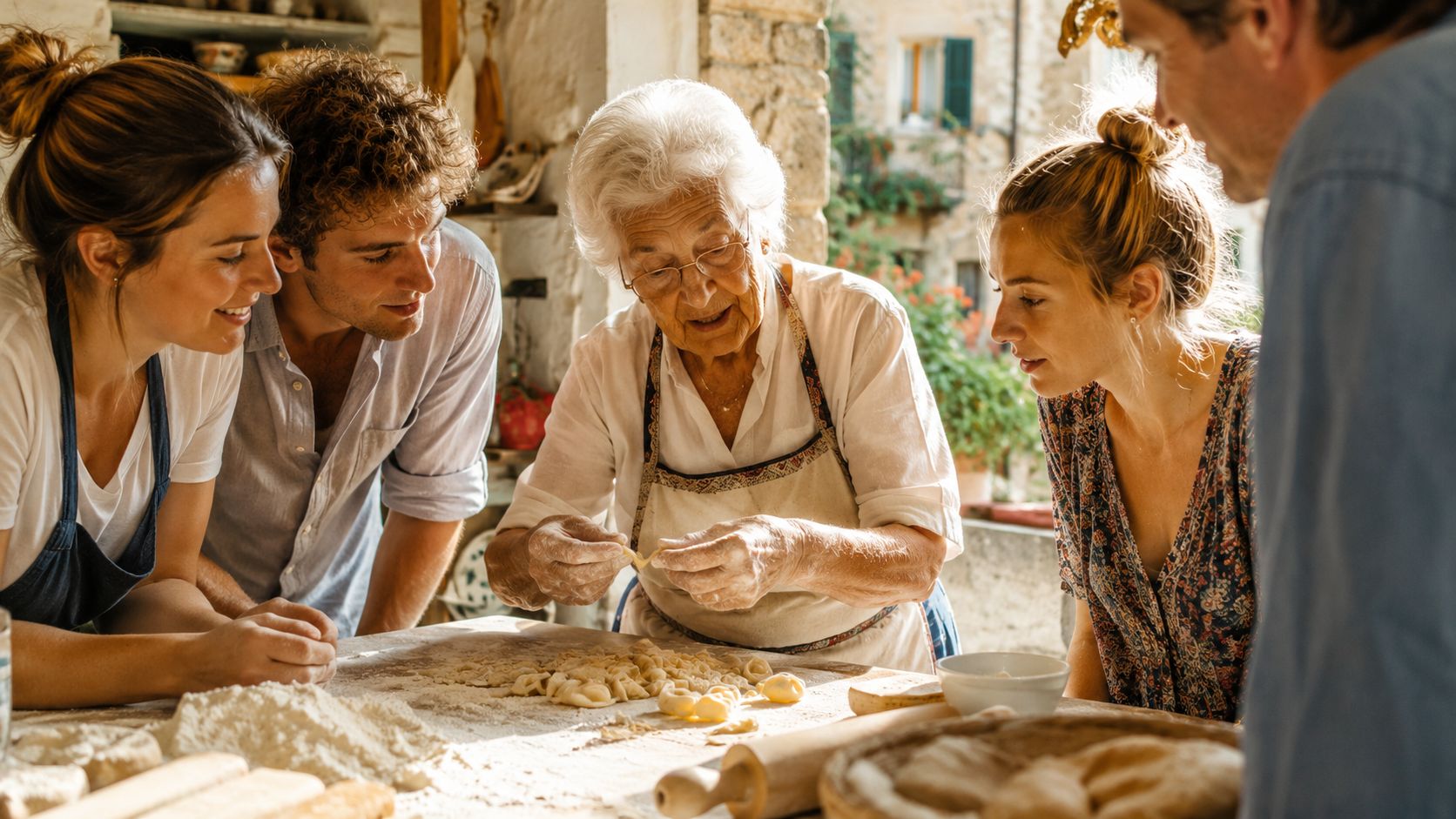
The best days in Italy usually start small. You walk to the market with a tote bag. You buy tomatoes that smell like tomatoes, a wedge of local cheese, bread still warm from the bakery, and fruit you didn't plan to eat but couldn't resist. Then the fishmonger asks a question too quickly, you answer with rough Italian and hand gestures, and somehow it all works.
That is the trip.
Build your days around local rituals
Forget the pressure to fill every hour. Instead, anchor your day to recurring local habits.
A strong slow-travel day might look like this:
- Morning market run: Buy produce, ask what's in season, and pay attention to what locals are buying in quantity.
- Long lunch or home cooking: Take a cooking class once, then recreate pieces of it yourself with regional ingredients.
- Afternoon pause: Sit in a piazza, read, journal, or people-watch. Italy makes room for idleness. Use it.
- Evening passeggiata: Join the pre-dinner stroll. Don't overthink it. Just walk.
If you want more ideas on traveling this way, this piece on cultural immersion through travel lines up well with what works on the ground.
Seek out the unpolished experiences
The most rewarding cultural experiences are often lightly organized or not organized for visitors at all. A town festival. A local food fair. A church celebration. A neighbor recommending a tiny trattoria with handwritten specials.
Look for these opportunities:
- Sagre and local festivals: Go hungry, bring cash, and don't expect polished English-language signage.
- Regional cooking classes: Choose classes centered on local dishes, not generic “Italian cooking.”
- Artisan visits: Ceramics, olive oil, cheese, wine, textiles. Buy one meaningful item instead of a bag of souvenirs.
- Routine places: Barber shops, laundromats, corner bars, produce shops. They sound mundane. They reveal the most.
Learn three things in Italian before you arrive: greeting, gratitude, and apology. That tiny effort changes every interaction.
Solo and budget travel advice that actually helps
Solo travel in Italy can be rewarding because the country gives you built-in social spaces. Piazzas, markets, cafés, guesthouses, and walking culture make it easier to feel present without feeling lonely.
Still, be practical.
- For solo women: Arrive in new places before dark if possible, choose lodging with recent reviews, and trust your instincts about empty streets and isolated properties.
- For tight budgets: Make lunch your main meal when possible, cook often, and treat paid activities as occasional anchors rather than daily habits.
- For meeting people: Join a small food tour, class, or community event early in your stay, then return to the same places rather than constantly trying new ones.
One final note. Don't confuse performative friendliness with real connection. Be respectful, curious, and patient. Italy opens up gradually. That's part of its charm.
Sample Slow Travel Itineraries for Italy
Templates help, but don't build rigid schedules. Slow travel works best when the structure is clear and the days stay loose. Pick a base, understand the region's rhythm, and leave room for repetition.
These itinerary ideas aren't about seeing everything. They're about seeing enough to care.

Two weeks in Umbria
Base yourself in Orvieto, Spoleto, or Perugia depending on whether you want dramatic views, a smaller-town feel, or a livelier urban rhythm. Umbria is one of the easiest places to understand the logic of slow travel in Italy because it rewards wandering, eating, and small-scale discovery.
A good pattern is to alternate local days with simple day trips. Spend one day doing almost nothing beyond your own town. The next day, take a regional train or bus to a nearby hill town, market, or countryside walk. Then reset.
What makes Umbria special is balance. It has excellent food, strong local identity, and enough cultural depth without the constant pressure found in Italy's most famous hotspots. It suits solo travelers well because towns feel manageable and social spaces feel grounded rather than transactional.
Three weeks in Puglia
For Puglia, I'd split the region mentally even if you keep one base. Lecce works well if you want architecture, cafés, and easy access to both coastlines. Ostuni or Monopoli can work if sea access matters more than city life.
Puglia gives you a different flavor of slowness. Whitewashed towns, olive groves, simple seafood, and long coastal afternoons. This is a region where a car can be worth the cost because some of the best experiences sit between towns rather than inside them.
A loose rhythm might include:
- Town days: Lecce, Ostuni, Martina Franca, or smaller inland stops.
- Sea days: Quiet beach time, harbor walks, seafood lunches, and sunset strolls.
- Food days: Bakeries, olive oil tastings, local wineries, and simple trattorie.
- Reset days: Stay in your apartment, shop, cook, and do nothing ambitious.
If you're looking for inspiration on where to base yourself, these towns in Italy worth knowing can help you think beyond the obvious names.
A month in Sicily
Sicily is too large and layered for a rushed approach. A month lets you absorb at least one part of it properly. I'd still resist trying to circle the whole island unless movement itself is the point. Better to choose western or southeastern Sicily and commit.
For a western focus, consider Palermo or a smaller town nearby if you want energy with escape options. For the southeast, base in a Baroque town and make room for markets, coast, and countryside. Sicily rewards appetite and curiosity. It also rewards patience, because the island can be intense in the best and worst ways.
This is the kind of trip where your best days might be wildly different:
- A full market day in Palermo.
- A quiet coastal day with a packed lunch.
- A visit to an archaeological site early, before the heat builds.
- A home-cooked dinner from local ingredients and a late walk afterward.
Sicily is ideal for travelers who don't mind contrast. Beauty and rough edges sit side by side. That's exactly why staying longer matters.
Two weeks in Liguria beyond the postcard rush
Many visitors approach Liguria as a quick hit, especially around Cinque Terre. That's a mistake. Base in a less frantic town on the Ligurian coast and use regional trains for selective exploring rather than trying to “complete” the area.
This version of Liguria is about sea air, steep paths, long lunches, and choosing one village well instead of five badly. Spend your mornings hiking or taking short train hops. Spend afternoons swimming, reading, and savoring straightforward food. Repeat without guilt.
The right itinerary should leave blank space on purpose. If every day is committed, you're not traveling slowly. You're just staying longer.
Liguria especially suits travelers who want a compact base with enough visual drama to make stillness feel rich.
Leaving Italy Better Than You Found It
Slow travel in Italy isn't only better for you. It's better for the places you visit.
When you stay longer, move less, and spend more intentionally, you stop treating Italy like a backdrop. You become a guest with responsibilities. That means your choices matter. Where you eat, where you sleep, what you buy, how much waste you create, and how you behave in residential neighborhoods all leave a mark.
Spend where it counts
Choose family-run restaurants over chains. Buy ceramics from the person who made them. Stay in locally owned guesthouses when possible. Shop at food markets and neighborhood stores instead of defaulting to convenience spots built around visitor turnover.
Small choices add up to a different kind of trip. They also create better stories.
Be easy for a place to host
Respect quiet hours. Dress appropriately in churches. Learn basic greetings. Carry a refillable water bottle and a reusable bag. Don't block narrow streets for photos. Don't treat small towns like open-air theme parks.
If responsible travel matters to you, these sustainable tourism practices offer a strong foundation.
Leave your destination with fewer plastic bottles used, fewer rushed transactions, and more money spent in places you'd want to exist next time you return.
That's the point. Slow travel asks less from a place and gives more back. Italy deserves that kind of visitor.
Your Slow Travel Italy Questions Answered
Is slow travel in Italy only for people with a lot of time?
No. It works with modest time if you stop overloading the trip. Even a shorter stay feels deeper when you choose one base and resist the urge to bounce around.
Do I need to speak Italian?
No, but you should learn the basics. Greetings, thanks, excuse me, and how to order politely go a long way. Effort matters more than accuracy.
Is it more expensive than a normal trip?
Not necessarily. It often gets cheaper in practice because you move less, make fewer rushed purchases, and can shop and cook more easily. The trap is spending like you're on a city-break every day.
Is slow travel in Italy safe for solo women?
Usually, yes, with the same common-sense habits you'd use anywhere. Pick well-reviewed lodging, avoid arriving late into unfamiliar places when possible, keep an eye on your belongings in busy transit areas, and don't book isolated stays unless you're comfortable with the setup.
Should I rent a car?
Only if your base or priorities justify it. Rural stays, beach hopping, and remote villages often make a car worthwhile. Compact towns and rail-linked regions often don't.
What should I do if I feel guilty for “not seeing enough”?
Ignore that impulse. Seeing less is often how you experience more. If a place starts to feel familiar, you're doing it right.
Travel Talk Today helps you plan trips that feel richer, calmer, and smarter without blowing your budget. If you want more grounded advice on meaningful travel, solo safety, and practical ways to explore deeper, visit Travel Talk Today.