Your bag is zipped, your phone is charged, and you have twenty minutes before boarding. Then your brain starts running drills. What if the hotel feels off at check-in? What if the driver takes a strange route? What if you hit a wall of loneliness halfway through the trip and stop trusting your own judgment?
That response is normal. A lot of women want the freedom of solo travel and still feel the weight of risk before they leave home. Fear does not mean you are unprepared, and confidence does not mean you ignore reality. Good safety practice sits in the middle. You assess, prepare, and stay flexible.
Solo female travel safety is a skill set.
Some of those skills are practical and obvious, like choosing transport carefully, booking places with a strong review history, and keeping your money and documents under control. Some are psychological. You need to know how you respond to stress, how to slow yourself down when you feel rushed, and how to spot the difference between real danger and ordinary discomfort in a new environment. That combination is what keeps small problems from turning into bad decisions.
The effect is significant: preparation changes how you move through a place. When you already know your first route from the airport, your backup plan if a neighborhood feels wrong, and who you can call if your nervous system spikes, you make cleaner choices. You are less likely to freeze, overshare, follow the crowd blindly, or stay in a situation that feels off because you do not want to seem rude.
I have found that the women who travel best alone are not the ones pretending nothing could go wrong. They are the ones who expect a few things to go sideways and prepare for that without letting it shrink the trip. They use technology well, trust their observations, and keep building confidence through repetition.
That is the point of this guide. Safety is not a list of fears to memorize. It is a set of habits that gives you more range, more calm, and more freedom to enjoy where you are.
1. Share Your Itinerary and Real-Time Location with Trusted Contacts
Start with the simplest safety habit, because it works. Someone reliable should always know where you are, where you’re headed next, and when to worry if you go quiet.
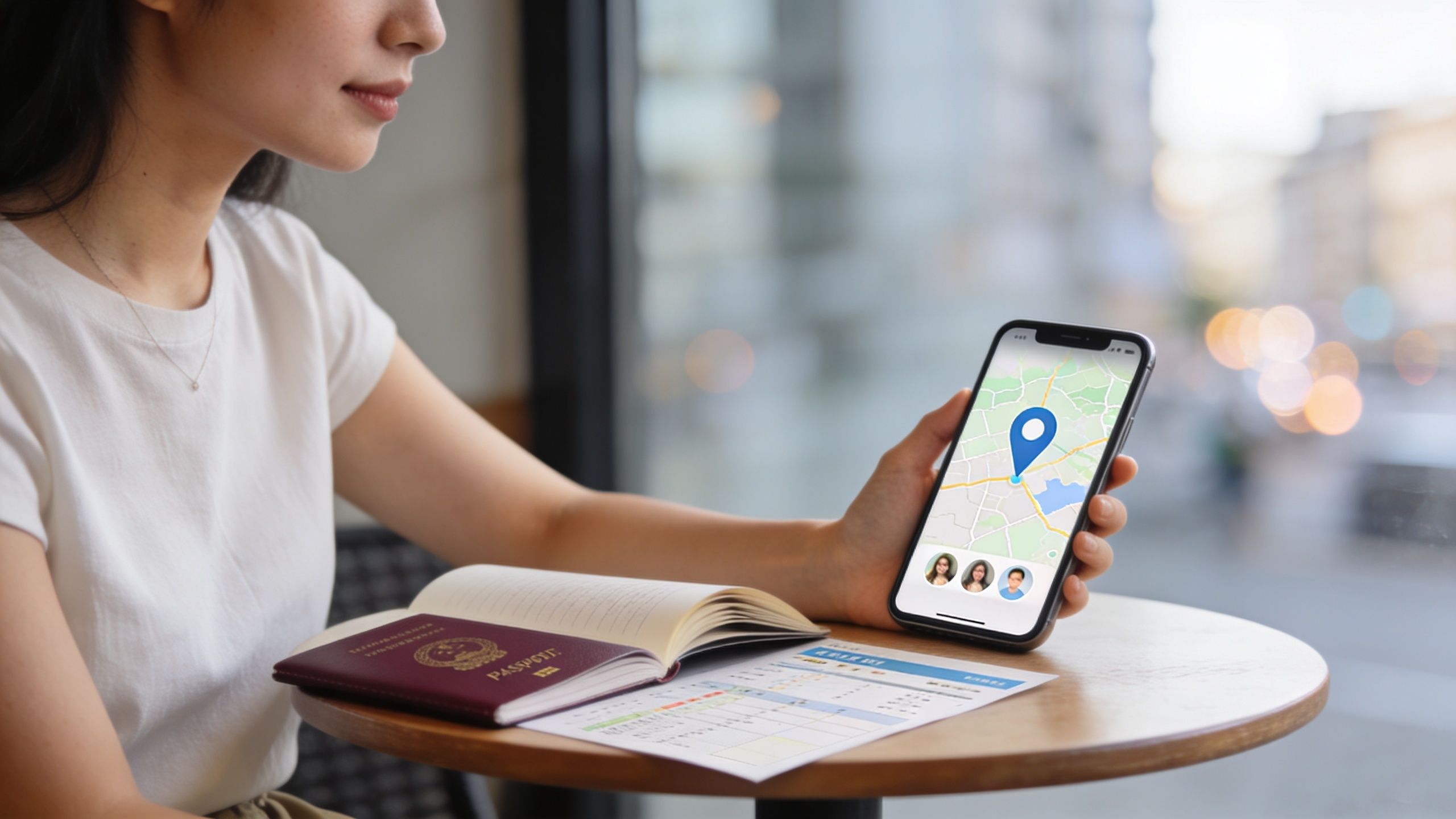
You don’t need to notify ten people. In fact, that usually creates confusion. Pick two or three adults who answer their phones, read messages, and won’t overreact if you miss a check-in by an hour because your train went underground or your hostel Wi-Fi died.
Set up your safety net before you leave
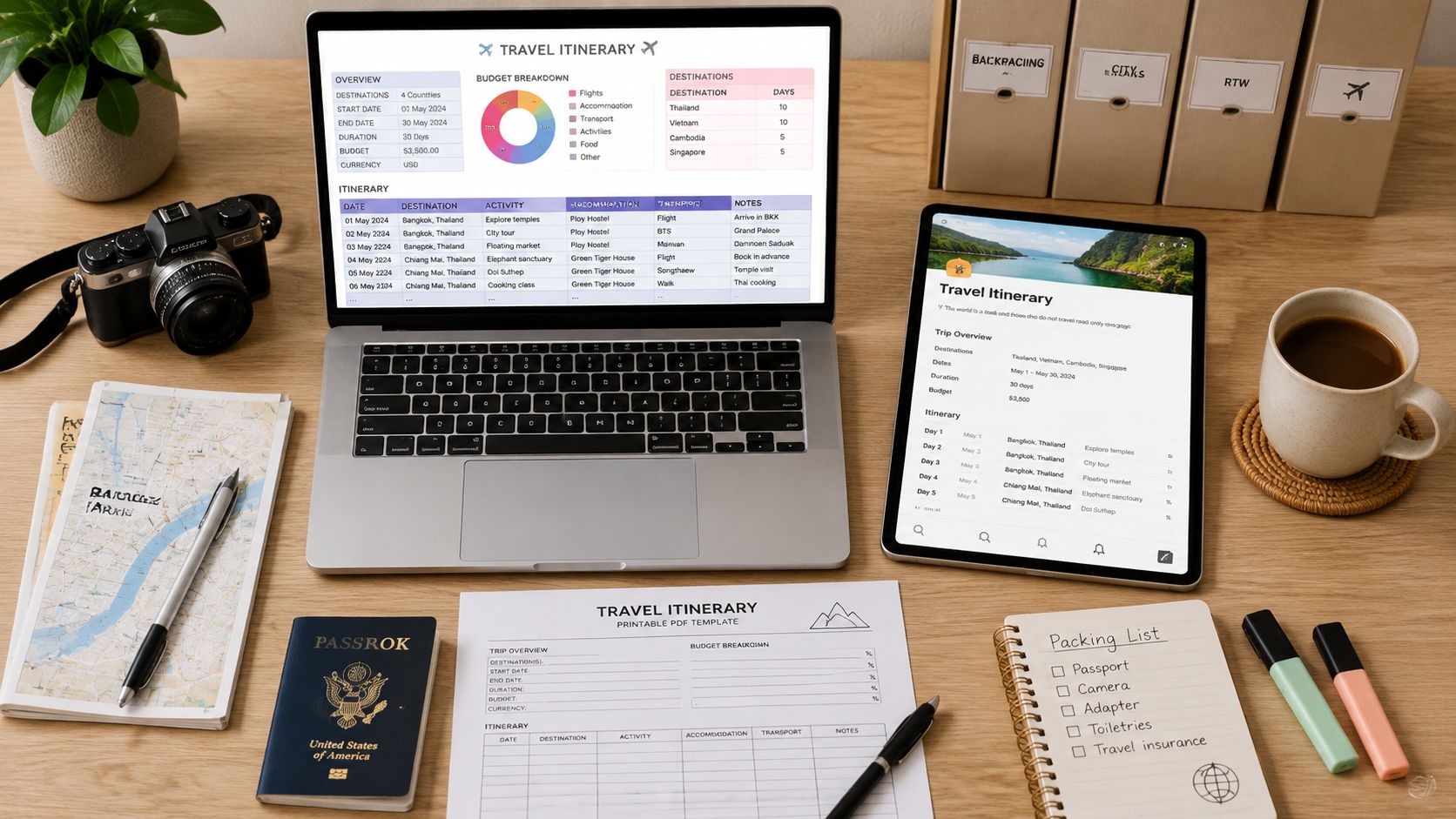
Send them your flight details, accommodation names, booking confirmations, and transport between stops. A shared Google Doc works well. A shared Google Calendar works even better if your trip has multiple cities.
Use tools you’ll remember to open:
- Google Maps location sharing: Good for ongoing real-time tracking.
- WhatsApp live location: Useful for shorter windows, like arriving in a new city at night.
- Life360: Better if your family already uses it and knows how to respond.
- Email plus screenshots: Best backup when apps fail.
A good rhythm is one scheduled check-in each evening and one “arrived safely” message after major travel legs. If your plans change, update them. Small detours matter more when you’re solo.
Practical rule: Share with the few people who are calm, consistent, and capable of helping. Not the ones who panic and call the police because you slept through breakfast.
Don’t make your phone your only backup
Write down emergency contacts, your accommodation address, and one local emergency number on paper. Keep it in a wallet or day bag. Phones get stolen, batteries die, and screens crack at the worst possible time.
A very real travel mistake is assuming digital access will always save you. It won’t. The safer pattern is layered communication. Real-time location sharing, scheduled check-ins, and one old-fashioned written backup.
If you’re crossing borders, changing SIMs, or moving through areas with weak signal, tell your contacts that gaps may happen. The point isn’t constant surveillance. It’s making sure someone can spot the difference between “she’s offline” and “something’s wrong.”
2. Trust Your Instincts and Practice Situational Awareness
The most useful safety tool you own isn’t in your bag. It’s your attention.
A lot of women get taught to second-guess themselves, especially when a situation is only slightly off. The man is too friendly. The taxi pickup feels unofficial. The bar vibe shifts. The apartment entrance doesn’t match the listing photos. None of that has to look dramatic to justify leaving.

The women who travel well alone usually aren’t fearless. They’re responsive. They notice things early, and they don’t argue with their own discomfort.
Notice the room before you relax in it
When you walk into a café, station, rideshare, or hostel common room, do a quick scan. Where are the exits? Who’s working? Is the lighting decent? Are other women around? Does the energy feel ordinary or too interested in you?
This doesn’t mean acting paranoid. It means staying present. Keep one ear free if you’re using navigation. Don’t stand on a curb with your phone out and your whole attention buried in directions. Step inside a shop, check your map, and move again.
If you’re new to solo travel, reading practical guidance on how to travel alone as a woman can help you sharpen this skill before the trip starts.
What works, and what usually doesn’t
These responses tend to work:
- Leave early: Exit the situation at the first red flag, not the fifth.
- Use direct language: “No, thank you.” “I’m leaving now.” “Stop.”
- Move toward structure: Hotel desks, staffed stores, families, well-lit places.
- Observe local behavior: If local women aren’t walking down that street at night, don’t make yourself the exception.
These responses often fail:
- Trying to be endlessly polite: Predatory people use hesitation.
- Explaining too much: You don’t owe strangers your plans.
- Waiting for proof: Unease is enough.
- Freezing because you don’t want to seem rude: Rude is recoverable. Unsafe is harder.
If a situation feels wrong and you leave, then later wonder if you overreacted, that’s fine. The cost of leaving is usually small. The cost of staying can be much bigger.
3. Research Destinations Thoroughly Before Arrival
You land after a long flight, your phone battery is low, and the airport pickup area is more chaotic than the website photos suggested. That is a bad time to start figuring out which neighborhoods are safe, which taxi options are legitimate, or whether your hotel sits on a busy street or a dark side road. Good research prevents that kind of decision-making under stress.
Good destination research gives you something better than vague caution. It gives you options. You want to know which areas are fine by day but not worth testing at midnight, how women around you usually dress, whether public transport is reliable after dark, and how far your first-night stay is from the airport or train station.
Start broad, then get specific. A country can be generally safe and still have neighborhoods, transit routes, or arrival times that create unnecessary risk. I check official travel advisories first for major security, health, or legal issues. Then I narrow in with local news, recent traveler reports, Google Maps, and Street View to see what the ground level looks like.
Use each source for a different job:
- Official advisories for major disruptions, legal concerns, and health alerts.
- Maps and Street View for block-level reality, including lighting, storefront activity, and how exposed your route looks.
- Recent traveler reports for current conditions, common scams, and whether an area feels different at night.
- Local women’s forums, expat groups, and solo travel communities for details that generic guides often miss.
One useful comparison tool is the Solo Female Travelers safety statistics and index overview. I would use any index carefully. It helps with shortlisting, but it does not replace checking your exact neighborhood, arrival plan, and transport options.
If you are still choosing between destinations, this guide to the best countries for solo female travelers is a practical place to start before you drill down into local details.
Research should also cover the less obvious pressure points. Look up local laws that affect women, attitudes toward nightlife and dating, common transit scams, emergency numbers, hospital options, and whether ride-hail apps work where you are going. Save your hotel address offline in the local language if needed. Save embassy details too.
Then do one more layer of planning that many women skip. Research yourself. If you know you get foggy after overnight flights, do not set yourself up for a midnight transfer, a complicated train change, and a hard-to-find guesthouse. Book the easier arrival, even if it costs more. Safety is not only about the destination. It is also about how you function when tired, rushed, or overloaded.
4. Use Reliable Accommodation Booking Platforms with Verified Reviews
A bad hotel choice can undo a lot of good planning. If the property is isolated, badly lit, hard to enter late at night, or full of review red flags, your stress level jumps the second you arrive.

Good accommodation isn’t just about aesthetics. It’s about access, staffing, locks, neighborhood feel, and whether the listing matches reality. Booking.com, Airbnb, Hostelworld, and similar platforms can all work. The trick is reading them like a cautious adult, not like someone seduced by cute tiles and fairy lights.
Read the negative reviews first
Positive reviews often tell you the place was “lovely” and “convenient.” Negative reviews tell you whether the street is dark, the host goes silent after check-in, or the front door doesn’t lock properly.
Look for patterns:
- Access issues: Hard to find, poor signage, no late check-in support.
- Security concerns: Broken locks, open entrances, strangers coming and going.
- Neighborhood mismatch: “Fine by day, uncomfortable at night.”
- Cleanliness and maintenance: Neglect often travels with weaker security.
If you’re booking a hostel, female-only dorms can be a good option, especially on your first solo trip or after an overnight transit when you’re exhausted and less alert.
What I’d prioritize over a cheap nightly rate
Choose places close to reliable transport, on a visible street, with plenty of recent reviews and clear arrival instructions. A private room in a modest guesthouse near a staffed front desk often beats a stylish bargain apartment down a dark lane.
Self-check-in can be convenient, but only if the instructions are clear and the entrance is easy to access safely. If your flight lands late, message the property in advance and judge the reply. Fast, specific responses are a good sign. Vague ones are not.
One more no-nonsense rule. If you arrive and the place feels wrong, leave. Lose the first night’s payment if you must. Money is recoverable. Your nervous system knows when something is off.
5. Master Basic Self-Defense and De-Escalation Techniques
Self-defense is useful, but not in the cinematic way people imagine. You do not need a complicated skill set. You need a few simple responses you can remember under stress, plus the judgment to avoid escalation when escape is possible.
The best self-defense training also changes how you carry yourself. You stand differently. You use your voice faster. You stop looking for permission to leave.
Learn boring, effective basics
Take an in-person women’s self-defense class before a big trip if you can. Not because you’re expecting trouble, but because rehearsal matters. Under pressure, you won’t rise to theory. You’ll fall back on what you’ve practiced.
Focus on:
- Boundary setting: “No.” “Back up.” “Don’t touch me.”
- Escape-based movement: Breaking distance and getting to a safer area.
- Simple targets: High-impact moves that create a window to run.
- De-escalation: Calm tone, firm words, no debating.
A better goal: Create space, attract attention, and exit. Winning a fight is the wrong frame. Getting away is the right one.
Pair physical skills with language
Memorize a few local words before you travel. Help. Stop. Police. Hospital. Taxi. It doesn’t have to be elegant. It has to be usable.
Practice saying firm phrases out loud, because many women freeze less from fear than from social conditioning. They’re not used to sounding “mean.” But clear, assertive language can shut a situation down before it becomes physical.
There’s also a trade-off to understand. Visible safety gear can help, but don’t let it become magical thinking. A whistle, a personal alarm, or a door wedge can be useful layers. None of them replace awareness, route planning, and fast exits.
If you carry any self-defense item, check local laws first. A tool that is legal at home may create problems at border control or in a hotel security check abroad.
6. Maintain Financial Security and Practice Smart Money Management
You miss the last train, your card fails, and your phone battery is at 6%. That is how a money issue turns into a safety issue.
Financial security on the road is about staying calm and keeping options open. If one payment method stops working, you need a second. If your wallet is stolen, you need enough backup to get to your accommodation, contact your bank, and avoid depending on a stranger.
Build redundancy into your setup before you leave. Carry one card in your day wallet, keep a backup card in your luggage, and store a small emergency cash reserve in a separate spot. The goal is simple: one mistake, one theft, or one blocked transaction should not derail your day.
A practical setup looks like this:
- Primary spending card: For day-to-day purchases and ATM withdrawals
- Backup card: Stored separately from your main wallet
- Small daily cash amount: Enough for transit, food, and small purchases
- Emergency reserve: Hidden and left untouched unless it's necessary
Keep secure digital copies of your passport, cards, insurance details, and booking confirmations. Save them in cloud storage and make sure key documents are available offline too. Under stress, having that information ready matters as much as having the money itself.
If you are still working out your numbers, these smart travel budgeting tips can help you build a plan that leaves room for safer choices, not just cheaper ones.
That trade-off matters. The lowest price can put you in the wrong neighborhood, on the last bus of the night, or in a hotel that is cheap for reasons you feel the moment you arrive. A slightly higher daily budget often buys better location, more reliable transport, and the ability to leave a situation that feels off without hesitating over cost.
Use ATMs attached to banks when possible, and withdraw cash during the day. Turn on transaction alerts before your trip. Know exactly how to freeze your cards from your banking app, and write down your bank’s international contact number somewhere other than your phone.
Digital wallets like Apple Pay or Google Pay are useful backup tools, especially if a physical card goes missing. They are backup tools, not your whole plan. Phones get stolen, batteries die, and some places still run on cash.
Good money management is psychological preparedness in practice. It lowers panic, protects your decision-making, and gives you room to choose the safer hotel, the licensed ride, or the earlier departure. That is what confidence on the road looks like.
7. Dress Appropriately for Your Destination and Blend In Locally
You step off a bus in a neighborhood where no one is dressed like you. That feeling matters. If your clothes broadcast tourist, money, or cultural obliviousness before you even speak, you have given away information you did not need to share.
Clothing is not a guarantee of safety, and it is never an excuse for harassment. It does affect how visible you are, how quickly you are categorized, and whether local people read you as respectful, alert, and prepared.
That is why I treat clothing as strategy, not self-expression alone.
Before you pack, study what women wear in everyday life. Check street scenes, transit stops, local markets, and university areas. Skip the vacation content built for photos. It usually reflects a curated version of a place, not the standards that shape daily interactions.
A practical wardrobe gives you options:
- Lightweight scarf: Covers shoulders or hair when needed, adds sun protection, and changes the tone of an outfit fast.
- Loose, breathable layers: Help in conservative settings and often work better in heat than tight athletic wear.
- Closed-toe shoes or sturdy flats: Better for uneven sidewalks, long walks, and leaving quickly if you need to.
- Simple jewelry and low-key bags: Less attention, less hassle, less visual shorthand for expensive taste.
The goal is not to disappear completely. In many places, that is impossible. The goal is to avoid standing out for preventable reasons.
This matters even more when local gender norms are strict or public attention toward foreign women is common. As noted earlier in the article, safety concerns around solo travel often rise where expectations about women’s behavior and appearance are more rigid. That does not make those destinations off-limits. It means your preparation needs to include social reading skills, not just bookings and maps.
Comfort still matters. Practical comfort matters more.
Clothes that ride up, need constant adjusting, expose more than you intended when you sit or climb stairs, or leave you sweating and distracted can chip away at situational awareness. Good travel clothing lets you walk confidently, sit comfortably, visit religious sites without scrambling, and change neighborhoods without feeling out of place.
Watch for local shifts, too. Beach areas, nightlife districts, and tourist centers often have looser norms than residential blocks or small towns nearby. The skilled move is to adjust early, not after you have already drawn attention.
I usually pack one or two outfits that are more covered than I think I will need. I do not always wear them. I am always glad to have them. That is the main trade-off. A little less personal style can buy more ease, more access, and more control over how you move through a place.
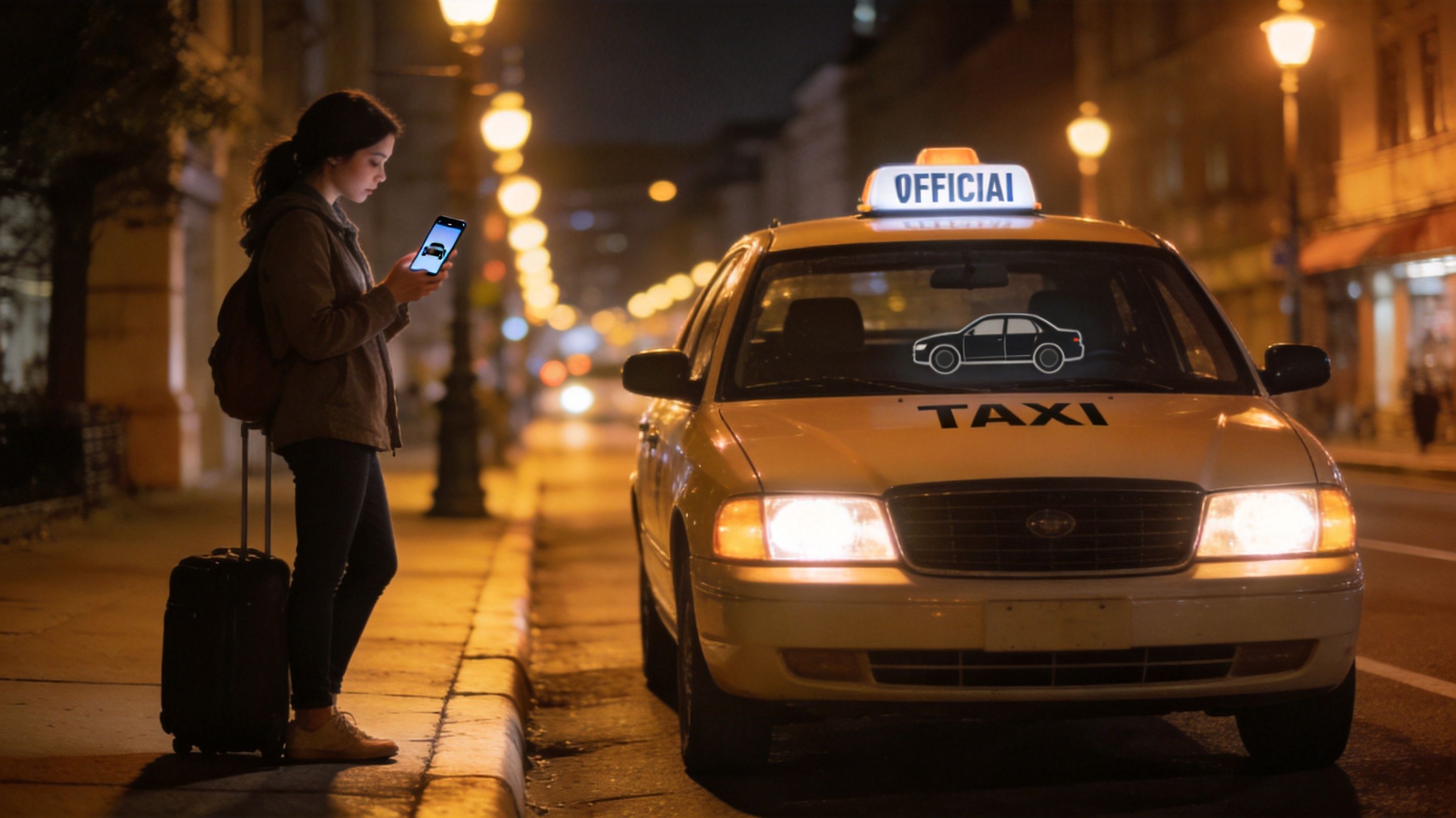
8. Use Licensed Taxis, Rideshare Apps, and Vetted Transportation Services
You land after a delayed flight, your phone battery is low, and three drivers are already asking where you’re going. That is when good judgment gets replaced by urgency. Build your transport plan before you are tired, distracted, or trying to be polite to strangers.
For solo female travelers, transportation safety is less about fear and more about control. The best option is usually the one with a record, a route, and a way to identify the driver if something goes wrong. That means licensed taxis, rideshare apps, hotel-arranged pickups, and transport booked through a provider your accommodation recommends.
Choose traceable rides over convenient guesses
If your accommodation offers an airport transfer, compare the price with local rideshare rates before arrival and save both options. In some cities, a hotel car costs more but removes the stress of SIM cards, cash exchange, and finding the right pickup zone after dark. In others, the official airport taxi stand or a rideshare app is just as safe and far cheaper. The point is to choose on purpose.
A few habits make a big difference:
- Match the license plate exactly. Near enough is not enough.
- Check the car model and driver photo in the app.
- Ask the driver to confirm your name. Do not offer it first.
- Sit in the back seat, ideally behind the passenger seat.
- Share your live trip in the app or send your route to a trusted contact.
- Keep your own map open so you can notice a wrong turn early.
I also recommend arriving with a charged power bank and enough mobile data to handle one route problem without panic. If you need a good pre-trip checklist for that side of travel prep, this guide on how to stay healthy while traveling covers the practical basics that keep small problems from turning into safety issues.
Know what risk you are actually accepting
An unlicensed taxi is not just a cheaper ride. It is a ride with fewer protections. You may have no plate logged in an app, no customer support, no payment record, and no easy way to report misconduct.
Public transport can still be the right call. It often is. But timing matters. A busy airport train at 2 p.m. is different from a near-empty bus after midnight when you are carrying luggage and trying to figure out where to get off. Safety decisions work better when they are based on your condition, the hour, and how easy it will be to get help fast.
If a driver locks the doors, starts changing the route without explanation, pressures you to cancel the ride in-app, or pushes for cash payment off platform, treat that as a real warning. Call out the change directly. Message someone. If you can exit safely, do it in a public, well-lit, staffed place.
Confidence on the road comes from systems you trust, not from hoping you can read every stranger correctly. Use tools that leave a trail. That gives you more freedom, not less.
9. Maintain Mental Health and Build a Support Community
You get to a new city after a long travel day, your phone is low, you have not eaten properly, and suddenly the wrong invitation sounds appealing because you do not want to spend the night alone. That is the kind of moment that changes safety decisions.
Mental health on the road is not separate from safety. It affects judgment, boundaries, energy, and your ability to notice when something feels off. I have seen travelers prepare for theft, transit issues, and scams, then get blindsided by loneliness, overload, or decision fatigue. Those states make people easier to pressure and slower to respond.
Treat emotional regulation like part of your travel kit
Build support into the trip before you need it. Book something structured early in a new destination, especially if you know the first 24 hours are hard on you. A walking tour, cooking class, coworking day pass, or women-focused meetup can give you human contact without forcing instant trust.
Choose accommodation based on your actual condition, not your fantasy self. A social hostel can help when you want connection. A private room can be the smarter choice when you are overstimulated, sleep-deprived, or carrying stress from the last stop. Good safety decisions usually start with being well-rested enough to make them.
A simple routine works well:
- Short daily check-ins: Note your energy, mood, and any moments that felt off.
- Regular calls home: Put them on the calendar so support is not left to chance.
- Planned social contact: Tours, classes, group dinners, or online communities with real moderation.
- Recovery time: Leave space in the itinerary for a quiet night or a slow morning.
Analysts at Solo Traveler World reported in the brief for this article that many solo female travelers describe anxiety after too much time alone, while practical coping advice is often missing from mainstream guides. That gap matters. Physical precautions help, but calm thinking and steady nerves help you use those precautions well.
If stress, poor sleep, or low energy tend to affect your judgment, build that into your prep with this guide to travel insurance options for backpackers and this article on how to stay healthy while traveling.
Have a plan for lonely days before they happen
Loneliness does not mean you are bad at solo travel. It means you are a person away from your normal anchors.
The useful question is: what do you do next?
Set a default response list before the trip. Message two trusted people. Go somewhere public and low-pressure, like a café, museum, or hotel lobby. Book a group activity for the next morning. Eat a real meal. Sleep. If a destination keeps draining you, change the setup. Move neighborhoods, switch accommodations, or stay one more night to recover. Flexibility is often safer than forcing yourself to push through.
As noted earlier in the article, concern about loneliness while traveling solo is common. The practical fix is not pretending you will never feel it. The fix is having systems, people, and routines that bring you back to baseline fast.
A strong support circle does not make solo travel less independent. It makes you more stable, more confident, and much harder to isolate.
10. Get Comprehensive Travel Insurance and Know Your Coverage Details
Travel insurance feels boring right up until the moment you need it. Then it becomes one of the most useful purchases of the whole trip.
Not all policies are equal. Some cover medical emergencies well but exclude adventure activities. Some are good for delayed baggage but weak on evacuation support. Some require fast reporting and specific documentation, and if you don’t know that in advance, you can lose a valid claim.
Buy the policy for your actual trip
If you’re trekking, diving, riding scooters, carrying camera gear, or traveling remotely, read the exclusions line by line. Don’t assume “all-inclusive” means everything you personally planned to do.
Keep these details easy to access:
- Emergency assistance number: Saved in your phone and written down.
- Policy number and documents: Stored digitally and printed.
- Claim deadlines: Some insurers require fast notification.
- Required proof: Receipts, police reports, medical records, airline documentation.
Older solo travelers should be especially careful here. The verified data for this brief included a summary of an AARP 2025 survey showing that women over 50 reported age-specific concerns such as mobility scams or health emergencies abroad, and that specialized insurance products for pre-existing conditions have seen growing uptake. Even if you’re younger, the lesson holds. Generic coverage often leaves important gaps.
If you’re comparing providers, this breakdown of the best travel insurance for backpackers can help you sort through what matters before departure.
Insurance only helps if you know how to use it
Take photos of valuable items before you leave. Save receipts for major purchases. If luggage goes missing, file the airline report immediately. If you get sick, contact the insurer’s assistance line before treatment when possible, especially for bigger claims.
The practical difference between “I have insurance” and “insurance helped me” is organization. Boring, yes. Effective, also yes.
Solo Female Travel Safety: 10-Point Comparison
| Safety Measure | Implementation Complexity 🔄 | Resource Requirements ⚡ | Expected Outcomes 📊 | Ideal Use Cases 💡 | Key Advantages ⭐ |
|---|---|---|---|---|---|
| Share Your Itinerary and Real-Time Location with Trusted Contacts | Low, set up apps and check‑in routines | Low, smartphone, data/Wi‑Fi, trusted contacts | Improved emergency response time; higher accountability | Urban and remote solo travel, long transit days | Fast help coordination; low cost; documented plans |
| Trust Your Instincts and Practice Situational Awareness | Low–Moderate, ongoing mental effort and practice | Minimal, attention, training resources, experience | Prevents escalation; early risk avoidance | Solo exploration, crowded or unfamiliar settings | Always available tool; no financial cost; adaptable |
| Research Destinations Thoroughly Before Arrival | Moderate, time‑consuming research process | Low–Moderate, internet access, time, reliable sources | Better decisions; reduced surprises and risk exposure | New countries, culturally different regions, long trips | Informed planning; avoids unsafe areas; cost savings |
| Use Reliable Accommodation Booking Platforms with Verified Reviews | Low, online booking and vetting steps | Low–Moderate, accounts, payment methods, review reading | Lower accommodation risk; recourse if issues arise | First-time stays, solo travelers seeking vetted options | Verified hosts; payment protection; user feedback |
| Master Basic Self-Defense and De-Escalation Techniques | Moderate, requires training and practice | Moderate, classes, time, practice partners or instructors | Increased confidence; tools for immediate threats | High‑risk areas, solo night movements, public transit | Deterrence through confidence; tangible skills retained |
| Maintain Financial Security and Practice Smart Money Management | Moderate, planning and discipline required | Moderate, multiple cards, hidden storage, insurance | Reduced theft/fraud impact; emergency funds accessible | Long trips, cash‑heavy destinations, remote travel | Financial resilience; lowers desperation-driven risk |
| Dress Appropriately for Your Destination and Blend In Locally | Low, requires prep and wardrobe choices | Low, suitable clothing, local research | Reduced unwanted attention; smoother local interactions | Conservative cultures, religious sites, visible tourist spots | Cultural respect; decreased targeting; easier access |
| Use Licensed Taxis, Rideshare Apps, and Vetted Transportation Services | Low–Moderate, app setup and verification habits | Low–Moderate, smartphone, payment method, local knowledge | Safer journeys; reduced scams and overcharging | Airport transfers, night travel, unfamiliar cities | Route tracking; driver accountability; payment security |
| Maintain Mental Health and Build a Support Community | Moderate, ongoing effort to connect and self‑care | Low–Moderate, social apps, groups, time, possibly therapy | Better decision‑making; reduced isolation; resilience | Long trips, solo stretches, emotional stress periods | Emotional support; practical assistance; improved safety |
| Get Comprehensive Travel Insurance and Know Your Coverage Details | Moderate, policy selection and documentation | Moderate, premium cost, documents, research | Financial protection for medical emergencies and loss | Remote travel, adventure activities, long trips abroad | Catastrophic cost protection; evacuation support; peace of mind |
Empowered, Aware, and Ready to Explore
You land after dark, your phone battery is low, the airport Wi-Fi is unreliable, and a driver is waving you toward the wrong car. That is not the moment to invent a safety plan. The work that protects solo travelers happens earlier, in the habits and systems you build before pressure hits.
Solo female travel gets pushed into two unhelpful stories. One treats it like reckless courage. The other wraps it in feel-good language and skips the parts that matter. Real travel sits between those extremes. It is exciting, stretching, sometimes inconvenient, and usually very manageable when you prepare for it like a skill set, not a personality trait.
That shift matters.
The best solo female travel safety tips are rarely dramatic. They are small decisions repeated until they become automatic. You share your route with someone who would notice a missed check-in. You look closely at your first night's logistics instead of assuming you will sort it out on arrival. You verify the car, protect access to money, choose clothes with local context in mind, and read the insurance details before you need a clinic, a cancellation, or a flight change.
Those habits do more than reduce risk. They calm your nervous system. Good preparation gives your brain fewer loose ends to chase, which means better judgment when plans change. That is the part generic checklists often miss. Safety is physical, but it is psychological too. A traveler who is rested, oriented, and clear on her options usually makes better calls than one who is already overloaded.
You feel that difference on the road. Instead of spending the whole trip running worst-case scenarios, you can ask a better question: what is the smartest move right now? Sometimes that means staying for one more hour because the place feels solid. Sometimes it means leaving in five minutes because something is off. Both choices come from the same foundation. Awareness, preparation, and the willingness to act.
Solo travel is not only about avoiding bad outcomes. It is also about building range. You get better at reading rooms, solving problems, recovering from mistakes, and trusting your own judgment without becoming naive. That confidence is earned. It comes from practice, not bravado.
Some trips will still test you. You may be tired, homesick, overstimulated, or disappointed by a place you expected to love. You may book one bad transfer or arrive at a guesthouse and decide not to stay. None of that means you failed. It means you are out in the world, making decisions in real time, which is exactly what capable travelers learn to do well.
Preparation is not a one-time task either. It is an ongoing adjustment. After each trip, pay attention to what helped. Maybe early arrivals suit you better than overnight transport. Maybe a private room on transit-heavy weeks is money well spent. Maybe one walking tour at the start of a trip settles your nerves and helps you get your bearings. Maybe journaling, therapy, or regular check-ins with friends keep you steady enough to enjoy the experience instead of just managing it.
You do not need a different personality to travel safely alone. You need workable systems, honest risk assessment, and enough self-respect to leave situations that do not feel right.
The world is still worth meeting on your own terms. Go prepared. Go alert. Go ready to adapt. Safety does not shrink the trip. It gives you the freedom to experience more of it.
Travel planning gets easier when you have trustworthy guidance in one place. Travel Talk Today shares practical advice for safer solo trips, smarter budgeting, meaningful destinations, and confident independent travel, so you can spend less time spiraling and more time going.