You’re probably doing what most of us do before a language trip. You’ve opened fifteen tabs, compared schools you’ve never heard of, read that Antigua is “easy,” Xela is “authentic,” and Lake Atitlán is “magical,” and you still don’t know what to book.
That uncertainty is normal. Spanish in Guatemala can be one of the best immersion experiences in Latin America, but it only works well when your plan matches conditions on the ground. This situation extends beyond cheap classes and pretty courtyards. It includes rural areas where Spanish isn’t always the first language, transport choices that affect your safety, and health access that changes a lot once you leave major hubs.
I learned fastest in Guatemala when I stopped treating it like a study-abroad brochure and started treating it like a real place. That meant picking a city for the kind of Spanish I sought, choosing a homestay carefully, carrying the right medical basics, and accepting that “learning Spanish” in Guatemala also means learning how Spanish and Mayan languages live side by side.
Your Dream of Learning Spanish in Guatemala Starts Here
A lot of travelers arrive with the same hope. They want mornings in a courtyard classroom, afternoons buying fruit in Spanish, and evenings talking with a host family until the words stop feeling translated and start feeling natural.
That version of Guatemala exists. So does another version.
You might step outside a market town and realize the conversation around you isn’t Spanish at all. You might book the “cheap” option and discover it’s far from your school, noisy at night, or too isolated to feel comfortable as a solo traveler. You might choose the most famous town and spend more time around other foreigners than around Guatemalans.
That’s why a good immersion plan starts with honesty.
Practical rule: The best place to learn Spanish isn’t the prettiest town. It’s the place where your budget, comfort level, and daily habits make you speak Spanish more often.
Guatemala rewards travelers who build around routine. Pick one base. Stay long enough to recognize your bakery, your bus stop, your tortilla stand. Repetition matters more than chasing highlights.
The payoff is substantial. One week gives you momentum. A month can reshape your listening. A longer stay can make ordinary life, asking directions, chatting with a shopkeeper, explaining food preferences, feel possible without panic.
If you’re planning spanish in guatemala for the first time, think of this guide as the version I wish I’d had before landing. Not romanticized. Not cynical. Just practical enough to help you learn well and travel smart.
Why Guatemala is Your Ultimate Spanish Classroom
You can feel the difference fast. On your first morning, your teacher speaks clearly enough that you catch more than you expected. By the afternoon, a market conversation reminds you that classroom Spanish and daily life are not the same thing here.
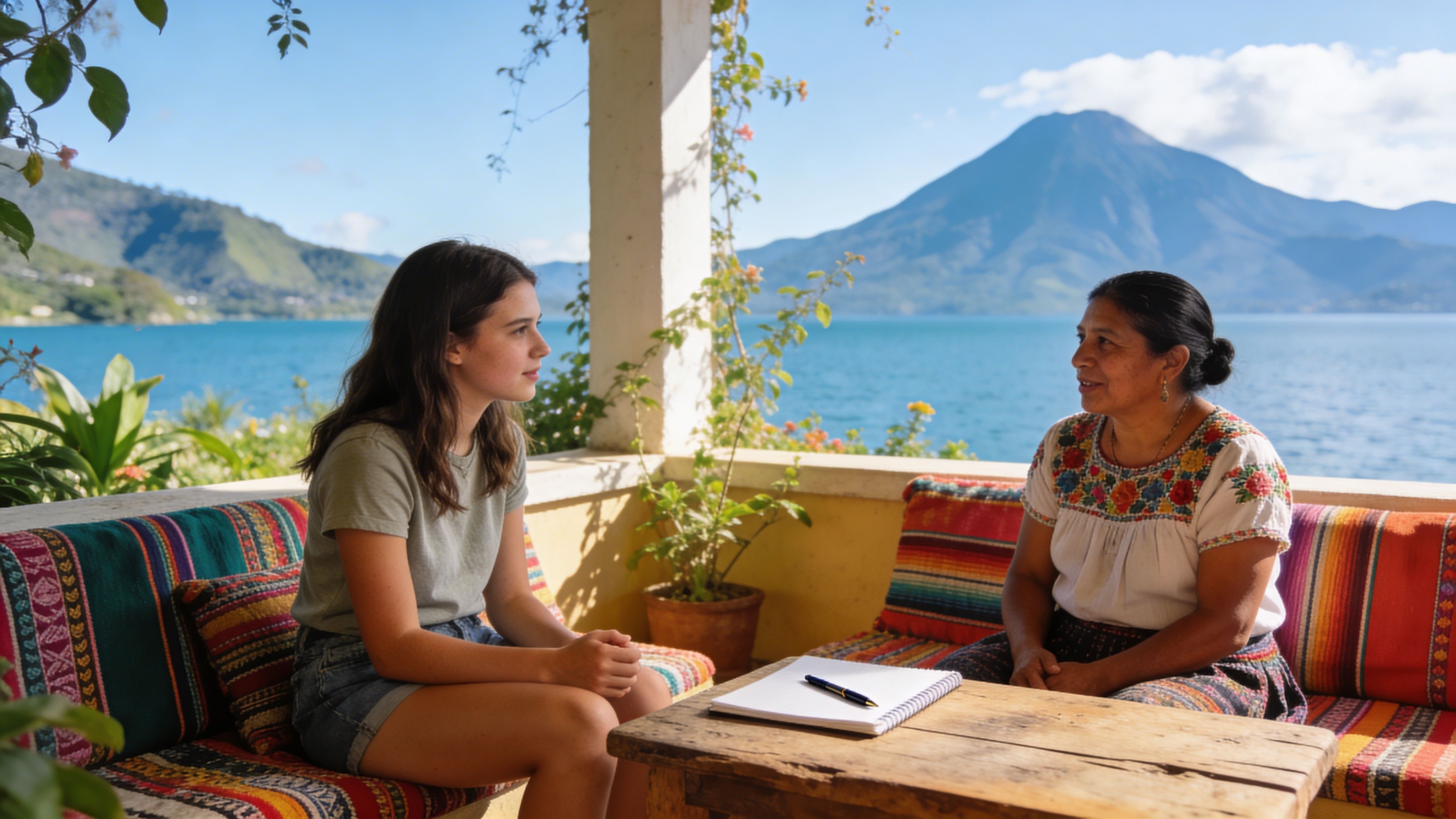
The accent gives beginners a fair start
A lot of travelers choose Guatemala because it is cheaper than studying in Spain or Mexico. The stronger reason is this: Much of the Spanish many students hear in schools and daily transactions is relatively clear and easier to separate into individual words.
That matters in week one. Beginners usually have enough trouble with speed, nerves, and basic vocabulary. A clearer accent lowers one barrier, so you can spend more energy on understanding meaning instead of decoding sound. That is a big reason Guatemala works so well for first-time immersion students.
The catch is that “clear Spanish” is not the whole story. Outside school, speech changes by region, age, and setting. You will hear voseo, local slang, and plenty of conversations shaped by indigenous languages and local rhythm. That challenge is useful. It pushes your ear forward without throwing you straight into the deep end.
Daily life teaches more than your notebook does
Guatemala is not a single-language bubble built for visitors. Spanish is the national lingua franca, but it exists alongside many Mayan languages, especially in indigenous-majority towns and rural areas.
For learners, that changes the experience in a good way and sometimes in a frustrating one. In a school, your teacher may use slow, standard Spanish. In a highland market, two vendors might speak K'iche' or Kaqchikel to each other, then switch into Spanish with you. On a chicken bus, the person next to you may answer kindly but briefly because they are tired, busy, or not interested in chatting with a foreign student.
That friction builds practical Spanish. It also teaches humility.
You start paying attention to who is speaking, who is switching languages, and what kind of Spanish works in real situations. Ordering lunch, asking whether a colectivo still runs after dark, or explaining a stomach issue at a pharmacy does more for your confidence than another perfect worksheet. If you travel solo, the payoff is even bigger. Daily decisions force interaction, which is one reason Guatemala appeals to travelers looking for budget-friendly destinations for solo travelers.
Guatemala rewards realistic immersion
The best part of studying here is not that every day feels easy. It is that the difficulty is often useful.
In bigger student hubs, you can build momentum with classes, host families, and enough infrastructure to keep life manageable. In smaller towns, immersion can be stronger, but so can the practical problems. Fewer people may speak English. Medical care may be basic. ATM access can be inconsistent. A beautiful village can feel isolating if your housing is far from town or you are uncomfortable walking back after dark.
That trade-off gets ignored in a lot of guides. It should not.
Guatemala works best for students who want real-world Spanish, not just classroom progress. It gives you accessible entry points, then quickly shows you that communication depends on context, respect, and preparation. Learn to handle that, and your Spanish gets stronger in a way that sticks.
Finding Your Perfect City for Spanish Immersion
You finish your first class feeling good, then the practical stuff starts. You need cash, dinner, a SIM top-up, and a safe way back to your room after dark. The right city makes those errands part of your Spanish practice. The wrong one drains your energy before the second week.
That is why choosing a base matters so much in Guatemala. This is not only about pretty streets or the cheapest tuition. It is about how much friction you can handle while still showing up to class, speaking Spanish, and staying healthy.
The four main hubs each solve a different problem.
Guatemala Spanish School Hubs Compared
| City | Vibe & Atmosphere | Average Weekly Cost (Lessons + Homestay) | Immersion Level | Best For |
|---|---|---|---|---|
| Antigua | Beautiful, polished, easy to get around, social | Higher than other hubs | Moderate | First-timers, short stays, travelers who want convenience |
| Lake Atitlán | Scenic, village-based, relaxed, sometimes spiritual or social depending on town | Varies by village | Moderate to high | Nature lovers, mixed study and downtime |
| Quetzaltenango (Xela) | Local, urban, less polished, more day-to-day Guatemalan life | Often better value | High | Serious learners, longer stays, tighter budgets |
| Guatemala City | Big-city, practical, fast-moving, less romantic | Varies widely | Mixed | Travelers needing logistics, transit access, urban Spanish practice |
Antigua for the easiest start
Antigua works well for beginners because daily life is simple to set up. Schools answer messages quickly. ATMs are easy to find. Shuttle companies know the student routine. If your Spanish is still shaky, that cushion helps.
I recommend Antigua to travelers with one or two weeks, anyone arriving late at night for the first time, and solo travelers who know they need a gentle landing. It is easier to recover from mistakes there. If a homestay does not fit, you can change plans without much drama.
The trade-off is obvious once you leave the classroom. English is everywhere. You can order coffee, book transport, and chat with other travelers without pushing your Spanish very hard. That comfort is useful at the start, but it can slow progress if you stay too long and never change your habits.
Choose Antigua if consistency matters more than intensity.
Lake Atitlán for motivation, with more moving parts
Lake Atitlán can be excellent for study, but only if you choose the village carefully. San Pedro, San Marcos, Panajachel, and the smaller towns around the lake all feel different. Some are social and easy for students. Others are quieter, more local, and less forgiving if your internet, transport, or housing setup is poor.
Many guides stay too vague on this point. The lake is beautiful, yes. It is also the place where practical problems show up fast. Boat schedules change with weather and demand. Walking routes can be dark at night. In several towns, Spanish is only part of what you hear day to day because many residents also speak Mayan languages. That is a strength culturally, but learners should understand what it means. You may need to repeat yourself more, listen more carefully, and accept that local communication norms are different from those in Antigua.
Atitlán suits travelers who stay motivated by environment and do not mind a less predictable routine. It is less suited to anyone who needs reliable transport, stable Wi-Fi, or quick access to pharmacies and clinics.
Xela for long-term progress
If your main goal is to improve fast and stay on budget, start by looking hard at Xela.
Quetzaltenango feels more local and less packaged for short-term visitors. That changes your Spanish quickly. Errands feel more real. Conversations are less rehearsed. It is easier to build a week around classes, markets, buses, laundry, and regular meals instead of cafés and day trips.
Xela also tends to work better for longer stays because your money often goes further. Many students can afford more weeks of classes there than in Antigua, and that matters more than having the prettiest study setting.
The trade-off is comfort. Xela can feel colder, rougher, and more tiring at first. Housing location matters a lot. So does your evening routine. I tell solo travelers, especially women, to pay extra attention to the walk between school and home, not just the room itself. A cheaper place on the edge of town is not a bargain if you end up taking taxis every night or skipping evening plans because the route feels off.
Xela rewards students who care more about progress than polish.
Guatemala City for logistics, appointments, and urban Spanish
Guatemala City is rarely the romantic choice, but it can be the smart one. If you need airport access, medical appointments, better shopping, work-friendly housing, or a base before moving on to another part of the country, the capital solves those problems better than anywhere else.
It also gives you a different kind of Spanish practice. You hear faster speech, more city routines, and less of the student-bubble feel that defines Antigua. For some travelers, that is useful. For others, it is too much friction for a first stop.
I would not send a first-time backpacker there just for atmosphere. I would consider it for travelers mixing study with practical needs, or for anyone who feels more comfortable in a big city than in a tourist town or small highland center.
If you are weighing these trade-offs as a solo traveler, this guide to budget-friendly solo travel cities helps frame the comfort-versus-immersion question.
A practical way to choose
Use your weakest point, not your fantasy, to pick a city.
- Choose Antigua if you need an easy first week and want fewer setup problems.
- Choose Lake Atitlán if scenery keeps you motivated and you can tolerate uneven logistics.
- Choose Xela if you want stronger immersion, better long-stay value, and a more local routine.
- Choose Guatemala City if transport, appointments, remote work, or urban life matter more than postcard appeal.
The best city is usually the one that fits your real habits. If you get tired easily, need predictable services, or feel stressed in places with limited infrastructure, be honest about that before booking. Guatemala rewards ambition, but it rewards self-awareness more.
The Best Ways to Learn Spanish in Guatemala
Once you’ve picked a city, the learning model matters as much as the location. The wrong setup can waste money even in the right town.
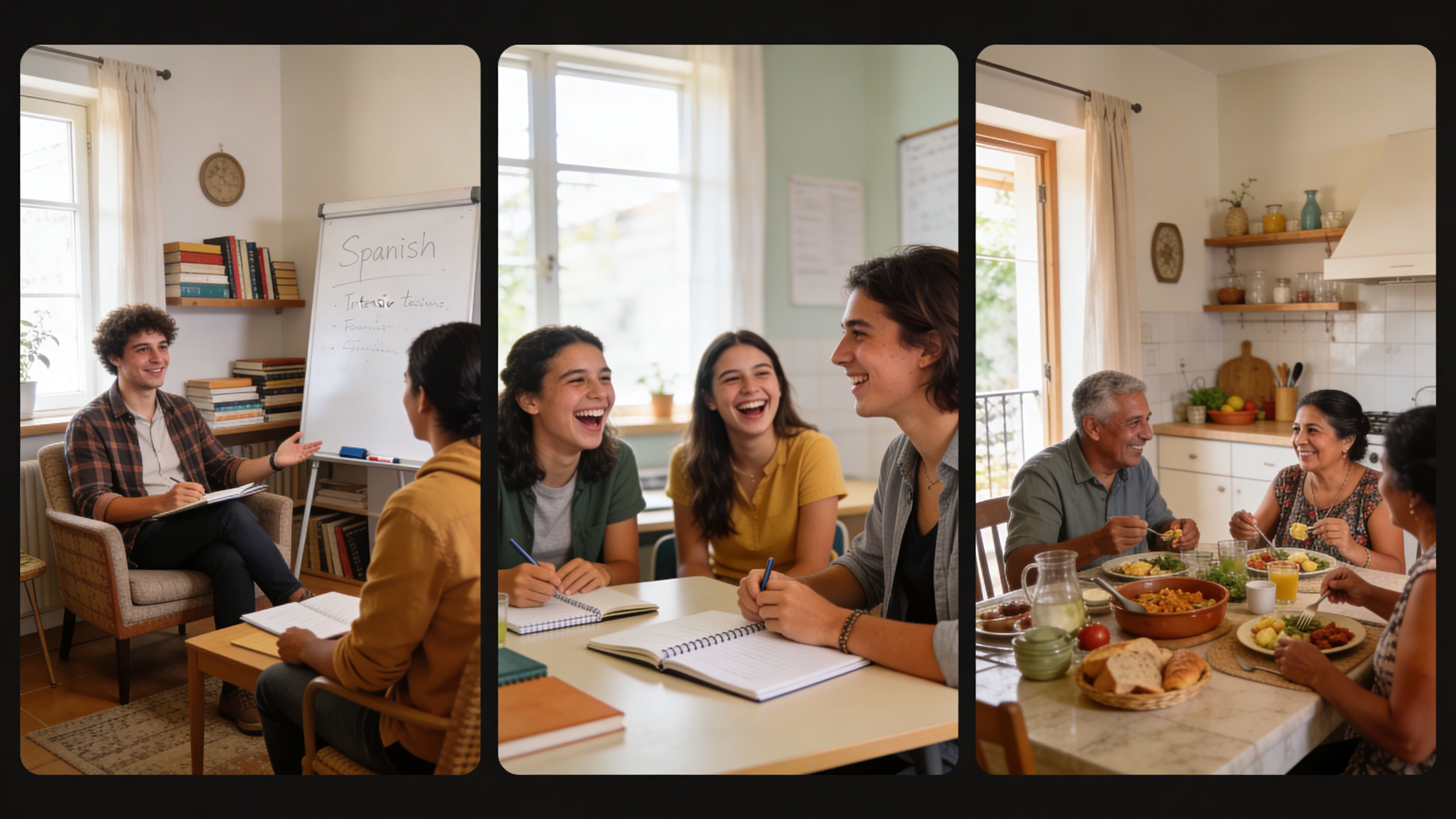
One on one schools still work best for most travelers
The classic Guatemalan model is intensive one-on-one instruction. For many people, it works because there’s nowhere to hide. Every gap in your Spanish appears quickly, and a good teacher adjusts in real time.
That model fits Guatemala especially well because the country is linguistically diverse. Spanish is Guatemala's official language, spoken as a primary tongue by 69.9% of the population. However, 22 Mayan languages are also spoken, with K’iche’, Q’eqchi’, Mam, and Kaqchikel being the most common. This linguistic diversity means many Guatemalans are bilingual, contributing to the patient and clear Spanish often encountered by learners in immersion settings, according to Translators without Borders language data for Guatemala.
That patience helps. It doesn’t replace effort, but it makes early mistakes less punishing.
Homestays help when they’re chosen well
A homestay can accelerate your Spanish more than extra worksheets ever will. Breakfast chatter, family errands, repeated questions, and hearing the same words every day all add up.
But not every homestay is immersive.
A good one gives you:
- Conversation at meals: Not just food dropped at your door.
- Clear house expectations: Bathroom timing, keys, laundry, quiet hours.
- A manageable commute: If getting home is stressful, your study suffers.
A weak homestay gives you a room and very little interaction. Ask direct questions before booking.
Volunteering can help or distract
Some travelers want to mix classes with volunteering. That can be meaningful, but only if the language side stays central.
The best version is a light volunteer commitment paired with formal lessons. The worst version is replacing study with loosely organized volunteering where everyone falls back into English.
If you’re comparing ethical, low-cost options, this roundup of affordable volunteer abroad programs can help you screen opportunities more carefully.
What works: Study first, volunteer second. When your Spanish improves, the volunteering becomes more useful to everyone.
Private tutors and flexible setups
Private tutors are a smart choice if you already know your weaknesses. Maybe you need conversation only. Maybe you want medical vocabulary, travel Spanish, or help with voseo and local expressions.
This path works well for:
- Travelers staying longer than planned
- People balancing remote work
- Return learners who don’t need a full school package
It works less well for complete beginners who need structure, placement, and daily accountability.
The setup that usually gives the best return
For most travelers, the strongest combination is simple:
- One-on-one school
- Homestay
- A city where you can’t default to English too easily
- A weekly rest day so you don’t burn out
That formula isn’t glamorous. It’s effective. In spanish in guatemala, the biggest gains usually come from consistency, not from finding some unusual “hack.”
A Realistic Budget for Your Guatemala Trip
Guatemala can be affordable, but “cheap” is too vague to plan from. You need a working model, not a backpacker cliché.
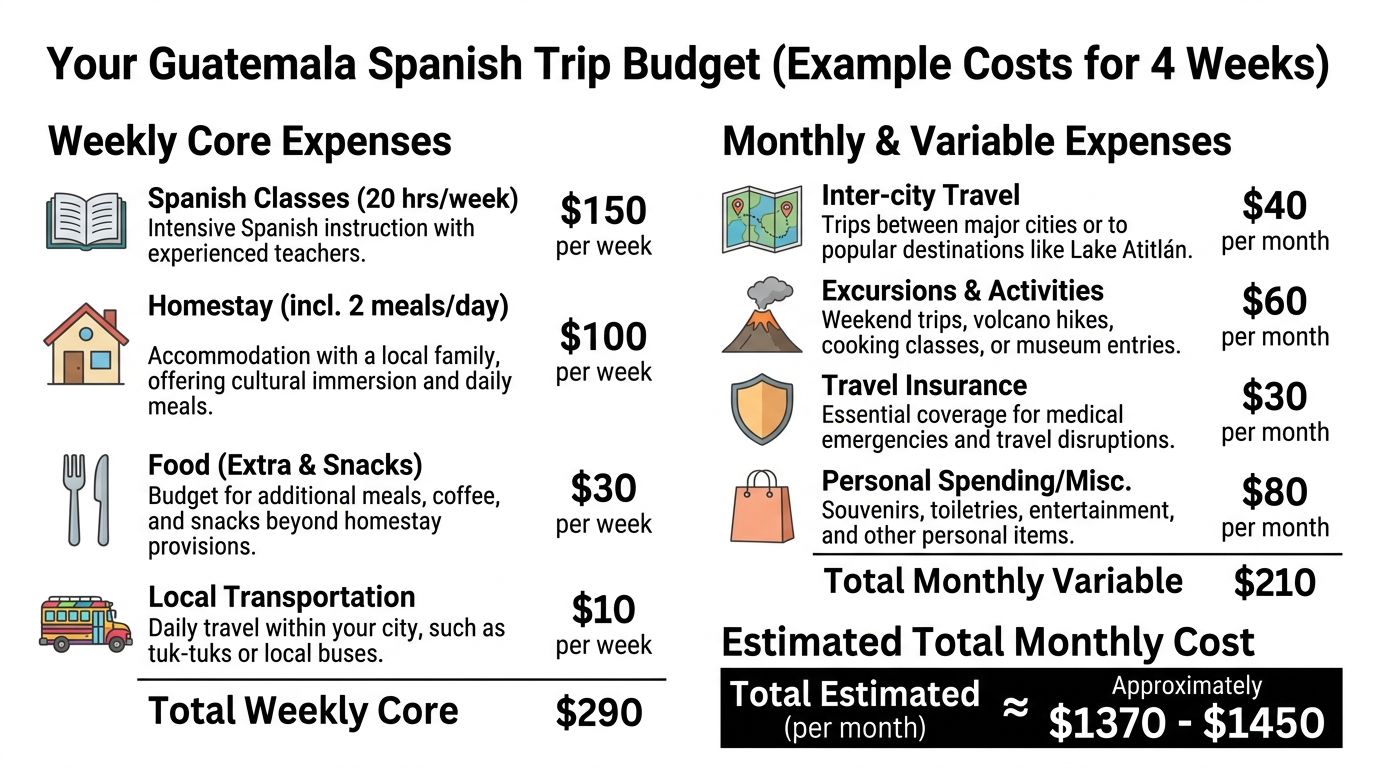
A practical baseline
A solid planning example for a four-week study trip looks like this:
- Spanish classes (20 hrs/week): $150 per week
- Homestay including 2 meals/day: $100 per week
- Food for extra meals and snacks: $30 per week
- Local transportation: $10 per week
- Weekly core total: $290
- Inter-city travel: $40 per month
- Excursions and activities: $60 per month
- Travel insurance: $30 per month
- Personal spending and miscellaneous: $80 per month
- Monthly variable total: $210
- Estimated monthly total: approximately $1370 to $1450
Those figures come from the infographic brief provided for this article and give you a useful planning frame for a month of focused study.
Where your money goes
Most travelers underestimate three categories.
First, small food spending. Even with a homestay, coffee, fruit, bakery stops, and meals during weekend trips add up.
Second, transport upgrades. You may plan to take the cheapest local option every time, then choose a shuttle or tuk-tuk when arriving late, carrying luggage, or not feeling safe.
Third, the social leak. A few café meetups, market purchases, and spontaneous outings can become your biggest overage without you noticing.
How language saves money
The most underrated budget tool is better Spanish. Not perfect Spanish. Better Spanish.
The local dialect includes around 500 loanwords from Mayan languages and unique idioms, and mastering a few Chapinismos such as patojo or puchica can increase negotiation success by up to 40% in local markets, according to this study on Chapinismo and Guatemalan Spanish.
That doesn’t mean turning every purchase into a battle. It means sounding engaged enough that prices, directions, and everyday exchanges become smoother.
A few useful habits:
- Learn market language: Greetings, polite questions, and basic bargaining matter more than grammar perfection.
- Ask locals where they eat: Prices near schools and tourist routes often drift upward.
- Stay longer in one base: Moving around constantly usually costs more than travelers expect.
Budget style matters more than labels
Instead of “backpacker” versus “mid-range,” think in behaviors.
| Travel style | What it looks like |
|---|---|
| Tight budget | Homestay, local transport, limited nightlife, one base, careful weekend spending |
| Balanced budget | Homestay or simple room, occasional shuttle, regular coffee shops, a few paid activities |
| Convenience-focused | Private room, more restaurant meals, tourist transfers, frequent side trips |
The best cost-cutting move isn’t choosing the absolute lowest price. It’s choosing the setup you can sustain without making yourself miserable.
For a broader planning framework, this guide on how to plan a trip on a budget is useful before you start locking in schools and flights.
Spend where it reduces stress. Save where it doesn’t reduce learning.
That’s the line I’d follow every time.
Staying Safe and Culturally Aware in Guatemala
A good Spanish trip isn’t just about speaking more. It’s about moving through the country in a way that’s alert, respectful, and realistic.
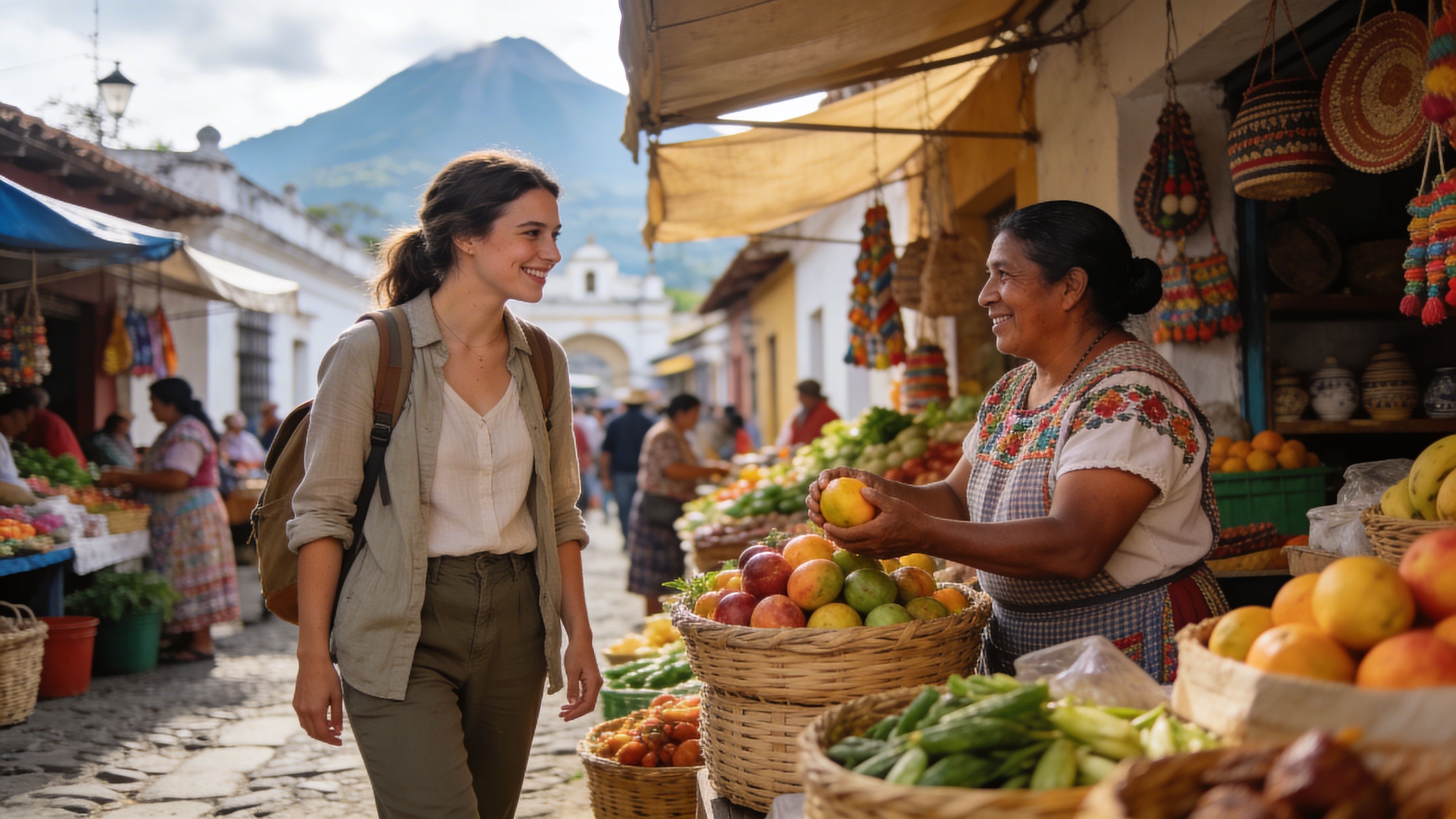
Safety starts with routine, not fear
Most day-to-day safety in Guatemala comes down to habits.
Choose accommodation with a location you’d feel okay returning to before dark. Ask schools which streets students usually use. Don’t normalize walking alone at night just because other travelers do. If a transport option feels off, leave.
For solo women, the basics matter more than bravado:
- Arrive in daylight when possible: First impressions are easier when you can orient yourself.
- Keep your phone and cash setup simple: Don’t flash your full wallet at bus stations or markets.
- Use school staff and host families: They usually know which taxi, shuttle, or route is the least stressful.
For a broader framework beyond Guatemala, this guide to safe solo travel for women pairs well with local common sense.
Rural communication needs extra humility
This is the part many glossy language guides skip.
Urban Spanish study does not automatically prepare you for rural Guatemala. In many indigenous-majority areas, Spanish may be the second language in the conversation or not the language being used around you at all. If you head into villages assuming your school Spanish will cover every interaction, you’ll misunderstand both the place and your role in it.
That doesn’t mean don’t go. It means go prepared.
Bring:
- Offline translation tools
- Your homestay or school address written clearly
- Basic health and transport phrases
- Patience when communication slows down
In rural Guatemala, speaking slower and listening longer will usually help more than speaking more.
Health planning is not optional
This matters even more outside the main hubs. Travelers venturing into rural Guatemala should be aware of healthcare access issues, as 80% of the country's doctors are located in Guatemala City. In highland regions like Sololá, where Mayan languages are dominant and extreme poverty is high, access to medical care is limited, according to this overview of healthcare in Guatemala.
That should change how you pack and plan.
Carry a medical kit with the basics you rely on personally. Keep copies of insurance details offline. Know where you’d go if you got sick in your specific town, not just in the country in general. If you’re heading into highland or village areas, tell someone your route.
Cultural awareness shows up in small moments
Guatemala rewards respect more than performance. You don’t need to act like a local. You do need to act like a guest who’s paying attention.
A few habits go far:
- Greet before asking for help: Jumping straight to the transaction can feel abrupt.
- Learn a few local expressions: Even basic Chapinismos can warm up an interaction.
- Ask before photographing people: Especially in markets and indigenous communities.
- Don’t treat villages like “undiscovered” scenery: People are living their lives, not hosting your authenticity quest.
The best language students usually aren’t the loudest or most fearless. They’re the ones who notice context, accept correction, and move carefully without acting scared.
Your Guatemalan Immersion Itinerary and Checklist
A strong trip plan doesn’t need to be complicated. It needs to fit your time, your energy, and the kind of learner you are.
One week for a first taste
If you only have a week, keep it simple. Base yourself in Antigua.
Take daily classes, stay with a homestay if possible, and avoid trying to see half the country. One market, one museum or cultural walk, one nearby day trip, and a lot of ordinary repetition will do more for your Spanish than rushing around.
Best for travelers who want momentum and confidence.
Four weeks for real progress
A month gives you enough time to settle in and enough time to notice your mistakes repeating. That’s where progress starts.
A practical flow:
- Week 1 in Antigua for easier arrival and adjustment
- Weeks 2 and 3 in Xela for stronger immersion
- Week 4 at Lake Atitlán or back in your preferred base for consolidation, lighter classes, and more conversation practice
This structure works because it starts easy and gets deeper. You build listening confidence first, then push harder.
Twelve weeks for a deep dive
Three months changes the experience completely. You stop “doing a course” and start living in Spanish.
A strong long-stay pattern looks like this:
- Start in one easy base
- Move to one high-immersion base for the core of your study
- Add shorter trips instead of changing housing constantly
- Use the final weeks for targeted work, such as conversation, professional vocabulary, or village-based cultural learning with proper support
If you stay that long, choose stability over novelty. Language grows in routine.
Pre-departure checklist
Use this before you book anything else:
- Choose your primary goal: Conversation, grammar repair, confidence, or long-term fluency.
- Book your first school week only if you’re unsure: You can often extend once you’ve seen the setup.
- Confirm the homestay details: Meals, private bathroom or shared, laundry, key access, Wi-Fi, commute.
- Buy travel insurance and save the documents offline
- Download maps and translation tools before arrival
- Carry cash in a few separate places
- Pack study tools you will use: Notebook, headphones, flashcard app, small day bag.
- Prepare a health kit for your own needs
- Save key addresses on paper and phone
- Read a full travel planning checklist: This travel planning checklist is a good final sweep before departure.
A language trip feels less intimidating once the decisions are on paper. Then all you have to do is show up and keep going.
Your Final Questions Answered
Is Guatemala good for complete beginners?
Yes. The clarity of Guatemalan Spanish is one of its biggest advantages for newer learners, especially in structured school settings.
Should I choose Antigua or Xela first?
Choose Antigua if you want ease, beauty, and a softer landing. Choose Xela if you care more about stronger immersion and don’t mind a less polished environment.
Do I need Spanish before I arrive?
No, but learning survival basics helps a lot. Greetings, directions, food terms, numbers, and transport phrases will make your first days much smoother.
Will I only hear Spanish?
No. In some places you’ll hear plenty of English around travelers. In many rural and indigenous areas, you may also hear Mayan languages used in daily life.
Is a homestay worth it?
Usually yes, if the family is communicative and the setup fits your needs. A good homestay turns meals and routines into extra class time.
How much should I move around?
Less than you think. Most learners improve faster when they stay in one place long enough for repetition to kick in.
What if I’m traveling solo?
Solo travel in Guatemala can be rewarding, but it goes better when you arrive in daylight, ask locals for current transport advice, and avoid treating confidence as a substitute for caution.
If you’re planning a thoughtful, affordable immersion trip, Travel Talk Today is a strong next stop for practical guides on budgeting, safety, slow travel, and building trips that feel meaningful once the language classes end.