Let's reframe how we think about budget travel. It’s not about what you can’t do; it’s about discovering just how much you can do with a bit of creativity. The real secret is shifting from a mindset of limitation to one of possibility. This whole process boils down to a few simple ideas: booking smart, timing it right, and being mindful of your spending.
Once you get the hang of it, you’ll see that financial constraints aren't a roadblock—they're just a fun, rewarding puzzle to solve on your way to seeing the world.
Your Blueprint For Affordable Adventure
So, you're dreaming of your next big trip but feel that familiar tug of worry from your bank account. You've come to the right place. Think of this guide as your personal playbook for seeing the world without emptying your wallet. We're skipping the vague, generic advice and getting straight to the good stuff—real, practical strategies that prove incredible experiences have nothing to do with a hefty price tag.
This is all about putting the power back in your hands. It's about that lightbulb moment when you realize that with a little know-how, the world is way more accessible than you ever imagined. We're going to break down the pillars that make those dream trips a reality, turning what feels like a restriction into an exciting challenge.
The Core Principles of Budget Travel
I've learned that the entire process really comes down to a few key phases. Making smart decisions early on is what frees up your budget for the things that truly matter—the experiences you'll remember forever once you’re actually there. The goal is simple: spend less on the boring logistics and more on making memories. Every dollar you spend should feel intentional.
This visual below maps out the entire journey, from the first spark of an idea and setting savings goals all the way to how you manage your money on the ground.
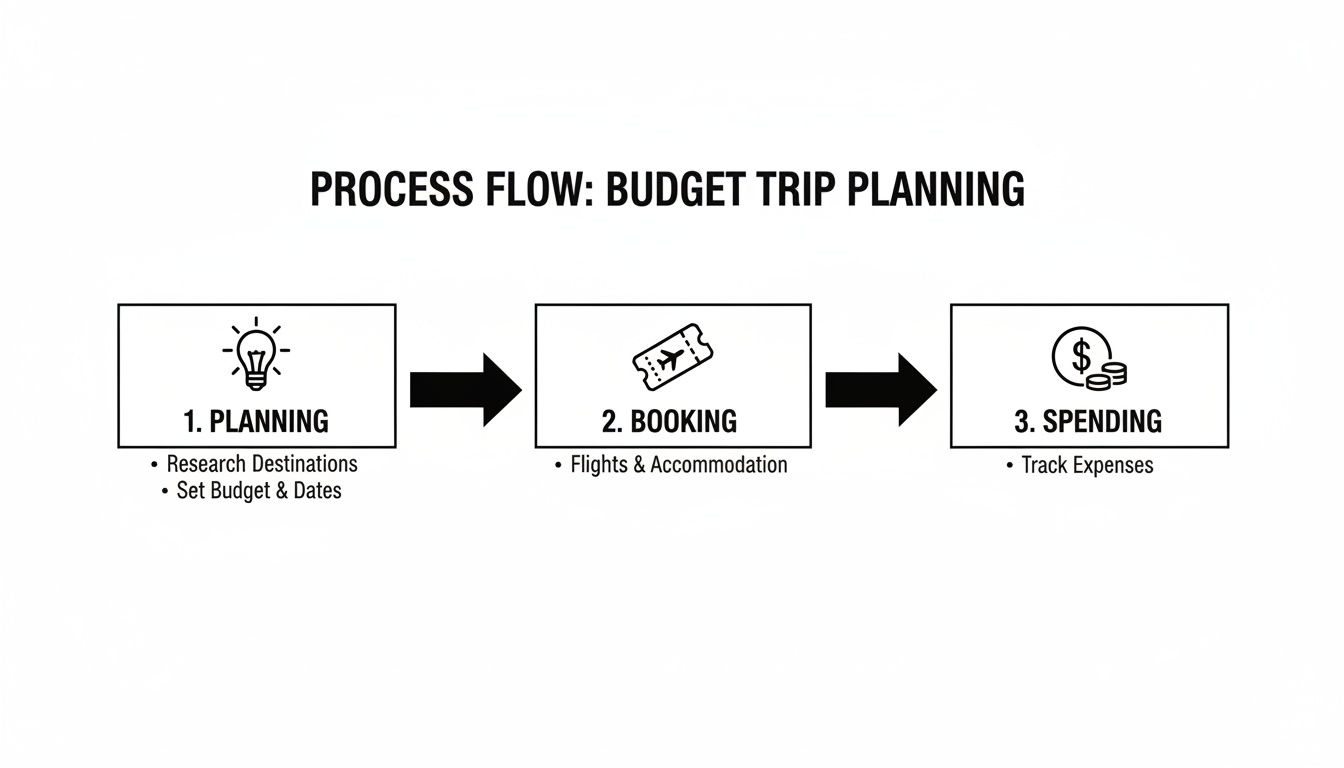
As you can see, the work you put in upfront has a direct impact on your daily spending power. It’s what gives you the freedom to truly relax and enjoy your destination.
To put it all together, here’s a quick overview of the essential stages we'll cover, which I like to call the four pillars of budget trip planning.
The Four Pillars of Budget Trip Planning
Each pillar builds on the last, creating a solid framework that takes the stress out of planning and lets you focus on the adventure ahead.
From Dream to Destination
The real magic of budget travel is found in the small, smart choices you make along the way. It’s choosing a hostel with a great communal kitchen so you can cook a few meals and save a ton on food. It’s hopping on the local bus in Oahu for a couple of bucks instead of grabbing a pricey taxi. It’s knowing when to splurge on that once-in-a-lifetime cooking class and when to join a fantastic free walking tour.
The most rewarding part of traveling on a budget is discovering your own resourcefulness. You learn to connect with locals, find those hidden gems off the tourist path, and truly appreciate the simple moments that often become your most cherished memories.
This guide gives you the framework, but your creativity is what will bring your trip to life. We'll show you how to strike that perfect balance between being smart with your money and having an absolutely unforgettable time.
For a deeper look at getting organized, our complete guide to trip planning tips covers everything else, from building the perfect itinerary to packing like a pro. Alright, let's start building your blueprint.
The Secrets to Budget-Friendly Bookings
Some of the biggest wins for your travel budget happen long before you even start thinking about what to pack. This is where a little bit of strategy goes a long way, turning what could be massive expenses into totally manageable costs. Let's get past the generic "book early" advice and dig into the tactics that actually move the needle.
It all starts with getting a handle on your biggest upfront cost: the flights. I can't stress this enough—timing is everything. Holding out for a last-minute deal is a huge gamble that almost never pays off, especially as planes get more and more crowded.
This is more true now than ever. With global air passenger demand jumping by 10.4% year-over-year in 2024, airlines hit a record 83.5% load factor. In plain English? Seats are filling up faster than ever. For anyone trying to travel on a budget, that statistic should set off alarm bells. The longer you wait, the more you'll pay.
Booking within that sweet spot of 21 to 60 days in advance can knock up to 25% off the price of an international flight, on average. You can find more details behind numbers like these in these business travel statistics on atlys.com.
Timing Your Flight Purchase Perfectly
Finding that perfect booking window feels like an art, but there’s a real science to it. Airlines run on complex algorithms that are constantly adjusting prices based on demand, the season, and how far out you are. Your job is to swoop in before those last-minute price hikes kick in.
Don't just search for flights; hunt them. Set up price alerts on platforms like Google Flights or Skyscanner for your route. These tools do the heavy lifting, sending you an email the moment prices drop so you never miss a good deal.
Another classic trick that still works wonders is flying mid-week. Flights on Tuesdays and Wednesdays are almost always cheaper because the business travel crowd isn't flying. Just shifting your departure day by a day or two can free up a surprising amount of cash—money you can use for a great meal or a cool activity at your destination.
For a much deeper dive into flight-hacking strategies, be sure to check out our complete guide on how to find cheap flights and uncover even more pro tips.
Mastering Your Accommodation Choices
Once your flights are locked in, the next big piece of the puzzle is figuring out where you'll sleep. This is about so much more than finding the cheapest bed; it’s about picking a style that fits your trip and makes the whole experience better.
Let's look at some of the best budget-friendly options out there:
- Hostels: The social hub of budget travel. Hostels offer dorm beds for a fraction of a hotel's cost and are amazing for solo travelers who want to meet people. Plus, many now offer private rooms, giving you the social vibe with a little more personal space.
- Airbnb (Private Rooms): Renting a room in a local’s home can be incredibly affordable and gives you a much more authentic feel for a place. You get insider tips from your host and a glimpse into a neighborhood most tourists never see.
- House-sitting: This one's a game-changer for longer trips. Platforms like TrustedHousesitters connect you with homeowners who need someone to watch their home and pets. In return, you get to stay for free.
A Real-World Accommodation Scenario
Let’s put this into perspective. Imagine you're planning a week in a moderately expensive city like Honolulu, Hawaii. Your choice of lodging will completely change your budget.
- Hotel: A standard hotel room in Waikiki can easily run you $250+ per night. For a week, you're looking at a whopping $1,750.
- Airbnb: A private room a short bus ride from the beach might be about $90 per night, bringing your weekly total to a more reasonable $630.
- Hostel: A dorm bed in a well-rated hostel could be as low as $45 per night. That’s just $315 for the entire week.
That $1,435 you save by picking a hostel over a hotel is more than enough to cover your food, activities, and local transport for the whole trip. It’s a perfect example of how one smart decision at the booking stage gives you incredible freedom later on.
The trick is to think beyond the traditional hotel. When you explore the alternatives, you open up a world of possibilities that don’t just save you a ton of money but also lead to richer, more unforgettable experiences. Get these two big expenses locked in smartly, and you’ve already won half the battle.
Crafting Your Daily Spending Plan
Okay, you've nailed down the big stuff—flights are booked, and you know where you're sleeping. This is where the real fun starts. The focus shifts from spreadsheets and booking sites to the actual adventure. But how do you soak it all in, say "yes" to that random street food tour, and not spend the whole time nervously checking your bank account?
The secret is a simple, flexible daily spending plan. This isn't about pinching every penny; it’s about giving yourself the freedom to relax. When you know roughly what a coffee, a bus ticket, or a local lunch costs, you trade financial anxiety for genuine presence. It's the difference between guessing and knowing, and it lets you actually enjoy the moment you're in.

Researching Local Costs Like a Pro
Before you can pick a daily number out of thin air, you have to get a feel for the financial landscape of your destination. Forget those generic "average cost" articles. It's time to dig into the specifics, and honestly, this part of the planning process can get you even more pumped for your trip.
Your goal is to get a sense of the on-the-ground prices for a few key things:
- Food: What's the price of a meal at a local eatery versus a tourist-trap restaurant? How much for a beer or a bottle of water from a corner shop?
- Transport: Look up the cost of a single metro ticket, a multi-day pass, and what a short taxi or ride-share trip will set you back.
- Activities: Check the entrance fees for the museums or big-ticket attractions on your list. Just as importantly, look for incredible free alternatives, like parks, viewpoints, or neighborhood walks.
A brilliant tool for this is a cost-of-living database like Numbeo, which gives you crowd-sourced data on everything from a cappuccino to a three-course meal in cities all over the world. Cross-reference that with a few recent travel blogs, and you'll have a surprisingly accurate picture of what your money can buy.
Building Your Sample Daily Budget
Once you've done a little digging, you can sketch out a sample plan. Let's run through a real-world example. Say you're heading to Lisbon, Portugal, and you're aiming for a daily budget of $50 USD (which is about €46).
Here’s how you could make that work, easily:
Look at that—you’ve covered all your bases and still have nearly €6 left over for a glass of vinho verde or an unexpected treat. This quick exercise turns an abstract number into a totally achievable daily goal. It shows you exactly how to plan a trip on a budget without feeling like you're missing out on anything.
The Power of Smart Accommodation Choices
Your daily spending is directly tied to where you choose to stay. I know we’ve already talked about booking, but it's crucial enough to mention again. Choosing a hostel or an Airbnb with a kitchen can slash your lodging costs by a staggering 40-60% compared to a standard hotel.
That kitchen is a game-changer. It means you can make your own breakfast and pack a lunch, which can easily save you $15-20 per day. It's a simple choice that compounds into huge savings over the course of your trip.
Your daily budget isn’t a rigid rulebook; it’s a flexible guide. It gives you the confidence to know when you can afford to splurge on a memorable dinner and when it’s wiser to grab a delicious, cheap bite from a food truck.
Don't Forget the Just-in-Case Fund
Finally, the most important part of any good budget is the part you hope you never have to use. I always, always recommend adding a 10-15% buffer to your total trip budget for those "oops" moments. This isn't for daily splurges; it’s for genuine, out-of-the-blue surprises.
Think of it as your financial peace of mind. It’s for when you get invited on a last-minute boat trip with new friends from the hostel, or when you realize you left your phone charger two cities ago. Having this buffer means you can handle those moments with a calm "yes" instead of a stressed-out "no." For a deeper dive into what to include, check out our guide on the key travel budget categories that save you money. Trust me, this little bit of preparation is what turns a good trip into a truly great one.
Smart Saving and Trip Timing Strategies
The secret to a stress-free and wildly affordable trip doesn’t start at the airport. It begins months before you even pull out your suitcase, with small, steady habits that turn saving money from a chore into a background hum. This is all about making your money work for you, transforming tiny, regular contributions into the fuel for your next great adventure.
First things first: give your travel dreams a dedicated home. Open a high-yield savings account and name it something that gets you excited, like “Thailand Adventure Fund” or “Italian Pizza Tour.” This simple psychological trick does wonders. It separates your travel cash from your everyday expenses, making the goal feel real and protecting it from being accidentally spent on a random Tuesday.
Next, put your savings on autopilot. Set up a recurring transfer from your checking account that hits every payday, even if it’s just $25. Consistency is everything. This "out of sight, out of mind" approach builds your fund without you ever feeling the pinch.
The Magic of Automated Savings
Think of it this way: automating your savings is like paying your future self first. It ensures your travel goals are a non-negotiable priority, not just a leftover wish.
- Set It and Forget It: Automation removes the daily temptation to skip saving. You don’t have to decide to save; it just happens. Your account grows on its own.
- Small Drops Fill the Bucket: A modest $50 tucked away every two weeks adds up to $1,300 in a year. That’s enough for a round-trip international flight or weeks of accommodation in many parts of the world.
- Split Your Paycheck: Ask your employer if they can split your direct deposit. Funneling even 5% of your paycheck directly into your travel account is a powerfully painless way to supercharge your savings.
This systematic approach demystifies the whole process. It’s not about waiting for a massive windfall; it’s about the quiet, cumulative power of small, consistent actions over time.
Master the Art of Trip Timing
Beyond how you save, the single biggest lever you can pull to slash costs is when you travel. Your timing can cut the cost of your biggest expenses—flights and accommodation—by more than half. The secret weapon in every savvy traveler’s playbook? The shoulder season.
Shoulder seasons are those beautiful windows of time just before and after a destination's peak tourist frenzy. For much of Europe, that means April-May and September-October. For tropical spots, it might be the period right after the high season madness but before the rainy season truly kicks in.
Traveling during the shoulder season is the absolute sweet spot of budget travel. You get the best of both worlds: gorgeous weather and thinner crowds, all while paying a fraction of the peak season price.
And we're not talking about a minor discount here; the savings can be downright dramatic. You’re simply avoiding the summer holiday rush and school breaks that cause demand—and prices—to skyrocket.
Peak vs Shoulder Season Cost Comparison: Rome Example
Let’s look at what this means in the real world. Here’s a quick breakdown of a one-week trip to Rome, comparing the sky-high prices of peak season (July) with the much friendlier costs of shoulder season (October). The experience is just as magical, but your wallet will breathe a huge sigh of relief.
By simply shifting your travel dates a few months, you’re looking at a potential savings of over $1,000. That’s not chump change! It's enough money to fund an entirely different trip later on, or to splurge on incredible meals and unique experiences while you're actually in Rome.
For more brilliant ways to cut costs, dive into our guide filled with essential budget travel hacks that will save you even more.
Ultimately, smart saving and strategic timing are a powerful duo. Your automated savings build the foundation, while smart timing makes every single dollar you saved stretch further than you ever thought possible, unlocking places and adventures that might have once seemed out of reach.
Traveling Safely and Smartly on a Budget
Traveling on a budget should feel empowering, not exposed. Real freedom on the road comes from a quiet confidence—knowing you have the tools and foresight to handle whatever comes your way. This is your toolkit for exploring the world with assurance, especially if you’re heading out on your own.
Smart, safe travel starts long before your plane ever takes off. It begins with where you choose to lay your head. When you’re booking a place to stay, look past the price tag. Dive into the recent reviews, paying close attention to what other solo travelers say about the neighborhood. Spending a few extra dollars for a spot in a well-lit area with good transport links isn't a splurge; it’s a direct investment in your peace of mind.
Building Your Safety Net
Even the most meticulously planned adventure has its curveballs. That's why building a simple but solid safety net is absolutely non-negotiable. This isn’t about being paranoid or expecting the worst. It’s about being so prepared that you can finally relax and just soak it all in.
Your first line of defense is simply information. Before you go, share your detailed itinerary—flight numbers, hostel addresses, a rough daily plan—with a trusted friend or family member back home. A quick "I'm okay!" text each day can also bring a massive amount of comfort to both you and your loved ones.
You should also let technology give you a feel for a new place. An app like GeoSure is fantastic for this, providing neighborhood-level safety scores that give you a quick snapshot of the local vibe. It’s a great way to back up your own research and make smarter decisions about where you wander.
Demystifying Travel Insurance
I get it. Travel insurance often feels like a complicated, pricey add-on. But trust me on this: it's one of the most critical parts of your trip. Don't think of it as a cost—think of it as your shield. The right policy is your backup for everything from a lost backpack to an unexpected doctor’s visit, ensuring a small hiccup doesn’t turn into a financial nightmare.
You don't need the platinum-level plan, just the right one. Zero in on policies with solid medical coverage and emergency evacuation. For most of us traveling on a dime, a basic plan that covers these essentials is more than enough.
The goal of travel insurance isn’t to cover every tiny inconvenience. It’s to protect you from the big, trip-ending disasters that could derail your journey and your finances. It’s the ultimate peace of mind for just a few dollars a day.
When you're ready to pick a plan, we've already broken down the best options. You can learn more about travel insurance in our article and find a policy that fits your trip perfectly without blowing your budget. It’s a small step that makes a world of difference.
Staying Connected Without Breaking the Bank
Trying to find your way in a new city, looking up a restaurant review, or just letting your mom know you've landed safely—staying connected is a modern travel must-have. But those international data roaming charges can be absolutely astronomical, leaving a nasty surprise on your phone bill when you get home.
Luckily, you’ve got some great, affordable options to stay online:
- Local SIM Cards: This is the old-school, tried-and-true method. As soon as you land, you can usually find a kiosk at the airport or a mobile shop in town selling prepaid SIM cards. They're typically dirt cheap and give you a local number with a generous pile of data.
- eSIMs: For a much smoother, more modern approach, an eSIM is a total game-changer. Services like Airalo let you download a digital data plan for your destination right to your phone before you even leave home. You just activate it the moment you land for instant connectivity—no more fumbling with tiny plastic cards.
Whether you grab a local SIM or an eSIM, you'll be able to use maps, book rides, and stay in touch without a second thought. This simple prep is a key part of how to plan a trip on a budget, preventing sticker shock while boosting your safety and experience. Armed with these strategies, you’re not just another tourist. You’re a prepared, confident, and empowered explorer, ready for anything.
Got a Few Last-Minute Questions?
Even with the perfect plan in hand, a few "what if" questions can bubble up. It's totally normal, especially when you're diving into the world of budget travel for the first time. Think of this as a quick coffee chat with a friend who’s been around the block—someone who's made all the mistakes so you don't have to.
Let's tackle some of the most common worries I hear from new travelers. We'll cut through the noise and get straight to the practical advice that will give you that final jolt of confidence to just go for it.
How Far in Advance Should I Actually Start Planning?
Ah, the million-dollar question. Finding that sweet spot is key. For those big, exciting international trips, I’d start daydreaming and researching about 4-6 months before you want to leave. This isn't about booking—it's about getting smart. You'll have time to casually watch flight prices and pounce when you see a great deal, usually within that ideal 2-3 month booking window.
For a trip closer to home, you can relax that timeline a bit. A 2-4 month head start for domestic travel is usually plenty. It gives you enough time to snag some great early-bird deals on trains, buses, or unique stays before the last-minute rush sends prices soaring. It’s all about being prepared, not panicked.
What Are the Best Travel Apps to Have on My Phone?
Your phone can be your most powerful money-saving tool if you load it up with the right apps. These are the ones I swear by and never leave home without:
- Finding Cheap Flights: This is non-negotiable. Get Skyscanner or Google Flights and set up price alerts for your dream destination. Let them do the work of finding the cheapest days to fly.
- A Place to Sleep: Hostelworld is my go-to for the social vibe and honest reviews. For budget guesthouses or private rooms, Booking.com's filtering options are incredibly powerful.
- Tracking Your Spending: An app like Trail Wallet or Spendee is a game-changer. It shows you exactly where your money is going in real-time, so you know if you can afford that extra gelato.
- Getting Around: Don't get lost (or ripped off). Google Maps or Citymapper will show you how to navigate a new city's public transport system like you've lived there for years.
The right tools don't just save you a few bucks; they save your sanity. When you let these apps handle the logistics, you free up your mind to actually soak in the experience.
Should I Book Everything in Advance or Just Wing It?
Honestly, the best approach is a little of both. For the big, important stuff—your flight there and your first couple of nights' accommodation—booking ahead is almost always the smarter, cheaper move. It locks in a good price and gives you a soft landing when you arrive, tired and overwhelmed.
But once you're there? Let spontaneity be your guide. You'll often find better deals on local buses, day tours, and activities by booking them in person a day or two beforehand. Plus, you’ll have the freedom to follow a recommendation from a new friend or change your plans on a whim. That's where the real magic happens.
How Do I Avoid Getting Ripped Off by Hidden Fees and Tourist Traps?
The simplest rule is also the most important: read the fine print. That jaw-droppingly cheap flight from a budget airline? It can easily double in price once you add a checked bag and pick a seat. Always, always look at the final checkout price before you pay. The same goes for hotels—watch out for sneaky "resort fees" or city taxes that aren't included in the advertised nightly rate.
And when you get hungry, just walk two or three blocks away from the main tourist plaza. I promise the food will be better and the prices will plummet. A quick Google search for common scams in your destination before you go can also save you a lot of money and stress.
Here at Travel Talk Today, we believe adventure should be for everyone. We're on a mission to give you the confidence and know-how to see the world without breaking the bank. For more real-world travel guides and inspiration, check out all our resources at Packlight Journeys.