10 Unforgettable Things To Do in Cape Cod (2026 Budget & Eco-Friendly Guide)
Welcome to Cape Cod, a destination of windswept dunes, historic villages, and quiet harbors. Beyond the postcard-perfect scenes lies a deeper experience, one that’s affordable, sustainable, and rich with authentic local culture. This guide moves past the typical tourist traps to uncover the real heart of the Cape, showing you how to connect with its natural beauty and vibrant communities without breaking your budget.
This is your roadmap, whether you are a solo traveler seeking quiet trails, a couple planning a cost-conscious escape, or a family wanting to create meaningful memories. Forget the generic advice. Here, you will find a practical plan designed to help you craft a trip that respects the local environment and economy, leaving both you and the destination a little better. We’ll cover everything from free beaches and scenic bike paths to exploring the rich maritime heritage and art scenes that define this iconic peninsula.
We believe travel should be about connection, not just consumption. This guide is packed with actionable insights for a more intentional visit. Let's dive into the essential list of things to do in Cape Cod, focusing on real value, unique experiences, and sustainable practices. You'll discover how to explore the famous Cape Cod National Seashore on a budget, find the best spots for kayaking, and even learn how to enjoy the magic of the off-season. Your meaningful adventure starts now.
1. Cycling the Cape Cod Rail Trail
Imagine pedaling along a smooth, paved path that unspools through classic Cape Cod scenery: salt marshes teeming with birdlife, dense pine forests, and cranberry bogs shimmering in the sun. The Cape Cod Rail Trail offers this quintessential experience, transforming a historic railroad bed into a 22-mile artery of adventure. It’s an exceptionally rewarding activity for anyone wanting to explore the Cape’s natural beauty and charming towns at their own pace, making it a top thing to do in Cape Cod for budget-conscious and active travelers.
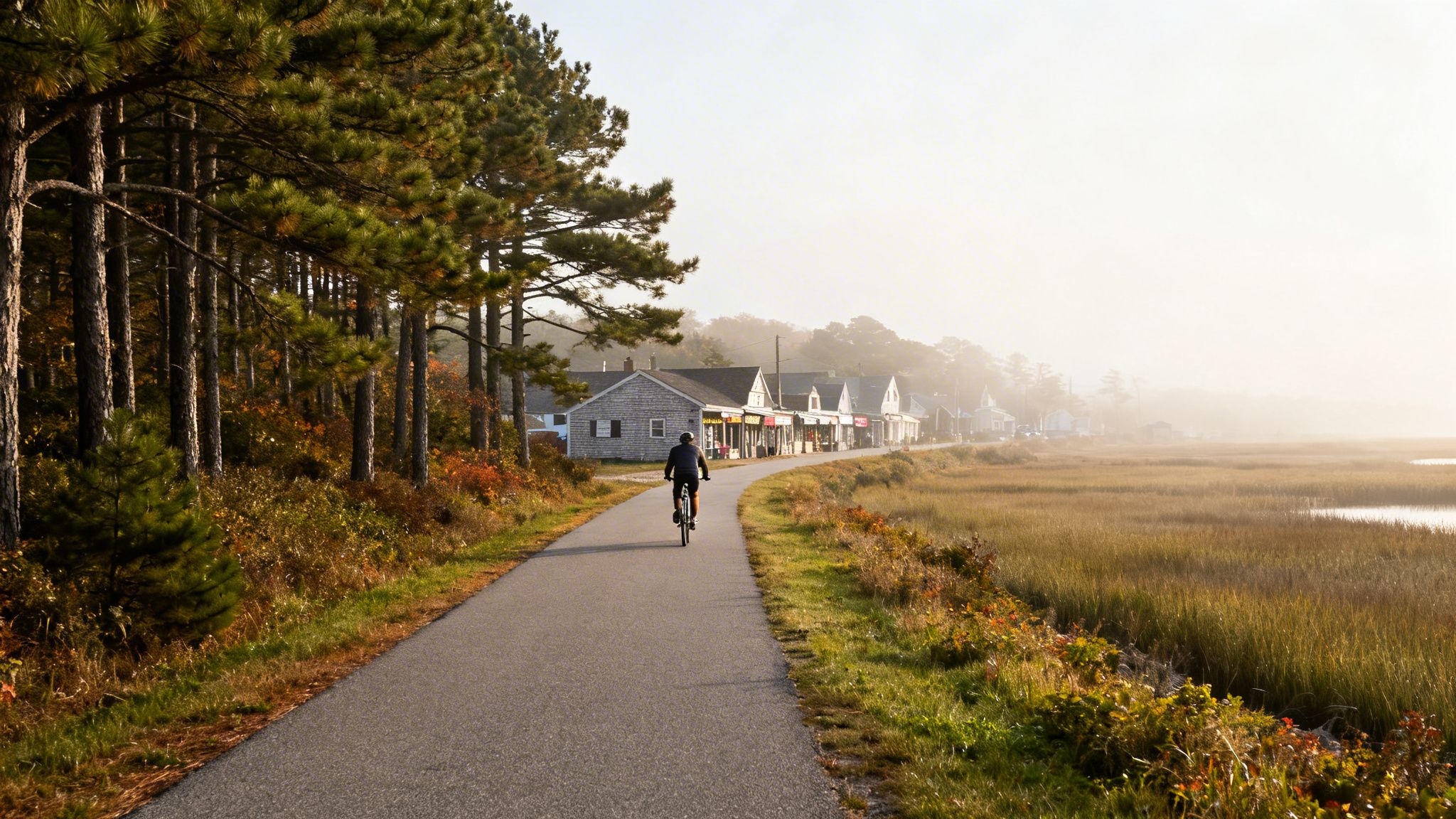
This trail is far more than just a bike path; it’s a green-friendly corridor connecting Dennis to Wellfleet, with extensions that reach even farther. Its flat, gentle grade makes it accessible to cyclists of all fitness levels. Along the way, you can hop off to explore the art galleries of Brewster, grab a coffee in Orleans, or take a refreshing dip in a kettle pond at Nickerson State Park.
How to Make the Most of the Trail
To maximize your experience, a little planning goes a long way. This is your chance to trade car traffic for serene nature, saving money on gas and parking fees while getting a fantastic workout.
- Bike Rentals: No bike? No problem. Rental shops like Trail Hub in Dennis and Wellfleet offer affordable daily rentals, often between $20-$40. Reserving in advance online, especially during peak season, is a smart move.
- Best Start: For a quieter ride, begin at the northern Dennis trailhead near the Route 134 intersection. This section typically sees fewer crowds than the more central access points.
- Timing is Key: The trail is most peaceful in the early morning. An early start also means cooler temperatures in the summer. For ideal weather and even fewer people, plan your ride for May-June or September-October.
Pro Tip: Pack your own water bottle and snacks. While there are some cafes and general stores near the trail, they can be spread out. Having your own supplies lets you stop for a spontaneous picnic at one of the many scenic overlooks without breaking your budget. Use a free app like AllTrails to check for any trail closures or detours before you head out.
2. Visiting Cape Cod's Free Beaches & Swimming
Feel the soft sand between your toes and the refreshing Atlantic breeze on your skin without spending a dime. With over 100 public beaches, Cape Cod offers an incredible array of coastal experiences, from the calm, warm bay-side waters perfect for families to the dramatic ocean shores beloved by surfers. Many town beaches are free or have low-cost daily parking, making a beach day a classic and affordable thing to do in Cape Cod.

This isn't just about sunbathing; it's about finding your perfect stretch of coastline. You can explore the vast, wave-swept expanse of Nauset Beach in Orleans or watch the sunset over the iconic Race Point Beach in Provincetown. For those willing to venture slightly off the beaten path, local favorites like Cahoon Hollow Beach in Wellfleet offer a more secluded vibe. This variety ensures there's a beach for every mood and budget.
How to Make the Most of the Beaches
A little insider knowledge will help you save money and find the best spots. This is your guide to enjoying the Cape’s premier natural attraction without the premium price tag. For more tips on budget travel, check out these other free things to do on your next trip.
- Parking Strategy: Arrive before 10 AM, especially in July and August, to secure a parking spot. Many town-managed beaches offer day passes for non-residents ($10-$20), which are often cheaper than state or national park fees.
- Best Time to Go: September is a magical month. The ocean is at its warmest, the summer crowds have thinned, and many beaches reduce or eliminate their parking fees after Labor Day.
- Tidal Awareness: Always check the local tide tables before you go. Low tide is perfect for exploring tide pools and walking on sandbars, while high tide is best for swimming.
Pro Tip: Pack your own cooler with food and water to avoid marked-up prices at beach snack shacks. Don't be shy about asking a local shop owner or your rental host for their favorite "secret" beach-many small spots with free roadside parking are known only to residents. Also, opt for reef-safe sunscreen to help protect the Cape's delicate marine ecosystem.
3. Exploring Provincetown's Art Scene & LGBTQ+ Heritage
Step into Provincetown and you’re walking through living history. Perched at the very tip of the Cape, this vibrant town is a world-renowned haven for artists and a cornerstone of America’s LGBTQ+ culture. It’s a place where creativity isn’t just displayed in galleries; it’s woven into the fabric of the streets, from colorful storefronts to spontaneous performances. For those seeking authentic cultural immersion, exploring P-town’s creative spirit is an essential thing to do in Cape Cod.

For over a century, this community has served as a refuge and inspiration for creators and free spirits. You can feel this legacy as you wander through the more than 40 art galleries dotting Commercial Street and its hidden side streets. Institutions like the Provincetown Art Association and Museum (PAAM) showcase local talent alongside historic works, while the Fine Arts Work Center offers a glimpse into the studios of working artists. It’s a dynamic environment that offers meaningful connection beyond typical tourist attractions.
How to Make the Most of Provincetown
To truly appreciate P-town, embrace its dual identity as both a historical art colony and a modern LGBTQ+ sanctuary. This approach allows you to engage with the community respectfully while uncovering its most authentic and budget-friendly experiences.
- Gallery Hopping: Many galleries are free to enter, and on Friday evenings, several host free public receptions with wine and snacks. Check schedules posted in gallery windows for times.
- Go Beyond Commercial Street: The real magic is in the quiet lanes. Wander down alleys to find local street art, charming gardens, and smaller, independent artist studios that are easy to miss.
- Timing is Key: Visit in May, June, or September-October for pleasant weather, lower prices, and fewer crowds. This makes for a more relaxed and intimate experience with the town and its residents.
Pro Tip: Save on accommodations by staying in nearby Truro or Wellfleet and taking a short bus or bike ride into Provincetown for the day. For an affordable lunch, skip the pricier waterfront restaurants and grab a delicious sandwich from a local deli or bakery to enjoy on the beach. Always remember that Provincetown’s LGBTQ+ spaces are a living community, so visit with respect and appreciation.
4. Hiking the Wellfleet Bay Wildlife Sanctuary
Step into a world where salt marshes breathe with the tides and coastal forests whisper stories of the seasons. The Wellfleet Bay Wildlife Sanctuary, a 1,000-acre haven managed by the Massachusetts Audubon Society, offers an authentic immersion into the Cape’s wild heart. With over five miles of trails winding through tidal creeks, sandy beaches, and pine woodlands, it’s a must-see destination for anyone looking to connect with nature on a deeper level. This sanctuary is an essential thing to do in Cape Cod for photographers, birdwatchers, and families alike.
This sanctuary is much more than a simple park; it's a living classroom. Its well-maintained trails are accessible and offer stunning vistas, including a universally accessible trail that ensures everyone can experience its beauty. You can spend hours watching ospreys dive for fish, spotting fiddler crabs scuttling across the mudflats, or simply enjoying the peaceful panoramic views of Wellfleet Harbor. It’s an ideal spot for slow travel, allowing you to appreciate the environment at a contemplative pace.
How to Make the Most of the Sanctuary
A visit here is a chance to support conservation while enjoying an incredibly low-cost, high-reward day out. For a small entry fee ($5-6 for adult non-members), you gain access to an entire ecosystem.
- Bring the Right Gear: Binoculars are a game-changer here, turning distant specks into identifiable birds. Pack a bird identification guide or use an app like Merlin Bird ID to enrich your experience.
- Best Time to Visit: Arrive early in the morning when wildlife is most active and the light is perfect for photography. The spring and fall migration seasons are particularly spectacular for birding.
- Be Prepared: During summer, wear long pants and use insect repellent to stay comfortable. Always download a trail map from the Mass Audubon website before you go for easy offline navigation.
Pro Tip: Pack a picnic lunch and enjoy it at one of the designated areas for a truly budget-friendly meal with a million-dollar view. Participating in a guided walk (often available for a small additional fee) provides expert insights you won't get on your own. Your visit supports crucial conservation work, making it a wonderful example of sustainable tourism. You can learn more about how to travel sustainably to make your entire trip more impactful.
5. Walking Through Historic Sandwich & Visiting Heritage Museums
Step back in time by wandering through the streets of Sandwich, Cape Cod's oldest town, founded in 1637. Here, you'll find impeccably preserved historic homes, a charming village green, and a palpable sense of New England heritage. This walkable town offers a peaceful and authentic alternative to the more commercialized areas, making it a wonderful thing to do in Cape cod for history lovers, photographers, and anyone seeking genuine cultural immersion.
Exploring Sandwich feels like stepping onto a movie set, with its picturesque grist mill and tranquil Shawme Pond. The town is a treasure trove for those who appreciate architecture and local stories. You can spend hours simply strolling along Main Street, discovering unique, locally-owned shops and cafes. Museums like the Sandwich Glass Museum and the expansive Heritage Museums & Gardens add another layer of discovery, connecting you with the region's artistic and botanical past.
How to Make the Most of Historic Sandwich
To fully appreciate Sandwich, embrace a slower pace. The town's charm is found in its details, from the historic plaques on colonial-era houses to the friendly conversations with shop owners. It’s an affordable way to experience the Cape’s soul.
- Affordable Exploration: Many of Sandwich's best sights are free. Grab a complimentary walking map from the visitor center and design your own architectural tour. For paid attractions, entry fees are modest, often between $8-$15.
- Best Photo Spots: Capture iconic shots of the Dexter Grist Mill reflected in the pond, the historic homes lining Main Street, and the stunning sunset views from the Sandwich Boardwalk.
- Timing is Key: The shoulder seasons of May-June and September-October offer pleasant walking weather and fewer visitors. This is when the town's quiet atmosphere truly shines.
Pro Tip: For an authentic local experience, check the Sandwich Historical Commission's website for free lectures or guided walking tours. Instead of pricier restaurants, pack a lunch from a local deli and enjoy a picnic on the village green or by the waterfront for a budget-friendly meal with a view.
6. Kayaking and Paddling Cape Cod's Waterways
Picture yourself gliding silently across a calm bay at dawn, the only sounds being the dip of your paddle and the call of a distant shorebird. Kayaking Cape Cod’s myriad waterways offers an intimate connection to the peninsula's wilder side, from protected estuaries to serene freshwater ponds. It’s an authentic and immersive way to discover landscapes unreachable by car, making it an essential thing to do in Cape Cod for adventurous and budget-minded travelers.
This activity is far more than just a workout; it's a floating safari and a front-row seat to nature. You can explore the wildlife-rich Nauset Estuary in Orleans, paddle the scenic and protected waters of Pleasant Bay, or navigate the beginner-friendly Scorton Creek in Sandwich. Each route presents a new perspective on the Cape's beauty, offering chances for wildlife photography, secluded beach-hopping, and pure tranquility.
How to Make the Most of Your Paddle
To get the best experience, a little bit of preparation is key. This is your opportunity to escape the crowds, find your own private slice of coastline, and do it all affordably.
- Kayak Rentals: Leave your boat at home. Independent rental shops like the Goose Hummock Shop in Orleans offer affordable daily rentals, typically between $40-$70. They also provide valuable local knowledge and guided tours.
- Best Launch Spots: For beginners, start in a protected area like Scorton Creek. The calm, winding waters are perfect for building confidence before tackling larger bays.
- Timing is Key: Paddle at sunrise or sunset for the best wildlife viewing opportunities and the most dramatic light. These times also mean fewer people on the water and calmer conditions. If the weather turns, you can always find some fun indoor things to do nearby.
Pro Tip: Always check the tide tables and weather forecast before you depart. Tides can be strong, and conditions can change quickly. Pack a waterproof bag for your phone and a camera, wear sun-protective clothing, and download an offline map of the waterways just in case you lose your signal.
7. Exploring Chatham's Maritime Heritage & Working Harbor
Feel the salty air and witness a piece of living history in Chatham, a town that proudly holds onto its authentic maritime identity. Situated on the Cape's iconic "elbow," Chatham isn’t a commercialized tourist trap; it’s a genuine working fishing village where you can see the day’s catch being hauled onto the docks. This makes it a fascinating thing to do in Cape Cod for anyone craving a taste of the region's true soul and unfiltered local culture.
Here, the harbor is the heart of the community. You can stand at the Chatham Fish Pier and watch fishing vessels unload their bounty, often with curious seals hoping for a stray fish. Beyond the pier, the town offers affordable local museums, stunning lighthouse views, and waterfront trails that let you explore the working docks up close. It’s an immersive experience that connects you directly to the industry that has sustained Cape Cod for centuries.
How to Make the Most of the Harbor
A visit to Chatham offers a free and deeply enriching cultural experience. By engaging with its working waterfront, you’re stepping away from ticketed attractions and into the daily life of a coastal community.
- See the Action: The Chatham Fish Pier is a public observation deck where you can watch the entire process for free. Arrive between 5-6 AM to see boats returning and unloading, or visit in the afternoon to see the day's catch weighed and sorted.
- Affordable History: For a deeper dive, the Chatham Maritime Museum offers local history for a small fee, typically under $10. It provides valuable context to the sights and sounds of the harbor.
- Best Seasons: The atmosphere is most pleasant in May, June, September, or October when the weather is mild and the summer crowds have thinned.
Pro Tip: Bring a good zoom lens for your camera. You can capture incredible photos of fishing boats, working fishermen, and the abundant wildlife, including the famous harbor seals, from a respectful distance. For a different perspective, walk over to the public beach at the Chatham Bars Inn for panoramic views of the harbor and ocean.
8. Visiting Cape Cod National Seashore & Lighthouse Trails
Step into a world where windswept dunes meet crashing Atlantic waves and historic beacons stand guard over the coast. The Cape Cod National Seashore protects nearly 44,000 acres of this precious landscape, a stunning mosaic of pristine beaches, salt marshes, and historic lighthouses. Exploring this national treasure is an essential thing to do in Cape Cod, offering an incredibly affordable way to experience the raw, untamed beauty of the Outer Cape.
The Seashore is more than just a collection of beaches; it’s a living museum of coastal ecology and maritime history. Follow trails to iconic spots like the Nauset Light, perched precariously near the eroding cliffs, or the stately Highland Light in Truro. Nature photographers and slow travelers will find endless inspiration, from the serene Head of the Meadow Trail, a 2-mile beach walk, to the dramatic views from the bluffs at Marconi Beach.
How to Make the Most of the Seashore
A little bit of planning ensures you can soak in the maximum beauty for minimal cost. This is your chance to connect with nature, learn about local history, and capture unforgettable images without straining your travel budget.
- Smart Savings: If you plan on visiting for more than a single day, purchase a weekly pass ($12 per person) instead of multiple daily passes. An annual pass ($25 per vehicle) is an even better deal for frequent visitors.
- Free Resources: Before you go, download the free National Seashore map and trail guide from the official NPS website. Also, check the schedule for free ranger-led programs that offer fascinating insights into the local ecosystem.
- Golden Hour Magic: The light during the hour after sunrise and before sunset is a photographer’s dream. Visiting the lighthouses during this “golden hour” will reward you with spectacular, warmly lit photos.
Pro Tip: Pack your own meals and water to avoid higher prices at park-adjacent stores. Bring binoculars, as you can often spot whales from shore during migration season and observe countless bird species. For the best beachcombing and tide pool exploration, check the local tide tables online before you head out.
9. Foraging & Exploring Cape Cod's Local Food Scene
Taste the true essence of Cape Cod by diving into its vibrant local food scene, a world where salty sea air meets fertile farmland. This isn't just about dining out; it's an invitation to connect with the source of your food, from the briny oysters of Wellfleet to sun-ripened berries from a local farm. Exploring this culinary landscape is an essential thing to do in Cape Cod, offering a deeply personal and affordable way to experience the region’s culture and support its local producers.
The Cape’s food culture is a delicious mix of traditions. You can wander through bustling farmers markets, enjoy a lobster roll at a no-frills seafood shack near a working harbor, or even join a food tour. This approach allows you to bypass expensive tourist traps and engage directly with the community, making your meals more meaningful and your travel more sustainable. It’s a perfect example of how authentic travel experiences can enrich your journey.
How to Make the Most of the Local Flavors
A little bit of culinary curiosity is all you need to unlock the Cape’s best-kept secrets. This strategy saves you money on restaurant bills while delivering fresher, more memorable meals.
- Market Mornings: Arrive early at farmers markets like the Orleans Farmers Market (Saturdays) for the best selection and a chance to chat with vendors. They often have the best tips on hidden gems and local farms.
- Shack Strategy: Skip the formal dining rooms and head to the casual seafood shacks. A meal at a dockside spot often costs between $12-$18 and provides an unmatched atmosphere and freshness.
- Harvest Festivals: If you visit in the fall, don't miss events like the Wellfleet Oyster Festival in October. It's a fantastic cultural immersion focused on the local harvest and maritime heritage.
Pro Tip: Ask locals for their favorite bakery or hidden food spot, like the famous Hole in One Donut in Orleans. Self-catering with market finds is a huge budget-saver. Grab some fresh bread, local cheese, and produce for an impromptu picnic on the beach. This not only cuts costs but connects you directly to the taste of the region.
10. Off-Season Winter & Spring Exploration for Budget Travelers
Imagine Cape Cod without the summer crowds: windswept beaches all to yourself, cozy inns offering warm welcomes, and a serene quiet that lets you hear the rhythm of the waves. Visiting during the off-season (November through April) reveals an entirely different, more intimate side of the Cape. It’s a time when accommodation costs can drop by 30-50%, making it an ideal choice for anyone wanting to experience the area's authentic soul on a smaller budget. This is one of the smartest things to do in Cape Cod for a truly local feel.
The summer throngs give way to a peaceful landscape perfect for reflection and discovery. While some seasonal businesses do close, many year-round gems remain open and are eager for visitors. Storm watchers and photographers flock here from November to March to capture dramatic coastal scenes, while birdwatchers arrive in May and early June to witness the spectacular spring migration. It's a chance to trade the bustling tourist version of the Cape for a genuine connection with its natural beauty and community.
How to Make the Most of the Off-Season
Embracing the quieter months requires a slight shift in mindset, focusing on nature, relaxation, and local life. This approach not only saves significant money but also offers a more sustainable, slow-travel experience.
- Book Smart: To secure the best off-season rates at local inns and guesthouses, book your stay two to three months in advance. Car rentals are also cheaper but should be reserved ahead of time.
- Plan Ahead: Always check business hours before you go. A quick phone call to a restaurant, gallery, or shop can save you a wasted trip, as opening times can be limited.
- Gear Up: Weather is a key part of the experience. Pack warm layers, a reliable rain jacket, and wind protection. Proper gear allows you to comfortably enjoy a walk on a deserted beach or a hike through quieter trails, no matter the forecast.
Pro Tip: Use the quiet to your advantage. Engage with locals in cafes and shops; they often have more time and are happy to share stories and recommendations. This slower pace is perfect for a deeper dive into one or two towns rather than trying to see everything. For more ideas on stretching your travel funds, check out these tips on how to plan a trip on a budget.
Top 10 Cape Cod Activities Compared
| Experience / Activity | Resource & Cost 🔄 | Implementation Complexity ⚡ | Expected Experience / Outcomes ⭐📊 | Ideal For 💡 | Key Advantages ⭐ |
|---|---|---|---|---|---|
| Cycling the Cape Cod Rail Trail | $25–50 (bike rental + snacks) | Low — easy to rent and self-route | Scenic 22‑mile flat ride; town access; eco‑friendly mobility | Budget solo travelers, families, casual cyclists | Affordable, safe off‑road route; flexible segments |
| Visiting Cape Cod's Free Beaches & Swimming | $0–30 (parking typical) | Very low — drive and arrive early | Relaxation, swimming, varied beach types and photo ops | Swimmers, families, photographers | Low cost; diverse beach experiences; lifeguarded options |
| Provincetown Art Scene & LGBTQ+ Heritage | $0–40 (mostly free galleries; meals extra) | Low–medium — plan for travel/parking or nearby stay | Rich cultural immersion, galleries, street art, community events | Art lovers, LGBTQ+ visitors, cultural travelers | Authentic arts culture; inclusive community; many free venues |
| Wellfleet Bay Wildlife Sanctuary (Audubon) | $5–15 entry; optional program fees | Low — self-guided trails; guided walks optional | Educational wildlife viewing; varied habitats; excellent birding | Birdwatchers, nature photographers, families | Conservation focus; varied trails; quieter than parks |
| Walking Historic Sandwich & Heritage Museums | $10–30 museums; walking is free | Very low — self‑guided stroll; check museum hours | Historic architecture, gentle walking, photography opportunities | History buffs, photographers, slow travelers | Authentic historic charm; affordable museums; walkable town |
| Kayaking & Paddling Cape Cod's Waterways | $40–70/day rental; guided options cost more | Medium — reserve rentals; check tides and skill needs | Close wildlife encounters; access to remote coves; active outing | Adventurous travelers, photographers, active solo/group | Unique water perspective; eco‑friendly; wildlife viewing |
| Exploring Chatham's Maritime Heritage & Working Harbor | $0–15 (museums, free harbor viewing) | Low — self-guided waterfront exploration; early visits best | Authentic fishing‑community insight; working harbor scenes | Maritime/history enthusiasts, photographers | Genuine working harbor; affordable local museums; fresh seafood |
| Cape Cod National Seashore & Lighthouse Trails | $12/week or $25 annual pass | Low — purchase pass and choose sites | Iconic lighthouses, varied landscapes, ranger programs | Hikers, photographers, nature explorers | Excellent value pass; conservation support; ranger-led activities |
| Foraging & Cape Cod Local Food Scene | $0–30/day (markets, casual meals) | Low–medium — follow market schedules and seasons | Culinary immersion; seasonal flavors; local producer support | Foodies, market-goers, budget travelers | Affordable sampling; farm‑to‑table access; cultural insight |
| Off‑Season Winter & Spring Exploration | $30–70/night lodging; 40–50% lower costs | Medium — requires flexible planning; confirm openings | Solitude, dramatic coastal weather, deeper local interactions | Budget travelers, photographers, slow travelers | Significantly lower prices; fewer crowds; authentic local life |
Crafting Your Perfect Cape Cod Story
As the sun sets over Cape Cod Bay, painting the sky in hues of fiery orange and soft lavender, you realize this peninsula is not just a place on a map. It’s a feeling, a collection of moments that weave themselves into the fabric of your memory. From the rugged beauty of the Cape Cod National Seashore to the quiet dignity of Sandwich’s historic streets, you have a roadmap to an adventure that is both timeless and uniquely yours.
This guide was designed to be more than a simple checklist of things to do in Cape Cod. It’s an invitation to travel with intention. We've shown you how to pedal through salt marshes on the Rail Trail, find solace in the calls of shorebirds at Wellfleet Bay Wildlife Sanctuary, and connect with the vibrant, creative spirit of Provincetown. The journey we've outlined encourages you to look beyond the surface, to discover the stories behind the scenery.
Your Cape Cod adventure doesn’t have to break the bank or follow the crowds. The most profound experiences are often found in the off-season calm, the taste of a locally foraged berry, or the simple joy of watching fishing boats return to Chatham Harbor.
Weaving Your Own Narrative
Think of the suggestions in this article as individual threads. Now, it's your turn to be the weaver. How will you combine them to create your perfect Cape Cod story?
- For the Solo Adventurer: Perhaps your story involves a quiet winter weekend in a historic inn, long, contemplative walks along a deserted beach, and afternoons spent lost in the galleries of P-town. You'll find safety, solitude, and a deep connection to the natural world.
- For the Budget-Minded Explorer: Your tale might be one of smart, savvy travel. Packing picnics for free beach days, cycling instead of driving, and discovering the magic of the Cape during the shoulder seasons of spring and fall. Your journey proves that a rich experience isn't measured by its cost.
- For the Cultural Enthusiast: You could build an itinerary around history and art. Start by walking the same streets as early colonists in Sandwich, then explore the maritime heritage of Chatham, and finish with a deep dive into the LGBTQ+ history and thriving arts scene of Provincetown.
The real magic of Cape Cod lies in its versatility. It’s a place that meets you where you are. Whether you seek adventure, relaxation, inspiration, or connection, the Cape offers a path. The most important thing to do in Cape Cod is to allow yourself to be present, to listen to the whisper of the dunes, and to create a journey that resonates with your soul.
Your story is waiting to be written among the lighthouses, cranberry bogs, and seaside villages. It’s a story of salty air, sandy toes, and the unforgettable light that has drawn artists and dreamers here for centuries. Go find it.
Ready to share your own travel stories or find inspiration for your next journey? Join the community at Travel Talk Today. We’re a platform dedicated to authentic, sustainable, and budget-conscious travel, offering tips and firsthand accounts that go beyond the guidebook. Find your people and plan your next adventure with us. Travel Talk Today