Venice in 48 hours usually starts the same way. You’ve opened too many tabs, every guide promises the perfect route, and half of them push you toward the exact same photo stops at the exact same times. Meanwhile, you’re wondering whether 2 days in venice means rushing from basilica to bridge, or whether there’s still a way to feel the city rather than just consume it.
That tension is real. Venice is famous enough to be overwhelming before you even arrive. The city’s big names pull hard. St. Mark’s Square, the Rialto Bridge, the Grand Canal, gondolas. Then there’s the other Venice, the one that shows up in quiet fondamenta, neighborhood bakeries, boat wakes at dusk, and side streets where the souvenir stalls disappear. In a short trip, choosing one version often means sacrificing the other.
You don’t need a single perfect itinerary. You need one that matches how you travel.
The five plans below are built for different people with different priorities. One leans classic and iconic. One protects your budget. One is shaped around solo safety and confidence. One follows light and atmosphere. One trades speed for depth. Each gives you a full two-day rhythm, the trade-offs that matter, and the practical decisions that make a short Venice trip feel intentional instead of chaotic.
1. The Classic Venice Essential
You step out early, the paving stones are still damp from the night, and Piazza San Marco feels almost calm for a few brief minutes. That window matters. For a first trip, the classic route is still the right one. The difference is timing, pacing, and knowing where to spend money for atmosphere versus where to save it for later.
This version of Venice is for the traveler who wants the city’s major icons without turning two days into a checklist. It suits first-timers, couples on a short break, and anyone who would regret leaving Venice without seeing the places that shaped its image. The trade-off is simple. You will share parts of the city with crowds. In return, you get the architecture, ceremony, and sense of history that make Venice feel unlike anywhere else.
Day 1 rhythm
Start at St. Mark’s Basilica as early as you can manage, then go straight to the Doge’s Palace while your attention is still fresh. These two sites belong together. One shows Venice at its most sacred and theatrical. The other shows how power worked.
Inside the Doge’s Palace, the appeal is not just gilded ceilings and grand halls. It is the machinery of the old republic. Courtrooms, council chambers, and state apartments sit close together, which makes the building feel more human and more unsettling than many European palaces. It was never just a residence.
Cross the Bridge of Sighs while you are there, then leave San Marco before lunch. That is the point where many first-time visitors go wrong. They linger too long in the same area, pay too much for an average meal, and start confusing exhaustion with having seen enough.
Use the afternoon for the Grand Canal. A vaporetto ride gives you the quintessential water-level view, without committing to a private boat right away. If you are trying to keep this classic trip polished but sensible, save your money for one meaningful splurge and trim the rest with a few practical budget travel habits that work in expensive cities. Venice rewards that discipline.
A gondola can still make sense. I would only book one if the ritual matters to you, or if you want a quieter canal experience away from the Grand Canal traffic. If your real goal is to see Venice from the water, the public boats do the job well.
Day 2 without the rush
Start early again, this time around Rialto. The bridge is far better before the day fully builds, and the surrounding streets have more personality when shop shutters are still lifting and delivery boats are moving through the canals. This approach refines the classic itinerary. After the marquee sites of Day 1, Day 2 should be lighter on ticketed attractions and stronger on wandering.
Walk through the market area, then keep going into the smaller lanes of San Polo and Cannaregio instead of hovering around the bridge for too long. You will still get the recognisable Venice scenes, but with more texture and less performance. Look for quiet campi, small bacari, and canal edges where people live their day.
If you want one more museum or church, add it in the afternoon. If not, leave room for a long lunch and one unplanned detour. Classic travel works best in Venice when the schedule has some slack in it.
A strong two-day classic plan looks like this:
- Day 1 morning: St. Mark’s Basilica and Doge’s Palace, done early and back to back.
- Day 1 afternoon: Grand Canal by vaporetto, then time away from the San Marco crush.
- Day 1 evening: Optional gondola if the experience matters more than strict value.
- Day 2 morning: Rialto early, followed by slow wandering through nearby neighborhoods.
- Day 2 afternoon: One final church, museum, or long café stop, depending on your energy.
The classicist’s version of Venice is not about covering everything. It is about seeing the names you came for, then giving yourself enough space to feel why they mattered in the first place.
If Venice is one stop on a wider Italy trip, this pairs well with other cities in this guide to the best cities to visit in Italy.
2. The Budget Backpacker’s Venice
You arrive with one backpack, a short window, and just enough money to do Venice properly if you make a few disciplined choices. That is the backpacker challenge here. Venice rewards select spending and punishes casual drift.
The first decision is your base. Cannaregio usually gives better value, easier arrivals from Santa Lucia, and a more lived-in feel than paying extra to sleep near San Marco. If you are visiting without an overnight stay, Venice also charges a day-tripper access fee on certain high-traffic dates, so sleeping in the city can change the budget calculation in your favor.
The second decision is transport. For backpackers who plan to cross districts, ride out to an island, or use the vaporetto as a scenic shortcut, the pass often pays for itself. For travelers who are happy to stay mostly on foot, buying one boat ticket at the right moment can be the smarter move. The mistake is doing neither and bleeding money on isolated rides because your route was never thought through.
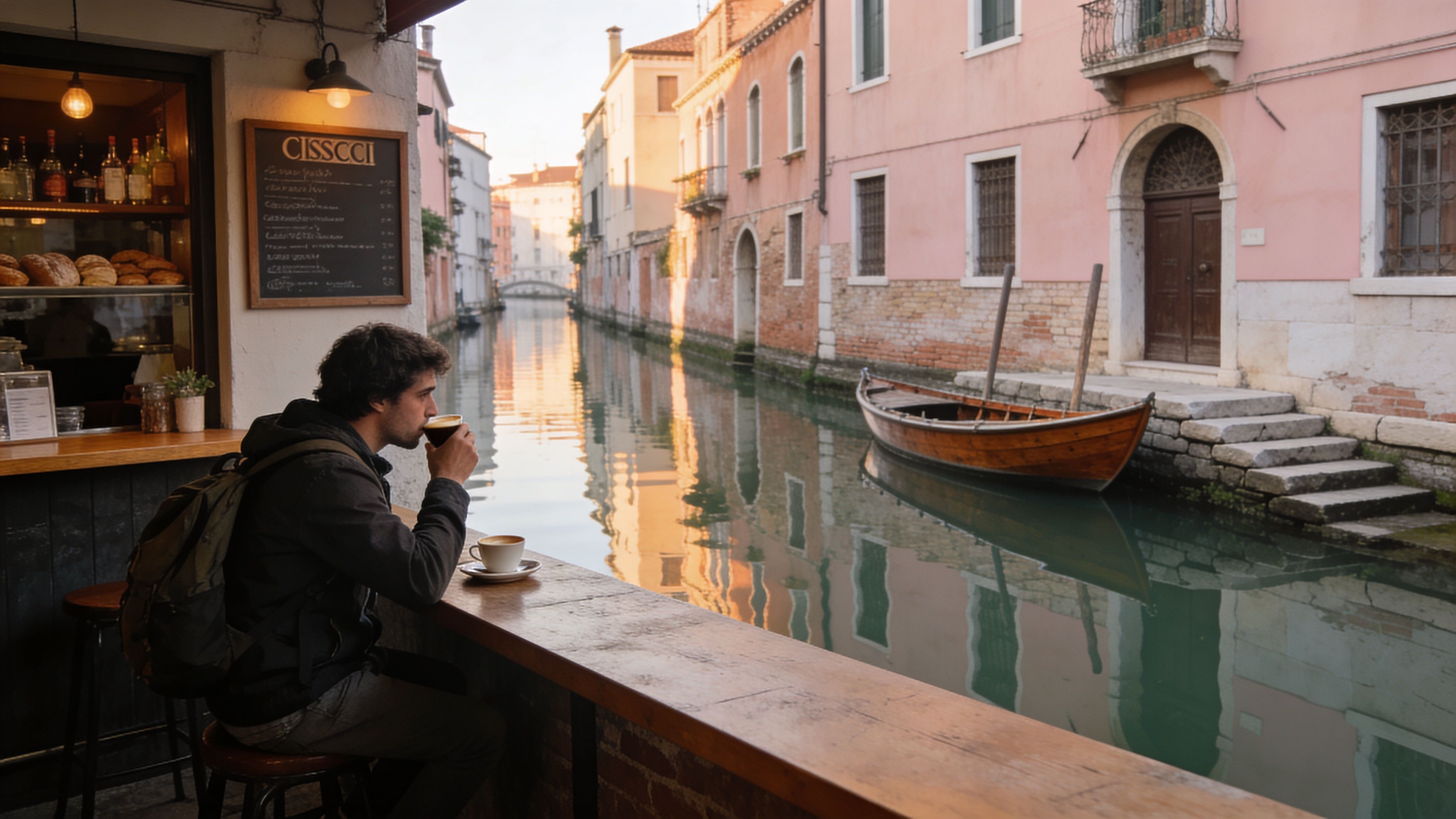
Day 1 on a backpacker budget
Start in Cannaregio and let the morning stay simple. Walk the fondamenta, cross into the quieter residential stretches, and save your first coffee for a spot where Venetians are stopping on their way to work. Then angle down toward San Polo or Dorsoduro instead of spending your best hours trapped in the Rialto bottleneck.
Campo Santa Margherita is a good backpacker anchor because it gives you energy, cheap enough food by Venice standards, and room to pause without feeling pushed along. That matters in a city where sitting down in the wrong square can wreck the day’s budget faster than any museum ticket.
For one paid viewpoint, Scala Contarini del Bovolo is still one of the better value calls. It is compact, atmospheric, and gives you a rooftop perspective without turning the afternoon into a major-ticket attraction crawl. Backpackers rarely need more than one view like this. After that, the better return is usually time on foot.
Keep the evening flexible. A spritz in a standing bacaro, cicchetti instead of a full restaurant meal, and a long walk back through quieter streets will usually feel more Venetian than chasing a prestige experience. If you are traveling solo, these habits also pair well with common-sense evening planning in this guide to how to travel alone as a woman.
Day 2 with one deliberate splurge
Backpacker Venice works best when Day 2 has one clear priority. For some travelers, that is Burano. The ride takes long enough to feel like an outing, but not so long that it wipes out the day. Go early, keep expectations realistic, and treat it as a color-and-atmosphere trip rather than a checklist stop.
If islands are not your thing, stay in the city and use your money differently. Put it toward one church, one museum, or one proper lunch. Venice gets expensive when every decision is impulsive. It gets manageable when you choose the one thing you care about and let the rest of the city be your free entertainment.
What usually blows the budget is not one dramatic mistake. It is the stack of small ones: table service in the busiest square, extra vaporetto rides because you got tired, snacks bought in obvious tourist lanes, then a last-minute gondola because it feels like you should. That pattern makes Venice seem hostile to budget travelers, when the problem is paying premium prices for low-value moments.
A practical backpacker plan looks like this:
- Day 1 morning: Arrive, drop bags in Cannaregio, explore on foot.
- Day 1 afternoon: Dorsoduro or San Polo, cheap lunch, one paid viewpoint if it matters to you.
- Day 1 evening: Bacaro crawl and a long walk back instead of a formal dinner.
- Day 2 morning: Burano, or stay local and claim a quieter neighborhood.
- Day 2 afternoon: One chosen splurge, then keep the rest of the day free.
Use a simple filter before spending anything.
- Pay for reach: A vaporetto pass or a few strategic rides if they save real time.
- Pay for one strong experience: A viewpoint, a museum, or one meal you will remember.
- Skip prestige transport: Gondolas are memorable, but poor value on a backpacker budget.
- Sleep smart: An overnight stay can improve both logistics and total cost.
For more principles like this, the budget travel hacks guide is useful before you book anything.
3. The Solo Female Traveler’s Venice
You arrive in Venice alone, your phone is at 18 percent, the lanes are starting to blur together, and dusk comes faster than expected between the buildings. The city still feels magical, but solo comfort now depends on simple choices. Stay near open waterfronts, keep your evening route obvious, and save the maze-like wandering for daylight.
That is the trade-off with Venice for solo women. It is one of the easiest cities in Europe to enjoy alone, yet it gets less comfortable the moment you are tired, underprepared, or trying to force one more sight into the day.
For this traveler persona, I would build the 48 hours around confidence first and freedom second. Venice gives that back quickly if you structure the first day well.
Day 1 with a strong base
Start in San Marco and the eastern side of Castello while everything is still clear, busy, and easy to read. This is not the moment to prove you can decode every alley. It is the moment to learn the city’s rhythm, spot your landmarks, and get used to how Venice feels under your feet.
Choose one major indoor sight on day one. Doge’s Palace works well for solo travelers because it gives shape to the afternoon. You move through a defined route, spend time around other visitors, and avoid the low-grade stress of standing in a square wondering what to do next. After that, walk the Riva degli Schiavoni before sunset. It stays visually open, usually has a steady flow of people, and makes a much better first-evening stroll than disappearing straight into narrow back lanes.
A practical first day looks like this:
- Morning: Arrive, check in, and get oriented around San Marco.
- Midday: Visit Doge’s Palace or one other major site you care about.
- Afternoon: Slow walk through Castello, with breaks in active campi.
- Evening: Stay near the waterfront, eat in a busy area, return before you are exhausted.
That last point matters more than many guides admit. Venice feels far less confusing when you leave yourself a margin.
Day 2 for independence, not overreach
On the second day, use the confidence you built. Head for Cannaregio or Dorsoduro in the morning, when the streets feel calmer and your attention is sharper. These neighborhoods reward solo travelers who like observing daily life rather than racing between headline sights.
This is also the better day for a small detour into places with a more local feel. If that is your style, this guide to less touristy places to add to your itinerary pairs well with a Venice trip, especially once you already know your way back to a main route.
A solo-safe day in Venice usually comes down to habits, not fear:
- Start early. Orientation is easier before the lanes fill up.
- Use the waterfront whenever possible. Open edges are easier to read than interior alley networks.
- Keep your phone charged and your lodging pinned. Venice gets annoying fast when both memory and battery fail.
- Pick cafés and pauses in active areas. A busy campo is more comfortable than an empty lane if you want to rest alone.
- Set an evening cutoff. Solo travel gets better when you stop before fatigue makes every wrong turn feel personal.
Quiet truth: In Venice, safety often feels like visibility. If you can quickly reach a busy fondamenta or waterfront, the city usually feels manageable again.
There is also the emotional side of traveling here alone. Venice is marketed as a city for couples, but that framing misses the point. It is a city for people who like looking closely, walking slowly, and changing plans without negotiation. Solo travelers often get more from Venice because they are free to stop at a bridge for ten minutes, sit by the water without explaining themselves, or leave a crowded area the second it stops feeling good.
If you want broader solo planning ideas before the trip, the guide on how to travel alone as a woman is a solid companion.
4. The Photographer and Urban Explorer’s Venice
You arrive before breakfast, camera ready, and the city gives you ten quiet minutes before delivery carts, rolling shutters, and the first tour groups change the mood. That short window matters. Venice rewards photographers who treat it as a place with working rhythms, not a collection of famous angles.

This version of 2 days in Venice suits travelers who like to walk hard, notice small changes in light, and trade checklist sightseeing for stronger images. You will still hit major landmarks, but the plan is built around access, atmosphere, and repeat passes at the same spots in different conditions. If that sounds close to your style, it also overlaps with the mindset behind slow travel in practice, even if your pace is more urban explorer than linger-all-day romantic.
Day 1 for scouting and structure
Start in San Marco at first light. The point is not to chase a mythical empty Venice. The point is to work before the square turns into a stage set. Early on, the paving still reflects soft light, arcades hold usable shadow, and the facades read clearly.
Doge’s Palace is especially good for a photographer because it gives you variety in a tight area. Wide geometry from the exterior. Repeating arches and columns. Compressed detail shots in the stonework. Interior transitions where bright courtyards meet darker corridors. I usually treat the first hour here as a scouting session, not a final shoot, because it helps to learn where the light falls before committing too much time.
By late morning, harder light becomes useful. Venice is often photographed as misty and dreamy, but midday can produce sharper work if you aim for contrast instead of softness. Look for shadows under porticoes, laundry against pale walls, and boats cutting dark shapes across bright water.
Use the middle of the day well:
- San Marco early: clean sightlines, longer shadows, fewer bodies in wide frames
- Doge’s Palace: patterns, texture, and architectural repetition
- Rialto area later in the day: crowd movement, compressed scenes, visual rhythm
- A bridge you can return to at dusk: reflections improve when you already know your angle
Then stop shooting for a while. Sit down, review what is working, and mark two or three locations worth repeating. Good Venice photography often comes from returning, not covering more ground.
Day 2 for atmosphere and human scale
Spend the second day in Castello and Cannaregio, where Venice feels less polished and more inhabited. These neighborhoods give you worn shutters, repair work on boats, backlit laundry, narrow canals with stronger leading lines, and small moments of daily life that the San Marco core often flattens into crowd scenes.
Trade-offs become real. You will get fewer obvious trophy shots. You will also get a more personal edit.
Walk early through residential lanes, then stay near fondamenta where you can work with open space and layered backgrounds. Mid-morning is good for market activity and local movement. Late afternoon is better for quieter canal scenes, especially if the water settles and starts giving you cleaner reflections. If you like street photography, keep your camera ready but your behavior measured. In lived-in parts of Venice, respect shows up in small decisions.
A few rules help:
- Ask before making a close portrait.
- Do not block bridges, doorways, or narrow quays for a tripod shot.
- Skip any composition that turns someone’s front step into your set.
- Carry light. Venice punishes heavy gear by midday.
The strongest frames here usually feel simple. One boat. One passerby. One patch of good light on an old wall.
If your instinct is to collect only the famous corners, push farther into the streets that do not advertise themselves. That is often where Venice stops performing and starts feeling real. For more inspiration on places that reward that mindset, browse these off-the-beaten-path destinations.
5. The Slow Travel Immersion
You arrive in Venice with 48 hours, a saved list of famous stops, and the familiar urge to cram them all in. By lunchtime, you are queueing in San Marco, checking the time between bites, and seeing the city through logistics. The slow version of this trip makes a different bargain. You cover less ground and come home with a sharper memory of Venice.

This persona suits travelers who care more about texture than checklist wins. It is the least efficient of the five 2-day Venice plans in this guide, and that is the point. You trade landmark volume for better meals, fewer rushed decisions, and enough time to notice how each sestiere changes by hour.
Day 1 for depth over coverage
Choose one anchor for the morning and let it hold the day together. A long museum visit works. So does a mask workshop, a cooking class, or a slow walk through Dorsoduro with time for churches, small galleries, and an unplanned glass of wine. If the Doge’s Palace is your priority, book the earliest slot you can reasonably make and stay disciplined about what follows. One major sight is enough for this itinerary.
Then build in repetition on purpose. Return to the same cafe later in the day. Sit by a canal without turning it into a photo stop. Buy one well-made object from an artisan instead of collecting disposable souvenirs. Venice rewards that pace because the city changes with light, tide, and crowd flow far more than first-time visitors expect.
Lunch matters here. Pick a place slightly away from the main tourist arteries, eat sitting down, and leave room in the schedule afterward. A slow afternoon is not empty time. It is where the trip starts to feel personal.
Day 2 for neighborhoods, routine, and a better base
Use the second day for one neighborhood and, at most, one island. Cannaregio is a strong fit because daily life is easier to read there. You see deliveries being made, children heading home from school, residents stopping for a quick spritz, and shopkeepers conversing with regulars. That ordinary rhythm is part of Venice, and many short itineraries miss it entirely.
Hotel choice matters more on this plan than on the others. A quieter base outside the most congested lanes gives you a calmer start and finish, and in a 2-day trip that can decide whether Venice feels restorative or draining. I would choose good placement over flashy decor every time. Easy walking access to your evening neighborhood is worth more than a view you only notice for five minutes.
A practical budget for this persona usually sits in the mid-range. Spend more on lodging location and one meaningful activity. Spend less on constant transport, rushed attraction-hopping, and overpriced stops near the biggest landmarks.
Counterintuitive move: In Venice, doing less often gives you a better city.
Slow travel also demands honesty. If your day is packed with timed entries, restaurant reservations across town, and repeated vaporetto hops, this is no longer the slow-travel version. It is a standard itinerary with softer branding.
If that style appeals to you, this guide to what slow travel actually looks like in practice is a useful companion before you choose your 48-hour plan.
2-Day Venice Itinerary Comparison
Choosing between these five versions of 2 days in Venice is really a question of trade-offs. Some travelers should spend their limited time on headline sights. Others will get more from quieter neighborhoods, safer evening routines, better light, or fewer scheduled stops. The best plan is the one that fits how you travel, not the one that looks most impressive on paper.
| Itinerary | Planning Difficulty 🔄 | Typical Spend ⚡ | What You Get ⭐📊 | Best For 💡 | Key Advantages |
|---|---|---|---|---|---|
| The Classic Venice Essential: St. Mark's & Grand Canal Explorer | Low 🔄, straightforward booking and fixed routes | Moderate ⚡, museum entries, vaporetto use, one classic splurge if desired | ⭐⭐⭐⭐, famous sights, strong first-time coverage, reliable postcard Venice | First-time visitors; short-stay travelers; landmark-focused photographers | Clear structure; efficient sightseeing; easy access to major transport and dining |
| The Budget Backpacker’s Venice: Hidden Neighborhoods & Local Secrets | Medium 🔄, requires smart route choices and comfort with simpler logistics | Low ⚡, hostel beds, cicchetti, walking-heavy days, few paid entries | ⭐⭐⭐, stronger local feel, lower costs, less of the major-sights checklist | Backpackers; budget travelers; independent explorers | Lower daily spend; more neighborhood character; good value from free and low-cost stops |
| The Solo Female Traveler’s Venice: Independence & Confidence | Medium 🔄, requires thoughtful timing, accommodation choice, and evening planning | Moderate ⚡, slightly higher spend for well-placed lodging and vetted activities | ⭐⭐⭐⭐, more confidence, smoother solo movement, safer independent exploration | Solo female travelers; safety-conscious solo visitors | Specific safety guidance; stronger hotel-location strategy; social options without forcing group travel |
| The Photographer and Urban Explorer’s Venice: Golden Hour & Hidden Perspectives | High 🔄, demands scouting, early starts, and strict timing around light | Moderate to High ⚡, gear-related costs, transport flexibility, long shooting windows | ⭐⭐⭐⭐⭐, stronger images, quieter scenes, more original city coverage | Photographers; visual storytellers; urban explorers | Better light planning; less obvious viewpoints; practical route design around shooting conditions |
| The Slow Travel Immersion: Venice’s Art, Craft & Cultural Close Look | Medium to High 🔄, benefits from advance reservations and disciplined pacing | Moderate to High ⚡, workshop costs, longer meals, fewer but richer activities | ⭐⭐⭐⭐, deeper connection, better context, meaningful, lasting experiences | Slow travelers; culture-focused visitors; repeat visitors | More time in each place; artisan encounters; a calmer rhythm with stronger sense of local life |
A simple way to choose: the classicist gets range, the backpacker protects cash, the solo traveler builds confidence through better structure, the photographer follows light, and the slow traveler trades volume for depth.
If you are undecided, start with your main constraint. Money points toward the backpacker plan. First-trip pressure usually points toward the classic route. Safety and evening comfort matter most for many solo travelers. Creative priorities make the photographer plan the clear fit. If you already know that rushing ruins a city for you, choose the slow version and accept that you will see less on paper but often remember more.
Making Your 48 Hours in Venice Count
Venice resists control. That’s part of its charm and part of what frustrates travelers who arrive with a spreadsheet mentality. You can map the major sights, reserve the big-ticket entries, and choose your neighborhood carefully, but the city still works best when you leave room for slight detours and unplanned pauses.
That’s why the right version of 2 days in venice depends less on ambition and more on alignment. The classicist should see the classics without apology, but with better timing and fewer filler stops. The backpacker should protect cash flow by spending on transport and one or two meaningful entries instead of symbolic splurges. The solo female traveler should build confidence through smart routing and visible evening paths, not by pretending caution ruins independence. The photographer should follow light rather than popularity. The slow traveler should let depth replace volume.
A short Venice trip always involves trade-offs. If you chase every headline sight, you’ll miss the quieter Venice that people remember most vividly. If you avoid the famous areas entirely, you may leave feeling like you dodged the city rather than met it. The sweet spot is different for everyone, which is exactly why a persona-based plan works better than a single “perfect” itinerary.
There are also practical realities worth respecting. Venice can become expensive through accumulation, not just through obvious luxury. Small ticket fees, poorly timed meals, unnecessary boat rides, and prestige experiences can distort your budget quickly. Crowds can also drain energy faster than distance does. A route that looks manageable on paper can feel heavy if every major stop lands in the middle of the busiest hours.
What helps most is choosing your priorities before you arrive. Decide whether your trip is about history, cost control, confidence, images, or immersion. Then let that choice eliminate the rest. You don’t need to earn Venice by exhausting yourself.
The city’s best moments are usually small anyway. Light bouncing off pale stone. The hush after turning off a packed street. A boat wake rolling under a bridge. A simple plate of cicchetti eaten standing up. Those are the moments that make a rushed weekend feel surprisingly full.
Use these plans as working templates, not rigid scripts. Keep the shape, adjust the pace, and let Venice interrupt you now and then. That’s often when the city feels most alive.
Travel Talk Today helps you plan trips that feel richer, smarter, and more personal, whether you’re chasing hidden corners in Venice or building a bigger Europe itinerary on a backpacker budget. Explore more thoughtful destination guides, practical safety advice, and grounded money-saving strategies at Travel Talk Today.