The first time I did an Al Capone Chicago tour with an out-of-town friend, we stood on a perfectly ordinary downtown block while the guide pointed at a building facade and suddenly the city changed shape. Chicago stopped being just pretty architecture and good food. It felt charged, like every corner had a backstory.
Step Into the Shadow of Scarface
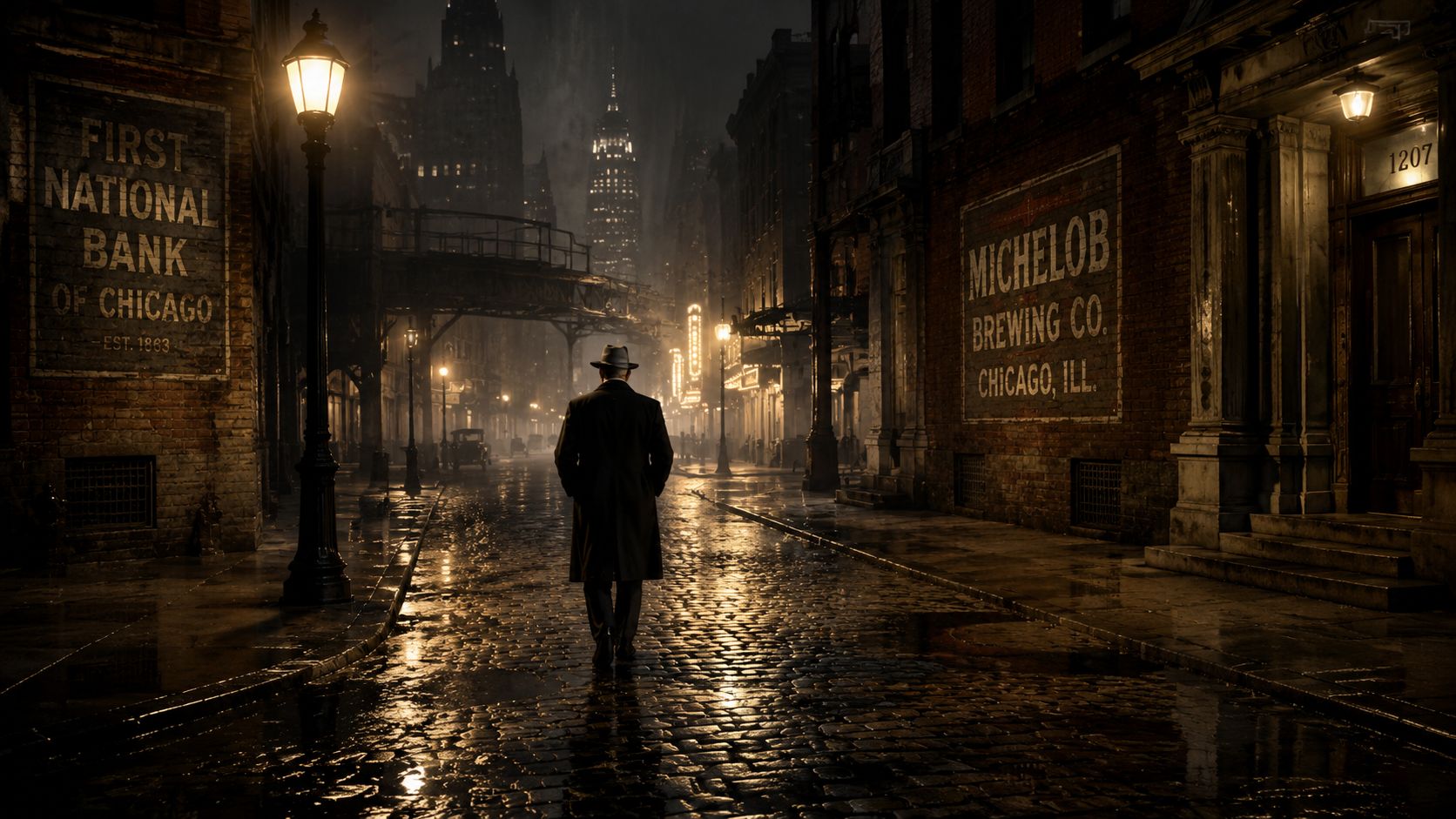
Chicago does noir better than most cities without even trying. Wet pavement, old brick, shadowy alleys, brass doors, and a skyline that can look polished one minute and ruthless the next. If you're here for mob history, that's the draw. You want the authentic city, not a cartoon gangster act with a fedora bought five minutes before the tour started.
Most visitors make the same mistake. They search "Al Capone Chicago tour," open a few listings, and book the one with the flashiest copy. That's how you end up paying for theatrics when what you really wanted was sharp storytelling, a route that makes sense, and enough local context to understand why these streets still matter.
What makes a tour worth it
A good gangster tour gives you three things:
- Geography that clicks: You should leave understanding how downtown, the Near North Side, and key historic zones connect.
- Stories tied to real places: If the guide can't anchor the legend to an actual block, building, or neighborhood, it's fluff.
- A format that matches your trip: If you're tired, on a budget, traveling solo, or squeezing this into a packed weekend, the right format matters more than the fanciest brochure.
A bad one leans too hard on fake mobster energy. Overacted accents. Corny jokes. Too much time on a bus speaker system and not enough time helping you see Chicago with new eyes.
Practical rule: Book for fit, not hype. The right Al Capone Chicago tour depends more on your schedule, walking tolerance, and budget than on the operator's branding.
Who this guide is for
This guide is for the traveler who wants value. Maybe you're solo and don't want to overpay for a private car. Maybe you're backpacking and need the most history for the least money. Maybe you want the cool version of Chicago crime history without getting trapped in something gimmicky.
My advice is simple. If a tour can't justify its price with either stronger access, better narration, or smarter logistics, skip it. Chicago has too much actual history to waste time on a costume-party version of it.
The Man Behind the Chicago Outfit
Al Capone isn't just a famous criminal. He's one of the main reasons Chicago's Prohibition story still has such a grip on travelers. If you don't know the broad outline of his Chicago years, the landmarks can blur together. Once you do, the city becomes much easier to read.
Why the Lexington Hotel matters
The most important physical anchor for many tours is the Lexington Hotel. Capone shifted his Chicago headquarters there in July 1928 and operated there until his 1931 arrest, which is why the South Loop remains one of the most meaningful real-world settings in this story, according to the Mob Museum's history of Al Capone.
That matters more than a lot of tourists realize. A solid guide doesn't just say Capone was "around Chicago." They use places like the Lexington to show how power sat inside the city, block by block. Once that clicks, you stop seeing this as abstract crime lore and start seeing it as urban history with a street address.
Why visitors still care
Capone became the most visible mobster in America during the late Prohibition period. That's the version of him most tours sell, and for good reason. It's the peak of the legend. Money, fear, political influence, headlines, and a public image so oversized that it still shapes Chicago tourism now.
What keeps the story alive isn't only crime. It's the contrast. You walk through polished downtown streets, hotel districts, and expensive neighborhoods, yet the history underneath them is messy and violent. That tension gives these tours their edge.
What to look for in the storytelling
The best guides don't drown you in names and dates. They build a clean narrative:
- Rise in a fast-moving city
- Control during Prohibition
- A headquarters tied to a real location
- The fall
If the guide can do that, every stop lands harder.
The best mob history tours don't glorify Capone. They show how he used Chicago, and how Chicago eventually closed in on him.
One more thing. Don't expect every original site to look dramatic. Some locations are gone, altered, or surrounded by modern development. That's normal. The payoff isn't always the building itself. It's standing in the right place with enough context to understand what happened there.
Choosing Your Gangster Tour Style
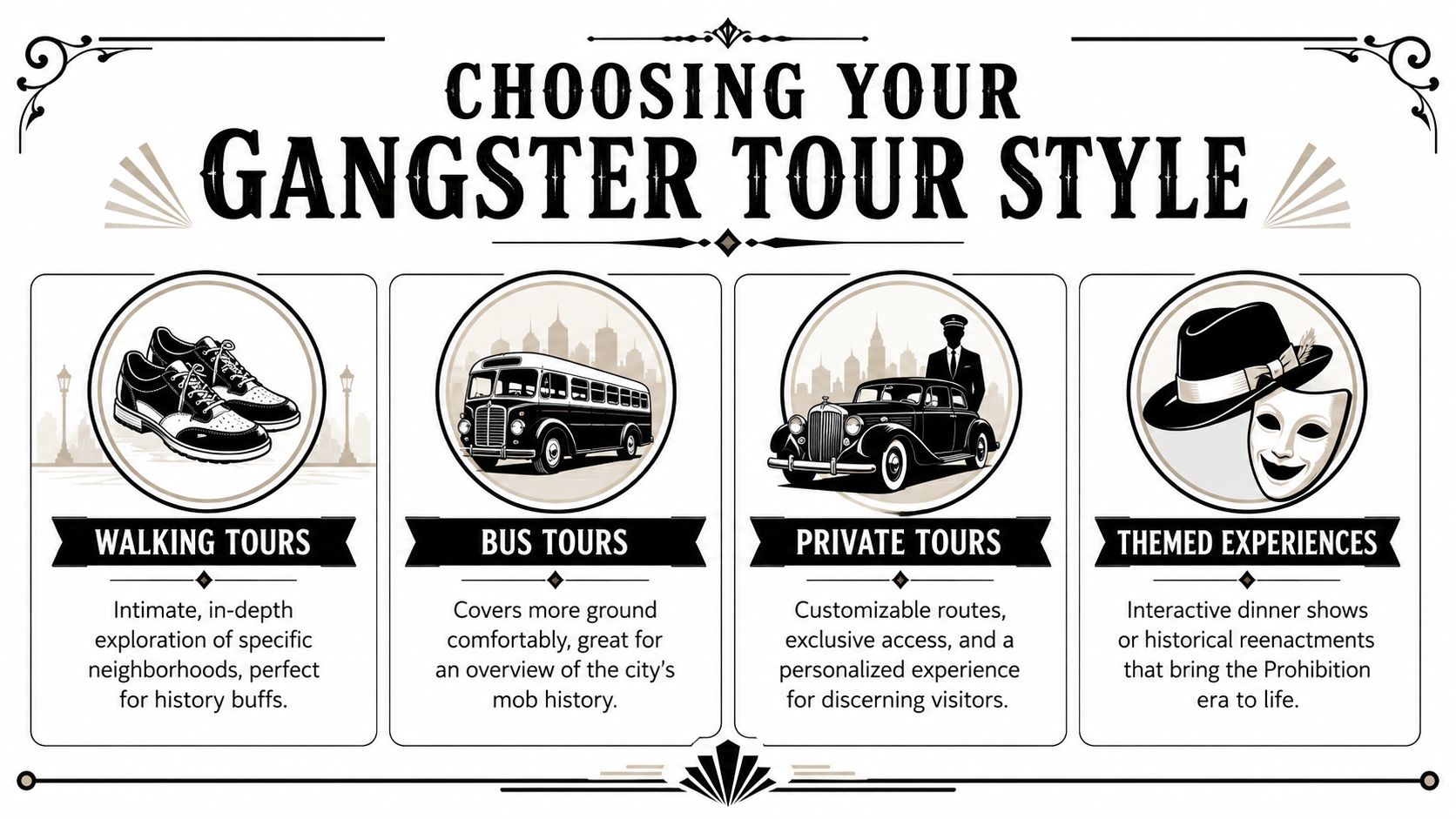
If you're trying to pick the right Al Capone Chicago tour, don't start with company names. Start with format. That's what determines whether you feel immersed or annoyed an hour in.
The useful benchmark is simple. Core guided formats tend to fall between 1.5 to 3 hours, with bus tours often around 2 to 3 hours and some walking options covering about 1.8 miles, as summarized in HelloTickets' overview of Chicago Al Capone tours. That difference tells you a lot. Bus tours trade intimacy for coverage. Walking tours trade range for detail.
Walking tours
Walking tours are the strongest choice if you care about texture. You notice the building materials, the side streets, the old commercial corridors, the little details a bus rolls past. They're also better for photography.
Good fit if you want:
- Close-up history: You can stand still, ask questions, and hear the answer.
- A slower pace: If you're interested in slow travel, this format fits that mindset better than a rapid-fire drive-by.
- Better solo energy: It's easier to blend in and less awkward if you're traveling alone.
The downside is obvious. Weather matters. So do shoes. And if your mobility is limited, an on-foot route can turn from interesting to exhausting quickly.
Bus tours
Bus tours are the efficient option. If you've only got one free afternoon and want a broad sweep of mob history across multiple parts of the city, this is the practical pick.
What they do well:
| Format | Best for | Main tradeoff |
|---|---|---|
| Bus tour | Broad city overview | Less street-level detail |
| Walking tour | Immersion and photos | More physical effort |
| Private tour | Custom pacing | Usually worst value for budget travelers |
| Self-guided audio | Maximum flexibility | No live guide to answer questions |
Bus tours are also the least stressful for visitors who don't know Chicago well. You don't need to make your way between stops, and you can cover more ground without burning energy you'll want later for dinner, architecture, or nightlife.
The weak point is atmosphere. Some bus tours feel too scripted. If the narration is flat, the whole thing can feel like history through a windshield.
Private tours
Private tours make sense for a narrow group of travelers. If you're with family, splitting costs with friends, or you want a custom route, they can work. If you're a solo traveler on a budget, I'd pass unless this is your big splurge.
They're strongest when you want:
- Custom timing
- Less group friction
- Space for deeper questions
- A route shaped around your interests
They're weakest on raw value. You pay for privacy and flexibility, not necessarily for more history.
Self-guided audio and themed experiences
Self-guided audio tours are the sleeper hit for independent travelers. You move at your own pace, stop for coffee, detour when something catches your eye, and start whenever it suits your day. That's hard to beat if your trip is loosely planned.
Themed experiences are the wildcard. Some are fun. Some are tacky. If the experience leans more dinner theater than city history, go in knowing that. It's entertainment first.
My blunt take is this:
- Best value for solo travelers: walking or self-guided audio
- Best value for first-timers with limited time: bus
- Best value for groups splitting costs: private
- Most likely to disappoint serious history fans: overly theatrical themed experiences
The Best Al Capone Tours in Chicago Reviewed
The market is all over the place. Current offerings range from 3-hour chauffeured private tours to 1-hour walking tours and self-guided audio options, which is why comparing by schedule, mobility, and budget matters more than comparing by marketing language, as reflected in this Tripadvisor listing for a private Al Capone gangster tour in Chicago.
That spread tells you something important. There isn't one "best" Al Capone Chicago tour. There are only better matches for different travelers.
Best for first-time visitors who want the easiest overview
A group bus tour is the safe recommendation.
If you're new to Chicago, this format solves a lot of problems at once. You don't need to know the neighborhoods, you don't need to map a route, and you won't use up all your energy on foot. You'll likely see more of the city in one sitting, which helps if gangster history is just one piece of a packed itinerary.
Pros:
- Easy logistics
- Good for bad weather
- Strong choice for visitors with limited mobility
- Good value when you want a broad intro
Cons:
- Can feel crowded
- Less room for spontaneous questions
- Some operators lean too hard into performance
This is the one I'd tell my aunt to book. It's not always the coolest version, but it's the least likely to go wrong.
Best for solo travelers and urban explorers
A walking tour is usually the sweet spot.
If you travel alone, walking tours feel more natural than private options and more connected than bus rides. You can hear your guide clearly, stay engaged, and often chat with other travelers without that forced group dynamic that happens on some larger tours.
What makes it worth your time:
- You get a stronger sense of place
- The pace usually supports better storytelling
- It's often easier to judge value by looking at route intensity
The drawback is that some short walking tours feel too short. If the route is thin and the guide fills gaps with recycled gangster mythology, you won't feel like you got much. Read the route description carefully and check whether the emphasis is downtown, the North Side, or a tighter historic pocket.
For logistics, I like keeping a few trip tools handy on the same day. A mapping app, weather app, and notes app are enough. If you want a wider setup, this roundup of travel apps that help with navigation, planning, and day-of coordination is a useful companion.
Best for travelers who want flexibility above all else
A self-guided audio tour is the budget-conscious move.
This won't give you the chemistry of a skilled live guide, but it wins on freedom. You can pause, restart, duck into a cafe, or stretch the experience into a half day with lunch and side stops. For backpackers or anyone protecting their budget, that's often the smarter play.
Why it works:
- No group timetable
- Good for awkward arrival days
- Often the easiest option if your schedule is changing
- Pairs well with independent sightseeing
Why it doesn't:
- No one answers your questions
- You need self-motivation
- The quality depends heavily on the script and app experience
If you're the kind of traveler who already prefers wandering neighborhoods with headphones and a map, this is probably enough.
Best for couples, families, or small groups
A private chauffeured tour is the premium convenience pick.
I don't recommend this first for budget travelers. I recommend it if you're splitting the cost, want to avoid group pacing, or need a very controlled day. Maybe you're traveling with older relatives. Maybe you're celebrating something. Maybe you want a guide focused only on your questions.
Here's the honest breakdown:
| Tour type | Who should book it | Who should skip it |
|---|---|---|
| Bus | First-timers, visitors short on time | Travelers wanting close-up detail |
| Walking | Solo travelers, photographers, history fans | Anyone struggling with distance or weather |
| Self-guided audio | Budget travelers, independent explorers | People who want live Q and A |
| Private | Couples, families, small groups sharing cost | Solo travelers watching every dollar |
Private tours become a poor value fast if you're paying alone. You can admire the convenience without pretending it's the smartest deal.
Skip the tour that sounds most glamorous. Book the one you'll actually enjoy for the full duration.
One practical note. If you're comparing options and want a clean planning workflow, Travel Talk Today publishes destination-focused planning content that can help you combine history activities with the rest of a city itinerary. That's useful if this tour is only one part of your Chicago trip, not the whole event.
Booking Your Tour and Budgeting Tips
Travelers often overspend on city tours because they book emotionally. They see a dramatic description, imagine a cinematic afternoon, and hit reserve. A better approach is duller and cheaper. Compare the format first, then the timing, then the cancellation terms.
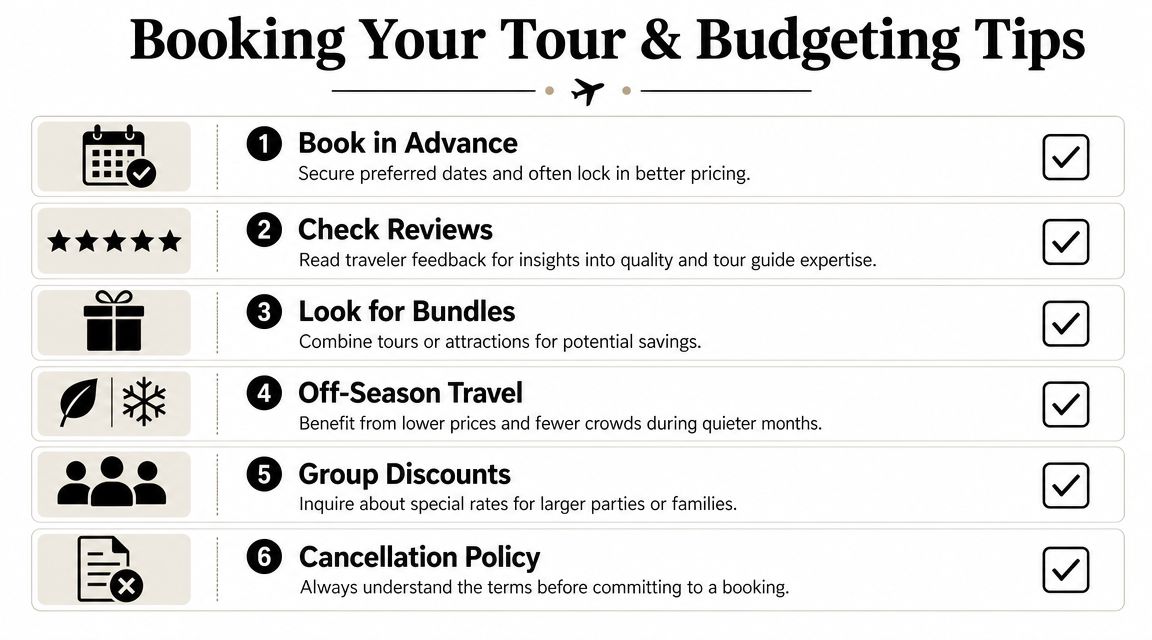
How to spend less without having a worse experience
Use this filter before you book:
- Check the route, not just the title. Plenty of tours sound similar. The route tells you whether you're getting a real city-history experience or a generic crime package.
- Match the format to your energy level. If you've already got museum days, river walks, and neighborhood exploring planned, a walking tour might be too much physically.
- Protect flexibility. Chicago weather can shift fast, and your plans may too. A sensible cancellation policy matters.
- Don't pay private-tour prices for basic storytelling. If a group tour covers the same core ground, keep your money.
A simple value test
You don't need exact math to judge value well. Just ask:
- How long is it?
- How much walking is involved?
- How much city coverage do I get?
- Will I learn anything I couldn't pick up from a quick search?
If the answer to that last question is no, skip it.
Budget move: For many solo travelers, the smartest combo is one paid guided experience plus one self-built history walk on a different day.
Day-of advice that saves hassle
Chicago can turn a casual walk into a cold, windy march fast. Dress for movement, not for the photo you hope to take. Comfortable shoes beat stylish ones every single time on these tours.
A few practical calls:
- For walking tours: bring water, wear layers, and assume you'll stand more than expected.
- For bus tours: sit where you can hear clearly. A bad seat can flatten the whole experience.
- For solo travelers: choose a daytime slot if you're unfamiliar with the area and want easier logistics.
- For budget planning: pair your tour day with lower-cost meals and free neighborhood wandering. This guide to travel budgeting tips is a good framework if you're trying to keep the whole Chicago trip under control.
The cheapest ticket isn't always the bargain. The bargain is the tour you finish feeling glad you paid for.
Create Your Own Chicago Mob History Trail
You don't need an organized tour every time you want mob history. Chicago is one of those cities where independent wandering pays off, especially if you like architecture, photography, and neighborhoods that reveal themselves slowly.
Capone's criminal empire was famously huge, allegedly bringing in $105 million in 1927, and his influence stretched across areas including the Loop, River North, and Gold Coast, all of which now show up on modern crime-tour routes, according to EBSCO's historical overview of Al Capone. That's exactly why a self-made trail works. The history isn't trapped in one museum-like pocket.
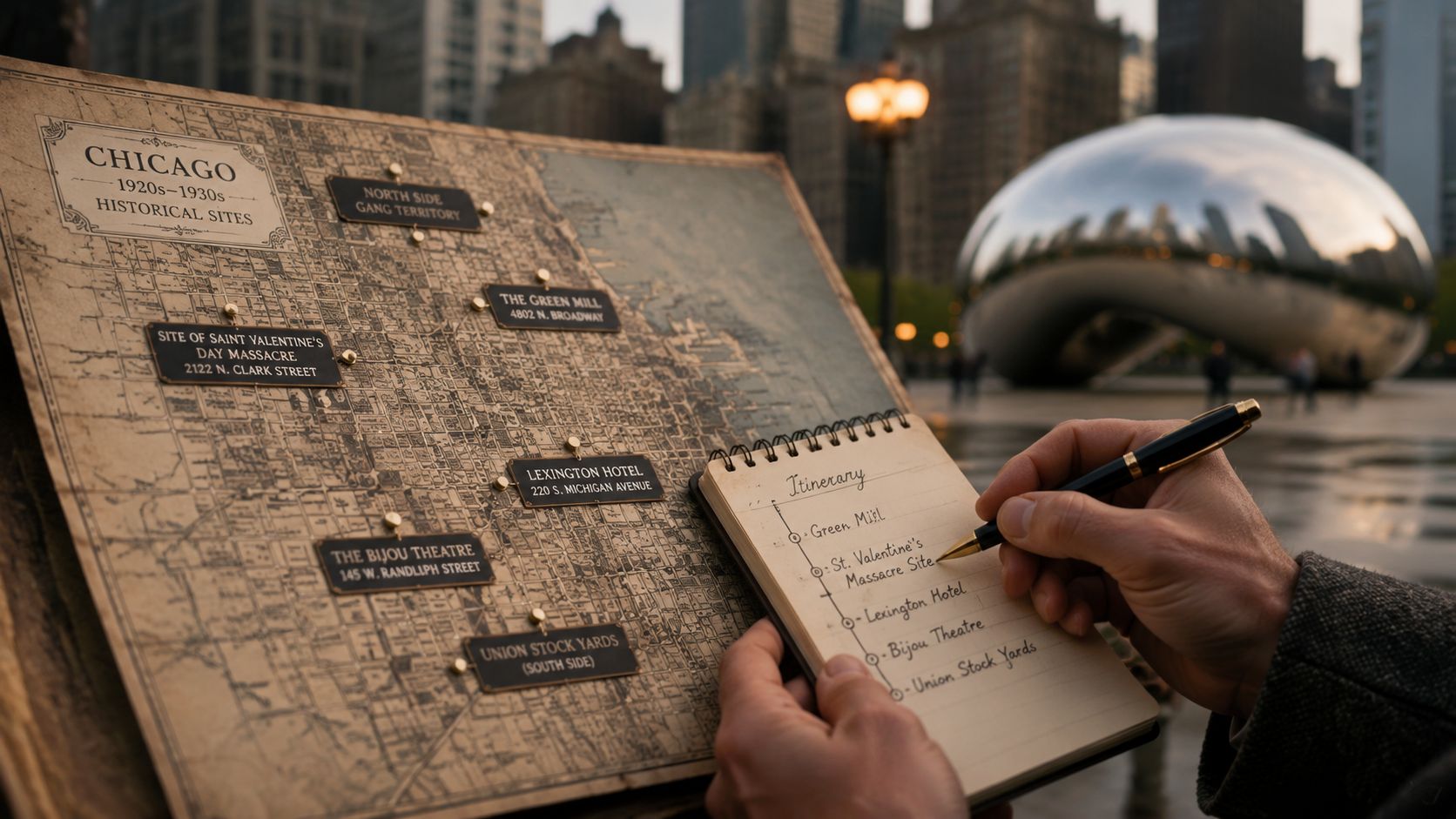
A smart DIY route
If I were building a cheap, satisfying mob-history afternoon for a friend, I'd focus on central areas where historic atmosphere and modern city energy still overlap.
Start with:
- The Loop: Good for grounding yourself in downtown Chicago and connecting crime history to the business core.
- River North: Strong mix of architecture, nightlife energy, and the kind of streets where old stories feel plausible.
- Gold Coast: Worth adding if you want to contrast glamour, wealth, and the city's darker legends.
What you're doing here isn't "checking off sites." You're reading the city. That's why this works so well for urban explorers.
How to make it feel richer
Don't rush. Pick a few blocks and pay attention.
Try this rhythm:
| Stop type | What to do |
|---|---|
| Historic exterior | Stay long enough to understand the block, not just the building |
| Cafe or bar break | Pause and review your notes, map, or audio |
| Street photography stop | Catch details like signage, facades, alley lines, and old masonry |
| Neighborhood walk | Let the route breathe instead of sprinting to the next point |
This approach also works well if you're trying to keep costs down. Pair one paid tour with a day built around free things to do in a city, and Chicago gets a lot more affordable.
What not to do
Don't force a marathon route across the whole city. That's how DIY touring turns into transit fatigue. Stay focused, keep the geography tight, and give yourself permission to stop when the mood is right.
Also, don't expect every mob-related location to look cinematic. Some of the payoff is mental. Once you know the story, an ordinary street corner can hit harder than any staged attraction.
Walk in the Footsteps of a Legend
A great Al Capone Chicago tour isn't really about celebrity crime. It's about seeing Chicago with sharper eyes. You notice how neighborhoods connect, how power once moved through hotels and downtown blocks, and how a polished modern city still carries the imprint of a rougher era.
My opinion is simple. Don't book the loudest tour. Book the one that fits your travel style and gives you the strongest sense of place. For some people that's a bus seat and a broad overview. For others it's a walking tour, a pair of solid shoes, and a guide who can make one block feel electric.
If you're traveling solo, be practical and trust your instincts. Daytime tours are easier, central routes are simpler, and planning your transit home before you head out removes a lot of stress. If you'd like a wider safety framework before your trip, this guide to safe solo travel for women is worth reading.
Chicago rewards curiosity. Pick your route, spend carefully, and let the city do the rest.
If you want more practical trip planning ideas beyond this Al Capone Chicago tour guide, visit Travel Talk Today . It's a useful resource for building affordable city itineraries, planning smarter solo travel, and finding meaningful experiences that go beyond the usual tourist checklist.