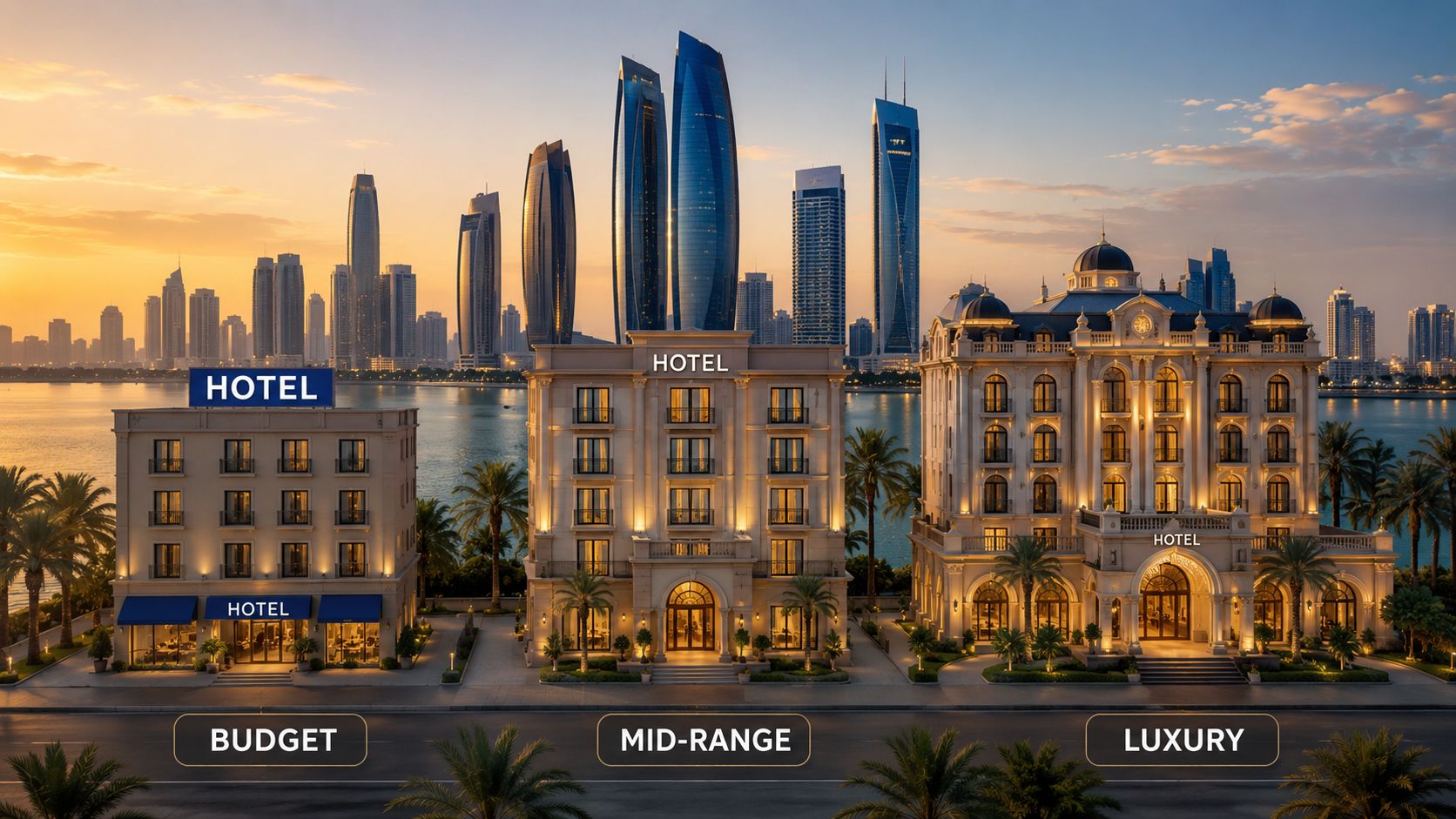
Most advice about an Abu Dhabi hotel starts in the wrong place. It treats the city like a luxury-only stop, then tells budget travelers to lower their expectations. That's lazy planning.
The twist is structural. Abu Dhabi has no hostels according to official tourism guidance, so the budget game is not about bunk beds or social dorms. It's about choosing the right hotel, in the right district, with the right transfer logic, and refusing to overpay for amenities you'll never use. Abu Dhabi's hotel market is also far bigger and more international than many travelers assume, with 5.8 million hotel guests in 2024, 79% occupancy, and 171 hotel establishments offering more than 34,000 rooms. That scale matters because it creates more real value tiers than many expect (Abu Dhabi hotel sector booms with 5.8 million guests in 2024).
Why Abu Dhabi Defies Budget Travel Expectations
Abu Dhabi puts budget travelers off for the wrong reason. People hear “capital city in the Gulf” and assume every stay has to be a splurge. That assumption leads to bad hotel choices, especially for travelers used to cities built around hostels and backpacker clusters.
The budget problem is different here
The city's official tourism guidance says there are over 230 hotels and resorts, with options starting from about $30 a night, and it also says there aren't any hostels in Abu Dhabi (Visit Abu Dhabi FAQs). That changes the whole decision. You are not chasing the cheapest dorm bed. You are choosing the cheapest acceptable hotel in a city where transport, beach access, and neighborhood fit matter more than shared kitchens or social lounges.
A smart Abu Dhabi hotel search starts with value, not sticker price. A room that looks cheap on the booking page can become costly once you add taxis, a poor location, and wasted time. In Abu Dhabi, cheap only matters if it still lets you move around the city without friction.
Practical rule: If a lower-rate hotel forces repeated taxi rides, it is not really budget-friendly. It is just hidden spending.
The city rewards selective spending
Abu Dhabi's hotel stock is broad, so you can spend only where it helps. For some trips, that means paying a bit more for a location that cuts transport costs. For others, it means booking a simple hotel with clean rooms and reliable service, then putting your money into experiences, food, or a better view.
The market also gives a clear signal about where value sits. In 2024, room revenues made up 62% of total revenues, rose 22%, and the sector posted a 12% rise in ADR plus a 9% increase in occupancy rates (Abu Dhabi hotel sector booms with 5.8 million guests in 2024). That points to a mature, revenue-driven market, not one where every decent room is either luxury-priced or out of reach.
The question is not whether Abu Dhabi is expensive. It is which district, hotel type, and transfer pattern fit your trip without wasting money. A good comparison guide, like where to stay in Paris, helps only if you apply the same logic here, match location to trip style first, then judge price second.
Neighborhood Breakdown for Different Travel Styles
The biggest mistake in Abu Dhabi is booking by price alone and ignoring geography. The city does not reward random placement. Choose the district that fits your trip, or you will waste time and money moving between hotels, beaches, malls, and attractions.
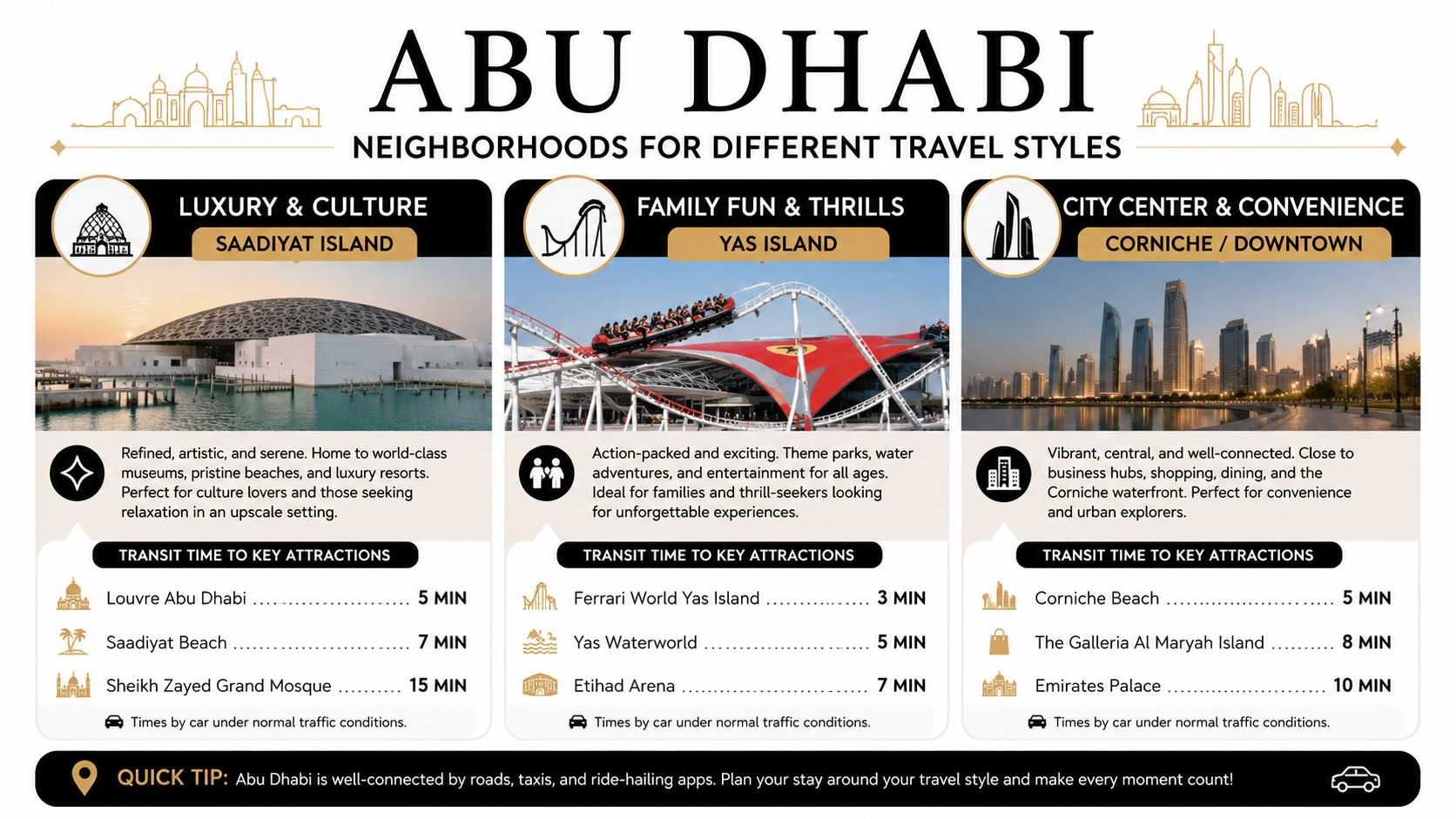
Saadiyat, Yas, and the Corniche each solve a different problem
Saadiyat Island is the right pick if you want culture and a calmer, resort-style stay. It works for travelers who care about beach clubs, museum access, and a more polished coastal setting. It also suits photographers who want clean lines, elegant light, and a setting that feels intentionally composed.
Yas Island fits families, theme-park trips, and anyone who wants entertainment grouped together instead of spread across the city. It also sits close to the airport, so it makes sense for short stopovers or for travelers who do not want to cross Abu Dhabi after landing.
The Corniche and downtown are the practical choice. Stay here if you want easy access to city life, straightforward transport, and a hotel close to restaurants, promenades, and the older urban core. For a short stay, this is often the least frustrating option.
A district-first approach works in other cities too. A good Paris stay guide uses the same basic logic, but Abu Dhabi is less walkable and more car-based, so location matters even more here.
Match the district to your travel style
Solo female travelers usually do best in areas with simple transport access and active hotel zones, not isolated fringe properties. Families should favor Yas or resort-style stays where pools, transfers, and bundled entertainment cut down daily logistics. Couples who want atmosphere without chaos should focus on Saadiyat or a well-located Corniche property.
Downtown works well for business travelers and first-timers who want the city to feel manageable. It is not the flashiest choice, but it is often the most efficient.
Do not book the prettiest hotel on paper if it sits far from the places you actually want to visit.
How to Choose the Right Hotel for Your Trip
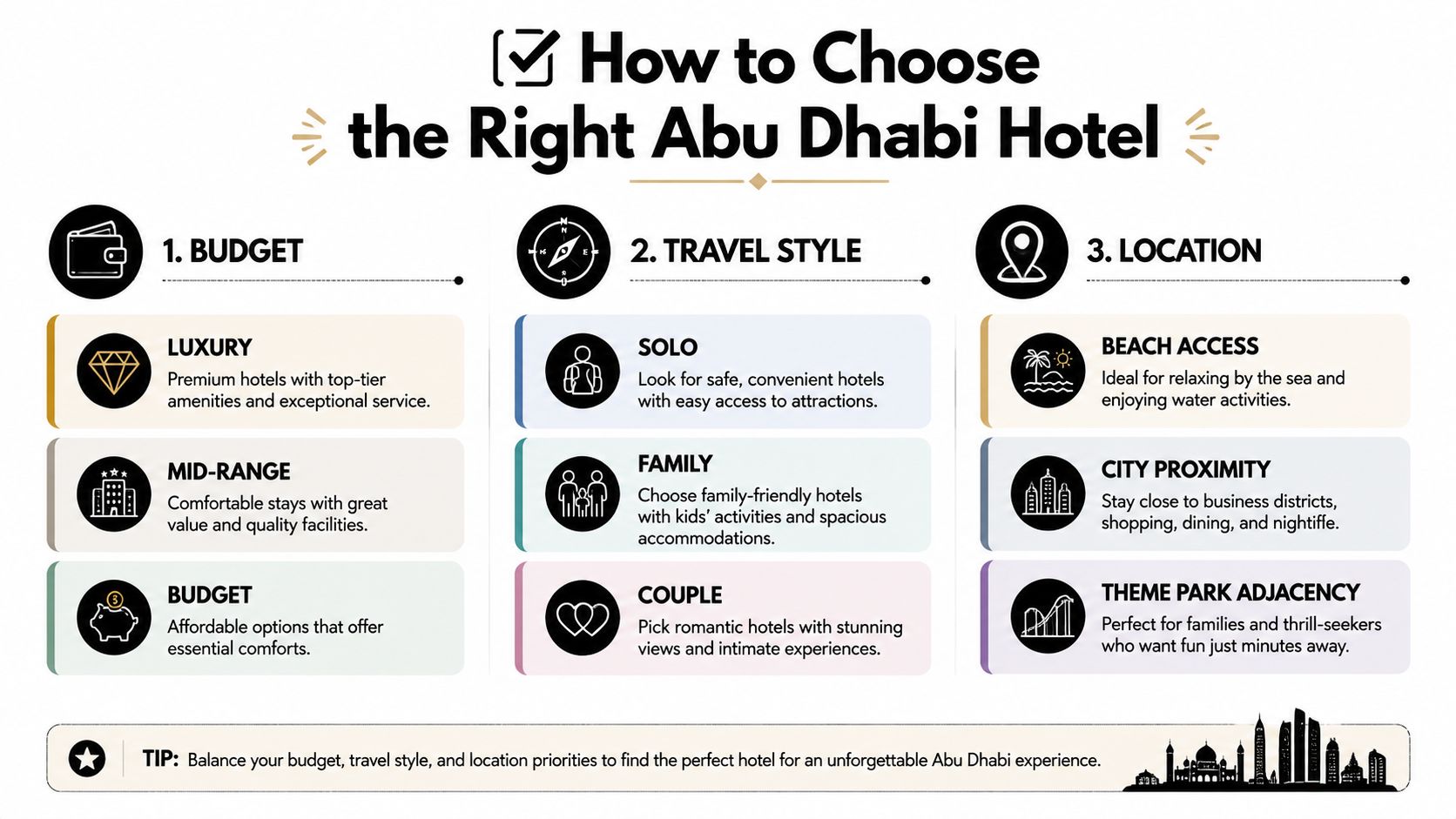
Start with the trip purpose, not the hotel name. A strong Abu Dhabi hotel matches how you will spend your time. If you only need a place to sleep, your priorities are different from someone planning long pool days, remote work, or a base for cultural sightseeing.
Use three filters, and cut your shortlist fast
First, set your budget ceiling. Then decide your travel style, solo, couple, family, or group. Finally, choose the main purpose of the trip, transit, beaches, business, culture, or theme parks. Those three filters remove most weak options before you waste time comparing glossy photos.
- Budget first: If a property pushes you past what you want to spend, move on unless it clearly saves you money elsewhere, such as by cutting taxi use.
- Travel style next: Solo travelers should look for easy check-in, strong lighting, and simple transport access. Families should focus on room layout, pool access, and dining convenience. Couples should care about atmosphere and location, not just polished décor.
- Trip purpose last: A business stay near the city center serves a different need from a beach weekend or a layover stop.
Movement is often the hidden cost. A hotel that looks cheaper can lose that advantage once you add rides across the city. Airport-adjacent stays, Corniche properties, and Yas hotels each solve a different problem, and mixing them up leads to wasted time and money.
Read reviews for what they don't say
Skip the generic praise. Look for comments about noise, elevator waits, breakfast queues, transfer friction, and whether staff solved problems quickly. Those details tell you more than lobby photos ever will.
If you want a structured planning tool while you narrow options, Travel Talk Today offers trip-planning content and budgeting frameworks that fit this kind of decision-making. Use it as a support tool, not a replacement for checking neighborhood fit and transfer time.
Recommended Hotels Across Every Price Tier
I'd rather stay in a well-run mid-range hotel in the right district than in a flashy property that wastes my time. That's the core rule in Abu Dhabi. The strongest choices are the ones that fit the trip cleanly, not the ones with the loudest branding.
Budget choices that still make sense
For budget stays, I'd look first at Premier Inn Abu Dhabi Capital Centre. It's a straightforward value pick, and the appeal is simple, modern basics, cleanliness, and a location that works for short visits. It's not romantic, but it does what budget hotels should do, which is remove friction.
La Quinta by Wyndham Abu Dhabi Al Wahda is a stronger pick if you want a bit more room and an urban setting. It's better for travelers who don't want a bare-bones feel and still want a practical downtown base.
A third good-value option is Marriott Courtyard Abu Dhabi Hamdan Bin Mohammed Street. It sits near downtown with a more polished corporate feel, which is useful if you want a budget-adjacent stay that doesn't feel stripped down.
Mid-range is where Abu Dhabi often wins
This is the sweet spot. Crowne Plaza Abu Dhabi properties and similar mid-scale branded hotels often deliver the best balance of service, location, and room quality. In this tier, the goal isn't luxury theater. It's dependable comfort and a location that saves time.
If you want a more residential stay, the Conrad Abu Dhabi Etihad Towers can blur the line between premium and luxury, especially if you care about facilities and views more than pure room size. It's more of a statement stay than a budget one, so I'd only choose it if the extras matter to you.
Luxury should feel distinct, not just expensive
For high-end stays, Etihad Towers style properties make sense for travelers who want the full Abu Dhabi experience, big views, premium lounges, beach access, and a sense of arrival. Luxury here should buy you time, space, and a smoother stay, not just a thicker carpet.
| Price Tier | Hotel Name | Location | Best For | Standout Feature |
|---|---|---|---|---|
| Budget | Premier Inn Abu Dhabi Capital Centre | Capital Centre | Short stays, practical travelers | Reliable basics and strong value |
| Budget | La Quinta by Wyndham Abu Dhabi Al Wahda | Downtown | Urban base, value seekers | Apartment-style feel |
| Budget | Marriott Courtyard Abu Dhabi Hamdan Bin Mohammed Street | Downtown | Business-lite trips | Polished corporate comfort |
| Mid-range | Conrad Abu Dhabi Etihad Towers | Prime waterfront area | Guests who want premium facilities | Big-view, resort-style positioning |
| Luxury | Etihad Towers area properties | Waterfront district | High-end leisure and business | Strong sense of place and scale |
Money-Saving Booking Tactics That Actually Work
Cheap in Abu Dhabi is rarely about finding a miracle rate. It's about avoiding bad timing and unnecessary add-ons. If you book like a generic city break traveler, you'll often pay for convenience you don't need.
Use timing and channel choice with intent
Shoulder periods are the smartest time to look, especially when the city isn't dealing with major event pressure. In Abu Dhabi, event calendars can reshape demand quickly, so flexible travelers should compare dates before they compare brands.
Direct booking can help when a hotel offers extras that third-party sites don't include. That often matters more than a small rate difference. If a property is already close to your preferred neighborhood and the direct rate includes a useful perk, the total value can beat a slightly cheaper third-party listing.
Practical rule: Compare the final stay cost, not just the room rate. A cheaper listing with worse cancellation terms or higher transfer costs can be the expensive option in disguise.
Negotiate for value, not just price
Front desks are more likely to respond to specific requests than vague haggling. Ask about breakfast inclusion, room upgrades, late check-out, or bundled transfer support. Those are the perks that change the stay.
That's also where a local travel agent can still make sense. I'd use one for complex itineraries, family trips, or stays that combine hotels and excursions. If you're comparing planning resources, the booking advice in how to book cheap hotels fits the same logic, especially when you want to compare platforms without wasting hours.
Don't pay for amenities you won't use
A pool sounds nice until you're out exploring all day and never touch it. The same goes for oversized suites, long breakfast menus, and premium lounges. In Abu Dhabi, smart savings usually come from stripping out what you won't use, not from chasing the absolute bottom rate.
Safety and Cultural Considerations for Hotel Stays
Abu Dhabi feels orderly, and that helps first-time visitors relax fast. But comfort goes up another notch when you understand the local rhythm and stop guessing about what's normal in hotel spaces, beaches, and shared public areas.
A clean example beats generic caution
A solo woman checking into a downtown hotel late in the evening doesn't need panic, she needs predictability. She should choose a property with reliable reception hours, clear taxi access, and a district with active foot traffic. A family arriving for a beach break needs a different kind of calm, more space, easier movement, less chance of awkward misunderstandings.
That's where cultural sensitivity matters. Dress modestly in lobby areas if you want to avoid attention. Keep swimwear for pools and beaches. Don't assume every hotel terrace or promenade allows the same behavior you'd use at a resort in a more permissive destination.
Know the practical rules before you go
Alcohol policies vary by property and venue, so don't assume a hotel bar and a hotel restaurant operate the same way. Photography can be sensitive in some public areas, especially when guests or staff are involved. During Ramadan, hotel etiquette becomes even more important, because the atmosphere changes and some services run differently.
If something feels off, speak to the front desk directly and calmly. Hotels here are used to handling discomfort quickly, especially for international guests. For solo travelers and families who want a broader safety refresher, this travel safety guide is worth keeping in the planning mix.
Sustainable Lodging Options Worth Considering
Sustainable hotel choices in Abu Dhabi are about choosing properties that understand desert conditions, resource use, and how comfort and restraint can coexist. That makes sustainability a practical filter, not a moral performance.
Desert hotels should prove efficiency, not just talk about it
Water and cooling matter in a hot climate, so the best properties are the ones that build smart systems into the guest experience. That can mean better bathroom fixtures, smarter laundry practices, and disciplined operations behind the scenes. The UAE's hotel technical standards also show how important these systems are at the building level, with prescriptive requirements for water pressure, room size, and guest-room services in premium properties (Hotel Classification System Manual).
I'd rather stay in a property that shows those efficiencies than one that just throws around eco language. In practice, that usually means better maintenance, fewer comfort problems, and a more thoughtful stay.
Ask what the hotel actually does
Look for reduced towel and linen waste programs, local sourcing in restaurants, and visible maintenance discipline. Those are the signals that usually mean the sustainability claim is real. A hotel that supports local suppliers or keeps operations tight often feels more grounded, too.
The guest experience usually improves as well. Better sourcing can mean better food. Stronger resource management can mean more reliable systems. If you want a broader set of eco-minded travel ideas, the guidance at eco-friendly accommodations fits neatly into the same decision process.
Your Abu Dhabi Hotel Decision Action Plan
Stop treating your hotel choice like an afterthought. Abu Dhabi punishes lazy booking decisions. Pick the wrong district and you waste your trip in taxis. Pick the wrong property type and you spend more time commuting than enjoying the city. The right choice makes Abu Dhabi easier to use, and that matters more here than in most cities.
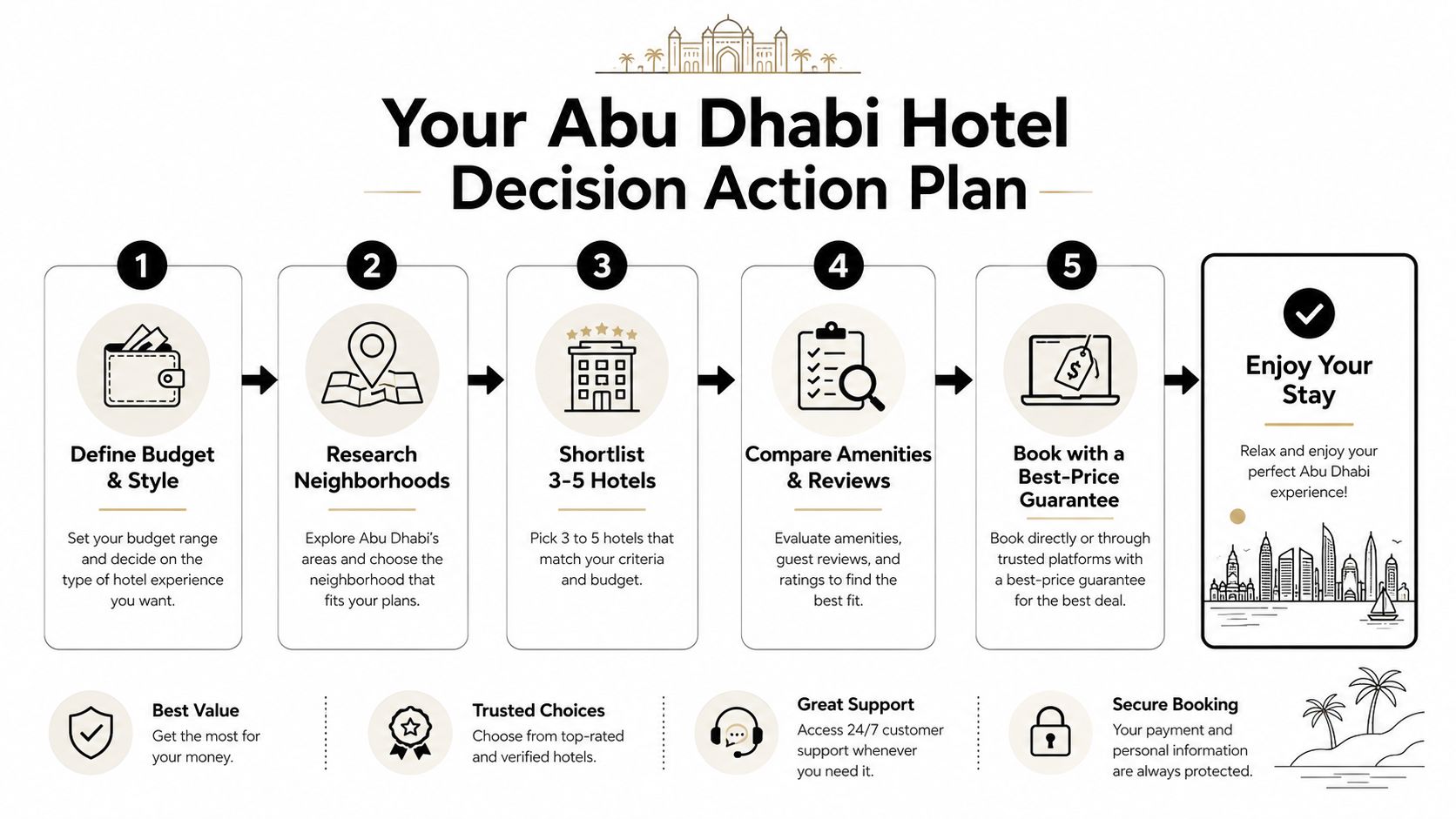
Use this final filter before you book
- Set your budget ceiling first, then decide whether you need a full-service hotel or just a place to sleep.
- Choose the district before you compare room photos. Saadiyat fits culture trips, Yas works for entertainment, and the Corniche or downtown suits convenience.
- Narrow it to three to five hotels, then compare cancellation terms, airport transfer options, and review patterns.
- Read reviews for concrete problems, not vague praise. Focus on noise, check-in delays, air-conditioning, and how the hotel handles transport.
- Make the booking only when the total cost fits the trip you plan to take.
The biggest mistake is booking a cheap room in a location that fights your itinerary. The next mistake is a property with no clear plan for getting you in and out at the times you need. The third is paying for facilities you will not use.
Use the city's layout to your advantage. Abu Dhabi rewards travelers who choose with intent, especially when they match neighborhood, transport, and trip style to the stay they want.
Before you press book, run the details through a travel planning checklist so you do not miss the small costs and logistics that shape the whole trip. Then commit to the property that fits your route, not the one that merely looks good in photos.