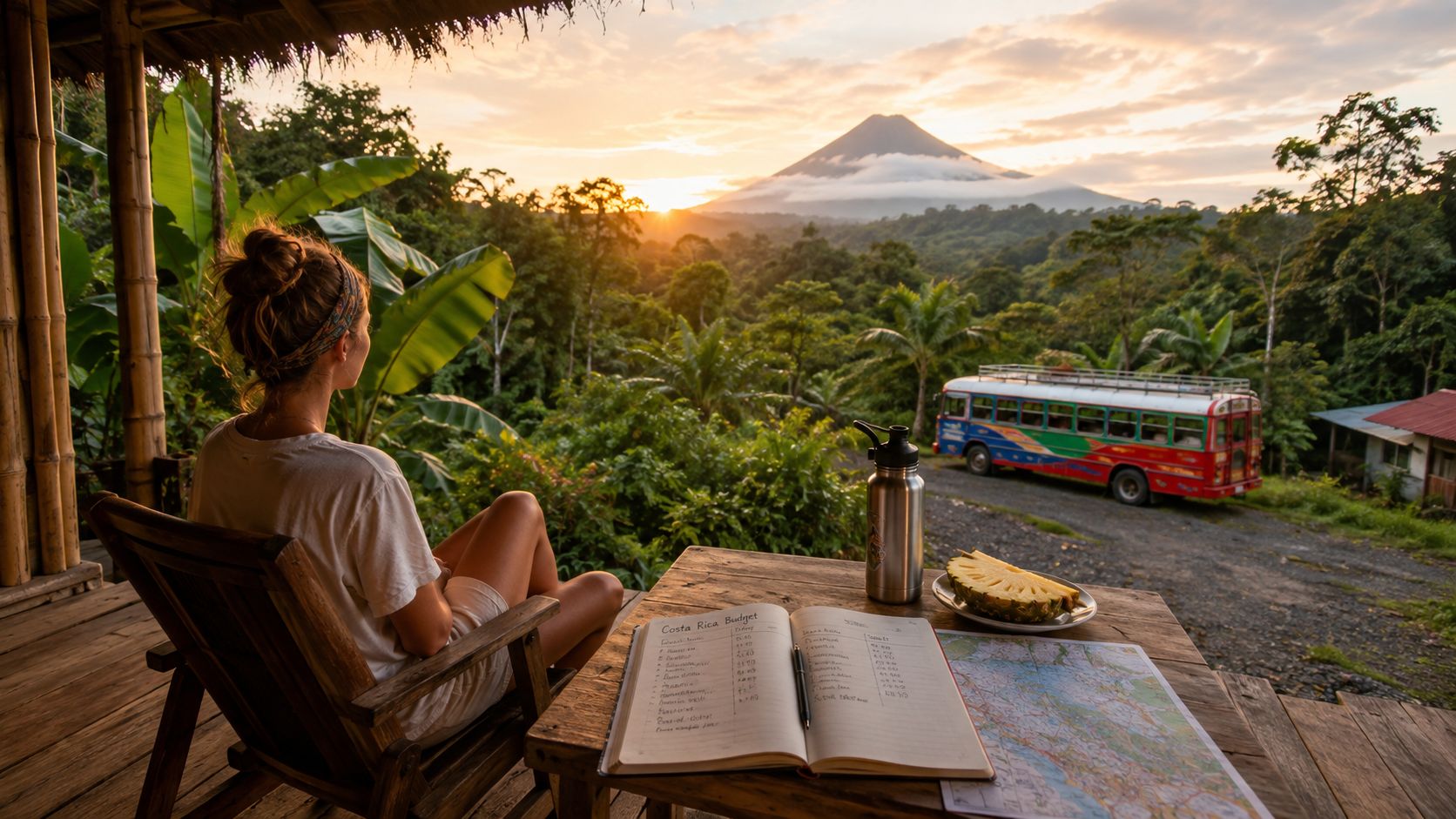
You've got the flights tab open, a board full of waterfalls and surf towns, and the question lands fast. Can you do Costa Rica budget travel without turning the trip into a hunt for the cheapest dorm bed and the most forgettable meal on the menu?
Yes, if you stop planning like a checklist backpacker and start planning like a strategist. Costa Rica sits on the expensive side for the region, so the budget gets stretched fast when you keep changing bases, paying for transport, and repeating the same setup costs again and again. The smarter move is slower travel, fewer places, and longer stays in each one, because that reduces waste and gives you more time for the parts of Costa Rica people visit for, the beaches, trails, wildlife, and everyday local rhythm.
A simple way to keep that plan honest is to run the numbers before you book. A travel budget calculator helps you see how transport, lodging, food, and activities add up once you leave the fantasy version of the itinerary behind.
The best savings usually come from staying put more often, not from stripping the trip down until it feels miserable. One solid base can give you cheaper rooms, fewer long bus rides, and better chances to settle into a town instead of just passing through it. That also lines up with the kind of slower, community-rooted travel that community-based tourism is built around, where you spend less on constant movement and more on experiences that connect you to the place.
Embracing Pura Vida Without Breaking the Bank
Costa Rica can feel like a contradiction at first. It's the place people dream about for rainforests, wildlife, warm beaches, and easygoing Pura Vida, yet it also has a reputation for being one of the pricier places in Central America. That reputation is real, and pretending otherwise only sets travelers up for disappointment.
The pressure point shows up fast once you start moving around. Longer stays are common, and costs climb when you keep paying for transport, meals, and activities every time you shift to a new base OECD tourism trends and policies review. That is why budget travelers often get caught out. The leak is rarely one big splurge, it is the steady drain of repeated transit and constant repositioning.
Stay longer in fewer places, and the budget starts working in your favor. A slower trip usually means better room rates, less stress, and more time for beaches, trails, and the kind of conversations that do not happen when you are packing before sunrise.
Practical rule: if a route feels rushed on paper, it will feel expensive on the ground.
That is also why this guide favors slower travel. The goal is not to strip the trip down until it feels thin. It is to spend less on unnecessary movement and more on the parts of Costa Rica that stay with you. That includes local routines, and it fits naturally with community-based tourism, where being based in one place for longer often means more meaningful experiences and fewer wasted travel days.
Decoding Your Daily Costa Rica Travel Budget
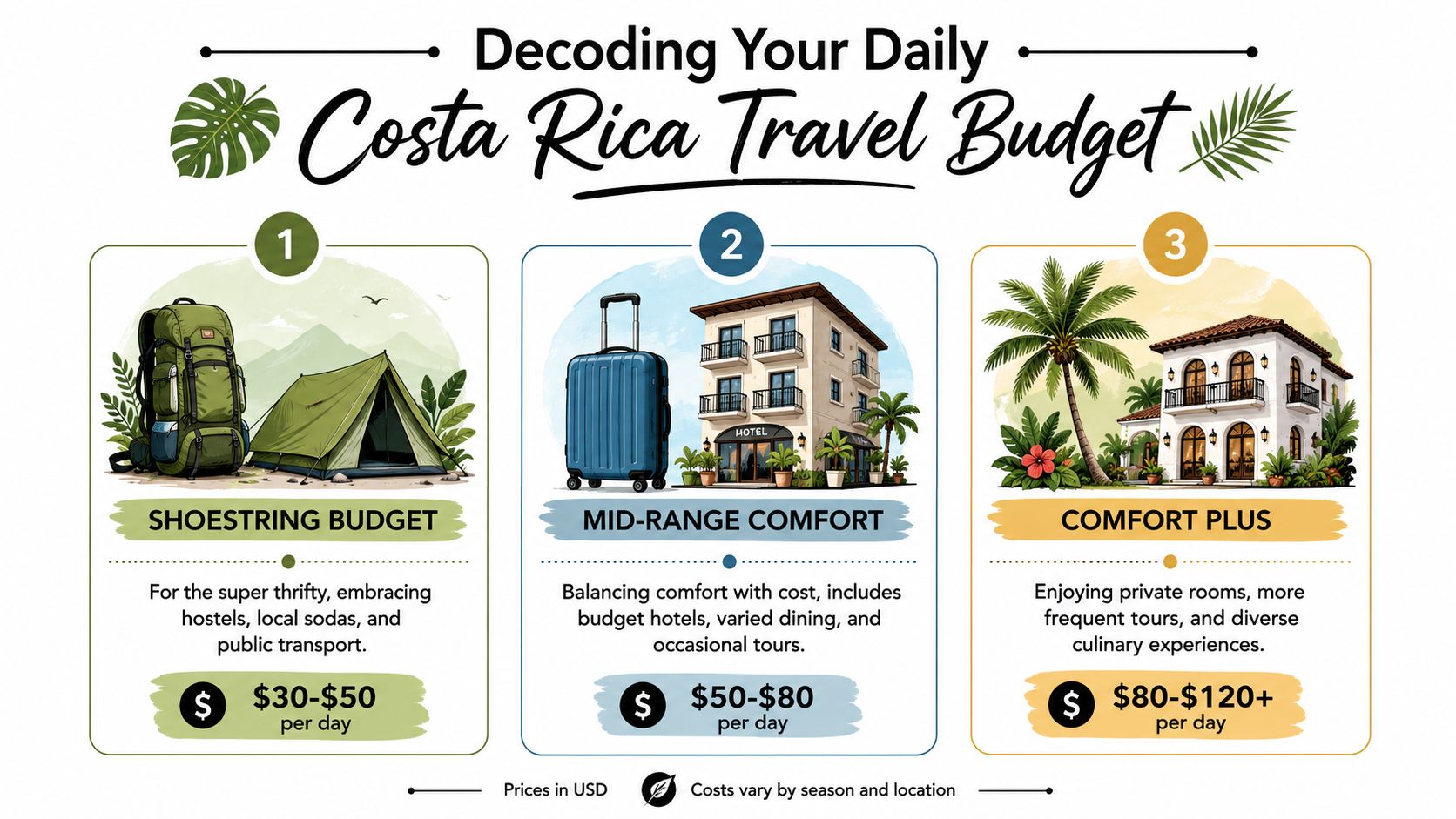
A one-week Costa Rica trip is often benchmarked at about $1,000 per person before flights, split roughly into 35% accommodation, 25% food, 20% activities, and 15% local transport. That is a useful anchor because it shows where the money goes. It also exposes the mistake many travelers make, which is underestimating food and activities while focusing too hard on the nightly room rate.
Sample Daily Budgets for Costa Rica
| Expense | Shoestring Backpacker | Mid-Range Traveler |
|---|---|---|
| Accommodation | Hostel dorm or simple cabina, minimal extras | Private room or better hostel with kitchen |
| Food | Sodas, market snacks, self-catered breakfasts | Mix of sodas, cafes, and some self-catering |
| Local transport | Public buses and the occasional shared ride | Buses plus selective shuttles |
| Activities | Free trails, beaches, markets, viewpoints | Entry-fee parks and a couple of paid tours |
| Daily style | Bare-bones, but still comfortable | Balanced comfort with fewer trade-offs |
For a shoestring style, a reasonable target is the $30 to $50 per day range shown in the budget infographic, especially if you keep transport simple and choose places with a kitchen. Mid-range comfort usually sits higher because private rooms, faster transfers, and more paid activities push the total up. A comfort-plus approach climbs quickly once you add frequent tours and more restaurant meals.
The key is not to build your estimate around the cheapest possible night, then forget the rest. One night in a good hostel is easy to find. A week of rooms, buses, entrance fees, and meals is where the budget takes shape.
For a more precise planning pass, use the travel budget calculator to test your route before you book anything.
Budget reality: if food and day trips are treated as afterthoughts, Costa Rica will feel expensive no matter how cheap the bed was.
Strategic Itineraries for Maximum Value and Experience
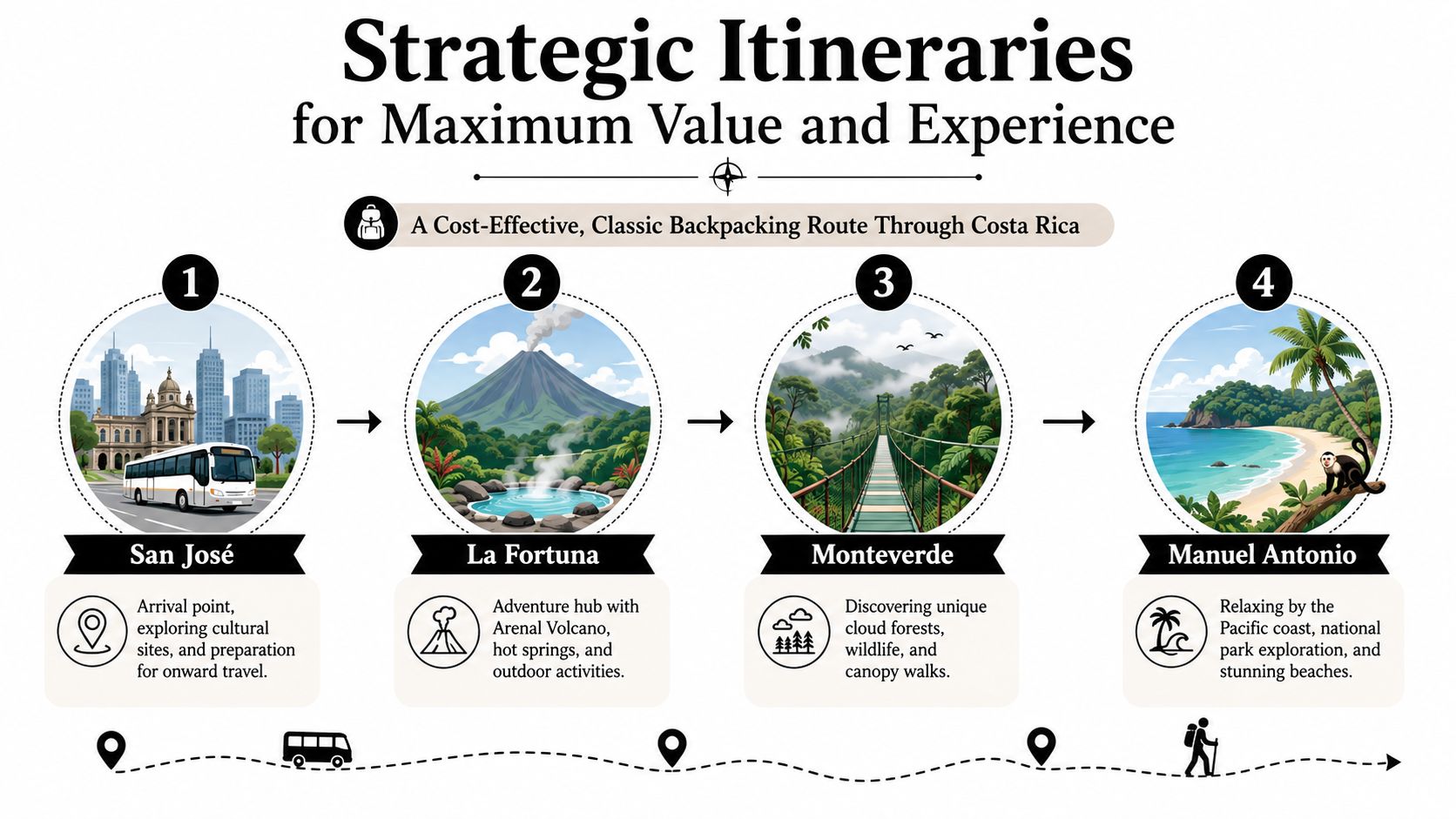
A budget trip through Costa Rica gets cheaper when the route makes sense. The classic backpacker line, San José → La Fortuna → Monteverde → Manuel Antonio, keeps movement efficient and avoids the expensive habit of bouncing around the country for the sake of variety. A route-planning guide also points out that locking transport before lodging can cut trip costs sharply compared with less organized itineraries route efficiency guide. The point is not to rush through each stop, it is to stop wasting money on unnecessary backtracking.
Why Fewer Bases Usually Win
Fast itineraries hide costs that do not show up in the headline fare. Every extra transfer adds shuttle premiums, baggage headaches, and hours lost to check-ins, checkouts, and waiting around. Short stays also push travelers toward pricier convenience, since the easiest option at each stop is often the one aimed at tourists.
Staying longer in one place shifts the math. Public buses become more useful, budget rooms make more sense, and daily spending settles down because you are not paying for movement every single day. That slower pace also gives each base more room to feel local instead of transactional.
How to Think About the Route
Use the corridor as a framework, not a script. San José works as the arrival and reset point. La Fortuna gives you one concentrated adventure zone. Monteverde adds cloud forest variety. Manuel Antonio closes the trip with an easier coastal finish. Each stop has enough to do that you are not forced to move just to stay busy.
That slower structure is where the value shows up. You spend less on transfers, settle into local rhythms, and make better use of each base instead of treating every stop like a quick photo stop.
For travelers deciding between buses, rental cars, or a road-based entry point, the practical breakdown in how to drive to Costa Rica is worth reading before you commit.
Mastering Affordable Lodging and Food
Lodging and food are the two places where budget travelers either stay in control or lose control. A room that looks cheap can become expensive if it forces you into taxis and restaurant meals, while a slightly better place with a kitchen can save money every single day. The trick is to think in systems, not in isolated prices.
What to Look For in Lodging
Hostels are useful, but they're not the whole answer. In Costa Rica, cabinas and small family-run guesthouses can be excellent value because they often feel quieter than big hostels and more local than chain hotels. A key feature to hunt for is a shared kitchen, because that turns one grocery run into several low-cost breakfasts and a few easy dinners.
Weekly pricing is worth asking about too. Even if a host doesn't advertise it, longer stays often open room to negotiate, especially outside the busiest periods. That's one more reason to slow down. A place that looks average for one night can become a strong budget choice once you stay multiple nights and stop paying for repeated check-ins.
If you want a room-selection framework, the hotel-saving tactics in how to save money on hotels map well to Costa Rica's market. The same logic applies here. Choose the room for the trip you're taking, not the one-night version of it.
Where to Eat Without Overspending
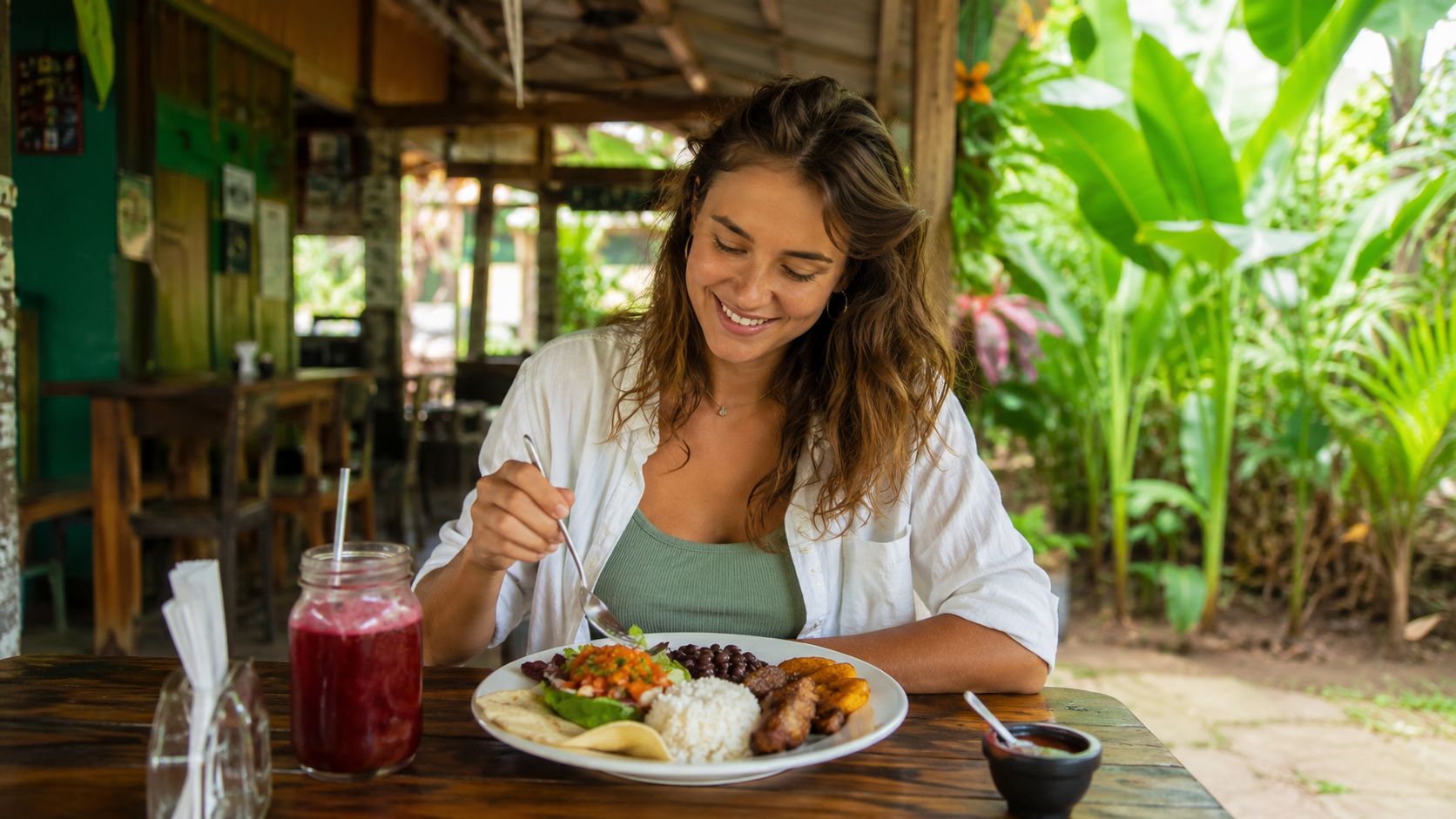
The best budget meal in Costa Rica is still the local soda. These family-run spots are where travelers get real food without the markup that comes with tourist menus. Staples like casado, gallo pinto, soups, and simple rice-and-bean plates are exactly what keep a budget stable when you're traveling for more than a few days.
Shopping at ferias, the farmers' markets, is the other half of the equation. Fresh produce, fruit, and pantry basics can stretch a kitchen stay much further than convenience-store snacking. Supermarkets help too, especially for breakfast supplies, drinks, and easy picnic food on long excursion days.
A practical rhythm looks like this:
- Breakfast: keep it simple with fruit, bread, eggs, or leftovers.
- Lunch: use sodas when you're out exploring.
- Dinner: self-cater a few nights each week if the stay has a kitchen.
- Snacks: buy them from markets or supermarkets instead of resort cafés.
That combination keeps the trip feeling local without forcing you into bare-minimum eating. You still eat well. You just stop paying extra for every meal because you're tired and hungry.
High-Value Adventures Without the High Price Tag
Costa Rica gets expensive fastest when every memorable day has to come with a ticket. The better move is to let the country do more of the work. Walk, watch, swim, sit still for a while, and build your days around places that reward your own pace instead of a paid itinerary.
Free and Low-Cost Wins
Self-guided time is the strongest budget move here. Beaches, trails, and markets let you spend very little while still getting a real feel for the country, and Visit Costa Rica recommends those free or low-cost local attractions as part of a slower, base-yourself approach Visit Costa Rica budget advice.
That matters because the adventure market can pull money out of your budget quickly. Zip lines, ATV rides, and packaged excursions are all easy to find, but they do not need to control the trip. If you are already based in La Fortuna, Monteverde, or Manuel Antonio, there is often enough nature close by to fill a full day without paying for a big outing.
What I'd Prioritize First
Start with national parks, short hikes, public beaches, local viewpoints, and walks through town. Those are the experiences that give Costa Rica its character, and they tend to give the best return for the money. They also fit slow travel well, because you have time to follow a trailhead, watch the weather change, or stay on the beach until sunset instead of rushing to the next transfer.
The less you move, the more likely you are to notice the country instead of the schedule.
That is the part many budget guides miss. Slowing down costs less, and it usually makes the trip better too. You see more detail, lose less time in transit, and leave room for the small moments that make travel feel alive.
Your Smart Traveler Booking and Packing Checklist
A budget in Costa Rica can shift quickly if you make the wrong payment or booking choices, so the smart move is to set the trip up before you land. Paying in colones usually keeps costs lower than paying in U.S. dollars, and the green season from August to November often brings softer prices on flights and hotels, according to recent budget guidance Costa Rica budget travel guidance. That matters even more if you are basing yourself in fewer places, because a slower route gives you more control over transport, meals, and where you spend the big-ticket nights.
Lock These In Before You Go
- Book flights early: a practical booking window for flights is about 3 to 6 months ahead, and a little flexibility with dates plus midweek departures can help you find better fares flight booking guidance.
- Favor local currency: use colones whenever you can so you are not giving away extra money to weak exchange rates.
- Reserve key stays first: this matters most if your route includes the busiest hubs or if you are traveling during popular travel periods.
- Plan transport before lodging: the route matters more than the room when you are trying to protect the budget, especially if you are staying longer in one area instead of bouncing around.
- Pack for flexibility: quick-dry clothes, a reusable bottle, rain protection, and light layers keep you from buying replacement basics after arrival.
- Check entry paperwork: make sure visa and entry requirements are sorted before departure, and review a travel planning checklist so the small details do not get missed.
- Pre-book high-demand parks when needed: online reservations can save time and reduce last-minute stress.
Costa Rica rewards travelers who prepare well and move with intention. If you want more practical guides, smart budget frameworks, and slow-travel destination ideas, visit Travel Talk Today and use the planning tools there to shape a trip that feels rich, not rushed.