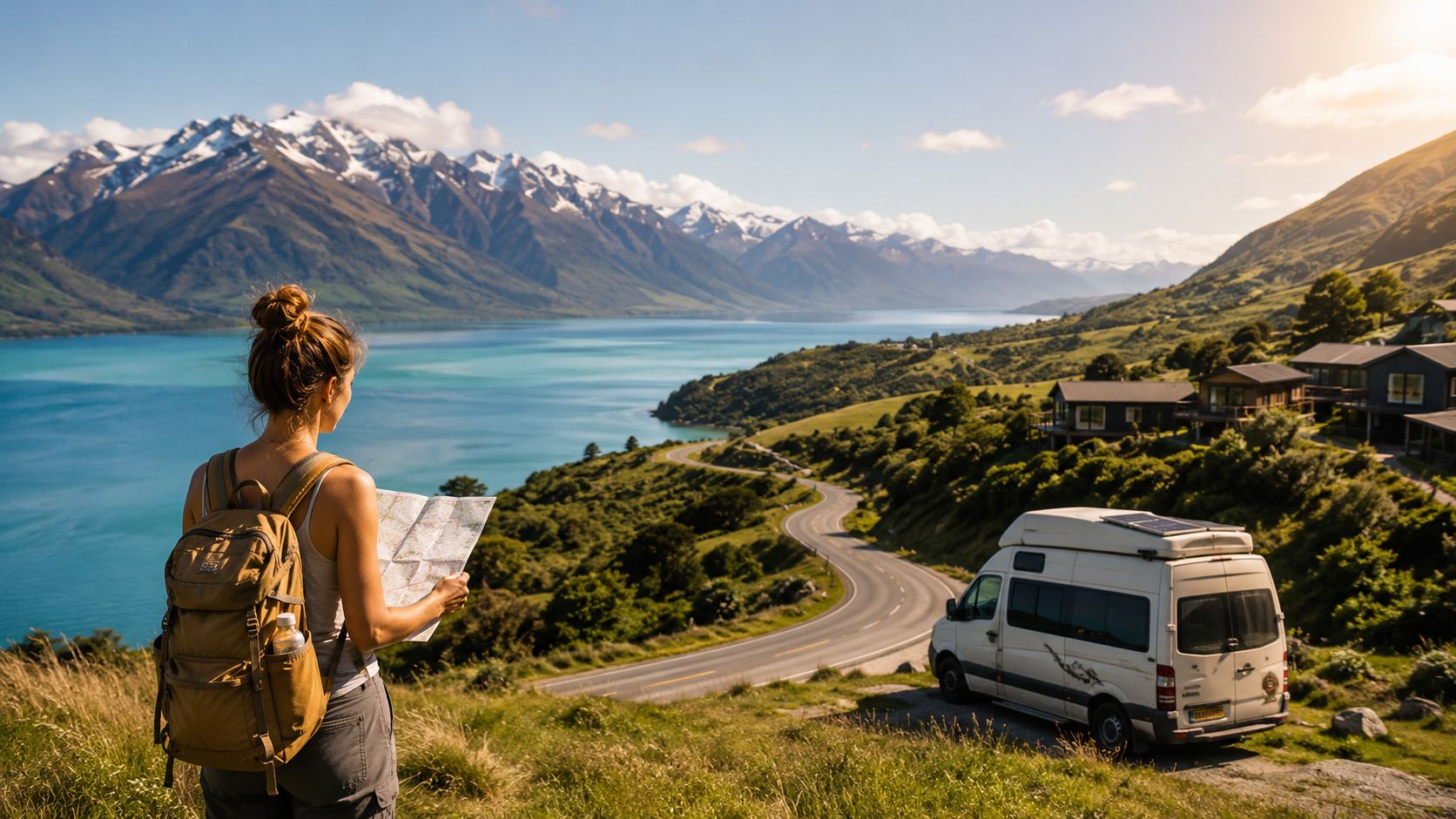
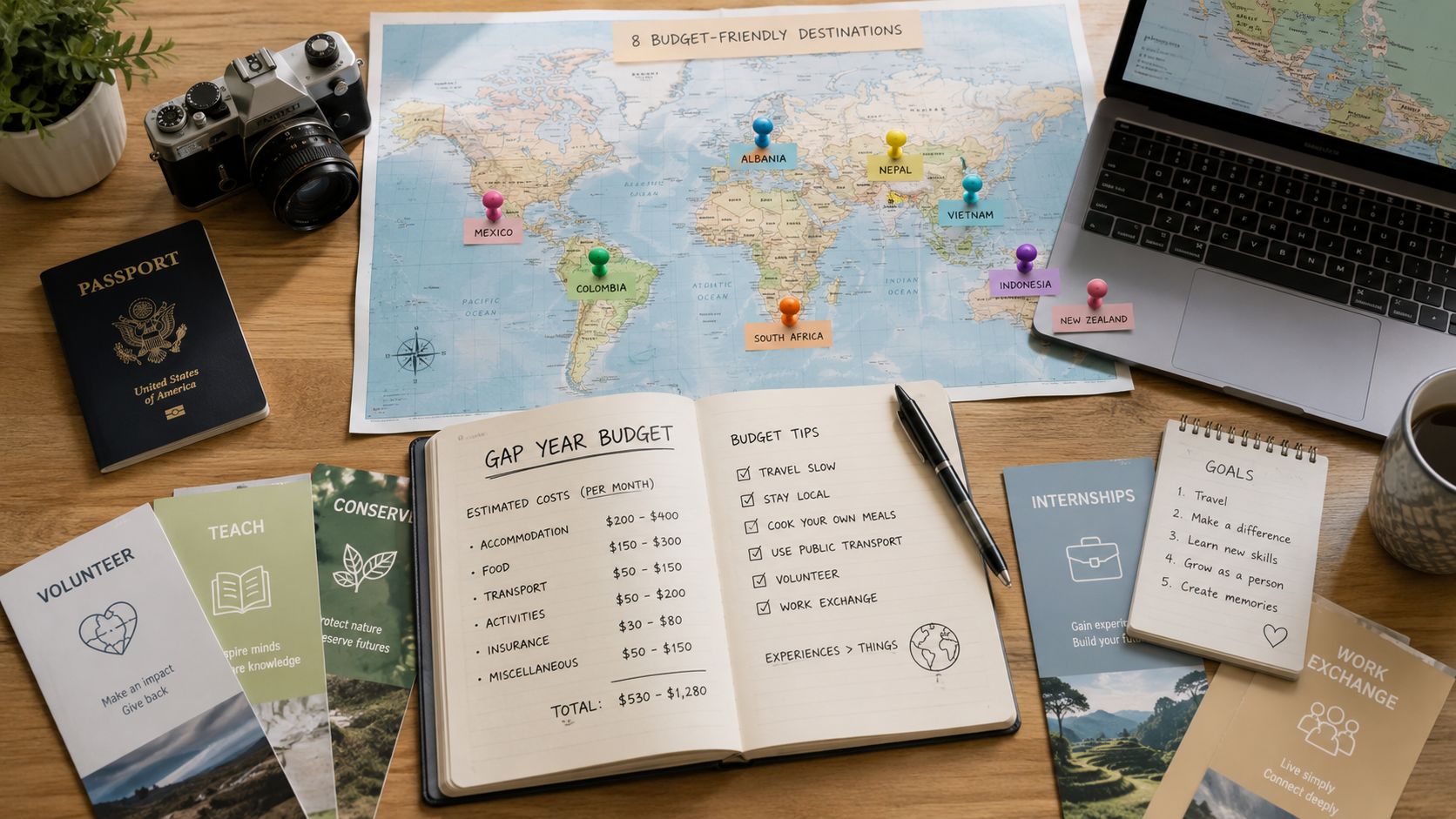
NZD 90-130 per person per day is the realistic backpacker budget for New Zealand, and that assumes hostel dorms, self-catering, public transport, and only a few paid activities. A one-week budget-to-mid-range trip usually lands around NZ$1,000-3,000 per person before flights, so the trick isn't finding a mythical cheap version of New Zealand, it's cutting the costs that blow up the total (Statistics New Zealand).
Most advice gets this backward. People obsess over free hikes and cheap hostels, then get clipped by card surcharges, peak-season transport, and overpacked routes that turn every transfer into a money leak.
Understanding the True Costs of Budget Travel in New Zealand
New Zealand is expensive, and that is exactly why you need to budget with your eyes open. The country's tourism economy still shapes how pricing works, with total tourism expenditure at NZ$46.6 billion for the year ended March 2025, up 3.3% or NZ$1.5 billion from 2024, according to Statistics New Zealand. That scale keeps accommodation and transport options broad, which helps travelers who know where the money disappears.
Budget travel New Zealand style always comes with trade-offs. Travel-budget guides put strict budget trips at about NZ$120-160 per day, mid-range trips at NZ$180-450 per day, and luxury travel at NZ$450+ per day. A backpacker budget of NZD 90-130 per person per day is tighter still, and it only works when accommodation, meals, transport, and activities are all kept on a short leash.
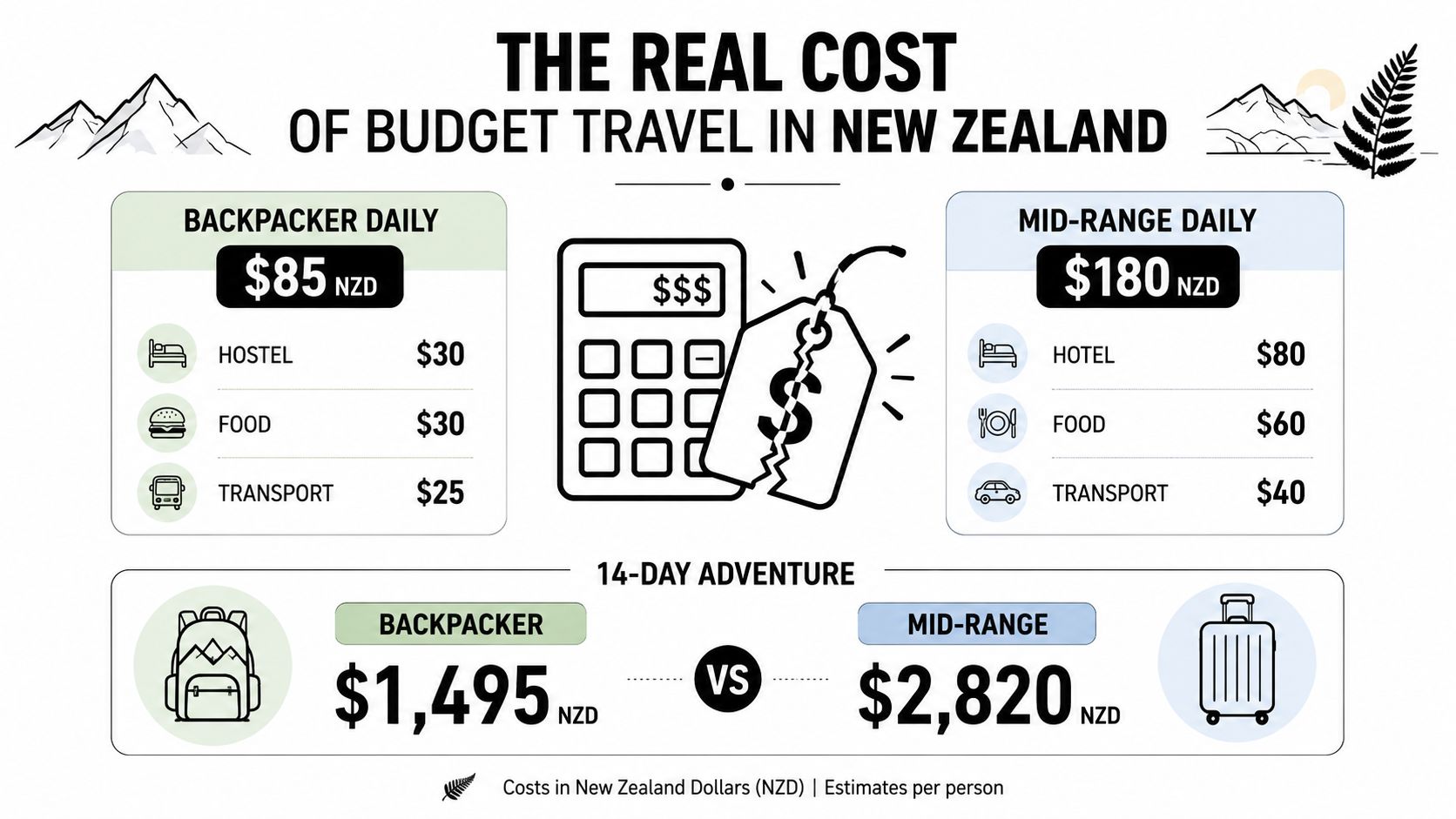
Practical rule: if your plan depends on private rooms, taxis, and a paid activity every day, you are not budgeting, you are just spending carefully in a pricey country.
The hidden costs are what catch people out. Card surcharges, peak-season transport, and overambitious routes eat money fast, especially once you start booking on the fly in a country that expects digital payments almost everywhere. A rough plan is better than a perfect fantasy, and a travel budget calculator is useful for testing whether your daily spend holds up.
A one-week budget-to-mid-range trip commonly lands between NZ$1,000-3,000 per person before flights. That gap is where the choices live. Dorms instead of private rooms, cooking instead of eating out, buses instead of a car, and selective paid experiences instead of a long list of tickets.
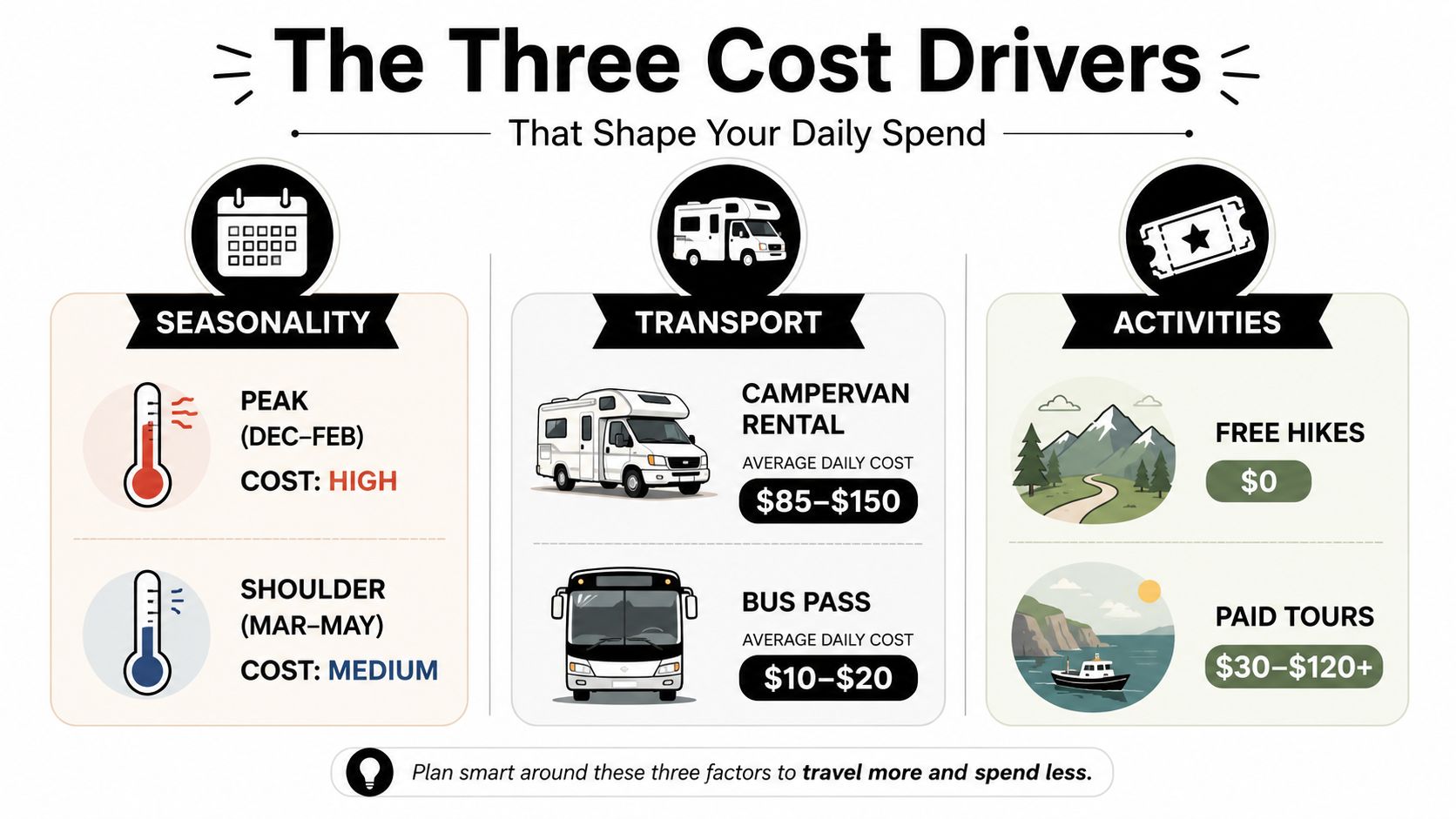
The Three Cost Drivers That Shape Your Daily Spend
Season, transport, and activities decide whether your trip feels lean or bloated. Everything else is noise. If you control those three levers, you can keep a New Zealand trip in budget range without turning it into a punishment.
Season is the first tax on your wallet
Peak travel months push prices up across the board. That includes beds, vehicles, and the parts of the itinerary that need advance booking. Shoulder periods usually give you more breathing room, not because New Zealand suddenly gets cheap, but because demand stops squeezing every option at once.
The best move is simple, travel when locals aren't trying to do the same thing. That's especially true if you're aiming for flexible bus travel, rental vehicles, or last-minute accommodation. The lower the pressure on the system, the less you pay for convenience.
Transport is where budgets go to die
New Zealand's distances punish impulsive route changes. A bus pass can keep the math sane, while a rental car or campervan gives you freedom that often costs more than travelers expect once fuel, parking, and pickup logistics get folded in. The more often you move, the more you pay.
Budget truth: the fastest way to inflate a trip is to make every stop a long transfer day.
Activities are the sneaky budget killer
The country is famous for scenery, and the scenery is often free. Hikes, beaches, lookouts, and lakes give you a lot without charging entry at every turn. Paid tours, on the other hand, can eat the budget because they stack one after another, especially if you try to “maximize” every region.
The smart approach is not to skip paid experiences entirely. Pick a few, build the route around them, and let the rest of the trip stay lightweight. That keeps your day-to-day spend under control and stops the false economy of booking a dozen expensive add-ons just because they look tempting in the moment. For more route timing and booking logic, the travel planning checklist helps you lock in the expensive pieces before they get away from you.
Cheap Accommodation and Transport Strategies That Work
The cheapest trips in New Zealand are built around one rule, reduce fixed costs first. If your bed and your movement stay cheap, you can still enjoy the country without picking every decision apart. The recent shift toward domestic, price-sensitive travel makes that easier, because local habits lean toward shorter stays, alternative accommodation, and less dependence on flights (Community Press).
Pick the right bed for the way you travel
Hostel dorms remain the default for solo budget travel because they keep the nightly base cost low and they give you a kitchen. That kitchen matters more than people admit. Cooking a few simple meals beats paying for convenience every day, and it keeps your budget from drifting.
DOC campsites suit travelers who already have camping gear and don't mind a simpler setup. Freedom camping can be even cheaper, but only if you know the local rules and don't treat it as a loophole. House-sitting works for longer stays and slower routes, but it rewards flexibility, not rigid planning.
| Accommodation and Transport Options by Budget Level | Estimated Daily Cost (NZD) | Best For |
|---|---|---|
| Hostel dorm + bus travel | Lower end of budget range | Solo travelers, short routes, social trips |
| Basic private room + bus travel | Mid budget range | Couples, travelers who want more sleep and less noise |
| Camping or DOC site + bus or shared car plan | Lower to mid budget range | Road trip travelers with gear |
| Private room + rental vehicle | Higher budget range | Comfort-first trips, multi-stop itineraries |
Use transport that matches your route, not your ego
Buses make sense when you're linking major stops and don't want the overhead of a vehicle. Rental cars and campervans make sense when you're splitting costs, carrying gear, or heading somewhere remote enough that public transport becomes awkward. Buying a car only makes sense for very long stays, and even then you need to factor in the hassle of resale.
The mistake most travelers make is paying for freedom they don't use. If you're spending three nights in one place, you probably don't need wheels sitting idle the whole time. For booking tactics and comparisons, the cheap hotels guide has the same basic logic, just applied to beds instead of roads.
Sample Low-Cost Itineraries by Trip Length and Region
The easiest way to waste money in New Zealand is to try to see too much. Long transfer days feel productive on paper, but they usually force you into more paid transport, more takeout, and less time to use free activities well. A tight route almost always beats a heroic one.
One week in the North Island
Keep the route compact. Auckland, Rotorua, and Wellington is a sensible backbone because you can stitch it together without turning every day into a logistics problem. Spend your free time on coastal walks, geothermal viewpoints, and city neighborhoods that don't require tickets just to exist.
Budget-wise, one-week trips sit in the broader NZ$1,000-3,000 per person range before flights, so a disciplined North Island loop should live near the lower half if you keep paid experiences selective (Statistics New Zealand). Use one splurge day, then balance it with low-cost days.
Ten days in the South Island
The South Island tempts people into overbooking. Don't do that. Choose either a west-coast style run or a central-lakes-and-mountains style run, then build around hikes, lakes, and scenic stops that don't require constant ticket purchases.
The South Island often feels more expensive because the scenery invites detours, and detours cost money. If you want the trip to stay lean, stay in one place longer and let the free views do the work. The “cheap” version here is slower, not thinner.
Two weeks across both islands
A two-week cross-country trip can still work on a budget, but only if you accept that every island change adds friction. That's where travelers often blow the numbers. Ferries, intercity transfers, and the temptation to squeeze in too many headline sights stack up fast, which is why a budget-conscious two-week trip is usually best planned around NZD 1,400-2,100 before international flights (NZ Pocket Guide).
The false economy is trying to “get your money's worth” by covering both islands too quickly. You don't save money by adding more cities. You save money by reducing movement and choosing one or two anchor regions that let you repeat the same cheap habits for longer.
Travel light on the map and heavy on the stays. That's how New Zealand becomes affordable without feeling rushed.
For route inspiration that respects a tighter schedule, the rhythm in the 4 days in Iceland guide offers the same principle, pack less geography into more days.
Mastering Cash-Light Budgeting in a Digital Economy
New Zealand's budget scene now runs on cards and phones, so the old “just carry cash” advice misses the underlying risk. The issue isn't whether you can pay, it's whether you can pay without leaking money to fees. That's the part most budget guides ignore, and it matters more as the country moves toward a low-cash economy, with the Reserve Bank's 2024 cash-use monitoring showing cash used for only a small minority of consumer transactions while debit and credit cards dominated everyday spending (Lonely Planet).
Stop treating every terminal the same
EFTPOS and contactless aren't always interchangeable in practice. Small businesses, holiday parks, and remote operators can have different fee structures, and that's where card surcharges creep in. If you're paying for a campsite, a shuttle, or a tiny café purchase, check the terminal behavior before you tap.
Dynamic currency conversion is another trap. If a machine offers to charge you in your home currency, decline it unless you have a very good reason not to. Pay in the local currency and let your card issuer handle the conversion, not the merchant's terminal.
Build your cash-light toolkit before you land
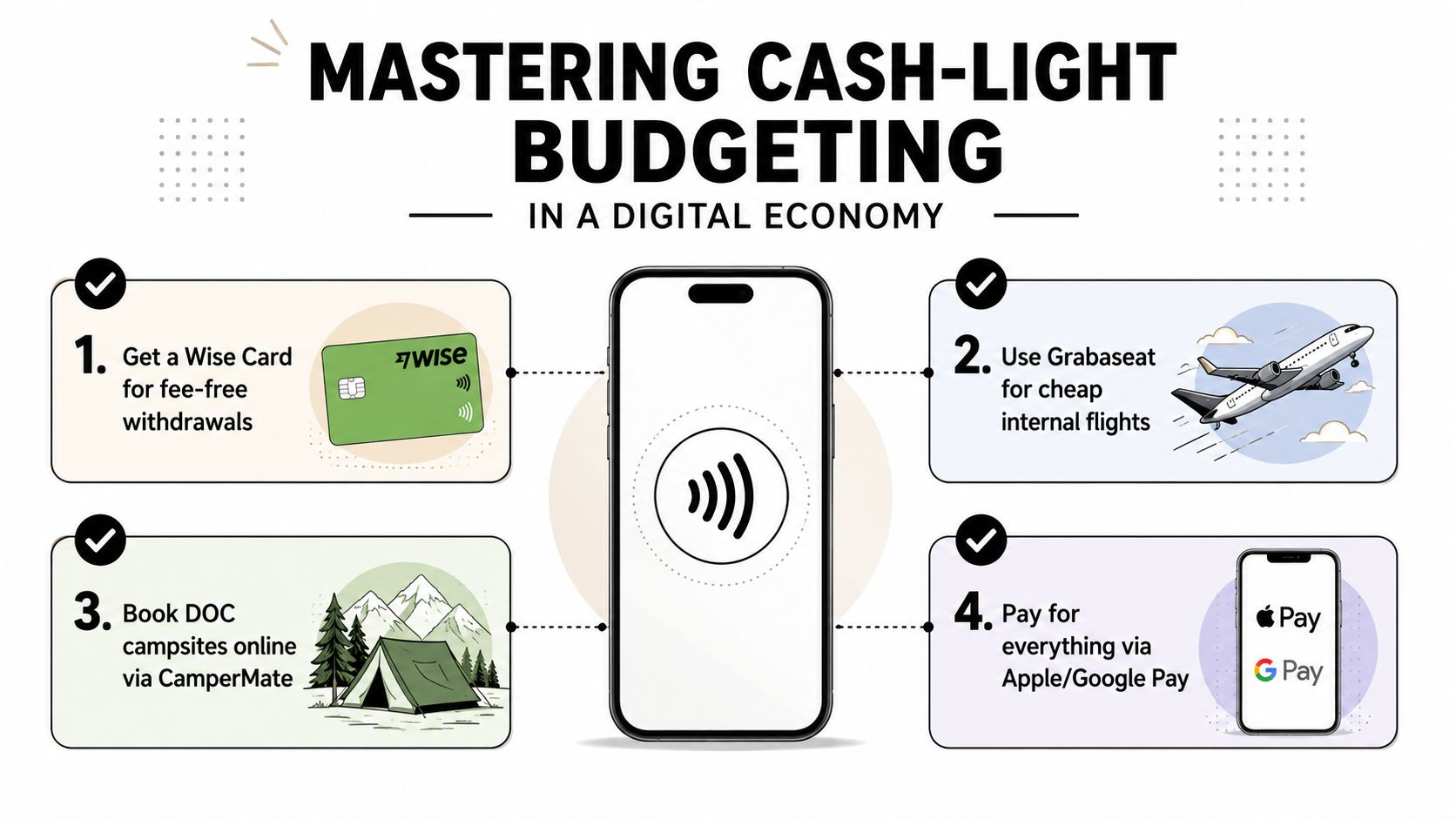
A fee-aware setup matters more than a wad of cash. A multi-currency card such as Wise can help reduce friction for travelers who want cleaner budgeting and fewer surprises, while mobile wallets like Apple Pay and Google Pay make everyday spending easier when merchants accept them. Internal transfers, bank-top-ups, and backup cards should be part of the plan, not an afterthought.
Use the international transaction fees guide if you want to stop paying for the privilege of spending your own money.
Practical rule: keep one primary card, one backup card, and one reserve balance you never touch unless a remote stop or terminal issue forces the issue.
Grabaseat is worth watching for internal flights if your route really needs one. And if you're booking campsites digitally, CamperMate is the practical way to keep your stopovers organized without relying on paper or cash-heavy detours.
Sustainable and Solo Travel on a Budget
The cheapest way to travel New Zealand is often the least frantic way. Slow travel cuts transport costs, gives you more use out of each booking, and lets you spend longer in places where the free stuff is good. That also lines up with sustainable travel, because fewer moves usually mean less waste, less pressure, and more local spending.
Volunteering through networks like WWOOFing or HelpX can wipe out accommodation costs, but only if you're comfortable trading time for a place to stay. That arrangement suits slow travelers, not people chasing a checklist. It also pushes money into local households rather than distant chains, which is a better fit for the way New Zealand travel works on the ground.
For solo travelers, especially women, the budget decision can't ignore safety. A female-only dorm in a well-reviewed hostel can be worth a little extra if it gives you better sleep and better judgment the next day. Group day-trips can also make sense when they remove the need for awkward solo transport into remote areas, even if they cost more than going alone.
The smartest solo budget is rarely the absolute cheapest line item. It's the one that keeps you rested, visible, and able to make good decisions. If you're tired, isolated, or stranded after sunset, the “savings” disappear fast. Choose the option that keeps the trip both affordable and manageable, because those are not competing goals.
Your Booking Checklist and Trip Planning Tools
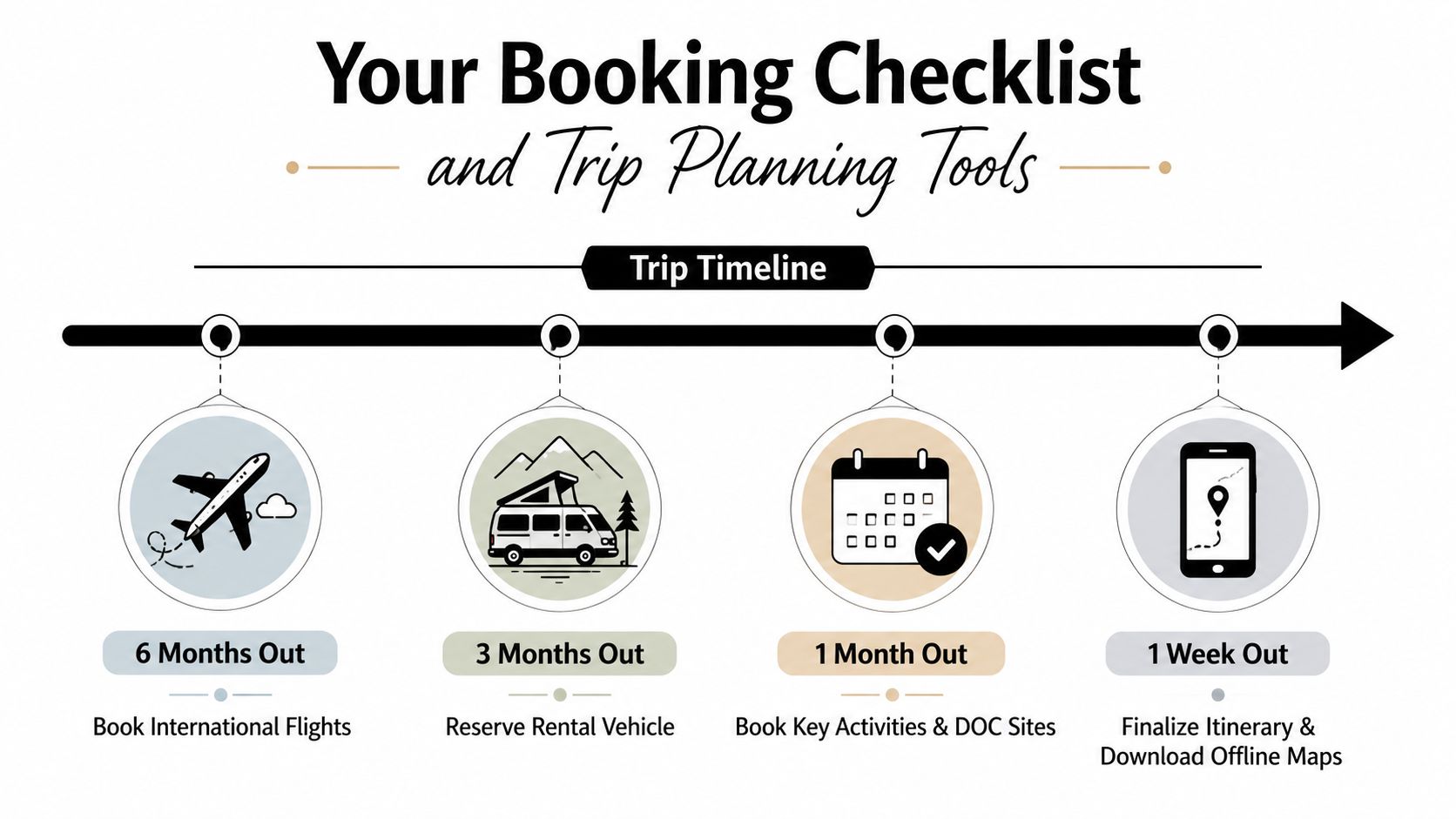
Book the expensive, fixed parts first. International flights need to be sorted early, rental vehicles and popular internal routes should be secured well before peak periods, and the activities that sell out need to be on your calendar before you land. That leaves room to stay flexible without getting trapped by last-minute pricing.
A simple booking order that works
- Six months out: lock in flights if your dates are fixed, especially for peak-season travel.
- Three months out: reserve the vehicle or intercity transport plan that matches your route.
- One month out: book key activities and DOC sites that matter to your itinerary.
- One week out: finish the route, download offline maps, and check your payment cards.
The best tools are boring and useful. Use a budget calculator to stress-test your daily spend, use route-planning maps to cut out unnecessary zigzags, and keep alerts on for deals that fit your real plan instead of your fantasy version of the trip. The travel planning checklist gives you a clean final pass before you commit money.
Do not over-plan the free days, but do over-plan the costly ones. That is how you keep budget travel New Zealand realistic instead of aspirational.