You've probably landed in Lima with one eye on your onward trip and a half-packed day bag, wondering whether the city is worth more than a quick stop. It is. Lima rewards travelers who slow down, walk a little, eat well, and choose neighborhoods with intention, because the city's best moments come from street-level details, not rushed sightseeing.
That matters here because activities in Lima, Peru work best when they're matched to how you travel. Budget travelers can keep costs low without feeling bored. Solo female travelers can stay comfortable by timing outings well and sticking to livelier corridors. Photographers can chase light, texture, and coastal views without paying for a big tour every time. And if you care about travel that supports local people instead of just extracting from a destination, Lima has plenty of ways to do that too.
1. Explore Historic Centro Lima on Foot
Centro Lima gives you the city's oldest story in its most walkable form. The historic core dates back to the city's founding in 1535, and that colonial footprint still shapes the streets, plazas, churches, and palace facades you'll pass on foot. Because Lima sits in a very dry coastal desert, the area works especially well for slow morning wandering, when the light is softer and the plazas are easier to enjoy without heat fatigue. National Geographic's fast facts on Lima also helps explain why the district feels built for architecture, not for leafy shade.
Start with Plaza Mayor, then move at a relaxed pace rather than trying to “tick off” every landmark. If you want a practical way to save money, join a guide through a hostel instead of paying a polished tour company. Many hostel-led walks feel more conversational and less scripted, and they're usually a better fit for travelers who want context without overspending.
A smart route pairs the plaza with nearby churches and historic houses, then finishes in Barrio Chino for lunch. That last stop matters because you get a real neighborhood meal instead of a generic tourist café, and it keeps the day grounded in everyday Lima rather than pure monument-hopping.
Practical rule: go early, carry water, and keep your camera ready for corners, balconies, and doorways. The best shots usually come before the crowds arrive.
For photographers, this is one of the easiest low-cost ways to capture Lima's texture. For budget travelers, it's hard to beat a full morning of history and street life for very little spend. For a visual approach to framing old-city scenes, see urban exploration photography tips.
2. Discover Street Art in Barranco and San Isidro
Barranco and parts of San Isidro are where Lima's creative energy feels loudest. Murals, pasted posters, gallery fronts, and painted walls turn ordinary walks into a moving outdoor exhibition. The appeal here is that you don't need a ticket, just time, decent shoes, and the curiosity to turn down side streets instead of staying on the main avenue.
Barranco works especially well for travelers who want a mix of art, cafés, and people-watching. Start at the Bridge of Sighs, then let the neighborhood unfold around you. The side streets change quickly, so the best approach is to walk slowly, look up often, and treat every wall as a possible photo stop. San Isidro is calmer and more polished, which makes it a good contrast if you want to see how Lima's art scene stretches beyond bohemian Barranco.
How to make the walk better
- Go on weekday mornings: Fewer crowds make it easier to photograph murals without a stream of people crossing the frame.
- Talk to local artists when they're open to it: Many are happy to explain a mural's meaning or technique if you're respectful and brief.
- Use offline maps: Barranco's smaller streets are best explored without relying on spotty data.
- Bring small cash for a coffee stop: A budget café break lets you stay out longer without turning the outing into an expensive restaurant visit.
This is also one of the better activities in Lima, Peru for solo travelers because it keeps you in lively, walkable areas during the day. If you care about travel that feels more authentic than checklist sightseeing, look for neighborhoods where working artists and local cafés still shape the atmosphere. For more on how to spot the difference, this guide to authentic travel experiences fits the mindset well.
3. Visit Lima's Top Museums Strategically
Lima's museums are worth your time, but only if you're selective. Trying to cram in too many in one day turns a cultural outing into a blur of labels and fatigue. The better move is to choose one or two museums that match your interests, then give yourself enough time to absorb what's inside instead of rushing to the exit.
If pre-Columbian art interests you, Larco Museo is the obvious anchor. If you want a broader historical frame, museums focused on anthropology or national history will give you a different perspective on Peru's past. The point isn't to collect museum visits. It's to leave with a deeper sense of how the country sees itself.
Skip the expensive guided package unless the topic is very specific to your interests. Museum pamphlets, room labels, and a translation app can do a lot if you're patient.
That approach also works better for budget travelers. You'll spend less, move at your own pace, and avoid the pressure that comes with trying to keep up with a group. For visitors who like structure, a museum day can be the most comfortable activity in the city because the pace is predictable and the environment is controlled.
Use a translation tool if your Spanish isn't strong, and don't be shy about taking breaks between rooms. Museums in Lima often reward slow observation. A single carved vessel, textile pattern, or ceramic detail can tell you more than a rushed loop through three institutions.
For travelers who rely on apps to keep days smooth, these travel app suggestions are especially useful when museum signage isn't in your strongest language.
4. Sample Peruvian Cuisine at Local Markets and Cevicherias
Lima's food reputation is real, but the strongest meals are often the least polished. Market stalls, neighborhood cevicherias, and simple lunch counters usually give you a truer read on the city than a tasting menu does. That matters if you want to eat well without planning your trip around restaurant bookings.
Food is one of the clearest ways visitors engage with Lima. PROMPERÚ's visitor data for Lima shows that gastronomic activities are a major part of how people spend their time in the city (PROMPERÚ tourism figures). The pattern is clear enough without overcomplicating it. Lima is a city where eating well is part of the daily rhythm, not a side activity.
For budget travelers, that usually means starting with ceviche, causa, and papas a la huancaína in places with steady local turnover. Markets work best in the morning, when produce looks fresher and the pace is lively without feeling rushed. Solo female travelers often do better in busier, established spots where staff are used to a steady flow of regulars. If you are unsure what to order, ask your hostel staff where they eat, then follow that advice instead of chasing random online rankings.
Keep the practical side simple.
- Carry small bills: Many market vendors prefer cash in small denominations.
- Watch the line: Stalls with local customers usually turn food over faster.
- Keep lunch flexible: The best meal may be one block farther than expected.
- Learn a few food words: Basic Spanish makes ordering easier and usually gets a warmer response.
For travelers who like food markets in other cities, Aix-en-Provence market culture is a useful comparison for how market spaces shape everyday travel.
5. Hike or Bike Through the Magic Water Circuit
The Magic Water Circuit works best when you treat it as a daytime park first and a nighttime spectacle second. The evening fountain show draws the biggest crowds, but that doesn't mean it's the only useful way to visit. If you want a calmer experience, the park's paths, green space, and fountain layout make for an easy walk or light bike outing before the evening rush.
This is a smart option for travelers who want low-cost outdoor time without leaving the city. It's also a good reset between heavier sightseeing days. You can move slowly, sit for a while, and still feel like you've done something visually satisfying.
The practical move is to arrive when the park is quieter, then decide whether you want to stay for the full show later. If you're traveling alone, daylight is more comfortable. If you're with friends, biking through the area can make the visit feel more playful and less scripted.
Best use of this stop: arrive before the crowds, walk the full loop, then leave before the evening crush unless the fountain show is your main reason for going.
Bring water and sunscreen, because the city's dry climate doesn't give you much natural cover. Golden hour is the better time for photos if you want reflections, movement, and color without the clutter of big groups. For travelers building a budget itinerary, this is one of the easiest activities in Lima, Peru to combine with nearby cultural stops in a single half-day.
If you're trying to keep costs down while still filling a day well, look for simple, free, or low-cost outing ideas like these free things to do. Lima rewards travelers who plan around free movement, not just paid tickets.
6. Day Trip to Callao's Historic Coastal Sites
Callao offers a different side of Lima's coastal identity. The port area feels more working-class and maritime than the polished tourist districts, which is exactly why it's worth the short ride. You get history, seafood, ocean air, and a less curated urban scene.
The main draw is Real Felipe Fortress, but the true value is in the surrounding atmosphere. Fishing boats, waterfront streets, and simple cevicherias create a day that feels more lived-in than stage-managed. That matters for budget travelers, because a day trip that mixes transport, history, and an affordable meal gives better value than chasing a string of separate paid attractions.
Go in daylight and keep the outing focused. The area is best experienced when you can move comfortably, observe the port, and sit down for fresh seafood without rushing. This is also where local recommendations matter more than glossy reviews. Ask around for the places busy with workers and residents, not just travelers.
A practical version of this day is simple. Visit the fortress first, walk the promenade, eat lunch at a waterfront spot, then head back before evening. That keeps the logistics easy and avoids unnecessary friction. If you're interested in birdlife or boat activity, you can extend the trip, but don't force an overload of stops.
For solo travelers, daylight and clear routing are primary safety advantages here. For photographers, Callao gives you stronger documentary material than many polished city-center scenes. For sustainable travel, choosing locally owned food spots in a working port district keeps your spend in the neighborhood instead of sending it into a chain economy.
7. Take a Budget Cooking Class or Food Tour
A budget cooking class in Lima gives you more than a meal and a recipe. It shows how market shopping, local ingredients, and home cooking habits fit into everyday life. For travelers who want something practical to take home, that is a stronger use of time than another polished stop built for quick photos.
Hostel-run classes often feel more relaxed than larger commercial tours. You usually cook with a small group, ask direct questions, and hear how people use the ingredients instead of listening to a rehearsed pitch. If the class includes a market visit, the experience becomes much more useful, because you see the produce, spices, and seafood before you ever start cooking.
A structured class also works well if you want a break from walking but still want a real activity. On a wet or tiring day, you stay indoors, learn a skill, and eat what you have made. Solo travelers often appreciate the easy conversation, while budget-conscious visitors get a built-in meal that replaces one more restaurant stop.
Choose the right option by checking a few details first:
- Check whether market time is included: Shopping before cooking gives the lesson more local context and often makes the whole experience feel less scripted.
- Ask about recipe handouts: A class is more useful when you can recreate the dish later without guessing.
- Read recent reviews carefully: Pay attention to comments about the teaching and pacing, not just whether the group had a good time.
- Arrive hungry: Many classes end with enough food for a proper meal, so you can treat it as lunch or dinner rather than a snack.
This is one of the better activities in Lima, Peru for travelers who want a deeper food experience without paying fine-dining prices. For a similar hands-on, place-based approach to market eating, this local market guide shows the same kind of practical food focus.
8. Explore Sacred Valley Day Trip to Pisac Ruins
Pisac is outside Lima, but it belongs on a serious Peru itinerary if you have the time and energy. The terraces, hilltop views, and archaeological setting give you a different kind of historical experience than Lima's urban monuments. This is less about city life and more about engineering, scale, and the surrounding terrain.
The trip asks more from you than a neighborhood walk. You need transport planning, a decent fitness level, and enough patience to make the distance worthwhile. But if you want a day that feels expansive and memorable, Pisac delivers that in a way few Lima-area outings can.
Make the trip realistic
Bring water, sunscreen, a warm layer, and sturdy shoes. The terrain can be steep, and the altitude changes the feel of the day fast. If altitude affects you easily, don't try to power through on ego alone. Stay overnight in the Sacred Valley or spend time acclimatizing before you push farther.
A local guide can make a huge difference here because the site becomes much richer once the terraces and ceremonial spaces are explained in context. After the ruins, the market adds a human scale to the day through crafts and food. That combination of archaeology and everyday commerce is what makes Pisac feel alive rather than just preserved.
For travelers aiming for low-impact exploration, this kind of day trip often feels more grounded than the higher-traffic bucket-list circuit. It's a good reminder that activities in Lima, Peru don't have to stay inside the city to still serve a thoughtful, budget-aware trip.
9. Volunteer or Participate in Community Experiences
Meaningful travel in Lima doesn't have to mean formal volunteering for months on end. Short, well-vetted community experiences can still create real connection if you choose carefully and show up with humility. Teaching English, helping with cleanup projects, supporting animal rescue centers, or joining community art programs can all be worthwhile when they're locally organized and transparent.
The key is to avoid feel-good volunteering that exists mostly for visitor convenience. Ask where the money goes, who benefits, and what the actual output is. If an organization can't explain its impact clearly, keep looking. Short commitments are usually better than overpromising, especially if you're new to this kind of travel.
This type of activity suits travelers who want to contribute instead of only consume. It's also a strong fit for solo travelers who like having a purposeful routine during part of the day. The best experiences usually come from local networks and community-led groups, not glossy international intermediaries.
Look for organizations that can name their beneficiaries, explain their goals, and describe what changes after volunteers leave. If they can't, that's a red flag.
Workaway, HelpX, and WWOOF can be useful starting points, but they're only as good as the host vetting you do. Read testimonials, ask direct questions, and start small. A week of genuine participation is more valuable than a longer stay that doesn't fit your skills or the community's needs.
For travelers who want their trip to mean more than moving through landmarks, this may be the most rewarding activities in Lima, Peru category of all.
10. Budget Neighborhood Walks in Miraflores and Barranco
You don't need a formal tour to understand how Lima changes from one district to the next. Miraflores and Barranco are both made for walking, and a self-guided loop through them is one of the best low-cost ways to see the city's coastal face and creative side. The best part is that you can shape the day around your own pace, energy, and budget.
Miraflores gives you polished promenades, ocean views, and easy café stops. Barranco gives you color, irregular streets, art, and a more bohemian rhythm. Walking between them ties the two moods together and helps you understand why so many travelers stay in these neighborhoods while still missing the full picture of the city.
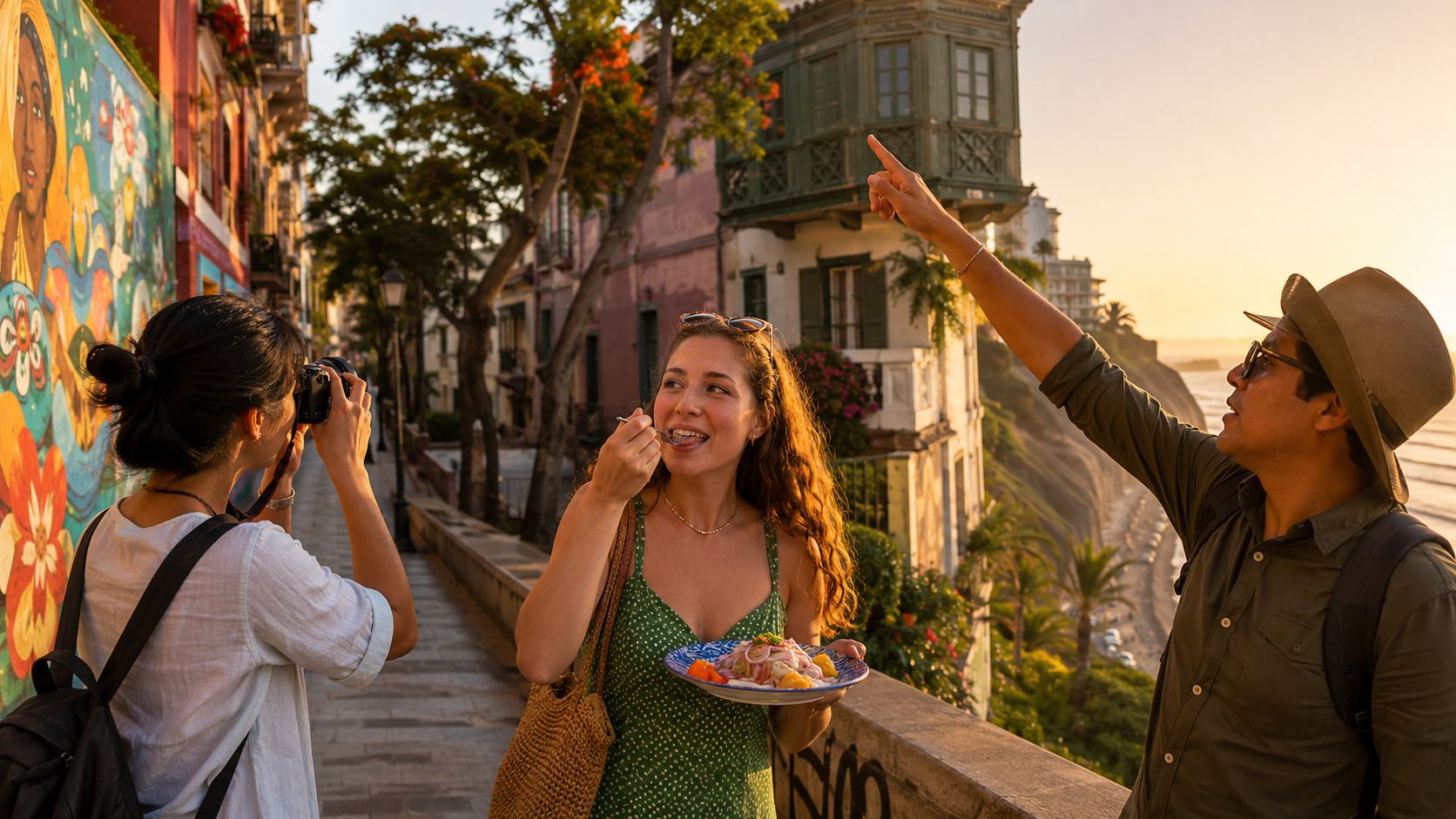
For photographers, the coastal light is a major reason to linger. The cliffs, paths, and public overlooks are especially rewarding near sunset, when the air softens and the city feels calmer. For solo female travelers, daytime walking in these busy districts usually feels easier to manage than trying to overpack the evening.
A smart budget strategy is to buy one coffee and use it as your anchor point for an hour of observation. That gives you a break, a restroom, and a chance to watch local life without paying for a full restaurant meal. Bookstores, galleries, and public viewpoints can fill the rest of the route for free.
This is one of the most dependable activities in Lima, Peru because it works whether you have half a day or a full one. It's simple, flexible, and easy to repeat in different light. If you only do one neighborhood-based outing, make it this one.
Top 10 Lima Activities Comparison
| Activity | Complexity 🔄 | Resources ⚡ | Expected outcomes 📊 | Ideal for 💡 | Key advantages ⭐ |
|---|---|---|---|---|---|
| Explore Historic Centro Lima on Foot | 🔄 Low, self-guided, daytime only | ⚡ $0–10, comfy shoes, water, 2–4 hrs | 📊 Historical immersion, strong photo opportunities | 💡 Budget travelers, photographers, solo daytime explorers | ⭐ UNESCO architecture, free plazas, close monuments |
| Discover Street Art in Barranco and San Isidro | 🔄 Low, self-guided, roaming routes | ⚡ $0–5, smartphone/maps, 3–4 hrs | 📊 Contemporary cultural insight, ever-changing murals | 💡 Urban explorers, art lovers, photographers | ⭐ Vibrant murals, artist access, café culture |
| Visit Lima's Top Museums Strategically | 🔄 Medium, planned timing (discounts/free hours) | ⚡ $5–20 per museum, 2–3 hrs each, translation app | 📊 Deep historical/contextual learning, curated exhibits | 💡 History enthusiasts, cultural immersion seekers | ⭐ World-class collections, climate-controlled exhibits |
| Sample Peruvian Cuisine at Markets & Cevicherias | 🔄 Low, choose busy vendors, basic navigation | ⚡ $2–8 per meal, small bills (soles), morning visits | 📊 Authentic culinary knowledge, affordable meals | 💡 Foodies, budget travelers, market explorers | ⭐ Genuine flavors, supports local vendors, very affordable |
| Hike or Bike Circuito Mágico del Agua | 🔄 Low, easy walking/biking; avoid evening crowds | ⚡ $0 daytime; bike rental $3–5/hr; 1–2 hrs | 📊 Relaxation, green-space exploration, photos | 💡 Slow travelers, fitness enthusiasts, photographers | ⭐ Free daytime entry, interactive fountains, safe park |
| Day Trip to Callao's Historic Coastal Sites | 🔄 Medium, short transit, local navigation | ⚡ $8–15 total (transit + entry + meal), half-day | 📊 Coastal history, working-port scenes, fresh seafood | 💡 History buffs, foodies, photographers | ⭐ Real Felipe fortress, authentic fishing atmosphere |
| Take a Budget Cooking Class or Food Tour | 🔄 Medium, booking + multi-hour commitment | ⚡ $15–30 via hostels ($50+ tour companies), 4–6 hrs | 📊 Practical skills, recipes, social exchange | 💡 Foodies, solo travelers, learners | ⭐ Hands-on market-to-table learning, take-home recipes |
| Explore Sacred Valley Day Trip to Pisac Ruins | 🔄 High, long travel, altitude, logistics | ⚡ $20–35 (transport, entry, guide), 5+ hrs travel | 📊 Dramatic landscapes, Incan archaeology, market finds | 💡 Hikers, photographers, history enthusiasts | ⭐ Less-crowded Incan terraces, panoramic Andean views |
| Volunteer / Community Experiences | 🔄 High, vetting orgs, longer commitment | ⚡ Free–$150/week, 1+ week, Spanish helpful | 📊 Meaningful impact, deep cultural exchange, personal growth | 💡 Extended-stay, socially conscious travelers, solo females | ⭐ Direct community benefit, transformative experiences |
| Budget Accommodation Neighborhood Walks (Miraflores & Barranco) | 🔄 Low, self-guided, flexible timing | ⚡ $0–10 (optional cafés), few hours | 📊 Neighborhood insight, coastal views, local life | 💡 Budget travelers, photographers, slow travelers | ⭐ Free promenades, diverse architecture, safe daytime |
Your Blueprint for an Unforgettable Lima Adventure
Lima rewards travelers who don't treat it like a checkpoint. The city's best experiences come from mixing old and new, cheap and meaningful, busy and quiet. A morning in Centro Lima, an afternoon in Barranco, and a market meal can teach you more about the city than a rushed list of headline attractions ever will.
The strongest pattern across the best activities in Lima, Peru is this: the more local and time-sensitive the experience, the better it tends to feel. Historic streets are best early. Coastal walks are best in good light. Markets are best when local buyers are present. Museums are best when you choose one or two and absorb them. And community experiences are best when they're led by people who live the reality of the place, not just package it for visitors.
If you're budget-conscious, lean into walking, public spaces, markets, and self-guided neighborhood exploration. If you're traveling solo, keep your days anchored in lively areas and use daylight to your advantage. If you're chasing photos, prioritize the coast, mural districts, and golden hour. If you care about ethical travel, spend where local vendors, artists, and community groups can benefit.
Lima doesn't ask you to do everything. It asks you to pay attention. The traveler who walks slowly, eats locally, and chooses experiences with care usually leaves with the strongest memories and the least regret. That's the version of the city worth aiming for, and it's much easier to build than a flashy, expensive itinerary that never really touches the place.
Travel Talk Today helps you build trips like this with practical budgeting advice, safety-aware solo travel guidance, and destination ideas that go beyond the obvious highlights. If you want more thoughtful, affordable, and locally focused planning for Lima and beyond, visit Travel Talk Today and start shaping a trip that feels as good as it looks.