You've got the tabs open, the dates are half-decided, and the trip still looks affordable in your head. Then you start pricing flights, hotels, food, and local transport for real, and the number you thought you had disappears fast. That's exactly why a travel budget calculator matters. It turns a vague wish into a trip you can pay for, compare, and defend before you book anything.
A good calculator doesn't promise a magic total. It does something better, it forces structure. It separates fixed costs from daily spending, splits the bill by person when you're traveling with others, and gives you a clean way to test whether one itinerary is smarter than another. The right tool is a cost-aggregation system that combines transportation, accommodation, food, activities, and miscellaneous spending, then converts those totals into per-person and per-day estimates so you can compare scenarios quickly and consistently, which is the point of the whole exercise fintoolsuite's travel budget calculator framework.
If you've ever guessed low and spent the trip stressed, you already know the two failure modes. First, people undercount the obvious categories. Second, they ignore the way itinerary choices change the cost of being on the road. A calculator is useful only if it makes both mistakes harder to make.
Why Most Trip Budgets Fall Apart Before Departure
The classic mistake is easy to spot. Someone says, “Flights will be around this much, hotels maybe that much, and food can't be too bad.” Then the trip gets priced for real, and the biggest costs show up in chunks, not evenly. Transportation can drain the budget early, accommodation climbs with every night, and activities can jump from optional to expensive depending on the destination and travel style.
The number in your head is not a plan
A travel budget calculator matters because it replaces guesses with a repeatable method. That matters more than most travelers want to admit. Good planning starts with a total trip estimate, then turns that into a savings target before departure, because a small miss at the start can force the rest of the trip onto a credit card later, as outlined in MoneyFit's vacation budget calculator guidance.
Practical rule: if you can't explain where the money goes, you don't have a budget yet.
I see the same mistake over and over. Travelers lock onto the headline price of a flight or hotel and ignore how the rest of the trip behaves. A calculator helps by forcing every cost into a fixed, daily, or one-off bucket, which is far more useful than staring at one big total and hoping it holds.
That is the difference between a trip you can afford and a trip that falls apart before you leave. Budget mistakes usually start with itinerary mistakes, so use these trip planning tips while you price the trip, not after. It's not pricing the actual way you'll move through the trip.
The Four Cost Categories Every Calculator Needs
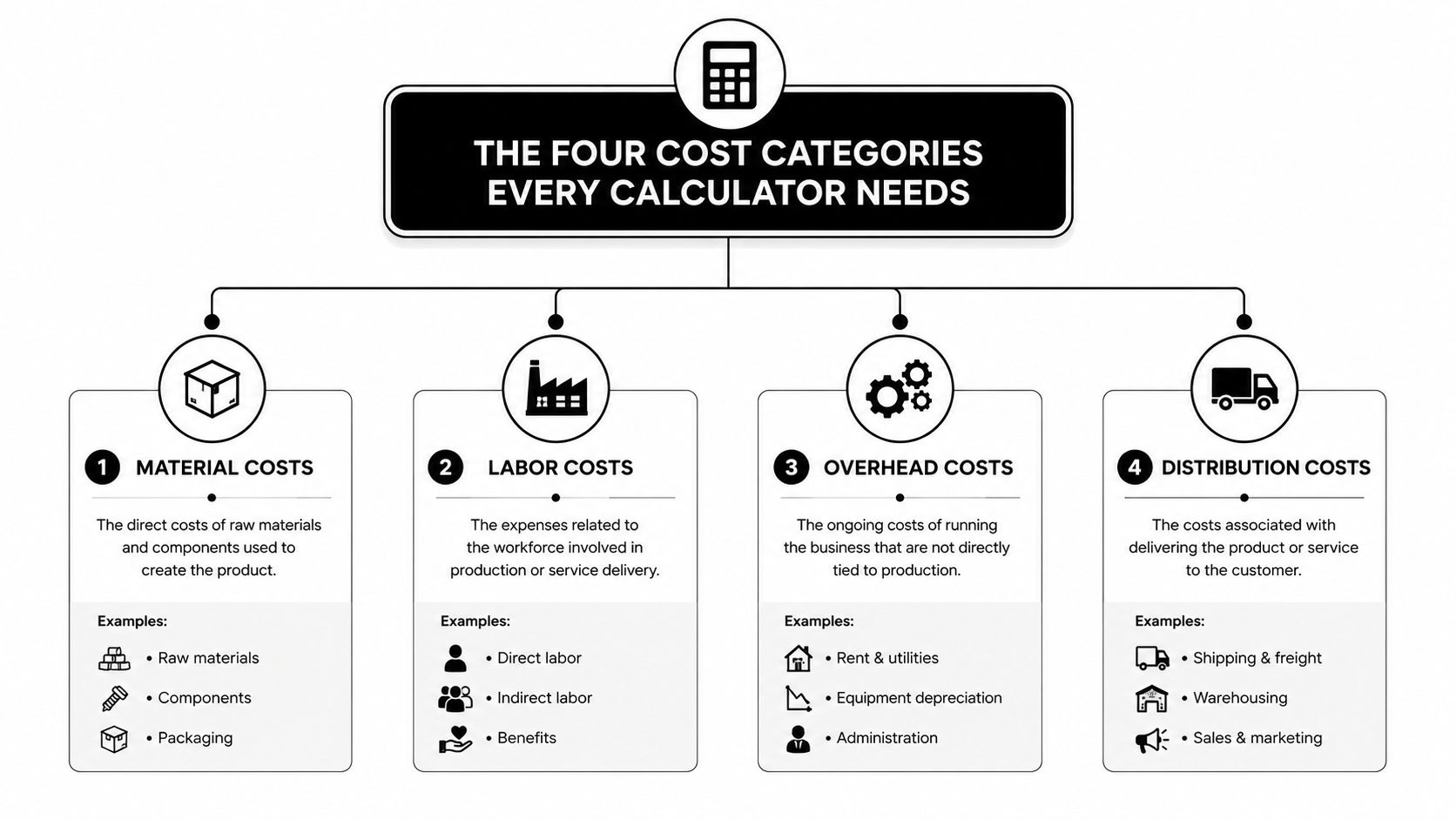
A travel budget calculator only works when it forces the trip into four buckets, transportation, accommodation, food, and activities. Skip that split and you end up with a number that looks tidy but hides the trade-offs. Travel spending is lumpy. One category usually eats a bigger share than the rest, and the balance shifts with distance, destination, and how fast you move through the itinerary.
What belongs in each bucket
Transportation is not just the flight. Count airport transfers, train rides between cities, rideshares, parking, and any intercity legs you are adding because the itinerary is spread out. Accommodation is the room rate plus the extra charges beginners miss, resort fees, extra guest charges, and the cost of shifting between hotels. Food includes groceries, cafés, snacks, and the dinners that always land higher than the rough estimate in your head. Activities cover paid tours, museum entries, attraction passes, and rentals like bikes, scooters, or gear.
Budget split reference: one planning framework puts roughly 35-45% into transportation, 25-35% into accommodation, 20-25% into food, and 15-20% into activities, with the split shifting by destination and style.
Treat that split as a check, not a rule. If your numbers look way off, you either found a real bargain or you missed a transfer, a fee, or a full day of eating out.
Use the fixed, daily, one-off test
Before you type anything into a calculator, sort every line item by how it behaves. Flights are fixed. Most food and local transport are daily. A visa, a SIM card, or a gear rental is one-off. That distinction matters because the same trip gets cheaper or more expensive depending on how long you stay.
A clean budget also needs to account for itinerary friction. A city break with one hotel and a walkable center has fewer moving parts than a route with multiple transfers, paid baggage, long airport runs, and expensive last-mile transport. That extra friction is real money, and calculators that ignore it make the trip look cheaper than it is.
Write your own four-category list for the trip you are taking. If a line item does not fit neatly, do not force it. Put it where it behaves financially, not where it looks tidy on the spreadsheet. If you want a sharper way to trim the list, compare it with these travel budget categories that save you money, then cut the items that only add friction without adding value.
Per-Day vs Fixed Costs and How to Estimate Each
A travel budget calculator only works if you split the trip into costs that behave differently. Some expenses stay fixed no matter how long you stay. Others grow with every day on the road. If you blur that line, the budget looks neat and turns useless fast.
Separate what scales from what doesn't
Flights, insurance, visas, and gear are fixed costs. Stretch a trip from seven days to ten and those numbers usually stay put. Food, local transport, baggage, and many activities move with the number of nights and the way you travel. That is why a calculator has to divide costs by both travelers and nights, not just by trip length.
It also has to account for itinerary friction. A city break with one hotel and a walkable center is cheaper to run than a route with multiple transfers, paid baggage, long airport runs, and expensive last-mile transport. That extra movement adds up in ways generic budgets miss.
A simple example makes the split clearer. Two people on a 7-night trip with a mid-range style can use the daily spend band to estimate the on-the-ground part of the budget, then add fixed costs on top. If a trip falls in the $150-250/day range, you have a workable frame for the daily spend before flights and other one-off items are added in. The destination still sets the ceiling, but this gets you close enough to tell whether the trip is realistic or padded with wishful thinking.
Use the daily bands as a self-check
Daily bands are useful because they expose bad assumptions early. Budget travel sits around $75-100/day, mid-range around $150-250/day, and luxury around $400+/day in MoneyFit's daily travel bands. If your number lands nowhere near the style you say you want, stop and fix the plan. Either the trip is cheaper than you expected, or you missed a cost that will show up later.
Don't confuse a daily average with a quote. A daily rate is a planning tool, not a booking price.
That warning matters because the average hides friction. It does not price the actual way you'll move through the trip. Taxes, transfers, a pricier meal, or a night where the easy option disappears can push the spend above the clean average fast. Use the average to screen the trip, then pressure-test the parts that break patterns, like airport transfers, intercity hops, and any day that forces you to buy convenience.
Currency, Fees, and Seasonal Swings That Wreck Estimates
The cleanest spreadsheet still lies if it ignores how you pay for things. Foreign transaction fees, ATM charges, and exchange-rate spreads chip away at the budget in small bites, and travelers usually notice them too late. Add seasonal pricing on top, and the same trip can look affordable one month and brutal another.
The hidden drag from payments and cash
Start with the obvious math. A 1.5% foreign exchange fee on a $3,000 trip is $45 gone before you've even had the first coffee. That does not include cash withdrawals, ATM charges, or the worse exchange rate you often get at the counter. The practical fix is boring but effective, use a card with no foreign transaction fees, withdraw larger amounts less often, and skip airport exchange booths when you can. If you need a refresher on card choices, how to avoid international transaction fees is the right place to start.
If your calculator leaves no room for those costs, it is incomplete. I'd rather see a slightly ugly estimate with a cushion than a polished fantasy that forgets how money moves abroad. You do not need perfect precision here, you need fewer surprises.
Seasonal swings change the whole budget
Timing matters just as much. Travel guidance for planning in this period says shoulder-season travel in April-May or September-October is often linked to lower flight and hotel prices, sometimes by a meaningful margin MoneyFit's timing guidance. That is not a tiny tweak. It can decide whether a destination fits your budget at all.
Recent budgeting guidance also warns that peak-season travel can be much more expensive than off-peak in some destinations CalculatorPlaza's destination volatility notes. That is exactly why broad daily averages are not enough. A trip to the same city in the wrong month can crush your plan, while flexible dates can rescue it.
The sanity-check is simple. If an online calculator gives you one daily rate and will not let you adjust by season, it is too blunt for real planning. Flexible dates, destination choice, and payment fees should all be part of the estimate, not afterthoughts. If you are comparing booking methods, the choice of season and how to avoid international transaction fees matter more than obsessing over tiny category differences.
The Hidden Cost Most Calculators Ignore
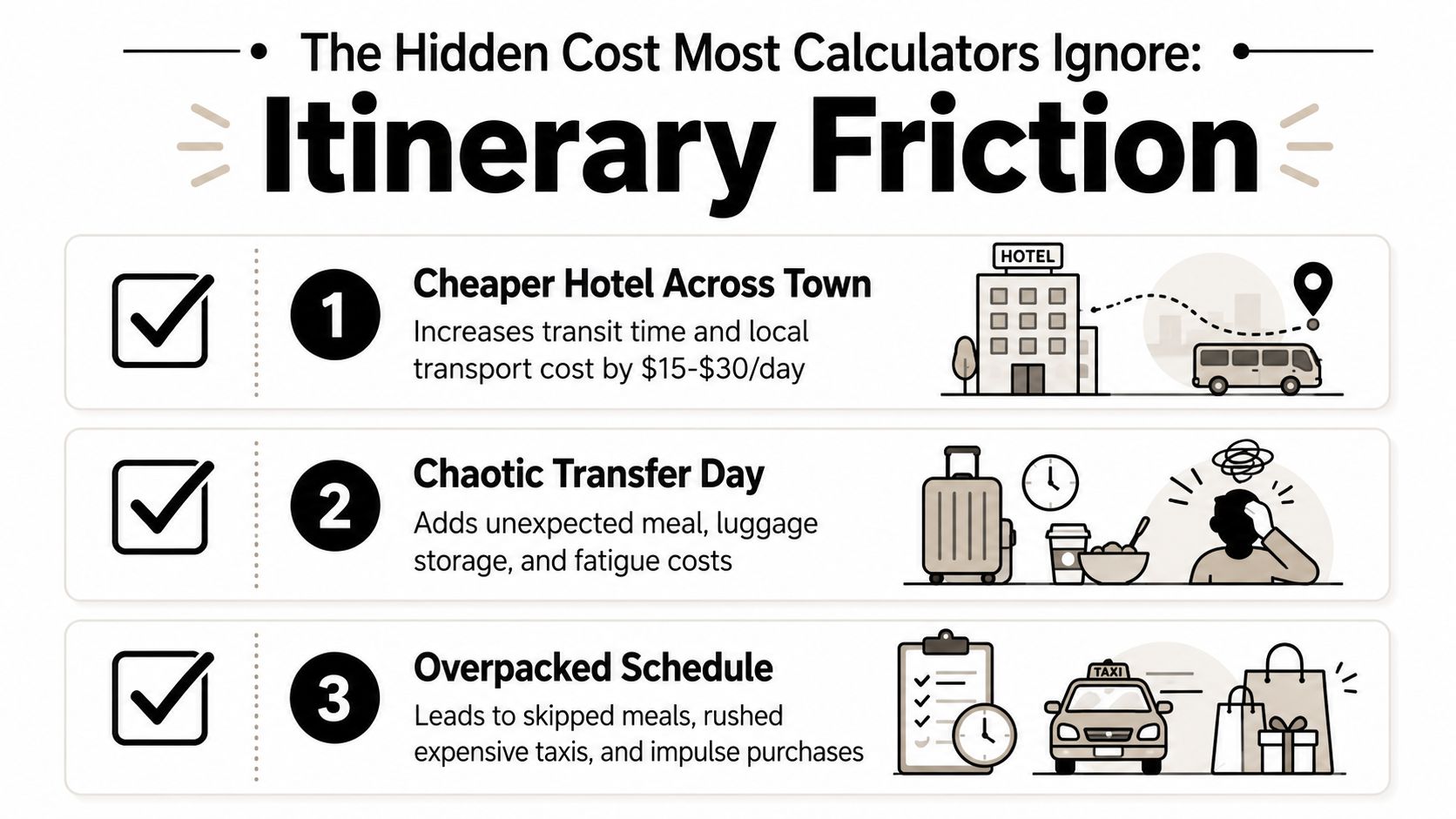
A trip can look cheap on paper and still drain your budget fast. That usually happens because calculators stop at visible items and ignore itinerary friction. A hotel that is cheaper but sits far from the action, a transfer that eats half a day, and a schedule packed too tightly can cost more in transport, meals, stress, and lost flexibility than the deal you thought you found.
Friction is a cost, even when it doesn't show up neatly
Take two versions of the same trip. Version one uses two hotel moves and three paid tours. Version two stays in one base, uses free walking days, and keeps the schedule loose. Version one often looks cheaper on the booking page, but it usually forces more transit, more baggage handling, more timing pressure, and more impulse spending when the plan gets messy.
That is the blind spot. A calculator that ignores friction is only pricing rooms and tickets. It's not pricing the actual way you'll move through the trip. If you pick the “cheap” hotel and spend half your day commuting back and forth, the savings are fake.
Rule of thumb: if a booking saves money but adds stress, time loss, or extra transfers, count those as real costs before you commit.
Price friction like an adult, not like a dreamer
You do not need perfect precision. You do need a rough number for the stuff calculators skip. Add a line for hotel changes, transfer hours, refund flexibility, and a safety margin for jet lag or weather. If one hotel choice creates more local transport, price that in. If a tour locks you into a tight transfer window, price the backup plan too.
The best budget travelers I know do not chase the lowest headline price. They chase the best total trip. I would rather book a slightly better base and keep the itinerary clean than save a little on paper and pay for it every day in inconvenience. If you are comparing protection against bad timing, a travel insurance comparison belongs in the same conversation, because disruption is part of the budget.
Worked Examples for Three Common Trip Types
The cleanest way to use a travel budget calculator is to compare trip styles, not just destinations. A budget backpacking run, a couple's mid-range getaway, and a family trip all behave differently, even if they land in the same country. The categories stay the same. The pressure points do not.
A backpacking trip lives or dies on transport efficiency and food costs. A mid-range couple's trip usually bends under accommodation spending and activity creep. A family trip gets hit hardest by convenience costs, rigid bookings, and the price of fixing mistakes on the fly.
Three trip styles side by side
| Trip Type | Daily Spend Band | Top Cost Driver | Friction Risk |
|---|---|---|---|
| Budget backpacking trip | Budget range, roughly $75-100/day | Transportation and food | Too many moves, too many transit tickets |
| Mid-range couple's trip | Mid-range range, roughly $150-250/day | Accommodation | Paying for comfort while overpacking activities |
| Family trip | Higher daily spend, often closer to comfort levels | Accommodation and activities | Transfer fatigue, booking rigidity, backup costs |
A backpacker can keep costs down by staying put, eating affordably, and using public transit. The trap is stitching the trip together with too many hops. Every extra transfer adds cost, eats time, and makes the plan more fragile.
A couple at mid-range usually loses money by upgrading room comfort while letting dining and activities drift upward. That is where a calculator needs to be honest, because a nicer hotel can hide a sloppy day-to-day budget. A family trip gets punished when the schedule is too tight and every delay forces a paid fix.
Read the trip, not just the destination
The same destination behaves differently depending on the setup. A backpacking trip across one country gets squeezed fast if you add too much intercity movement. A couple's trip gets more expensive when every dinner turns into a splurge and every afternoon becomes a paid experience. A family trip needs a real contingency line, because kids, weather, and logistics will break a neat plan.
I'd price the backpacking trip around transport simplicity first. I'd price the couple's trip around dining and attraction choices. I'd price the family trip around convenience and flexibility, because that is where money gets saved or burned.
If you want a better live-tracking setup for that kind of planning, use a dedicated travel budget app guide and compare it with your calculator before you book. The calculator is only the shell. The planning logic keeps the budget honest.
Choosing the Right Tool to Run Your Calculator
A travel budget calculator is only useful if it fits the way you plan and spend. If you only need a rough pre-trip estimate, a spreadsheet gives you control and makes the trade-offs obvious. If you want to track spending while you're on the move, an app keeps the numbers in front of you when you are tired, distracted, and more likely to spend loosely.
Pick the format that matches your behavior
Google Sheets or Excel is the better choice for serious planning. You can build your own categories, split costs by person, adjust for price swings, and add a real contingency line without waiting for a tool to offer the right template. That matters because trip budgets fail when the structure is too rigid for the trip you are taking.
A mobile app makes more sense once the trip starts. You need live tracking, not a rough memory of what you spent three days ago. A good app shows whether you are drifting over budget while there is still time to cut a meal out, skip a paid transfer, or slow down on extras. An online calculator is fine for a fast first pass, but it is a starting point, not a final answer.
Walk away from tools that miss the basics
Some tools look polished and still miss the part that matters. If the calculator cannot split costs cleanly between travelers, handle currency conversion without forcing manual guesses, or adjust for seasonal price changes, it will give you a tidy number that falls apart in real use.
A calculator also needs a contingency line. Without one, every delay, bad weather day, or itinerary change pushes the plan into panic mode. That is how a trip that looked affordable online starts leaking money after the first few bookings.
Revisit your budget before you book, then check it again during the trip. Travel spending changes fast, especially when transport gets messy or a destination gets pricier in a busy period. If you want a practical shortlist of apps that help while you are on the road, compare your options with these best travel apps and pick the one that matches how you travel, not the one with the slickest interface.