The heat hits differently after a morning at Chichén Itzá. Stone reflects the sun back at you, your water bottle is suddenly empty, and that first thought of cool freshwater starts to feel less like a bonus and more like the second half of the whole trip. This is the moment when choosing the right cenote close to Chichen Itza matters.
Some travelers want the famous plunge with hanging vines and postcard views. Others want quiet water, fewer people, or a place that feels more rooted in local life than in bus itineraries. The best choice isn't the same for everyone, and that's why a generic roundup usually falls short.
This guide is built for the traveler who wants more than a quick dip. You'll get practical blueprints for each stop: what kind of experience it delivers, when it works best, what trade-offs come with it, and how to turn a standard ruins day into something that feels personal. Some of these cenotes are made for swimming. Some are better for photography. One shouldn't be approached as a swim stop at all.
If you're standing in that exact planning moment right now, deciding whether to tack on a cenote after the ruins or make it a central part of the day, start here. A great Chichén Itzá day is memorable. A well-chosen cenote afterward makes it unforgettable.
1. Cenote Ik Kil The Iconic Postcard-Perfect Plunge
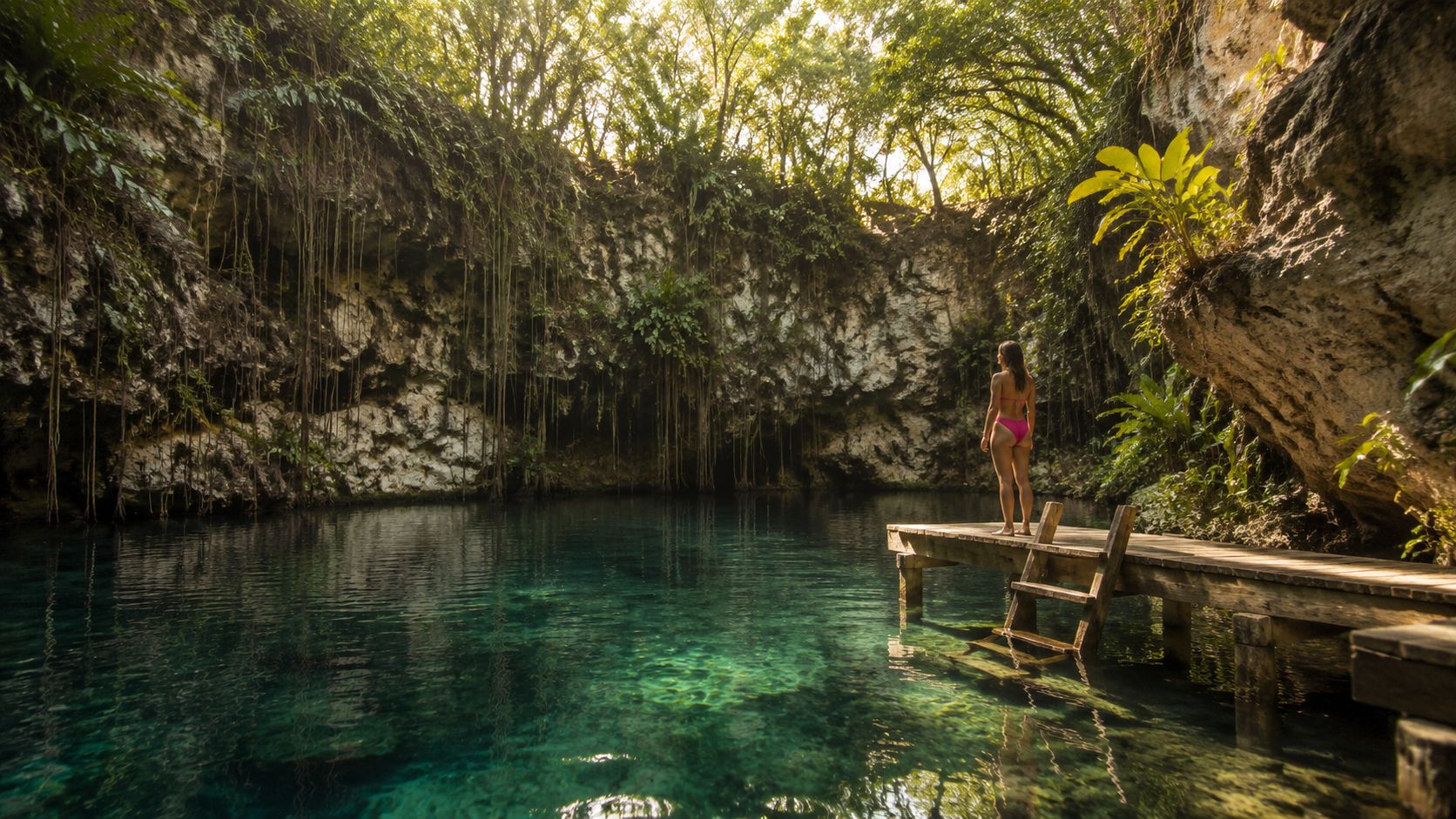
You finish the ruins hot, bright-eyed, and slightly overcooked, then Ik Kil gives you the fastest possible reset. The staircase drops, the temperature shifts, and that first view of vines hanging into blue water lands exactly the way travelers hope it will.
Ik Kil is the closest high-profile swim stop to Chichén Itzá, and that convenience is the whole point. According to Chichén Itzá cenote visitor information, it sits about 3 kilometers away, the cenote is roughly 43 meters deep and 45 meters across, the water lies far below the rim, and locker rentals are available for an added fee. Those details explain why it works so well after the ruins. You get a dramatic cenote experience without spending the best part of your afternoon in transit.
Visitor's blueprint
This is the cleanest pairing for travelers who want a classic Chichén Itzá day with very little logistical friction. Arrive at the archaeological site early, finish before midday crowds and heat peak, then head straight to Ik Kil for a swim and a slow lunch nearby if time allows. If you are driving yourself, keep a dry change of clothes ready in the car and pack cash for small on-site extras.
Ik Kil suits first-time cenote visitors, mixed-age groups, and anyone who wants infrastructure instead of improvisation. Life jackets are part of the setup, access is straightforward, and the stairs are manageable for many travelers, though they can still feel steep on the way back up.
The trade-off is obvious. You are choosing beauty and convenience over solitude.
Go at opening if you want calmer water and cleaner photos. Late afternoon can also work well, especially if your priority is a shorter stop after the ruins rather than a long swim. Midday brings the heaviest tour-bus rhythm, and Ik Kil feels most commercial then.
If your Yucatán trip is built around memorable swims, Ik Kil can be the easy-entry version of a bigger water-focused route, much like planning other confidence-building experiences such as swimming with whale sharks in Mexico, where timing and comfort in the water shape the day.
What works and what doesn't
What Ik Kil does better than almost any cenote near Chichén Itzá is instant impact. The open circular shaft, the hanging greenery, and the viewing angles from both the stairway and the water make it feel cinematic without needing a long approach or a complicated plan.
What it does not offer is a hidden local atmosphere. Expect shared space, set procedures, and plenty of other travelers who had the same good idea.
For photography, the best strategy depends on where you stand. From the upper rim, use a wide frame to capture the full opening and the curtain of vines. From water level, shoot upward and include the rock walls to show scale. Keep electronics in a dry bag, and if you want cleaner compositions, wait a minute between groups instead of rushing the shot.
A final practical note. Wear reef-safe sunscreen only if you apply it well before swimming, and skip it entirely if possible. Cenotes are fragile systems, and Ik Kil stays beautiful only if visitors treat it like freshwater habitat first, photo stop second.
2. Cenote Oxman The Adventurous Rope-Swing Favorite
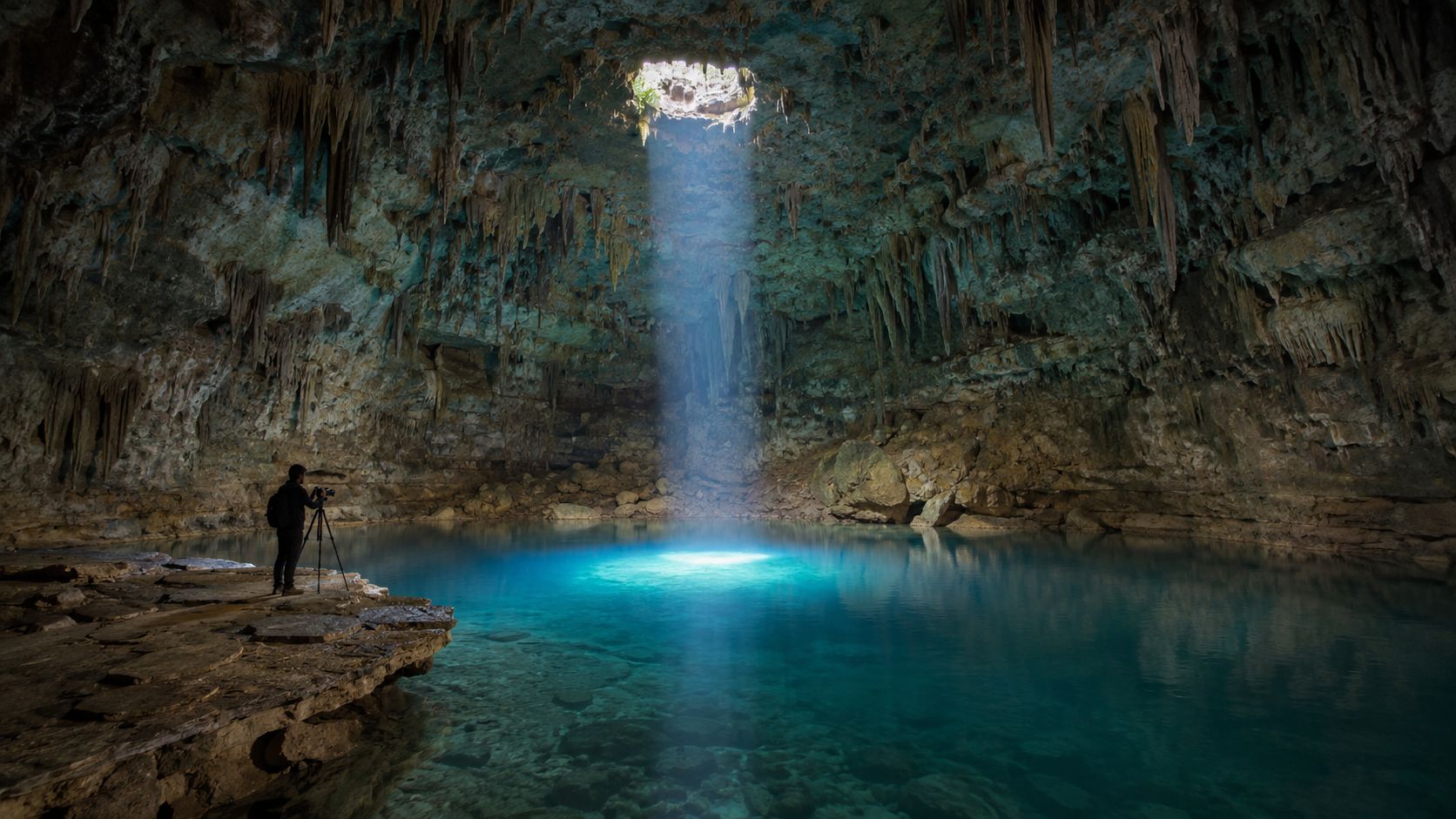
Oxman suits travelers who want their cenote stop to feel playful, not polished. The rope swing changes the whole mood. Instead of arriving, taking a few photos, and swimming a lap, you end up watching strangers cheer each other on, debating whether to jump, and staying longer than planned.
The setting helps. Because it's on hacienda grounds, the visit feels like more than a swim. You get a semi-rustic cave atmosphere, then surface back into a property where relaxing afterward feels appropriate.
Visitor's blueprint
This is one of the best picks if you're pairing Chichén Itzá with Valladolid. Do the ruins first, have lunch in town, then spend the afternoon at Oxman when you're ready for something less historical and more physical. It turns a hot sightseeing day into a two-part experience instead of one long endurance test.
If you like building themed Mexico itineraries around memorable swims, this kind of stop pairs well with bigger wildlife days later in your trip, like swimming with whale sharks in Mexico, where timing and confidence in the water matter just as much.
Trade-offs worth knowing
Oxman is better for action than serenity. The rope swing is the draw, so if your ideal cenote experience is quiet floating and uninterrupted reflection, you may find the energy a little busy.
On the other hand, it's excellent for groups with mixed personalities. One person can jump repeatedly, another can shoot photos, and someone else can head for the pool or restaurant. That flexibility is what makes Oxman practical, not just fun.
- Best for photographers: Use a fast shutter speed if you want a clean rope-swing frame.
- Best for value seekers: If the site offers a ticket package with restaurant credit, that's usually the smarter choice than paying piecemeal.
- Best timing: Weekdays tend to feel calmer and give you more space to enjoy the swing without a queue-heavy atmosphere.
Go to Oxman when you want a cenote day with movement. Skip it if you want your swim to feel meditative.
3. Cenote Yokdzonot The Community-Run Hidden Gem
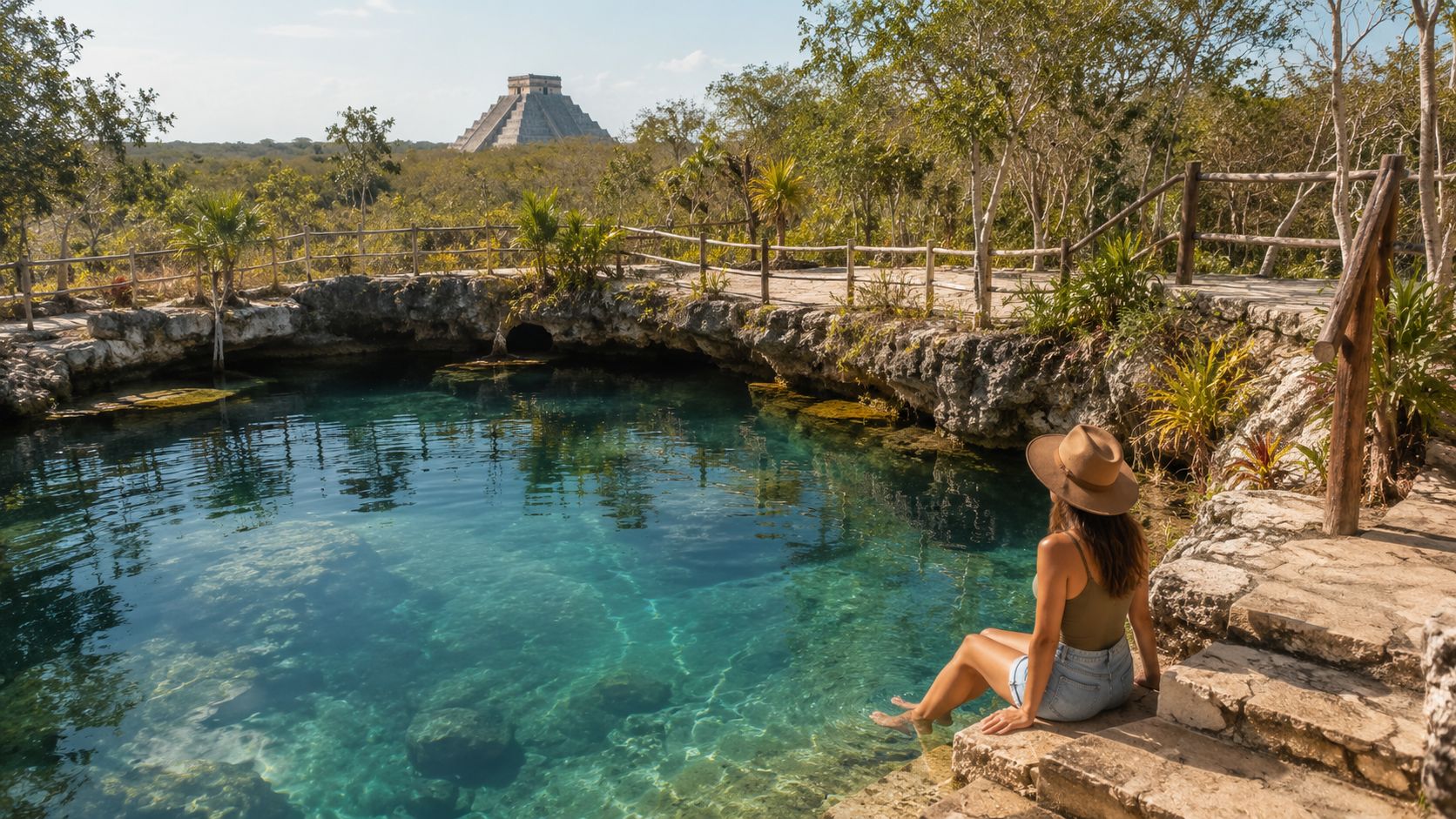
Yokdzonot is the cenote I'd point travelers toward when they tell me they want something meaningful, not just pretty. The water is inviting, the setting is more peaceful than the headline-grabbers, and the experience carries a stronger sense of place because it's community-run.
That matters. A lot of cenote content focuses only on the swim itself, but some of the best travel days come from spending money where the visit feels connected to local stewardship instead of just volume tourism.
Visitor's blueprint
This works best as a slower afternoon after Chichén Itzá. Don't rush it. Have a meal on site, sit longer than you normally would, and talk to the staff if they're available. Travelers often underestimate how much context changes the experience.
If sustainable travel is part of how you choose where to spend, this guide to traveling sustainably is a useful companion mindset for planning the day. Yokdzonot fits that style well because the stop feels rooted in community rather than spectacle.
What works better here than at bigger names
Yokdzonot tends to reward travelers who value calm over hype. You're less likely to feel like you're moving through a photo queue, and more likely to feel like you've found a place where the day can breathe a little.
That makes it especially good for couples, slow travelers, and anyone who doesn't need a famous shot to feel satisfied. It's also a strong answer for visitors who've already seen one high-profile cenote and want the next one to contrast rather than repeat.
- Best move: Bring cash. Rural sites can be less reliable for card payments.
- Best use of time: Stay for lunch instead of treating the restaurant as an afterthought.
- Best social tip: Ask staff about the cenote and the project behind it. Short conversations often become the most memorable part.
The only real downside is that if your priority is dramatic architecture or a bucket-list photo, Yokdzonot may feel understated. That's also exactly why many travelers end up loving it.
4. Cenotes X'keken & Samula The Twin Underground Caves
Some cenote days are about cooling off. This one is about atmosphere. X'keken and Samula offer the cave-cenote experience many travelers imagine before they even reach Yucatán. You descend into shadow, your voice changes in the chamber, and the water reflects light in a way open cenotes can't quite match.
These two work best together. Visiting only one is fine, but the short distance between them makes the pair the better move if you're already making the trip.
Visitor's blueprint
Plan these as part of a Valladolid-focused day. They pair naturally with a town lunch and another cenote stop if you want a full immersion route. If Ik Kil is the easy add-on to Chichén Itzá, X'keken and Samula feel more like a dedicated cenote excursion.
Midday tends to be the sweet spot for cave light. When sunlight hits the ceiling openings well, the beams become part of the experience rather than just a bonus.
How to enjoy them without frustration
The biggest mistake here is expecting bright, easy swim conditions like an open cenote. These are darker, moodier, and more dependent on timing and camera settings.
Bring a waterproof phone pouch if you're not carrying a dedicated waterproof camera. It's one of those small pieces of gear that makes a big difference in cave cenotes, because you'll want your hands free and your device protected.
- X'keken first: Start with the more enclosed, dramatic chamber if you want the stronger wow factor up front.
- Samula second: It's a good follow-up because the dome-like feel opens things slightly.
- Ticket check: Pay attention to whether you're buying single entry or a combined option.
For photography, don't fight the darkness. Use it. Silhouettes, reflections, and the visible shaft of light are more compelling here than trying to force bright swim portraits.
5. Cenote Suytun The Instagram-Famous Stone Platform
Suytun is the place to go when photography is the priority and you know it before you arrive. The stone platform is what people come for. When the light lines up, the image is striking enough to justify the hype.
But this is also the cenote where expectations need the most adjustment. If you arrive hoping for a tranquil swim-first experience, you may leave disappointed. Suytun rewards patience, timing, and a willingness to accept that many people are chasing the same shot.
Visitor's blueprint
Treat this as a dedicated photo stop, not a spontaneous cool-down break. Give yourself buffer time, especially if you're visiting during high-demand hours. The difference between a rushed stop and a satisfying one is often whether you expected to wait.
If your route also includes Riviera Maya destinations later on, this roundup of things to do in Tulum can help you avoid stacking too many similar social-media-first stops into one trip. Suytun is best when it feels like one distinctive photography moment, not one more content queue.
The strongest Suytun strategy is simple. Decide before you go whether you're chasing the light beam or avoiding the crowd, because you usually won't get both.
What works and what doesn't
What works is obvious. The geometry is theatrical. The platform gives the cave a focal point, and the composition almost builds itself.
What doesn't work is trying to force a laid-back swim day around that setup. People are often there for photos, and the atmosphere reflects that.
- For the classic look: Sunny midday tends to be the target.
- For a calmer visit: Earlier can be better, even if the beam is less dramatic.
- For extra flexibility: On-site stays can help if the property offers access outside the busiest windows.
If you enjoy travel photography enough to build part of a day around one frame, Suytun is worth it. If not, there are stronger all-around cenote experiences close by.
6. Cenote Chihuán The Rustic Off-the-Beaten-Path Cave
You leave the highway, the road gets quieter, and the day changes pace. Cenote Chihuán suits travelers who want less infrastructure and more atmosphere. It feels rougher around the edges than the better-known cenotes near Chichén Itzá, but that is part of the appeal.
The cave setting is the draw. So is the sense that you found a place many day-trippers skip. Chihuán works best for visitors who are comfortable with simple facilities, a less polished arrival, and a little self-reliance.
Visitor's blueprint
Build this around a slower half-day, not a rushed add-on after a packed ruins schedule. I'd pair it with a simple lunch in a nearby town and leave breathing room for the drive, the descent, and time underground. Chihuán rewards patience more than speed.
It also helps to treat this stop like a low-service nature outing, not a managed attraction. Download offline maps before you leave. Bring cash, water, and a dry bag. If you want more ideas for shaping a quieter regional route beyond the headline stops, this guide to Yucatán Peninsula attractions worth adding to your trip is a useful planning companion.
What you gain, and what you give up
The trade-off is clear: fewer people, more cave mood, and a stronger sense of discovery, in exchange for less convenience. Signage may be limited. On-site support may feel minimal. If you forget something, you may not have an easy backup plan nearby.
That matters even more for solo travelers. Remote cenotes can be immensely rewarding, but they call for better judgment than a popular, full-service swim stop. Share your route, avoid arriving late in the day, and trust your instincts if the setting feels too isolated for your comfort level.
A few items make a big difference here:
- Bring your own basics: Towel, drinking water, and a snack.
- Prepare for the approach: Offline maps help if signal drops.
- Pack for the cave: A small flashlight or headlamp is useful in darker areas.
- Wear proper footwear: Wet stone steps and uneven ground can be slippery.
Chihuán is one of the better choices near Chichén Itzá if you want a cenote that still feels rustic. It is less forgiving if you show up unprepared. For travelers who value quiet, atmosphere, and a more personal experience, that exchange is often worth it.
7. Sacred Cenote (Cenote Sagrado) The Archaeological Wonder
You reach the Sacred Cenote after walking out of Chichén Itzá's monumental core, and the mood shifts fast. The chatter drops, the trees close in, and the site stops feeling like a checklist stop and starts feeling ceremonial. This is not the cenote to save for a swim. It is the one to visit if you want the ruins to make deeper sense.
The cenote sits about 300 meters north of the civic precinct and was linked to the city by a raised sacbe, as summarized in the Sacred Cenote overview. That approach matters. It shows this was part of the city's ritual design, not a random water hole on the edge of the site.
Visitor's blueprint
Time this stop for the second half of your Chichén Itzá visit, once you have already seen the main ceremonial buildings. The sequence changes the experience. After El Castillo and the Great Ball Court, the Sacred Cenote gives context to the relationship between power, belief, and water in the Maya world.
Plan for a slower visit here than the map suggests. You are not coming for adrenaline or a cooling break. You are coming to observe, read the interpretive material, and let the setting reframe the rest of the archaeological zone.
A practical pairing works well. Visit Chichén Itzá early, walk to the Sacred Cenote before the midday heat peaks, then head to a swimmable cenote later in the day. If you want to build that into a fuller regional route, this guide to Yucatán Peninsula attractions worth adding to your trip can help you shape the second half of the day.
Why this one calls for a different mindset
The Sacred Cenote is a large, steep-walled sinkhole, roughly 60 meters across and about 22 meters deep. Archaeological recovery from its bottom included offerings such as jade, gold, pottery, copal, obsidian, shell, textiles, wood, rubber, and human remains. That record is what makes this place so significant.
Treat it as a cultural site first. The trade-off is obvious. You give up the physical pleasure of a swim, but you gain a stronger understanding of why cenotes mattered far beyond recreation.
That difference shapes how to visit well.
Skip loud behavior, drone-style posing, or anything that turns the space into a casual photo prop. A quiet visit is the right approach here, both out of respect and because the atmosphere is part of what makes the stop memorable.
For photography, use restraint. Wide shots work better than close selfies, especially if you want to show the drop, the tree line, and the isolation of the water below. Mid-morning light is usually easier to work with than harsh noon sun, and a phone lens often struggles with contrast here, so tapping to expose for the highlights can save detail around the rim.
Sacred Cenote is one of the most meaningful cenote visits near Chichén Itzá. It is also one of the easiest to misread if you arrive expecting another swim stop. Show up with the right expectations, and it becomes one of the most memorable parts of the day.
7 Cenotes Near Chichén Itzá, Quick Comparison
| Cenote | Visit Complexity 🔄 | Resource Requirements ⚡ | Expected Outcomes / Impact 📊 | Ideal Use Cases 💡 | Key Advantages ⭐ |
|---|---|---|---|---|---|
| Cenote Ik Kil: The Iconic Postcard-Perfect Plunge | Very easy, paved stairs, developed site; can be crowded | Short drive (3 km), entry ~150 MXN, full facilities | Highly photogenic swim; iconic Yucatán experience | First-time visitors; photographers; quick Chichén Itzá combo | Dramatic visuals, excellent infrastructure |
| Cenote Oxman: The Adventurous Rope-Swing Favorite | Moderate, semi-open, steeper stairs; more rustic feel | Longer drive (~45 km), entry 150–250 MXN (packages), hacienda amenities | Adventurous, playful swim with rope-swing thrills | Thrill-seekers; Valladolid day-trippers; value-package seekers | Rope swing, relaxed ambiance, pool access |
| Cenote Yokdzonot: The Community-Run Hidden Gem | Easy–moderate, open-air cooperative site, fewer crowds | Short drive (~18 km), entry ~125 MXN, basic facilities; best by car | Quiet, authentic visit that supports local community | Sustainable travelers; cultural seekers; crowd-avoiders | Community-run, sustainable tourism, peaceful atmosphere |
| Cenotes X'keken & Samula: The Twin Underground Caves | Moderate, cave descents, enclosed spaces, can be busy | Longer drive (~42 km), combined entry 80–125 MXN, lockers available | Strong photographic impact (midday beams); efficient two-for-one visit | Photographers; cave/geology fans; efficient sightseers | Two distinct cave cenotes in one stop; dramatic light beams |
| Cenote Suytun: The Instagram-Famous Stone Platform | Moderate, enclosed cave, queued photo opportunity | Longer drive (~47 km), entry ~200 MXN, well-developed facilities | Iconic, highly shareable photo; staged but impressive experience | Instagrammers; photographers seeking a signature shot | Unique stone platform and striking light beam |
| Cenote Chihuán: The Rustic & Off-the-Beaten-Path Cave | High, off-grid access, minimal development, tricky navigation | Moderate drive (~32 km), entry ~100 MXN, bring supplies | Solitude and authentic adventure; minimal crowds | Adventurous, budget travelers; solitude seekers | Non-commercialized, authentic cave experience, low cost |
| Sacred Cenote (Cenote Sagrado): The Archaeological Wonder | Very easy, on-site at Chichén Itzá; viewing only | No extra travel; included in Chichén Itzá fee (~614 MXN) | Deep historical and cultural insight; contemplative stop | History buffs; archaeology enthusiasts; all Chichén visitors | Unparalleled archaeological significance and context |
Crafting Your Perfect Chichen Itza & Cenote Itinerary
The best cenote close to Chichen Itza depends less on rankings and more on the kind of day you want to build. If you want the easiest, most iconic plunge, Ik Kil is the obvious fit. If you want movement and energy, Oxman gives you a more playful afternoon. If your priority is community-rooted travel, Yokdzonot stands out for all the right reasons.
Travelers who love cave atmospheres should look hard at X'keken and Samula. Travelers with photography at the top of the list should be honest and choose Suytun for what it is. And travelers who value low-key discovery over convenience will probably remember Chihuán longer than the polished big names. Then there's the Sacred Cenote, which belongs on the itinerary not as a swim stop, but as one of the clearest ways to understand how water, ritual, and power shaped Chichén Itzá.
A practical day often looks like this. Arrive at the ruins early, before the site feels fully awake. Finish before the midday heat drains your energy, then head to a cenote that matches your mood instead of following the default crowd path. Some days call for a fast transfer and an easy swim. Others deserve a meal, slower pacing, and time to sit at the edge of the water without watching the clock.
A few habits make these days smoother. Bring cash for smaller sites. Pack reef-safe sunscreen, but apply it thoughtfully and follow local rules around showering before entry when required. Carry a dry bag or waterproof pouch if you plan to swim with your phone. If you're heading to a more rustic cenote, download your route before leaving and don't assume services will be available on site.
The bigger point is simple. Cenotes aren't just add-ons to the ruins. Done well, they complete the story of the region. They show you the water system that shaped settlement, belief, and survival in this part of Yucatán. When you choose carefully and visit respectfully, you get more than a refreshing stop. You get a day that feels layered, grounded, and very hard to forget.
Travel Talk Today shares practical, thoughtful travel advice for people who want more from a trip than a checklist. If you're planning your next Mexico itinerary, building a smarter budget route, or looking for ways to travel with more cultural awareness, explore more from Travel Talk Today.