You book a flight that looks like a bargain, find a hotel that fits the search filter, and feel as if the trip is practically paid for. Then the airport transfer appears, the hotel adds a fee you didn't notice, dinner costs more than expected, and every small purchase seems harmless until your card balance tells a different story.
A useful travel budget plan doesn't treat airfare and accommodation as the whole trip. It separates costs you can lock in before departure from spending that changes every day, then gives both categories room to move. That approach matters in a market where worldwide travel spending reached US$5.5 trillion in 2023, while another estimate placed global travel and tourism expenditure at US$6.45 trillion that year, with leisure travel accounting for around 80% of spending (Statista's global travel spending data). Your trip is smaller, but the budgeting lesson is the same: timing, destination, and daily choices can move the final total substantially.
The Trip That Looked Cheap Until Day Four
The trip looked affordable on paper. The traveler had booked a reasonable flight, found a hotel within the target rate, and selected only a few paid attractions. The spreadsheet showed two or three major lines, leaving the total comfortably below the money set aside.
The first day exposed the gaps. An airport transfer cost more than expected. The hotel added a resort or cleaning fee. A local SIM solved a connectivity problem that had never appeared during planning. Bottled water, coffee, tips, a rideshare, and a meal near a major attraction filled the spaces between scheduled activities.
Day two brought another transfer. On day three, bad weather forced a change and led to a ticket that was never in the original plan. By day four, the traveler was not spending recklessly. They were paying for the actual trip, rather than the stripped-down version priced at home.
Practical rule: If an expense can happen during the trip, include it in the plan, even when you cannot book it yet.
A booking total is only the starting point. Fixed costs include airfare, prepaid lodging, rail tickets, rental cars, insurance, visas, and activities purchased in advance. Variable costs include food, local transport, drinks, tips, shopping, spontaneous experiences, and small necessities. Fixed costs set the minimum required to go. Variable costs decide whether the trip remains comfortable or becomes stressful.
The practical split is simple: lock in what you can, then budget for what will fluctuate. Food prices can swing by neighborhood and travel style. Ground transport can rise when weather, distance, or late arrivals remove cheaper options. A buffer gives you room to absorb those changes without cutting an experience you value.
Guides often focus on finding a cheaper flight or trimming a hotel rate. Those savings help, but they do not protect a plan that ignores spending after arrival. Independent pricing models put flights at roughly 25% to 35% of total trip cost, hotels at 30% to 40%, food at 15% to 20%, and ground transport at 5% to 10% (Instant Trip Cost's travel-cost methodology). The mix changes by destination and travel style, but airfare is often only one part of the bill.
A workable travel budget plan separates fixed commitments from daily volatility, adds a contingency layer, and identifies substitutions before prices move. If one category rises, you can switch transport, meals, or activities instead of abandoning the trip.
The Complete Cost Stack of a Trip
A low fare and an attractive room rate can still produce an expensive trip by day four. Build the cost stack before choosing a booking site, and assign every planned dollar to a category instead of treating the headline price as the estimate.
Build the fixed layer first
Start with airfare or long-distance transport, then add lodging with taxes, cleaning charges, resort fees, and required deposits. Price the transport between airports, stations, neighborhoods, and overnight stops as well.
The fixed layer also includes costs travelers often overlook because they do not feel like daily spending:
- Entry requirements: Visas, permits, and destination-specific documentation.
- Protection: Travel medical insurance and cancellation coverage suited to the booking terms.
- Connectivity: A local SIM, eSIM, or roaming package.
- Prepaid experiences: Tours, museum reservations, shows, park permits, and excursions.
After the fixed total, estimate food, activities, and miscellaneous purchases as variable categories. The travel budget categories guide helps turn broad labels into separate planning lines, so forgotten costs do not disappear inside one vague daily allowance.
Give each category a realistic role
A hotel with breakfast may shift spending from food to activities. A safari can carry a high activity and transport base while requiring little local transit. A backpacker may save on accommodation but spend more time and money moving between destinations. The right allocation follows the itinerary, not a generic percentage split.
Prices also change the risk in each category. Food varies by neighborhood and travel style. Ground transport becomes more expensive when weather, distance, or a late arrival removes the cheaper option. Check current prices rather than recycling an old budget, then add a buffer where volatility is highest.
Keep fixed commitments separate from daily spending. If transport costs rise, switch meals, routes, or activities before cutting the experiences that matter most. That substitution plan turns a budget from a spending limit into a set of choices, with a clear minimum cost and room to absorb surprises.
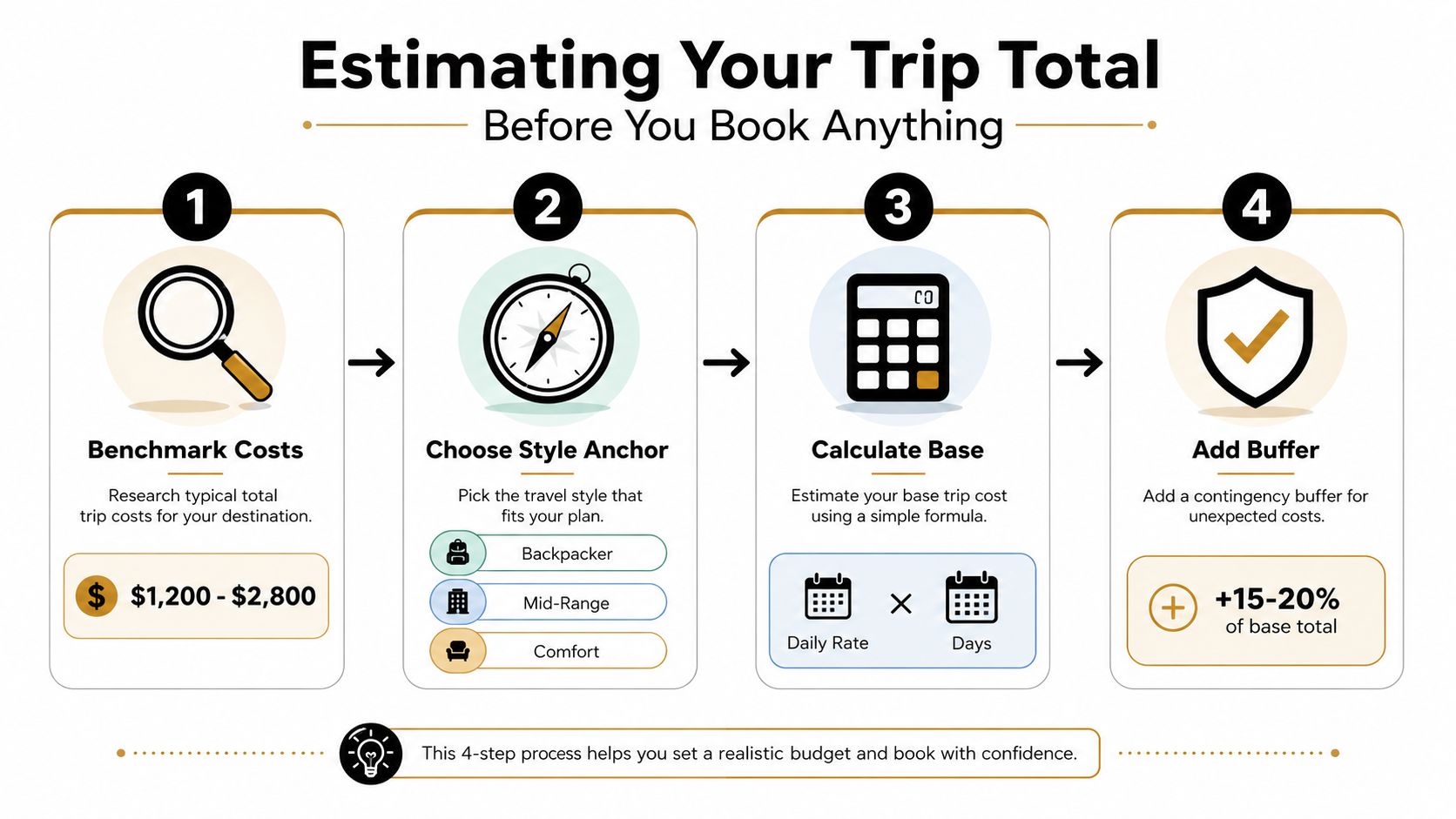
Estimating Your Trip Total Before You Book Anything
A trip can look affordable until the fourth day, when meals, transfers, admission fees, and small purchases begin pulling against the original estimate. Build the total in four passes, keeping fixed commitments separate from costs that can swing on the ground.
Pass one, benchmark the destination
Check current airfare, lodging, local transport, meals, and representative activities for the dates you may travel. Compare several listings instead of anchoring on the cheapest result. Baggage, breakfast, taxes, location, and cancellation terms can change the final price.
Use the Deloitte's 2026 summer travel trends survey as broad market context, not as your personal target. Your destination, traveler count, trip length, and comfort level should determine the estimate.
Pass two, choose a style anchor
Choose the style that describes most nights, not the occasional splurge. A backpacker anchor may combine dorms, public transport, markets, and mostly free activities. A mid-range anchor may use private rooms, casual and sit-down meals, and selected paid attractions. A comfort anchor may include central lodging, flexible transport, and more meals or experiences booked ahead.
The anchor prevents one cheap hotel night or one expensive dinner from distorting the whole plan.
Pass three, calculate the base
Use this working model:
Fixed transport and bookings + daily variable rate multiplied by travel days = base trip estimate
For a 10-night mid-range trip, price airfare, lodging, insurance, and prepaid activities first. Then estimate food, local transport, activities, and small purchases from the actual itinerary. Add the fixed total to the variable amount for the trip's base cost, before contingency.
A city break with frequent attractions needs a different daily rate from a beach stay with mostly free days. Separate fixed costs, such as airfare and lodging, from variable categories, because substitutions are easier once prices move.
Pass four, stress-test the result
Add a 15% to 20% reserve for price swings and unplanned costs. Test the resulting total against what you can save. If the figure fails, change the structure before booking: shorten the trip, choose a lower-cost destination tier, move to another neighborhood, or reduce the travel pace.
Set substitution levers in advance. A cheaper meal can offset a paid attraction. Public transport can replace a rideshare, and a slower itinerary can reduce transfer costs. Protect the experiences that matter most by adjusting flexible lines first.
Use this travel budget calculator guide to organize fixed and variable categories in a reusable template.
Setting Daily Spending Envelopes That Actually Stick
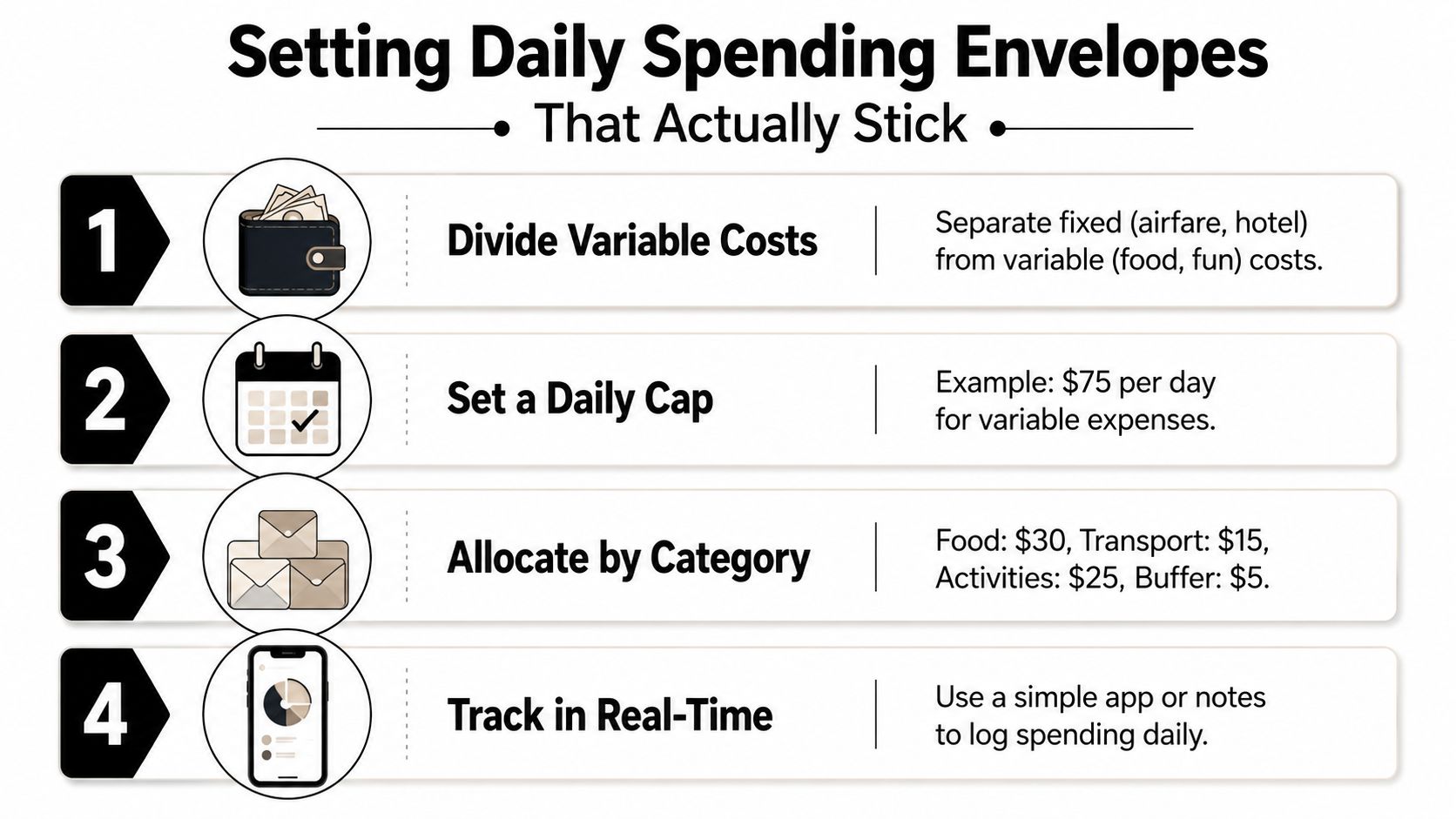
A trip total won't tell you whether today's dinner fits the plan. Daily envelopes solve that problem by converting the variable portion into visible limits for food, local transport, activities, and flexible spending.
Separate the fixed bookings from the money you'll use on the ground. Then divide the variable amount by the number of travel days, while keeping some money outside the daily envelope for irregular costs such as a long transfer or a special dinner.
Build an envelope that reflects choices
A daily cap isn't a command to spend the same amount every day. It's a balancing system. One day might include public transport, a market lunch, and a free walking route. Another might include a rideshare, a paid museum, and a restaurant dinner.
Consider the trade-offs without pretending they have universal prices. Street food and a sit-down meal can create a meaningful daily difference. Public transit and rideshare can also pull the envelope in opposite directions, especially when several travelers share a car. A free walking tour, public park, or neighborhood exploration leaves more room for a museum, show, or guided excursion later.
Use four pockets:
- Food: Meals, snacks, coffee, water, and planned splurges.
- Local transport: Buses, trams, metro fares, taxis, rideshares, parking, and transfers.
- Activities: Tickets, tours, rentals, guides, and donations.
- Flex money: Tips, small purchases, weather changes, and the occasional decision to say yes.
Let the envelope change by day
The same daily allowance can support very different trips. In one destination, a traveler might spend the morning walking, eat from a market, use a transit pass, and save for an evening performance. In another, a remote excursion may consume most of the day's allowance, followed by a low-cost evening at the accommodation. A third itinerary might use a kitchen and free outdoor attractions to make room for a restaurant meal.
A tight envelope shouldn't remove the experience. It should help you choose which version of the experience matters most.
Track spending at the end of each day, not weeks later. If one day runs over, lower the next day's paid activities or meal cost rather than pretending the overage didn't happen. When an envelope is consistently too tight, revise the daily rate, shorten the itinerary, or move money from a lower-priority category. Swap the day, don't skip the trip.
The Savings Timetable and Contingency Layer
A trip can be affordable on paper and still strain your cash flow if payments arrive before your savings do. Build the timetable around booking deadlines, then protect a reserve that ordinary spending cannot absorb.
Fund the trip in phases
At 24 weeks before departure, set the destination target and open a separate travel fund if possible. Price the fixed layer, list booking deadlines, and automate a transfer that matches your pay cycle.
At 12 weeks out, fund or pay deposits and balances that are coming due. Recheck airfare, lodging, and ground transport instead of relying on the first estimate. At 6 weeks out, set aside on-the-ground cash, confirm insurance and entry requirements, and move the contingency amount into a clearly labeled reserve.
The exact timing depends on booking terms, but the order protects your options. Deposits and nonrefundable balances come before restaurant money. Daily spending follows the trip's required commitments.
Separate planned money from protected money
A useful cost check lists luggage, airport transfers, resort and cleaning fees, insurance, visas, local transit, meals, and miscellaneous purchases as separate lines. Money Fit's vacation budget calculator guidance also highlights how fees and overlooked items can add roughly 20% to 35% or more to a trip total. Treat that range as a prompt to inspect booking conditions, not as an automatic surcharge.
Use a table like this before finalizing the base estimate:
| Category | Typical Range | Notes |
|---|---|---|
| Luggage | Destination and carrier dependent | Check whether the fare includes a bag |
| Airport transfers | Destination dependent | Price arrival and departure separately |
| Resort or cleaning fees | Property dependent | Look beyond the advertised nightly rate |
| Insurance | Policy dependent | Check medical, cancellation, and exclusions |
| Visas and permits | Destination dependent | Confirm requirements before booking |
| Connectivity | Provider and destination dependent | Compare roaming with local SIM or eSIM |
| Tips and service charges | Destination dependent | Include them in daily planning |
| Miscellaneous | Your chosen reserve | Cover small necessities and surprises |
Add a 15% to 20% buffer to the planned total for price changes and uncertainty. Keep a separate emergency pocket for serious disruption. The contingency handles a changed transfer, a more expensive meal, or a fee revealed after booking. The emergency pocket protects your ability to respond without draining the trip budget.
Set substitution levers before prices move. If transport rises, switch a paid transfer for public transit where practical. If an excursion costs more than expected, replace it with a free attraction or shorten a restaurant splurge. This preserves the experience while keeping fixed commitments protected.
For practical ways to build the fund, pair the timetable with this guide to saving money for travel. Review the reserve before departure, not after the first surprise bill.
Picking the Right Budgeting Tool for Your Style
The best tool is the one you'll update when the trip is still months away and when you're tired at the end of a travel day. A complicated system that you abandon is worse than a plain one that stays current.
| Tool | Works well for | Where it breaks |
|---|---|---|
| Spreadsheet | Solo travelers, long itineraries, detailed category control | Requires manual updates and shared editing discipline |
| Budgeting app | Travelers who want automated transactions and phone access | Sync features may require a paid plan and can miscategorize purchases |
| Notebook | Short trips, cash envelopes, and people who dislike technology | Totals become harder to reconcile across currencies or multiple travelers |
A spreadsheet is my default for a complex itinerary because it can separate booking deposits, remaining balances, daily envelopes, and contingency money. Use one sheet for the fixed layer, another for daily spending, and a final section for payments still due.
A dedicated app suits travelers who already check their accounts regularly. Set categories before departure and review transactions rather than trusting automatic labels. A notebook works surprisingly well for a short trip when the rules are simple: record each purchase, subtract it from the relevant envelope, and review the balance nightly.
The decision rule is straightforward. Choose a spreadsheet for a solo long-term trip, an app for a couple who wants shared visibility on a shorter vacation, and a notebook for a first-time international trip where reducing friction matters most. Browse the best travel apps for planning and tracking, then choose one tool and start entering real prices today.
Smart Trade-Offs and Your 7-Day Launch Checklist
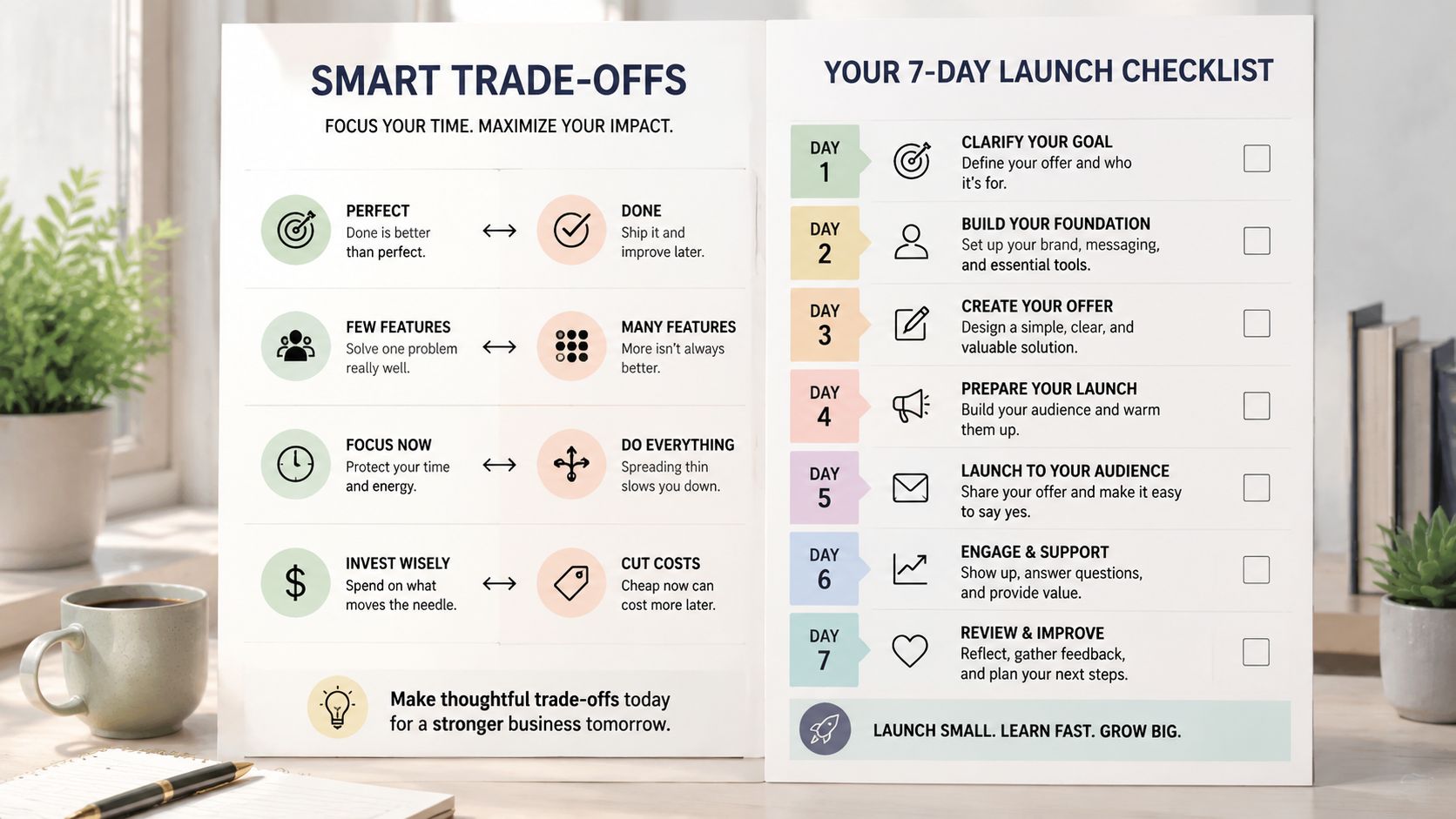
When prices rise, substitution works better than silent suffering. Current consumer research reports that 58% of Americans plan to spend less on travel, while 75% say their budgets no longer cover as much as before because of higher prices (KPMG's summer 2026 consumer pulse survey). A resilient plan gives you alternatives before the original itinerary becomes unaffordable.
Pull the right lever
Shift the dates. Shoulder-season travel can change the price of lodging and transport, though you may trade ideal weather or event access for a calmer, less expensive itinerary.
Shorten the stay. Removing a night can be cleaner than cutting every meal and activity. For example, two fewer nights in a pricey central district may leave enough money for a transit pass and the experiences that motivated the trip.
Change the neighborhood. Keep the city and move outside the most expensive core, provided the transit route is practical. A slightly longer commute can work if it doesn't create expensive daily rides or consume the time you wanted to spend exploring.
Slow the pace. Fewer hotel changes mean fewer transfers, less incidental transport, and more time in each place. This often protects the experience better than racing through several stops while paying for constant movement.
Decision test: Protect the purpose of the trip first. Cut convenience, repetition, and low-priority extras before cutting the one experience you planned the journey around.
Start in seven days
- Choose the destination tier. Decide whether the current destination, dates, and travel style fit your available funds.
- Set the daily envelope. Divide variable spending into food, transport, activities, and flexible money.
- Schedule the savings transfer. Automate the amount needed to reach the planned total and reserve.
- Price the fixed layer. Check airfare, lodging, transfers, insurance, visas, and prepaid activities.
- Add the contingency. Keep the planned total, reserve, and emergency pocket visibly separate.
- Select the tracking tool. Use a spreadsheet, app, or notebook you can maintain.
- Track from day one. Record every booking payment and every purchase, then adjust the envelope instead of abandoning the goal.
The U.S. Travel Association's Travel Price Index illustrates why static assumptions can fail, with travel costs reported 9.8% higher year over year in August 2026, airfare up 26.7% year over year, and airfare still 17.3% above May 2019 levels. Those figures are market context, not a reason to cancel your plans. They support a better response: check current prices, keep a reserve, and make deliberate substitutions when one category moves.
Use the travel planning checklist to turn the seven-day launch into booking and preparation tasks. Then review your budget once a week before departure and once each evening during the trip. A good plan doesn't force every day to look the same. It keeps your choices intentional.
Travel Talk Today offers practical destination guidance, budget frameworks, timing advice, and checklists for planning more thoughtful, affordable trips. Visit Travel Talk Today to compare destination ideas, refine your spending plan, and turn a realistic budget into a trip that still feels meaningful.