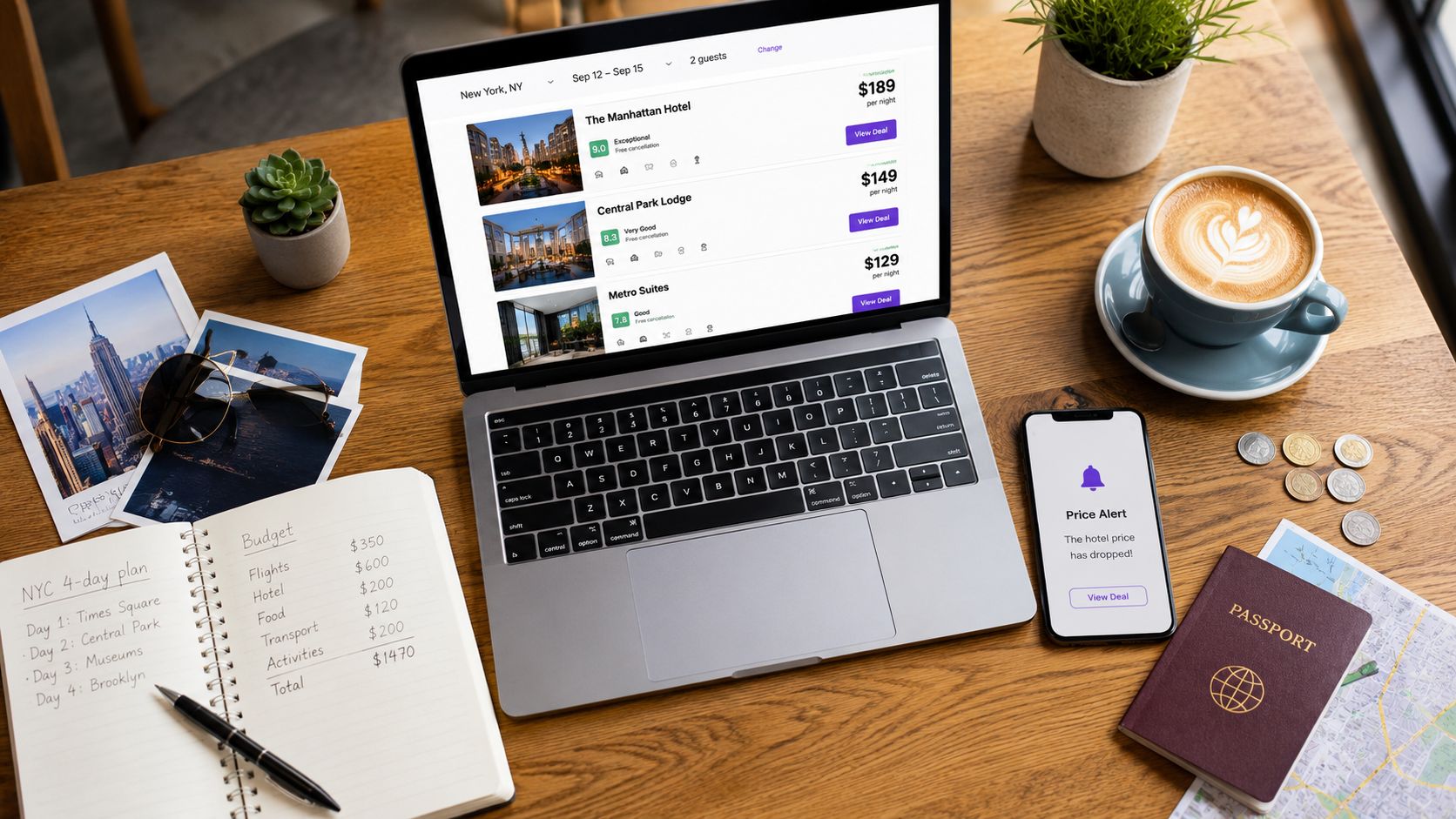
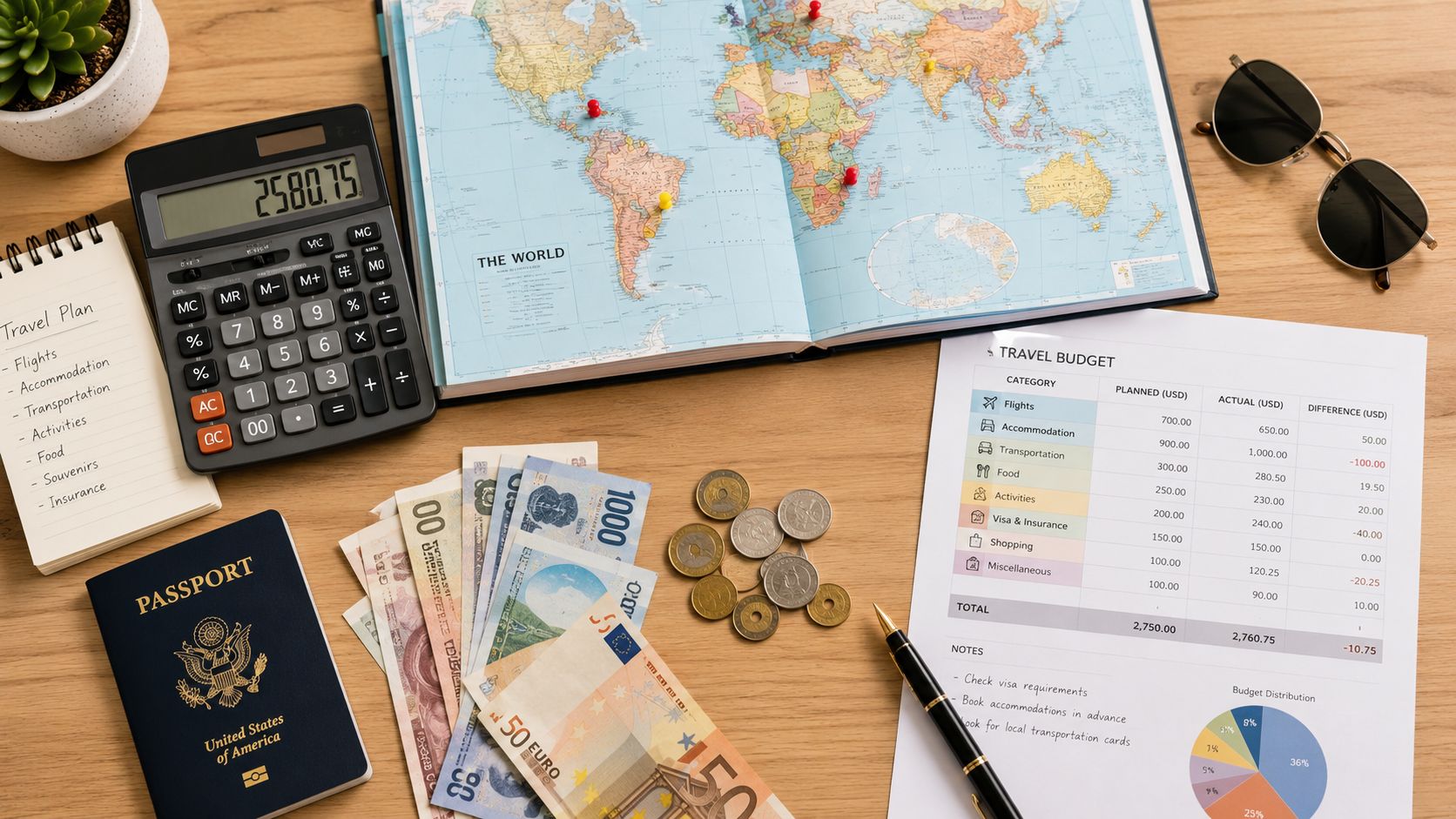
Forget the old advice to “just book early.” That's lazy guidance, and it leaves money on the table. How to save money on hotels is really about controlling the full trip cost, then staying nimble enough to catch a better rate if the market softens later.
A cheap nightly rate can be a trap when breakfast is extra, the hotel sits in the wrong part of town, or transport wipes out the savings. The smarter move is to treat hotel booking like a living decision, not a one-time click. That means comparing the all-in cost, watching prices, and keeping enough flexibility to rebook when a better deal shows up.
Why Most Hotel Savings Advice Fails Budget Travelers
Most hotel advice stops at the obvious stuff, compare sites, join loyalty programs, book early. That sounds useful, but it ignores the two biggest ways travelers get burned, hidden total-trip costs and static bookings in a dynamic pricing market. A room that looks cheaper on the headline rate can end up costing more once you add fees, breakfast, and transport, which is exactly the gap many guides gloss over neverstoptraveling.com.
The trap is the total bill
A lot of travelers obsess over the nightly rate and ignore everything attached to it. That is a mistake. If the hotel is in the wrong neighborhood, you will pay more getting around. If breakfast is not included, you will spend more every morning. If the room comes with a heavy fee structure, the sticker price stops mattering fast.
The cleanest rule is simple, compare the final payable price, not the advertised one. A hotel that looks like a bargain on a booking screen can lose once taxes and fees show up at checkout. Direct-booking offers, member rates, and price-match requests can beat third-party deals even when the first number appears higher.
Practical rule: never pick a hotel until you know what you will pay to sleep there, eat there, and move around from there.
Booking once is outdated
Hotel pricing does not behave like a fixed rack rate anymore. Travel + Leisure says the most economical rates are generally available around 15 days before a stay, and it also points to broader prime periods of about two weeks and two to three months before travel, depending on destination Travel + Leisure. AARP also advises that travelers can find 15% to 20% discounts on non-refundable rooms booked in advance, while short-notice tools can help when plans are flexible because hotels prefer discounted occupancy to empty rooms AARP.
That is the part most guides miss. The best deal is not always the earliest booking, and it is not always the last-minute panic deal either. It is the rate you are willing to lock in after you have checked enough times to know whether the market is drifting down. If you are not monitoring prices, you are just guessing.
For a wider look at travel savings habits, see this practical guide to travel budgeting and saving tips. Hotel savings work best when you treat booking as a process, not a one-time search.
Mastering Timing and Demand Patterns for Lower Rates
Hotel pricing follows demand, not moods. Shift your dates a little, and you can often move from expensive inventory into softer demand without changing the trip itself. That is the simplest win in hotel savings, and it matters more than the usual advice to book early and hope for the best.
Book in the window that fits your destination
The right booking window depends on the destination. Some markets reward booking around the last couple of weeks before arrival, while others soften much earlier, especially in the two to three months before travel. The point is simple. Start with the market, then set the calendar around it.
Business-heavy cities often get cheaper on the weekend. Resort areas built around leisure travelers often price better midweek. Shoulder season also deserves attention, because demand drops before or after the main travel rush and hotels usually have to compete harder for occupancy.
Let demand move your dates, not your budget
Budget travelers save money by adjusting the stay, not by settling for a worse trip. Move a city stay from a weekday to the weekend if business demand is pushing prices up. Move a resort stay out of Friday and Saturday if leisure demand is crowding the market. Small date changes can produce a real drop in price.
Seasonality works the same way. Shoulder season usually gives you more room to save because demand cools before or after peak periods. That is plain, practical hotel math. Empty rooms push hotels toward lower rates, especially when they still want the booking.
Use alerts, not guesses. Hotel prices change often enough that one search is weak strategy. Set a watch, check repeatedly, and be ready to act when the rate becomes acceptable.
Short-notice tools can help when your plans are flexible because hotels would rather sell discounted occupancy than leave a room empty. For a closer look at those options, see our guide to best last-minute travel deals. That same flexibility is what keeps same-day deals worth watching instead of dismissing outright.
Aggregator tools can notify travelers when selected hotel prices change, and travel-deal reporting says last-minute “tonight-only” offers can run about 35% below standard prices Yahoo Finance. That does not mean every trip should hinge on a same-day gamble. It means flexible travelers should track the market instead of pretending the first quote is final.
Use a simple rule. For fixed-dates travel, compare timing windows early, then again closer in. For flexible trips, shift days before you shift hotel class. That is where the significant savings usually show up.
Building a Smart Booking Workflow That Captures Every Discount
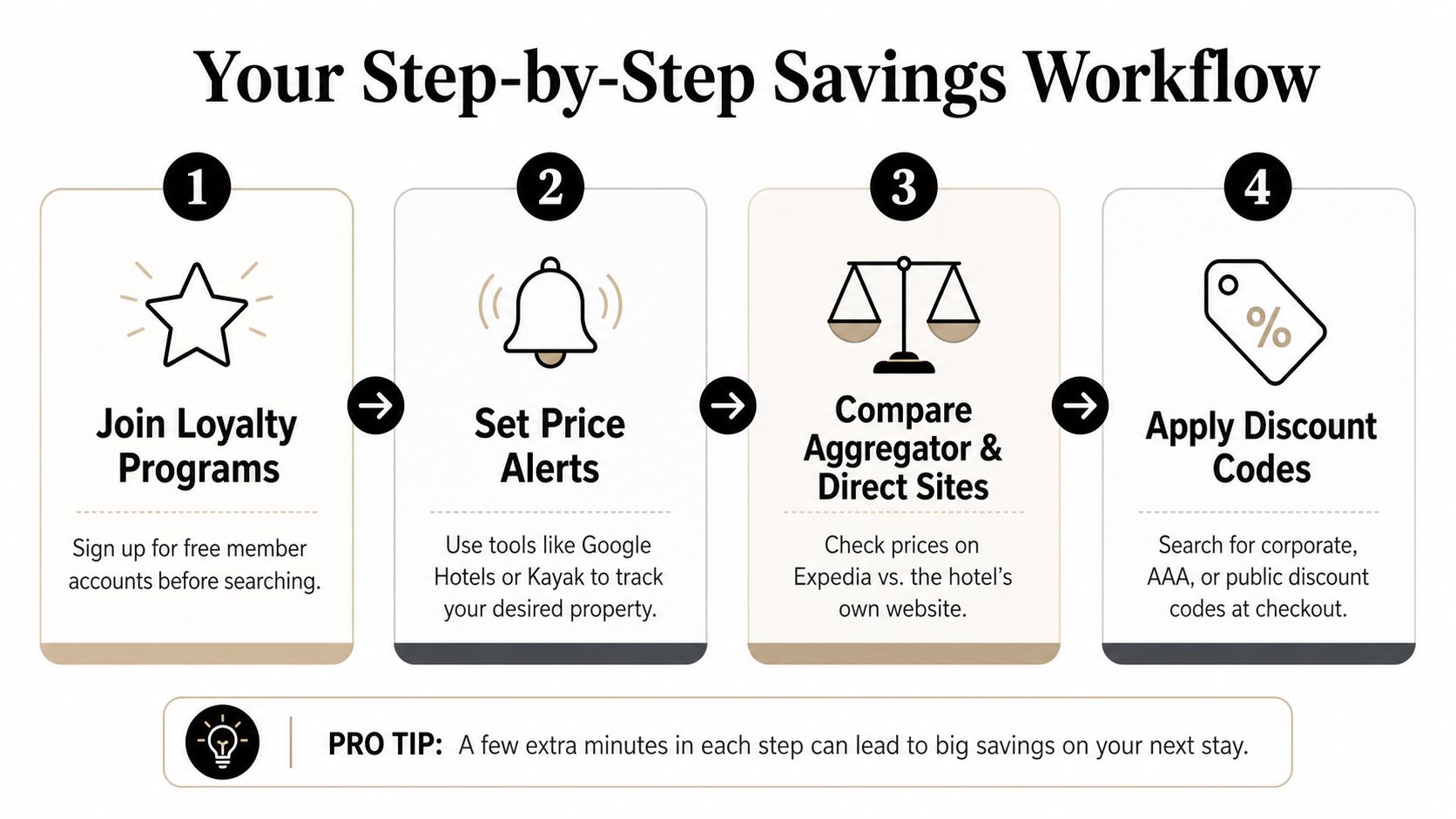
The winning workflow is boring, and that's why it works. Join the free program, check the member rate, compare the final price across channels, and keep watching until you're ready to commit. Many individuals do one of those steps. Smart travelers do all of them.
Start with loyalty and direct rates
Free loyalty programs are worth signing up for even if you only use them once a year. One hotel-budget guide singles out joining a free loyalty program, booking the member rate, and comparing Google Hotels, Booking.com, and the hotel's own site as the best low-friction money-saving stack Travel Value Finder. I agree with that approach because it forces you to compare the same room across multiple sales channels before you pay anything.
Direct booking matters more than many travelers think. Some properties will pass along savings because they skip OTA commission, while others will still undercut themselves on an aggregator. You won't know until you check both. A smart traveler doesn't pick a side in the direct-vs-OTA debate, they compare final value and move on.
Always verify the all-in total
The biggest mistake is comparing room rates without taxes and fees. A room that looks cheaper can be more expensive after checkout if the extras pile up. That's why the final number matters more than the headline number, and why “cheap” is not the same thing as “good value.”
Here's the workflow I'd use on any trip:
- Check the hotel's own site first. Look for member pricing and free cancellation.
- Compare Google Hotels, Booking.com, and one other OTA. You're looking for the final payable total, not the first number on the page.
- Look for hidden cost offsets. Breakfast, location, and transport can change the math fast.
- Ask for a price match or lower rate. If the direct site is close, the hotel may be worth booking for better terms.
The point is not to chase the lowest theoretical quote. The point is to secure the best real-world deal once taxes, fees, and flexibility are included.
Lock refundable first, then keep watching
This is the modern trick most guides still miss. A recent travel article recommends booking a refundable rate first, then continuing to check for lower prices as the stay gets closer Seeing Washington. That's the right mindset because it treats flexibility as an asset, not a luxury.
If you find a better rate before arrival, rebook and cancel the original reservation. If the original booking isn't refundable, you've boxed yourself in and lost the chance to adapt. That's exactly why cancellation terms matter so much when rates are volatile.
The best version of this workflow is simple. Book a refundable room when the price is acceptable, set alerts, then re-check rates regularly in the lead-up window. If the market softens, capture the drop. If it doesn't, you still have a fair booking in hand.
For travelers who want to organize the comparison process more efficiently, the best travel apps guide can help with the wider planning side of the trip: best travel apps.
Exploring Alternative Lodging and Direct Negotiation Tactics
Hotels are not always the best answer. Sometimes the smartest move is to leave the hotel category entirely, especially if the trip is long, the group is small, or the neighborhood you want is cheaper outside standard hotel stock. The question isn't “hotel or not.” It's “which option reduces the whole trip cost without wrecking the experience?”
Know when another bed type wins
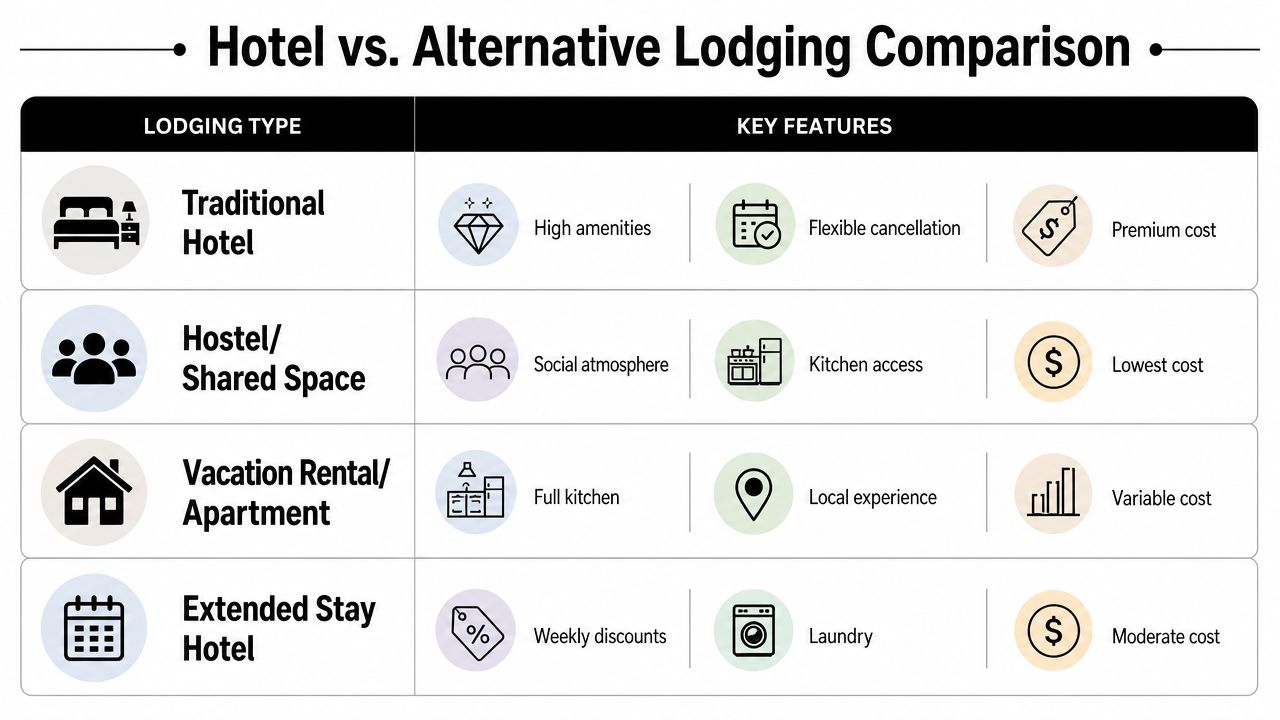
A hostel with a private room can beat a basic hotel on price while still giving you a clean bed and a social setting. Vacation rentals can make sense when a kitchen cuts meal spending and when you're staying long enough to benefit from the layout. Extended-stay hotels also deserve a look if your trip is measured in days, not just nights, because they're built for travelers who need laundry, space, and fewer extras.
That's why the lodging comparison matters. A hotel often gives you flexibility and comfort, but you pay for it. A shared space gives you the lowest cost, but you trade privacy. A vacation rental can lower meal expenses, but the quality swings more widely. An extended-stay property sits in the middle and often fits travelers who need practical convenience over polish.
The decision gets easier if you think in terms of tradeoffs, not categories.
- Pick a hotel when cancellation flexibility and predictable service matter most.
- Pick a hostel or shared space when the budget is the priority and privacy is optional.
- Pick a vacation rental when a kitchen or local feel offsets the variable quality.
- Pick an extended-stay property when laundry and longer stays justify the setup.
Negotiate when demand is soft
If the hotel isn't filling up, call. Ask for the lowest available rate. Mention the competitor price if you have one. Keep the tone calm and direct. Front desks can often do more than the first screen rate suggests, especially when they'd rather book the room than leave it empty.
AARP's logic on hotels preferring discounted occupancy to empty rooms is the right backdrop here AARP. You're not begging for a favor. You're offering the property a booked room in exchange for a better price or better terms.
Ask for the rate you'd be happy to see on the screen, not the rate you hope they'll volunteer.
The other part of negotiation is not always about price. Sometimes the best outcome is a perk that lowers your total trip spend, like breakfast inclusion, better cancellation terms, or a room that saves you transport later. That's a better deal than shaving a few dollars off a stay that costs more everywhere else.
For travelers who care about staying lighter on the planet while they travel, the right accommodation choice can also support that priority: eco-friendly accommodations.
Maximizing On-Stay Savings and Post-Booking Rebooking Strategy
Hotel savings do not end at checkout. That is where a lot of travelers start leaking money, paying for convenience they never planned to buy and sticking with a reservation long after the market has turned in their favor. Smart budget travelers keep watching the rate after booking and keep their stay tight once they arrive.
Spend less while you're actually in the hotel
Start by cutting the lazy spending. Skip desk upsells unless they solve a real problem, like a room issue, bad access, or a feature you genuinely need. Use the hotel's included amenities whenever they replace outside purchases, because that is where the biggest savings usually sit. If breakfast is included, eat there. If there is a shuttle, learn the route before you book a ride across town.
Ask the concierge for free activities, local discount programs, and cheaper transit options. In cities packed with paid attractions, the front desk often knows which experiences cost too much and which neighborhoods are worth your time for free. That kind of advice beats wandering into an overpriced tourist trap and pretending it was part of the plan.
Credit card perks matter here too, especially when they give you travel protection, hotel points, or statement credits that reduce the trip cost later. A good travel card can cover more than one stay and keep your overall budget in check, so it is worth comparing options like the best credit cards for travel rewards before you book.
Rebooking is the modern edge
Treat every refundable hotel reservation as temporary. Keep checking the price as your arrival date gets closer, because flexible-rate pricing moves and the best deal is often not the one you booked first. If you see a lower rate, rebook it. If the price never drops, you still have a room locked in and you avoided the panic of booking too late.
This works because hotel pricing softens and tightens in waves, especially on flexible rates. Earlier guidance on booking windows points to favorable rates appearing closer to stay dates in some markets, while other destinations reward booking further ahead Travel + Leisure. The point is not to memorize a magic number. The point is to keep watching and use the market instead of freezing after the first confirmation.
Keep the workflow strict.
- Hold a refundable booking whenever possible.
- Check prices repeatedly before arrival.
- Move to a nonrefundable rate only when the savings clearly justify the risk.
- Cancel the old reservation only after the new one is confirmed.
That habit turns rate volatility into savings. You stop treating the first booking as final and start treating it as a placeholder until the market proves you cannot do better. For travelers who book with points or want to reduce cash outlay, a strong hotel card can also make the rebooking strategy more flexible because the rewards cushion the cost when rates move.
The other part of saving on-site is knowing what not to buy. Late checkout, parking, minibar snacks, and convenience fees can erase the gain from a cheap nightly rate fast. If a hotel is cheaper but forces you into constant add-on spending, it is not the cheaper stay.
Your Complete Hotel Savings Checklist and Budgeting Framework
Use a checklist, not memory. Hotel savings gets messy fast when you're juggling dates, rate types, transport, and meal costs in your head. A clean framework keeps you from buying the wrong room for the wrong reasons.
Pre-booking checklist
- Check date flexibility first. Move the trip a day or two if it shifts you out of peak demand.
- Compare your destination type. City hotel, resort, and shoulder-season pricing behave differently.
- Set a price alert. Track the property instead of checking once.
- Open with refundable options. Flexibility provides an advantage.
Booking checklist
- Join the free loyalty program. Member rates are often the easiest first discount.
- Compare the hotel site and OTAs. Google Hotels, Booking.com, and the property's own site all deserve a look.
- Verify the final all-in price. Taxes and fees matter.
- Ask for the best direct offer. If the price is close, the hotel may match or beat it.
Budgeting framework
Start with the room, then add the hidden costs. Breakfast, transport, and fees should be part of the decision before you book, not after. If a cheaper room forces you into higher daily spending, it isn't cheaper.
Budget rule: the right hotel is the one that lowers the total cost of the trip, not the one that flatters your search results.
For solo travelers and backpackers, safety and location should sit beside price, not behind it. A slightly pricier room in a practical area can save money on transit and reduce hassle at night. That's not luxury. That's smart budgeting.
Travel Talk Today helps budget-conscious travelers make smarter decisions about hotels, timing, and trip costs without the fluff. If you want more practical guides like this, visit Travel Talk Today for affordable travel advice, budgeting frameworks, and trip planning tips that keep your next booking sharp.