Let's be honest: the biggest thing standing between you and that dream trip isn't a lack of money. It's a lack of a plan. The real secret to funding your travels isn't some complex financial wizardry; it's about turning that vague "someday" into a concrete, can't-miss departure date.
It all starts with a simple but powerful shift in perspective. Instead of seeing saving as a chore or a sacrifice, you start to see it as buying your freedom. Every dollar you intentionally set aside is a direct investment in a future experience.
Suddenly, that homemade coffee isn't a compromise—it's a train ticket through the Swiss Alps. Canceling that unused streaming service? That’s your first bowl of authentic pho in Hanoi. This is where the real magic happens.
From Daydream to Departure Date
Wishing you could travel more won't get you on a plane. But deciding you will travel, and then figuring out exactly what that looks like, is the first real step on your journey.
Give Your Dream a Price Tag
Let's get specific. "I want to go to Europe" is a nice thought. "I'm saving $3,000 for a two-week trip to Italy next October" is a plan. A real number transforms your goal from an abstract idea into something you can actually work toward, making the whole process feel tangible and exciting.
To figure out your magic number, you need to do a little homework. Break down the total cost into a few key categories:
- Flights: Use tools like Google Flights or Skyscanner to research the average cost of airfare for your destination and time of year.
- Accommodation: Get a rough estimate for your nightly stays, whether you're a hostel-hopper or a boutique hotel fan.
- Daily Spending: This is your budget for food, activities, and getting around. A good starting point for many places is $50-$100 per day, but this can vary wildly.
- Pre-Trip Essentials: Don't let these sneak up on you! Factor in costs for travel insurance, visas, or any special gear you might need.
Once you have that grand total, the math gets a lot less scary. If your $3,000 trip is 12 months away, you just need to set aside $250 a month. That's it. Suddenly, that huge number feels completely doable.
The Incredible Power of Small Savings
You don't need a massive income bump or a winning lottery ticket to fund your adventures. The truth is, most of us can build a serious travel fund just by plugging the small, almost invisible "cash leaks" in our daily spending.
You’d be amazed at how quickly these tiny, mindless expenses add up.
I always tell people to think about their "latte factor." That daily $5 coffee habit feels harmless, but over a year, it adds up to more than $1,300. That's enough cash for a flight and a week in the Galapagos or even a month backpacking through Colombia.
This isn't about giving up everything you love. It’s about making conscious choices. By identifying just one or two of these spending habits and redirecting that cash, you can build an impressive travel fund without feeling like you're missing out.
The table below shows just how powerful these small daily changes can be.
The Power of Small Daily Savings for Your Travel Fund
This table illustrates how cutting small, common daily expenses can accumulate into significant annual savings, directly funding your travel goals.
| Expense to Cut | Daily Cost | Annual Savings | What It Can Fund |
|---|---|---|---|
| Morning Cafe Latte | $5.50 | $2,007 | A round-trip flight to Paris and a 3-day museum pass. |
| Lunch Delivery | $22.00 | $8,030 | A two-week all-inclusive luxury resort stay in Mexico. |
| Vending Machine Snack | $2.50 | $912 | A 4-day weekend trip to a nearby national park, including lodging. |
| Streaming Service | $0.50 | $180 | A high-quality travel backpack or a set of packing cubes. |
As you can see, these aren't life-altering sacrifices. They are small, intentional decisions that compound over time, turning your everyday habits into the adventure of a lifetime. By combining a clear goal with these mindful choices, you build unstoppable momentum. If you're looking for more inspiration, check out these great tips on how small cuts can lead to big adventures.
Build a Travel Budget That Actually Works for You
Let's be honest: the word "budget" can feel like a straitjacket. But what if we thought about it differently? A good budget isn't about what you can't do; it's your personal roadmap to what you can do—like sipping espresso in Rome or hiking through Patagonia. It’s the tool that turns that far-off dream into a tangible plan.
The secret is to stop thinking of it as a set of rules and start seeing it as a system for assigning jobs. Every dollar you earn gets a mission. Some dollars pay the rent, some buy your groceries, and a special team of dollars becomes your "travel crew," working 24/7 to fund your next adventure. That mental shift is everything.
This decision tree breaks down the process beautifully. It’s not about one giant leap but a series of small, smart choices that build incredible momentum over time.
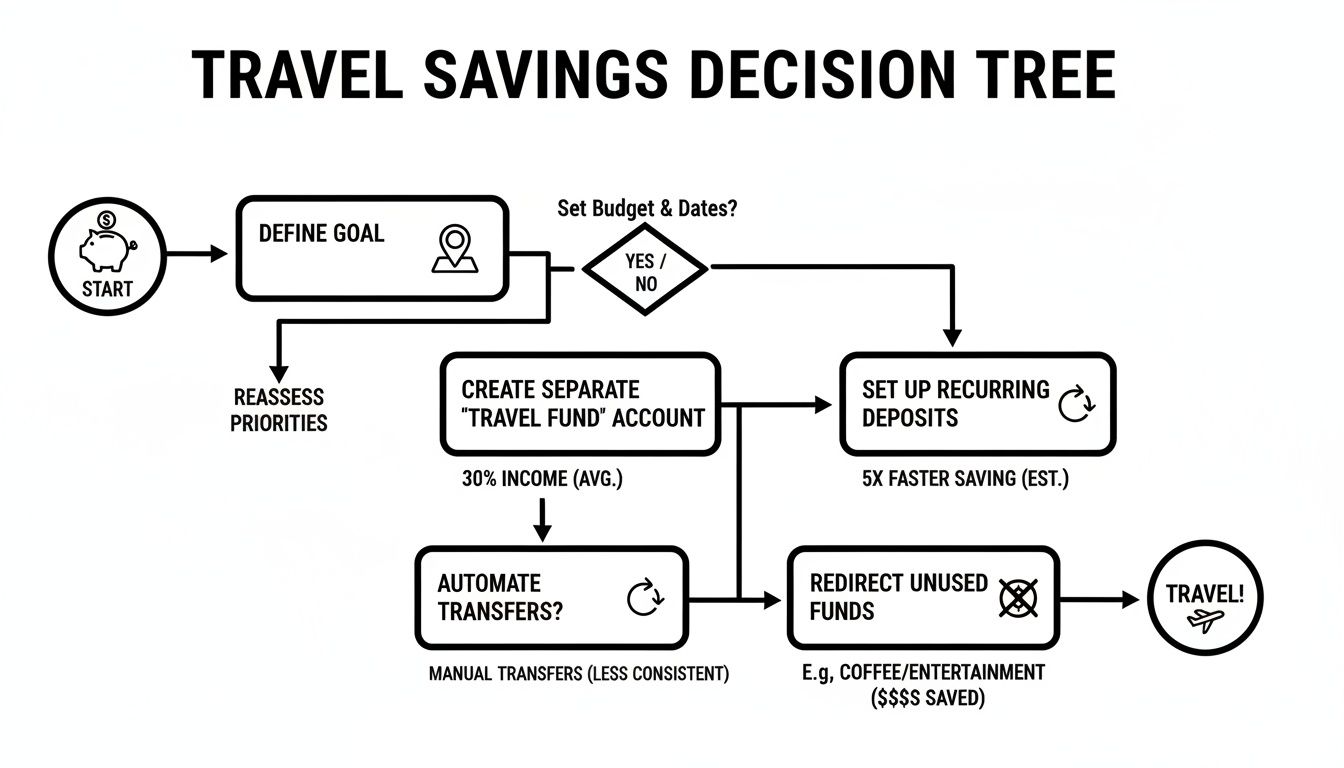
See? It all starts with your goal and flows into a rhythm of smart, automatic actions.
Choose Your Budgeting Style
There is no single "best" way to budget. The right system is the one you’ll actually use. After years of trial and error, I've seen these three methods work wonders for aspiring travelers.
The Modified 50/30/20 Rule: You've probably heard of the classic rule: 50% for needs, 30% for wants, and 20% for savings. To put your travel fund on the fast track, just flip the last two. Aim for 50% Needs, 20% Wants, and 30% Savings. This simple switch can dramatically accelerate your progress without making you feel deprived.
Zero-Based Budgeting: This is the ultimate approach for intentional spending. At the beginning of the month, you give every single dollar a purpose—bills, groceries, debt, and of course, travel savings. When your income minus all your planned spending equals zero, you know exactly where your money is going. No more mystery withdrawals.
Pay Yourself First: This isn't a full budget, but it’s a powerful, non-negotiable habit. Before you pay a single bill or buy a coffee, the very first thing you do on payday is transfer a set amount to your travel fund. This makes your dream a priority, not an afterthought.
Pro Tip: I’ve found the most success by combining these. I use a zero-based budget to map out my month, but the very first line item is always my "Pay Yourself First" transfer. This guarantees my travel goal gets funded before anything else.
Find Your Hidden Cash Leaks
Most of us are losing money to "cash leaks"—those sneaky, recurring costs that fly under the radar but add up fast. We're talking forgotten streaming trials, daily lattes, and one-click food delivery orders. A 2022 survey found the average person was wasting $58 per month on forgotten subscriptions. That's nearly $700 a year that could be paying for flights or experiences!
The only way to plug these leaks is to track your spending. Don't worry, you don't need a pen and paper. Today's apps do all the heavy lifting for you.
- Mint: A fantastic free tool that connects to your accounts and shows you exactly where your money goes with easy-to-read charts.
- YNAB (You Need A Budget): The gold standard for zero-based budgeting. It has a learning curve, but it will fundamentally change your relationship with money.
- Rocket Money: A lifesaver for finding and canceling those pesky subscriptions you forgot you had. It often pays for itself in the first month.
Just commit to tracking for one month. I guarantee you’ll find money you didn't know you had. You’ll see exactly where you can cut back painlessly and reroute that cash straight to your travel fund. For an even deeper dive, check out our guide on the top travel budget categories that will save you money.
Make Your Savings Work for You
Your hard-earned savings shouldn't just be sitting in an account collecting dust. It should be working for you, growing all on its own. Letting your travel fund idle in a traditional savings account earning 0.01% interest is a rookie mistake.
Open a high-yield savings account (HYSA). These are typically online-only accounts that offer much higher interest rates than the big brick-and-mortar banks. This means your money is earning its own money through compound interest, getting you to your goal faster without you having to lift a finger. It’s one of the easiest wins you can get.
Tackle the Big 3 Expenses and Watch Your Travel Fund Explode
If you want to seriously fast-track your travel savings, you have to look beyond just cutting out your daily latte. The real magic happens when you get strategic with the three biggest money pits in most people's lives: housing, transportation, and food. Making a few smart changes here can free up hundreds, even thousands, of dollars for your adventure fund—without making you feel like you're sacrificing everything.

This isn't about deprivation. It's about being intentional. Every dollar you redirect is a conscious choice that brings your dream trip one step closer, turning saving money from a chore into an exciting countdown to departure.
Reimagine Your Housing Costs
For most of us, our single biggest monthly bill is keeping a roof over our heads. Even a short-term shake-up in your living situation can create a massive windfall for your travel account. No, you don't have to sell your place—you just need a little creativity.
Have you ever considered house-sitting? Platforms like TrustedHousesitters connect you with homeowners who need someone to watch their property and pets while they're away. You get a free place to stay in exchange. Just think: eliminating your rent or mortgage for one month could easily add $1,500 or more straight into your travel savings.
Even smaller moves can make a big difference. Could you list a spare room on Airbnb for a few weekends a month? Or what about planning a "staycation" with a friend, renting your entire place out for a week while you rediscover your own city?
A friend of mine did this while saving for a six-month trek through Southeast Asia. For the last three months before she left, she moved back in with her parents. It wasn't glamorous, but she banked over $4,000 in rent money, which single-handedly funded the first half of her adventure.
Overhaul Your Transportation Spending
From your daily commute to weekend errands, your car is a goldmine of potential savings. The average American spends a staggering $10,000 a year on their vehicle. Imagine getting even a small piece of that back.
The key is to move beyond just "driving less" and build a real strategy.
- Commit to Public Transit: Challenge yourself to use only public transport for one full month. You'll save a ton on gas and parking, and you might even find it's a better way to get around.
- Set Up a Carpool: Get together with a few coworkers who live near you. If four of you start carpooling, you’ve instantly slashed your weekly commute costs by 75%.
- Rediscover Biking: Find a decent used bicycle for all your local trips. Those short, 2-mile drives to the grocery store or coffee shop are gas-guzzlers, and biking is a fantastic alternative.
These aren't just money-saving hacks; they often lead to a healthier and less stressful life. That’s a win-win that gets you closer to your goal.
Transform Your Relationship with Food
After housing and transport, food is where our money disappears the fastest. The secret isn't surviving on instant noodles; it's embracing the "cook once, eat all week" philosophy.
This is more than just meal prep; it’s about creating a system. Dedicate a couple of hours on a Sunday to batch-cook versatile staples. Think a huge pot of chili, a sheet pan of roasted vegetables, and a few pounds of grilled chicken.
With these building blocks in your fridge, you can whip up a dozen different meals in minutes all week long. This simple system is your best defense against the siren call of expensive, unhealthy takeout after a long day. You’ll save money, eat better, and get your evenings back.
Here’s what that could look like:
| Day | Meal Idea |
|---|---|
| Monday | Chicken, roasted veggies, and quinoa bowls. |
| Tuesday | Chili over a baked sweet potato with a side salad. |
| Wednesday | Chicken salad sandwiches on whole-wheat bread. |
| Thursday | Veggie omelets using leftover roasted vegetables. |
| Friday | "Kitchen sink" stir-fry with remaining chicken and veggies. |
By zeroing in on these three core areas, you’re not just trimming expenses—you're redesigning your finances to put your travel dreams first. And once you've saved up, you'll want to be just as smart about booking. Learn how to save money on flights to make every dollar you saved go even further.
Unlock New Income with Travel-Focused Side Hustles
Cutting back on lattes is one thing, but if you want to put your travel savings on the fast track, nothing works better than actually earning more money. When you create a pot of cash that’s just for travel, something shifts. Your far-off dream becomes a real, tangible project, and every extra dollar you make feels like a victory.
This isn’t about grinding away at a second full-time job. It’s about getting creative and using the skills, passions, and spare time you already have. Think of it as directly converting your effort into experiences. Every hour you spend on a side project is another step closer to that bustling market in Marrakech or that serene beach in Thailand.
Put Your Professional Skills to Work
The most direct path to extra income is often sitting right in your professional toolkit. You've already got valuable skills that businesses and individuals are paying for every single day. Platforms like Upwork and Fiverr have made it incredibly simple to find short-term gigs that fit neatly around your main job.
Are you a writer, editor, or graphic designer? Tons of companies need a hand with blog posts, website copy, or social media graphics. If you’re a pro at organization, you could offer virtual assistant services and help busy entrepreneurs tame their schedules and inboxes. The demand for these skills is always there.
Even just an hour or two in the evening can add up fast. For example, landing one small freelance writing project a week could easily bring in an extra $400-$600 a month. That’s enough to fund an entire trip in just a few months.
Turn Your Hobbies Into Cash
What do you actually love to do? The best side hustles often don't feel like work at all because they stem from a genuine passion. This is where you can have fun while your travel fund grows.
Just think about the possibilities:
- Photography: If you have a good eye and a decent camera, you can sell your photos on stock sites like Adobe Stock or Shutterstock. Your vacation photos could quite literally start paying for your next one.
- Language Skills: Are you fluent in another language? You could be tutoring people from all over the world on platforms like Preply or iTalki. You set your own hours and rates.
- Local Knowledge: You're an expert on your own city! Why not create a unique walking tour based on what you love? It could be a tour of the best street art, hidden coffee shops, or local historical secrets. Then, list it on Airbnb Experiences.
The trick is to recognize the value in what you already know and enjoy. I once had a friend who loved dogs and started pet-sitting through Rover. The extra $300 she made each month went straight into her "Japan Fund," and she got to enjoy puppy snuggles as a bonus.
Jump Into the Flexible Gig Economy
For pure flexibility, it's hard to beat the gig economy. These jobs are perfect for earning extra cash on your own terms because you work when you want, for as long as you want. There’s no commitment, so you can go all-in when you're saving hard and step back when life gets busy.
Here are a few popular ways to quickly boost your savings:
- Delivery Services: Sign up to deliver food with DoorDash or groceries with Instacart. You can work for an hour or two during the dinner rush and easily pocket an extra $20-$30.
- Handy Help: Platforms like TaskRabbit connect you with people who need help with everyday errands, from assembling IKEA furniture to running to the post office.
- Pet Care: As my friend discovered, services like Rover and Wag! are always looking for reliable dog walkers and pet sitters.
These side hustles do more than just build your savings; they’re a great way to test the waters of remote, flexible work. If you find you love the freedom, it might even inspire you to think about a more location-independent lifestyle. For those curious about taking their work on the road, our guide to the best countries for digital nomads has some fantastic ideas.
By pairing smart saving with a dedicated side income, you’re no longer just hoping to travel—you’re actively building the road to get there.
Book Smarter and Watch Your Savings Soar
You’ve done the hard work of saving up. Now for the fun part: making every single dollar stretch as far as it can possibly go. Booking your flights and lodging isn't just a transaction; it's a strategy. And when you get it right, your savings can take you further than you ever thought possible.
This isn’t about hunting for some mythical price glitch. It’s about being deliberate and flexible. The payoff is huge—more money in your pocket for that incredible cooking class, a spontaneous hike, or simply a few extra days soaking it all in.

Getting Smart About Booking Flights
Timing really can be everything with airfare. Booking at just the right moment is the difference between a decent price and a fantastic deal. While there's no single magic bullet, years of data point to some very clear sweet spots for booking.
A good rule of thumb I’ve always followed is booking domestic flights about 1-3 months out and international trips anywhere from 2-8 months ahead. Hitting this window can easily slash your ticket price by 20-50%.
Beyond the booking window, the day you actually fly is just as critical.
- Fly Mid-Week: Tuesdays and Wednesdays are your best friends. They are consistently the cheapest days to fly because most people aren't traveling then.
- Dodge the Weekend Rush: Unsurprisingly, Fridays and Sundays are almost always the most expensive days, packed with weekend travelers.
- Embrace the Red-Eye: I know, they’re not always glamorous. But an overnight flight can be significantly cheaper, and you save the cost of one night's accommodation. Win-win.
Seriously, being flexible by even one day can sometimes save you hundreds of dollars. Use tools like Google Flights and its calendar view—it lays out the price differences day by day, making it easy to spot the cheapest departure.
The Magic of the Shoulder Season
If I could give you one piece of budget-stretching advice, it would be this: travel in the shoulder seasons. These are the beautiful pockets of time right before or after a destination's peak season. Think Europe in May or September, not the chaos of July and August.
Shoulder season travel is a double victory. You’ll find lower prices on flights and hotels, but you’ll also find fewer people. That means shorter lines for museums, more space on the beach, and a much more authentic, laid-back vibe. A trip that feels out of reach in the high season suddenly becomes completely doable.
Imagine wandering the Greek Islands in early June. You get the same postcard-perfect weather and turquoise water, but with a fraction of the crowds and at a cost that feels like a steal compared to just a few weeks later. It's the difference between a frantic vacation and a true escape.
Play the Travel Rewards Game (and Win)
"Travel hacking" sounds intimidating, but it's actually pretty simple. The goal is to use credit card rewards to earn points you can redeem for free flights and hotel stays. When you do it right, it's one of the most powerful ways to slash your biggest travel expenses—often down to zero.
The golden rule is to never, ever spend more than you normally would just to chase points.
- Find the Right Card: Look for a travel rewards card that fits your spending habits. Some offer flexible points you can use anywhere, while others are co-branded with specific airlines you fly often.
- Pay It Off. Always. This is non-negotiable. The interest you’d pay on a revolving balance will instantly wipe out the value of any rewards you earn. Treat your credit card like a debit card.
- Make Your Everyday Spending Work for You: Put all your regular, planned purchases on the card—groceries, gas, monthly bills. You're turning your daily expenses into your next adventure.
Often, a single sign-up bonus from a new card is enough for a round-trip ticket. Over a year of smart, disciplined use, you can rack up enough points for another flight or a week of free hotel nights, letting your hard-earned cash go toward the experiences that matter most.
For a deeper dive into nailing your booking window, check out our guide on the best time to book flights.
Your Savings Superpowers Don't Stop at Takeoff
Getting on the plane doesn’t mean you have to stop being smart with your money. In fact, this is where the real fun begins. The savvy habits you built to save for this trip are exactly what will help you turn a good vacation into an unforgettable one, all without that nagging feeling of overspending.
I’ve learned over years of travel that the most incredible moments rarely come with a hefty price tag. It’s all about knowing where to look and being open to experiences that don’t cost a dime. That’s how you truly connect with a place.
Turn Points and Passes into Pure Gold
Those credit card points you've been hoarding? They’re not just for booking flights. I love cashing them in for on-the-ground experiences—think a cool city tour, museum tickets, or even that one fancy dinner you thought was out of reach. It feels like a free treat, letting you splurge without actually dipping into your cash budget.
Another one of my go-to moves is the city pass. Almost every major destination from London to Paris offers one, bundling top attractions and public transport into one package. You can easily save 30-40% if you’re planning on hitting several big-name sights.
Here's the trick: before you buy, do some quick math. Jot down the must-see spots on your list, add up their individual ticket prices, and see how it stacks up against the pass. You'll know in minutes if it's the right move for your trip.
There's a reason these strategies are exploding in popularity. A recent survey found that using points, miles, and passes is a top savings method for a whopping 91% of people planning their 2025 holidays. It’s right up there with hunting for deals on social media, which just goes to show how effective it is. You can dig into more of these fascinating travel saving trends on NGPF.org.
Discover the Magic of Free Experiences
Honestly, some of my most cherished travel memories cost absolutely nothing. When you build your days around free activities, you not only make your budget last longer, but you also slow down and see a place through the eyes of the people who live there.
One of the first things I do in a new city is find a tip-based walking tour. They’re led by passionate locals who share stories you'll never find in a guidebook. At the end, you just tip what you felt the experience was worth.
But beyond that, a whole world of free adventure is waiting for you:
- Become Your Own Tour Guide: Apps like Rick Steves Audio Europe have incredible free audio guides for major museums and historic walks. It’s like having an expert in your ear without paying for a crowded tour.
- Get Lost in a Local Market: I can spend hours just wandering through a bustling market. It’s a feast for the senses and the best way to see how locals shop, eat, and connect.
- Master the Art of People-Watching: Find a bench in a busy piazza or a quiet park and just watch the world go by. It’s a beautiful, unfiltered glimpse into the rhythm of a city.
- Step into History: Many of the world's most stunning cathedrals, temples, and historic churches are free to enter. They’re not only architectural marvels but also peaceful sanctuaries from the city buzz.
Shifting your focus this way changes everything. You stop chasing a checklist of expensive attractions and start collecting genuine moments. If you need more ideas, we've put together a huge list of free things to do in popular destinations right here on the blog.
Your Top Questions About Saving for a Trip, Answered
As you start planning, it's natural for a few big questions to pop up. Let's tackle some of the most common ones I hear from fellow travelers, so you can move past the hurdles and get closer to your goal.
"So, How Much Do I Actually Need to Save?"
This is the million-dollar question, isn't it? The honest answer is: it completely depends on where you're going and how you like to travel.
A solid rule of thumb for budget-to-mid-range travel is to plan for about $50-$100 per day. This gives you a good starting point, but remember to add the cost of your flights and any big pre-trip purchases on top of that. The real secret is to dive in and research your specific destination. That’s how you’ll turn a vague guess into a real, tangible number.
"What's the Absolute Fastest Way to Save?"
If you're on a mission, you need a two-part attack. First, get ruthless with your three biggest money drains: housing, food, and transportation. Making a serious dent here frees up cash faster than anything else.
At the same time, kick off a side hustle where every single dollar earned goes directly into your travel fund. When you're both cutting back and earning more, you'll be amazed at how quickly that savings account grows.
The most powerful combination I've found is using a high-yield savings account for your cash fund while also strategically using a travel rewards credit card. Just be sure to pay the balance in full every month to avoid interest charges, which would cancel out any benefits.
"Should I Use a Travel Credit Card or Just Save Cash?"
Why not both? This isn't an either/or game; it's about making your money work for you from every angle.
Think of it this way: Your main travel fund should live in a high-yield savings account. This is non-negotiable. You want your hard-earned cash to be earning interest while you're saving.
Then, if you're great at paying your bills on time, a travel rewards credit card becomes your secret weapon. Use it for your normal daily spending—groceries, gas, bills—and watch the points pile up for free flights and hotels. You’re essentially getting a discount on your trip's biggest expenses just by living your life.
"How Do I Stay Motivated When It Feels So Far Away?"
You have to keep the dream front and center. Make it impossible to forget what you're working toward.
Create a vision board (digital or physical!) filled with images of that beach in Thailand or the Italian cafe you’re dreaming of. Change your phone’s wallpaper to a picture of the Pyramids.
Seeing your progress is also a huge motivator. Use a savings app or even a simple chart on your wall to track how far you've come. When you hit a milestone, like saving 25% of your goal, celebrate it! Acknowledge the progress. It’s these small wins that keep the fire lit and remind you that your adventure is getting closer every single day.
At Travel Talk Today, we believe that smart planning turns travel dreams into reality. For more guides on affordable and meaningful journeys, explore our resources at Packlight Journeys.