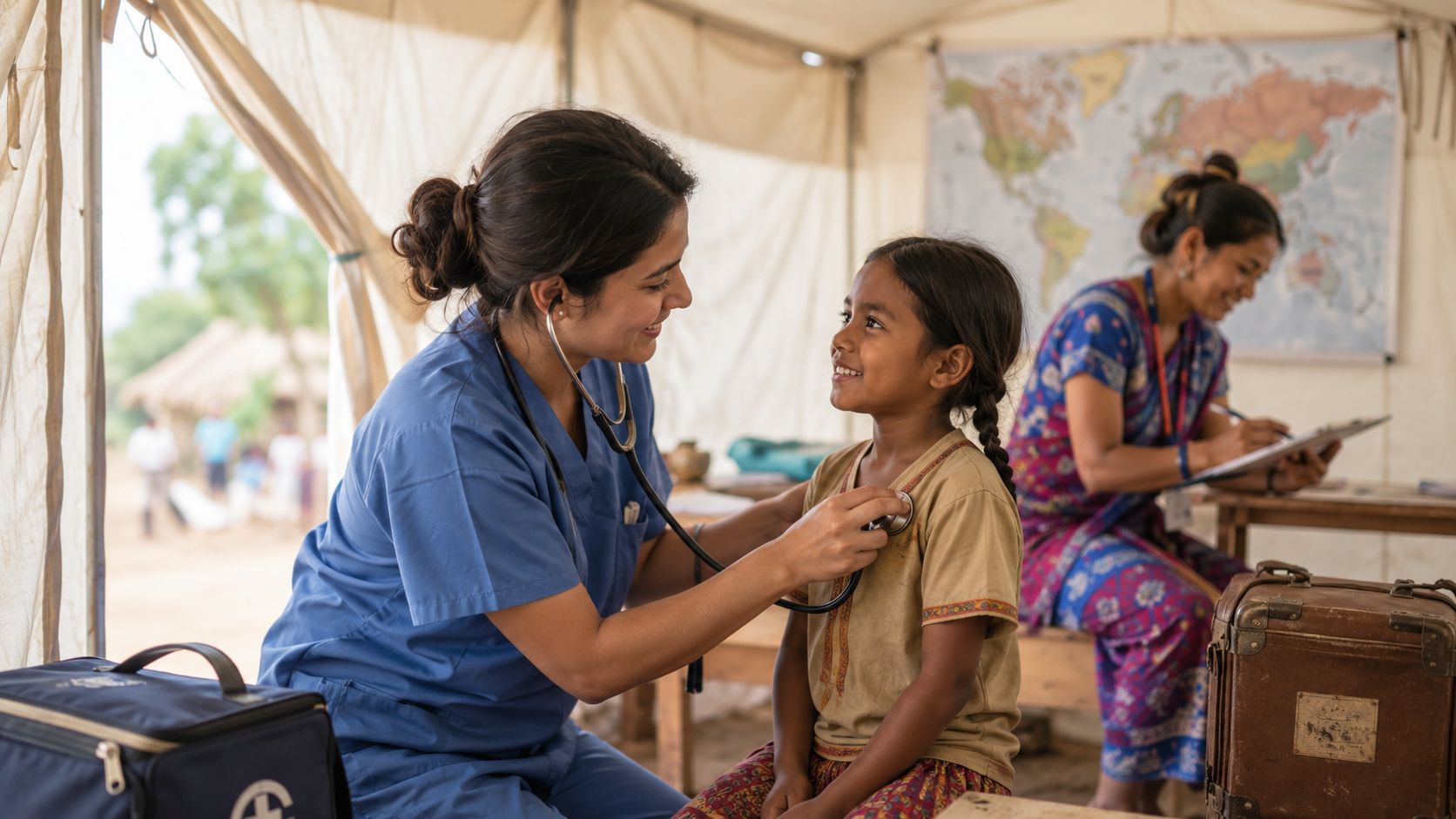
You've got the message at 2 a.m. after a long shift, a backpack half-packed in your mind and a quiet question you keep circling back to. You know your nursing skills could matter somewhere beyond your own hospital walls, but you also know good intentions don't make a placement ethical, legal, or useful. Volunteering abroad nursing can be meaningful, but only when it's matched to real local needs, your actual scope of practice, and a trip budget you can live with.
That's why the decision deserves more than an inspirational brochure. The practical questions matter just as much as the emotional pull. What will you be allowed to do, who supervises you, what does the trip cost once everything is added up, and how do you avoid becoming one more well-meaning visitor who creates extra work for a strained clinic?
The Call to Serve Beyond Your Borders
A nurse often starts this search from frustration and hope at the same time. Maybe your unit is short-staffed, maybe you have cared for patients who make the gap in access feel painfully clear, or maybe one local volunteer experience left you wanting to do more. That pull is powerful and genuine. It can also send people into poorly designed programs if they do not slow down and ask harder questions first.
International health volunteering has been around long enough to be taken seriously, not treated as a fringe idea. A survey of larger international health volunteer organizations found about 2,072 full-time-equivalent international health volunteers were deployed in sub-Saharan Africa at one point in time, and the same study estimated a cost per expatriate volunteer of US$36,000 to US$50,000 per year (PMC study on international health volunteers). That history matters because it shows two things at once, overseas nursing volunteering is established, and it demands real resources.
Practical rule: if a placement sounds effortless, it is probably underdesigned.
The best nursing volunteers do not lead with the fantasy of being the hero. They lead with humility, clinical discipline, and a willingness to fit into someone else's system. The strongest programs treat you like a guest professional, not a savior, and they expect you to arrive ready to learn local protocols, basic language skills, and the realities of working under supervision.
That is the mindset shift that makes the rest of the decision easier. Ask, “Where can I be useful without stepping outside my role?” Then check whether the program supports that answer. For a practical starting point, a guide to the best volunteer abroad programs can help you compare options before you commit.
Finding Ethical Programs Not Just Photo Ops
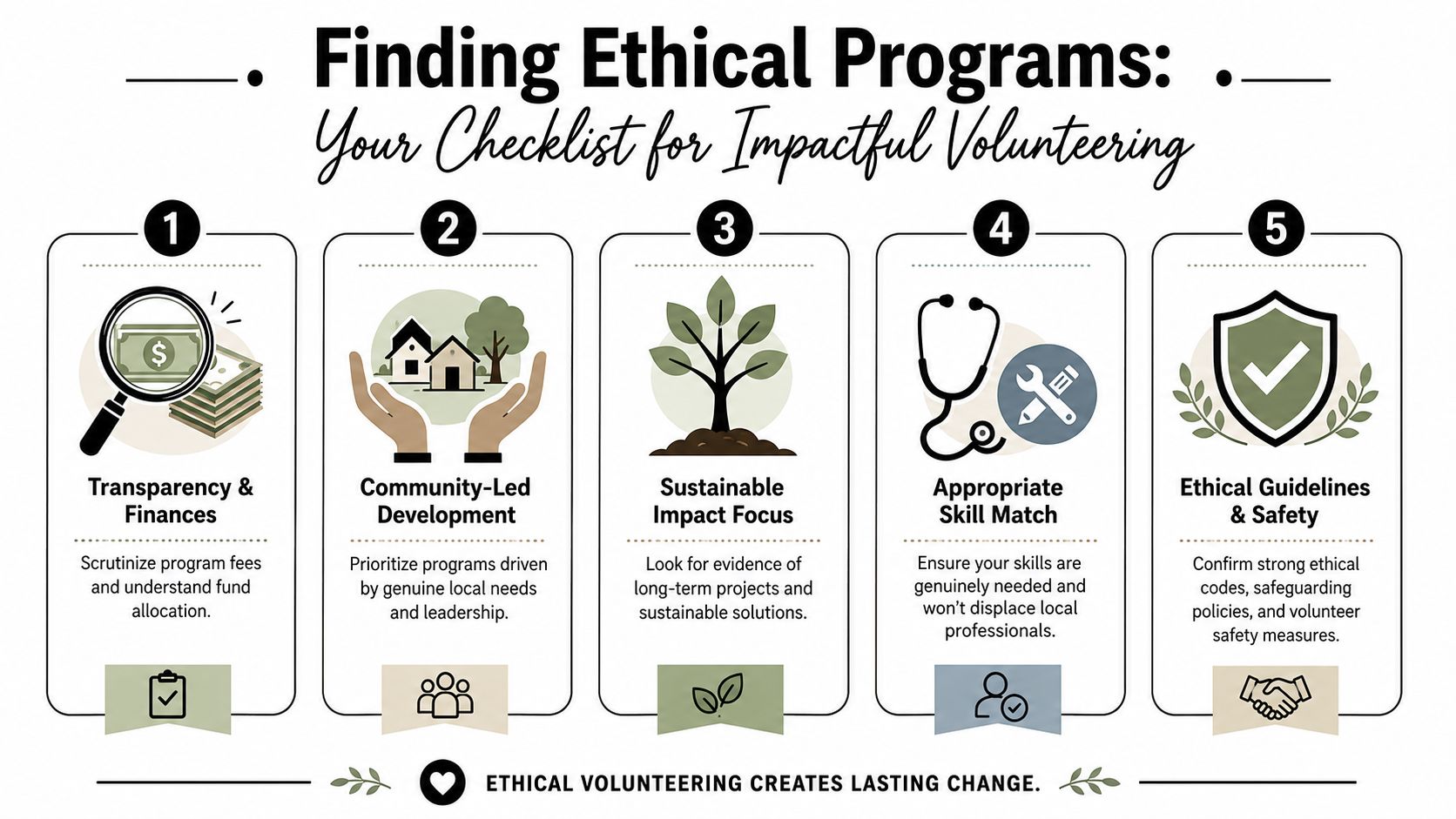
The first filter is simple, and it weeds out a lot of weak programs fast. Ask who designed the project, who benefits from it, and who has the authority to change it. A placement that's been shaped with local clinics and communities is a very different proposition from a volunteer package that seems built mainly to market a feel-good experience.
A critical gap in many volunteer programs is clarity on what tasks are clinically appropriate, legal, and ethical in the host country. Effective programs must provide pre-departure training, on-site orientation, and coordination with local communities to avoid creating dependency or undermining local health systems, which is why the question isn't whether you want to help, but whether the structure around that help is sound (ethical program guidance). If a program can't explain supervision, task boundaries, and local partnership in plain language, keep looking. The marketing might sound polished, but the operational side may be thin.
Green flags that usually matter
A strong placement usually has concrete signs of seriousness. These aren't glamorous, but they're what protect patients and volunteers alike.
- Local leadership: The project is shaped with local clinicians or community partners, not just foreign staff.
- Clear supervision: You can name who supervises you, and you know how often.
- Written scope: Your duties are listed in detail, not left vague.
- Training before arrival: You're briefed on culture, safety, and clinical expectations before you board the plane.
- Language planning: The program asks how you'll communicate on site, rather than assuming someone else will fix it.
- Realistic service design: The program explains how it avoids dependency and doesn't pretend a short stay can solve long-term staffing gaps.
Red flags that should stop you
The dangerous programs often sound exciting on the front end. They promise “hands-on” work without showing the legal path to get there, or they use broad language that hides weak oversight.
A placement that can't describe your tasks in detail probably hasn't thought through patient safety.
Watch for terms like “you'll be doing everything,” “independent clinical experience,” or “no experience needed” in a setting where you expect to touch patients. Guidance on ethical medical volunteering warns that the primary purpose is often observation rather than independent treatment, and applicants should request detailed task descriptions to avoid mismatched and unsafe expectations (ethical volunteering guidance). If you're a licensed nurse, that doesn't automatically mean you can perform every intervention in another country. You still need a placement that spells out exactly what's allowed and what supervision looks like.
If you want a practical starting point for comparing options, use this internal resource on best volunteer abroad programs and then verify everything directly with the organization before you pay anything. A good program welcomes questions. A weak one gets defensive.
Your Six Month Countdown to Departure
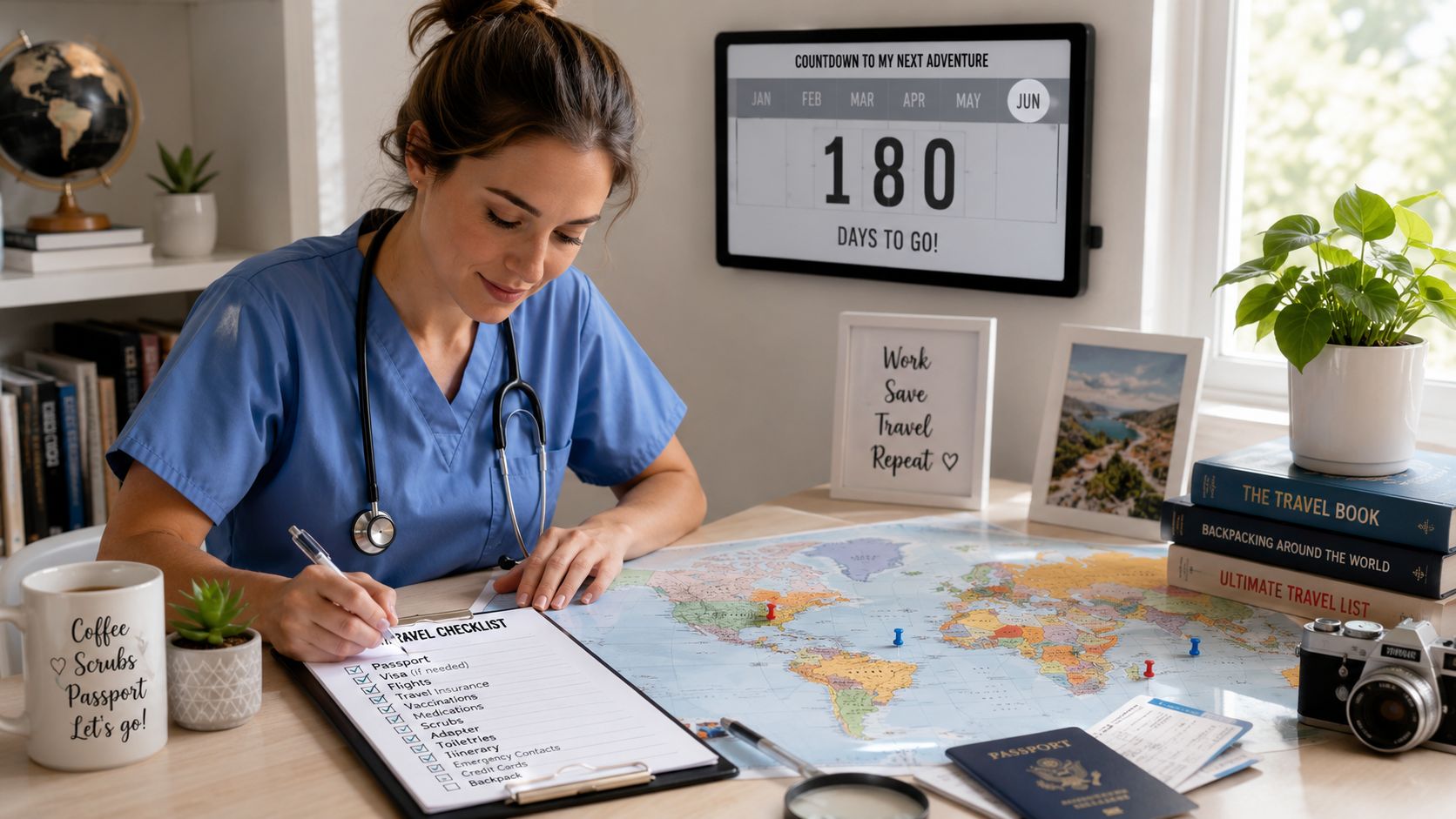
Start with the boring tasks first, because they're the ones that derail departure. Verify your professional registration and eligibility, gather credential copies and transcripts, confirm visa status, update vaccinations, and secure insurance. That sequence is specifically recommended in nursing-volunteer preparation guidance, and the process can take around six months because transcripts, police checks, and passport validity often create delays (pre-departure nursing guidance).
The smartest way to approach it is backward from your departure date. If you wait until the final month, you'll be rushing medical records, chasing sign-offs, and making avoidable mistakes with documents that should have been checked calmly. That's not just stressful, it can also push you into a placement with incomplete paperwork and fewer options.
A workable sequence
- First, confirm your license: Make sure your nursing registration is current and accepted for the placement you're considering.
- Next, collect paperwork: Put transcripts, credential copies, and identity documents in one secure folder.
- Then check visa rules: Some countries care about your activity type as much as your passport.
- After that, update vaccinations: Don't assume your routine shots are enough for clinical work abroad.
- Finally, lock in insurance: Your policy needs to fit both travel and health-related volunteer activity.
That's the order that saves headaches. A flight deal is useless if your visa is still pending, and a packed suitcase means nothing if you can't prove your credentials. Keep digital scans and paper copies separate, because documents have a habit of getting wet, lost, or delayed at the worst possible moment.
If you want a clean planning framework, compare your notes with this internal travel planning checklist and then add the nursing-specific items on top. The point isn't to make the process perfect. It's to make it predictable.
Decoding the True Cost of Volunteering
A lot of people hear “volunteer” and assume “cheap.” Nursing placements abroad rarely work that way. The total cost is usually bundled into the program structure, with fees often covering housing, coordination, and local transport, while you still pay for airfare, vaccines, insurance, visas, and day-to-day spending. A historical cost study of international volunteer placements found that placing a single expatriate health volunteer was expensive, which helps explain why many programs rely on volunteer fees instead of pretending the model is free.
That figure does not mean every program is overpriced. It means you should stop asking only whether a placement is affordable and start asking what your money buys. A well-run program may include supervision, orientation, housing, and transport that would be hard to arrange on your own. A weak one may charge a similar fee and give you very little structure in return.
A simple budget lens
Before you commit, price the full trip, not just the program fee. Include the following categories in your own worksheet.
- Program fee: Ask what it covers in writing.
- Flights: Budget separately, because they are rarely bundled.
- Insurance and medical prep: This includes travel health coverage and required vaccinations.
- Visa and documents: Do not forget passport renewals or document copies.
- Local living costs: Snacks, laundry, phone data, and transport outside the program.
- Emergency cushion: A changed return flight or medical issue can happen.
The deeper question is whether volunteering is the best use of your budget right now. Sometimes the answer is yes, especially if the placement offers supervision and a real clinical exchange. Sometimes the better move is to donate directly to a local health NGO or choose a shorter, skills-matched placement. If your trip fee is mostly paying for your own experience while local impact stays vague, that deserves a hard second look.
For a broader budgeting mindset, compare your numbers with this internal guide to volunteer abroad for cheap. Cheap is not automatically ethical, and expensive is not automatically impactful. The value is in the fit.
Health Safety and Your Scope of Practice

Your home-country license does not follow you with automatic authority abroad. Once you cross borders, your legal scope depends on local law, the supervising clinician, and the placement's own rules. The safest volunteers treat that boundary as fixed, because improvising in a clinic can put patients, staff, and your own license at risk.
A common mistake is assuming a “nursing” project automatically includes direct care at the bedside. In many placements, your role may be mostly observation with tightly limited tasks, and that is exactly why you need a detailed task list before you agree to anything (ethical medical volunteering guidance). If you skip that step, you may arrive expecting to function like staff when the clinic only needs an extra set of hands for basic support. That mismatch wastes time and can create avoidable liability for everyone involved.
Questions to ask before you go
Do not accept “you'll help in the clinic” as an answer. Ask for specifics in writing and read them carefully.
- What tasks will I perform? Get a written list.
- Who supervises me? Name, role, and on-site availability matter.
- What can't I do? Boundaries should be explicit.
- What local rules apply? Legal permission is not the same as program permission.
- What happens if I'm asked to do something outside scope? There should be a clear escalation path.
Safety first means dignity first. A patient deserves care from someone who is properly authorized, trained, and supervised.
Health preparation matters too. Update your vaccinations, review your travel health coverage, and make sure your insurance matches the kind of work you are actually going to do. If you are traveling alone, especially as a solo female traveler, keep the basics tight, clear arrival plans, reliable local contacts, and transport arranged before dark. Use practical advice on how to stay healthy while traveling to cover the nonclinical risks that can derail the trip before you ever step into the ward.
Protect yourself well enough that you can protect others. In under-resourced settings, that means staying alert, staying within scope, and being honest about what you can safely do.
Making an Impact and Bringing It Home
The volunteers who are most effective on site usually do the unflashy things well. They learn a few local phrases, listen before they suggest, and accept that they're joining someone else's workflow. Research on international volunteering for health found that the strongest predictor of perceived effectiveness was the volunteer's ability to speak the local language, and participants also reported gains in management, leadership, teaching, communication, knowledge, and skills (BMJ Open study). That finding should change how you prepare. Even basic language effort can improve rapport, reduce confusion, and make your presence more useful.
Your packing list should follow the same logic. Bring only what supports the work, not what inflates the trip. Practical shoes, modest clothing suited to the setting, a reliable headlamp, and copies of documents matter more than a perfectly styled travel wardrobe. If the placement includes language support, learn the clinical words that come up most often before you leave, because that's where trust begins.
What matters on the ground
- Listen to local colleagues first: They know what patients need.
- Use simple language: Short, clear communication beats jargon every time.
- Respect local rhythm: Clinic flow may look different from home, and that's fine.
- Stay teachable: Your job is to contribute, not to rearrange the whole system.
The return home matters too. A strong volunteer trip doesn't end at the airport. Put the experience into your CV in a way that reflects actual skills, such as cross-cultural communication, patient education, team coordination, and leadership under resource constraints. Those are not filler phrases if you used them.
There's also value in staying connected to the cause without chasing another trip immediately. You can support the local clinic remotely, donate to a vetted partner, or use what you learned to improve care in your own workplace. If you want to think more broadly about respectful engagement with communities, this internal piece on community-based tourism offers a useful mindset shift, because the same respect that makes travel sustainable also makes volunteer work less extractive.
For many nurses, the trip becomes part of professional identity in a quiet, lasting way. You come home with sharper judgment, better humility, and a more realistic sense of what care looks like when resources are tight. That's a genuine gain, but only if you choose a placement that honors the people you went to serve.
If you're serious about volunteering abroad as a nurse, start by comparing at least three placements, then write down who supervises you, what you're legally allowed to do, and what the full trip will cost before you apply. A careful first pass saves money, protects patients, and puts you in a program where your skills can make a difference. A CTA for Travel Talk Today .