In an era where our smartphones are our compass, map, and travel agent all in one, finding the right tools can feel overwhelming. The digital marketplace is crowded, making it tough to distinguish between a genuinely useful app and one that just takes up space. A great application doesn't just get you from Point A to B; it transforms your journey, saves you money, and helps you connect more deeply with the world around you. This guide is built to solve that problem.
We have sifted through hundreds of options to curate a powerful digital toolkit with the 12 best travel apps available today. Forget generic lists. We provide a detailed breakdown for each app, complete with screenshots and direct download links, so you can make informed choices quickly. Our goal is to equip you with the specific tools that match your unique travel style.
Whether you're a solo adventurer putting safety first, a budget backpacker making every dollar count, or an urban explorer searching for hidden gems, there’s an app designed for you. This comprehensive resource goes beyond simple descriptions, offering real-world use cases, honest pros and cons, and a look at ideal alternatives. We’re here to help you build the perfect app arsenal. Let's dive into the essential downloads that will elevate your next trip from a simple vacation to an unforgettable, smoothly-run experience.
1. Google Maps
Google Maps is more than just a tool for getting from A to B; it's a foundational part of modern travel and the undisputed king of digital navigation. For any traveler, this app is the reliable first step in exploring a new city or charting a cross-country adventure. Its power lies in its sheer depth of data, offering detailed, multi-modal directions that seamlessly switch between walking, public transit, and driving, all updated with live traffic information to keep you on the fastest route.
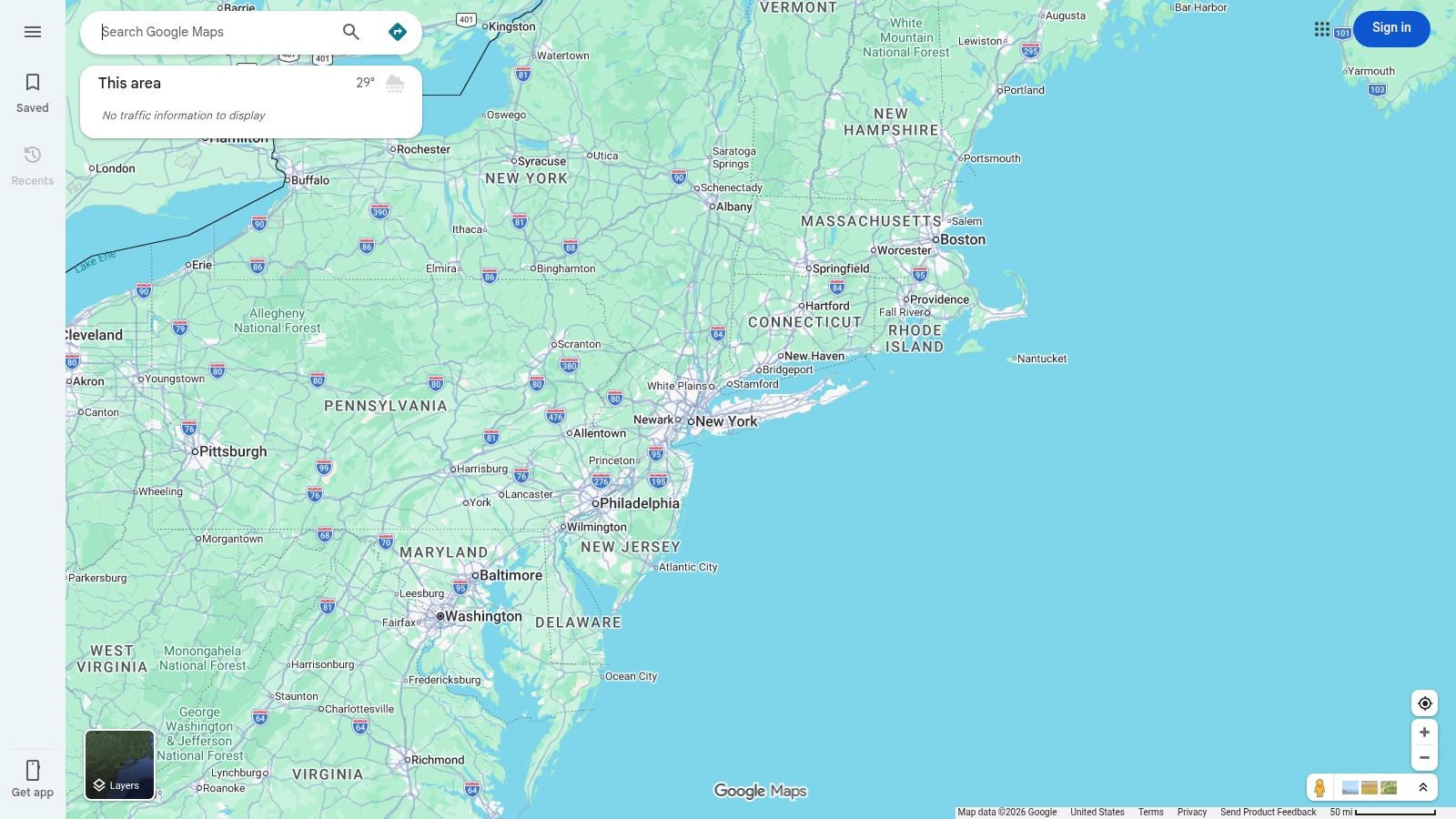
Its real magic for travelers, however, unfolds in its planning and discovery features. Before your trip, you can create custom "saved lists" for your must-see spots, pinning restaurants, museums, and photo locations to visualize your itinerary. Once you’re on the ground, the offline maps feature is a true lifesaver, providing full navigational support even when you're without a cell signal in a remote area or navigating a subway system.
Why It's a Top Travel App
What sets Google Maps apart is its integration and intelligence. It doesn't just show you a map; it understands your context. With features like camera-based landmark identification and conversational AI planning, it’s evolving into a genuine travel companion. You can find free attractions to fill your afternoons, discover top-rated local eats, and even find EV charging stations. Many travelers use it to build entire itineraries around interesting locations and explore budget-friendly options, a topic you can dive into by checking out these ideas for fun, free things to do on your next trip.
Quick Overview:
- Pros: Exceptional global coverage, reliable live traffic, deep integration with other Google services.
- Cons: Best features require a Google account; can be battery-intensive with continuous use.
- Website: google.com/maps
2. Google Flights
Google Flights has become an essential starting point for finding airfare, cutting through the noise of online travel agencies with a clean, powerful, and transparent interface. Instead of overwhelming you with ads, it focuses on delivering pure data, allowing you to quickly compare prices across multiple airlines and dates. Its speed and simplicity make the often-frustrating task of searching for flights feel empowering and straightforward.
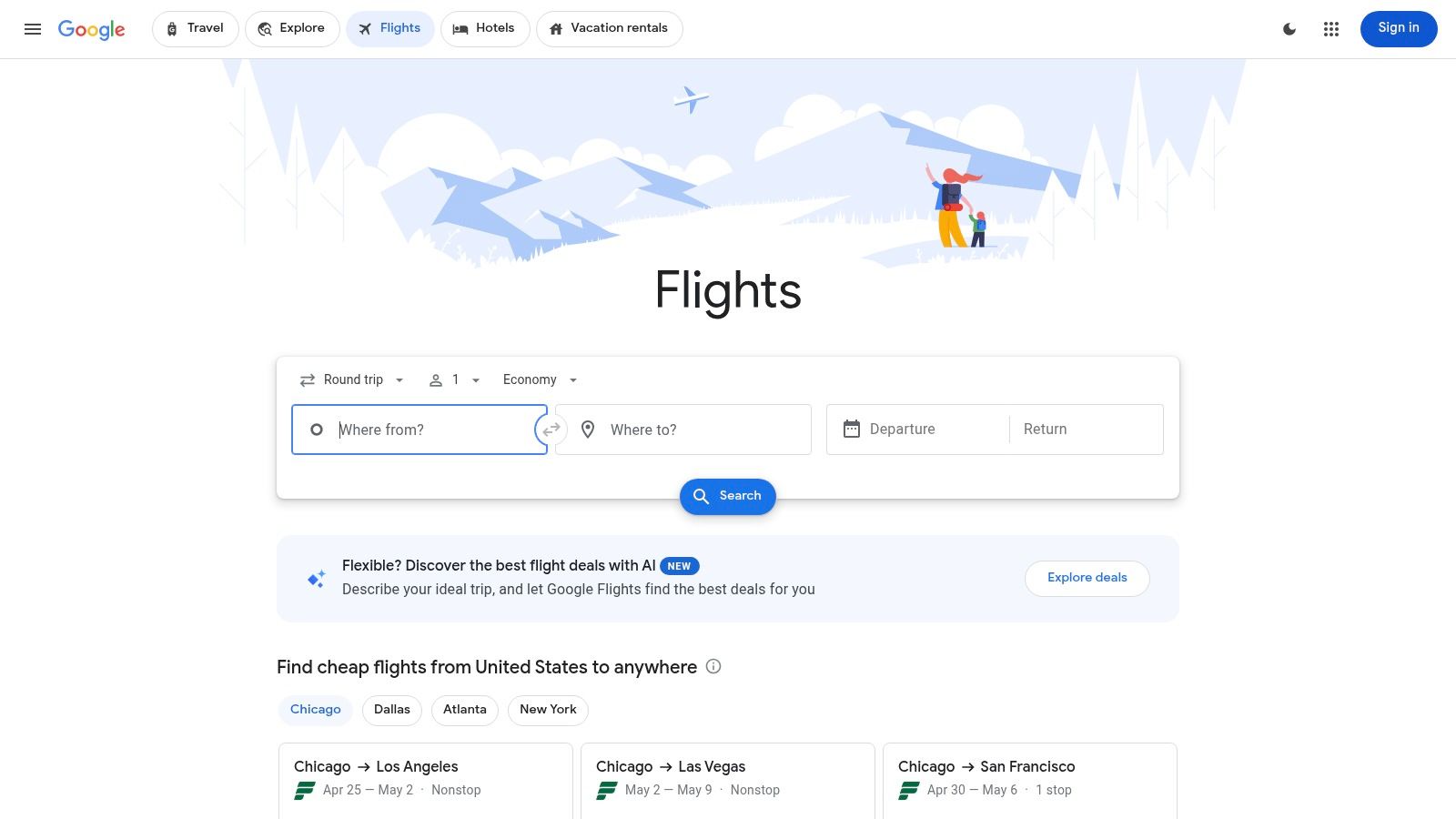
The platform's true genius lies in its flexible search tools. The calendar view and date grid instantly highlight the cheapest days to fly, making it perfect for travelers with flexible schedules. You can track prices for a specific route and receive email alerts when the fare drops, so you can book with confidence. It even shows historical price data, telling you if the current fare is low, average, or high for your chosen trip. This level of insight makes it one of the best travel apps for securing a great deal.
Why It's a Top Travel App
What makes Google Flights stand out is its commitment to user-first design and data-driven recommendations. It removes the guesswork from booking. For select U.S.-origin itineraries, it even offers a Price Guarantee badge; if the price drops after you book, Google pays you the difference. While the feature is limited, it shows a commitment to helping travelers save money. By mastering its filters and alerts, you can discover incredible deals, and you can get started by exploring these expert tips on how to find cheap flights.
Quick Overview:
- Pros: Clean, ad-free interface; excellent for finding the cheapest travel dates; powerful price tracking alerts.
- Cons: Price Guarantee is limited to certain U.S.-origin flights; it's a search tool, not a booking agency.
- Website: google.com/travel/flights
3. Skyscanner
Skyscanner is the ultimate starting point for budget-conscious travelers and those struck by a case of wanderlust without a destination. It operates as a powerful metasearch engine, pulling flight, hotel, and car rental data from countless airlines and online travel agencies to present a wide array of options. This makes it an indispensable tool for comparing prices and finding the best possible deal for your next adventure, all in one place.
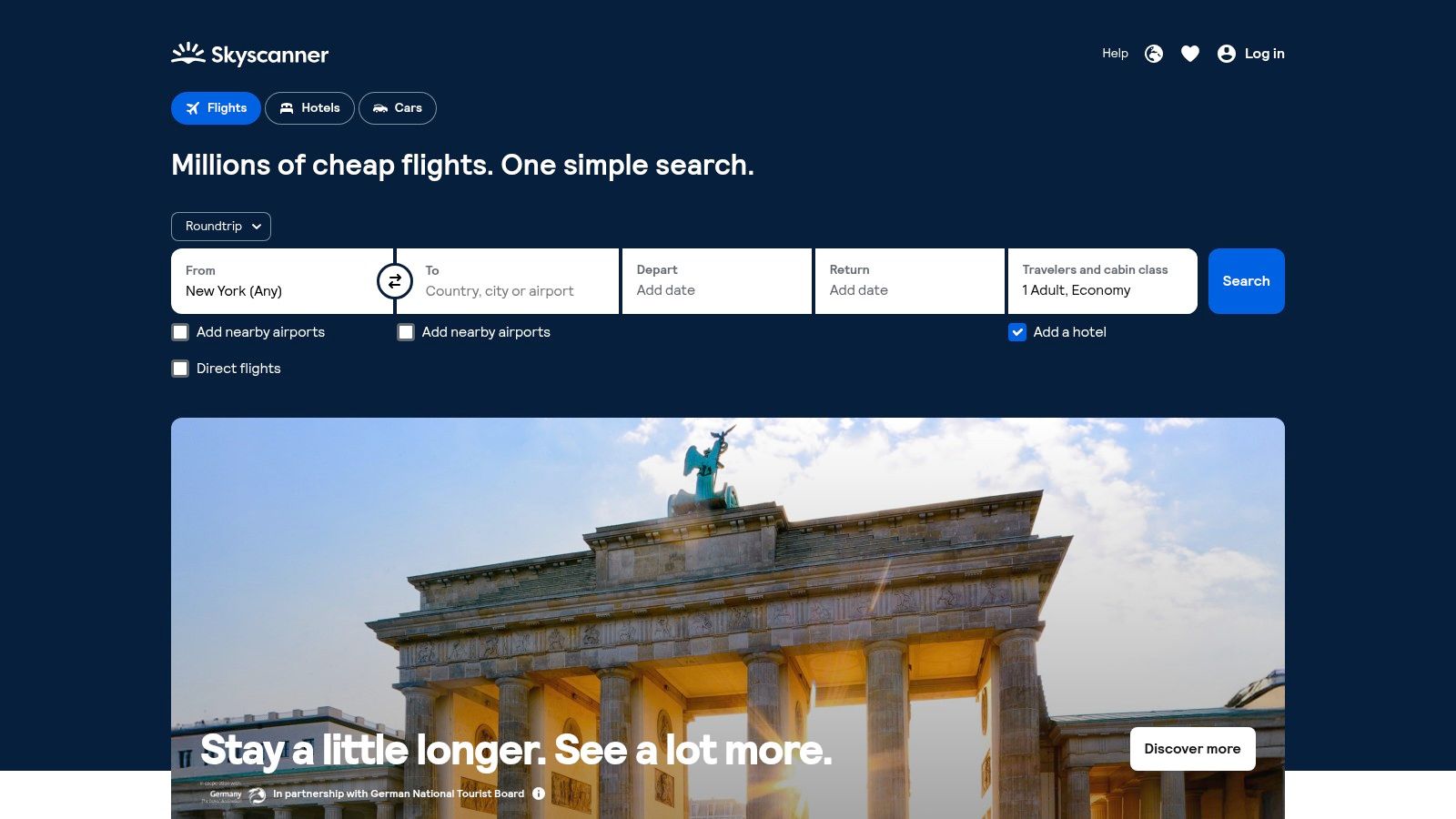
The real inspiration comes from its flexible search features. If you know when you want to travel but not where, the "Everywhere" search will show you the cheapest destinations from your home airport, sparking ideas you may have never considered. Conversely, if you have a destination in mind but flexible dates, the fare calendar view lets you pinpoint the cheapest days or even the cheapest month to fly, saving you significant money before you even book.
Why It's a Top Travel App
What makes Skyscanner one of the best travel apps is its focus on discovery and flexibility. It empowers you to find travel opportunities that fit your budget, not the other way around. By setting up price alerts, you can patiently wait for the ideal fare to your dream destination without having to check manually every day. While the final booking is handled by a third-party site, Skyscanner’s transparent and comprehensive search capabilities make the initial hunt for affordable travel both simple and exciting.
Quick Overview:
- Pros: Extensive coverage of airlines and OTAs, excellent for travel inspiration, completely free to use.
- Cons: Final booking experience depends on third-party sites; varied booking policies and fees depend on the operator.
- Website: www.skyscanner.com
4. Hopper
Hopper transforms the often-stressful process of booking travel into a strategic game you can win. Instead of just showing you current prices, this app-first platform acts as a data-savvy travel agent, using predictive algorithms to forecast when flight and hotel prices will be at their lowest. It advises you to either "buy now" or "wait for a better price," taking the guesswork out of your booking decisions and making it one of the best travel apps for securing a great deal.
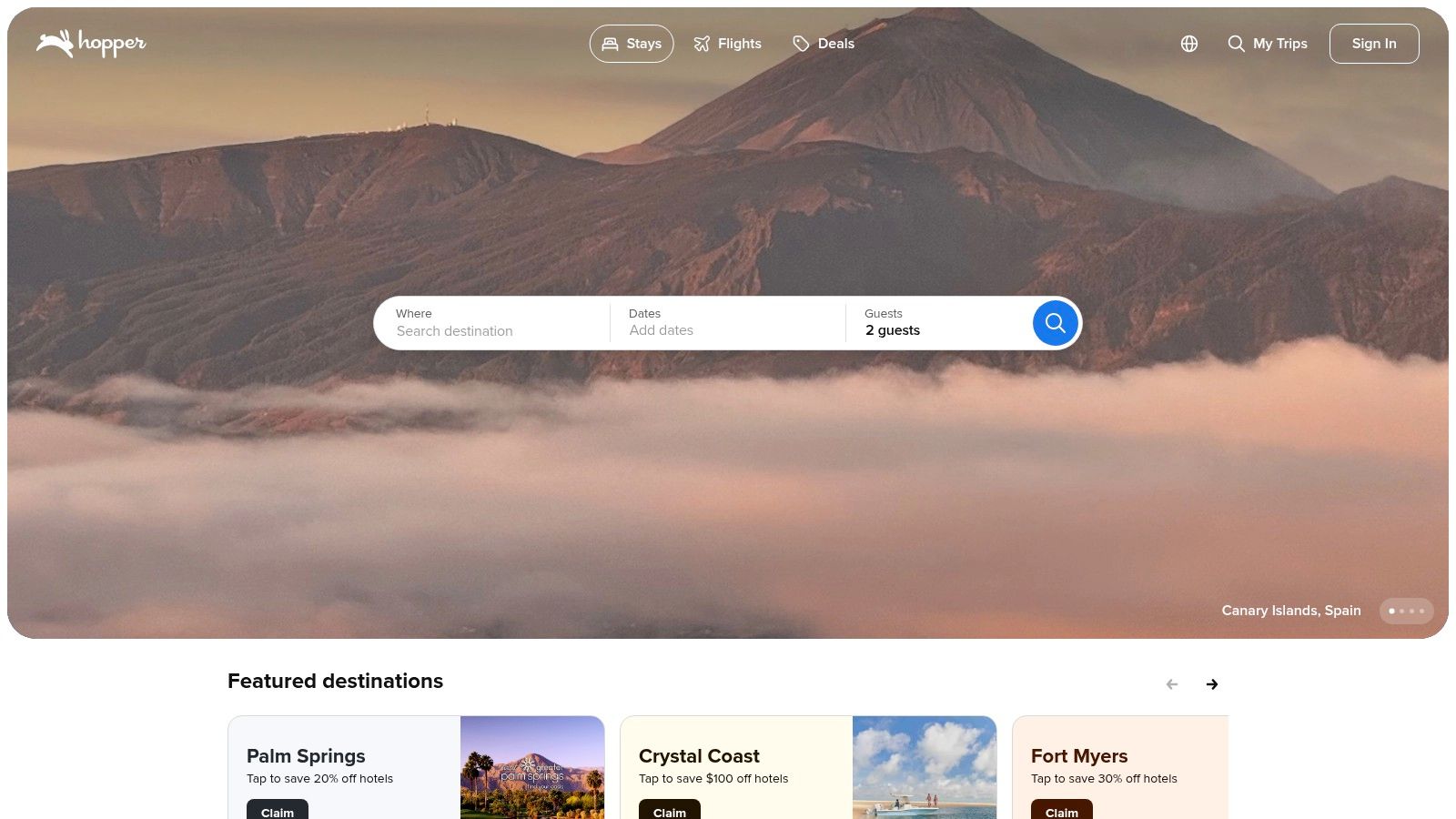
Its core appeal lies in its unique financial tools that give travelers more control and flexibility. With features like Price Freeze, you can pay a small fee to lock in a fare for a set period, protecting you from price hikes while you finalize your plans. This ability to hedge against the volatile nature of travel pricing is a significant advantage, allowing you to confidently build an itinerary without the fear of missing out on a good price.
Why It's a Top Travel App
What makes Hopper stand out is its commitment to reducing the financial risk of travel planning. Beyond predicting prices, it offers a suite of optional add-ons, like Cancel for Any Reason or Flexible Dates plans, that provide a safety net for unpredictable trips. The app also incentivizes users with "Carrot Cash" rewards and exclusive hotel rates that are often lower than those found on other sites. It's built for the modern traveler who wants both a great price and peace of mind.
Quick Overview:
- Pros: Powerful price prediction tools, app-exclusive hotel deals, financial products to hedge against price changes.
- Cons: Most protections and conveniences are paid add-ons; service fees can apply to bookings.
- Website: hopper.com
5. Rome2rio
Rome2rio is the ultimate trip-planning engine for the traveler who loves to see all the possibilities. Instead of just showing you flights, it functions as a door-to-door global journey planner, displaying a comprehensive mix of plane, train, bus, ferry, and driving options between any two points on the map. It’s perfect for those complex, multi-leg journeys where you want to compare the cost and time of an overland route versus a quick regional flight.
Its real strength is in visualizing the entire travel chain, from your starting address to your final destination. For example, it might show you that taking a bus to a neighboring city to catch a cheaper flight, or combining a train and ferry, could save you hundreds of dollars. The platform presents these routes with estimated travel times, prices, and direct links to the transport operators, making it an indispensable tool for budget-conscious backpackers and slow-travel enthusiasts.
Why It's a Top Travel App
What makes Rome2rio one of the best travel apps is its ability to uncover hidden travel pathways that other search engines miss. By pulling data from thousands of transport operators worldwide, it provides a macro-level view of your travel options, inspiring more adventurous and often more affordable itineraries. It answers the fundamental question, "What's the best way to get there?" with an exhaustive list of answers. While its interface has seen changes, its core function remains unmatched for planning complex, cross-border overland travel.
Quick Overview:
- Pros: Excellent for seeing all viable travel modes beyond flying; helpful for cross-border and overland journey planning.
- Cons: UI changes have frustrated some long-time users; always advisable to cross-check schedules on operator sites.
- Website: rome2rio.com
6. Booking.com
Booking.com has solidified its place as a go-to lodging marketplace for travelers worldwide, offering a massive inventory that spans from luxury hotels and resorts to budget-friendly hostels and private apartments. Its strength lies in providing unparalleled choice, making it simple to find a place that fits your exact travel style and budget. The platform’s powerful filtering tools are a planner's dream, allowing you to zero in on properties with specific must-haves like free cancellation, an in-unit kitchen, or a certain review score.
For frequent travelers, the Genius loyalty program is a significant draw, unlocking progressive discounts and perks like free breakfast or room upgrades at participating properties. This tiered system rewards repeat bookings, making it a valuable tool for anyone who travels regularly. Beyond just accommodation, the app has expanded its offerings to include car rentals and flight tracking, positioning itself as a more well-rounded travel planning hub.
Why It's a Top Travel App
What makes Booking.com one of the best travel apps is its combination of vast selection and user-friendly transparency. The sheer volume of genuine user reviews provides honest insight into what you can expect, while the prominent and clear "free cancellation" filter gives you the flexibility to adapt your plans without financial penalty. This peace of mind is invaluable. The app excels at helping you find accommodation that meets precise needs, from a solo traveler wanting a secure guesthouse to a family needing a multi-room apartment.
Quick Overview:
- Pros: Huge global inventory, robust review system, excellent free-cancellation options.
- Cons: Genius benefits depend on property participation; customer support experiences can vary.
- Website: booking.com
7. Hostelworld
Hostelworld is the quintessential tool for backpackers and social travelers, transforming the often-daunting task of finding budget accommodations into an inspiring part of the journey. More than just a booking engine, it’s a community hub built around the vibrant culture of hosteling. The platform provides access to over 16,500 properties in 180 countries, giving you an unmatched inventory of dorm beds and private rooms tailored for connection and adventure.
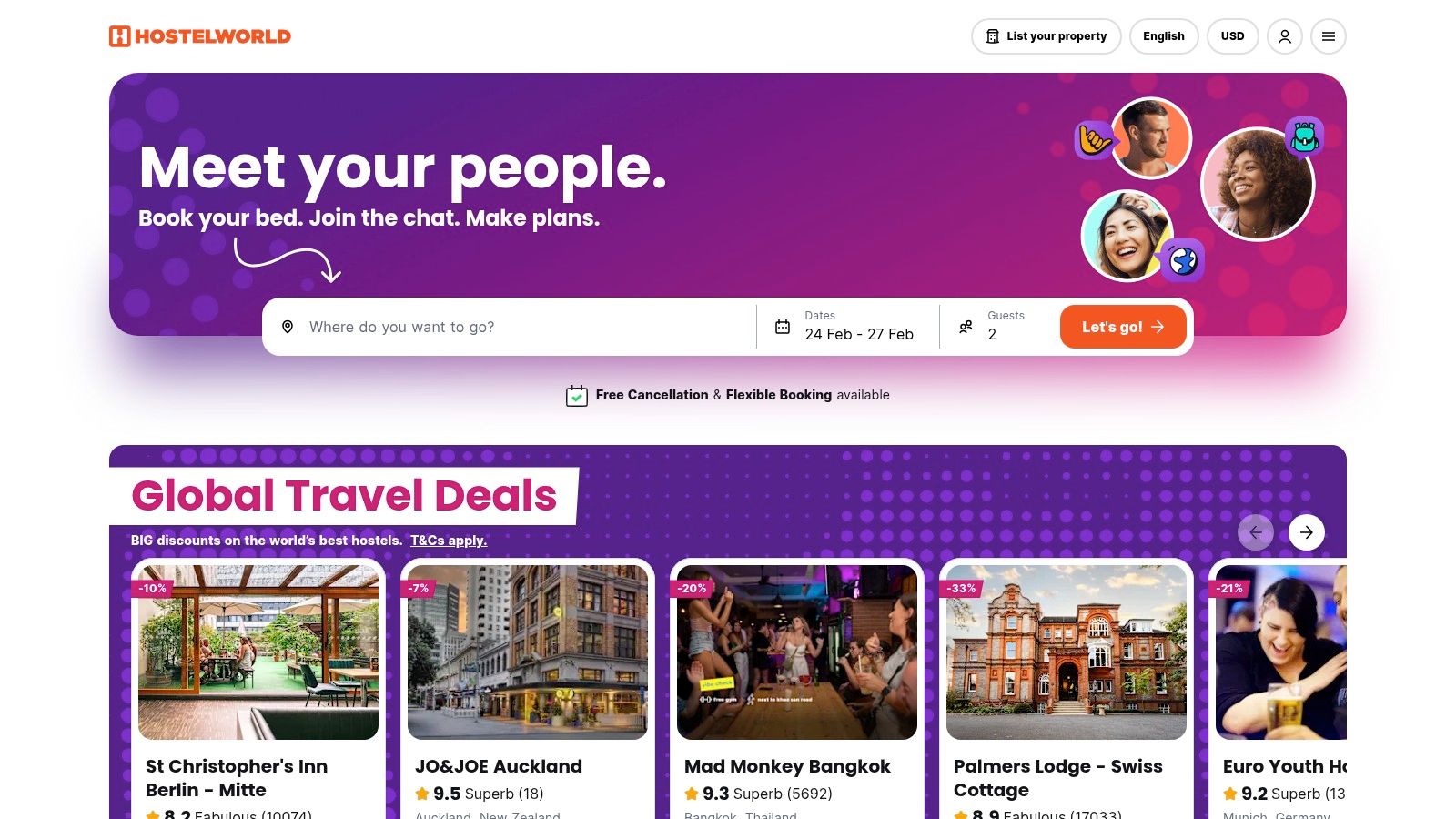
Its true value lies in its social features and detailed review system. Before you even book, you can join city-specific chats to meet fellow travelers, get real-time advice, and make plans. Once booked, hostel-specific chats open up, letting you connect with future roommates. This focus on community makes it one of the best travel apps for solo adventurers looking to forge new friendships on the road. The offline access to your booking details also ensures you have your reservation info ready upon arrival, no Wi-Fi needed.
Why It's a Top Travel App
What makes Hostelworld special are its granular, category-specific reviews. Instead of a single star rating, you see scores for atmosphere, security, cleanliness, and location, helping you find a hostel that perfectly matches your travel style. Whether you want a party vibe or a quiet, secure base for exploration, the reviews guide you. The app also offers flexible booking options, including a "Flexible Deposit" that allows you to cancel and use your deposit for a future stay, giving you peace of mind when plans change.
Quick Overview:
- Pros: Huge inventory of hostels, excellent social features for meeting people, detailed rating system helps find the right vibe.
- Cons: Service fees apply to bookings, and property cancellation policies can vary significantly.
- Website: hostelworld.com
8. TripIt
TripIt acts as your personal travel assistant, magically organizing your chaotic stream of confirmation emails into a single, cohesive master itinerary. The concept is brilliantly simple: forward your flight, hotel, and rental car confirmations to a specific email address, and the platform automatically parses the information, building a chronological plan for your entire journey. It eliminates the frantic search through your inbox for booking numbers or check-in times, consolidating everything in one accessible place.
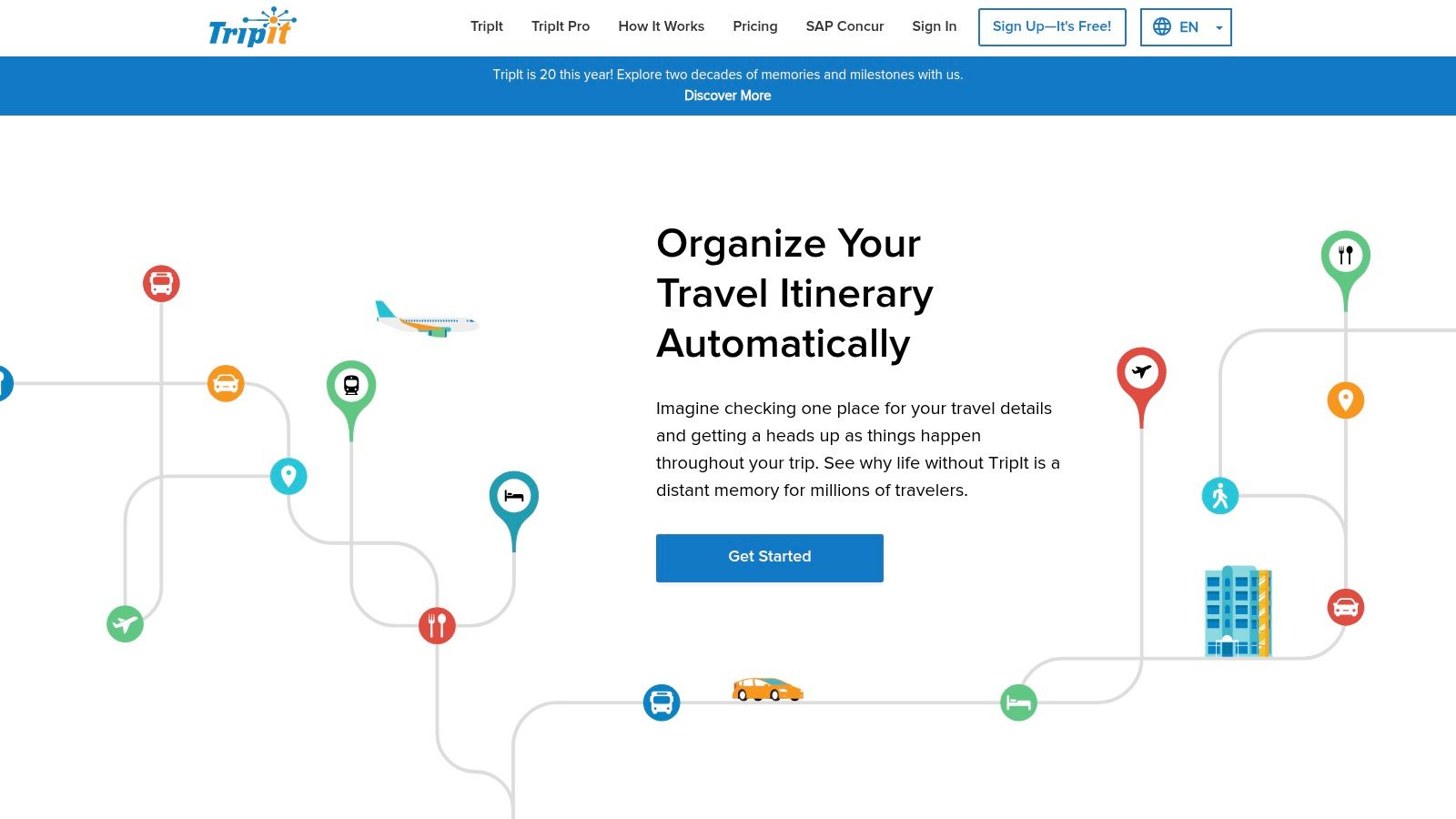
This app truly shines for complex, multi-stop trips where managing numerous bookings can become overwhelming. Once created, your itinerary is available offline, ensuring you have critical details even without a data connection. For travelers who value organization and peace of mind, TripIt is an essential tool. The Pro version takes this a step further by adding real-time flight alerts, seat tracking, and even neighborhood safety scores powered by GeoSure, providing crucial context for your destinations.
Why It's a Top Travel App
What makes TripIt one of the best travel apps is its ability to reduce travel friction. It’s not about discovery; it’s about execution. By automating the most tedious part of trip management, it frees you to focus on the experience itself. The calendar integration and easy sharing options keep everyone in your travel party on the same page. This level of organization is especially helpful for first-timers, a group that can get more guidance from our detailed guide on how to plan a backpacking trip.
Quick Overview:
- Pros: Saves time consolidating bookings into one master itinerary, reliable offline itinerary access, safety context integrated at the itinerary level.
- Cons: Best flight monitoring and advanced features require TripIt Pro; interface is utility-first and less polished for casual users.
- Website: tripit.com
9. Wanderlog
Wanderlog is the ultimate digital corkboard for the modern group trip, transforming chaotic travel planning into a collaborative and visual experience. It’s built for travelers who need to coordinate with friends or family, offering a shared space where everyone can contribute ideas, map out routes, and track expenses. Its strength lies in making group decisions simple, turning a jumble of texts and emails into a single, organized itinerary that everyone can access and update in real-time.
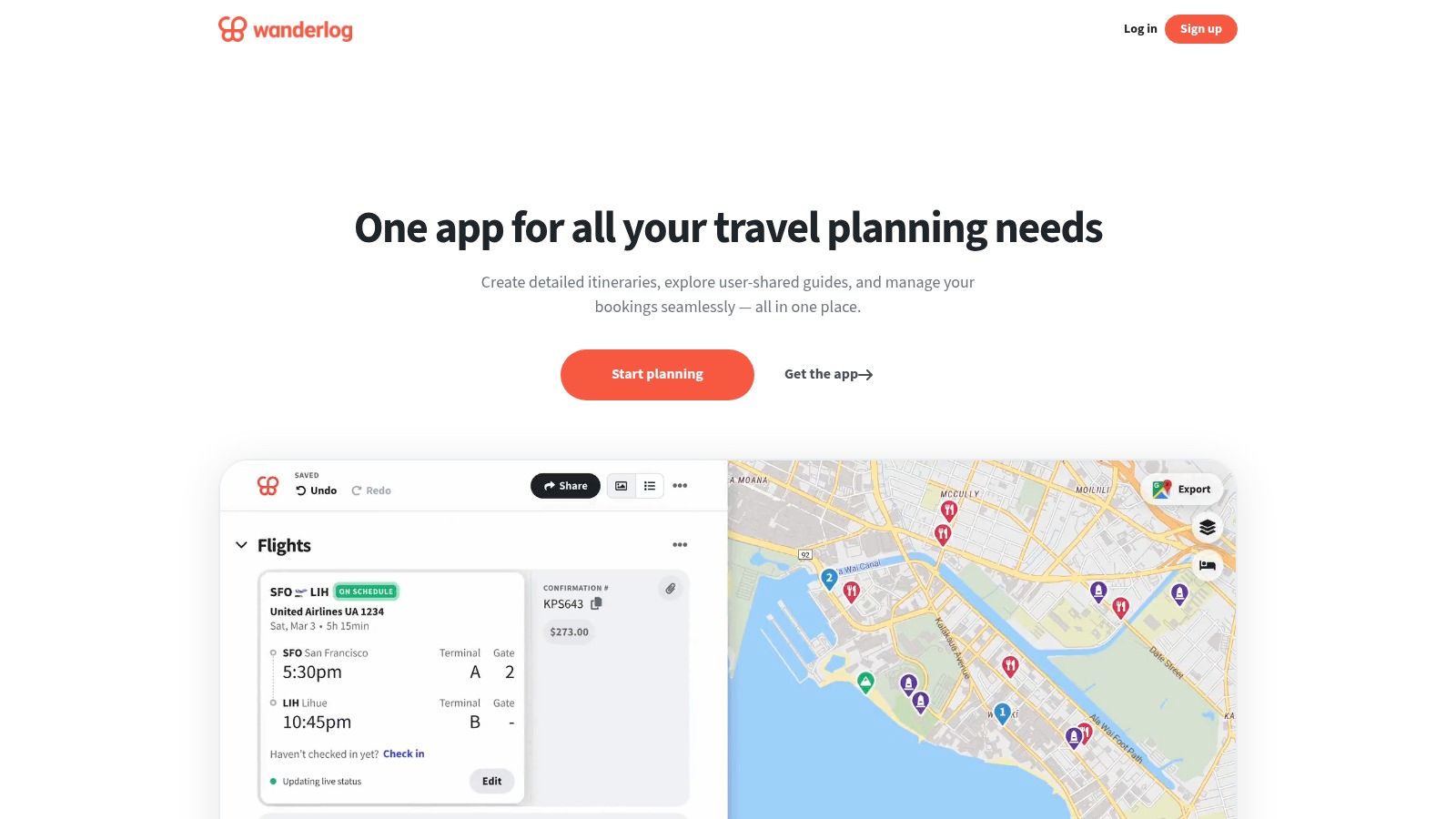
The platform shines with its map-first planning canvas, which allows you to plot points of interest and visualize your travel days geographically. This is a game-changer for road trips, as you can optimize your route and see exactly where your hotels, activities, and meal stops are in relation to each other. Even with a generous free version, Wanderlog gives you the tools to build a comprehensive plan, complete with checklists and notes for each location.
Why It's a Top Travel App
What makes Wanderlog one of the best travel apps is its focus on the social side of travel planning. The real-time collaboration and cloud sync features mean that when one person adds a new restaurant suggestion, everyone in the group sees it instantly. This removes the friction from planning a trip with multiple people. While the free tier is incredibly functional, upgrading to Wanderlog Pro unlocks offline access and unlimited attachments, perfect for times you're off-grid. The ability to export your finished plan to Google Maps also provides a seamless transition from planning to navigating.
Quick Overview:
- Pros: Flexible planning canvas is great for groups, strong free version is very useful, embeddable maps for bloggers.
- Cons: Pro is required for offline access and unlimited attachments; pricing can sometimes seem inconsistent across platforms.
- Website: wanderlog.com
10. Citymapper
While many apps can get you around a city, Citymapper is the specialist designed for anyone who relies on public transportation. It excels by focusing entirely on the urban transit experience, offering real-time, multi-modal routes that combine buses, subways, rail, ferries, and even micromobility options like scooters and bikes. This app is the ultimate key to unlocking a city's transport network like a local.
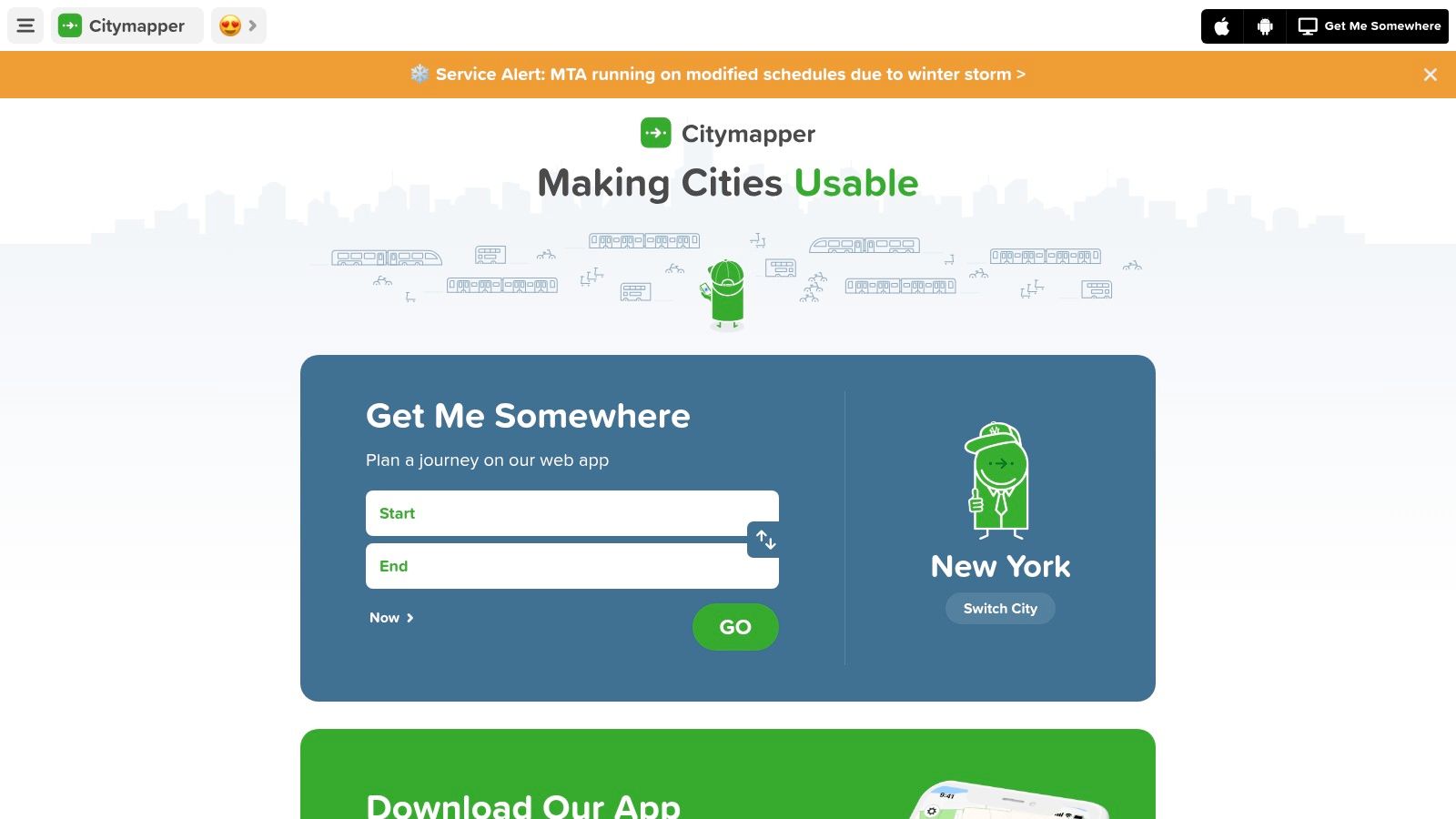
Its true advantage lies in its intelligent routing. Citymapper doesn't just find the fastest path; it presents alternatives based on your priorities. You can choose routes with fewer transfers, less walking, or lower costs, giving you complete control over your journey. For travelers with mobility concerns or heavy luggage, its step-free routing is an invaluable feature, and real-time disruption alerts ensure you're never caught off guard by a sudden service change.
Why It's a Top Travel App
Citymapper distinguishes itself from broader navigation tools with its superior user experience and transit-specific data. It often uncovers more efficient or cheaper routes that other apps miss, thanks to its deep integration with local transit authorities and micromobility providers across its 400+ supported cities. The interface is clean and intuitive, telling you exactly which subway car to board for the quickest exit and what time the next bus actually arrives. For urban explorers, this level of detail makes it one of the best travel apps available for mastering a new metropolis.
Quick Overview:
- Pros: Best-in-class UX for city transit, often finds cheaper or fewer-transfer options, excellent micromobility integrations.
- Cons: Coverage is limited to major metropolitan areas; the ad-free experience requires a subscription.
- Website: citymapper.com
11. TravelSpend
Keeping your finances in check is one of the most liberating parts of long-term travel, and TravelSpend is designed to make that process effortless. Built specifically for travelers, this app goes beyond generic budgeting tools by focusing on the unique challenges of managing money on the road, such as handling multiple currencies and splitting costs with companions. It allows you to log every expense, from a morning coffee to a hostel stay, in its local currency, automatically converting it to your home currency so you always know where you stand.
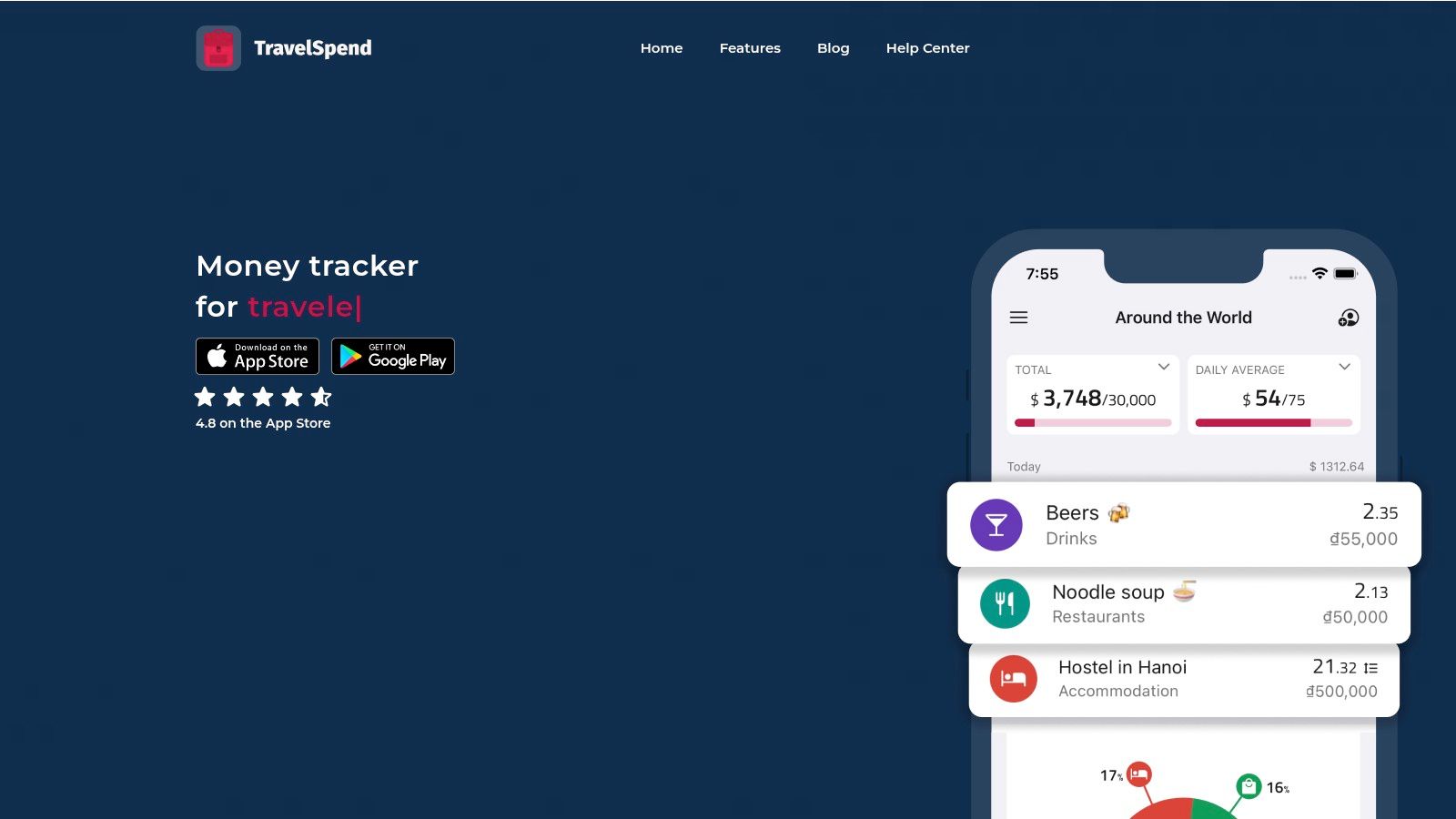
The app’s real strength is its simplicity and travel-centric design. You can set up a budget for your entire trip or break it down daily, and then watch as the app’s clear visualizations show your spending habits. For group trips, the bill-splitting feature is a game-changer, eliminating awkward conversations about who owes what. All entries can be made offline, which is perfect for when you’re out of service range, and your data syncs once you're back online.
Why It's a Top Travel App
What makes TravelSpend one of the best travel apps for budgeting is its laser focus on the traveler’s real-world needs. Unlike a standard spreadsheet, it’s built for mobility and immediate entry, helping you form a consistent habit of tracking your spending. The ability to see your expenses categorized visually helps you understand where your money is going, making it easier to adjust your habits and stick to your goals. You can improve your financial planning by learning about the key travel budget categories that save you money and applying them within the app.
Quick Overview:
- Pros: Designed specifically for travel use cases (multi-currency, offline), simple group cost-splitting, clear visual budget tracking.
- Cons: No automatic bank sync is available; premium is needed for advanced features like custom categories and attachments.
- Website: travel-spend.com
12. GeoSure
GeoSure brings a powerful layer of situational awareness to your travel planning, moving beyond generic country-wide advisories to deliver granular, neighborhood-level safety intelligence. It scores locations worldwide on a scale from 1 to 100, helping you understand the relative safety of an area before you book a hotel or decide where to explore. This allows you to make informed decisions with confidence, choosing destinations and even specific streets that align with your personal comfort level.

Its real strength lies in its specialized safety categories. Beyond an overall score, GeoSure provides ratings for women’s safety, LGBTQ+ safety, health and medical risk, and physical harm, complete with day and night variations. This data-driven approach demystifies travel safety, empowering you to proactively manage risk and feel more secure, especially when venturing off the beaten path or traveling solo.
Why It's a Top Travel App
What makes GeoSure one of the best travel apps is its commitment to providing specific, actionable safety context. It’s not about fear-mongering; it’s about awareness. For many, especially solo female travelers, it’s an essential tool for pre-trip vetting and on-the-ground decision-making. The integration with platforms like TripIt means your safety scores appear directly within your itinerary, adding a seamless safety check to your plans. For more tips on staying safe, review this guide on how to travel alone as a woman for added peace of mind.
Quick Overview:
- Pros: Adds crucial situational awareness to lodging and area choices; valuable category-specific data.
- Cons: Not all neighborhoods have scores yet; should be used as one of many inputs, not the only one.
- Website: geosure.ai
Top 12 Travel Apps Comparison
Building Your Perfect Travel App Stack
You've explored the landscape of the best travel apps, from the logistical powerhouses like Google Maps and Skyscanner to the specialized guardians like GeoSure and the budget-savvy companions like TravelSpend. The real journey, however, doesn't begin with downloading every single one. It starts with a simple, personal question: What kind of traveler are you, and what does your ideal adventure look like?
The purpose of this guide was never to overwhelm your home screen with a sea of new icons. Instead, it’s about empowering you to build a small, curated "app stack" that works for you. Think of it as assembling your own digital multi-tool. You don’t need every attachment, just the ones that will genuinely make your trip smoother, safer, and more memorable. A well-chosen set of apps frees up your mental energy from logistical worries, allowing you to be more present and open to the spontaneous magic that travel offers.
Assembling Your Personal Toolkit
Let's put this into practice. Your perfect combination is a reflection of your priorities.
- For the Solo Female Backpacker in Southeast Asia: Your stack might be a trio of Hostelworld for community-focused lodging, TravelSpend to stretch your budget further, and GeoSure for real-time neighborhood safety insights before you book that next stay.
- For the Urban Explorer on a European City Break: You could pair the unparalleled public transit directions of Citymapper with Wanderlog to map out a multi-city itinerary, using Google Maps to save hidden cafes and photo spots you discover along the way.
- For the Group Planning a Cross-Country Road Trip: The collaborative features of Wanderlog become essential for coordinating stops and daily plans. Add Rome2rio to explore alternative routes between major destinations and a flight tracker like Hopper to find the cheapest entry point for friends flying in.
The key is to start with a foundation. Everyone benefits from a reliable navigation tool like Google Maps and a smart flight searcher. From there, be selective. Add the specific tools that solve your biggest pain points, whether that's managing a tight budget, organizing a complex itinerary, or feeling secure in an unfamiliar environment.
Your apps should serve your adventure, not define it. The goal is to spend less time staring at a screen and more time soaking in the world around you.
Beyond the Download: A Mindful Approach
Remember that even the best travel apps are just that: tools. They enhance your intuition but never replace it. An app might tell you a neighborhood is safe, but your gut feeling on the ground still matters. A flight deal might look incredible, but a quick check of the airline's recent reliability is always wise.
Use these technologies as a bridge to deeper connection, not a barrier. Use a translation app to learn a few key phrases, then put your phone away and try them out with a local shopkeeper. Use a mapping app to find a hidden trail, then turn on airplane mode and simply listen to the sounds of nature.
Your phone can be your most powerful travel accessory or your biggest distraction. The choice is yours. By consciously building your app stack and using it with intention, you create a support system that works quietly in the background, giving you the confidence to chase new horizons and create stories worth telling.
Ready to take your travel planning from digital to reality? At Travel Talk Today, we believe the best trips start with smart preparation and a spirit of adventure. Our platform is a community hub where travelers share firsthand insights, moving beyond app reviews to discuss real-world experiences. Find your next destination and connect with fellow explorers who have already been there.