A backpacker in Southeast Asia can plan around about $32 a day, while a traveler in Scandinavia may need about $90 a day, before flights are added, according to the 2026 backpacker cost index. That gap matters more than most small savings tactics. Skipping a café purchase won't offset the cost of choosing a high-cost region for a multi-week trip.
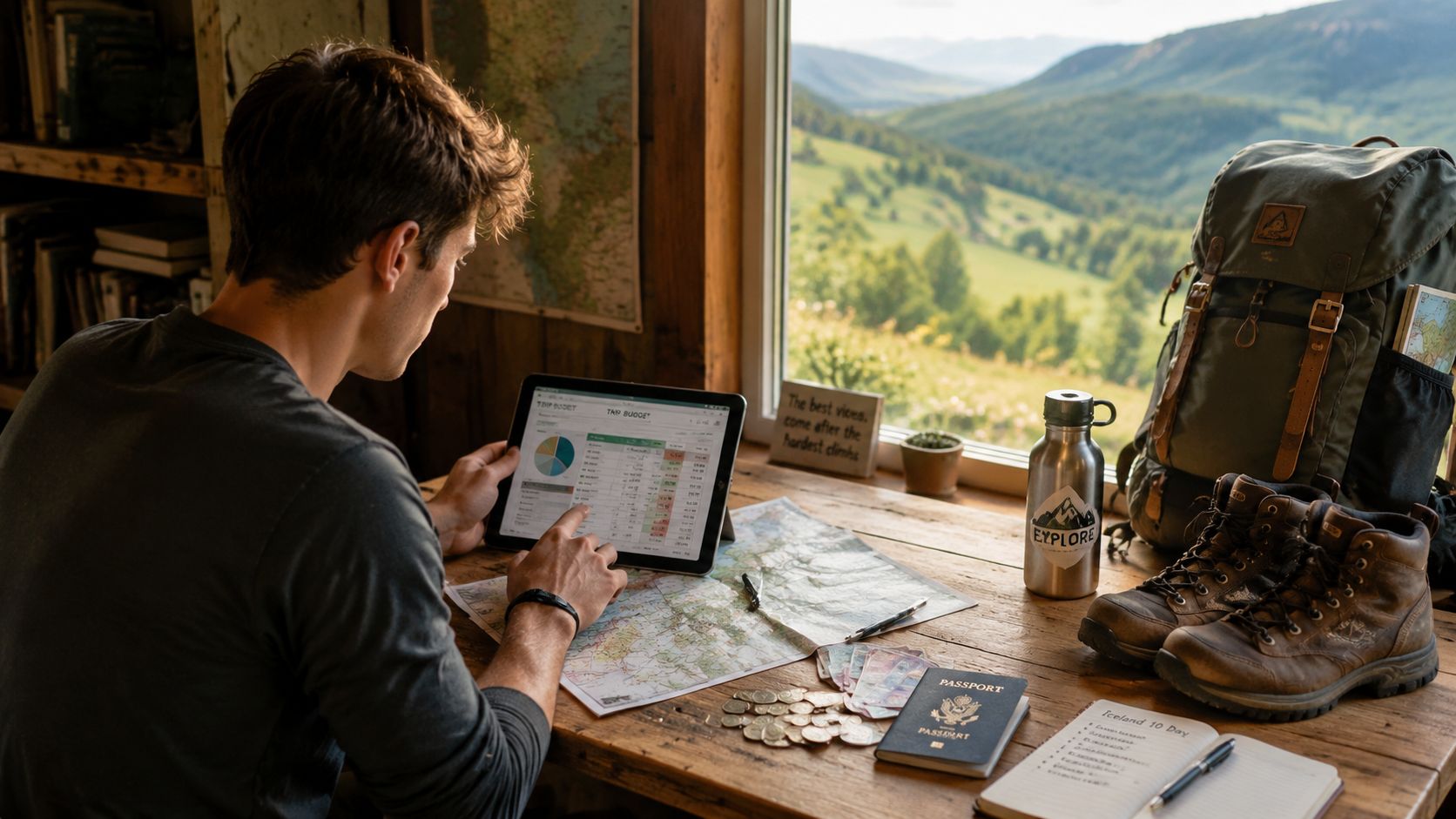
Backpacking on a budget works when you treat money as a planning system rather than a daily punishment. Choose the right destination tier, separate fixed costs from spending on the road, protect yourself from predictable leaks, and leave room for the unexpected. The result isn't a joyless trip. It's a route that gives you more freedom because your money lasts longer.
Why Geography Matters More Than Frugality
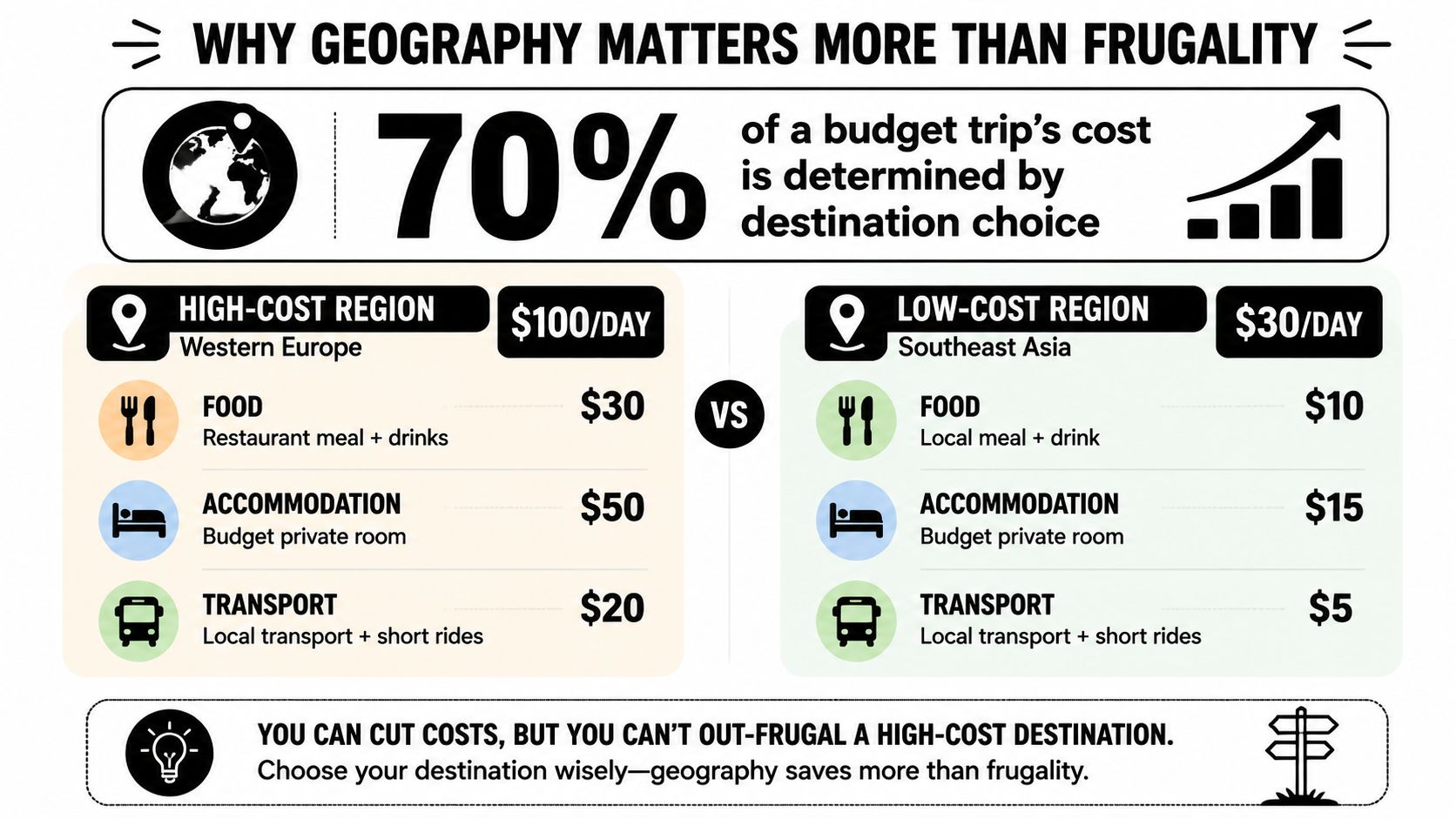
Destination choice is the largest budget decision on a backpacking trip. The 2026 backpacker cost index places average daily budgets at about $32 in Southeast Asia, $38 in Latin America, $39 in Eastern Europe, $40 in the Balkans, and $62 in Western Europe. Scandinavia reaches about $90 per day.
That gap changes the trip before you book a bed or buy a meal. A route through Western Europe or Scandinavia can cost roughly two to three times as much per day as one through Southeast Asia, even before airfare. Over several weeks, the difference can reach hundreds or thousands of dollars, depending on the route and trip length.
The regional tiers
Regional averages are planning baselines, not promises. Island transfers, major festivals, remote destinations, and last-minute bookings can push costs well above the typical range. A slower route through smaller cities can make a higher-cost region easier to afford, but it rarely removes the underlying price difference.
Choose a destination cluster, not only a country. Southeast Asia and South Asia can start around $25 per day, Eastern Europe and the Balkans often sit around $30 to $50, and Western Europe can run around $80 to $130, according to the backpacking budget calculator benchmarks. These bands help expose an unrealistic itinerary before you pay for internal transport.
The daily figure also hides a common planning failure. A traveler may fit food and lodging into the target rate, then exceed the full-trip budget through expensive transfers, peak-season rooms, border crossings, or extra nights caused by a rushed route. Global backpacker research cited in the 2026 index estimates roughly 45 million backpacking trips annually, with about two-thirds of backpackers aged 20 to 25. A large, established travel market creates recognizable regional tiers, while local variation still matters.
Planning rule: If your route is expensive, discipline alone will not rescue it. Change the geography first, then optimize the details.
Use the regional baseline as the starting point, then adjust for travel style, season, route, and comfort requirements. Build the rest of the plan around fixed costs, controllable spending, and a buffer for costs that are easy to underestimate.
Building a Realistic Pre-Trip Budget
A daily budget covers only the days you are away. The full trip also includes airfare, visas, insurance, vaccinations, gear, airport transfers, and entry requirements. These fixed costs can outweigh several days of careful spending, especially on a short itinerary.
A solo traveler survey found that 63% of travelers spend $1,000 to $3,000 on solo travel excluding airfare, while willingness-to-pay data indicates 27% would spend up to $5,000 on a single trip, as reported by Skyscanner's solo travel statistics. A low daily rate can therefore look affordable while the complete trip remains expensive.
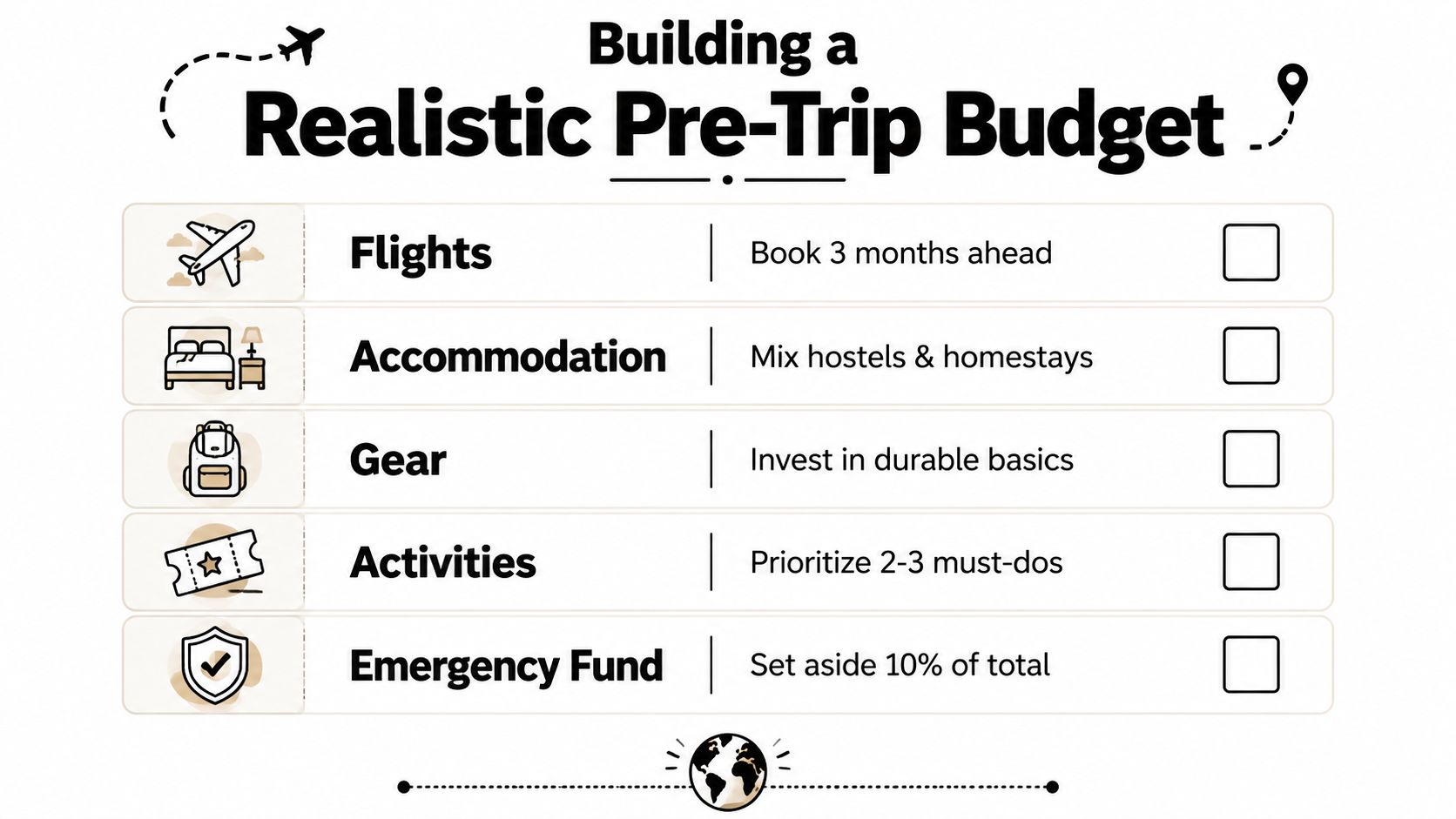
Use three budget buckets
Start with fixed pre-trip costs. Record the flight, visa charges, travel insurance, vaccinations, required gear, and any accommodation or transport booked in advance. Cheap meals after arrival cannot reduce these bills.
Then calculate daily variable costs. Multiply the destination baseline by the number of travel days, dividing the route across regional price tiers when necessary. Give food, lodging, local transport, activities, laundry, connectivity, luggage storage, and fees their own lines. The Travel Talk Today travel budget calculator can keep those categories visible instead of concealing them inside one daily average.
Finally, set aside an emergency reserve. Keep it separate from ordinary spending so a weak exchange rate, medical issue, missed connection, or urgent route change does not force you to borrow. Make the money accessible, but exclude it from the amount available for extra nights out.
Use a 15% to 20% buffer for hidden fees and overruns, following the backpacking budget calculator guidance. That margin matters because 53% of travelers always go over budget, while nearly 74% of Americans have used debt for travel, with average travel-related debt of $1,108, according to the same source.
Make the spreadsheet honest
Separate planned costs from actual costs and record purchases daily. Small leaks, such as recurring transfer fees, convenience-store snacks, paid restrooms, and extra local rides, become meaningful across a long trip.
Use three questions before booking:
- Necessary: Does this get you there, keep you safe, or support basic comfort?
- Flexible: Can you shift the date, neighborhood, route, or provider?
- Optional: Would you still choose it if the trip were already over budget?
A realistic budget leaves room for splurges. Assign each one a limit before departure, so a memorable activity does not consume money reserved for transport or safety. Reconcile the sheet every few days and adjust the route or comfort level early, while the remaining costs are still controllable.
Finding Cheap Flights and Low-Cost Lodging
Flights and accommodation often create the largest controllable costs, but the lowest displayed rate can hide the total. A budget-airline fare may require baggage fees, seat charges, an airport transfer, or an inconvenient connection. A cheap bed can produce the same problem if its distance adds daily transport costs or makes late returns impractical. Compare the complete trip cost, not the booking headline.
For airfare, check nearby airports, one-way combinations, and routes through established budget-airline hubs. Search flexible dates before committing to a departure day, then include transfers, meals during long layovers, and any extra night required by the schedule. A fare that looks cheaper can lose its advantage once those costs are added. These cheap flight hacks for smarter travel work best when each fare is evaluated as part of a complete itinerary.
Shoulder-season travel can improve the balance between price, weather, and availability, though the useful timing depends on the destination. Check lodging rates before finalizing the flight, since a cheaper ticket may place you in an expensive period at the destination.
What hostel data reveals
Global hostel pricing data covers 57,390 samples across 183 cities. It reports a mean price of $24.40 per night, a median of $19.11, and a minimum of $5.00. 49% of hostels are priced below $20 per night, according to global hostel pricing insights for 2026.
| Price range | Percentage of hostels | What to expect |
|---|---|---|
| Under $10 | Not specified in the dataset | The lowest-cost inventory, often with sharper variation in location and facilities |
| $10 to $20 | 37.4% | A broad range of dorm beds for flexible budget travelers |
| $20 to $30 | 24.0% | Common mid-budget dorm inventory in many destinations |
| Above $30 | Not specified in the dataset | Higher-cost cities, private rooms, premium hostels, or peak-demand dates |
The median supports everyday planning better than the mean because unusually expensive cities can pull the average upward. A sub-$20 bed still is not a universal expectation. Region, date, neighborhood, room size, reviews, and booking timing can change the final rate.
Compare the bed beyond its rate
A central hostel may cost more but reduce local transport and make returning after dark easier. A property with a kitchen can lower meal spending, while a secure locker protects valuables from replacement costs. Weigh those savings against the nightly difference.
Work exchanges, house-sitting, and overnight transport can reduce accommodation spending, but each trades money for time, obligations, flexibility, or sleep quality. Use them only when the trade-off suits the itinerary, rather than treating a zero listed price as a zero-cost option. As covered in the regional cost analysis above, the accommodation rate is only one part of the full-trip budget.
Managing Daily Spending on the Road
Daily overspending usually comes from repeated small choices, not one dramatic purchase. Airport meals, tourist shuttles, extra attractions, unfavorable cash withdrawals, and short rides can push a trip beyond its target.
Set routines that make the lower-cost option easy, then track whether they work.
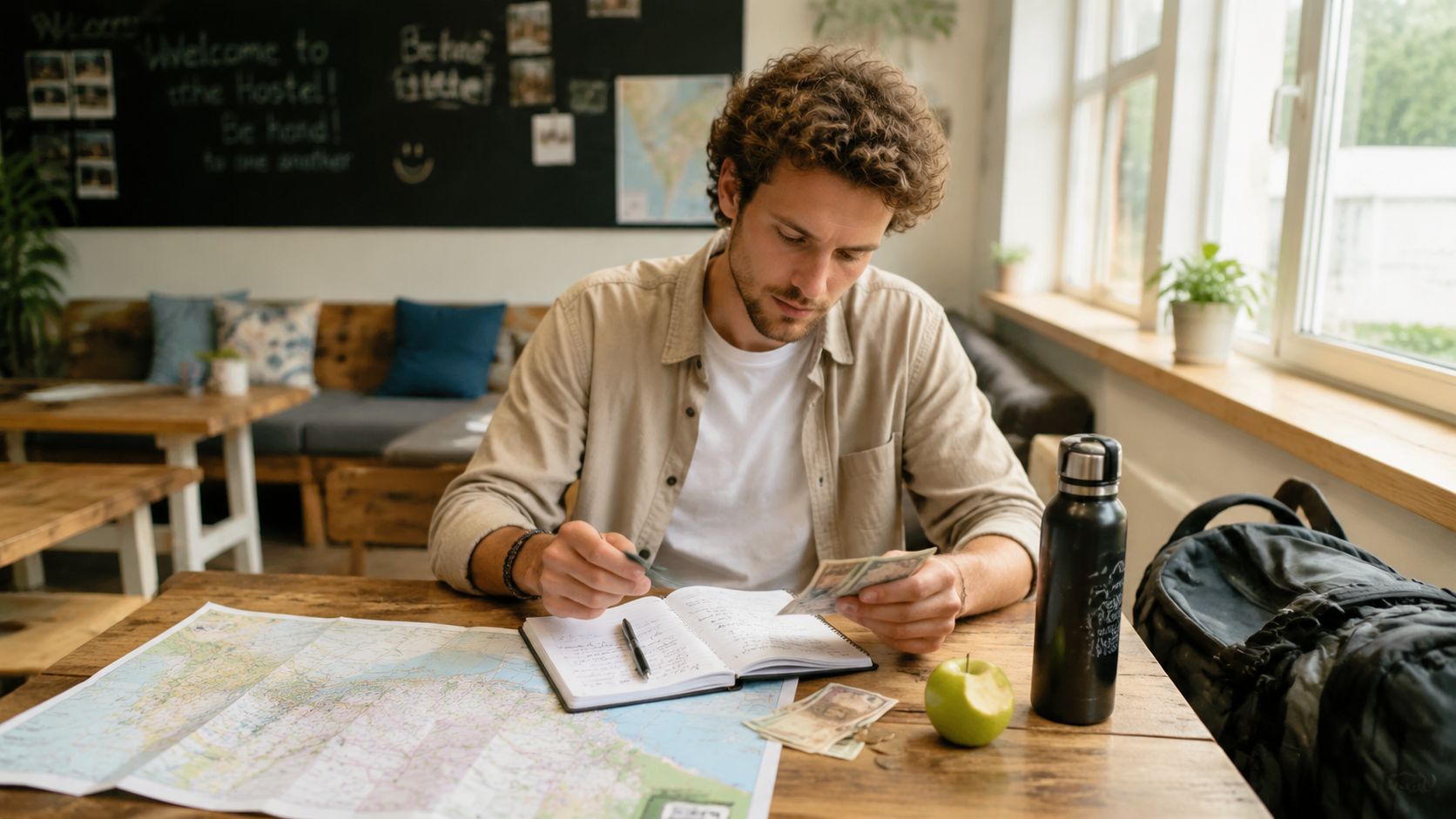
Build a repeatable day
Buy breakfast at a market or grocery store, or use the hostel kitchen. Eat where local workers eat, particularly during busy meal periods, and check for lunch specials before assuming dinner offers the best value. Cooking helps only when the kitchen is usable and you can finish the ingredients before moving on.
Give each day a mix of free, low-cost, and paid activities. Walking routes, public parks, neighborhood markets, viewpoints, and self-guided museum visits can offset a costly excursion. Spend on experiences that are difficult to recreate, rather than paying because an attraction appears on every itinerary.
Transport rewards patience. Walk between nearby sights, use public buses or trains, and cycle where practical. Compare official ride-sharing options with tourist shuttles, and check a city pass against your actual plans. A pass saves money only when you use enough of its included services.
Let slow travel do the work
Fewer moves mean fewer transfers, station meals, baggage complications, and last-minute bookings. Staying longer in one neighborhood also gives you time to find inexpensive food and avoid the premium attached to rushed connections.
Foreign transaction fees can turn ordinary purchases into a recurring drain. Review card terms and plan withdrawals before departure. The guide to avoiding international transaction fees explains practical ways to reduce those charges.
Road habit: Check your balance and spending categories at the same time each evening. The purpose is early correction, not guilt.
Use regional daily benchmarks as a starting point, not a complete trip budget. Southeast Asia and South Asia can start around $25 per day, while Western Europe can reach around $80 to $130 per day. Your target should cover ordinary meals, transport, and planned enjoyment, with room for the higher-cost days that daily averages conceal. A budget that works only when every day is identical will fail as soon as plans change.
Staying Safe While Traveling Solo on a Budget
A low room rate can hide larger costs if the property is isolated, difficult to reach, or unable to protect your belongings. Price safety into the trip before booking, especially for unfamiliar neighborhoods and late arrivals. The cheapest option often becomes expensive after an unplanned ride, a replacement phone, or a lost day dealing with theft.
Compare two hostels in the same city. One costs less but sits far from the center, has inconsistent reviews, and requires transport after dark. The other costs more, provides lockers and staffed reception, and sits near dependable transport. Paying extra for the second option can protect both your cash and your ability to make clear decisions.
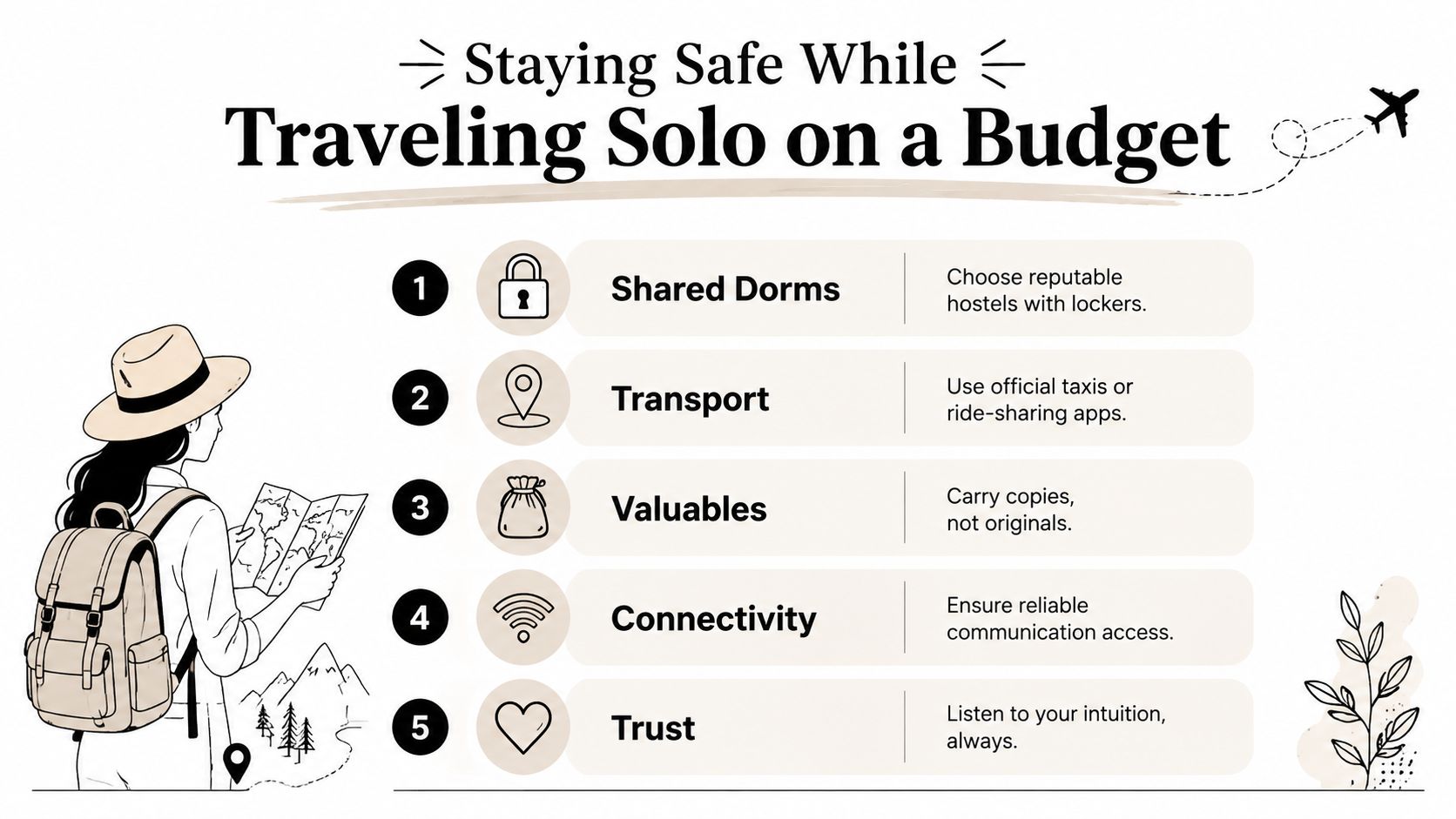
Spend first on protection
Put travel insurance in the fixed-cost part of your budget. Compare medical coverage, exclusions, baggage protection, trip interruption terms, and access to assistance. The cheapest premium may offer weak protection, while the right policy depends on your destination, planned activities, health needs, and home-country requirements.
Solo women should inspect accommodation details before paying. Check for secure entry, working lockers, recent reviews that describe staff response, and room arrangements that suit your comfort level. A female-only dorm may cost more in some markets, but the added privacy and comfort can justify the difference.
Local awareness also prevents avoidable expense. Research expectations around clothing, photography, public behavior, transport, and social spaces. Respectful choices reduce conflict, and preparation makes it easier to recognize a situation that feels unsafe before it becomes costly.
Keep your safety plan simple
- Share your route: Give a trusted contact your accommodation details and general itinerary. Update them when plans change.
- Protect access: Keep copies of important documents apart from the originals, and store essential information securely.
- Plan arrival: Avoid improvising transport after a late landing. Identify the official taxi, train, bus, or ride-sharing option beforehand.
- Maintain communication: Keep your phone charged, maintain working data access, and carry a backup way to contact someone.
- Trust discomfort: Leave a place, person, or vehicle that makes you uneasy. You do not need a perfectly provable reason.
The solo travel safety tips offer a practical checklist for turning these habits into a routine. Safety spending is part of the trip budget, not an optional extra. It protects the money already committed and limits the chance that one incident forces a far more expensive change of plan.
As noted in the budget planning section, daily spending figures do not show the full financial exposure of a trip. Insurance, secure lodging, reliable arrival transport, and communication costs can sit outside the daily allowance. Include them before comparing destinations, then decide where a small saving is worth the added risk and where it is not.
Sample Budgets and Itineraries for Every Region
Sample budgets are planning models, not promises. Regional prices vary by route, season, room type, and activity choices. Compare the full trip, not only the daily figure. Airfare, visas, insurance, gear, and arrival costs can determine whether a supposedly cheap itinerary stays affordable.
Southeast Asia at a lower baseline
A two-week route through Bangkok, northern Thailand, and a nearby regional hub can work well for a lower-cost trip. The savings come from controlling movement and paid activities, not from cutting every comfort. Dorm beds, local eateries, public transport, and a few selected experiences usually leave more room than changing towns every day.
A practical day-by-day pattern looks like this:
- Days 1 to 3: Settle in, use local transport, and keep activities inexpensive while learning the area.
- Days 4 to 6: Pay for one experience that matters, then balance it with markets, walking, or free public spaces.
- Days 7 to 10: Stay in one base long enough to avoid repeated transport and check-in costs.
- Days 11 to 14: Keep a reserve for the final transfer, missed connection, or a meal that costs more than planned.
The key questions are simple: can the dorm fit local prices, can most meals be bought locally, and does each paid activity justify its cost?
Eastern Europe and the Balkans
A three-week route through Eastern Europe and the Balkans rewards careful sequencing. Choose cities connected by practical overland transport, then avoid placing several expensive stops together. Dorms, local restaurants, markets, walking tours, and nature-based days can create variety without turning every day into a paid excursion.
Build the itinerary around longer stays where possible. A cheap room can lose its advantage if frequent border crossings, station transfers, and last-minute tickets consume the savings. Keep separate room in the plan for schedule changes and transport differences between countries.
Western Europe with deliberate choices
Western Europe requires sharper decisions because accommodation, transport, and attractions can all rise quickly. Hostels with kitchens, advance rail or coach planning, extensive walking, and fewer city changes make the largest difference. The budget travel destinations guide for 2026 can help compare lower-cost alternatives before you commit to a route.
Alternate expensive destinations with lower-cost bases. Reserve money for one or two experiences you genuinely value, then use free public spaces, self-guided walks, neighborhood markets, and local parks on other days. This approach protects the trip from the hidden multiplier of paying premium prices repeatedly.
Keep the trip sustainable
Low-cost travel should not shift costs onto local residents, workers, or the environment. Choose locally owned accommodation and restaurants where possible, refill water responsibly, carry less, and use public transport when it makes sense. Staying longer in one community often reduces transport spending while supporting local businesses.
A durable itinerary gives you room to change your mind without breaking the budget.
Start with the region, then list fixed costs separately from daily spending. Add a reserve based on the risks specific to your route, such as expensive arrivals, border changes, or activities that cannot be refunded. As noted earlier, a calculator can test different assumptions, but the final check should be a day-by-day itinerary with transport, meals, lodging, activities, and a realistic amount for mistakes.
Travel Talk Today offers budget guides, timing advice, safety resources, and destination planning tools. Use its checklists and regional ideas to refine your route, then visit Travel Talk Today to develop an affordable backpacking plan.