The cheapest country isn't automatically the best place to backpack. A low daily spend means little if you spend most of your time crossing borders, recovering from exhausting transfers, or staying in places that make meaningful local contact difficult. The strongest destination lets you stretch your money by staying longer, travel overland, support local businesses, and build a route you can enjoy rather than rush through.
This ranking focuses on the best destinations for backpackers who want long-term, meaningful travel, not just the lowest prices. It weighs budget flexibility, overland connections, cultural immersion, slow-travel potential, seasonal timing, crowd pressure, and safety trade-offs. You'll find practical route ideas, the best times to go, ways to stay longer, and honest guidance on where cheap travel demands more planning.
Travel demand also shapes the backpacking experience. The global hostel market was estimated at USD 7.97 billion in 2025 and is projected to reach USD 14.28 billion by 2033, with backpackers and solo travelers representing the largest guest-type revenue share at 55.7% in 2025, according to Grand View Research's hostel market analysis. That helps explain why the destinations below offer such varied hostel networks, social activities, and transport ecosystems. Use Travel Talk Today for thoughtful trip planning, current budgeting checklists, safety guidance, and timing strategies before you book.
1. Southeast Asia
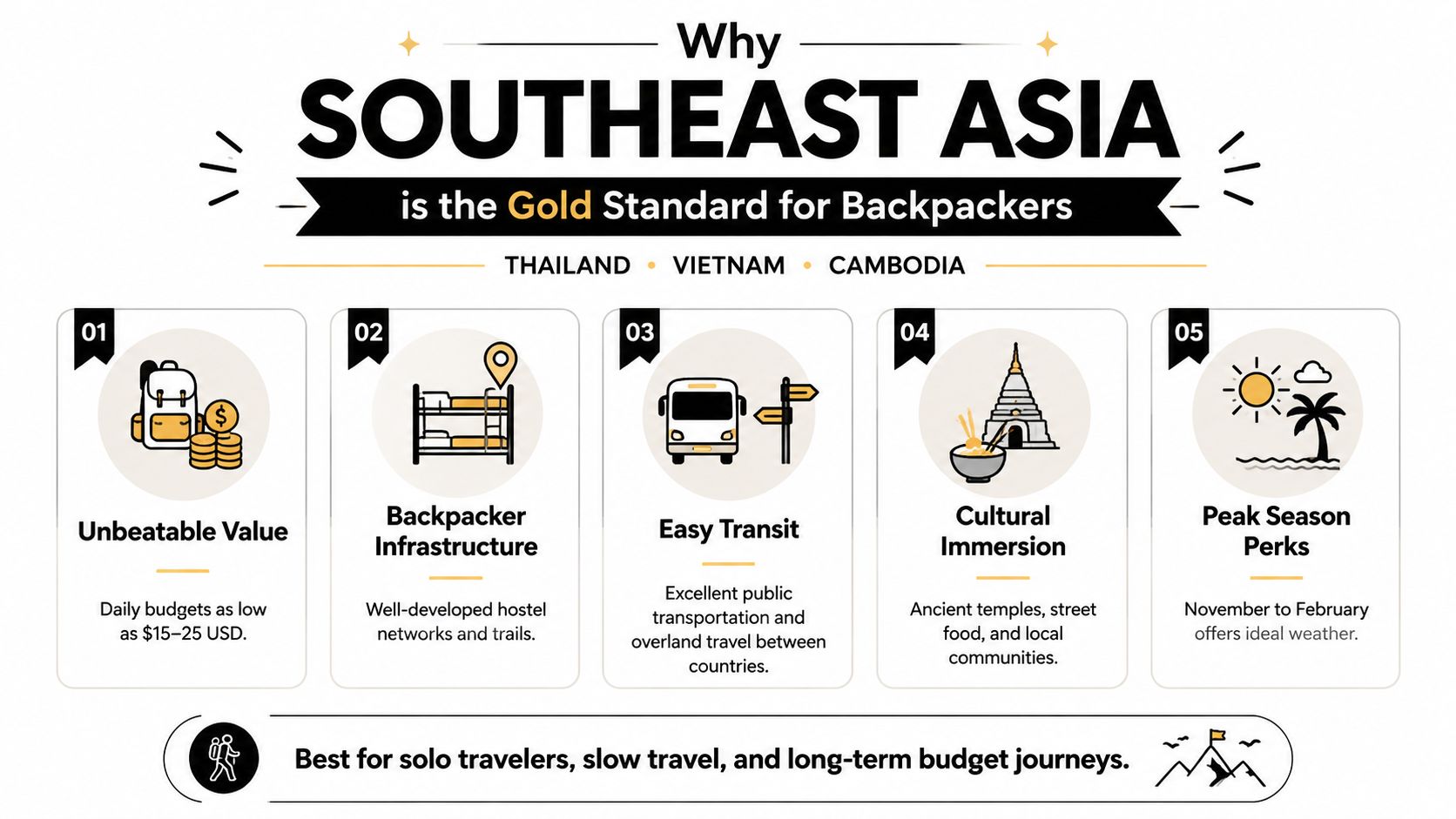
Southeast Asia earns the top position because it combines affordable daily living with a route that can support months of travel. Thailand supplies the easiest entry point, Vietnam often delivers exceptional value for food and transport, and Cambodia adds extraordinary historical depth. Together, they create a flexible journey through cities, temples, beaches, mountains, and river vistas.
Start in Bangkok, then move north through Chiang Mai before crossing toward Laos or Cambodia. Another strong route runs from Hanoi through central Vietnam and onward to Siem Reap, with Thailand added at either end. Bangkok is also the world's leading city for international arrivals, with 32.4 million visitors in 2024, according to global tourism flow data. That volume means excellent transport and accommodation choice, but it also means heavier crowds around major gateways.
How to travel slowly
Don't treat the region as a checklist. Spend several days in Bangkok, linger in Chiang Mai, take a cooking class in Vietnam, and give Siem Reap enough time for Angkor Wat and its surrounding communities. Overnight trains and buses can reduce accommodation needs, while locally owned guesthouses and neighborhood eateries keep more spending within the communities you visit.
Vietnam is gaining attention as a particularly affordable option for backpackers, with recent trend coverage reporting daily budgets around $30, while Thailand remains popular around $50 per day. These figures come from recent backpacking affordability coverage, so treat them as planning references rather than guarantees.
Practical rule: Choose two or three neighboring countries, then leave room for unplanned stays. The region rewards patience more than frantic movement.
For a more detailed route, use this guide to the best places to travel in Southeast Asia. Travel during a shoulder period if you want fewer crowds, and learn basic local phrases before leaving the main tourist centers. Check current border, weather, and safety conditions before each crossing.
2. Central America
Central America is the best choice for backpackers who want adventure, cultural depth, and a route that stays compact. Guatemala and Nicaragua usually suit travelers watching their spending closely, while Costa Rica offers strong appeal for national parks and environmentally focused tourism. Honduras adds Caribbean and archaeological possibilities, although route planning and current local guidance matter more here.
A practical journey begins in Guatemala City or Antigua, continues through Lake Atitlán and indigenous communities, then moves south toward Nicaragua's colonial cities and volcanic scenery. Granada makes an excellent slower base, while León works well for history and outdoor activities. Costa Rica can follow when you want rainforest, wildlife, and established park infrastructure.
Build confidence through local connections
The region becomes richer when you use Spanish, even at a basic level. Shared minibuses, locally operated tours, family-run guesthouses, and market visits create more direct contact than moving between international hotels and packaged excursions. A volcano hike with a reputable group can also be safer and better value than organizing a challenging route alone.
Stay alert around borders, transport terminals, and crowded nightlife areas. Research local customs, common scams, and places that require extra caution before you arrive. A cheap route isn't a good route if it leaves you navigating difficult transfers after dark.
- Start with a reliable corridor: Use established routes such as Antigua, Lake Atitlán, and Chichicastenango before branching into smaller towns.
- Use group activities strategically: Join a guided volcano hike or day trip when equipment, transport, or navigation would otherwise cost more.
- Choose the dry season: December through April generally offers the most dependable conditions for outdoor plans, but verify local weather before booking.
Costa Rica often requires a higher budget than Guatemala or Nicaragua, so balance it with longer stays in lower-cost countries. Read this practical guide to Costa Rica budget travel before deciding how much of your route belongs there.
3. South America
South America ranks highly for travelers who value scale and transformation over effortless logistics. Peru, Bolivia, Colombia, and Argentina offer radically different experiences, from Andean archaeological sites and high-altitude salt flats to Caribbean coastlines, wine country, and cosmopolitan cities. The continent is ideal for a long trip, but its distances punish rushed itineraries.
Choose one geographic corridor instead of trying to cover everything. A highland route from Cusco through Bolivia can focus on history, trekking, and dramatic scenery. A northern route through Colombia can combine Bogotá, Medellín, the Caribbean coast, and smaller mountain communities. Argentina works better as a dedicated section because its distances can consume both time and transport money.
Let altitude and distance set the pace
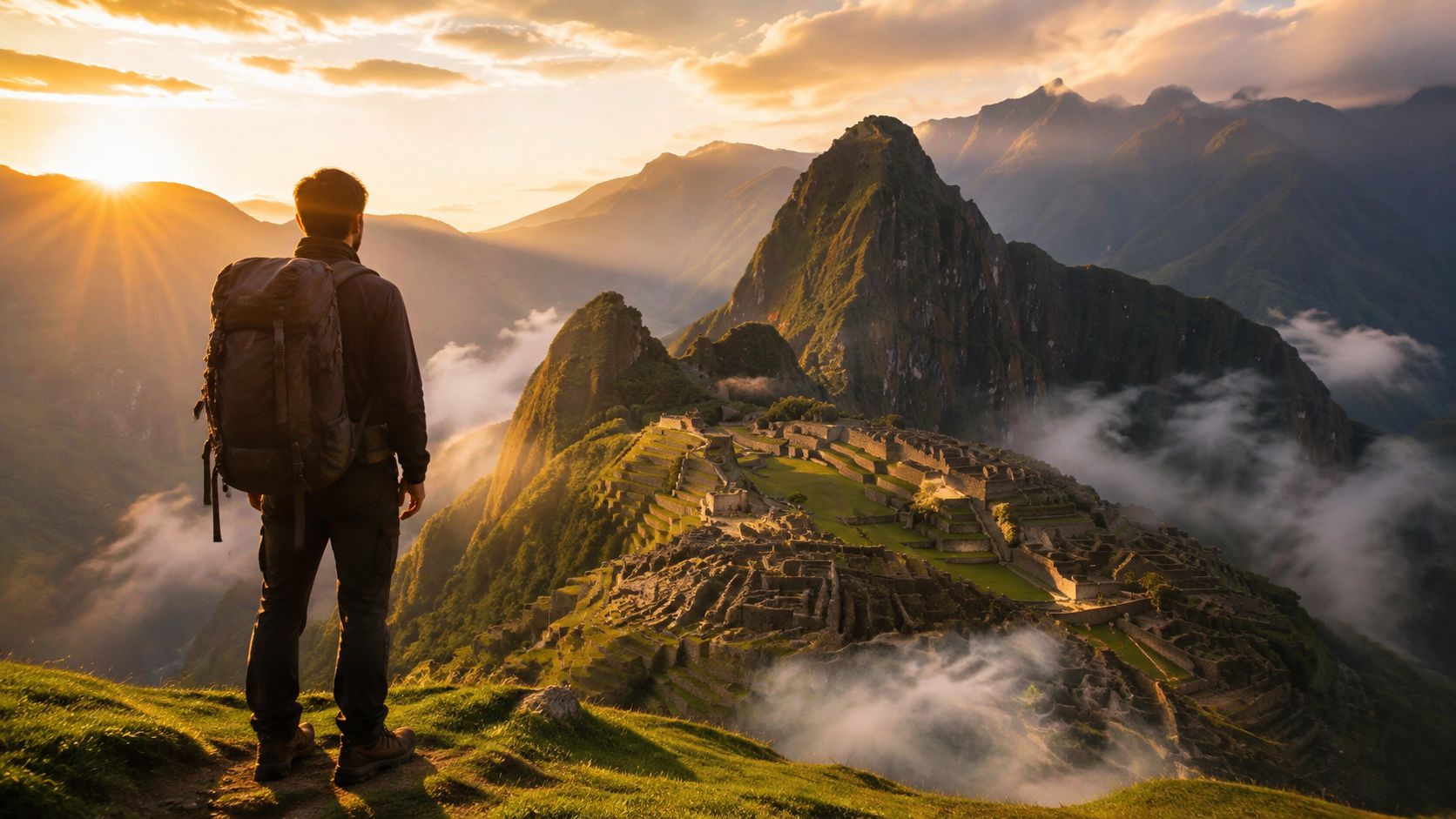
Spend time adjusting before demanding hikes. Cusco and the Salar de Uyuni require thoughtful planning because altitude can affect even experienced travelers. Popular excursions, including Machu Picchu and Uyuni tours, should be researched and reserved ahead during busy periods, while less famous towns provide better opportunities for slower cultural immersion.
Overnight buses can connect major destinations and reduce the need for a separate accommodation night, but don't choose them automatically. Compare safety records, arrival times, luggage policies, and your own tolerance for long journeys. A cheaper transfer isn't useful if it leaves you exhausted before a major trek.
South America works best when you travel by region, not by ambition.
Spanish will improve almost every part of the journey, particularly outside major tourist hubs. Look for locally operated food tours, conservation projects, indigenous farm stays, and community-based excursions. These experiences can turn a famous stop into a deeper stay rather than another photograph.
Use this guide to the best places to visit in South America to shape a route around your interests. Visit during the drier period for trekking, but check conditions by altitude and country because seasons vary across the continent.
4. India
India is the strongest destination for backpackers seeking maximum cultural immersion and an itinerary that can keep changing without losing depth. Rajasthan offers forts, desert vistas, and historic cities. Goa provides a gentler beach-based pace. Kerala brings waterways and village life, while Himalayan regions offer cooler air, mountain communities, and spiritual retreats.
The classic northern route links Delhi, Agra, Jaipur, and Jodhpur, but it shouldn't end at the major monuments. Add time in smaller towns, local markets, or a family-run guesthouse. In the south, combine Kerala's backwaters with quieter coastal communities. McLeod Ganj works for travelers seeking mountain scenery and contemplative experiences, while Varanasi demands patience and cultural sensitivity rather than a quick stop.
Travel with respect and structure
India rewards travelers who prepare. Book important train journeys through official Indian Railways channels, especially when your route depends on reaching a specific city. Overnight trains can connect destinations while reducing accommodation costs, but keep valuables secure and choose arrangements that match your comfort level.
The cooler season from October through March is generally more comfortable for much of the classic backpacker circuit, although regional weather differs. Religious sites require modest clothing and respectful behavior. Ask before photographing people, avoid treating ceremonies as performances, and choose locally owned operators where possible.
- Use rail as your backbone: Trains make long routes more practical, but confirm schedules and booking rules before relying on them.
- Eat thoughtfully: Freshly cooked food from busy local vendors is usually a better choice than food that has been sitting out.
- Slow down in one region: A longer stay in Rajasthan, Kerala, or the Himalayas creates more meaningful connections than constant city changes.
Solo travelers, especially women, should research local customs, transport options, high-risk areas, and common scams before departure. These backpacking tips for beginners can help you build a safer first route without removing the spontaneity that makes India compelling.
5. Mexico
Mexico is one of the most versatile choices for backpackers who want strong food culture, historical depth, and easy route customization. The Yucatán Peninsula offers cenotes, Maya sites, and Caribbean beaches, but the most meaningful long-term trips move beyond the coast. Oaxaca, Mexico City, Mérida, and mountain communities reveal a more layered country than the standard beach circuit.
A useful route begins in Mérida, continues through inland Yucatán towns, and then heads toward Oaxaca or Mexico City. You can also start in Oaxaca and travel slowly through craft villages, markets, and nearby mountain areas before reaching the capital. The coastal Cancún to Tulum corridor is accessible, but it often feels more commercial and crowded than inland alternatives.
Trade beaches for depth
Use long-distance buses for intercity travel, but compare operators and travel times before choosing a departure. In Oaxaca, stay near the Centro while supporting independent cafés, markets, restaurants, and guesthouses. In Mérida, use the city as a base for cenote and archaeological day trips rather than changing accommodation every night.
- Learn practical Spanish: Greetings, food terms, directions, and polite negotiation make daily interactions easier.
- Eat locally: Street stalls and neighborhood markets offer some of Mexico's best experiences, but choose busy vendors and freshly prepared dishes.
- Travel in shoulder periods: May to June and September to October can offer a calmer experience than the busiest coastal periods, subject to local weather.
Safety varies significantly between regions. Research the specific states and cities on your route, use trusted transport, avoid displaying valuables, and ask accommodation staff about neighborhoods to avoid after dark. Don't assume a famous tourist area is automatically risk-free.
For a focused route through the peninsula, consult this guide to Yucatán Peninsula attractions. Mexico suits travelers who want to stay for weeks in one city, build routines, and let food, language, and local relationships shape the trip.
6. Indonesia
Indonesia is the right destination for island-based slow travel, especially when you resist the temptation to make Bali the entire trip. Bali offers a mature backpacker network, rice terraces, temples, wellness communities, and a wide range of accommodation. Java adds volcanoes and cultural sites, Lombok brings a quieter island rhythm, and Sumatra offers jungle experiences and conservation projects.
Start in Java if you want cultural and outdoor intensity, then travel toward Bali and continue to Lombok. This route gives you a clear geographic progression without requiring constant flights. Island transfers take planning, so build in flexibility for ferries, local boats, and weather-related changes.
Go beyond the familiar island
Ubud can support a longer stay if you choose locally owned accommodation and create a routine around markets, cooking, walking, or yoga. Lombok works better for travelers who want beaches and smaller communities without the same density as Bali's most visited areas. Sumatra demands more preparation, particularly for jungle travel, but it can offer the deeper sense of discovery that many backpackers seek.
The dry season from April through October is generally favorable for many routes, although Indonesia's weather varies across islands. Motorbikes offer independence but create serious safety responsibilities. If you're inexperienced, tired, or traveling on difficult roads, use a reputable driver or organized transport instead.
The best Indonesian itinerary has fewer islands than your first plan.
Support warungs, village guesthouses, responsible guides, and conservation organizations that explain where money goes. Avoid wildlife experiences that allow handling, riding, or exploitative contact. Learn basic Indonesian phrases and ask permission before photographing ceremonies or residents.
Bali's popularity makes it easy to meet other travelers, but it can also weaken cultural immersion when you stay only in digital-nomad enclaves. Spend longer in one community, travel overland where practical, and choose destinations based on the experience you want rather than online visibility.
7. New Zealand
New Zealand belongs on this list for backpackers who prioritize outdoor access, safety, and scenery over the lowest possible daily spend. Fiordland, Rotorua, Lake Taupo, Auckland, and Queenstown create a powerful route through mountains, geothermal areas, beaches, and adventure towns. The country is easier to get around than many long-haul destinations, but activities, transport, and accommodation can quickly stretch a limited budget.
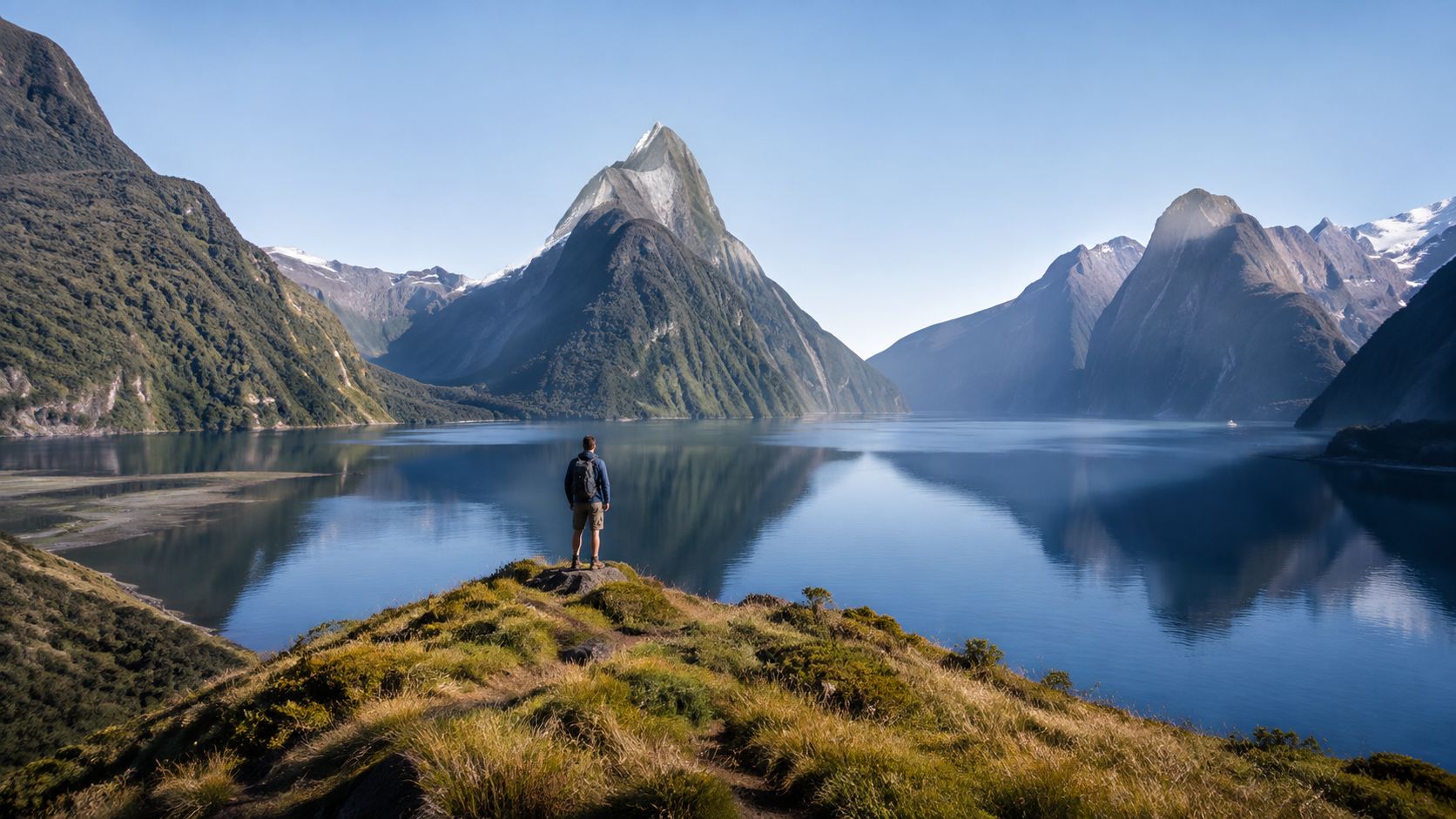
Begin in Auckland, explore nearby islands, then travel south through Rotorua and Taupo before choosing either the South Island's alpine route or a slower West Coast journey. Queenstown is a strong base for adventure, but it attracts heavy demand and can feel expensive. Milford Sound and the West Coast deliver more dramatic slow-travel rewards when you allow time for weather and walking conditions.
Spend more carefully, not automatically
A campervan can combine transport and accommodation, but calculate fuel, campsite fees, insurance, and vehicle responsibilities before committing. Intercity buses work better for travelers who don't want to drive. YHA hostels and other community-oriented accommodation can make solo travel more social while keeping you connected to practical local advice.
The shoulder seasons around October to November and March to April can provide a calmer experience than peak summer, but mountain conditions change quickly. Book popular walks and activities early, especially when your itinerary depends on a specific track or departure.
- Choose one island first: Covering both islands too quickly sacrifices the long stays that make New Zealand worthwhile.
- Prioritize free natural scenery: Hiking, beaches, viewpoints, and public parks can fill an itinerary without requiring a paid activity every day.
- Consider extended work travel: A working holiday arrangement may suit eligible travelers who want to fund a longer stay, subject to current visa rules.
New Zealand is a strong option for solo travelers who want an English-speaking environment and well-developed visitor infrastructure. It isn't the best pick for a shoestring trip, but it is one of the best destinations for backpackers who want confident independent outdoor travel.
8. Greece
Greece rewards backpackers who slow down. Its strongest combination is ancient history, regional food, sea travel, and routes that connect islands with mainland communities. Athens makes a useful cultural starting point, while Crete and the Peloponnese offer enough variety for a longer stay. Mykonos and Santorini are recognizable choices, but their popularity makes them a poor foundation for a budget-focused journey.
Choose your route by pace rather than by collecting famous names. Paros and Naxos offer a more balanced island experience, while Crete suits travelers who want beaches, villages, archaeology, hiking, and local food in one destination. Choose the Peloponnese for mainland history, scenic drives, and fewer ferry transfers. A practical route is Athens, one or two nearby islands, then the Peloponnese or Crete.
Let ferry schedules set your rhythm
Ferries connect much of Greek backpacking, yet routes differ in price, frequency, and travel time. Reserve important crossings early, then keep spare days around them. An overnight ferry can replace a night of accommodation, but the saving only makes sense if the timetable and sleeping conditions suit you.
Travel in April to May or September to October for more manageable heat and less pressure than the height of summer. Check current schedules before booking accommodation on a different island. One missed crossing can turn a low-cost plan into an expensive detour.
- Eat away from the waterfront: Tavernas on quieter streets often offer a more local setting and better value.
- Stay small: Rooms and family-run guesthouses can create more contact with local communities than large resorts.
- Include the mainland: The Peloponnese adds archaeological sites, villages, and scenic views without constant island-hopping.
Greece is safest and most enjoyable when you plan around practical limits. Carry water in hot weather, protect your documents, confirm ferry details, and leave room for delays. Crowded tourist zones demand the same basic awareness as any busy destination.
Give yourself time for long lunches, repeated walks, and unplanned conversations. Greece belongs high on a long-term backpacking list when cultural depth and slow travel matter more than checking off every island.
9. Eastern Europe
Eastern Europe earns its place through variety, overland connections, and the chance to slow down between major stops. Poland, Hungary, Czechia, Romania, and Bulgaria combine historic cities, thermal baths, mountain scenery, nightlife, and smaller communities without forcing you into Western Europe's most expensive corridors. It is a stronger long-term choice than a rushed capital-city checklist.
Build a route around Kraków, Budapest, and Prague, then add regional stays in Romania or Bulgaria. Transylvania brings rural scenery and historic towns, while Sofia works well as a base for mountain trips and cultural excursions. Keep the route geographically sensible. Repeated long transfers can consume both budget and energy.
Choose regional depth over capital collecting. Spend several nights in fewer places, use buses and trains where available, and compare arrival points before booking. FlixBus links major cities, while regional operators may provide more direct service. Party hostels make meeting travelers easy, but reviews, location, cleanliness, and noise level should decide where you sleep. Hostel-sector survey data lists value for money, location, reviews, cleanliness, and lowest price among leading accommodation-choice factors, according to Hostelworld's industry survey.
Budapest's thermal baths offer more than a break from walking. They also show how public wellness fits into local urban life. In every city, look beyond the historic core. Neighborhood markets, local cafés, and smaller towns create stronger cultural contact than landmark-only routes.
Choose spring or early autumn for comfortable walking and city exploration. Winter suits travelers interested in festive markets or budget mountain activities, provided they accept shorter days and colder conditions.
Prague's Old Town, Budapest's nightlife districts, and Kraków's headline attractions still draw heavy crowds. Start early, stay outside the busiest core, and protect your belongings in packed areas. Check current border, transport, and safety information before each cross-border leg, then leave enough time for delays. Eastern Europe works best when the itinerary leaves room for ordinary neighborhoods, local meals, and unplanned conversations.
10. Morocco
Morocco suits backpackers who want concentrated cultural immersion rather than the lowest daily cost. It feels markedly different from Europe and connects well with nearby travel hubs. Marrakech and Fez deliver dense medina life, the Atlas Mountains add serious trekking, and Essaouira slows the pace along the coast. The Sahara can anchor the trip, although desert tours deserve careful comparison. The cheapest offer is rarely the best guide to transport, group size, or desert conditions.
A practical route runs from Marrakech into the Atlas Mountains, then toward a desert gateway before ending in Fez or Essaouira. It covers cities, mountains, desert, and coast without forcing too many long transfers into one itinerary. Give Fez time for its crafts, food, and historic streets. Choose Essaouira when you want a quieter finish and more room for unplanned days.
Stay alert without becoming closed off
Curiosity works best with clear boundaries. Busy medinas bring persistent touts, misleading directions, and forceful sales tactics. Arrange official guides through a reputable riad or tourist office, agree on prices before accepting help, and keep your accommodation address accessible. Shared taxis and buses reduce transport costs, but patience and precise communication are necessary.
Plan hiking and desert travel for the cooler period from November through March, then check current mountain and desert conditions before leaving. Summer heat can reshape the trip, especially on routes with long walks or little shade. Choose a shorter itinerary if the forecast makes exposed travel uncomfortable.
- Choose a trusted riad: Locally owned accommodation can explain local customs, suggest practical routes, and arrange transport.
- Learn useful phrases: French and basic Arabic make markets and everyday exchanges easier.
- Leave the main circuit: Smaller towns and coastal communities offer calmer contact than the busiest squares.
Pay a fair price for skilled local work, and negotiate respectfully rather than turning every purchase into a contest. Ask before photographing people, dress appropriately around religious and rural communities, and select guides who consider community benefit. Morocco can fit a moderate budget, but its strongest experiences come from slowing down, using local expertise, and leaving enough time for places beyond the headline route.
Top 10 Backpacker Destinations Comparison
| Destination | 🔄 Complexity | ⚡ Budget (daily) | ⭐ Expected experience | 📊 Ideal use cases | 💡 Key advantages / tips |
|---|---|---|---|---|---|
| Southeast Asia (Thailand, Vietnam, Cambodia) | Low, well-established trails & transport | $15–25 | ⭐⭐⭐⭐⭐, high value & cultural variety | Slow travel, solo backpacking, long-term budgets | Unbeatable value; strong hostel network; tip: travel shoulder season, use overnight buses |
| Central America (Guatemala, Honduras, Nicaragua, Costa Rica) | Medium, established gringo trail but uneven infrastructure | $20–35 | ⭐⭐⭐⭐, diverse nature & culture | Eco-volunteering, jungle/volcano trekking, cultural immersion | Biodiversity & Mayan sites; tip: learn Spanish, avoid risky areas at night |
| South America (Peru, Bolivia, Colombia, Argentina) | Medium, good circuits but varied logistics & altitude | $15–30 | ⭐⭐⭐⭐, dramatic landscapes & adventure | Trekking, high-altitude routes, long-term adventure travel | Iconic natural sites; tip: book treks early, acclimatize for altitude |
| India (Rajasthan, Goa, Kerala, Himalayas) | High, complex logistics, crowded transit, cultural navigation | $10–20 | ⭐⭐⭐⭐⭐, profound cultural & spiritual payoff | Spiritual retreats, deep cultural immersion, ultra-budget travel | Lowest costs; tip: book trains early, be strict with food/water hygiene |
| Mexico (Yucatán, Oaxaca, beyond) | Low–Medium, good infrastructure; safety varies by region | $20–35 | ⭐⭐⭐⭐, strong food & cultural experiences | Short trips from North America, culinary & archaeological travel | Close access to US; tip: explore inland towns, use long-distance buses |
| Indonesia (Bali, Lombok, Java, Sumatra) | Medium, island logistics but established ferries | $15–30 | ⭐⭐⭐⭐, island variety & spiritual culture | Island-hopping, beaches, diving, yoga retreats | Great value & activities; tip: venture beyond Bali, use ferries, cautious motorbike use |
| New Zealand | Low, excellent infrastructure though distances long | $40–60 | ⭐⭐⭐⭐⭐, top-tier outdoor adventure & safety | Adventure sports, road trips, solo outdoor exploration | Exceptional safety & scenery; tip: consider campervan, book popular hikes early |
| Greece (Islands & Mainland) | Medium, ferry-dependent planning and seasonality | $25–40 (shoulder) | ⭐⭐⭐⭐, history + island life | Island-hopping, archaeology, Mediterranean beaches | Island-hopping ease; tip: travel shoulder season, avoid peak tourist isles for value |
| Eastern Europe (Poland, Hungary, Czech, Romania, Bulgaria) | Low, good public transport; some language barriers | $20–30 | ⭐⭐⭐⭐, affordable European culture & nightlife | Budget Europe, historic cities, digital nomad hubs | Excellent value vs. Western Europe; tip: use regional buses, explore smaller cities |
| Morocco (Marrakech, Fez, Atlas, Sahara) | Medium, medina navigation; negotiate & use guides | $20–35 | ⭐⭐⭐⭐, exotic culture & landscapes | Desert treks, medina exploration, short trips from Europe | Dramatic landscapes & crafts; tip: haggle prices, hire official guides, dress modestly |
Build a Route You Can Actually Live
The best destination depends on the kind of life you want to create while traveling. Choose Southeast Asia or India when your priority is stretching a budget through street food, local transport, guesthouses, and long stays. Southeast Asia offers the smoother first route, while India provides deeper cultural intensity and demands more preparation.
Pick Central America or South America for adventure and cultural depth. Central America keeps border crossings and scenery relatively concentrated, while South America suits travelers who can commit to a region and accept longer distances. Don't build a continent-sized itinerary around famous names alone. Choose a highland, coastal, or city-focused corridor and give yourself time to adapt.
For affordable European exploration, start with Eastern Europe. It offers strong urban infrastructure, social accommodation, historic neighborhoods, and easy opportunities to mix major cities with smaller towns. Choose Greece when you want island life, archaeology, and food, but avoid turning the trip into an expensive chain of famous islands. Mainland Greece and less promoted islands usually create more space for slow travel.
Choose Indonesia when island-based travel is the point. Start with a focused route through Java, Bali, and Lombok rather than trying to collect islands. Use ferries where practical, stay longer in one community, and treat weather and transport delays as part of the itinerary.
Select Morocco for a compact cultural journey with strong contrasts between medinas, mountains, desert, and coast. Choose New Zealand when outdoor access, solo confidence, and dramatic scenery matter more than keeping every day cheap. It costs more, but it offers a clear, independent adventure for travelers prepared to plan transport and activities carefully.
A practical planning sequence keeps any destination manageable:
- Choose the season first: Match weather, daylight, trekking conditions, heat, and crowd pressure to the route you want.
- Set a daily ceiling: Include accommodation, food, transport, activities, insurance, and an emergency reserve before deciding where to go.
- Keep the route geographically focused: Fewer transfers usually mean more local contact and less money lost to transport.
- Reserve flexibility: Leave space for a slow stay, a weather delay, or a town that deserves more time.
- Verify current conditions: Check entry rules, border procedures, health guidance, local safety updates, and transport schedules before departure.
- Spend locally: Favor independent guesthouses, family-run restaurants, community guides, ethical conservation projects, and locally owned experiences.
Your accommodation choice should support the way you want to travel. Hostel-sector research found that value for money, location, reviews, cleanliness, and price strongly shape guest decisions, while walking tours and day trips were among the preferred social activities in the same survey. That supports a practical strategy, choose a clean, well-located base with reliable reviews, then use walking and locally operated excursions to understand the place.
Backpacking becomes meaningful when you stop measuring success by the number of borders crossed. Pick a destination that lets you stay long enough to learn a few phrases, recognize the same market vendor, return to a favorite café, and understand how your spending affects local communities. Use Travel Talk Today's budgeting, timing, safety, and slow-travel resources to check the route before booking flights or accommodation.
Travel Talk Today offers practical destination planning, budgeting guidance, safety resources, timing strategies, and slow-travel ideas for backpackers who want more than a rushed itinerary. Visit Travel Talk Today to refine your route, compare travel styles, and prepare a trip that supports local communities while staying within reach of your budget.